
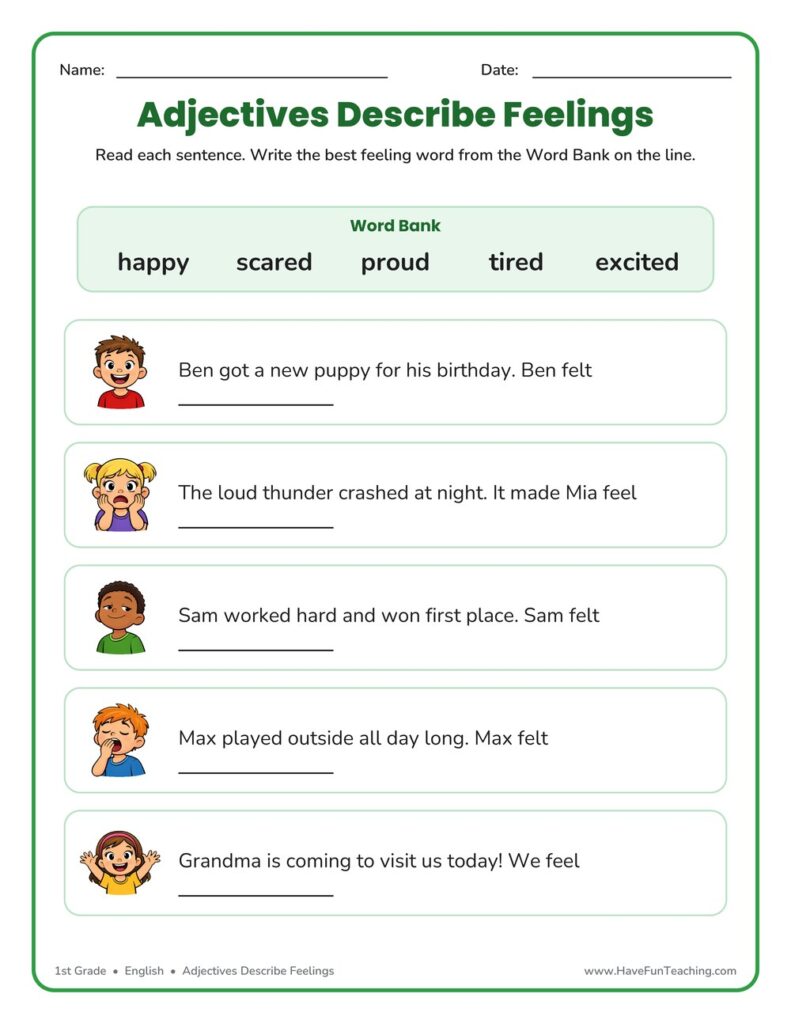
Adjectives Describe Feelings Worksheet
This adjectives describe feelings worksheet helps 1st graders match feeling words like happy, proud, and excited to picture-based sentences. Includes an answer key for easy checking—a fun, no-prep way to build emotion vocabulary.
$6.97
Or free with a membership — members pay $3.33/mo for all 10,000+ resources. See plans
Want this one free?
Tell us where to send it and it’s yours — no card, no catch.
One free resource per teacher. We’ll also send free teaching ideas each week — unsubscribe anytime.
Teaching is easier with a membership
Unlimited printables, games & videos for PreK–6th — for your classroom or homeschool. Cancel anytime.
Start your 3-day free trial$0 today · cancel anytime · Instant access to 10,000+ resources
About this resource
Description
Adjectives are describing words, and some of the most important ones describe how we feel. This Adjectives Describe Feelings Worksheet helps young learners connect feeling words like happy, scared, proud, tired, and excited to real, everyday situations. By matching the right adjective to each sentence, students build the vocabulary they need to talk about emotions and describe the world around them with more detail and care.
This 1st grade adjectives worksheet gives students five friendly sentences, each paired with a cheerful picture cue showing a feeling. Children read the sentence, look at the picture, and choose the best feeling word from the word bank to write on the line. It works well as morning work, a literacy center, homework, or a quick review, and the included answer key makes checking fast and simple for teachers and parents.
What’s Included
- 1 print-ready PDF worksheet
- Answer key
- 5 feeling-adjective fill-in activities with picture cues and a word bank
This Adjectives Describe Feelings Worksheet supports learning in three ways. First, the picture cues give children a visual anchor for each emotion, making new vocabulary easier to remember. Second, the word bank offers gentle support so students can succeed independently while still thinking about meaning. Third, connecting adjectives to short, relatable stories helps kids understand that describing words add color and clarity to their own speaking and writing.
To extend the lesson, invite children to act out each feeling or share a time they felt happy, proud, or excited. Play a quick game where you name a situation and students respond with a feeling adjective, or keep a classroom feelings word wall that grows all year. At home, families can talk about feelings during story time, pausing to name how a character feels and why. These simple conversations turn adjective practice into meaningful, everyday learning.
Related Resources
What teachers say
Reviews
You must be logged in to post a review.

This Adjectives Color Size Shape Worksheet gives 1st graders picture prompts and an adjective sorting activity to practice describing words. Answer key included for easy, no-prep grammar practice.

This Adjectives Colors Worksheet gives 1st graders picture-based practice writing and circling color words that describe a noun. An answer key is included, so grammar practice takes no prep.
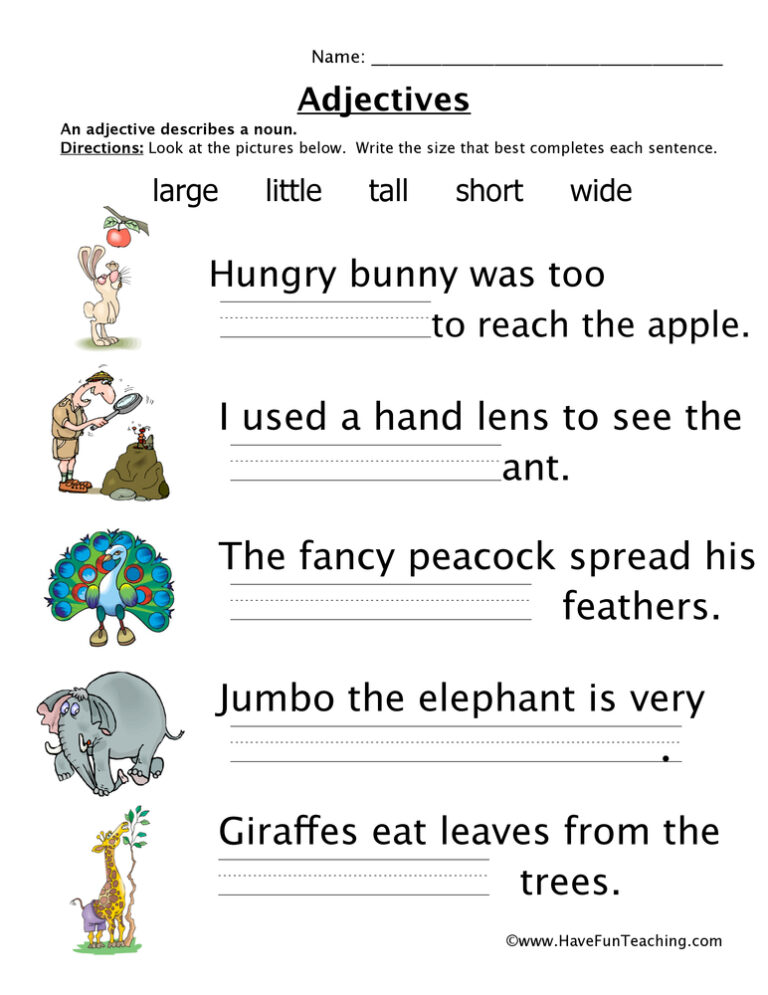
Students name four pictures and circle describing words in this Adjectives Size Worksheet built for 1st Grade. An answer key is included, so size-word practice needs no prep and checks itself in seconds.

Using Adjective Flash Cards, students describe pictures using adjectives to build vocabulary and writing skills.
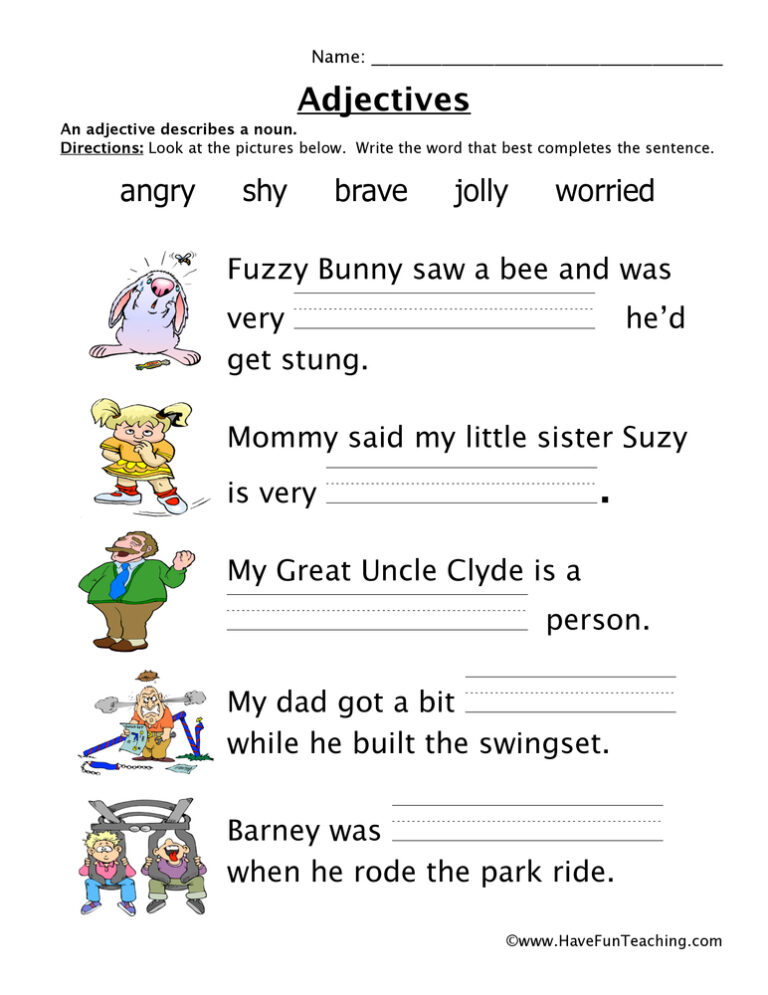
This Adjectives Feelings Worksheet has 1st graders pick feeling words from a word bank to finish five sentences, then circle the adjective in five more. Answer key included, so practice is quick to check and ready to print.
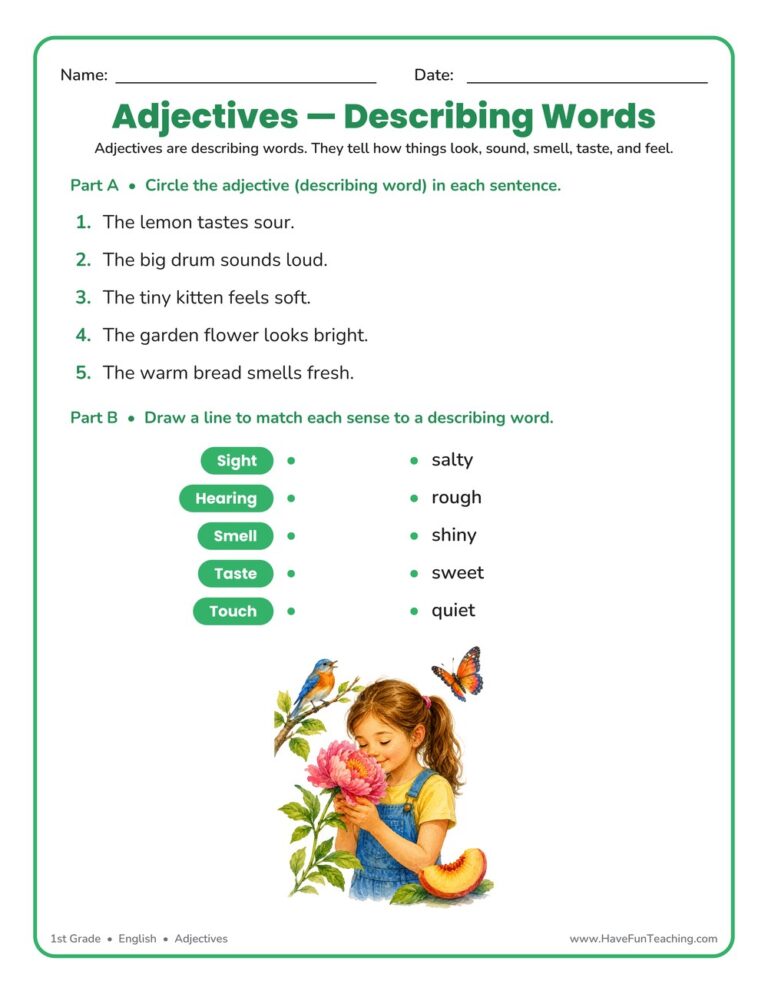
This Adjective Five Senses Worksheet helps 1st Grade students circle and match describing words for what they see, hear, smell, taste, and touch. Includes an answer key for easy, fun grammar practice.
Using this Noun, Adjective, and Verb Activity, students sort examples of nouns, verbs, and adjectives into categories to build their parts of speech understanding.

Using this Describing Pictures Adjectives Worksheet, first graders match six describing words to six pictures and write each word on the line. An answer key is included, so checking the page takes seconds.
Using the Adjective Song (MP3), students will be able to define, give examples and use adjectives in their own writing using the catchy and memorable lyrics.

Using this Describing Nouns Adjective Activity, students describe familiar people, places, things, and events.

The Who is the Mystery Person Worksheet asks 1st Grade students to describe someone they know in adjectives, then read the clues aloud so classmates can guess, building grammar and listening together.

This Sharing Experiences Worksheet gives 1st Grade students a simple page for planning a true story: the topic, what happened first and next, and describing words that help a reader picture the day.

Reviews
There are no reviews yet