
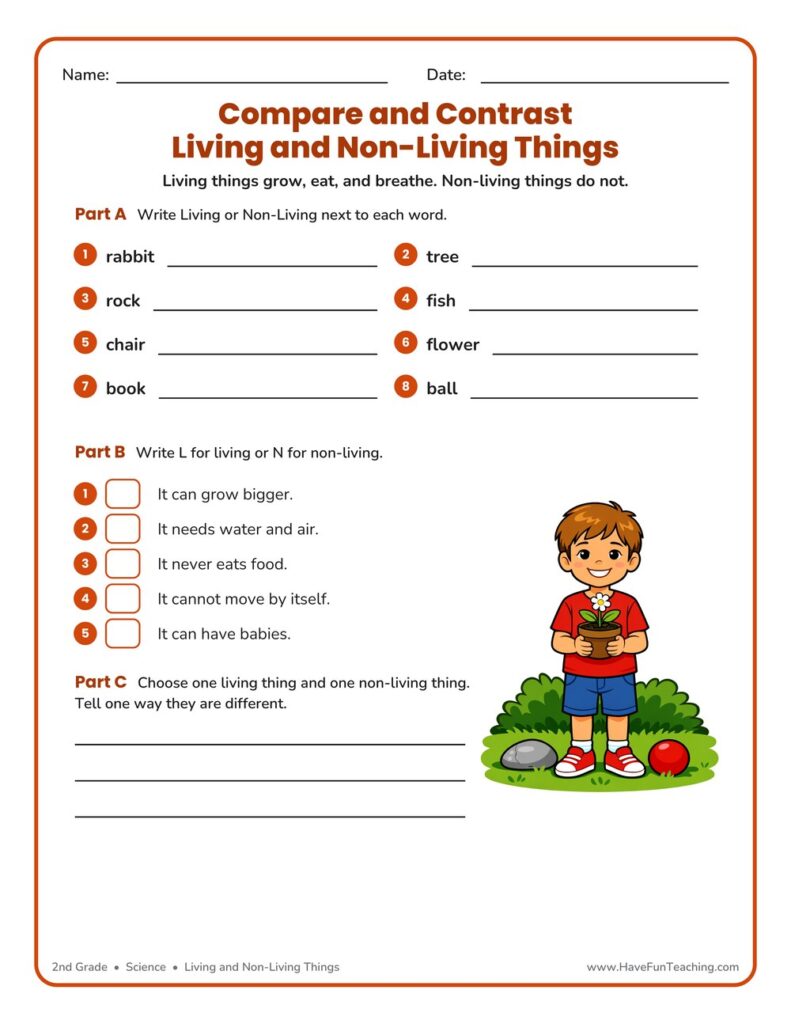
Characteristics of Living and Non-Living Things Worksheet
A hands-on characteristics of living and non-living things worksheet for 2nd grade, where students sort words, judge true traits, and compare examples. Includes an answer key for quick, no-prep science practice.
$6.97
Or free with a membership — members pay $3.33/mo for all 10,000+ resources. See plans
Want this one free?
Tell us where to send it and it’s yours — no card, no catch.
One free resource per teacher. We’ll also send free teaching ideas each week — unsubscribe anytime.
Teaching is easier with a membership
Unlimited printables, games & videos for PreK–6th — for your classroom or homeschool. Cancel anytime.
Start your 3-day free trial$0 today · cancel anytime · Instant access to 10,000+ resources
About this resource
Description
This characteristics of living and non-living things worksheet helps young scientists notice what makes something alive. Living things grow, need food and water, breathe, move on their own, and can have babies, while non-living things such as rocks, toys, chairs, and books do none of these. Learning to spot these differences is one of the first big ideas in life science, and it gives children a simple, reliable way to make sense of the world around them.
This second grade life science worksheet asks students to sort familiar words as living or non-living, decide whether each statement describes a living or non-living thing, and then write one way a living thing and a non-living thing are different. Use it as a quick warm-up, a science center task, or take-home practice, and review the answers together using the included answer key so every child leaves with the correct thinking.
What’s Included
- 1 print-ready PDF worksheet
- Answer key
- A word sort, a living or non-living characteristics activity, and a compare-and-contrast writing prompt
Kids build real understanding with this characteristics of living and non-living things worksheet in three ways. First, sorting everyday examples strengthens their ability to classify objects into clear groups. Second, the characteristics section pushes them to reason about why something counts as alive instead of just guessing. Third, the compare-and-contrast writing prompt lets them explain their thinking in their own words, turning a simple sorting page into genuine science practice.
Extend the lesson by going on a living and non-living scavenger hunt around the classroom, backyard, or neighborhood, and sorting the objects children find into two groups. Ask students to draw one living thing and one non-living thing, then label what each one can or cannot do. You can also keep a class chart on the wall and add new examples all week long as your young scientists discover them.
Related Resources
What teachers say
Reviews
1 review for Characteristics of Living and Non-Living Things Worksheet
You must be logged in to post a review.
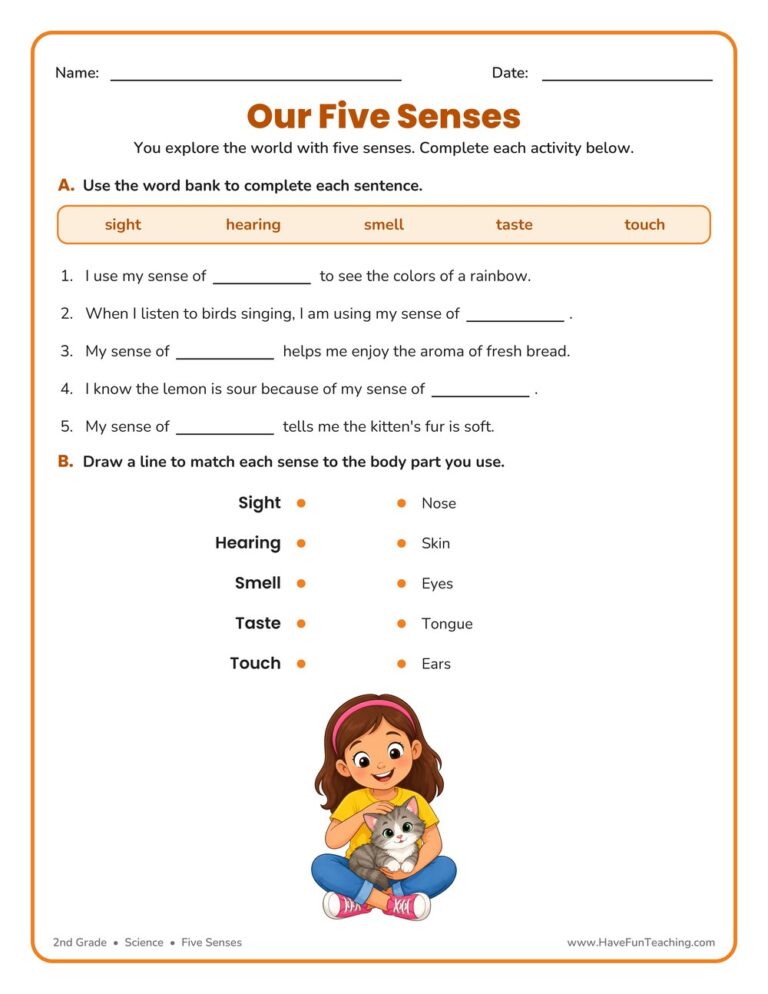
The Senses Fill in the Blanks Worksheet gives 2nd grade students word-bank practice completing sentences about sight, hearing, smell, taste, and touch, plus a sense-to-body-part match. Answer key included for quick, no-prep science review.

The Life Cycle of a Butterfly Worksheet has 2nd graders label the egg, larva, pupa, and adult stages and put them in the correct order. Answer key included for quick, hands-on life science practice.

This matching animal habitats worksheet has 2nd Grade students connect five animals to the ocean, pond, desert, forest, and grassland, then finish three sentences. An answer key is included for fast, no-prep science practice.
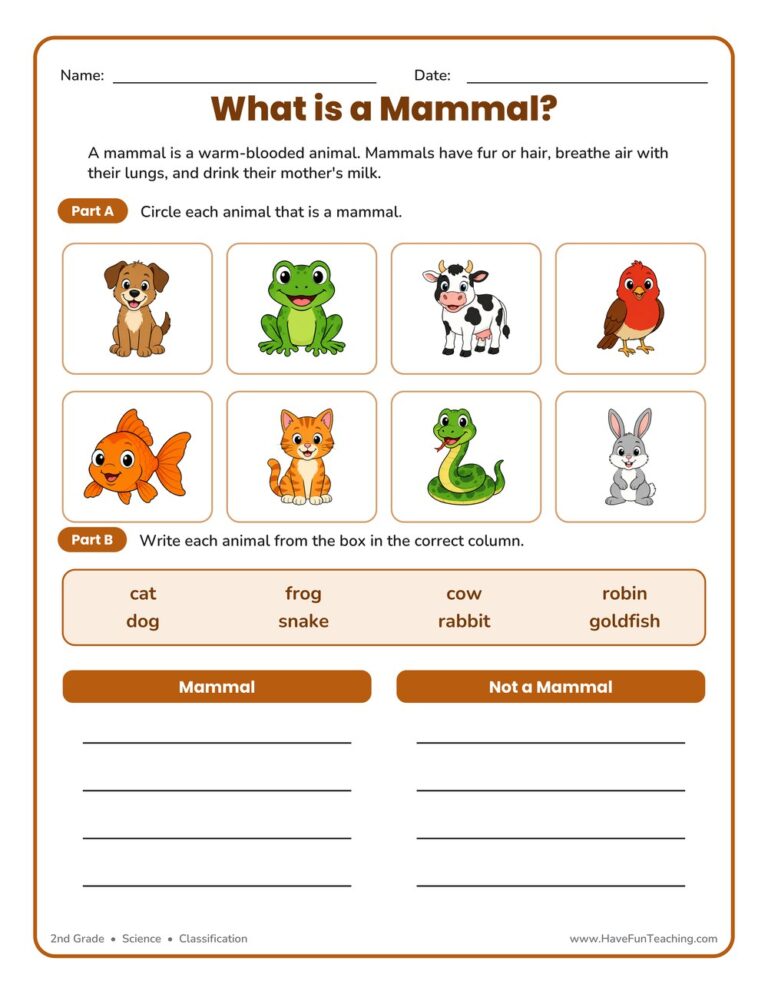
This mammal classification worksheet helps 2nd graders spot mammals and sort animals into mammal and not-a-mammal groups. It includes a complete answer key, making it perfect for no-prep science practice at home or in the classroom.
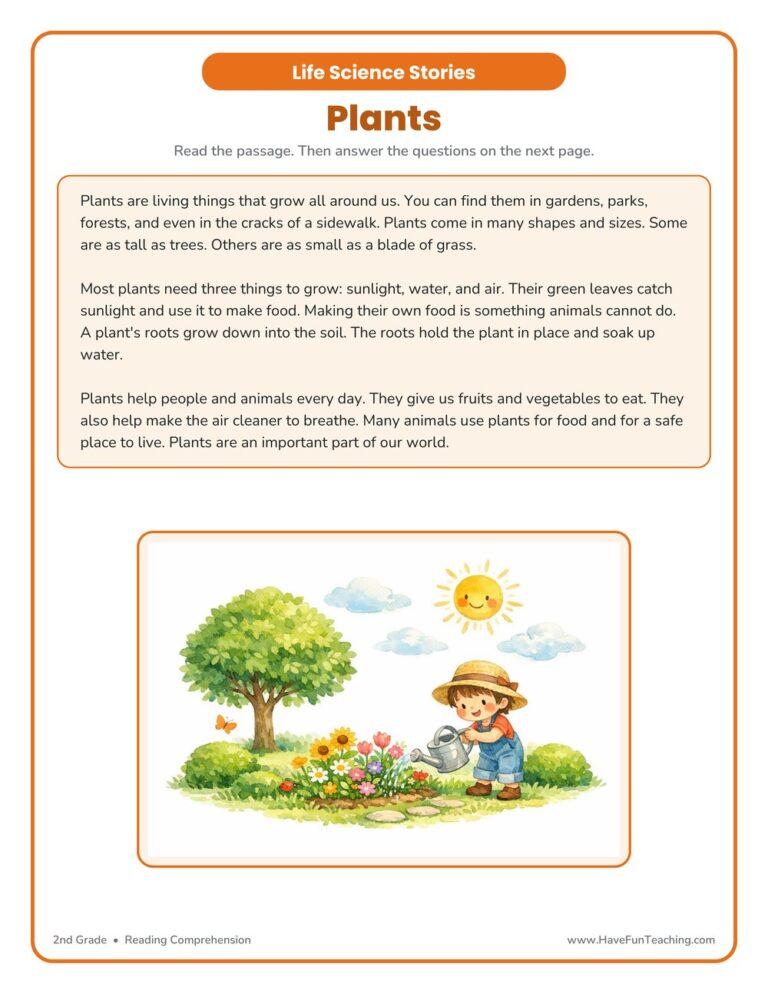
This Plants Life Science Reading Comprehension Worksheet gives 2nd graders a short nonfiction passage about plants plus questions that build reading comprehension. Includes a complete answer key — perfect for no-prep science and reading practice.
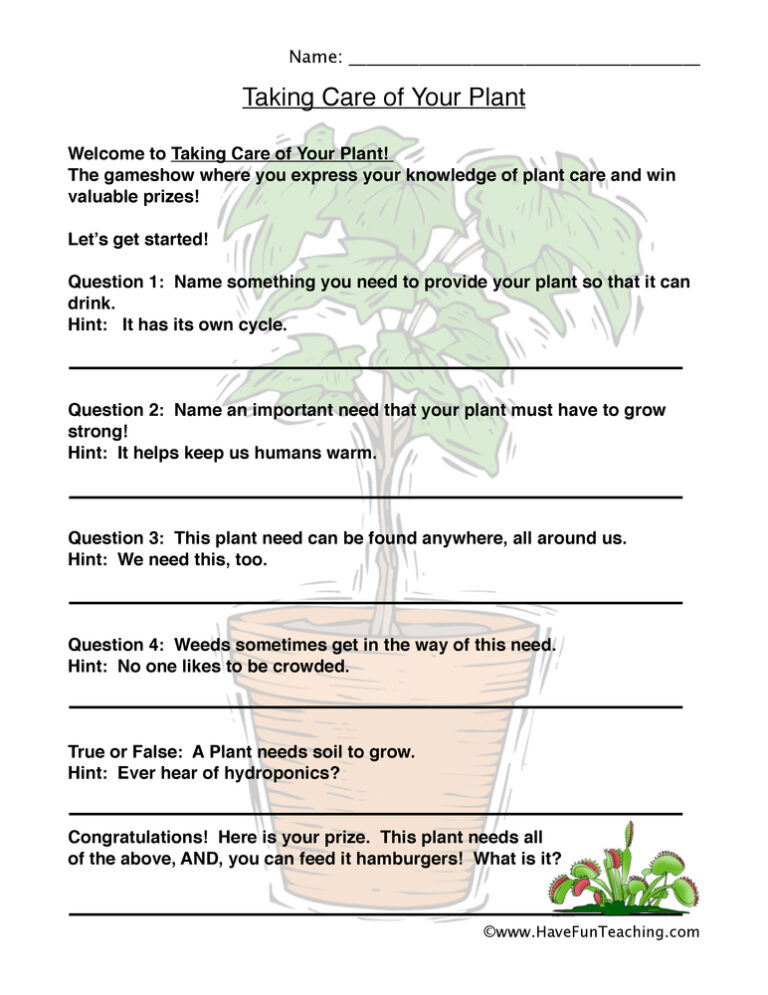
A hands-on plant needs worksheet where 2nd graders name the five things every plant must have, then match three pictures to the needs they show. Answer key included for quick, no-prep science practice.
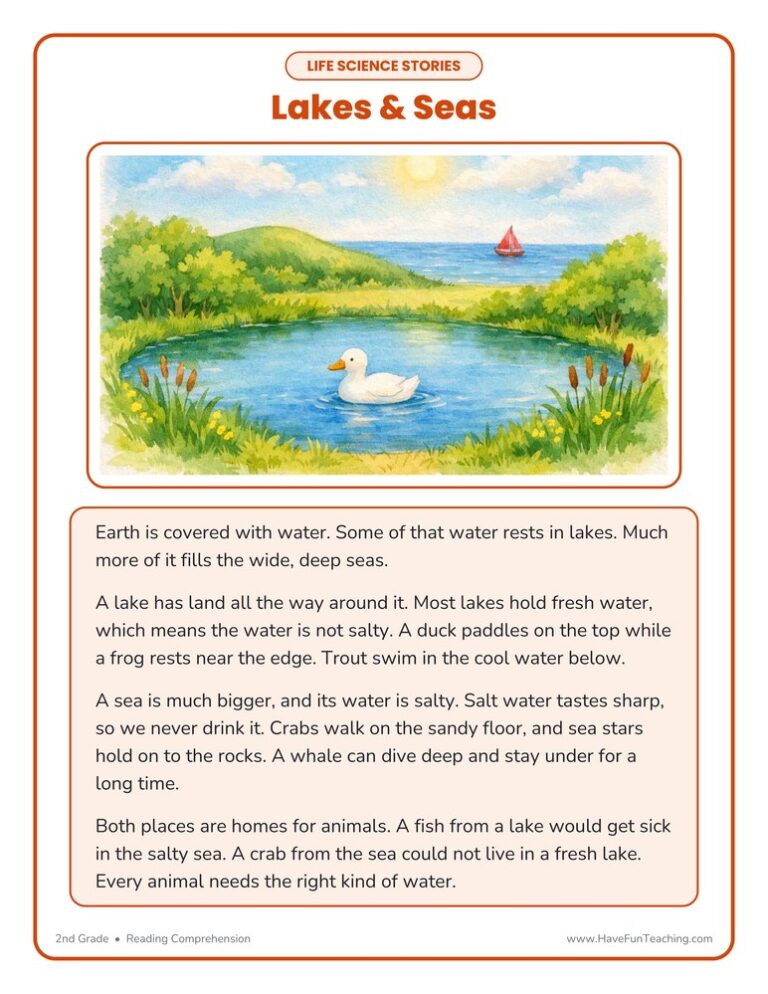
This Lakes and Seas Life Science Reading Comprehension Worksheet gives 2nd Grade students an original passage about fresh water and salt water habitats, with bubble, fill-in, and writing questions. Answer key included.
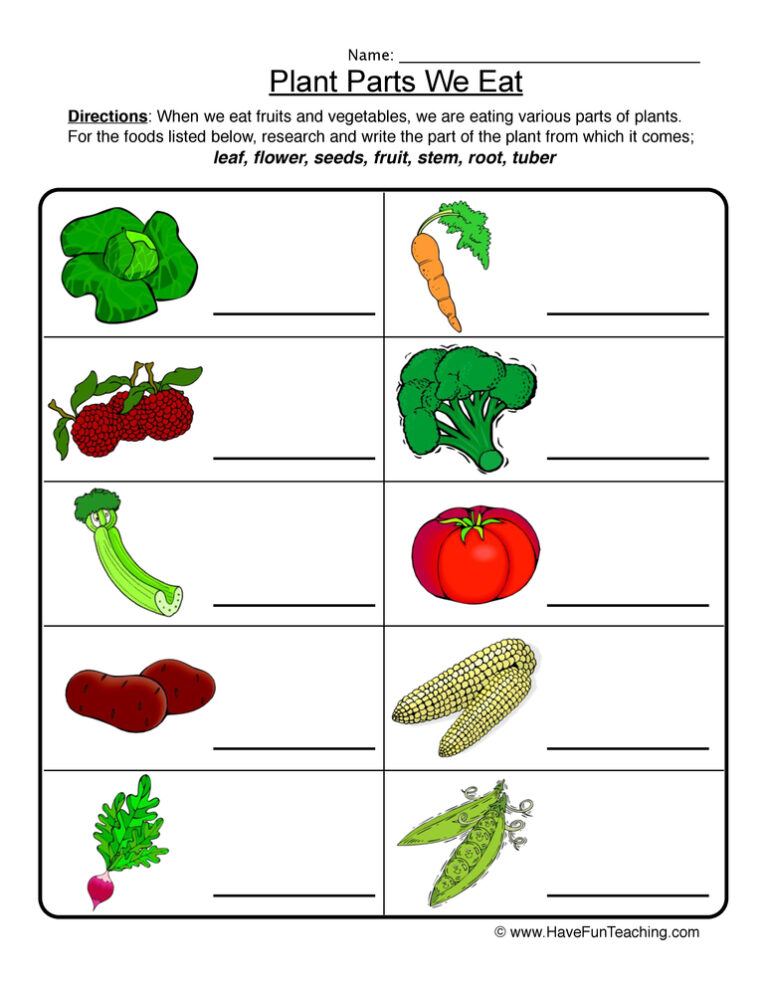
This plant parts worksheet asks 2nd grade students to name the plant part each of six familiar foods comes from, using a word box. An answer key is included, so checking work takes seconds.
This Plant Parts Drawing Worksheet has 2nd Grade students match each plant part to its job, then draw and label a whole plant. An answer key is included, so checking plant vocabulary is quick and easy.
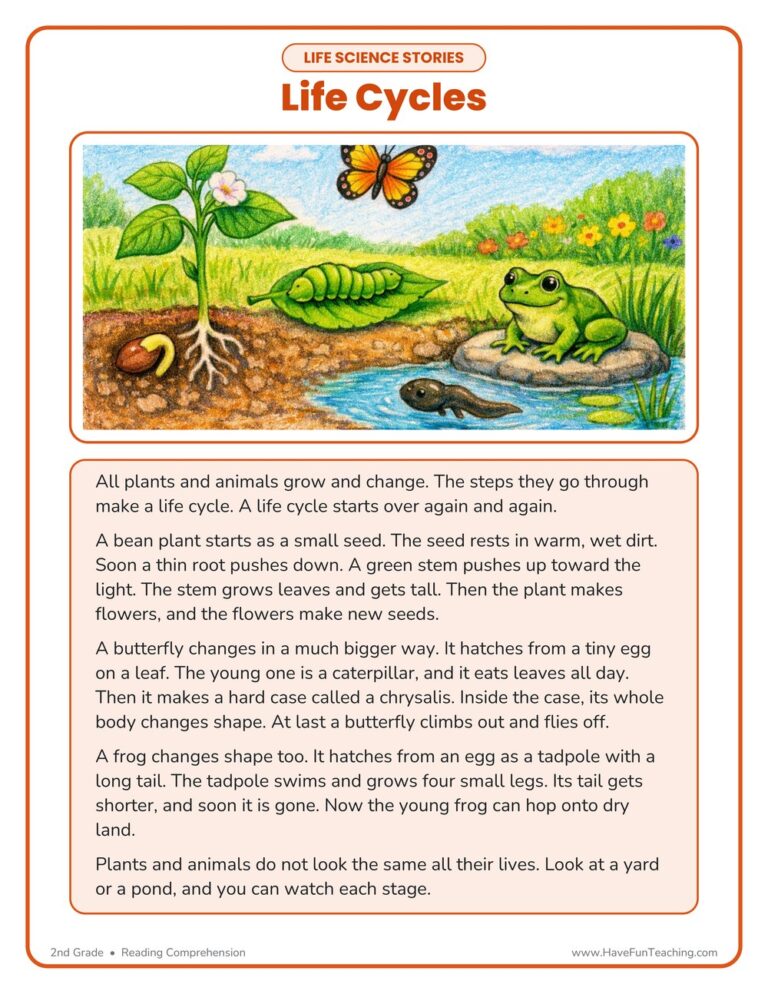
This Life Cycles Life Science Reading Comprehension Worksheet gives 2nd Grade readers a non-fiction story about seeds, caterpillars, and tadpoles, plus bubble, word-bank, and writing questions. Answer key included for fast, no-prep practice.
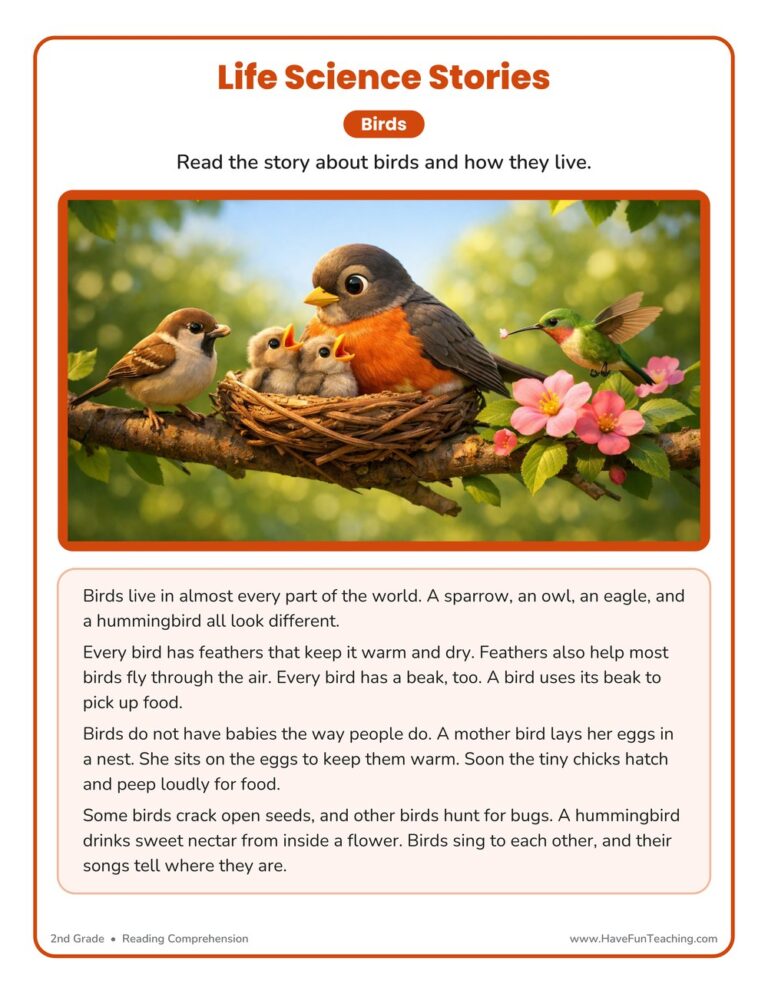
A nonfiction bird passage for 2nd graders, with questions on feathers, nests, and what birds eat. This Birds Life Science Reading Comprehension Worksheet includes an answer key for easy, no-prep science reading practice.
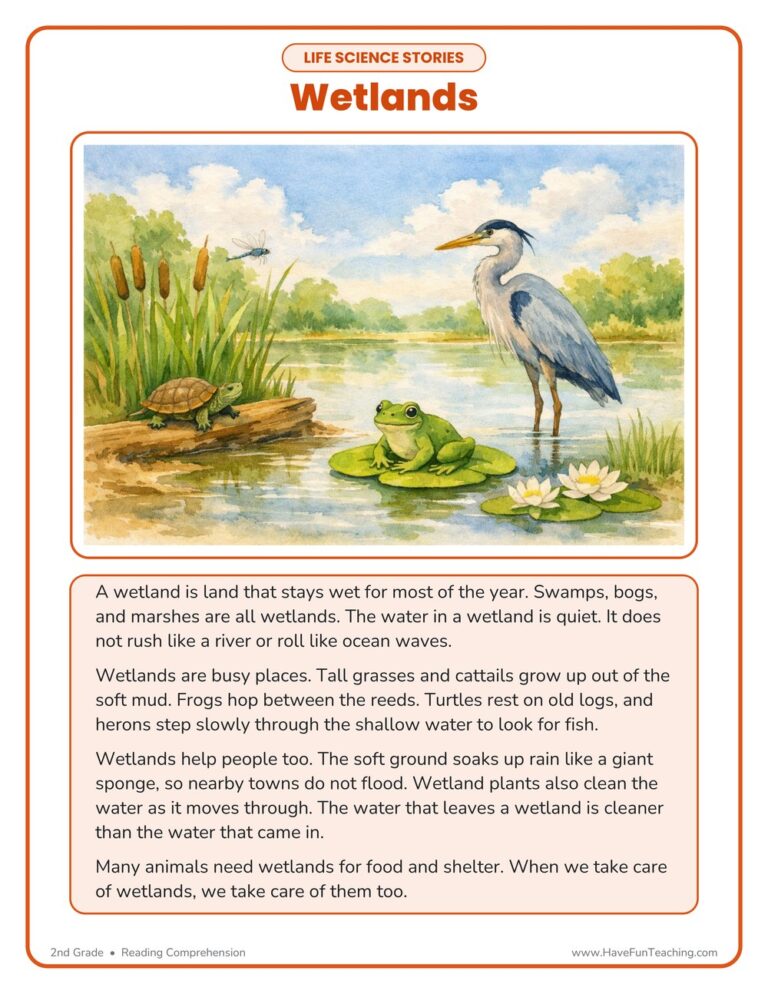
Explore swamps, bogs, and marshes with this wetlands life science reading comprehension worksheet. Second graders read a short nonfiction passage and answer six questions, and an answer key is included, so learning about habitats stays easy and fun.




Ruth Melendez (verified owner) –