

Living and Non-Living Things Scavenger Hunt Worksheet
This living and non-living things scavenger hunt worksheet helps 1st grade students sort six pictures into a chart and draw real finds. An answer key is included, making science practice quick and fun.
$6.97
Or free with a membership — members pay $3.33/mo for all 10,000+ resources. See plans
Want this one free?
Tell us where to send it and it’s yours — no card, no catch.
One free resource per teacher. We’ll also send free teaching ideas each week — unsubscribe anytime.
Teaching is easier with a membership
Unlimited printables, games & videos for PreK–6th — for your classroom or homeschool. Cancel anytime.
Start your 3-day free trial$0 today · cancel anytime · Instant access to 10,000+ resources
About this resource
Description
Young scientists learn to sort the world into two big groups: things that are alive and things that are not. Living things grow, need food and water, and change over time, while non-living things like rocks and toys never grow or eat. This living and non-living things scavenger hunt worksheet turns that big idea into a fun picture hunt that first graders can finish on their own.
About This Worksheet
Children look at six numbered pictures — a robin, a rock, a ball, a sunflower, a sneaker, and a tree — and decide whether each one is living or non-living. They write each picture’s number in the Living or Non-Living column of the chart. Each column has a short clue that explains why, so students practice the reason as well as the answer. To finish, children go on a real scavenger hunt around the room or outside and draw one more living thing and one more non-living thing they find. This 1st grade living and non-living things worksheet works well for science centers, morning work, or homework.
What’s Included
- One printable scavenger hunt page with six picture cards and a two-column sorting chart
- Clue lines that explain what makes something living or non-living
- Two drawing boxes for a real-world hunt
- An answer key for quick checking
Why It Helps Kids
First, it builds a clear rule children can use again: living things grow and need food and water. Second, sorting pictures by number keeps the writing light, so every child can show what they know. Third, the drawing boxes connect the lesson to the real world, which helps new science words stick.
Ideas for Teachers and Parents
Take the class on a short walk around the school yard before the drawing step and let students point out living and non-living things they see. At home, try a living and non-living things scavenger hunt worksheet challenge in the kitchen or backyard, then talk about how a plant and a toy are different. You can also ask children to explain their drawings out loud using the clue words.
Related Resources
What teachers say
Reviews
You must be logged in to post a review.
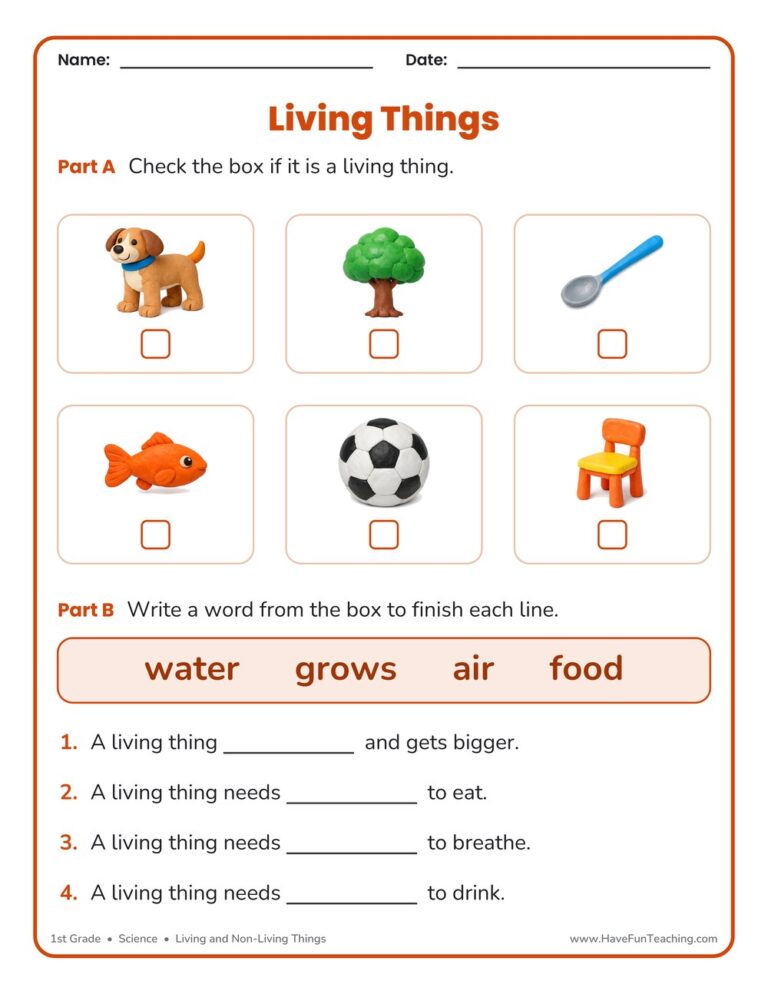
This Describing Characteristics Living Things Worksheet asks first graders to check off six pictures and finish four sentences about what living things need. Answer key included for fast, no-prep science practice.
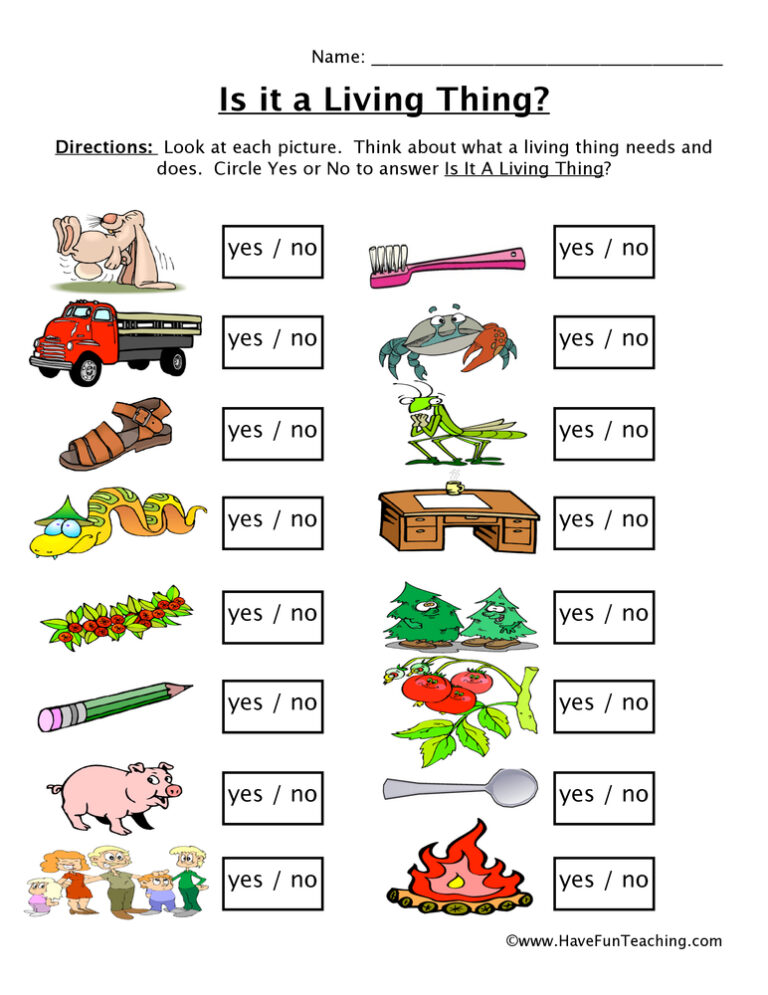
The Is it a Living Thing Worksheet asks 1st grade students to sort six pictures into living and not living and write each answer, with a word box for support and an answer key included.

This Plant Parts We Eat Worksheet helps 1st graders match eight foods to the plant part we eat, using a helpful word box. Includes an answer key for easy, no-prep plant science practice.
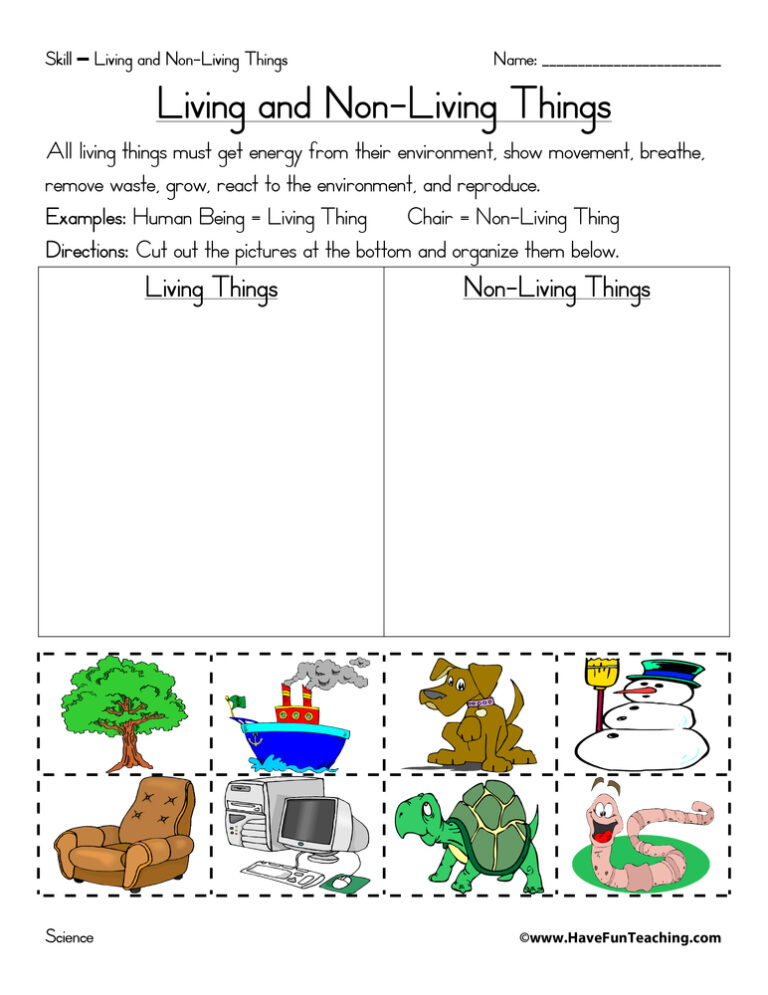
A living and non-living things sort worksheet where 1st graders label six pictures with L or N and sort four words into two groups. Answer key included for fast, no-prep life science practice.

A categorizing living and non-living things worksheet where 1st graders sort six words into two columns and bubble in living or nonliving for four pictures. Answer key included for fast, no-prep science practice.
The Life Science Stories Reading Comprehension Digital Worksheet Collection has online digital worksheets for Google Classroom & online distance learning.

This Basic Fish Parts Worksheet asks 1st graders to label six numbered parts on a big, friendly fish using a word box. An answer key is included, so science practice takes no prep at all.

This sorting characteristics living things worksheet asks 1st graders to read ten words and write each one under Living or Non-Living. An answer key is included, so science practice takes no prep at all.
Using this Living and Non-Living Things Mini Pack, students learn about the Living and Non-Living Things through ten fun worksheets and four activities.

This living and non-living things ABC order worksheet has 1st grade students sort twelve words into two columns and write each list in alphabetical order. An answer key is included for quick, easy checking.

Using this Frog Facts Activity, students learn about frogs by sorting facts into true or false categories.

This circle living things worksheet helps 1st graders spot the living thing in each row of pictures and words. An answer key is included, making science practice quick and easy to check.
Reviews
There are no reviews yet