

Charlie Horse – Reading Comprehension Worksheet
This charlie horse reading comprehension worksheet gives 3rd grade readers a nonfiction passage about muscle cramps, four multiple-choice questions and a short response, with an answer key for easy checking.
$6.97
Or free with a membership — members pay $3.33/mo for all 10,000+ resources. See plans
Want this one free?
Tell us where to send it and it’s yours — no card, no catch.
One free resource per teacher. We’ll also send free teaching ideas each week — unsubscribe anytime.
Teaching is easier with a membership
Unlimited printables, games & videos for PreK–6th — for your classroom or homeschool. Cancel anytime.
Start your 3-day free trial$0 today · cancel anytime · Instant access to 10,000+ resources
About this resource
Description
This charlie horse reading comprehension worksheet helps students read an informational text about a common body mystery: the sudden muscle cramp known as a charlie horse. Readers learn what a cramp is, why a tired muscle sometimes forgets to relax, how to gently ease one, and simple habits that help keep muscles working well.
Students read a clear, 229-word nonfiction passage written at a 3rd grade level, paired with a colorful park scene that shows a water bottle, bananas, sneakers, and a soccer ball from the text. Next, they answer four multiple-choice questions and write a short response that lists three ways to help prevent cramps, using details from the text. Use it for guided reading, a health lesson, a literacy center, or homework. As a 3rd grade reading comprehension worksheet, it builds both reading skills and body awareness.
What’s Included
- An original informational passage about charlie horses and muscle cramps
- A full-color illustration that connects to details in the text
- Four fill-in-the-bubble comprehension questions
- One short written response using text evidence
- A complete answer key
Why This Worksheet Helps Kids
This charlie horse reading comprehension worksheet helps in three ways. First, it builds nonfiction reading skills, because students must find definitions, details, and reasons in the text. Second, the written response teaches kids to support an answer with evidence instead of guessing. Third, it connects reading to real life, giving children calm, practical steps they can use when a muscle cramp surprises them.
Ideas for Teachers and Parents
Before reading, ask students whether they have ever had a leg cramp and what they did about it. After reading, practice the calf stretch from the passage together as a quick movement break. You can also pair this sheet with a lesson on healthy habits, such as drinking water and stretching after recess or sports.
Related Resources
What teachers say
Reviews
You must be logged in to post a review.

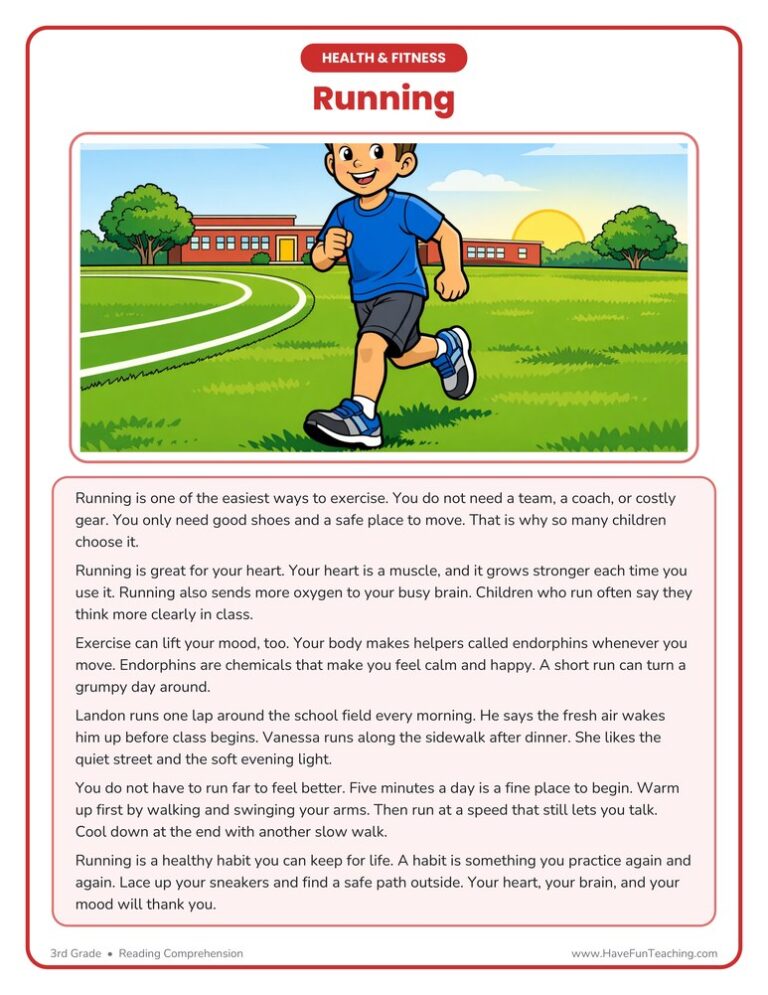
This running health and fitness reading comprehension worksheet gives 3rd Grade readers a nonfiction passage about exercise, plus questions and a full answer key, for no-prep practice that builds comprehension and healthy habits at once.
The Brain Break Song (MP3) is perfect for classroom brain breaks, transitions, indoor recess, and physical activities.

These Donut Cut Outs quickly give you templates that can be easily cut and applied for classroom decoration or student activities
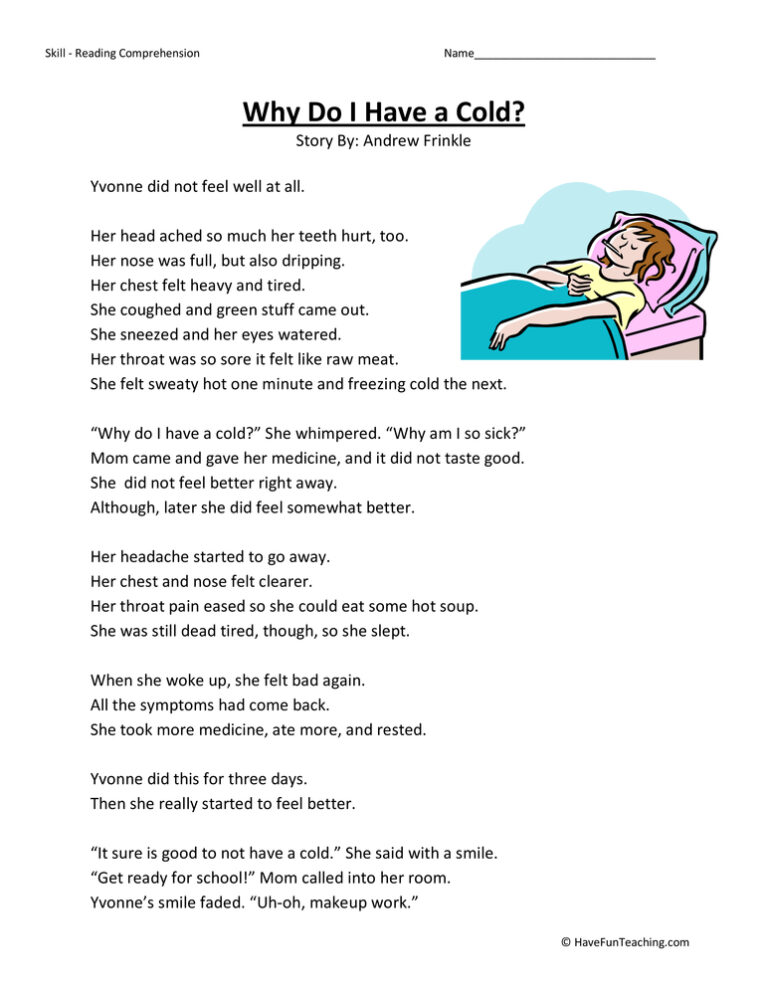
This Why Do I Have a Cold? Reading Comprehension Worksheet gives 3rd graders a short science story about germs, plus bubble and written-response questions. Answer key included, so comprehension practice takes no prep at all.


Students read a short passage about how plaque and acid wear down enamel, then answer comprehension questions. This tooth decay reading comprehension worksheet is written for 3rd Grade and includes an answer key.

This Kelly's Gym Class reading comprehension worksheet gives 3rd grade readers an original story about effort, warming up, water, and healthy food, with four questions, a writing prompt, and an answer key included.
This Fitness Songs (MP3 Album) provides you and your students with seven fitness songs to get your class moving and fit in a fun and musical way!

Health & Fitness Reading Comprehension Workbook Download includes 38 Phonics-themed Stories. 5 test questions per story. Progress Reports.
Using this Jumping Jack Song (MP3), your students will be working up a sweat as they do jumping jacks along with the catchy beat.

Reviews
There are no reviews yet