

Circling Groups with More Worksheet
This Circling Groups with More Worksheet lets kindergarten students count two picture groups and circle the one with more. Includes an answer key — a fun, no-prep way to build early number sense.
$6.97
Or free with a membership — members pay $3.33/mo for all 10,000+ resources. See plans
Want this one free?
Tell us where to send it and it’s yours — no card, no catch.
One free resource per teacher. We’ll also send free teaching ideas each week — unsubscribe anytime.
Teaching is easier with a membership
Unlimited printables, games & videos for PreK–6th — for your classroom or homeschool. Cancel anytime.
Start your 3-day free trial$0 today · cancel anytime · Instant access to 10,000+ resources
About this resource
Description
The Circling Groups with More Worksheet helps kindergarten students learn to compare two groups of objects and decide which group has more. Understanding “more,” “fewer,” and “the same” is the very first step in learning about inequalities and building strong number sense. With this circling groups with more worksheet, young learners practice counting, comparing amounts, and showing their thinking by circling the group that is bigger.
On this printable, students look at four pairs of picture groups — apples, stars, flowers, and ducks — count how many are in each box, and circle the group that has more. It works beautifully as a kindergarten inequalities worksheet for morning work, a math center, small-group practice, or homework. The large, colorful pictures and roomy boxes make it easy for little hands and eyes, and the included answer key lets you check the work in seconds.
What’s Included
- 1 print-ready PDF worksheet
- Answer key
- 4 count-and-compare picture problems
There are several reasons this circling groups with more worksheet helps children learn. First, comparing real picture groups turns an abstract idea into something kids can see and count, which makes “more” concrete. Second, counting each group carefully strengthens one-to-one counting and number recognition. Third, choosing and circling an answer builds early reasoning skills and the confidence to explain why one group is bigger than another.
To extend the learning, grab two small piles of the same object — buttons, blocks, or crackers — and ask your child which pile has more, then count together to check. You can line the objects up to compare, play “more or fewer” with flash cards, or have students make their own group that has more. A few minutes of hands-on comparing each day helps this skill grow.
Related Resources
What teachers say
Reviews
You must be logged in to post a review.
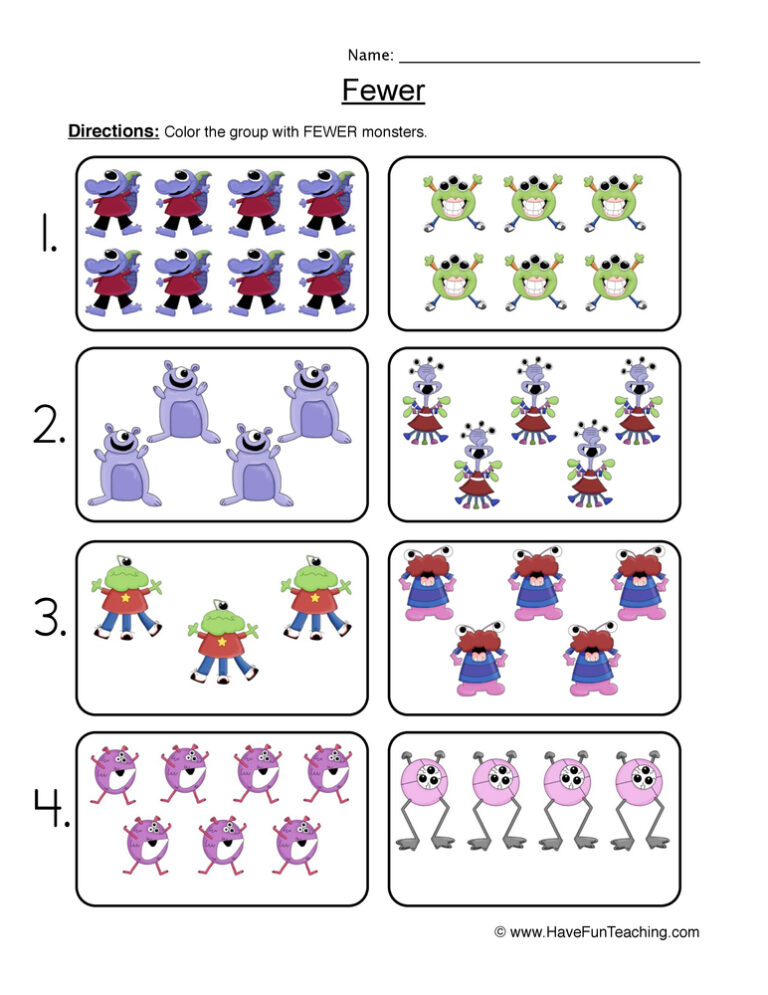
The Circling Groups with Fewer Worksheet gives Kindergarten students four picture pairs to count and compare. Children circle the group with fewer, building early number sense. Answer key included.

This Bigger Smaller and Same Numbers Worksheet gives Kindergarten students nine number pairs to compare, circling the bigger number, the smaller number, or both when they match. Answer key included, so checking work takes seconds.
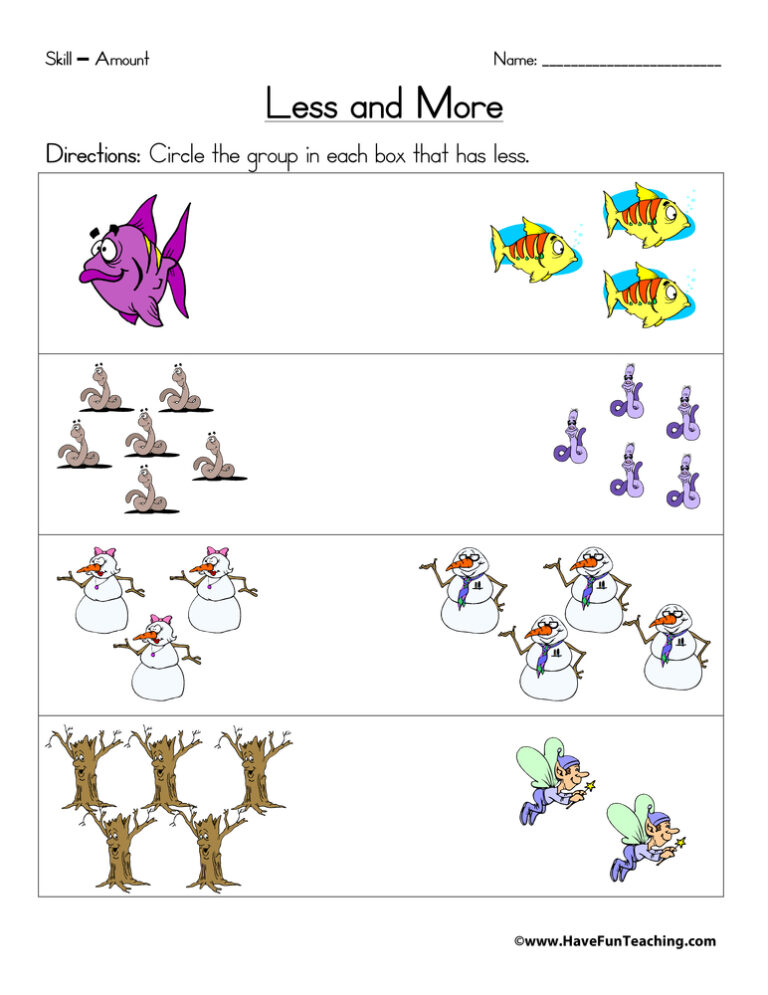
This Less and More Worksheet asks Kindergarten students to count two picture groups and circle the side with less, then the side with more, and it comes with an answer key.

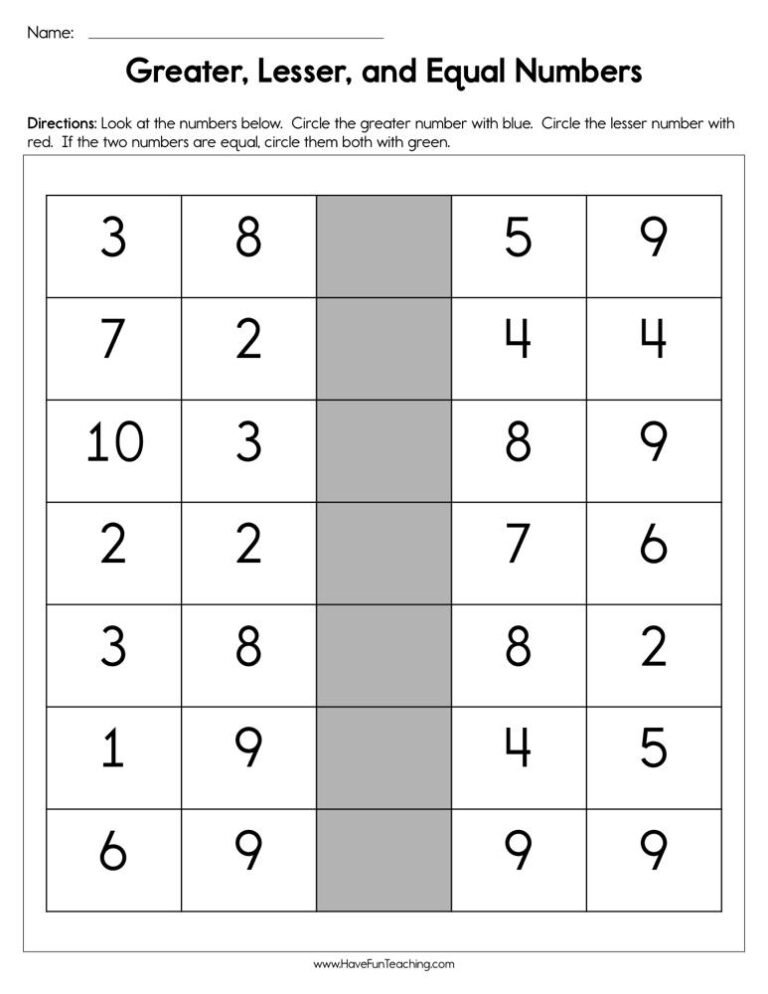
Kindergarten students compare numbers 1 to 10 on this greater lesser and equal numbers worksheet, circling the greater, the lesser, or both when equal. An answer key is included for quick checking.
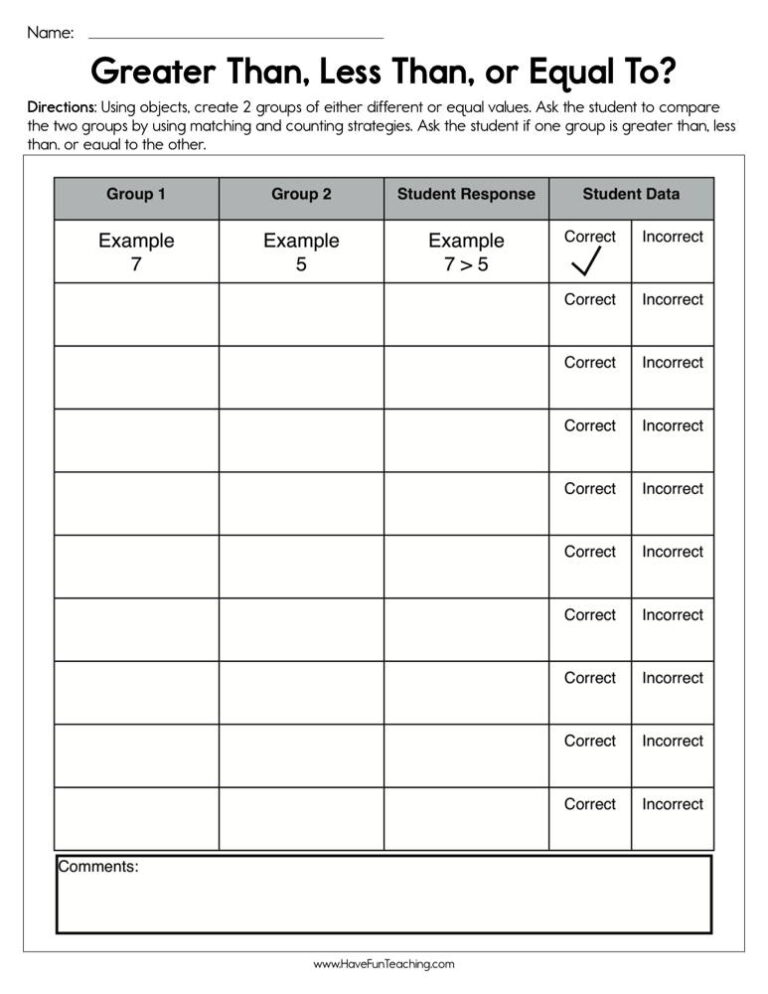
This greater than, less than, or equal to assessment worksheet helps kindergarten teachers record ten hands-on trials of comparing two groups of objects, plus the matching or counting strategy each child uses.
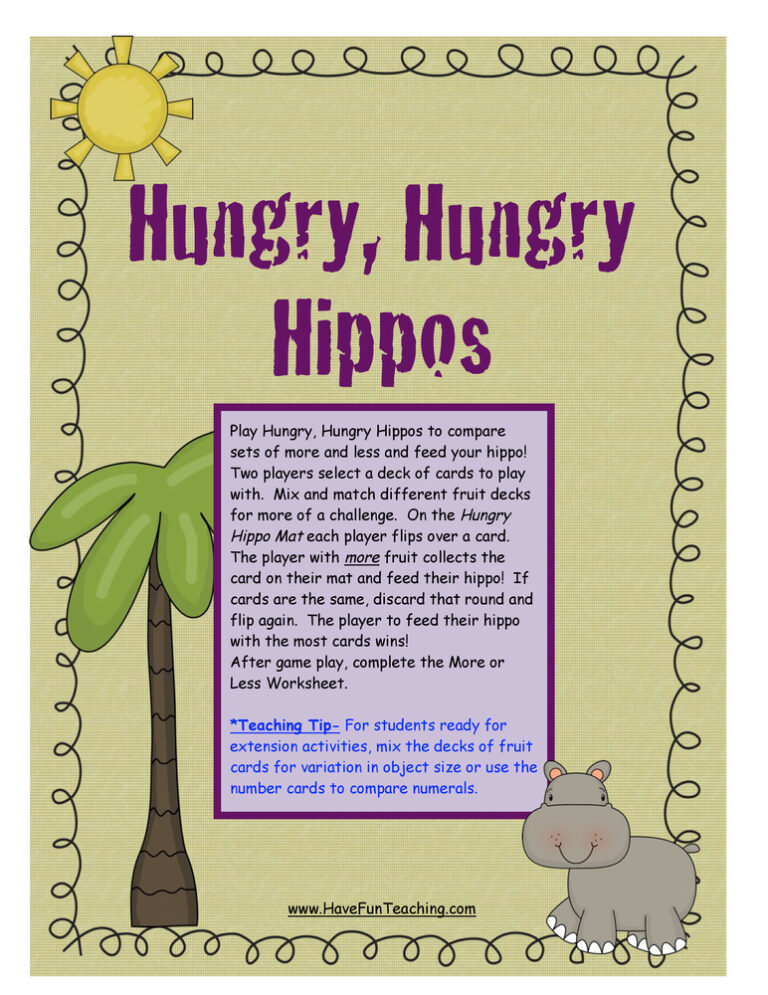
Using More Fewer Activity, studentscompare sets of more and less and feed your hippo to build their number sense skills.
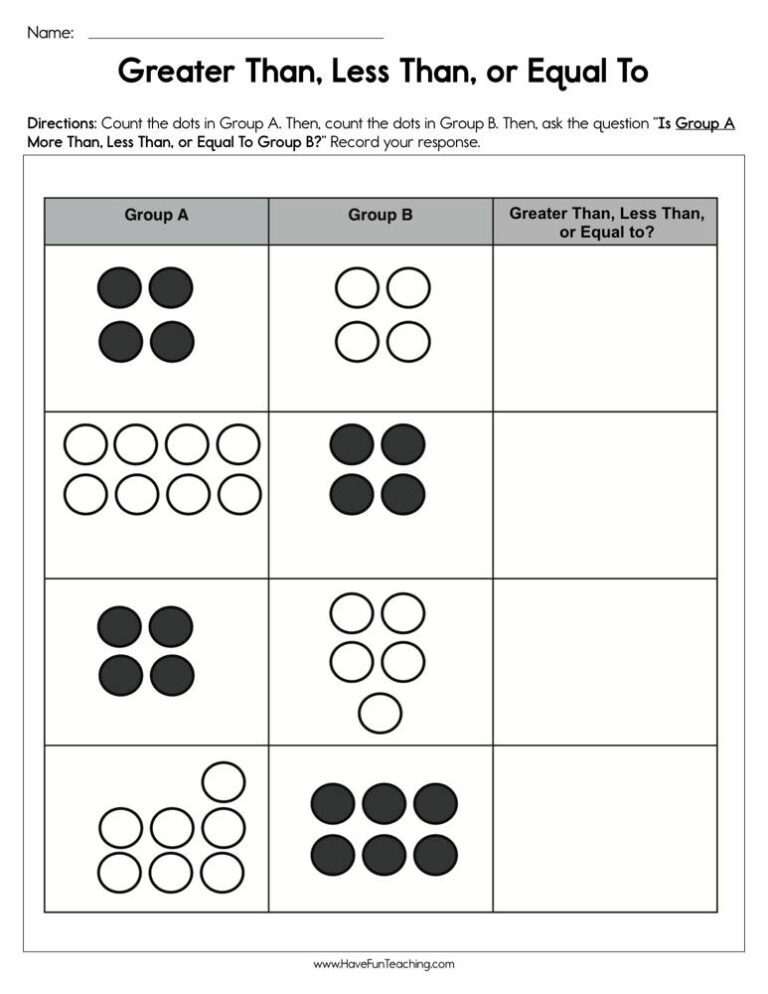
Using Greater Than, Less Than, or Equal To Worksheet, students compare the dots in each group to determine if they are greater than, less than, or equal to each other.
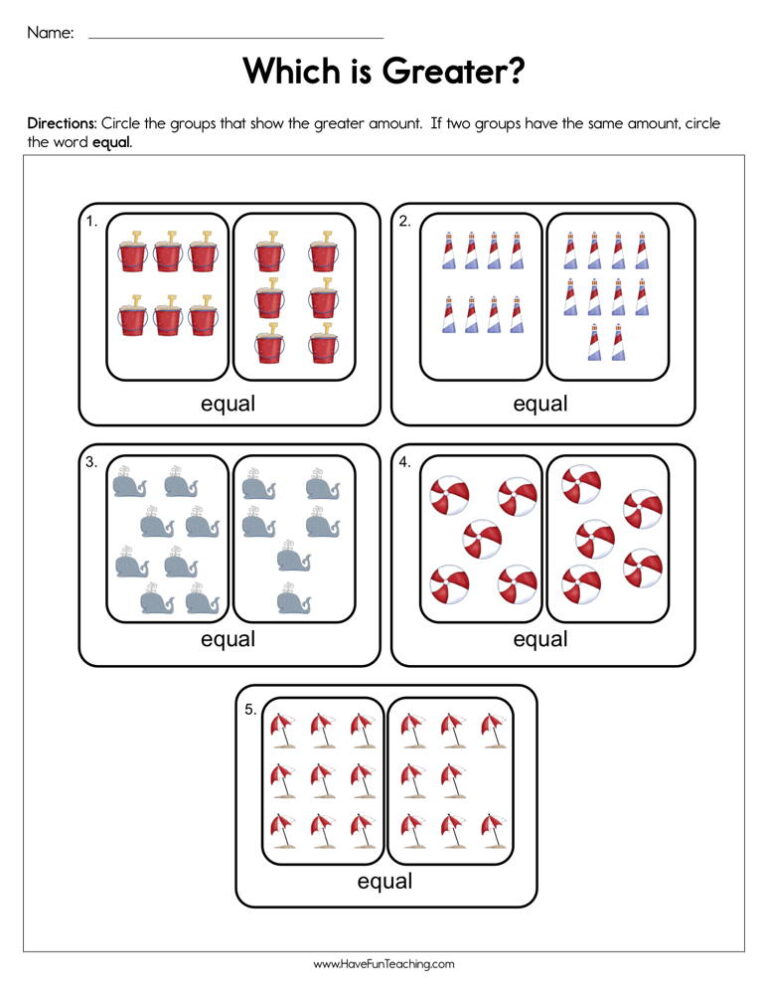
This which is greater worksheet has kindergarten students count two groups of beach objects and circle the group with more or circle equal. An answer key is included for quick, easy checking.

Using this Comparing and Ordering Numbers 1-10 Activity, students use the lion number cards to compare each number and sort them into the categories that they belong.
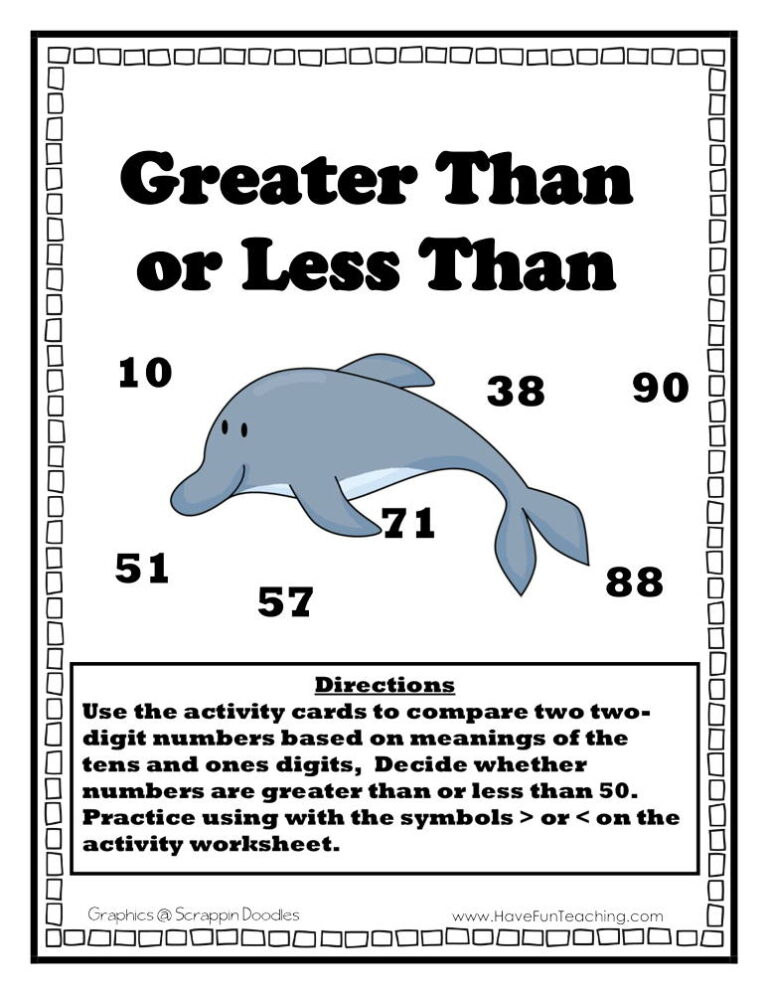
Using this Greater Than Less Than Dolphin Activity, students sort numbers into categories by deciding whether numbers are greater than or less than 50.
UsingK.CC.7 Kindergarten Common Core Lesson, students sort number cards into two categories in order to compare numbers.




Reviews
There are no reviews yet