
Skip to content
Start My 3 Free Days $0 today · cancel anytime

Kindergarten Inequalities Worksheets

10 kindergarten inequalities worksheets. Teacher favorites: Circling Groups with More Worksheet and Less and More Worksheet. How teachers use these

Kindergarten Inequalities Worksheets

10 kindergarten inequalities worksheets. Teacher favorites: Circling Groups with More Worksheet and Less and More Worksheet. How teachers use these

Worksheet
WorksheetKindergartenCircling Groups with More Worksheet

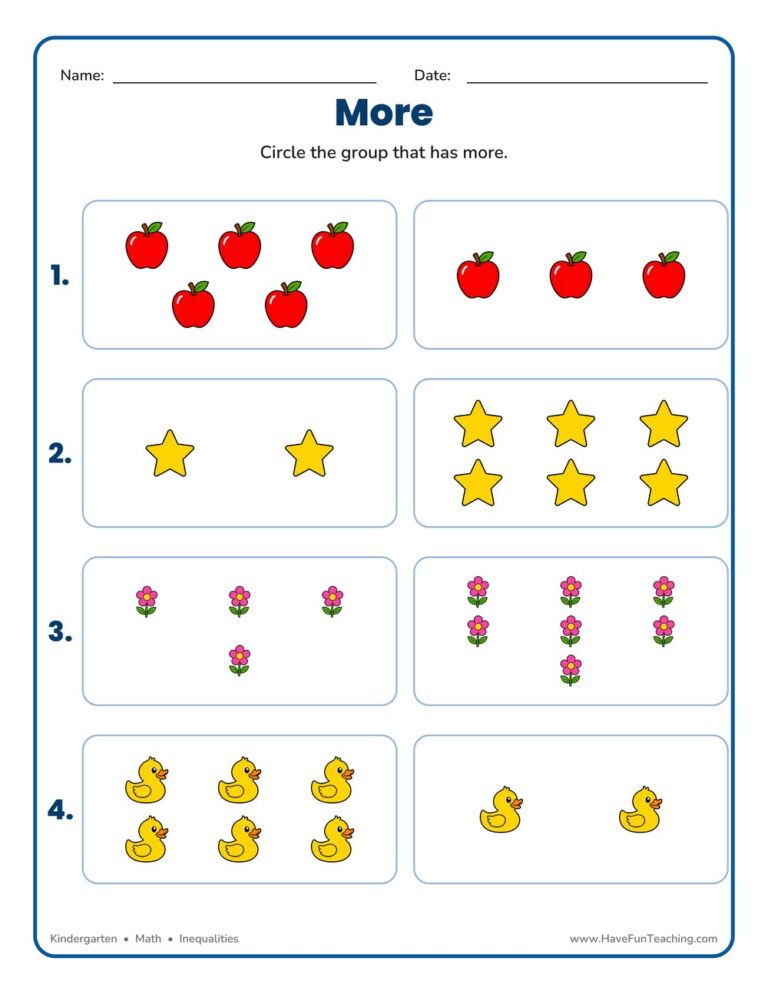
This Circling Groups with More Worksheet lets kindergarten students count two picture groups and circle the one with more. Includes an answer key — a fun, no-prep way to build early number sense.

Worksheet
WorksheetKindergartenLess and More Worksheet

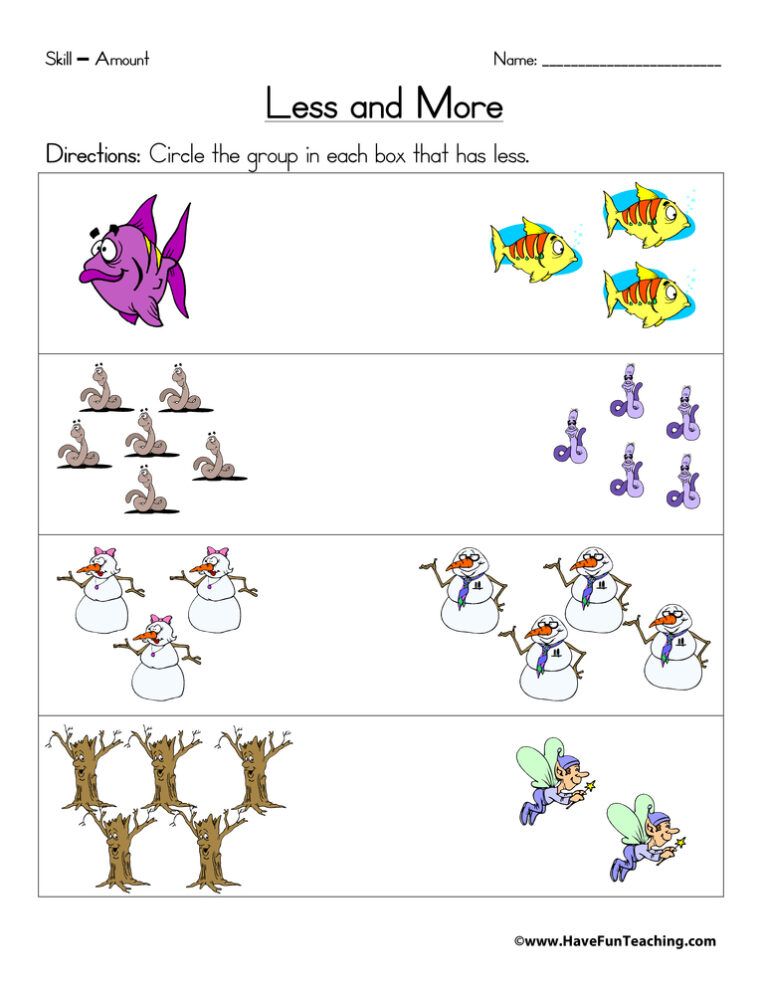
This Less and More Worksheet asks Kindergarten students to count two picture groups and circle the side with less, then the side with more, and it comes with an answer key.

Worksheet
WorksheetKindergartenCircling Groups with Fewer Worksheet

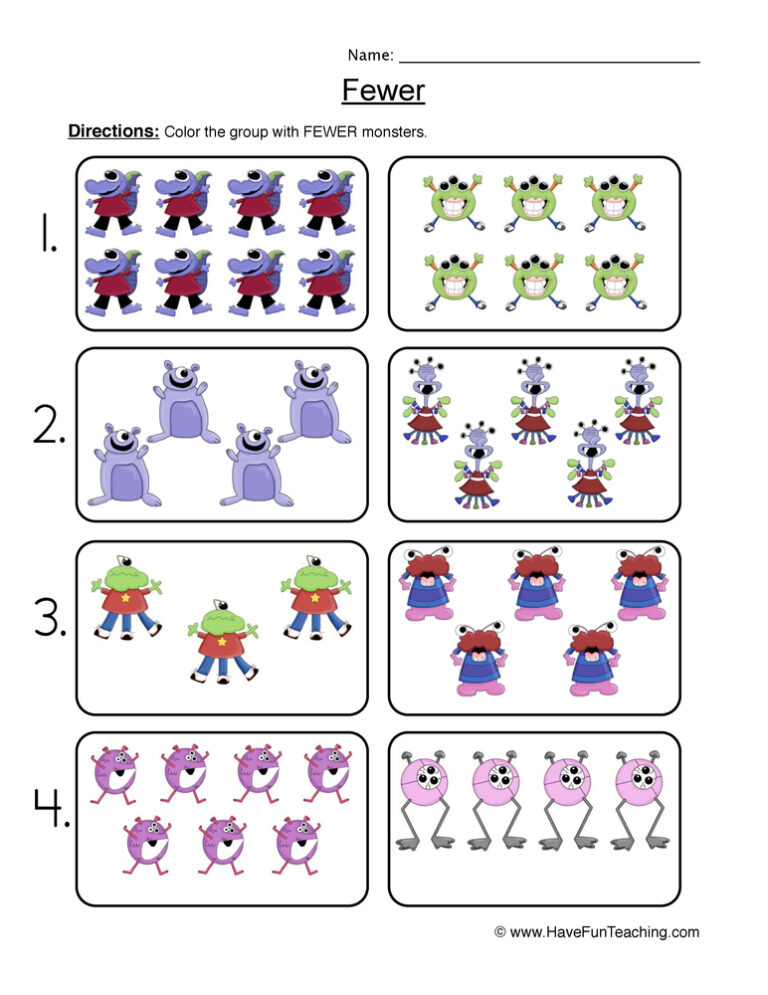
The Circling Groups with Fewer Worksheet gives Kindergarten students four picture pairs to count and compare. Children circle the group with fewer, building early number sense. Answer key included.

Worksheet
WorksheetKindergartenBigger Smaller and Same Numbers Worksheet

This Bigger Smaller and Same Numbers Worksheet gives Kindergarten students nine number pairs to compare, circling the bigger number, the smaller number, or both when they match. Answer key included, so checking work takes seconds.

Worksheet
WorksheetKindergartenGreater Than, Less Than, or Equal To Assessment Worksheet

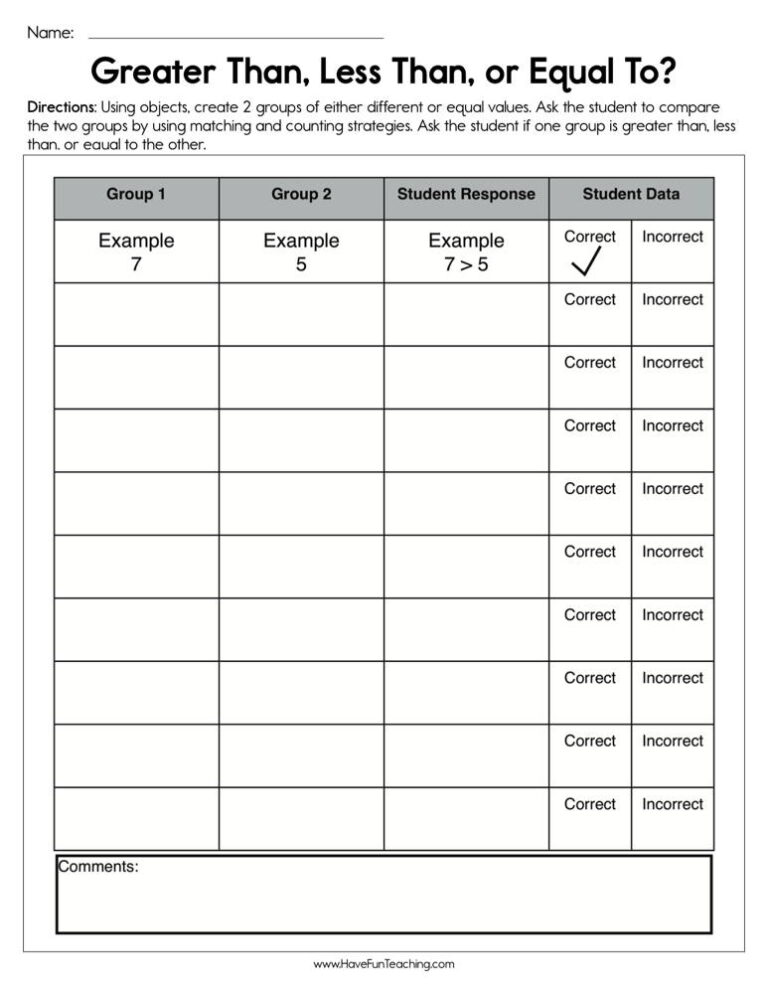
This greater than, less than, or equal to assessment worksheet helps kindergarten teachers record ten hands-on trials of comparing two groups of objects, plus the matching or counting strategy each child uses.

Worksheet
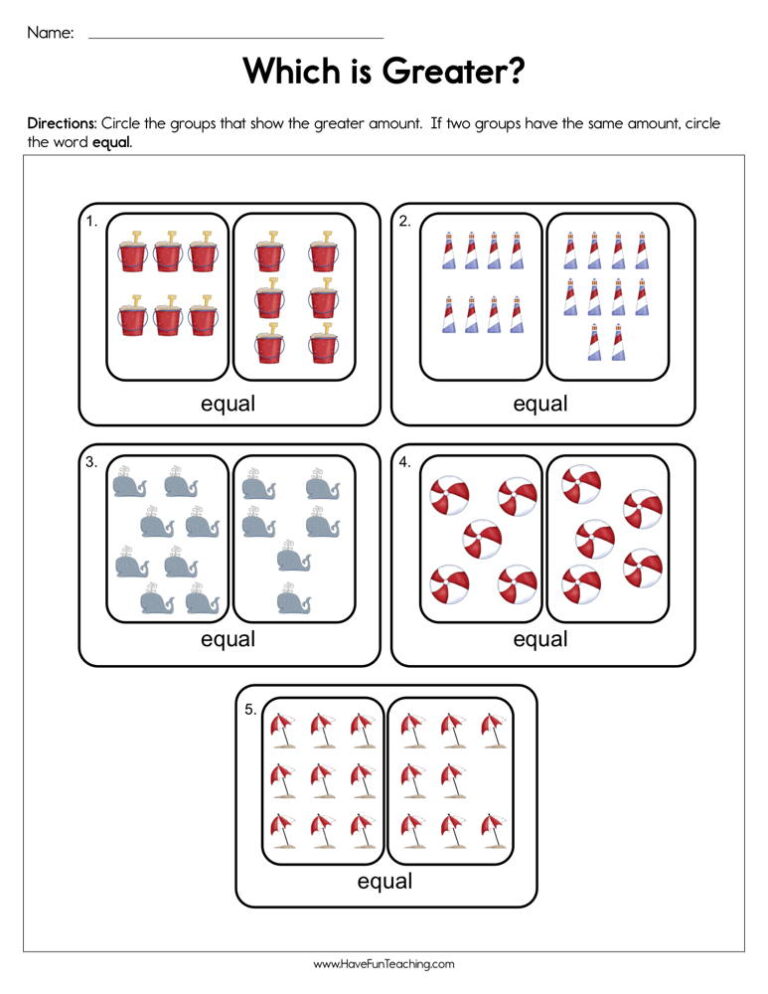
WorksheetKindergartenWhich is Greater Worksheet

This which is greater worksheet has kindergarten students count two groups of beach objects and circle the group with more or circle equal. An answer key is included for quick, easy checking.

Worksheet
WorksheetKindergartenGreater Less or Equal Worksheet

This greater less or equal worksheet helps kindergarten students compare numbers 1 to 10 and ten-frame dot groups by circling greater, less, or equal. An answer key is included for fast, easy checking.

Worksheet
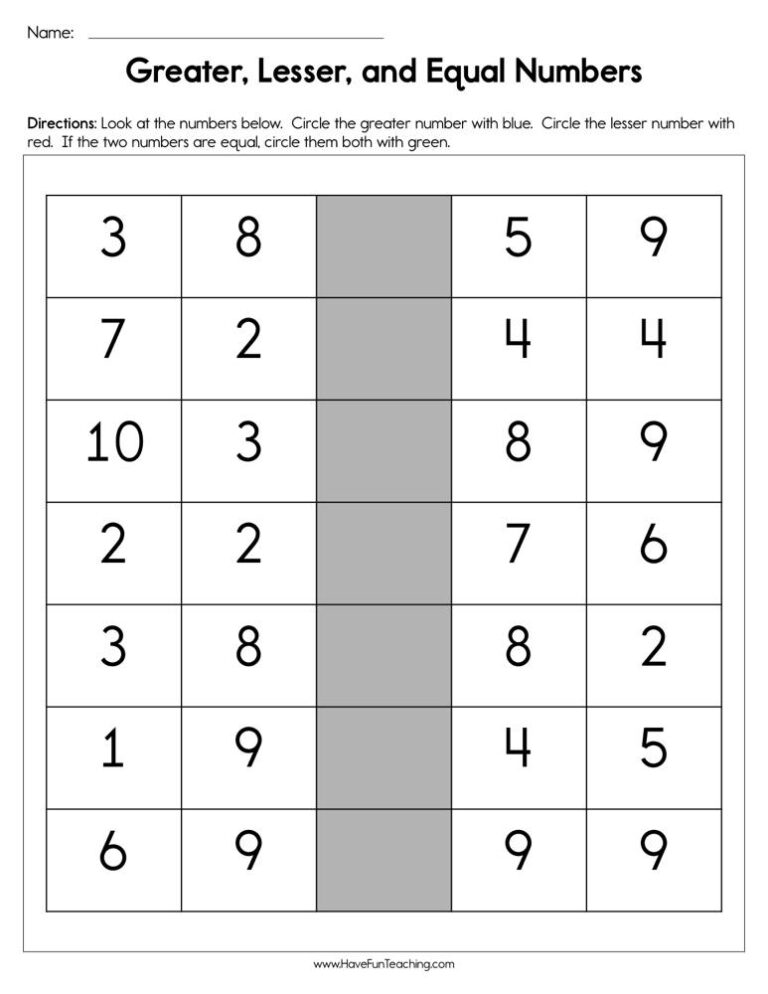
WorksheetKindergartenGreater Lesser and Equal Numbers Worksheet

Kindergarten students compare numbers 1 to 10 on this greater lesser and equal numbers worksheet, circling the greater, the lesser, or both when equal. An answer key is included for quick checking.

Worksheet
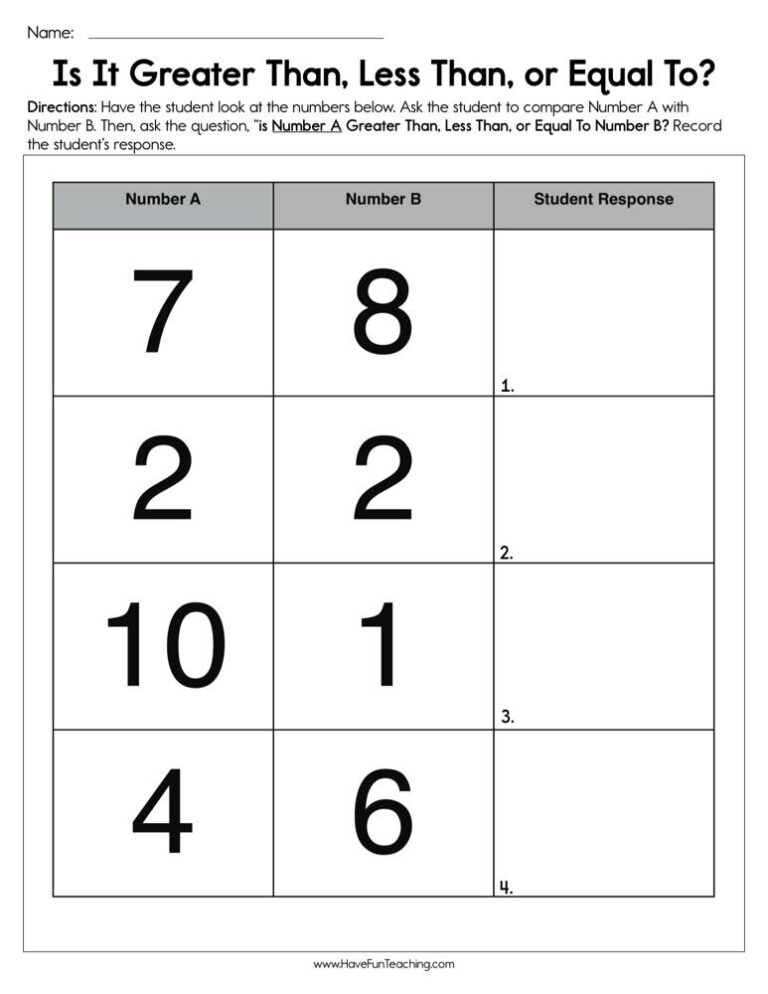
WorksheetKindergartenIs It Greater Than, Less Than, or Equal to Worksheet

This is it greater than, less than, or equal to worksheet has kindergarten students compare numbers 1 to 10 with and without a number line, with an answer key included.

Worksheet
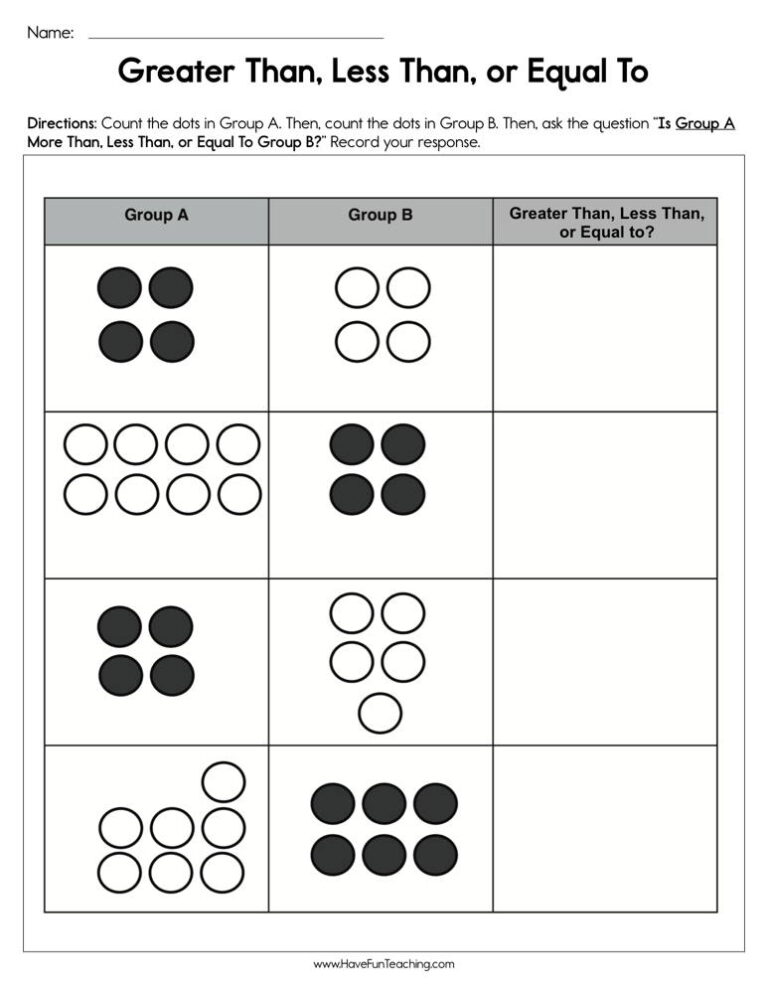
WorksheetKindergartenGreater Than, Less Than, or Equal To Worksheet

This greater than, less than, or equal to worksheet has kindergarten students count two dot groups and circle the word that compares them. An answer key is included for easy checking.

From our teachers' playbook

More, fewer or the same?

What do kindergarteners learn about comparing numbers?

Kindergarteners learn to compare groups and numbers. They look at two groups of objects and decide which has more, which has fewer or if they're the same, by lining them up to match or by counting. Then they compare written numbers from 1 to 10: 7 is more than 4. They use words first, and some classes also meet the greater than and less than symbols. The click moment is when a child lines up two rows of blocks and says, "This side has two extra, so it has more!"

Our favorite ways to teach more and fewer

Five-year-olds compare best with things they can touch and count. These moves keep it hands-on.

Line them up

Give kids two small piles of objects and have them line them up side by side, one under the other. The row that sticks out has more. Matching one-to-one is the first step before counting to compare.

Why it works: going from real objects to pictures to symbols is a core recommendation of the U.S. Department of Education's elementary math guide.
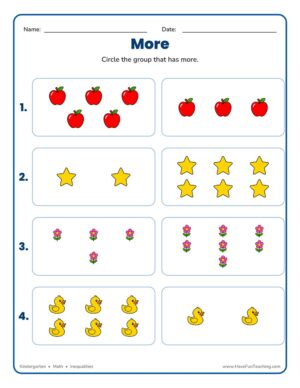
Circling Groups with More WorksheetTry it withCircling Groups with More WorksheetWorksheetsOpen it →

Circle the more

Show two pictures of groups, like 5 apples and 3 apples, and have kids circle the group with more. Then ask them to count to check. Pictures connect what they see to the numbers.

Why it works: pairing a picture with each word gives kids two ways to remember it, a well-tested principle of how people learn (Mayer, 2009).

Less and More WorksheetTry it withLess and More WorksheetWorksheetsOpen it →

Order the numbers

Give kids number cards 1 to 10 to put in order, then pull two and ask, "Which is more?" Seeing where numbers sit in the line helps kids compare without counting every time.

Why it works: playful practice with a clear goal keeps kids practicing longer, and simple learning games have been shown to build real skills (Ramani and Siegler, 2008).

Comparing and Ordering Numbers 1-10 ActivityTry it withComparing and Ordering Numbers 1-10 ActivityActivitiesOpen it →

Questions teachers and parents ask about kindergarten comparing numbers

What does comparing numbers mean in kindergarten?

Kids decide if one group has more, fewer or the same number of objects as another, and compare written numbers from 1 to 10.

How do I teach "more" and "fewer"?

Use real objects. Make two rows of snacks or toys, line them up and ask which row has more. Kids can see the extra items before they count.

Do kindergarteners learn greater than and less than symbols?

Mostly they use words like more, fewer and the same. Some classes introduce the symbols at the end of kindergarten, but they're a bigger focus in 1st grade.

How can I practice comparing at home?

At snack time, give two small piles of crackers and ask, "Which has more? How many more?" Comparing real things is the best practice.


