
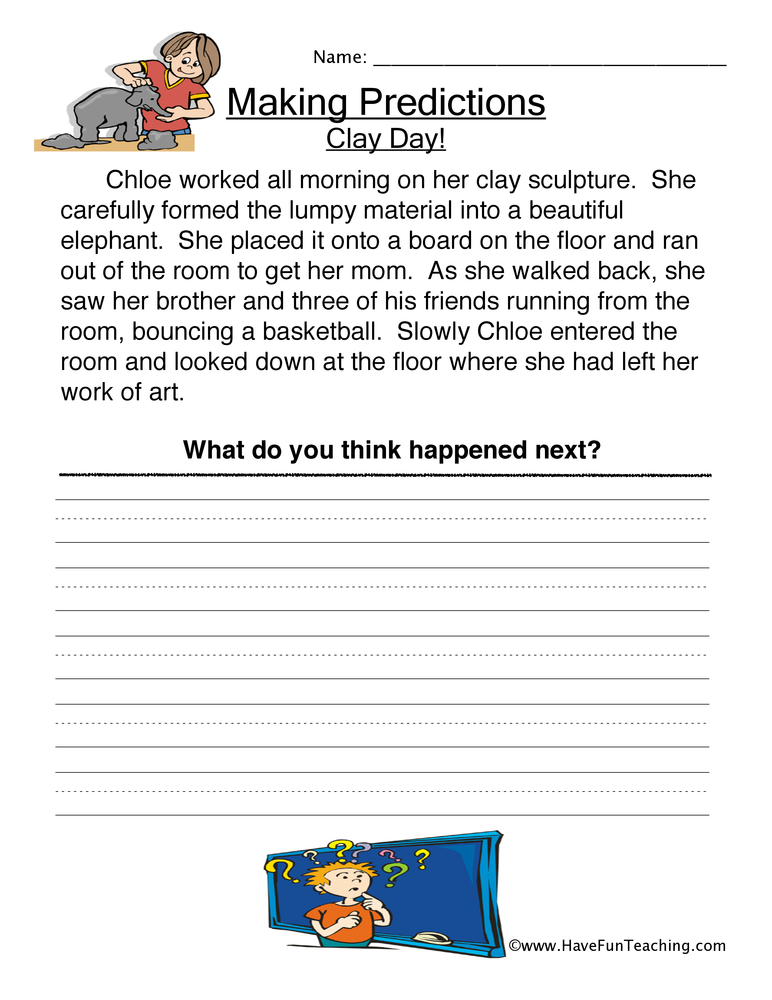
Clay Day Predictions Worksheet
This Clay Day Predictions Worksheet gives 2nd graders a short art-class story that stops before the ending, plus four questions and a written response on predicting from clues. Answer key included.
$6.97
Or free with a membership — members pay $3.33/mo for all 10,000+ resources. See plans
Want this one free?
Tell us where to send it and it’s yours — no card, no catch.
One free resource per teacher. We’ll also send free teaching ideas each week — unsubscribe anytime.
Teaching is easier with a membership
Unlimited printables, games & videos for PreK–6th — for your classroom or homeschool. Cancel anytime.
Start your 3-day free trial$0 today · cancel anytime · Instant access to 10,000+ resources
About this resource
Description
Predicting is a reading skill, not a guessing game. A strong prediction is built from clues the writer has already set down, and a reader has to be able to point at them. This Clay Day Predictions Worksheet hands second graders a short classroom story that stops one beat before the ending, then asks them what happens next and which words in the text told them so.
Joshua spends art class shaping a lump of gray clay into a sleeping cat. Clara, working across the table, explains the rule the whole story turns on: wet clay is soft and bends, dry clay turns hard and holds its shape, and the warm shelf by the window dries clay the fastest. Joshua leaves his cat on that sunny shelf and goes to lunch. The story ends as he reaches for it. Four multiple-choice questions follow, and each one has a single defensible answer: one asks what he built, one asks how Clara prepared her clay, one checks the stated rule about wet clay, and the last asks for the prediction itself. A written response closes this 2nd grade predictions worksheet, and a full answer key is included.
What’s Included
- 1 print-ready PDF worksheet
- Answer key
- An original 170-word story that stops before its ending, with an illustration
- 4 multiple-choice questions on detail, evidence and prediction
- 1 written response question with ruled writing lines
There are three reasons this resource helps children learn to predict. First, the story states its rule plainly and then puts that rule to work, so a student has to carry information forward across paragraphs instead of recalling a single line. Second, the questions in this Clay Day Predictions Worksheet ask for the clue as well as the outcome, which is the habit that separates a supported claim from a lucky guess. Third, the written response asks for two details, so children rehearse explaining their thinking the way a reading assessment will ask them to.
Teachers and parents can stretch the skill well past this page. Stop halfway through any read-aloud and ask what happens next, then ask what in the book made you think so. Write the class prediction on the board, keep reading, and go back at the end to see which clue held up. Cover the last panel of a comic strip and let children draw their own ending, then compare. Try it with a real science moment too, like clay or paint drying on a sunny windowsill, and let children watch their prediction come true.
Related Resources
What teachers say
Reviews
You must be logged in to post a review.

The Plant Predict and Infer Worksheet asks 2nd grade students to predict and infer how much each seed will grow from the water and sun it gets. An answer key is included, so checking work takes seconds.

This Wallet Wonder Predictions Worksheet gives 2nd graders a short story that stops before the ending, then four questions and a written response on predicting from clues. Answer key included.

This Uh Oh Eggs Predictions Worksheet asks 2nd graders to read a short grocery story, spot the clues, and predict what happens to the eggs. An answer key helps with fast, easy checking.

This Cookie Catastrophe Predictions Worksheet gives 2nd graders a short baking story that stops right before the ending, with four questions and a written response. An answer key is included, so checking clue-based thinking is quick.

Using RF.2.4 Second Grade Common Core Lesson, students read grade-level text with purpose and understanding.

The You Make The Call Inferences Worksheet has 2nd graders read short stories, spot the clues, and predict what happens next. An answer key is included, making prediction practice quick to check.
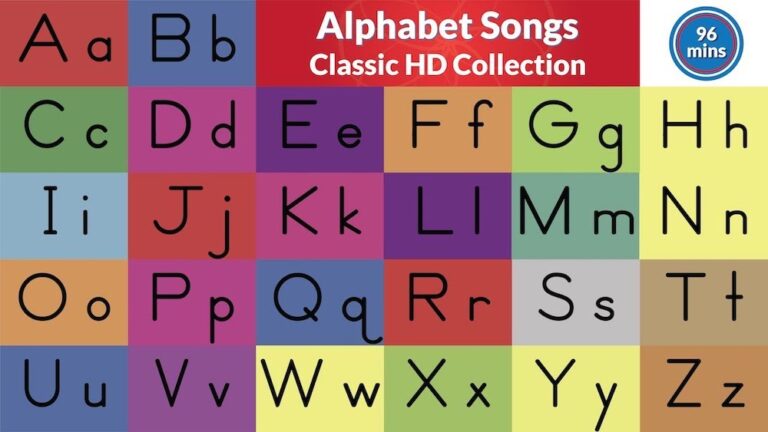
The Alphabet Songs Collection - Classic will help your kids gain a better understanding of letter names and sounds by listening to these ABC Songs.

The Alphabet Songs Pack - Animated will help support your visual learners gain a better understanding of letter names and sounds by listening to this song.
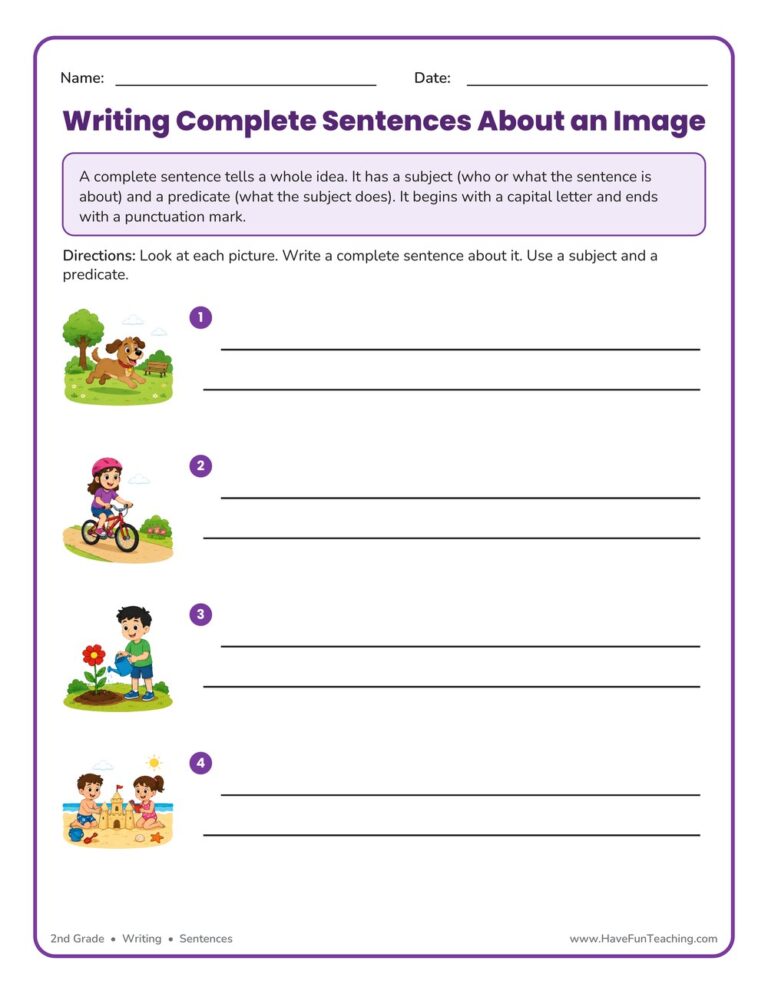
This Writing Complete Sentences About an Image Worksheet gives 2nd graders four picture prompts to practice building sentences with a subject and predicate. Includes sample answers — great for no-prep grammar and writing practice.
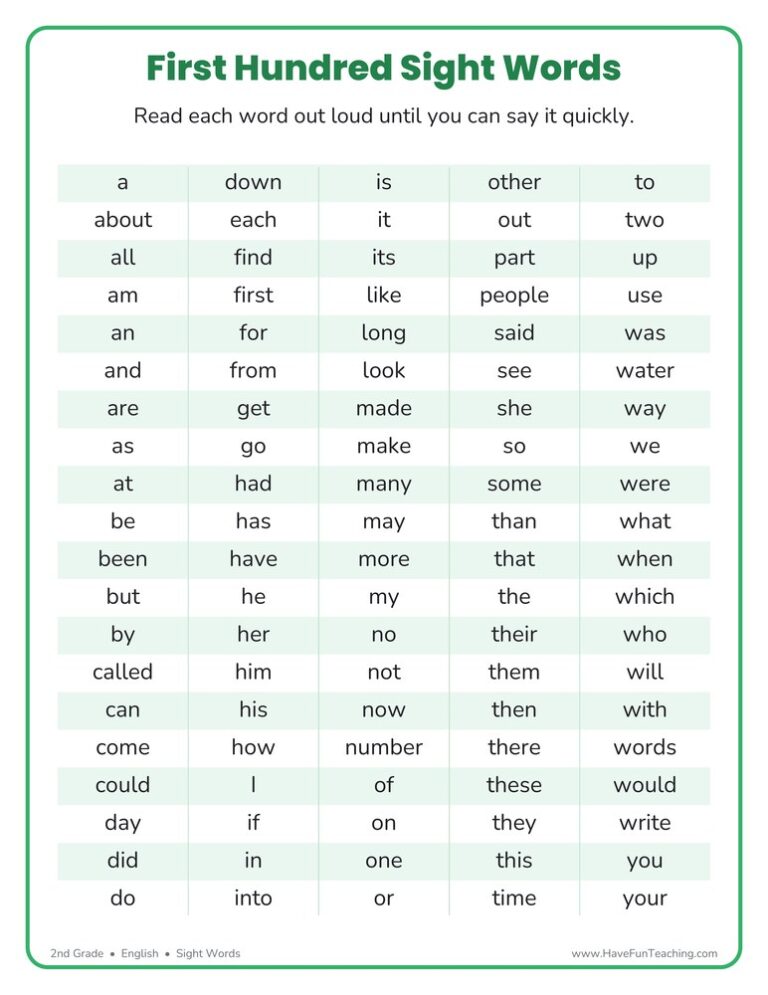
A three-page Fry's 300 Sight Words List reference chart for 2nd grade, sorted into the first, second, and third hundred words. Print it once and build fast, confident word recognition all year long.

This Writing Graphic Organizer Worksheet helps 2nd graders plan informative writing by choosing a topic, listing three facts, and adding a closing sentence. A simple, no-prep planning page for confident, organized young writers.

A word-box Identifying the Genre of a Story Worksheet where 2nd graders read six book clues and name each genre, from poems to non-fiction. Answer key included—great for quick, no-prep reading practice.
Reviews
There are no reviews yet