
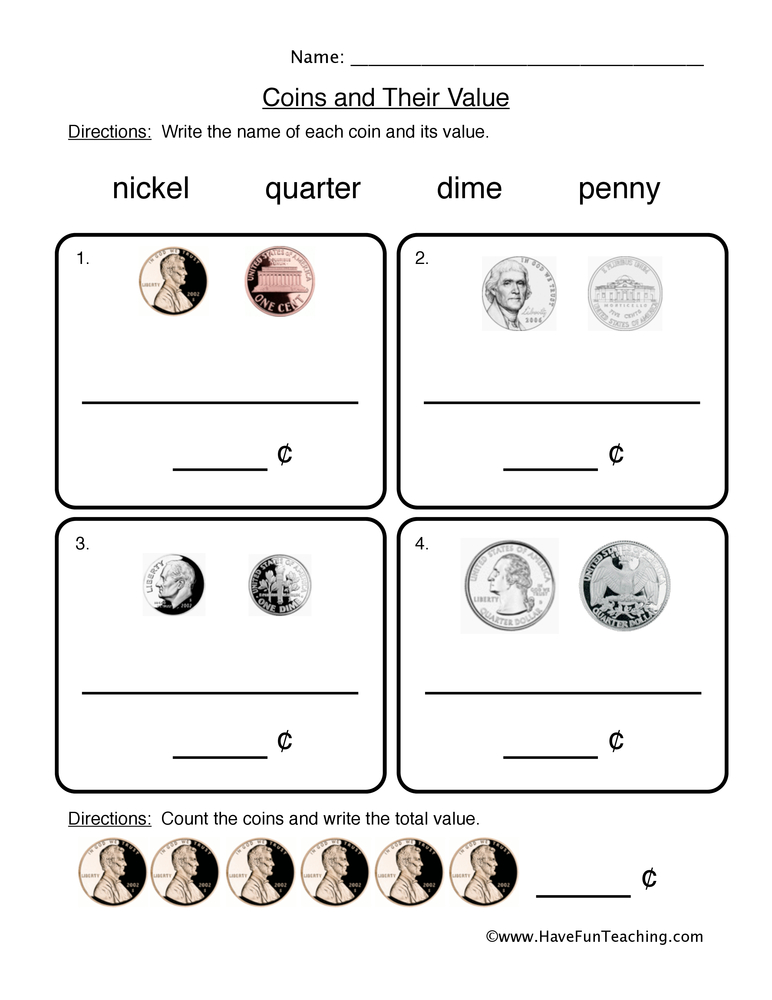
Coin Values Worksheet
A coin values worksheet that helps 2nd graders count mixed groups of pennies, nickels, dimes, and quarters, then solve two money word problems. Answer key included for fast, no-prep money practice.
$6.97
Or free with a membership — members pay $3.33/mo for all 10,000+ resources. See plans
Want this one free?
Tell us where to send it and it’s yours — no card, no catch.
One free resource per teacher. We’ll also send free teaching ideas each week — unsubscribe anytime.
Teaching is easier with a membership
Unlimited printables, games & videos for PreK–6th — for your classroom or homeschool. Cancel anytime.
Start your 3-day free trial$0 today · cancel anytime · Instant access to 10,000+ resources
About this resource
Description
Knowing what each coin is worth is one of the first real-world math skills a child ever uses, and this coin values worksheet gives second graders focused practice with the penny, nickel, dime, and quarter. Students look at a mixed group of coins, remember the value of each one, and add those values together to find a total in cents. That three-step move — recognize the coin, recall its value, combine the amounts — sits at the heart of second grade money work, and it is exactly what this coin values worksheet is built to strengthen.
This 2nd grade money worksheet opens with six groups of mixed coins drawn at their true relative sizes, so a dime really is smaller than a penny and a quarter really is the largest coin on the page. Children count each group and write the total value in cents on the line provided. Two money word problems follow, asking students to add the coins Zoey spends at the school store and the coins Jose saves in his bank. Use it as morning work, as a math center, as homework, or as a quick check before a unit test. A complete answer key is included on the final page.
What’s Included
- 1 print-ready PDF worksheet
- Answer key
- 6 mixed-coin counting problems
- 2 money word problems
There are three reasons this coin values worksheet helps children learn. First, the coins are drawn to their real mint proportions and metal colors, so students build the habit of telling coins apart by size and shine instead of guessing. Second, every group mixes denominations, which pushes children to skip count by tens and fives before adding the leftover pennies, rather than counting one coin at a time. Third, the two word problems carry the skill off the page and into a school store and a savings bank, the places where children actually handle money.
Teachers and parents can stretch this practice in simple ways. Set up a classroom store where small items are priced in cents and students pay with real or play coins. Hand a child a fistful of change and ask them to sort it, count it, and say the total out loud. Play a trading game where five pennies swap for a nickel and two nickels swap for a dime. Sing a counting-by-fives song while stacking nickels. Keep a coin jar at home and count it together at the end of every week, writing the new total on a chart.
Related Resources
What teachers say
Reviews
You must be logged in to post a review.

This addition and subtraction word problems worksheet gives 2nd graders four real-world number stories to solve within 100. It includes a complete answer key, making it perfect for no-prep math practice at home or in the classroom.
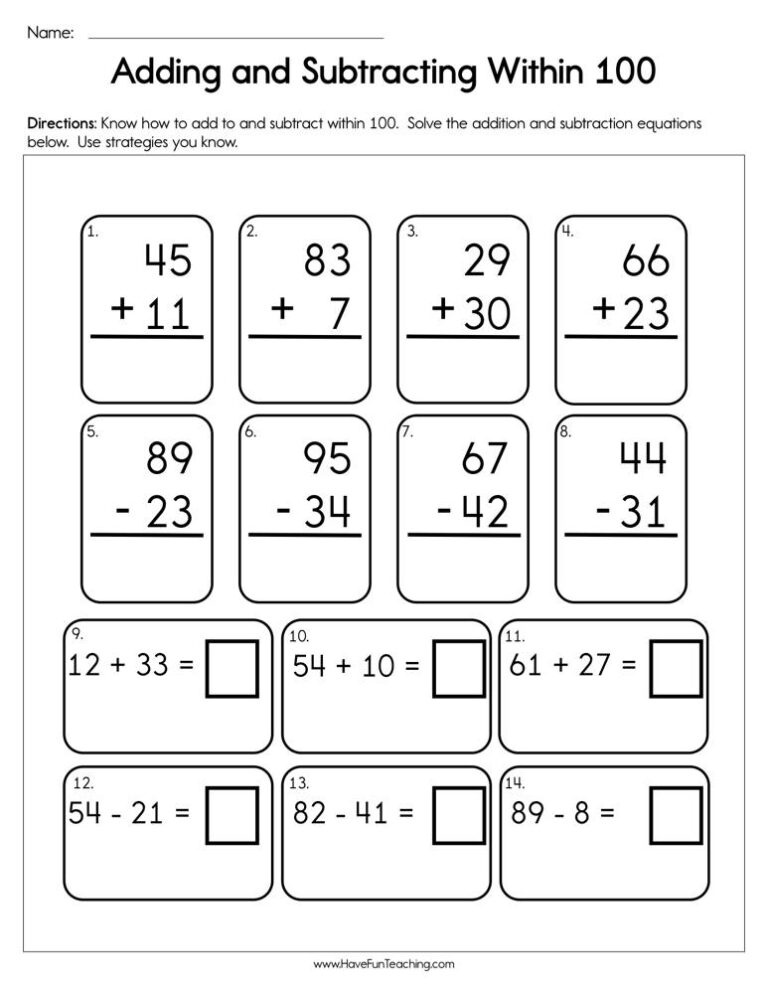
An adding and subtracting within 100 worksheet that helps 2nd graders solve two-digit problems in both stacked and horizontal form. Includes a complete answer key—great for quick, no-prep math practice at home or school.
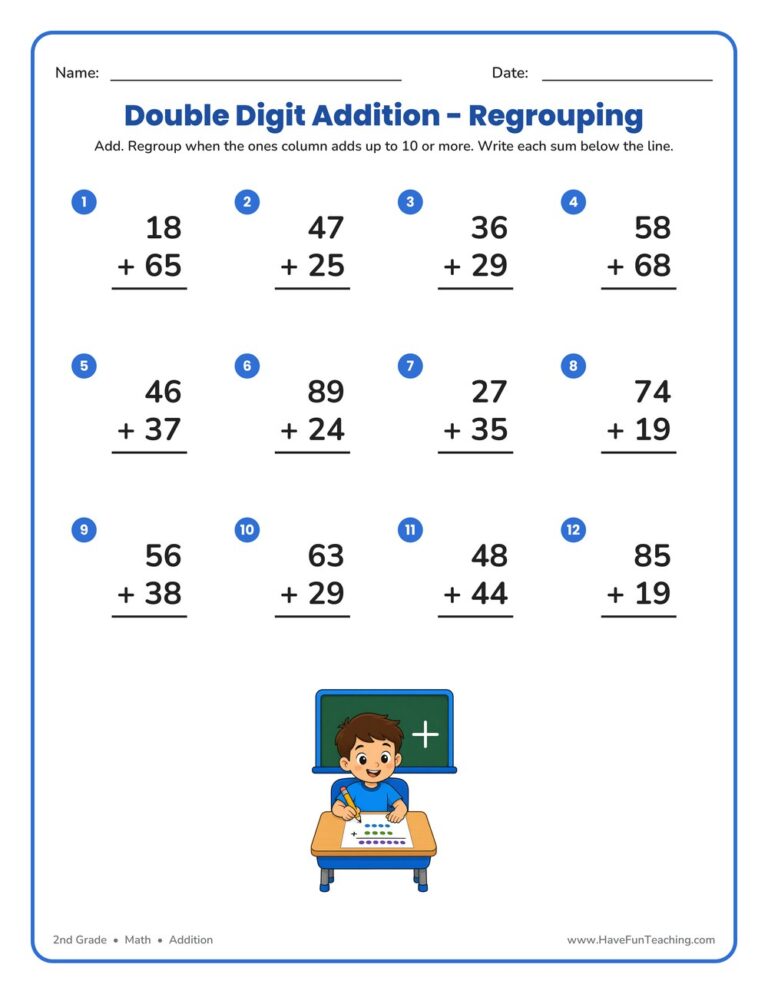
This double digit addition with regrouping worksheet gives 2nd graders twelve column-addition problems that practice carrying from the ones to the tens place. Includes a complete answer key—perfect for no-prep math practice at home or in class.

This Adding and Arrays Worksheet asks 2nd grade students to write a number sentence for six arrays and two story problems. An answer key is included, so practice with equal rows takes only minutes.

This Add and Subtract 10 and 100 Worksheet gives 2nd Grade students mental math practice with tens and hundreds, number patterns, and two word problems. An answer key is included, so checking work takes seconds.
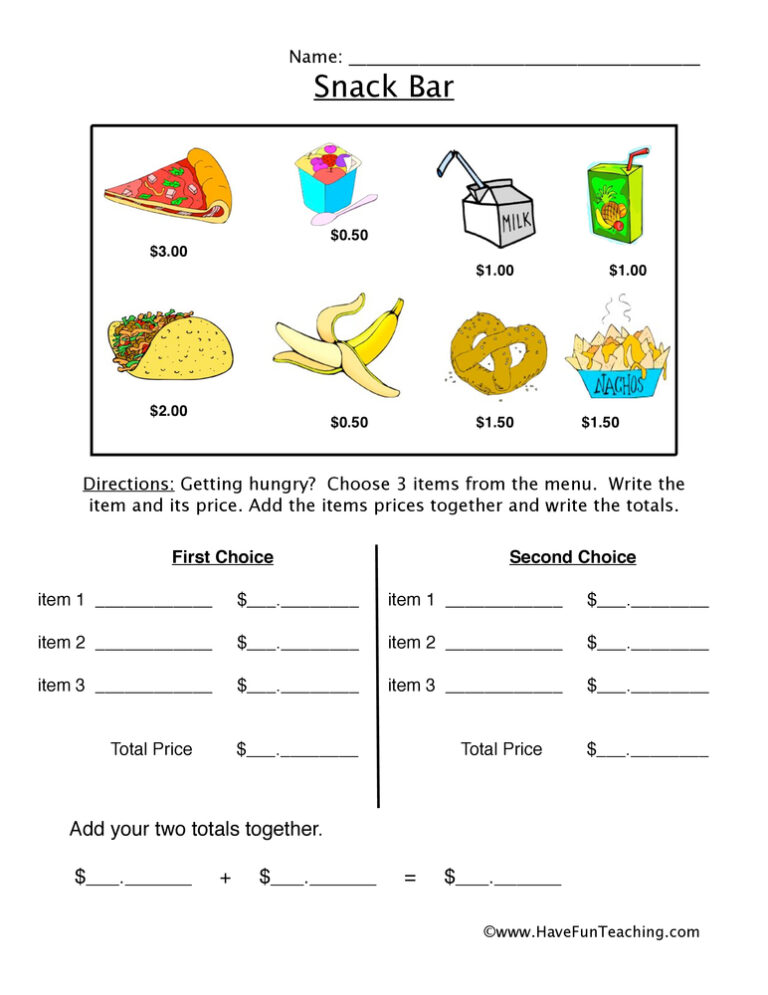
Students use the Ordering from a Snack Bar Worksheet to read a six-item menu, write two snack prices, and add them to find each total. Built for 2nd grade with an answer key included, it makes money practice feel like lunchtime.

This Word Problems With 3 Numbers Worksheet asks 2nd graders to draw a picture and then add three addends inside real stories. An answer key is included, so checking work takes only seconds.

Practice this add and subtract 10 and 100 word problems worksheet with three number stories and a 10 more, 10 less, 100 more, 100 less chart. Built for 2nd Grade with an answer key included, so mental math clicks fast.
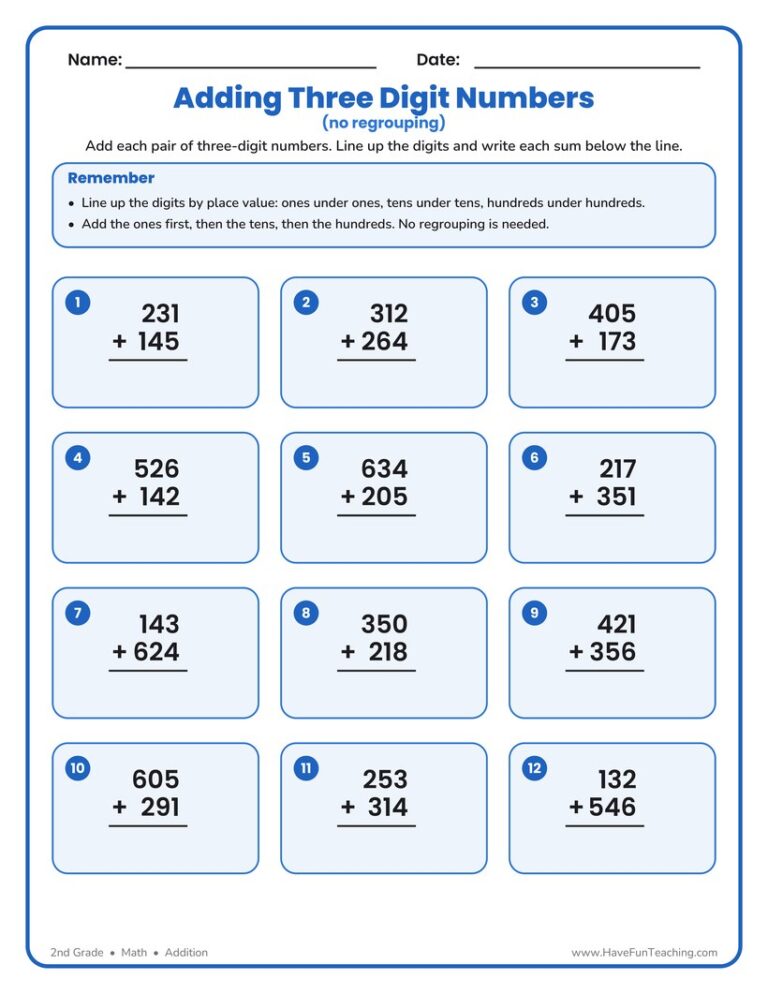
Practice adding three-digit numbers with this triple digit addition no regrouping worksheet for 2nd grade. Twelve column-addition problems with an answer key included — perfect for building place-value fluency with no-prep math practice.

This double digit addition with regrouping worksheet gives 2nd graders eight column-form problems that all trade ten ones for a new ten, plus a word problem. Answer key included for fast, no-prep practice.
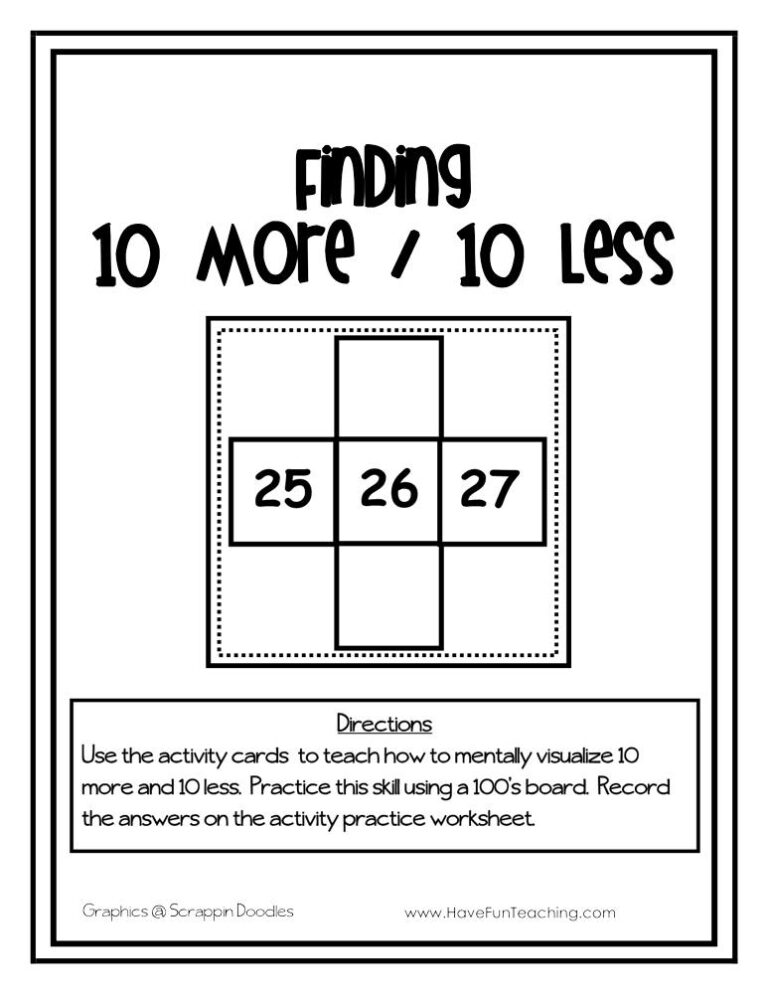
In this Finding 10 More 10 Less Activity, students practice finding 10 more and less than a given number to build skip counting and base ten skills.
Using the Adding 8 Song (Lyric Mjusic Video), students sing and practice adding 8 with all addition facts 1-15. Your kids will learn how to add 8.




Reviews
There are no reviews yet