

Quotation Mark Practice Worksheet
This quotation mark practice worksheet asks third grade students to rewrite six sentences with the quotation marks put in correctly, then write one of their own. An answer key is included.
$6.97
Or free with a membership — members pay $3.33/mo for all 10,000+ resources. See plans
Want this one free?
Tell us where to send it and it’s yours — no card, no catch.
One free resource per teacher. We’ll also send free teaching ideas each week — unsubscribe anytime.
Teaching is easier with a membership
Unlimited printables, games & videos for PreK–6th — for your classroom or homeschool. Cancel anytime.
Start your 3-day free trial$0 today · cancel anytime · Instant access to 10,000+ resources
About this resource
Description
This quotation mark practice worksheet gives third grade students six sentences of real dialogue to punctuate, one at a time. Quotation marks are the punctuation students meet first in the books they love and get wrong first in the stories they write. The marks are easy to draw and hard to place, because the rule is not “put them around the talking” but “put them around the exact words a person says, and keep the comma or the end mark inside.” This quotation mark practice worksheet asks for that placement six times, in both sentence patterns, so the habit sticks.
Each item prints a sentence with the punctuation missing and a full writing line underneath. Students copy the sentence and add the marks themselves, which is what makes this a writing task rather than a circling task. Three sentences put the speaker tag first and three put it last, so students have to decide where the comma or question mark belongs each time instead of repeating one pattern. A final section asks them to write a sentence of their own with talking in it. This 2nd grade punctuation worksheet also works as review for fourth and fifth graders who are drafting dialogue in their own stories.
What’s Included
- One printable worksheet page with six sentences to rewrite
- A full writing line under every sentence, sized for third grade handwriting
- Both dialogue patterns: speaker tag first and speaker tag last
- A write-your-own section at the bottom of the page
- A complete answer key on the last page
Three Reasons This Helps Kids
- Copying the whole sentence forces students to decide where every mark goes, which circling an answer never does.
- Mixing the tag position stops students from memorizing one shape and teaches them to read the sentence first.
- The sentences are short and familiar, so attention goes to the punctuation instead of to decoding.
Teacher and Parent Ideas
Read each sentence aloud twice, once as the narrator and once in the speaker’s voice, and ask students where the speaking starts and stops before they write anything. Have partners trade papers and check only the commas and end marks inside the quotes, which is where most errors live. Pull a page of dialogue from the class read-aloud and have students point out the same pattern in a published book. For an extension, ask students to turn the write-your-own sentence into a short three-line conversation.
Related Resources
What teachers say
Reviews
You must be logged in to post a review.
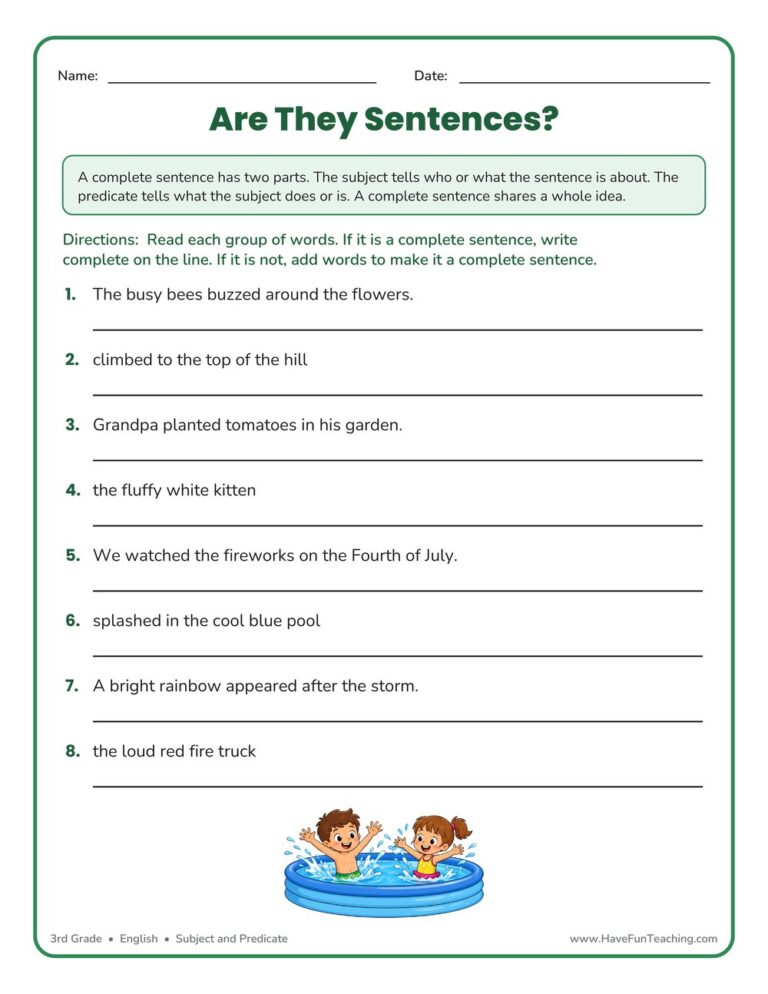
This Creating Complete Sentences Worksheet asks 3rd graders to spot complete sentences and fix fragments by adding a missing subject or predicate. Answer key included — perfect for quick, no-prep grammar practice at home or school.
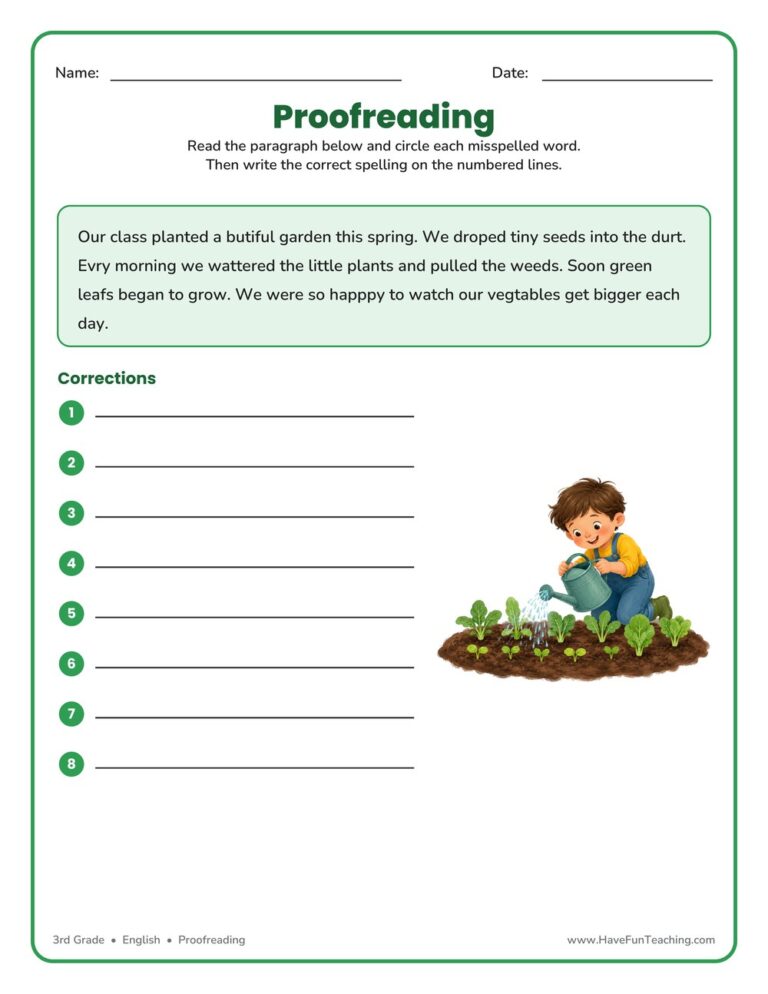
This 3rd grade proofreading worksheet has students hunt for and fix eight misspelled words in a fun garden paragraph. Answer key included — perfect for quick, no-prep spelling and editing practice at home or school.
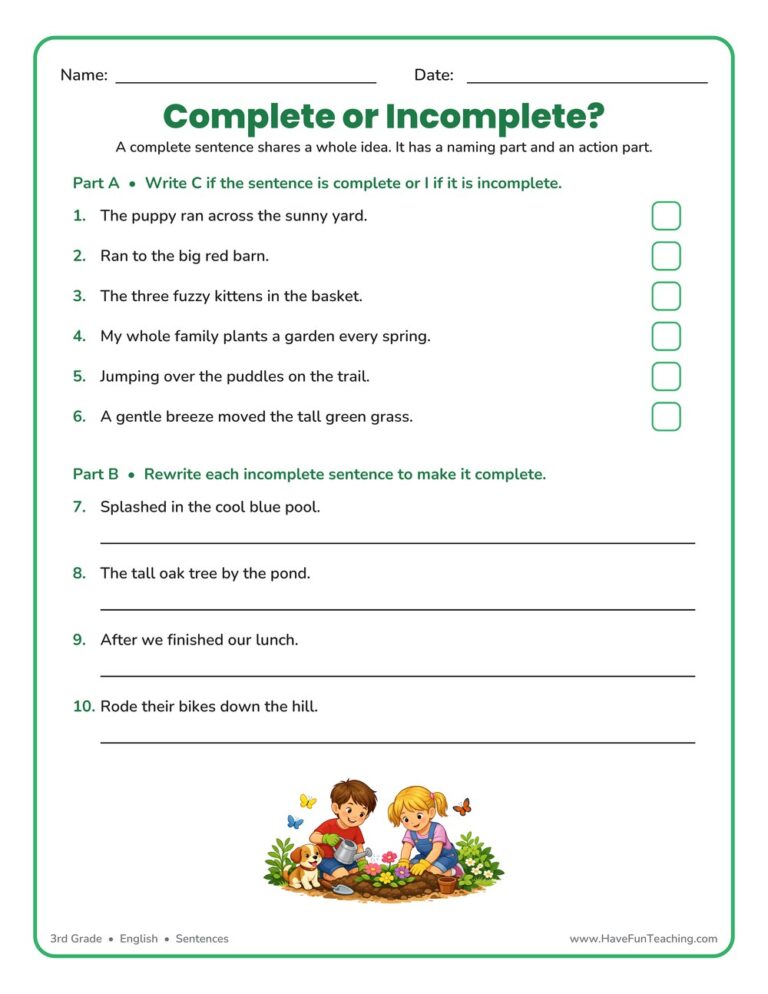
This rewriting incomplete sentences worksheet helps 3rd graders sort complete and incomplete sentences, then rewrite the fragments into full thoughts. Includes an answer key for fast, no-prep grammar practice at home or school.

This compound predicates sentences worksheet gives 3rd grade students three levels of practice: underline, combine, and write their own. An answer key is included, so it works for quick grammar review at school or at home.
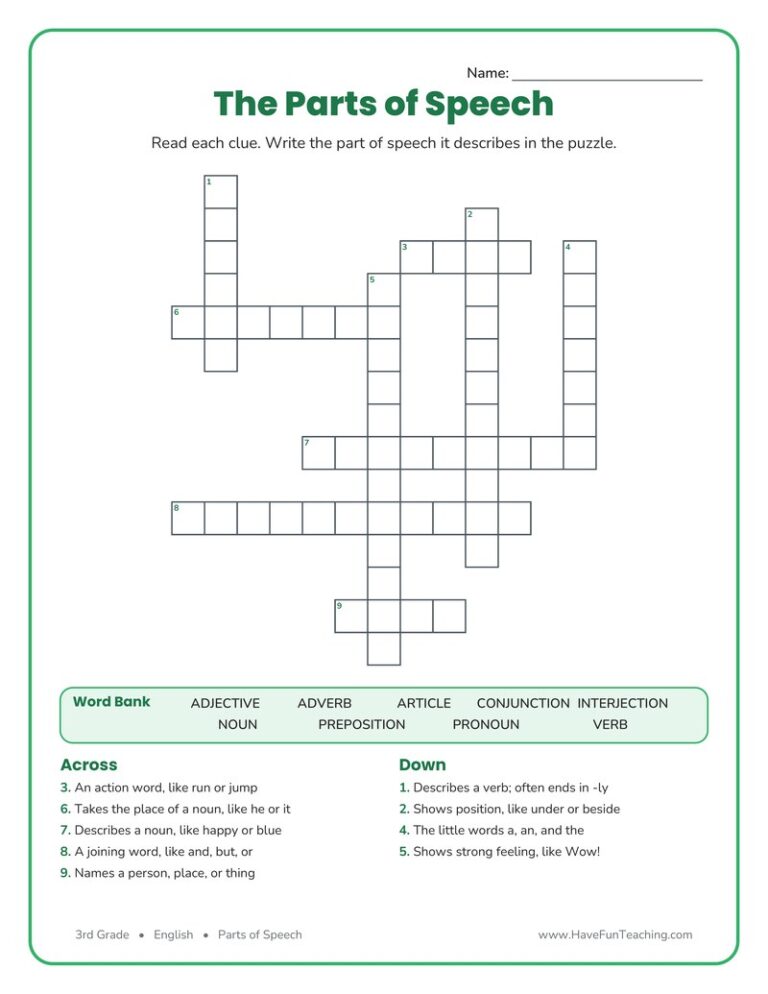
This Parts of Speech Crossword Puzzle has 3rd grade students match grammar clues to nouns, verbs, adjectives, and more, then fill in the grid. Includes an answer key and a helpful word bank for no-prep practice.
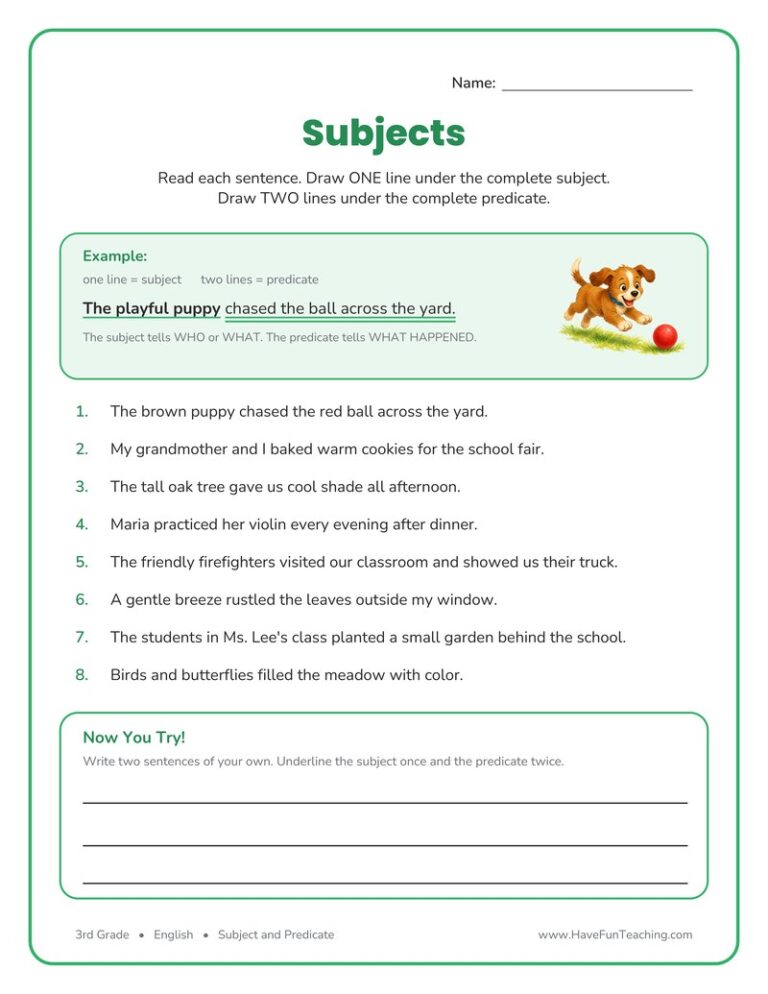
A 3rd grade subject predicate worksheet where kids underline the subject and predicate in eight sentences, then write their own. Includes a full answer key for quick, confident grammar practice.

This Adding Commas in a Series Worksheet gives 3rd graders practice separating list items with commas, spotting misplaced commas, and writing their own list sentence. Answer key included for quick, no-prep grammar practice.
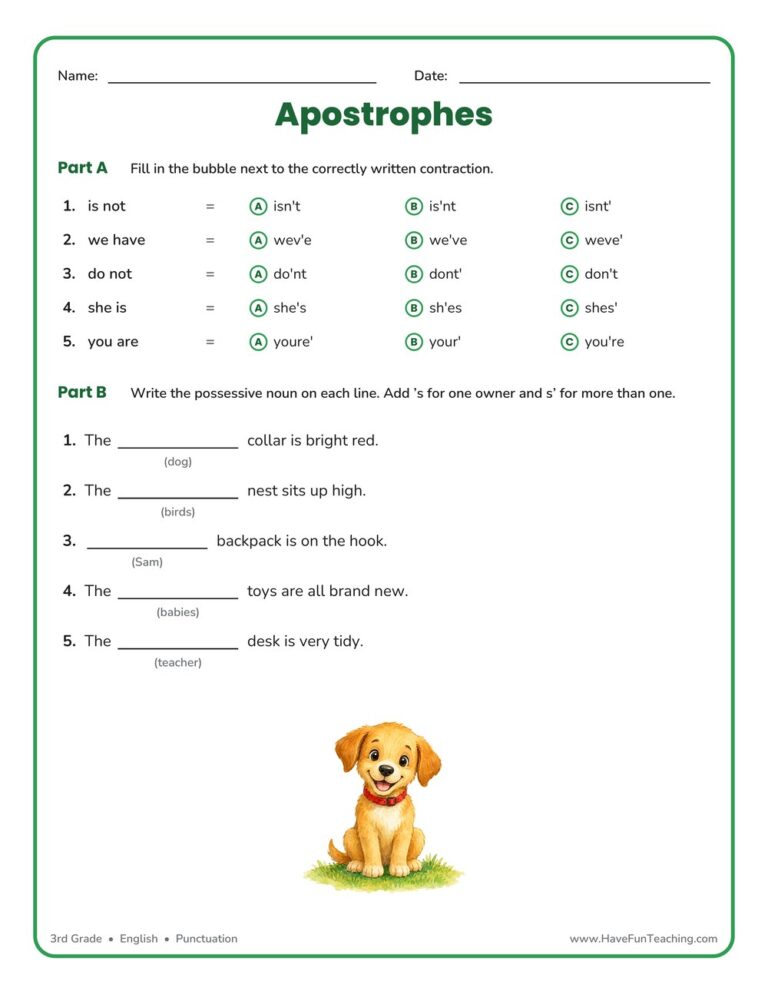
The Possession & Contraction Apostrophe Worksheet gives 3rd graders focused practice using apostrophes for contractions and possessive nouns. Includes a complete answer key — perfect for quick, no-prep punctuation practice.
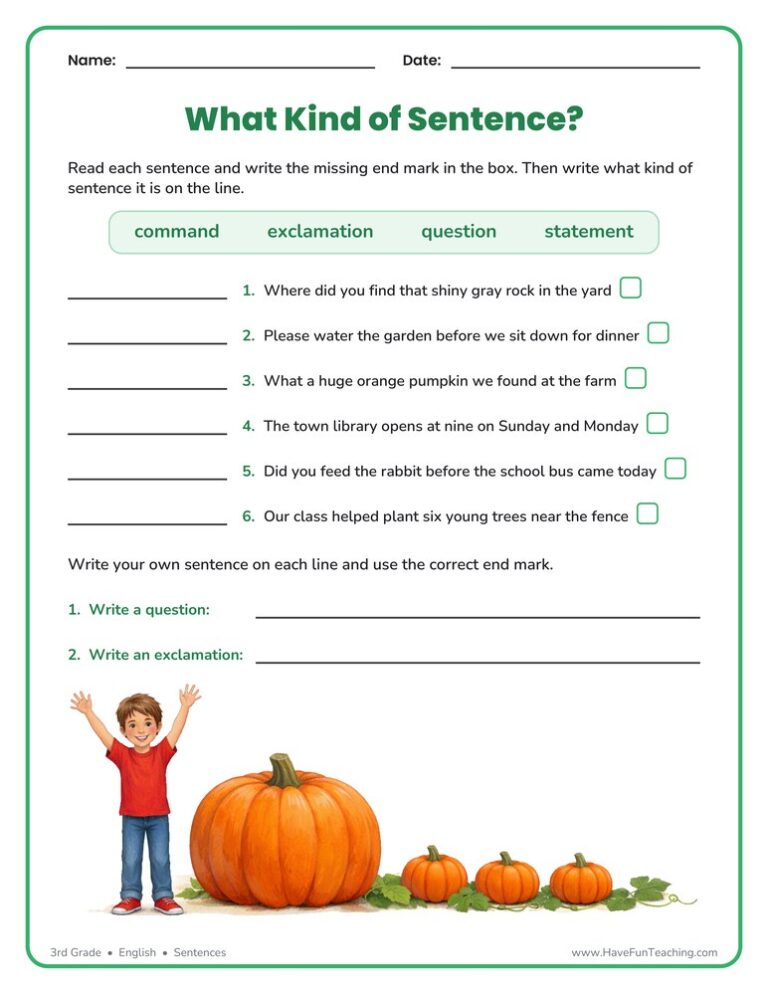
With this What Kind of Sentence? Worksheet, 3rd Grade students add the missing end mark and label each sentence as a statement, question, command, or exclamation. An answer key is included, so practice is quick to check.

Using the Science Songs (MP3 Album), students learn about different science concepts while listening to these upbeat and catchy songs.

The Rewriting Compound Subjects Worksheet has 3rd grade students combine four sentence pairs into one sentence with a compound subject, then split two more apart. An answer key is included, so checking is quick.
Using the Noun Song (Lyric Music Video), students will be able to define, give examples and use adjectives in their own writing using the catchy and memorable lyrics.

Reviews
There are no reviews yet