

Punctuation Review Worksheet
This punctuation review worksheet gives 3rd graders six sentences to mark and three to rewrite with commas, quotation marks, and end marks. An answer key is included, so students can check their own editing right away.
$6.97
Or free with a membership — members pay $3.33/mo for all 10,000+ resources. See plans
Want this one free?
Tell us where to send it and it’s yours — no card, no catch.
One free resource per teacher. We’ll also send free teaching ideas each week — unsubscribe anytime.
Teaching is easier with a membership
Unlimited printables, games & videos for PreK–6th — for your classroom or homeschool. Cancel anytime.
Start your 3-day free trial$0 today · cancel anytime · Instant access to 10,000+ resources
About this resource
Description
Punctuation is what tells a reader when to pause, when to stop, and when someone is speaking out loud. By third grade, students are expected to end every sentence with the right mark, separate items in a series with commas, and wrap a speaker’s exact words in quotation marks. This punctuation review worksheet gathers all three of those skills onto one page so students practice them together instead of one at a time. Reviewing them side by side is what helps children hear the difference between a statement, a question, and an excited exclamation.
This 3rd grade punctuation worksheet is a two-page printable with a full answer key. In Part A, students read six sentences and write the missing mark on each short line: commas in a series, periods, question marks, and exclamation points. In Part B, they rewrite three sentences from scratch, adding the comma, the pair of quotation marks, and the end mark that each one needs. Use it as morning work, as a quick review before a grammar test, as homework, or as a small-group editing lesson.
What’s Included
- 1 print-ready PDF worksheet
- Answer key
- 6 fill-in-the-mark sentences and 3 sentence-rewriting items
There are three reasons this punctuation review worksheet helps students learn. First, it separates noticing from producing: Part A asks only for the missing mark, while Part B asks students to rewrite the whole sentence, which is the harder skill that assessments actually measure. Second, every item has one correct answer, so children get honest feedback from the answer key instead of guessing. Third, the sentences describe real situations, like a packed picnic basket, a class project, and a parade starting, so punctuation feels like a tool for saying something clearly rather than a rule to memorize.
Teachers and parents can stretch this practice in a few easy ways. Read a sentence aloud twice, once as a question and once as an exclamation, and ask your child which mark belongs at the end. Hunt for quotation marks in a favorite chapter book and copy one line of dialogue exactly as the author punctuated it. Write a shopping list on the board and have students turn it into one sentence with commas. Finish by letting children write their own dialogue between two characters and read it aloud with plenty of expression.
Related Resources
What teachers say
Reviews
You must be logged in to post a review.
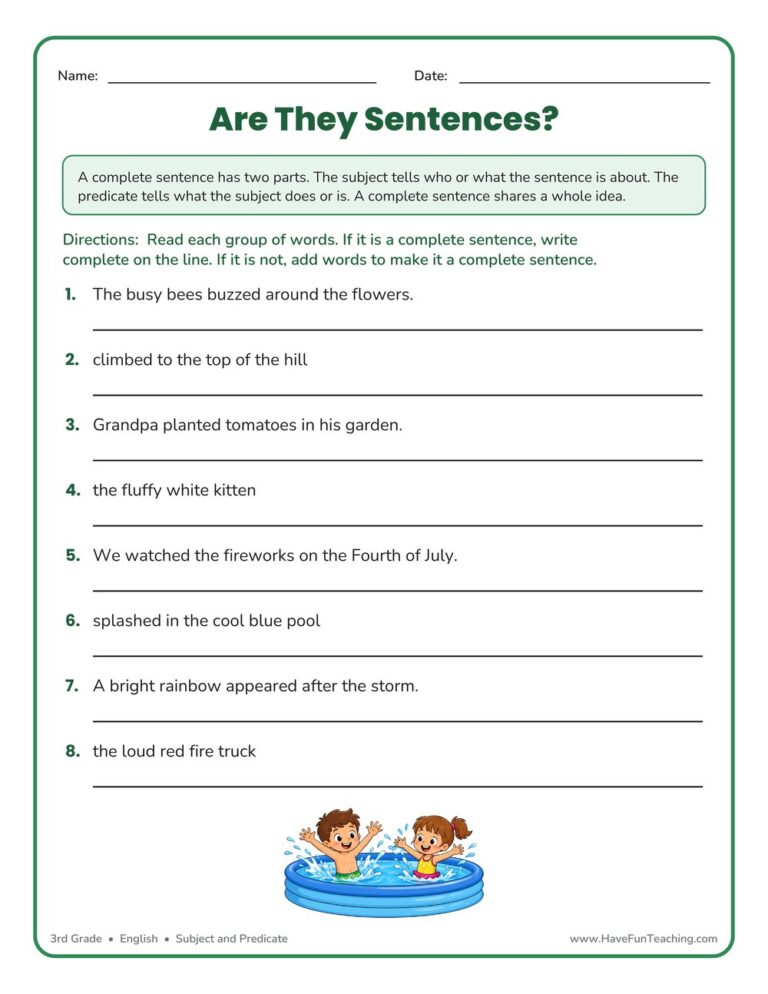
This Creating Complete Sentences Worksheet asks 3rd graders to spot complete sentences and fix fragments by adding a missing subject or predicate. Answer key included — perfect for quick, no-prep grammar practice at home or school.
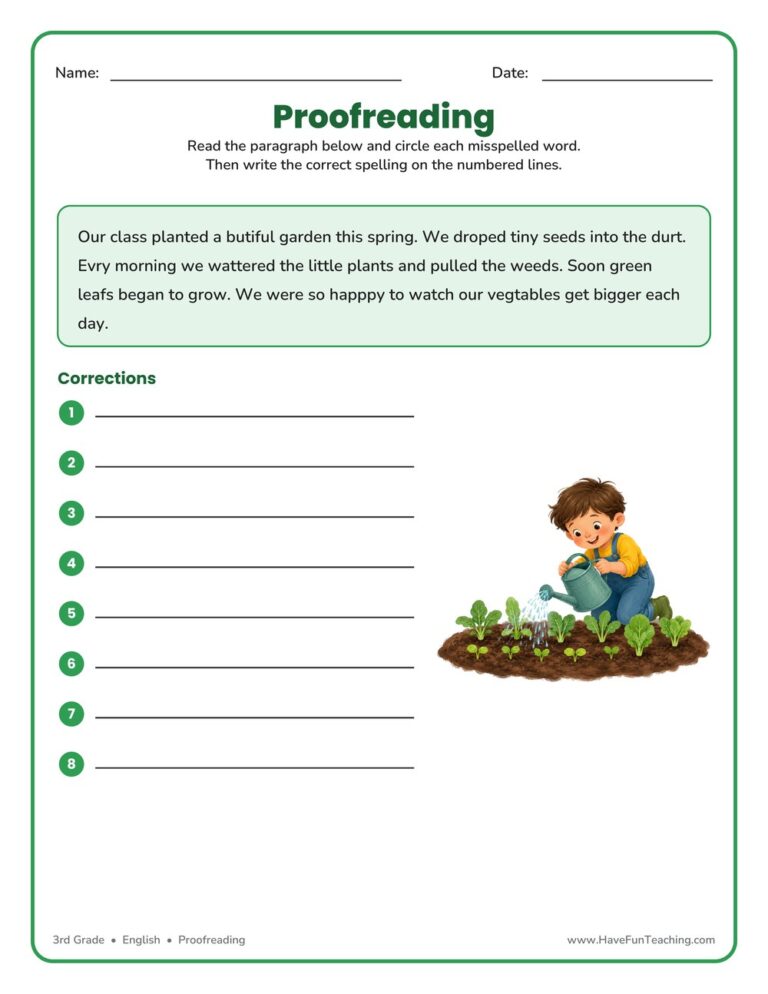
This 3rd grade proofreading worksheet has students hunt for and fix eight misspelled words in a fun garden paragraph. Answer key included — perfect for quick, no-prep spelling and editing practice at home or school.
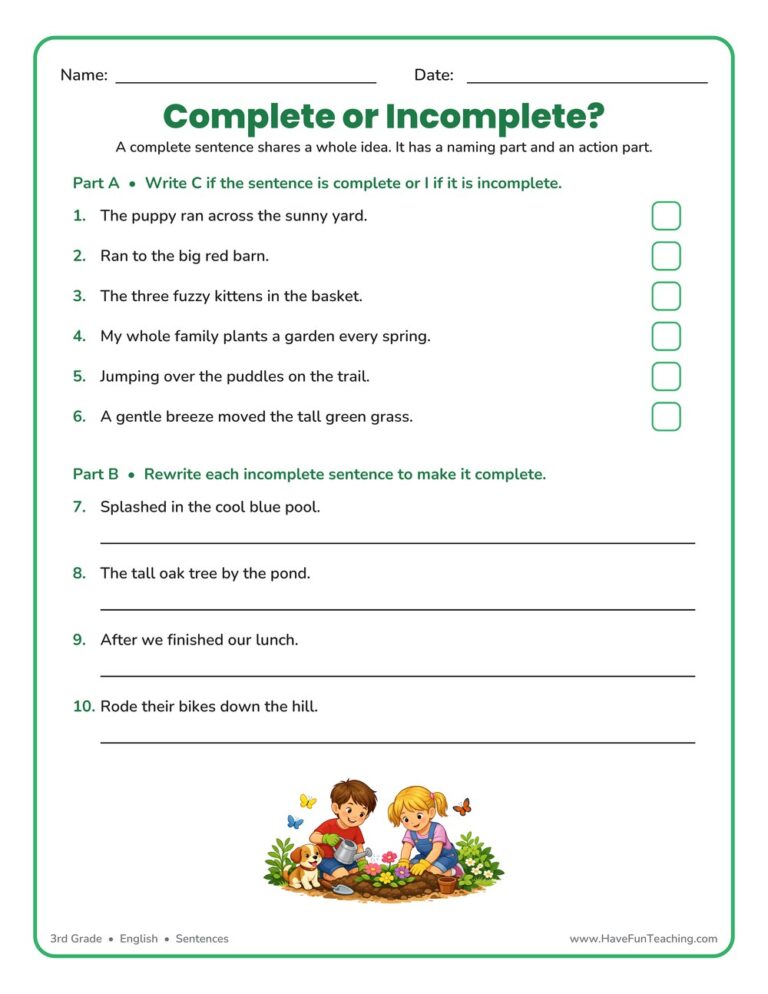
This rewriting incomplete sentences worksheet helps 3rd graders sort complete and incomplete sentences, then rewrite the fragments into full thoughts. Includes an answer key for fast, no-prep grammar practice at home or school.

This compound predicates sentences worksheet gives 3rd grade students three levels of practice: underline, combine, and write their own. An answer key is included, so it works for quick grammar review at school or at home.
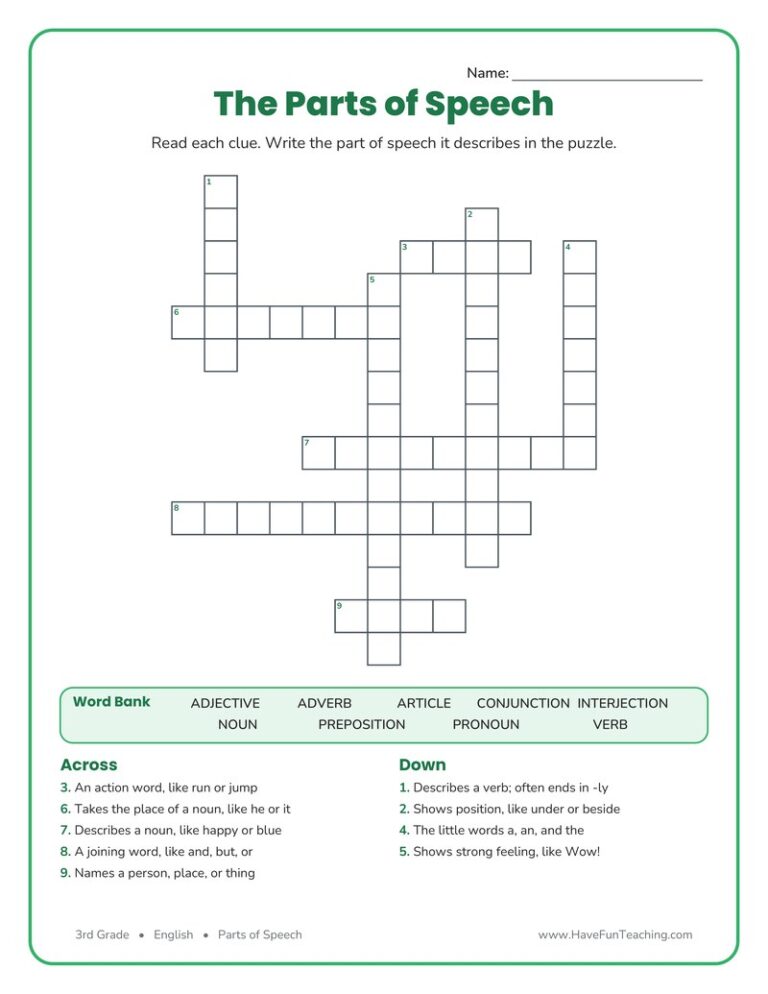
This Parts of Speech Crossword Puzzle has 3rd grade students match grammar clues to nouns, verbs, adjectives, and more, then fill in the grid. Includes an answer key and a helpful word bank for no-prep practice.
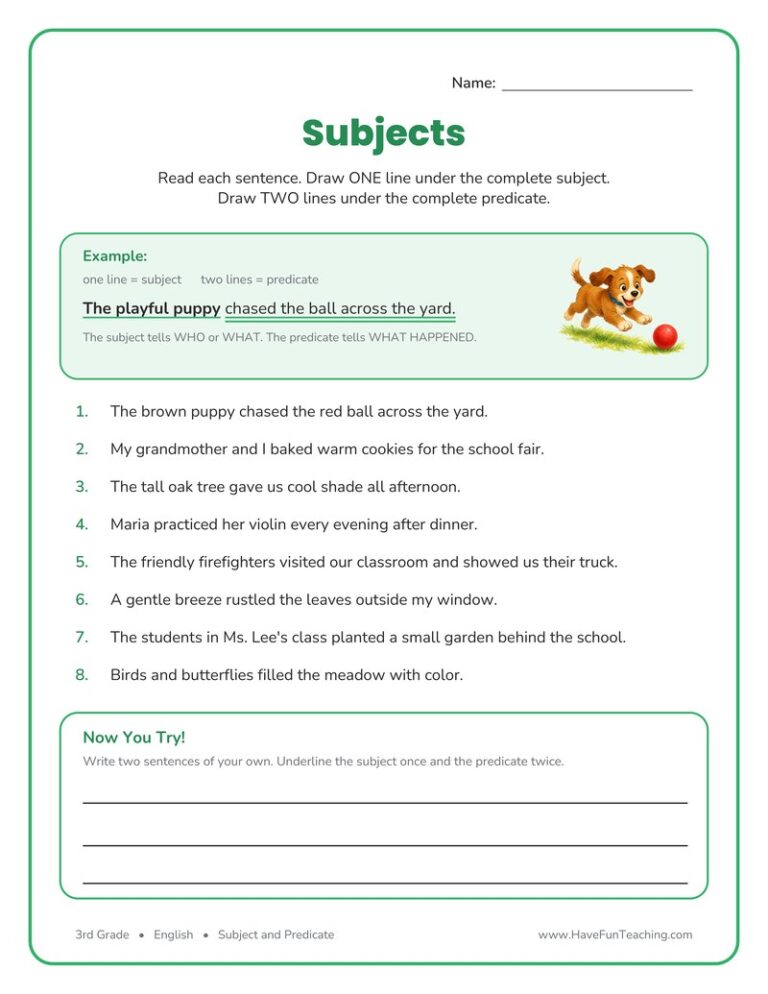
A 3rd grade subject predicate worksheet where kids underline the subject and predicate in eight sentences, then write their own. Includes a full answer key for quick, confident grammar practice.

This Adding Commas in a Series Worksheet gives 3rd graders practice separating list items with commas, spotting misplaced commas, and writing their own list sentence. Answer key included for quick, no-prep grammar practice.
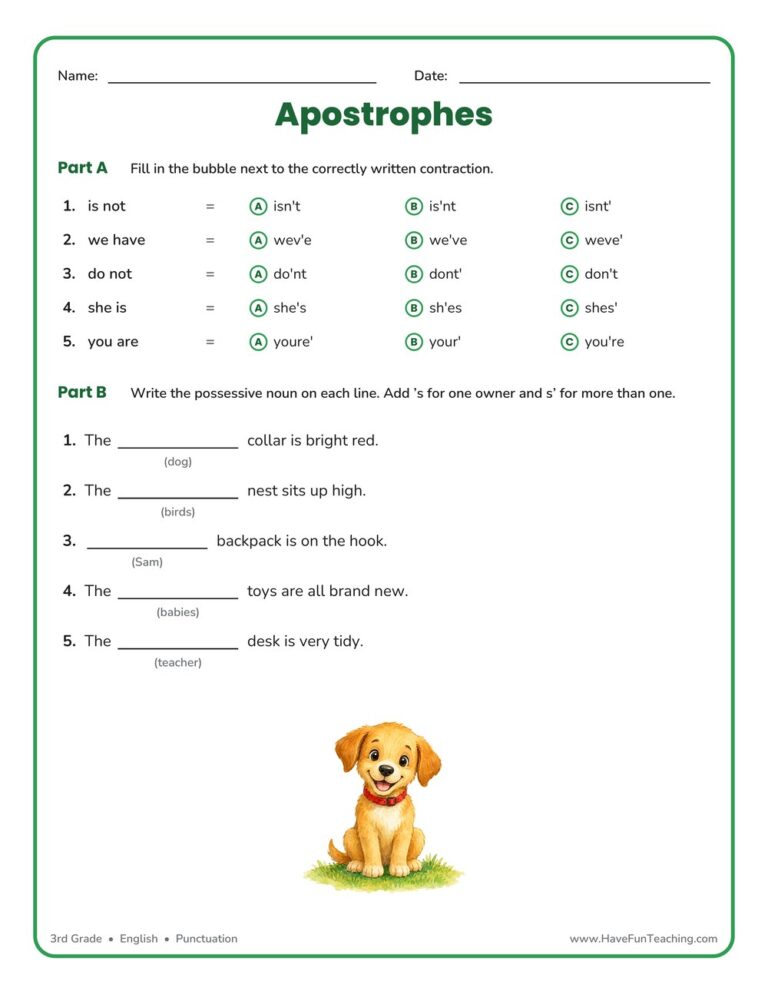
The Possession & Contraction Apostrophe Worksheet gives 3rd graders focused practice using apostrophes for contractions and possessive nouns. Includes a complete answer key — perfect for quick, no-prep punctuation practice.
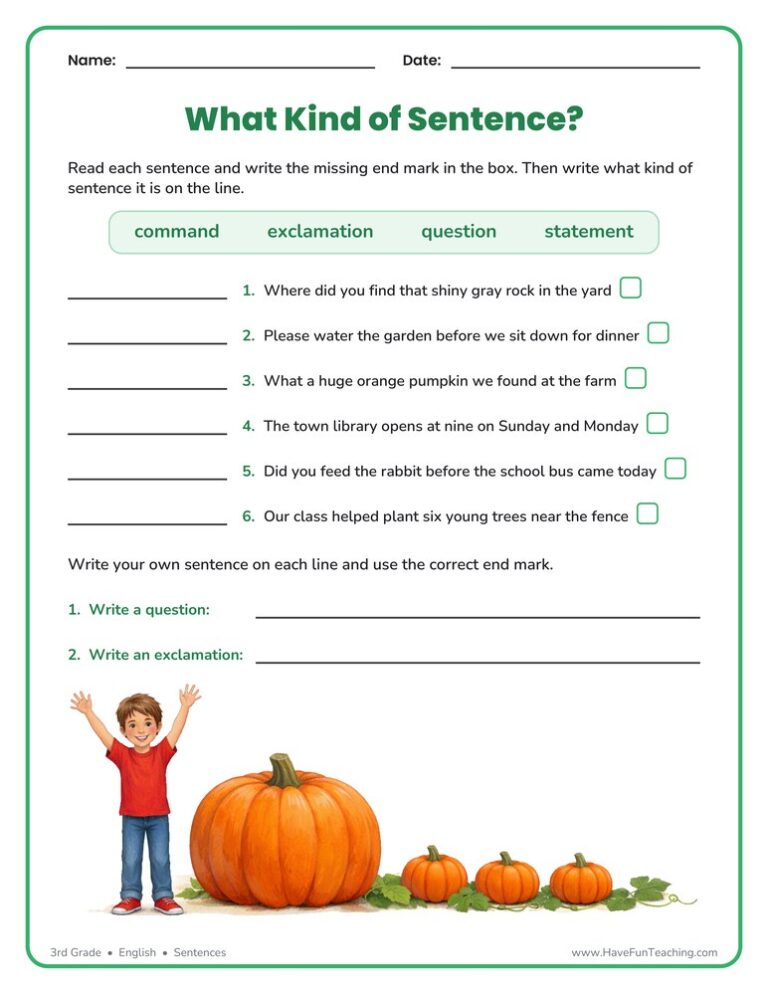
With this What Kind of Sentence? Worksheet, 3rd Grade students add the missing end mark and label each sentence as a statement, question, command, or exclamation. An answer key is included, so practice is quick to check.

Using the Science Songs (MP3 Album), students learn about different science concepts while listening to these upbeat and catchy songs.

The Rewriting Compound Subjects Worksheet has 3rd grade students combine four sentence pairs into one sentence with a compound subject, then split two more apart. An answer key is included, so checking is quick.
Using the Noun Song (Lyric Music Video), students will be able to define, give examples and use adjectives in their own writing using the catchy and memorable lyrics.




Reviews
There are no reviews yet