

Counting Back to Subtract Worksheet
This counting back to subtract worksheet gives 1st graders number-line hops, six equations within 20, and a word problem, with an answer key included, so subtraction becomes a quick, confident count.
$6.97
Or free with a membership — members pay $3.33/mo for all 10,000+ resources. See plans
Want this one free?
Tell us where to send it and it’s yours — no card, no catch.
One free resource per teacher. We’ll also send free teaching ideas each week — unsubscribe anytime.
Teaching is easier with a membership
Unlimited printables, games & videos for PreK–6th — for your classroom or homeschool. Cancel anytime.
Start your 3-day free trial$0 today · cancel anytime · Instant access to 10,000+ resources
About this resource
Description
Counting back is the first mental strategy a young mathematician uses to take a small number away without starting over at one. When a first grader can start at 15, say “14, 13, 12,” and land on the answer, subtraction stops being a mystery and becomes a short, confident count. This counting back to subtract worksheet gives students two ways to practice that move: hopping backward along a printed number line, and counting back in their heads to finish an equation. Both build the same habit — hold the larger number, then count back one space at a time.
The page opens with two 0–20 number lines. Each one is already marked at the starting number, so a child only has to hop backward the right number of spaces and write the difference. Part B moves the same strategy off the number line: six equations within 20, each taking away one to five, so students count back mentally and record the answer. Part C closes with a story about Audrey’s hopping game, where children write the number sentence and the number she landed on. Use it as morning work, as small-group practice after a number-line mini-lesson, or as a quick check before you move on to subtraction fluency.
What’s Included
- 1 print-ready PDF worksheet
- 2 number-line problems on a marked 0–20 line
- 6 count-back subtraction equations within 20
- 1 word problem with a number sentence and an answer line
- 1 answer key
This resource helps children learn the skill in three ways. First, the number line makes subtraction visible — a child can see that taking away three means three hops to the left, so the size of the difference is something they watch happen instead of something they memorize. Second, moving from the number line in Part A to bare equations in Part B walks students from a concrete picture to a mental strategy in one page, which is exactly how counting back becomes fluent. Third, the word problem asks children to turn a story into a number sentence, so they practice deciding when subtraction is the right operation, not just how to compute it.
Teachers and parents can stretch this counting back to subtract worksheet well past the page. Tape a large number line to the floor and let children physically hop backward as a partner calls out an equation. Roll two dice, make the larger number the start and the smaller the amount to count back, and race to say the difference. Draw stepping stones on the driveway with sidewalk chalk and number them, then play Audrey’s hopping game outdoors. If your students need more repetition before they leave the number line, pair this count back to subtract math worksheet with the related resources below and keep the practice short and daily.
Related Resources
What teachers say
Reviews
You must be logged in to post a review.
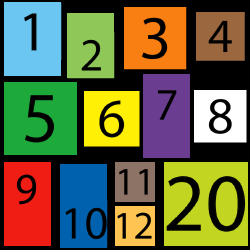
Using the Counting Songs (Classic Video Collection), students practice skip counting by all of the numbers by singing and counting along to these thirteen videos.
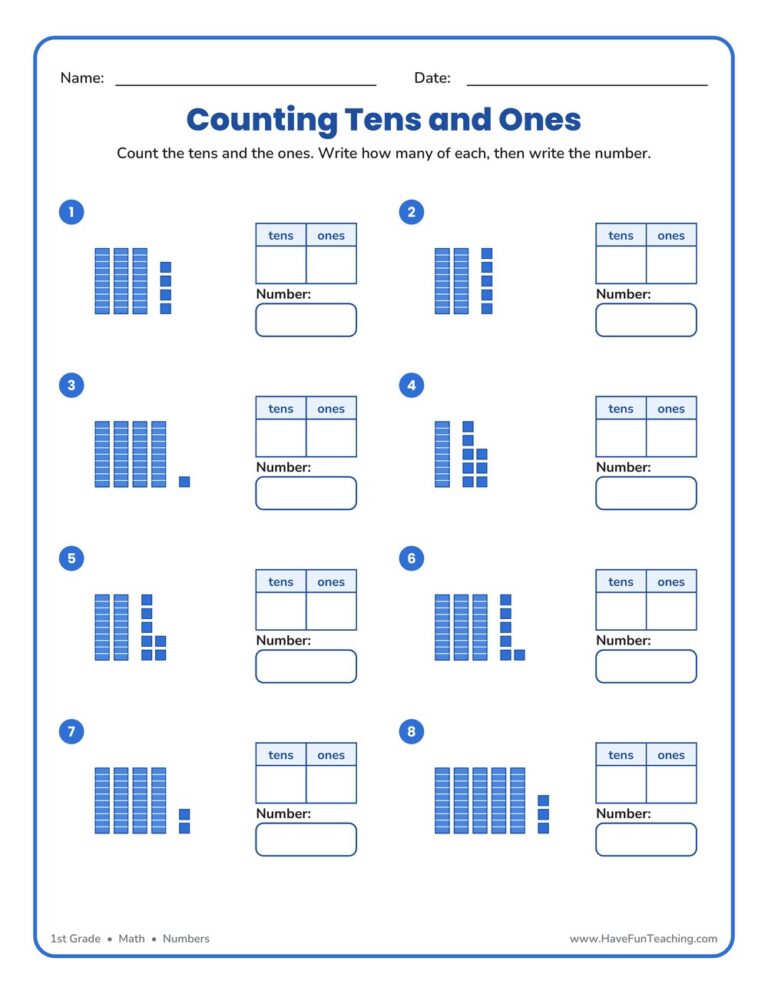
This Counting Tens Ones Worksheet helps first graders count base-ten blocks, record the tens and ones, and write each two-digit number. Includes a complete answer key for quick, no-prep place value practice at home or school.
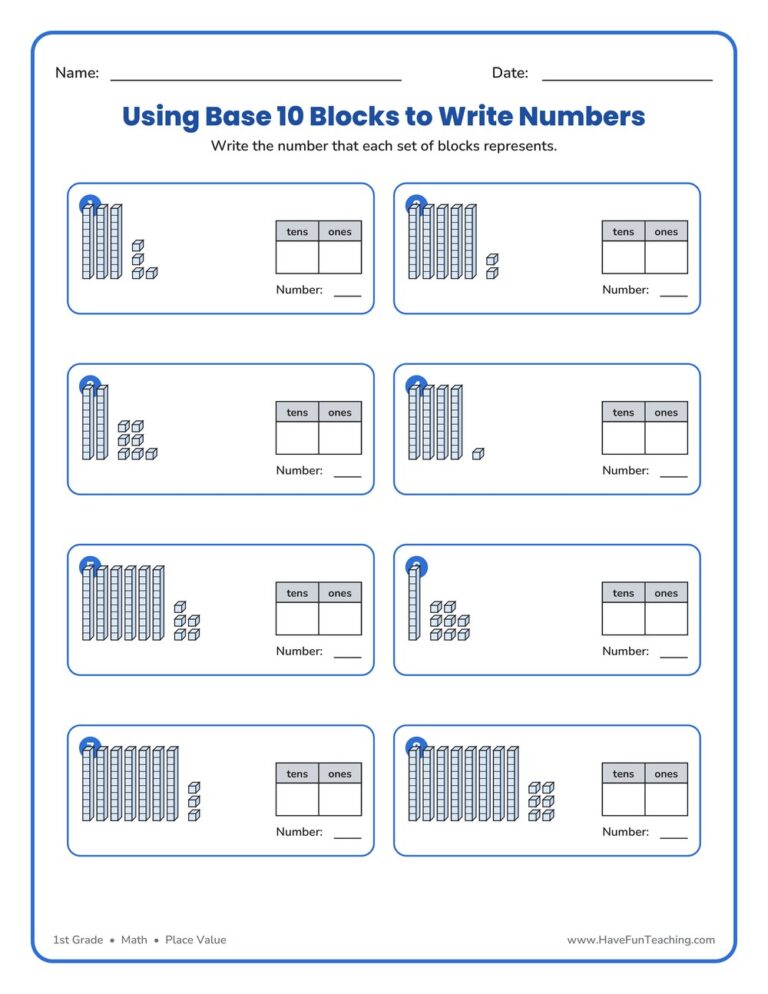
This Using Base 10 Blocks to Write Numbers Worksheet helps 1st graders count tens rods and ones cubes, then record each two-digit number in a place value chart. Includes an answer key for quick, no-prep practice.

This counting on to add worksheet helps 1st graders start from the bigger number and count forward on a number line to twenty. An answer key is included, so checking work takes seconds.

Using the Counting By Fives Song (Original Music Video), students practice skip counting by 5s by singing and counting along to this fun and engaging video!
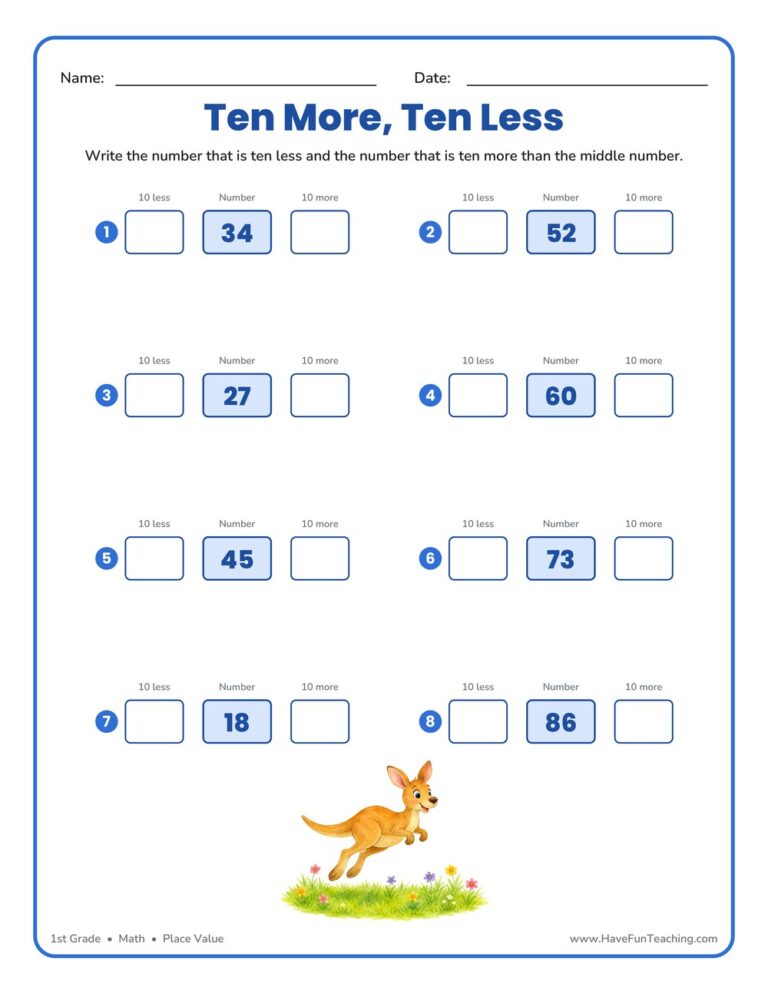
This Ten More Ten Less Worksheet gives 1st graders eight quick problems to find ten more and ten less than a two-digit number. Includes an answer key for fast, no-prep place value practice.
Using the Counting By Ones Song (Original Music Video), students practice counting by 1s by singing and counting along to this fun and engaging video!

Using the Counting By Twos Song (Original Music Video), students practice skip counting by 2s by singing and counting along to this fun and engaging video!

This finding the missing number worksheet gives first graders focused practice solving for the unknown number in addition and subtraction equations within 20. Includes an answer key — a quick, no-prep way to build number sense and fact fluency.
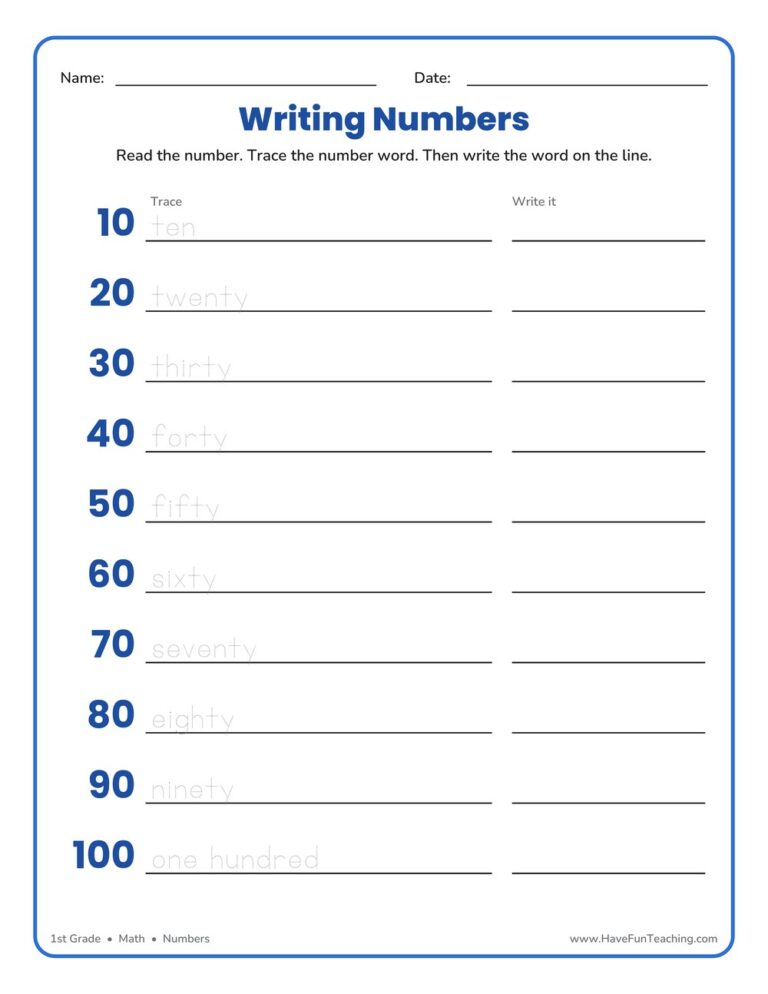
This Write Numbers to 100 Worksheet helps first graders trace and write number words from ten to one hundred while counting by tens. Answer key included — perfect for no-prep number word and handwriting practice.
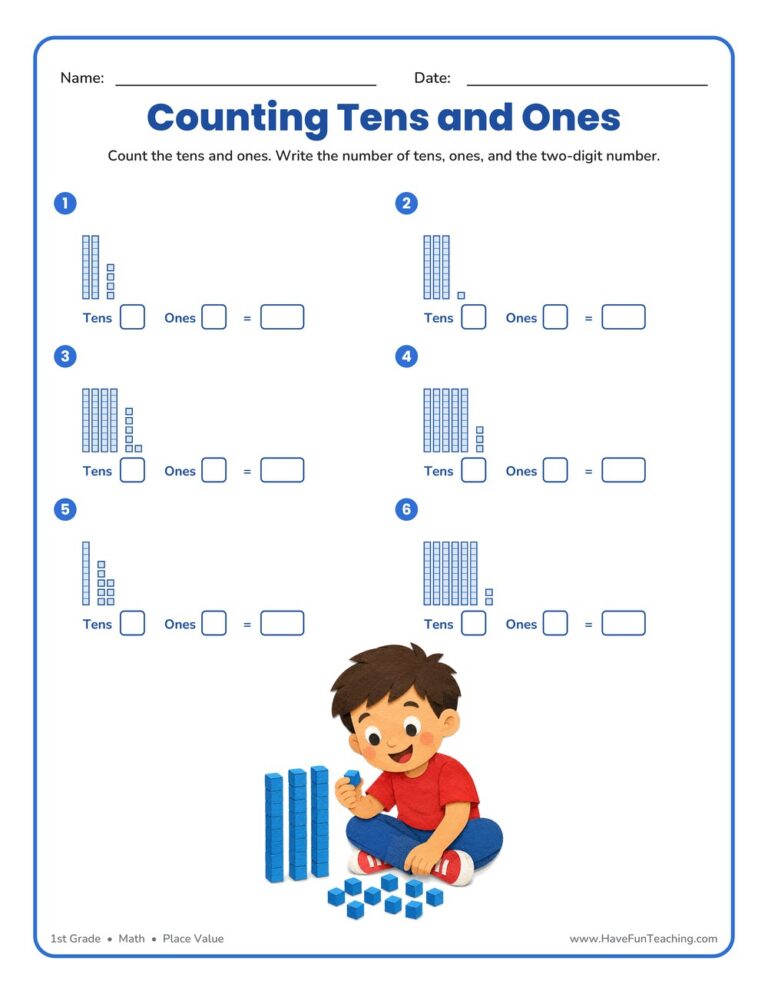
A first grade Counting Tens and Ones Worksheet where students count base ten blocks and write each two-digit number. Includes a complete answer key for easy, no-prep place value practice at home or school.
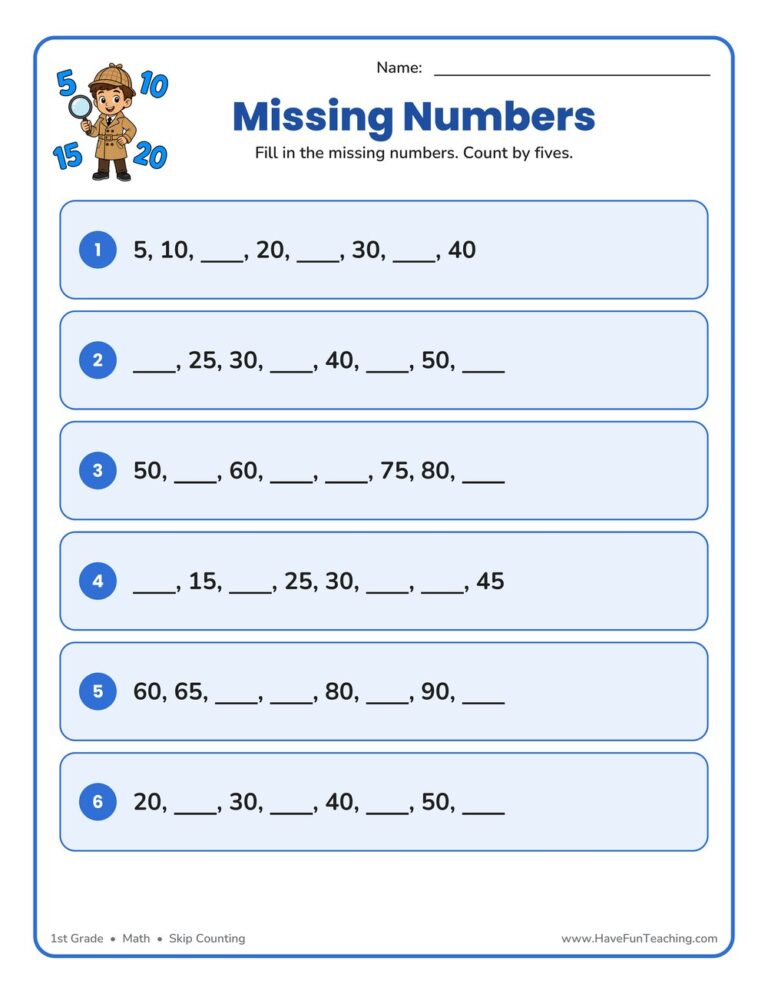
This Count Fives Fill in the Blank Worksheet gives 1st graders six number patterns to finish by skip counting by 5s. Includes an answer key for fast, no-prep counting practice at home or school.

Reviews
There are no reviews yet