
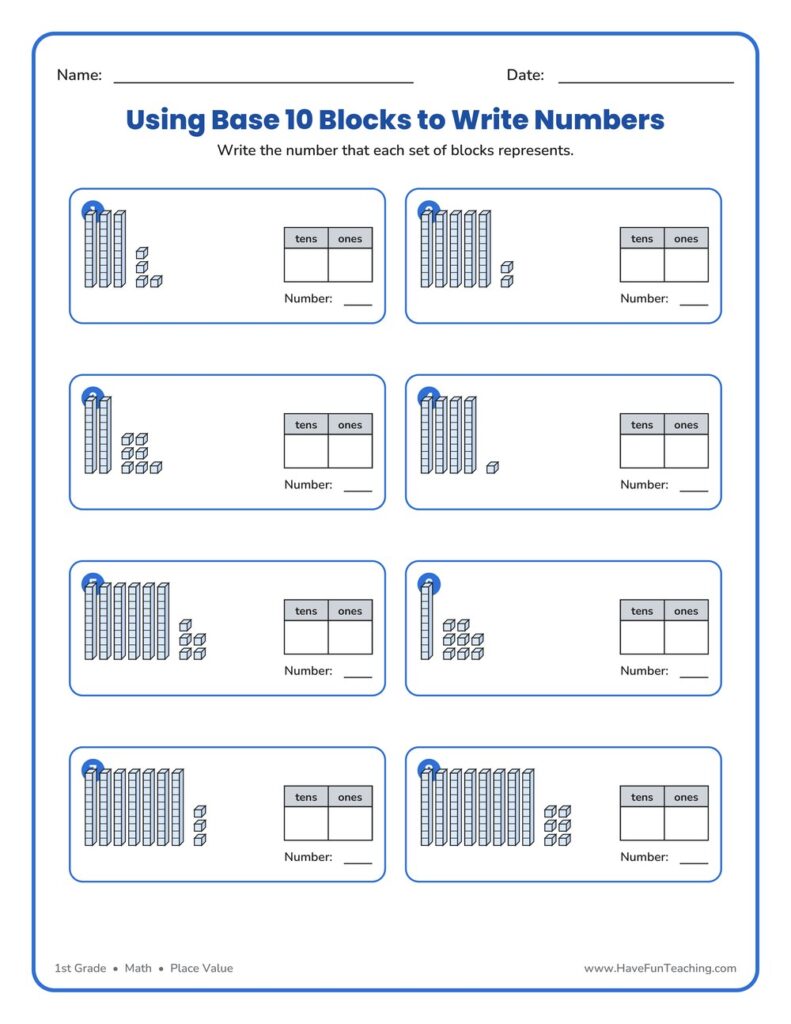
Using Base 10 Blocks to Write Numbers Worksheet
This Using Base 10 Blocks to Write Numbers Worksheet helps 1st graders count tens rods and ones cubes, then record each two-digit number in a place value chart. Includes an answer key for quick, no-prep practice.
$6.97
Or free with a membership — members pay $3.33/mo for all 10,000+ resources. See plans
Want this one free?
Tell us where to send it and it’s yours — no card, no catch.
One free resource per teacher. We’ll also send free teaching ideas each week — unsubscribe anytime.
Teaching is easier with a membership
Unlimited printables, games & videos for PreK–6th — for your classroom or homeschool. Cancel anytime.
Start your 3-day free trial$0 today · cancel anytime · Instant access to 10,000+ resources
About this resource
Description
Base ten blocks help young learners see how tens and ones build every two-digit number, and this Using Base 10 Blocks to Write Numbers Worksheet gives first graders hands-on practice reading a set of rods and cubes and recording the number they represent. By connecting the picture of the blocks to the digits in the tens and ones places, students build a strong, visual foundation for place value.
This base ten blocks place value worksheet presents eight sets of blocks, each paired with a tens-and-ones table and a space to write the final number. Students count the tall rods as tens, count the small cubes as ones, fill in each column of the chart, and then write the two-digit number. To use it, print the page and let children work independently, in pairs, or as a quick warm-up, and use the included answer key to check work in seconds.
What’s Included
- 1 print-ready PDF worksheet
- Answer key
- 8 base ten block counting activities
This Using Base 10 Blocks to Write Numbers Worksheet helps children in three key ways. First, it strengthens place value understanding by asking students to separate a number into tens and ones before writing it. Second, the picture-to-number format supports visual and concrete learners who benefit from seeing quantities represented with blocks. Third, the tens-and-ones table builds the habit of organizing digits by place, which prepares students for adding, subtracting, and comparing larger numbers.
Teachers and parents can extend this skill with real base ten manipulatives, having children build a number with rods and cubes and then write it down. Try calling out a number and asking students to show it with blocks, or reverse the activity by writing a number and drawing the matching blocks. Everyday objects like straws bundled into tens or stacking cubes also make great hands-on practice at home.
Related Resources
What teachers say
Reviews
You must be logged in to post a review.
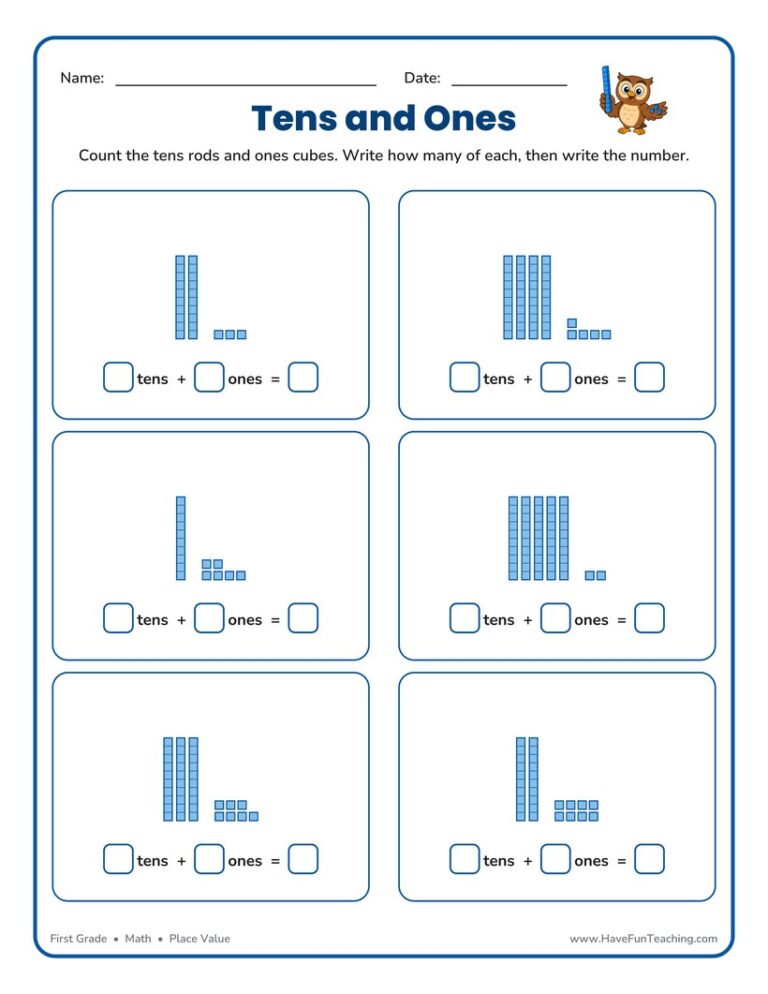
Count the tens and ones with this tens ones worksheet made for first grade. Students use base-ten blocks to write the tens, ones, and the two-digit number, and an answer key is included to make practice simple.
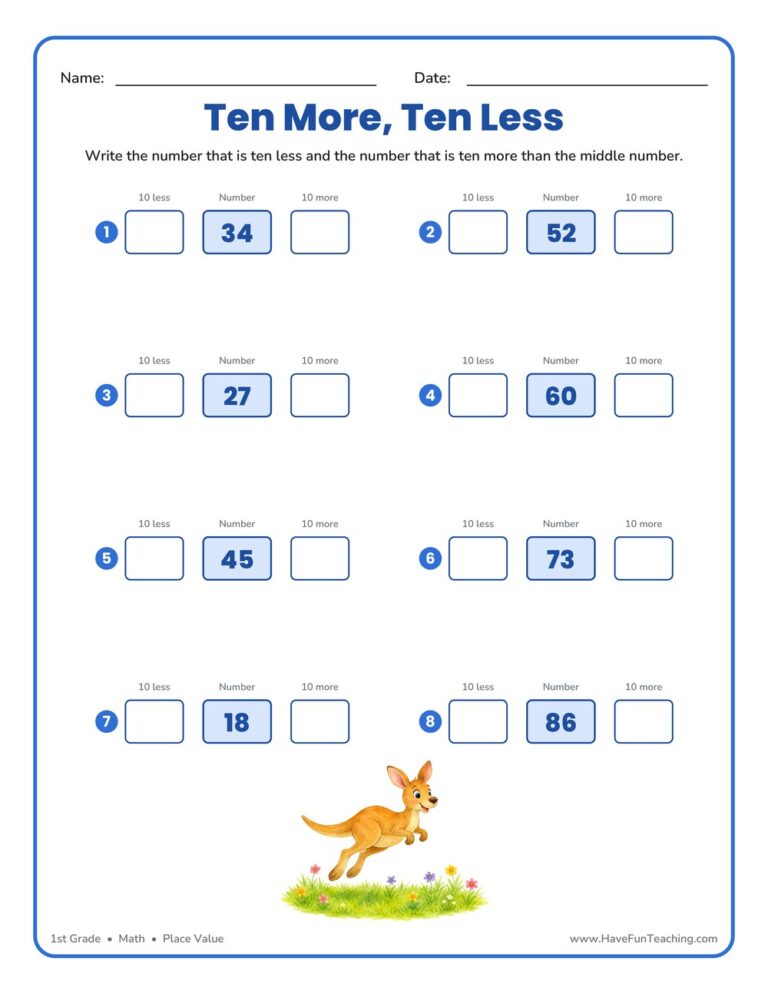
This Ten More Ten Less Worksheet gives 1st graders eight quick problems to find ten more and ten less than a two-digit number. Includes an answer key for fast, no-prep place value practice.

The Drawing Tens and Ones Worksheet gives first graders hands-on practice representing two-digit numbers as tens and ones on a place value mat. Includes a complete answer key for quick, no-prep place value practice.
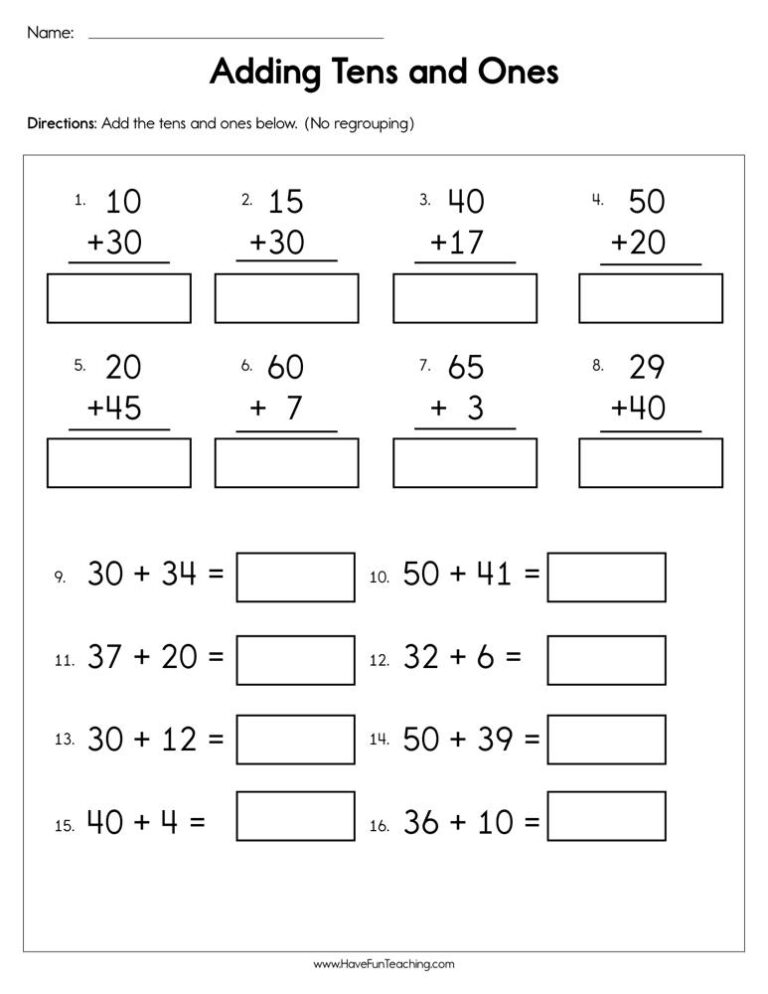
This adding tens and ones worksheet helps 1st graders build two-digit numbers with base ten blocks and column addition. Includes an answer key for quick, no-prep place value practice at home or school.
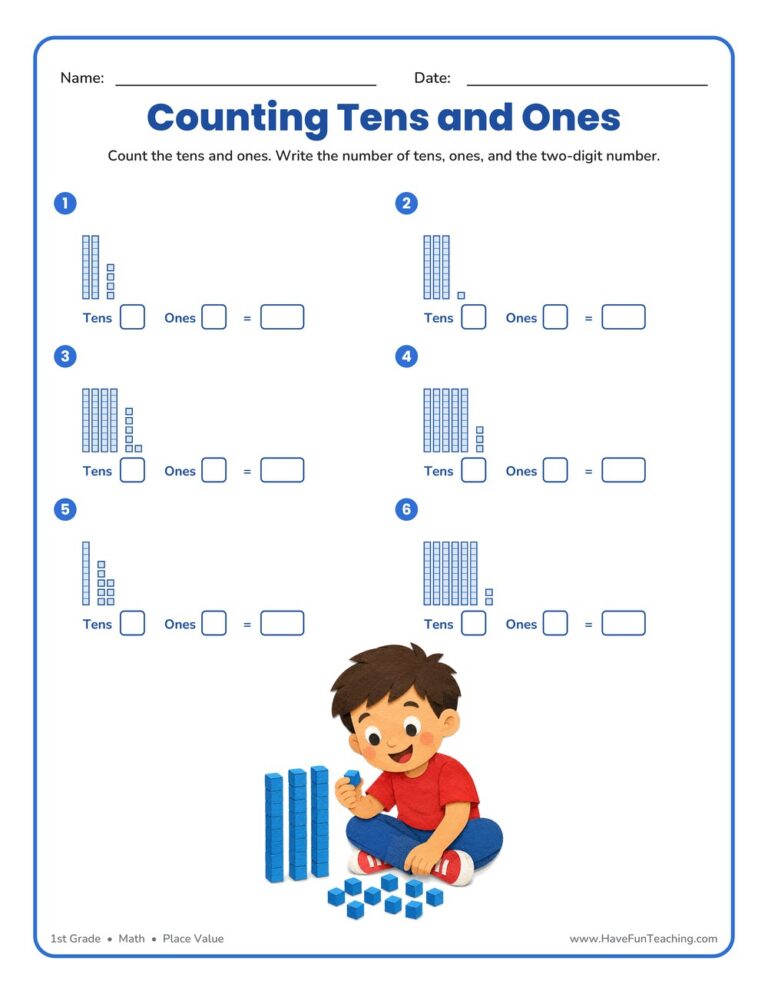
A first grade Counting Tens and Ones Worksheet where students count base ten blocks and write each two-digit number. Includes a complete answer key for easy, no-prep place value practice at home or school.
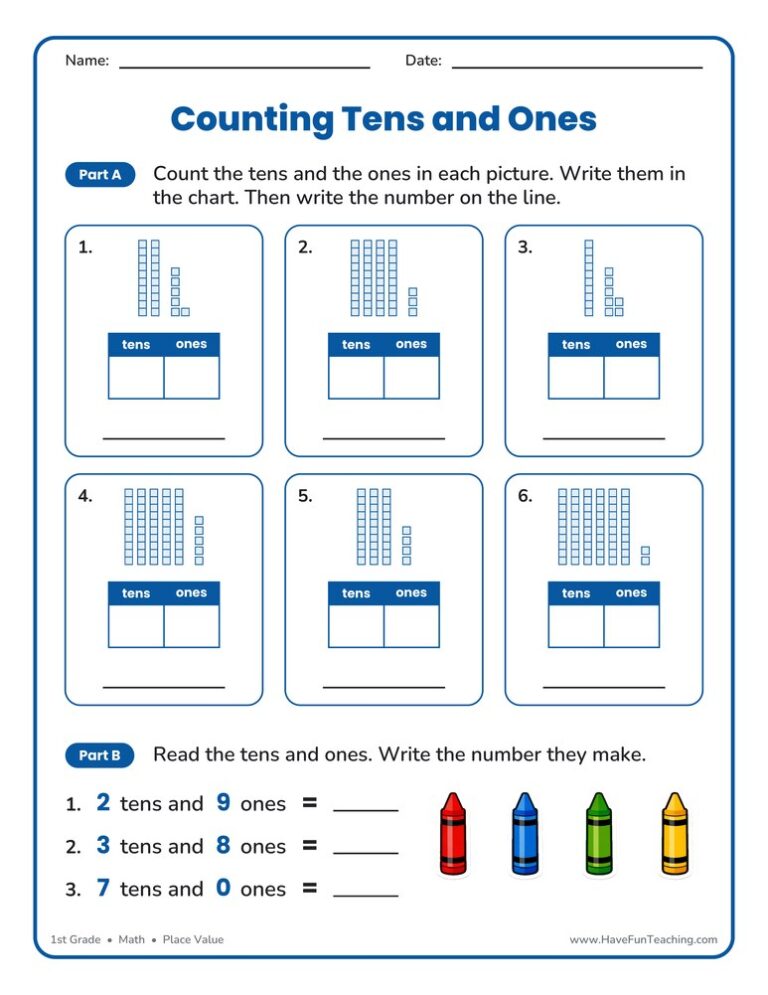
This count tens and ones worksheet gives 1st grade students base ten block pictures to count, chart, and write as numbers. An answer key is included, so place value practice is ready to print and go.
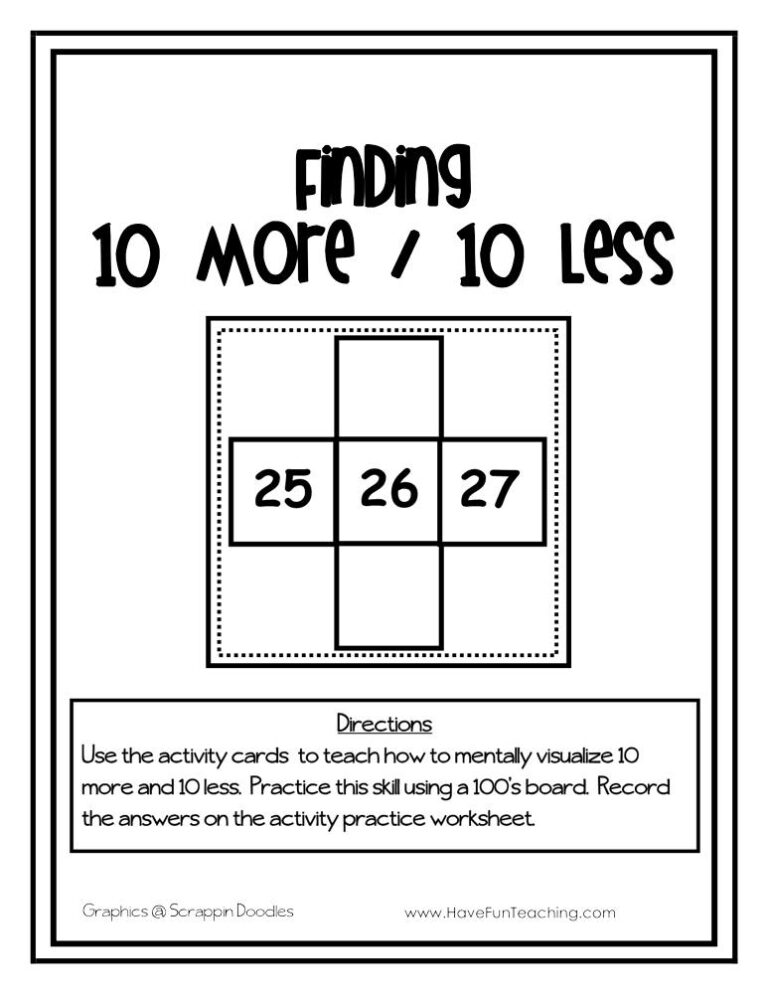
In this Finding 10 More 10 Less Activity, students practice finding 10 more and less than a given number to build skip counting and base ten skills.

This ten more and ten less worksheet gives 1st Grade students eight number-chart problems and two story problems for mental math with tens. An answer key is included, so checking work takes seconds.
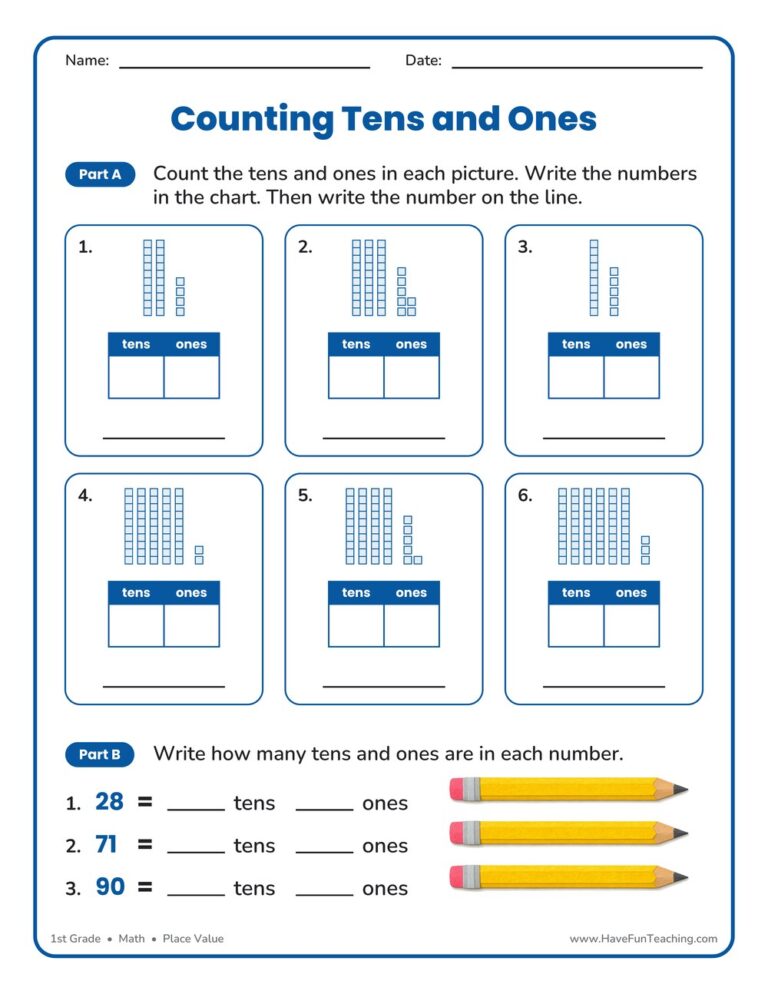
Count the tens and ones in six base-ten pictures, fill in the chart, and write the number. This Break it Apart Counting Tens Ones Worksheet builds 1st grade place value confidence, and an answer key is included.
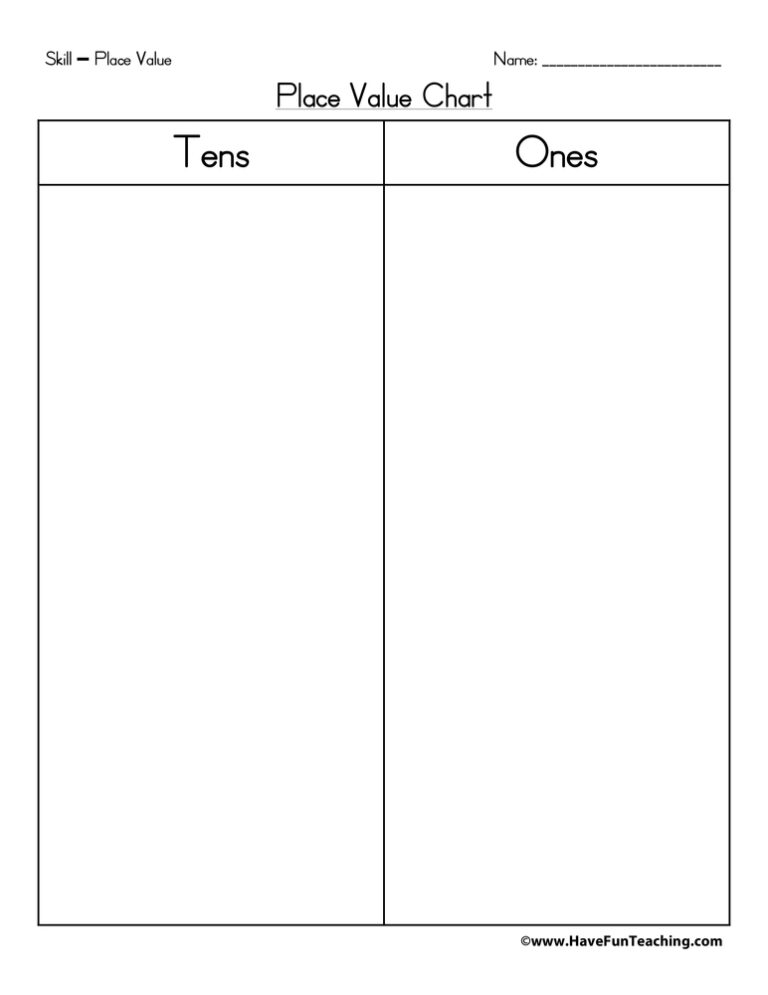
This place value chart worksheet helps 1st graders break two-digit numbers into tens and ones with base ten blocks, a fill-in chart, and a word problem. An answer key is included, so practice is quick to check.

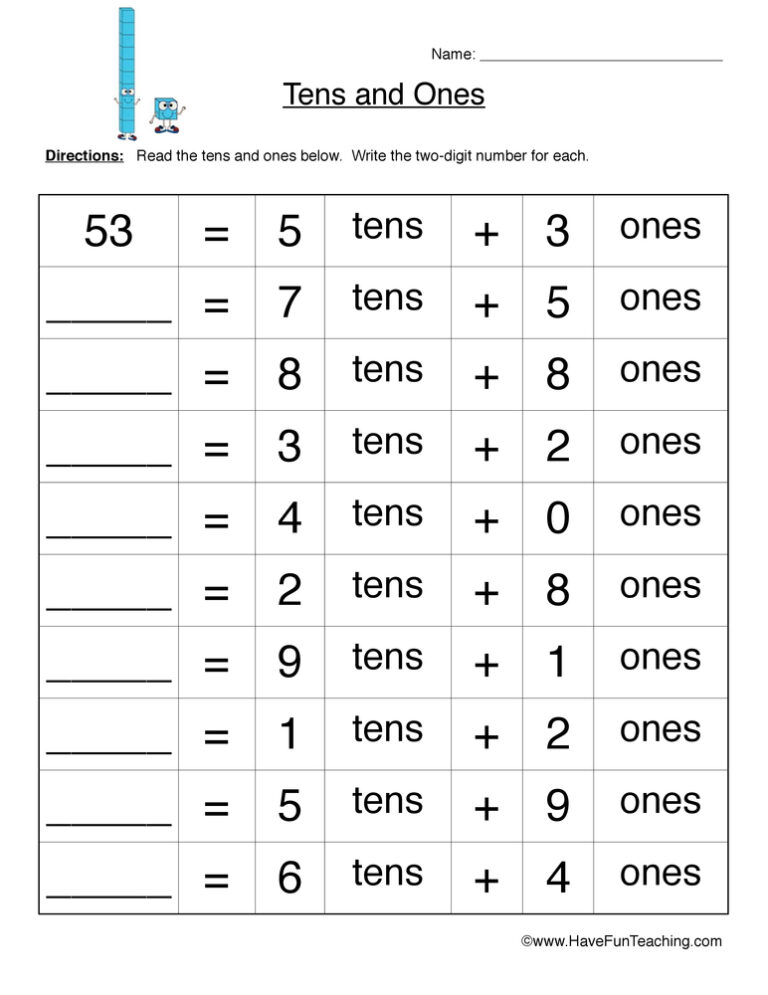
This Breaking into Tens Ones Worksheet asks 1st graders to count base ten blocks and add tens and ones to write each two-digit number. An answer key is included, so practice turns into instant feedback.




Reviews
There are no reviews yet