
Digraphs Word List
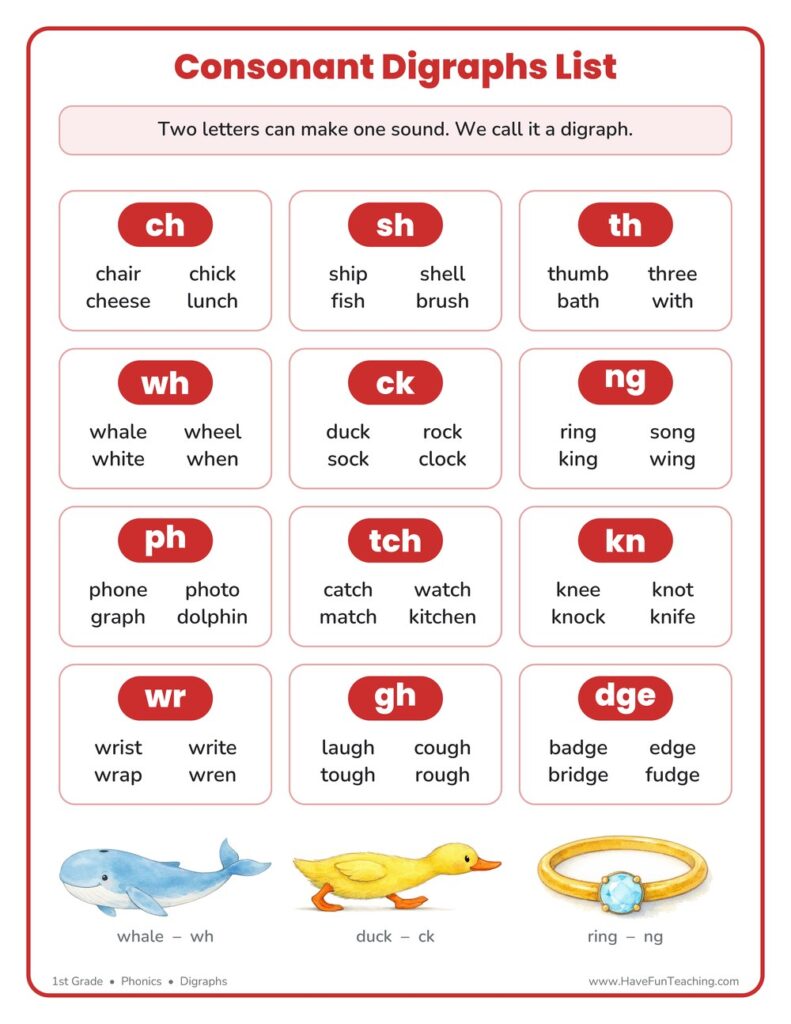
Keep this Digraphs Word List within reach during 1st Grade phonics. Twelve consonant digraphs and forty-eight example words sit on one print-ready page, so readers can check a spelling in seconds.
$6.97
Or free with a membership — members pay $3.33/mo for all 10,000+ resources. See plans
Want this one free?
Tell us where to send it and it’s yours — no card, no catch.
One free resource per teacher. We’ll also send free teaching ideas each week — unsubscribe anytime.
Teaching is easier with a membership
Unlimited printables, games & videos for PreK–6th — for your classroom or homeschool. Cancel anytime.
Start your 3-day free trial$0 today · cancel anytime · Instant access to 10,000+ resources
About this resource
Description
A digraph is two letters that team up to spell one single sound, and learning them is the first big leap a young reader makes after mastering single letter-sounds. Once a child knows that s and h together say /sh/, whole shelves of words swing open — ship, shell, fish, brush. This Digraphs Word List gathers the consonant digraphs first graders meet most often and puts every one of them in a single place, so the pattern is easy to see, easy to compare, and easy to remember.
Rather than a fill-in-the-blank exercise, this digraphs word list is a reference chart built to live on a desk or a wall. Twelve digraph cards — ch, sh, th, wh, ck, ng, ph, tch, kn, wr, gh and dge — each carry four example words a first grader can actually decode. Tape it inside a reading folder, clip it to the writing centre, slide it into a page protector for small-group work, or send a copy home so families can practise the very sounds you are teaching in class.
What’s Included
- 1 print-ready PDF reference chart
- 12 consonant digraph cards: ch, sh, th, wh, ck, ng, ph, tch, kn, wr, gh and dge
- 48 decodable example words, four for every digraph
- A kid-friendly definition of a digraph at the top of the page
- Illustrated examples — whale, duck and ring — drawn straight from the word cards
Three things make a chart like this worth the wall space. First, it makes the pattern visible: seeing knee, knot, knock and knife stacked together teaches the silent k faster than any rule ever will. Second, it takes the guesswork out of writing, because a child hunting for the /ch/ at the end of lunch can find it in seconds instead of stalling mid-sentence. Third, it builds independence — the answer lives on the page rather than at the teacher’s desk, so readers learn to check themselves.
Try a digraph hunt: hand each child the chart and a familiar book, then tally every word they find that matches a card. Cover the example words and use the cards as headings for a word sort. Play a quick listening game where you say a word aloud and children point to the digraph they hear. And for review, ask which spellings share a sound — this consonant digraphs chart makes ph and gh sit side by side, which is exactly the comparison older readers need.
Related Resources
What teachers say
Reviews
You must be logged in to post a review.
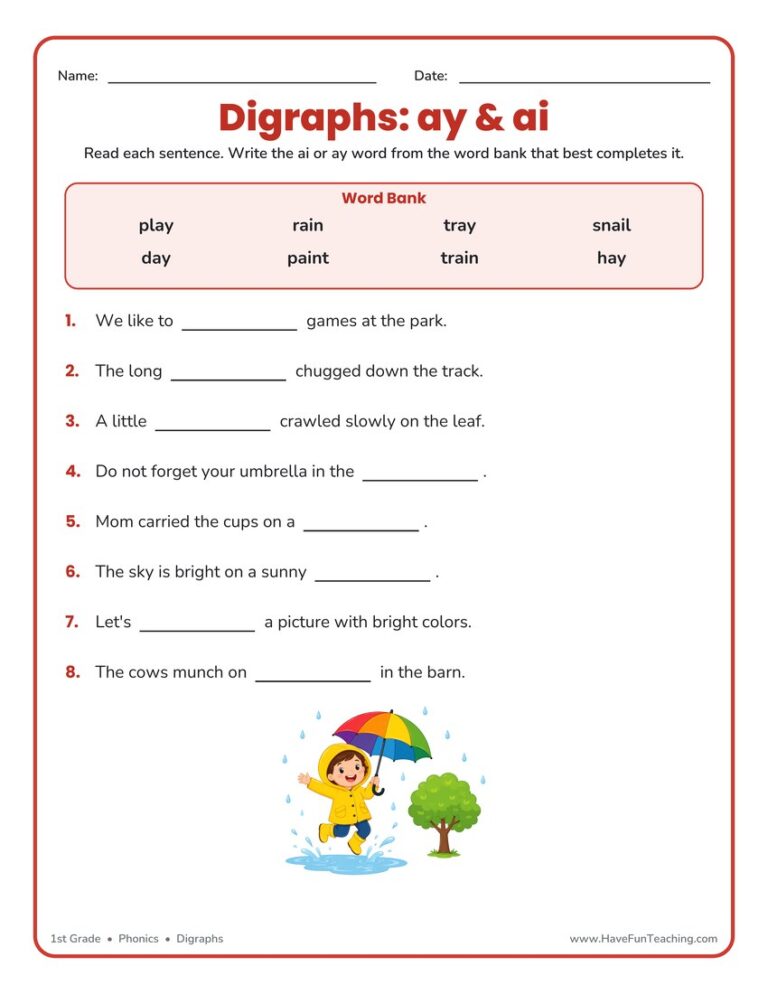
This AI AY Digraphs Fill in Blanks Worksheet lets 1st graders use a word bank to complete eight sentences with long-a words spelled ai and ay. An answer key is included for quick, no-prep phonics practice.

This NG/NK digraph worksheet asks 1st graders to sort six words by their ending sound and then build four more. Answer key included for fast, no-prep phonics practice.

This EE EA Vowel Worksheet gives 1st graders fun practice sorting and spelling long E words spelled ee and ea. Includes an answer key — perfect for phonics centers, homework, or quick no-prep review.
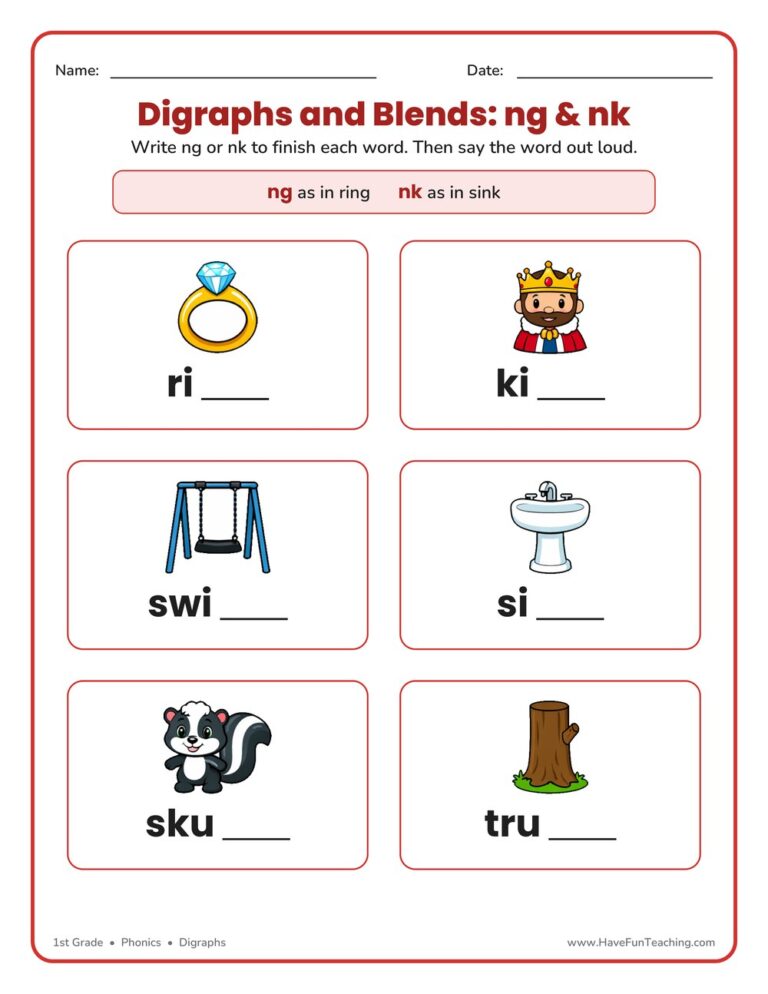
This ng and nk digraph worksheet gives 1st graders picture-clue practice writing the ending sounds in words like ring and skunk. An answer key is included for quick, no-prep phonics practice.
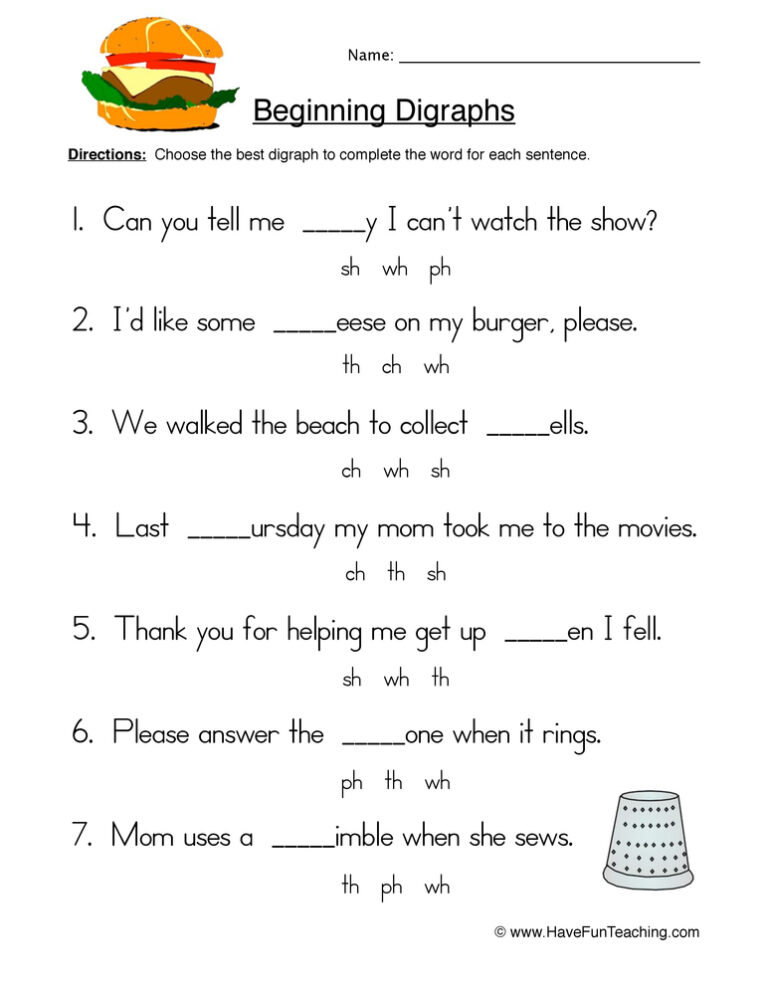
This beginning digraphs fill in the blank worksheet has 1st graders write ch, sh, th or wh to finish words in sentences and under pictures. Answer key included, so it grades itself in seconds.

A w or wh worksheet that helps 1st graders decide which spelling makes the /w/ sound, with six picture clues and six picture-free words. Answer key included for fast, confident phonics practice.
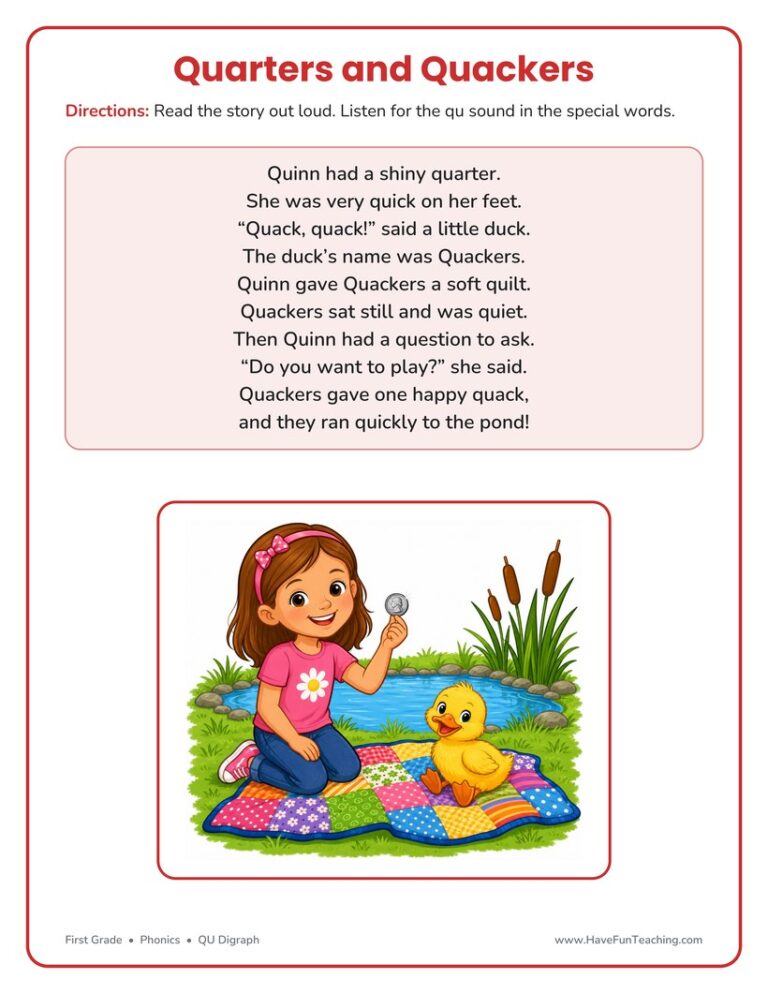
Read a fun QU Phonics Stories worksheet about Quinn and a duck named Quackers, then answer comprehension and phonics questions. Built for first grade with an answer key included, it makes qu digraph practice simple and fun.
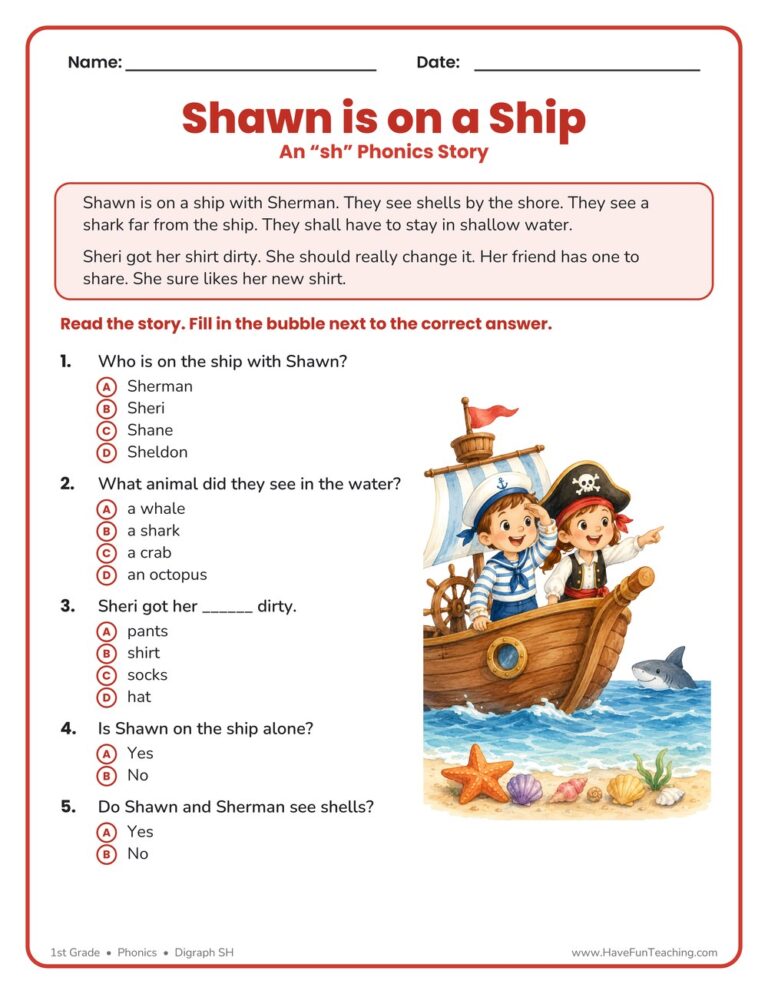
This Shawn is on a Ship SH Phonics Stories Reading Comprehension Worksheet has first graders read a decodable sh story and answer five questions. Includes an answer key—perfect for quick, no-prep digraph practice.
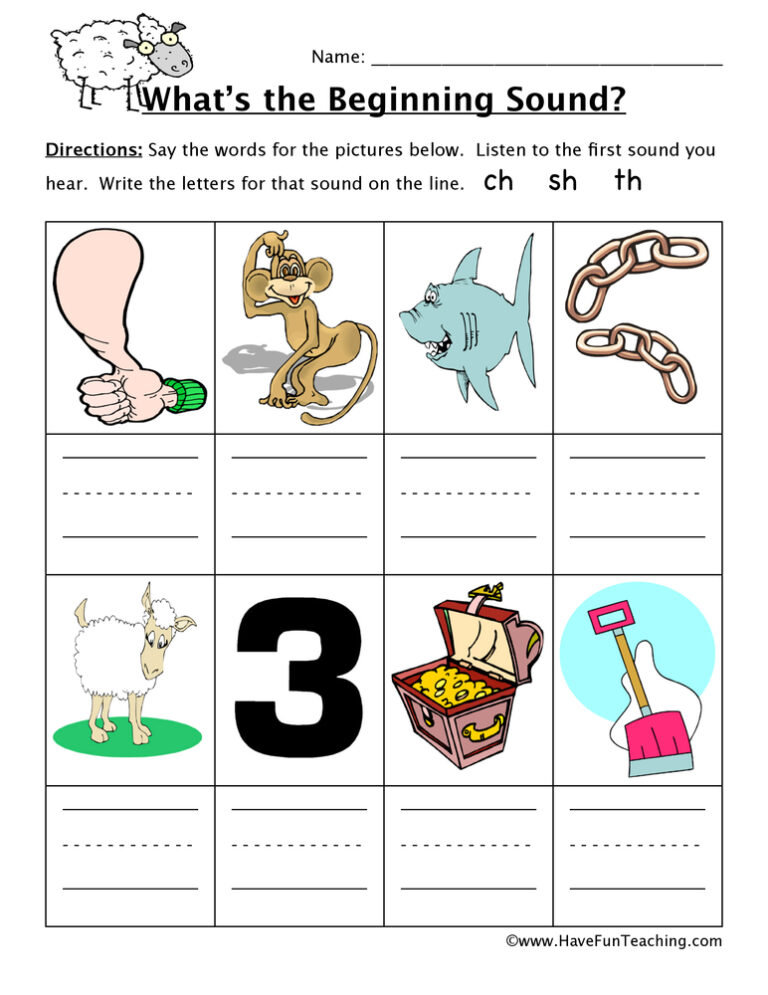
This ch, sh, th beginning sounds worksheet gives first grade students nine picture cards to say, listen to, and finish by writing the missing digraph. An answer key is included, so practice is quick to check.
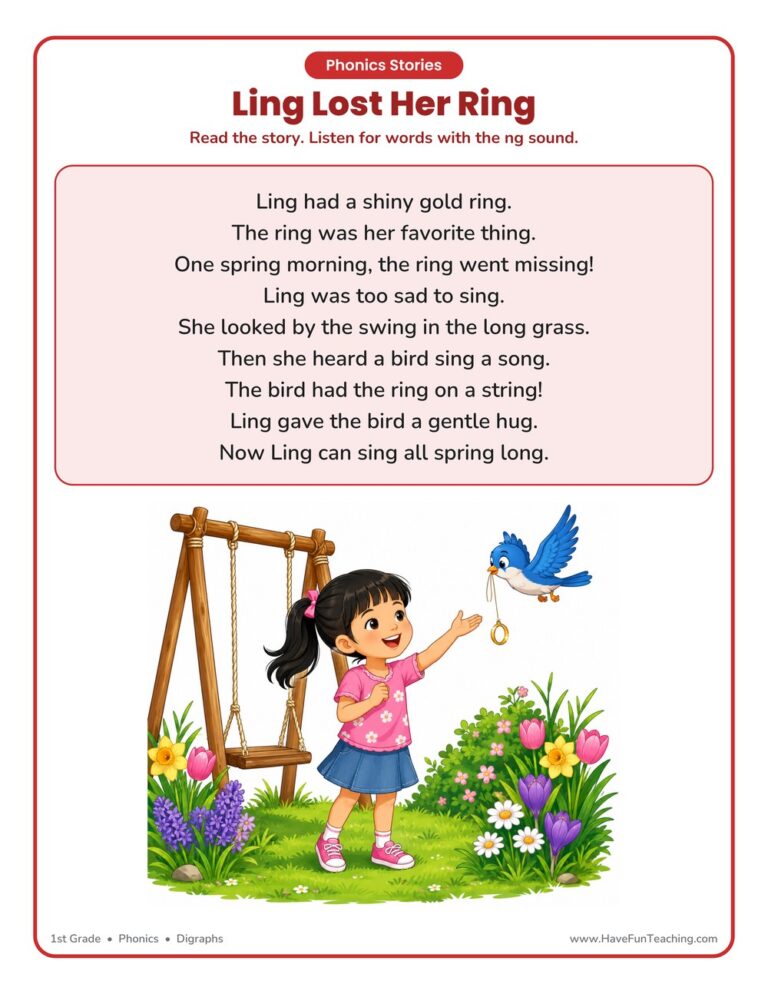
This NG Phonics Stories worksheet gives first graders a decodable ng story with reading comprehension questions and a word-building activity. An answer key is included, so young readers build phonics and comprehension skills with confidence.

Using the Blends, Digraphs, and Trigraphs Activity, students create lists of words that have beginning and ending blends, digraphs, or trigraphs.

A writing double vowels words worksheet where 1st graders name a picture, then write the missing vowel team in words like tree, boat, and moon. Includes an answer key for fast, confident phonics practice.




Reviews
There are no reviews yet