
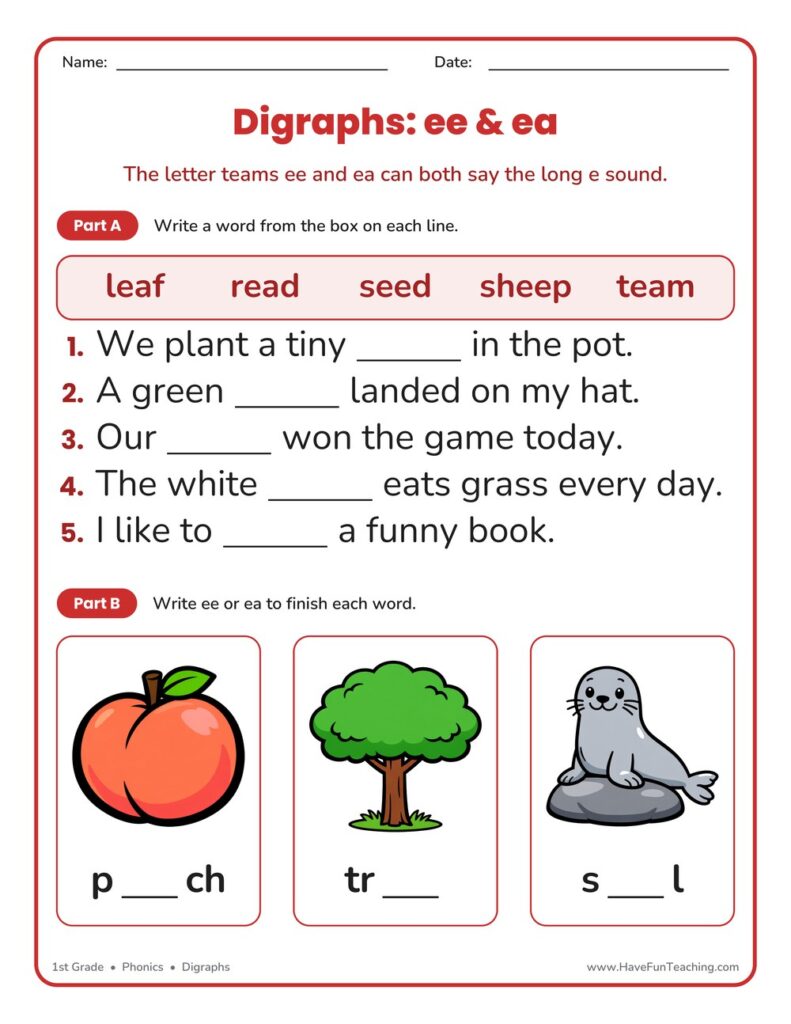
EE EA Digraphs Word Bank Worksheet
This EE EA Digraphs Word Bank Worksheet gives 1st graders five word-box sentences and three picture words to spell with ee or ea. Answer key included, so long e practice takes no prep at all.
$6.97
Or free with a membership — members pay $3.33/mo for all 10,000+ resources. See plans
Want this one free?
Tell us where to send it and it’s yours — no card, no catch.
One free resource per teacher. We’ll also send free teaching ideas each week — unsubscribe anytime.
Teaching is easier with a membership
Unlimited printables, games & videos for PreK–6th — for your classroom or homeschool. Cancel anytime.
Start your 3-day free trial$0 today · cancel anytime · Instant access to 10,000+ resources
About this resource
Description
The letter teams ee and ea are two of the very first vowel teams a young reader meets, and both of them say the long e sound. Once children notice that seed, tree, and sheep share the same ee pattern while leaf, read, and team use ea instead, whole shelves of books open up to them. This EE EA Digraphs Word Bank Worksheet gives first graders focused, low-stress practice with both spellings in one place, so they stop guessing at long e words and start decoding them with confidence.
This 1st grade digraphs worksheet is built in two short parts. In Part A students read five friendly sentences and choose the word from the word box that finishes each one, which forces them to use meaning and phonics together rather than one or the other. In Part B they look at a picture, say the word aloud, and write either ee or ea on the line to complete the spelling. Print it for morning work, a phonics center, a small-group lesson, or homework, and use the included answer key to check the page in seconds.
What’s Included
- 1 print-ready PDF worksheet
- Answer key
- 5 word-bank sentence activities and 3 picture-and-spelling activities
There are three reasons this EE EA Digraphs Word Bank Worksheet helps children learn the skill so quickly. First, the word box keeps the cognitive load low, so a beginning reader spends attention on the vowel pattern instead of on retrieving a word from memory. Second, the sentences are written at a true first grade reading level, so students practice the digraph inside real, meaningful language rather than in an isolated list. Third, the picture cards ask children to move in the other direction, from sound to spelling, and that two-way practice is what makes a pattern stick.
Teachers and parents can stretch this skill well beyond the page. Start a two-column anchor chart on the wall and add every ee and ea word your class finds while reading. Play a quick sorting game with word cards, or go on a hunt through a favorite picture book and tally the long e spellings you spot. At home, ask your child to point out ee and ea words on cereal boxes, street signs, and grocery lists, then write three of them in a silly sentence together. A few minutes of noticing each day builds the habit far faster than a worksheet alone.
Related Resources
What teachers say
Reviews
You must be logged in to post a review.
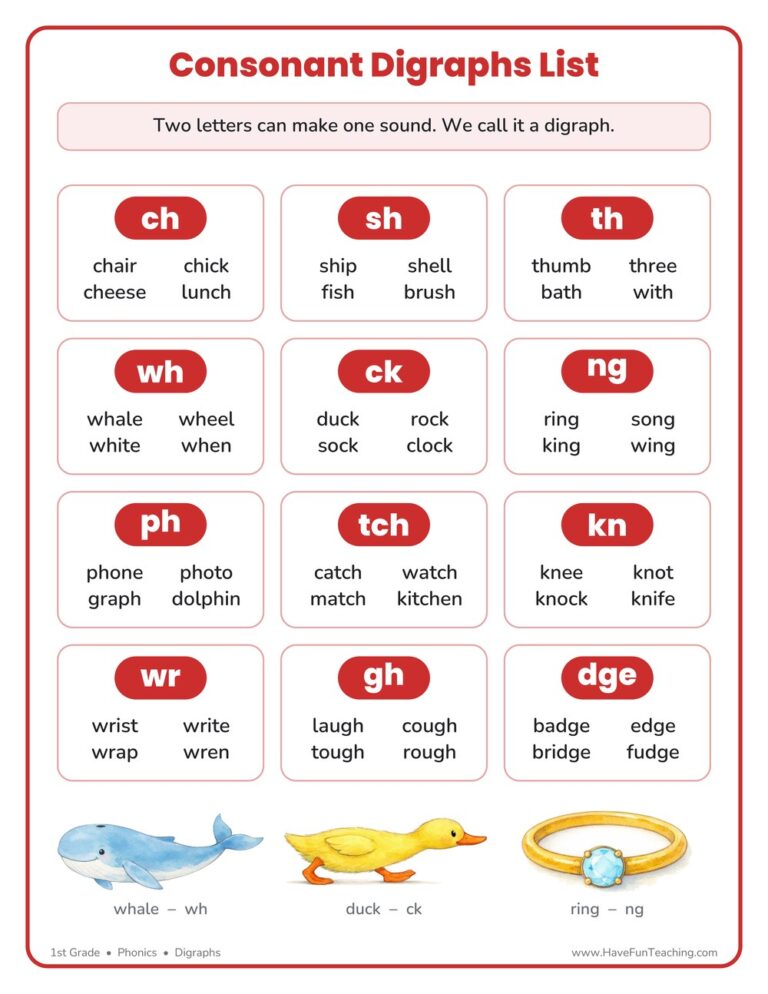
Keep this Digraphs Word List within reach during 1st Grade phonics. Twelve consonant digraphs and forty-eight example words sit on one print-ready page, so readers can check a spelling in seconds.
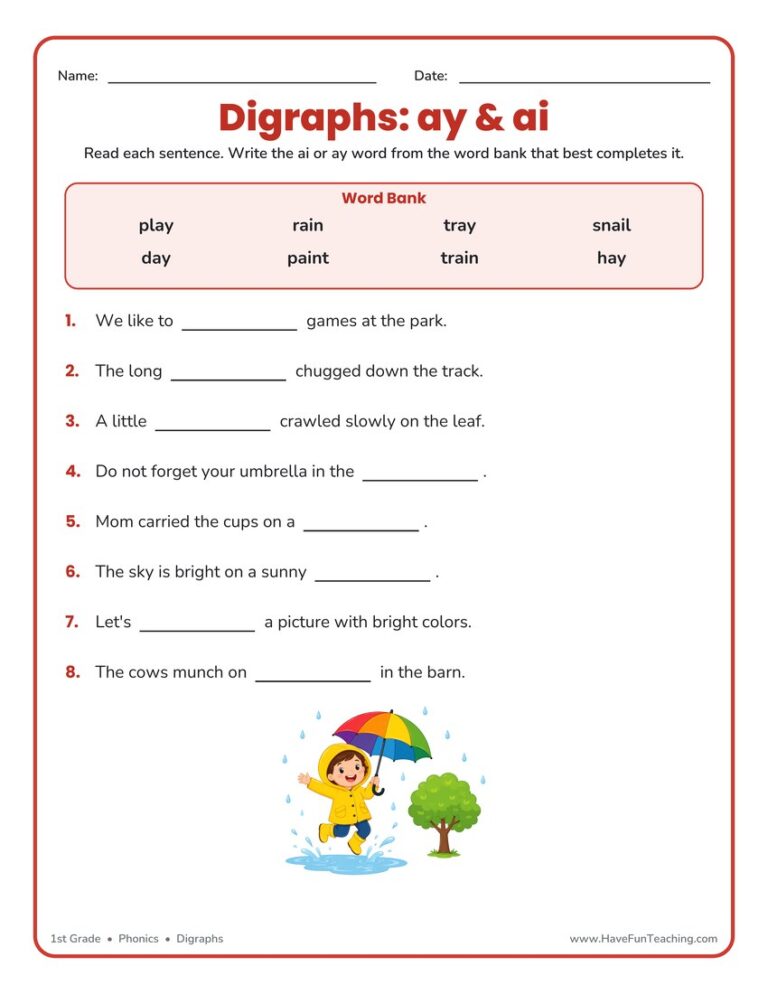
This AI AY Digraphs Fill in Blanks Worksheet lets 1st graders use a word bank to complete eight sentences with long-a words spelled ai and ay. An answer key is included for quick, no-prep phonics practice.

This NG/NK digraph worksheet asks 1st graders to sort six words by their ending sound and then build four more. Answer key included for fast, no-prep phonics practice.

This EE EA Vowel Worksheet gives 1st graders fun practice sorting and spelling long E words spelled ee and ea. Includes an answer key — perfect for phonics centers, homework, or quick no-prep review.
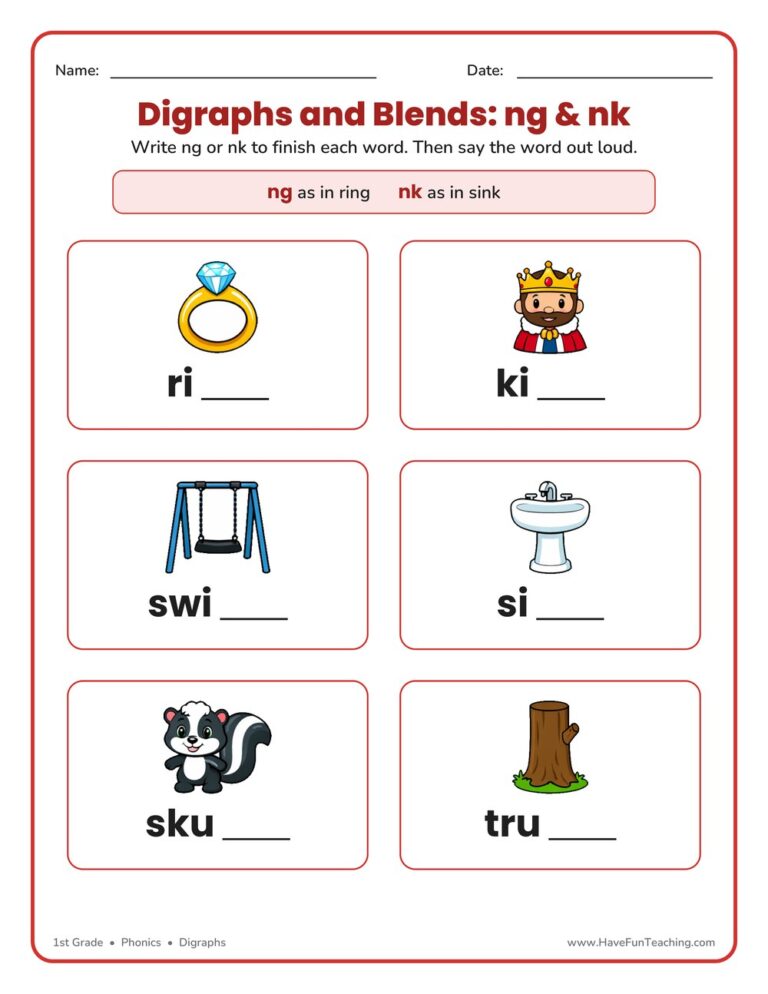
This ng and nk digraph worksheet gives 1st graders picture-clue practice writing the ending sounds in words like ring and skunk. An answer key is included for quick, no-prep phonics practice.
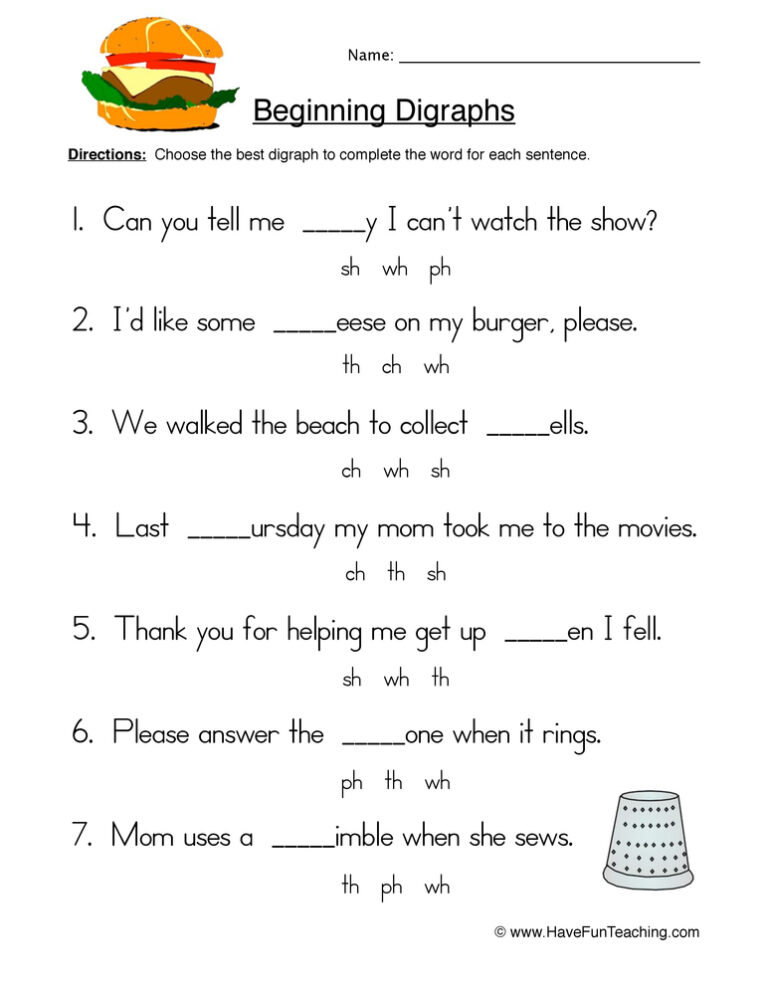
This beginning digraphs fill in the blank worksheet has 1st graders write ch, sh, th or wh to finish words in sentences and under pictures. Answer key included, so it grades itself in seconds.

A w or wh worksheet that helps 1st graders decide which spelling makes the /w/ sound, with six picture clues and six picture-free words. Answer key included for fast, confident phonics practice.
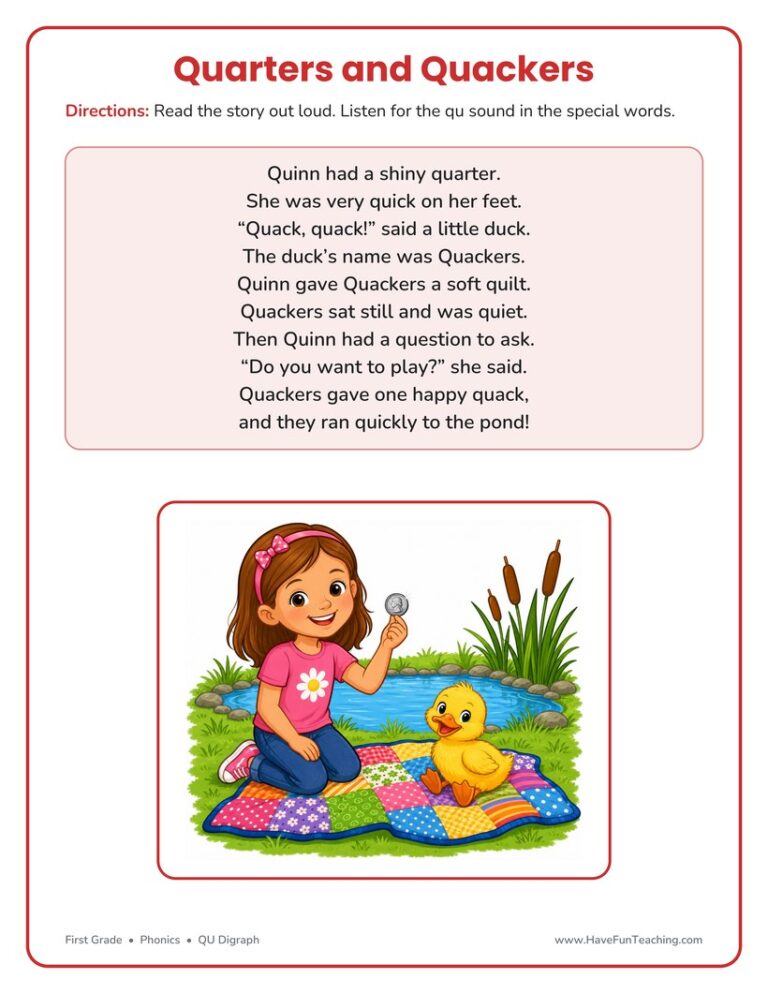
Read a fun QU Phonics Stories worksheet about Quinn and a duck named Quackers, then answer comprehension and phonics questions. Built for first grade with an answer key included, it makes qu digraph practice simple and fun.
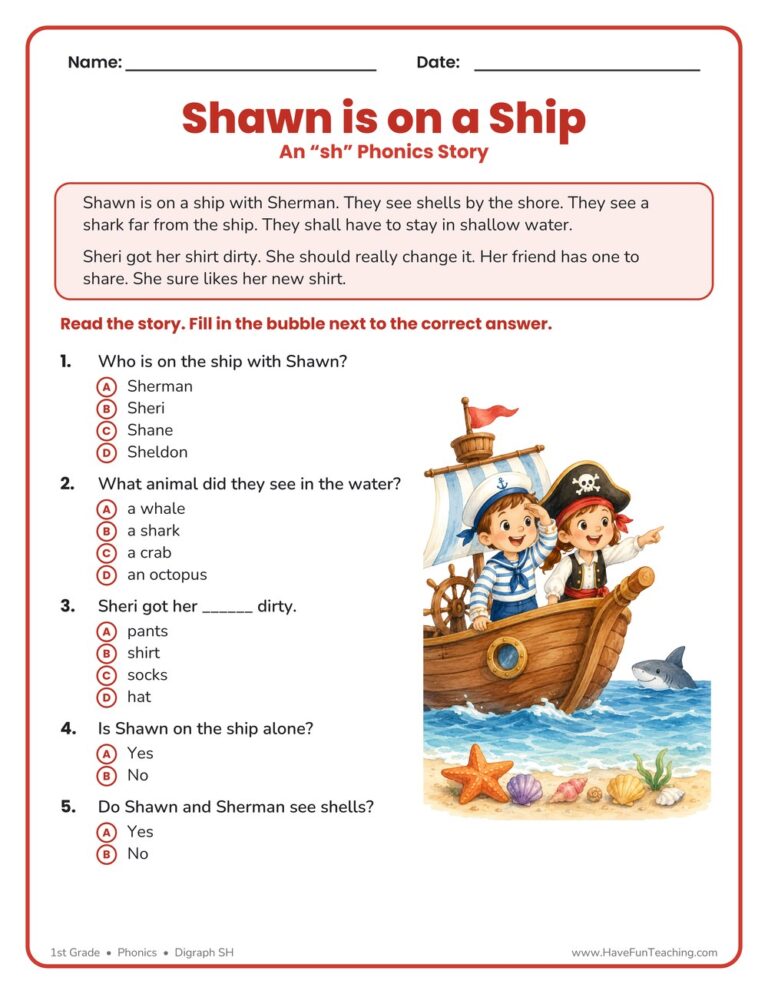
This Shawn is on a Ship SH Phonics Stories Reading Comprehension Worksheet has first graders read a decodable sh story and answer five questions. Includes an answer key—perfect for quick, no-prep digraph practice.
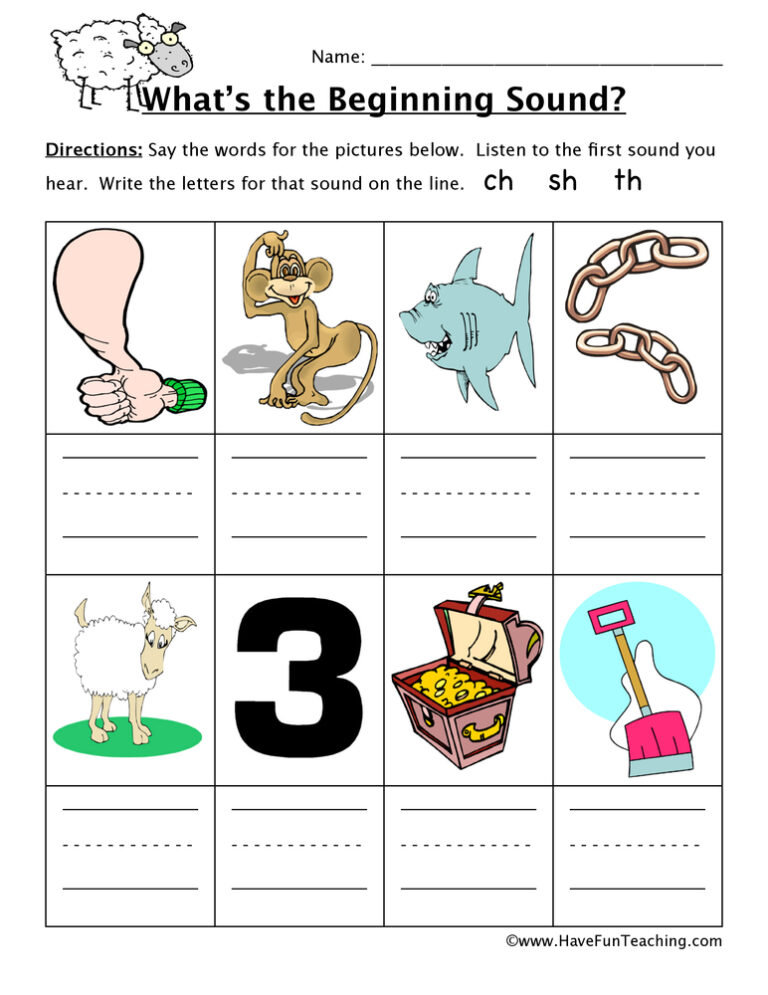
This ch, sh, th beginning sounds worksheet gives first grade students nine picture cards to say, listen to, and finish by writing the missing digraph. An answer key is included, so practice is quick to check.
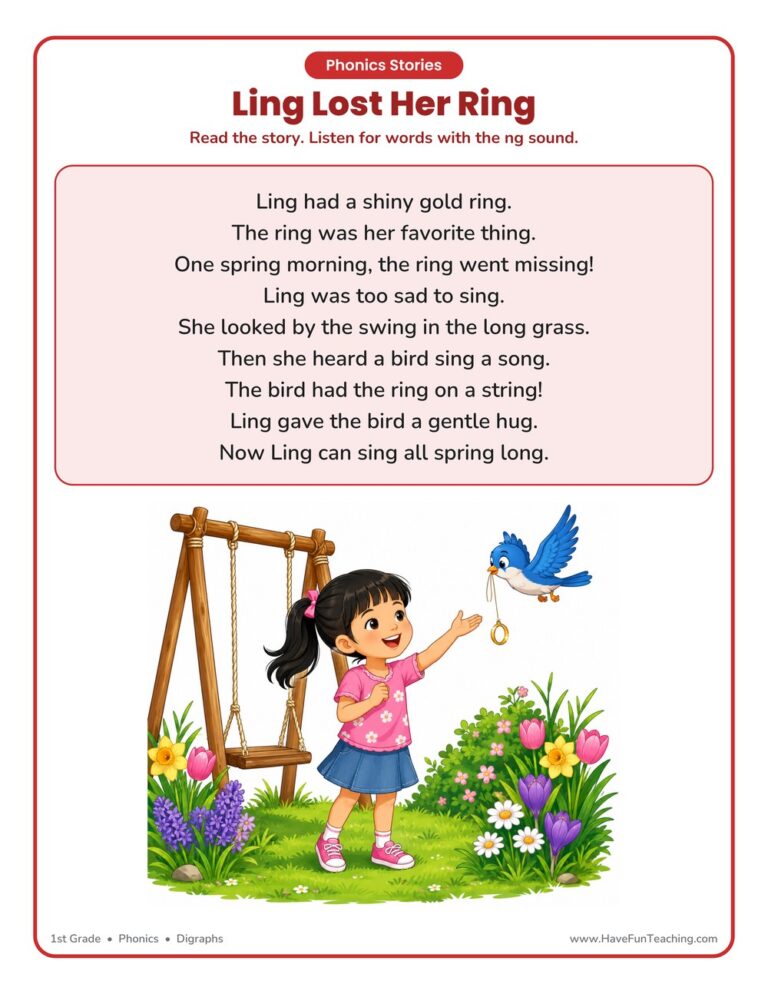
This NG Phonics Stories worksheet gives first graders a decodable ng story with reading comprehension questions and a word-building activity. An answer key is included, so young readers build phonics and comprehension skills with confidence.

Using the Blends, Digraphs, and Trigraphs Activity, students create lists of words that have beginning and ending blends, digraphs, or trigraphs.
Reviews
There are no reviews yet