

Double Digit Add Regrouping Worksheet
This Double Digit Add Regrouping Worksheet gives 2nd graders twelve column addition problems, every one of them requiring a carry. An answer key is included, so it grades in a minute flat.
$6.97
Or free with a membership — members pay $3.33/mo for all 10,000+ resources. See plans
Want this one free?
Tell us where to send it and it’s yours — no card, no catch.
One free resource per teacher. We’ll also send free teaching ideas each week — unsubscribe anytime.
Teaching is easier with a membership
Unlimited printables, games & videos for PreK–6th — for your classroom or homeschool. Cancel anytime.
Start your 3-day free trial$0 today · cancel anytime · Instant access to 10,000+ resources
About this resource
Description
Regrouping is the moment addition stops being a memory game and starts being a system. Once the ones column adds up to ten or more, a second grader has to trade those ten ones for a single ten, carry it, and finish the tens column with the extra in place. This Double Digit Add Regrouping Worksheet gives twelve column problems that all cross that line, so a student practises the trade twelve times instead of stumbling into it once or twice on a mixed page.
The layout is deliberately quiet. Each problem sits in its own rounded card with a numbered badge, the digits ride a place-value grid so ones sit under ones and tens under tens, and the sum is written on clear white space below the equation bar. Every pair of addends is a two-digit number, no addend contains a zero, and every sum stays within 100 — the range second grade actually owns. Use this two digit addition with regrouping worksheet as morning work, as a math-center task, or as a quick check before moving on to three-digit sums.
What’s Included
- 1 print-ready PDF worksheet
- Answer key
- 12 double-digit column addition problems, every one requiring regrouping
Three things make this Double Digit Add Regrouping Worksheet worth the printing. First, every single item regroups, so a student cannot pass by guessing which problems need the carry — the skill is the whole page. Second, the place-value grid keeps the columns straight, which removes the most common source of wrong answers at this age: a tens digit that drifted out of its column. Third, no problem repeats an addend, a sum, or even a pair of ones digits, so a child who has spotted a pattern in one problem gets no free ride on the next.
Away from the worksheet, keep the trade concrete. Build each problem with base-ten blocks or bundles of straws and physically swap ten ones for one ten before writing anything down. Play a two-dice game where each player rolls a two-digit number and the first to a hundred wins. Ask a child to explain out loud why the little one goes above the tens column, then check a friend’s work and say where it went wrong. Explaining the trade is what makes it stick.
Related Resources
What teachers say
Reviews
You must be logged in to post a review.

This addition and subtraction word problems worksheet gives 2nd graders four real-world number stories to solve within 100. It includes a complete answer key, making it perfect for no-prep math practice at home or in the classroom.
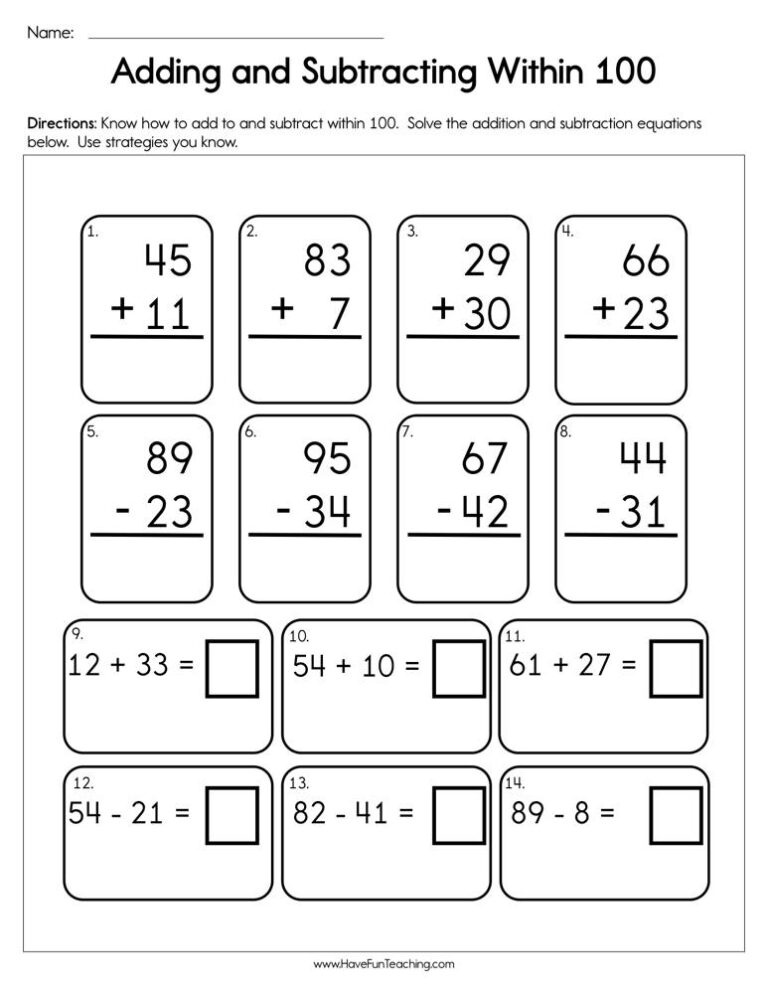
An adding and subtracting within 100 worksheet that helps 2nd graders solve two-digit problems in both stacked and horizontal form. Includes a complete answer key—great for quick, no-prep math practice at home or school.
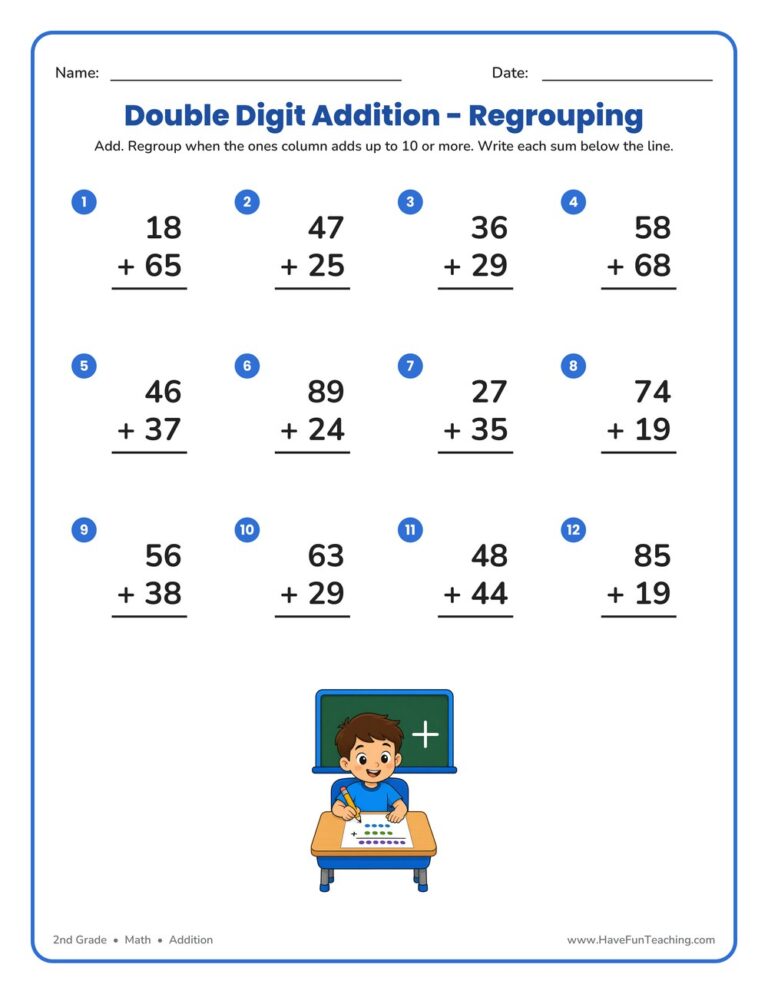
This double digit addition with regrouping worksheet gives 2nd graders twelve column-addition problems that practice carrying from the ones to the tens place. Includes a complete answer key—perfect for no-prep math practice at home or in class.

This Adding and Arrays Worksheet asks 2nd grade students to write a number sentence for six arrays and two story problems. An answer key is included, so practice with equal rows takes only minutes.

This Add and Subtract 10 and 100 Worksheet gives 2nd Grade students mental math practice with tens and hundreds, number patterns, and two word problems. An answer key is included, so checking work takes seconds.
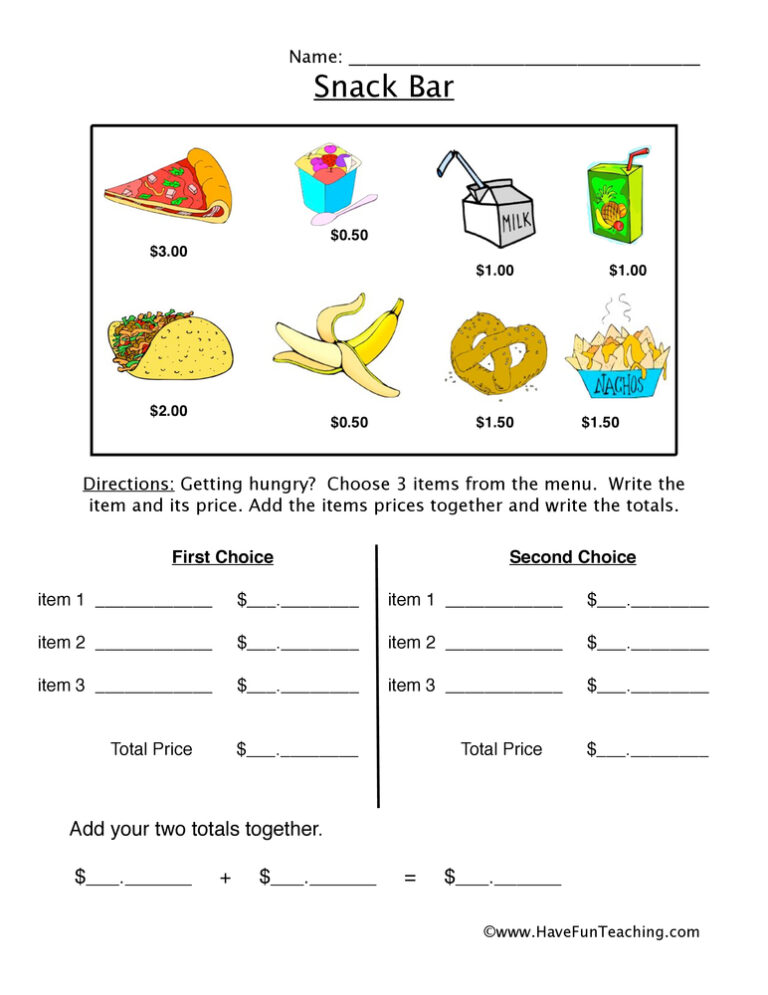
Students use the Ordering from a Snack Bar Worksheet to read a six-item menu, write two snack prices, and add them to find each total. Built for 2nd grade with an answer key included, it makes money practice feel like lunchtime.

This Word Problems With 3 Numbers Worksheet asks 2nd graders to draw a picture and then add three addends inside real stories. An answer key is included, so checking work takes only seconds.

Practice this add and subtract 10 and 100 word problems worksheet with three number stories and a 10 more, 10 less, 100 more, 100 less chart. Built for 2nd Grade with an answer key included, so mental math clicks fast.
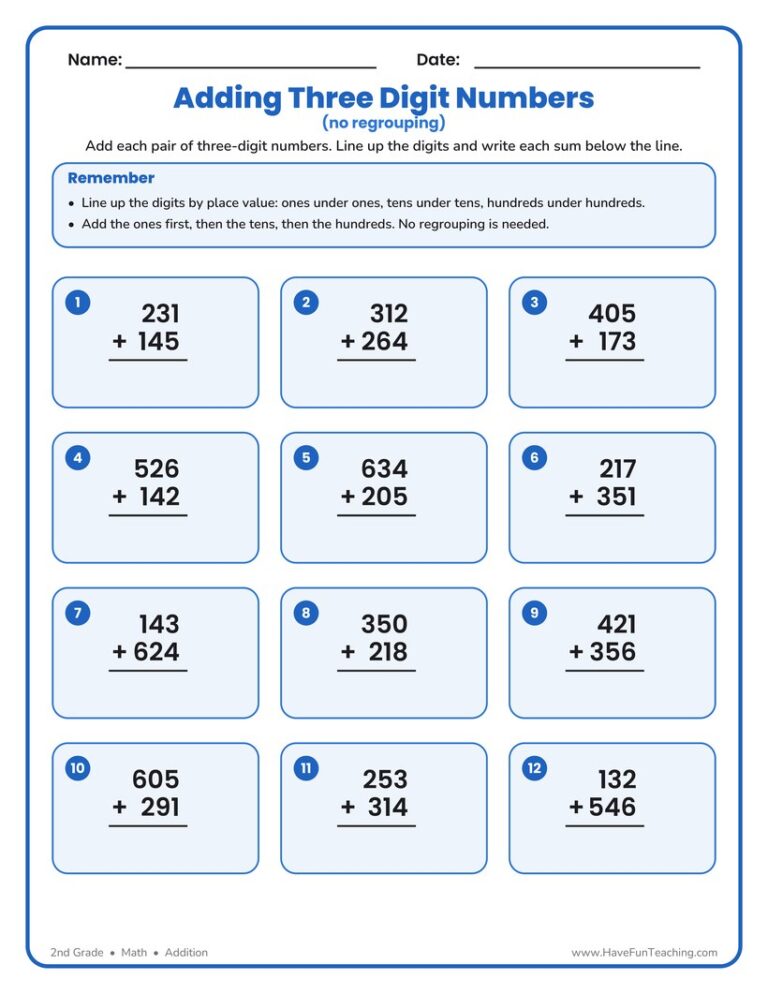
Practice adding three-digit numbers with this triple digit addition no regrouping worksheet for 2nd grade. Twelve column-addition problems with an answer key included — perfect for building place-value fluency with no-prep math practice.

This double digit addition with regrouping worksheet gives 2nd graders eight column-form problems that all trade ten ones for a new ten, plus a word problem. Answer key included for fast, no-prep practice.
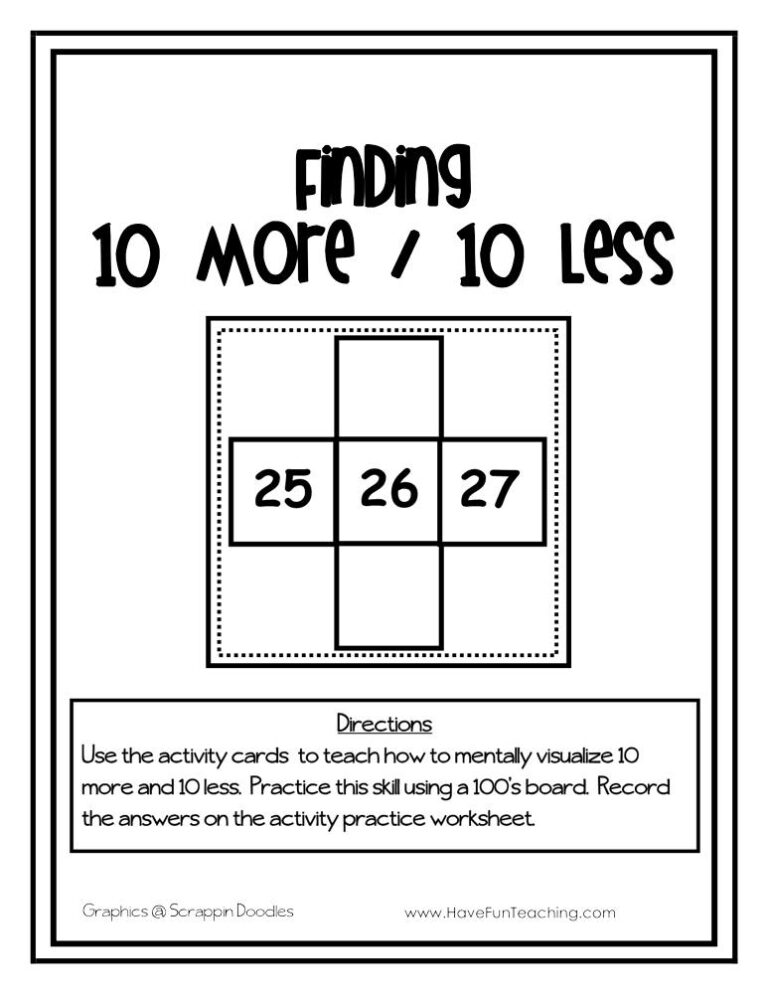
In this Finding 10 More 10 Less Activity, students practice finding 10 more and less than a given number to build skip counting and base ten skills.
Using the Adding 8 Song (Lyric Mjusic Video), students sing and practice adding 8 with all addition facts 1-15. Your kids will learn how to add 8.

Reviews
There are no reviews yet