

Draw Tens and Ones Worksheet
This draw tens and ones worksheet has kindergarten students draw one ten and some ones for six teen numbers and finish each equation. An answer key is included for fast, easy checking.
$6.97
Or free with a membership — members pay $3.33/mo for all 10,000+ resources. See plans
Want this one free?
Tell us where to send it and it’s yours — no card, no catch.
One free resource per teacher. We’ll also send free teaching ideas each week — unsubscribe anytime.
Teaching is easier with a membership
Unlimited printables, games & videos for PreK–6th — for your classroom or homeschool. Cancel anytime.
Start your 3-day free trial$0 today · cancel anytime · Instant access to 10,000+ resources
About this resource
Description
Teen numbers are the first place young learners meet the big idea of place value, and this draw tens and ones worksheet helps kindergarten students see that every number from 11 to 19 is made of one ten and some more ones. Instead of memorizing, children build each number themselves by drawing a ten stick and the leftover ones, then write the matching number in an equation such as 16 = 10 + 6.
This kindergarten base 10 worksheet starts with a worked example so students can see exactly what to do. Six teen-number cards follow. On each card the child looks at the number, draws one ten and the correct number of ones in the dotted drawing space, and writes how many ones in the box. The numbers are mixed up, so children must think about each one rather than follow a pattern. Use it for independent practice, a math center, small-group instruction, or a quick homework page.
What’s Included
- A worked example showing 13 as one ten and three ones
- Six teen-number cards with a drawing space and an equation to complete
- Large, kid-friendly numbers and boxes sized for young writers
- A complete answer key with every drawing and equation filled in
This draw tens and ones worksheet helps children in three ways. First, drawing the ten and the ones makes place value concrete, so students understand why the 1 in 16 means ten. Second, writing the equation connects the picture to numbers, which builds the foundation for addition and later two-digit math. Third, the mixed order of the numbers asks children to read and think carefully, strengthening number sense and attention to detail.
Teachers and parents can extend the lesson with real objects. Bundle ten straws or craft sticks with a rubber band and let children add loose sticks to build each teen number. Use linking cubes to make a tower of ten and a few extra cubes, then ask students to say the number sentence aloud. Call out a teen number and have children show it on a whiteboard with a quick ten stick and dots, or play a game where partners build numbers for each other to name.
Related Resources
What teachers say
Reviews
You must be logged in to post a review.
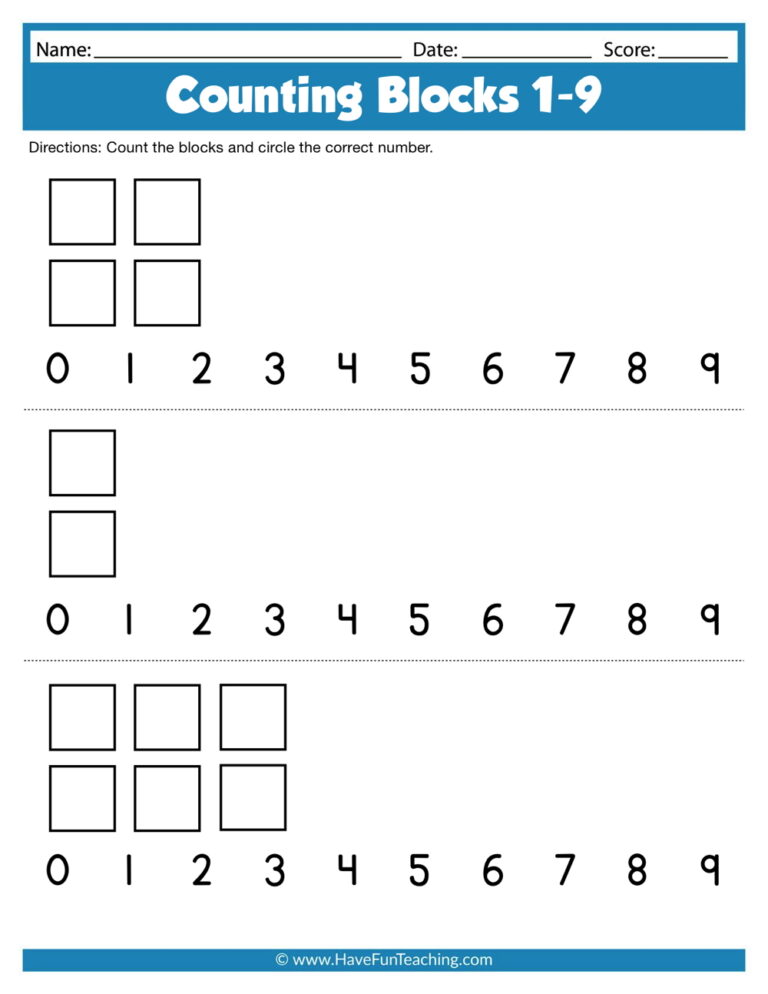
Counting Blocks 1-9 Worksheets ask Kindergarten students to count blocks, write the number, and draw sets of their own. An answer key is included, so counting practice takes no prep at all.
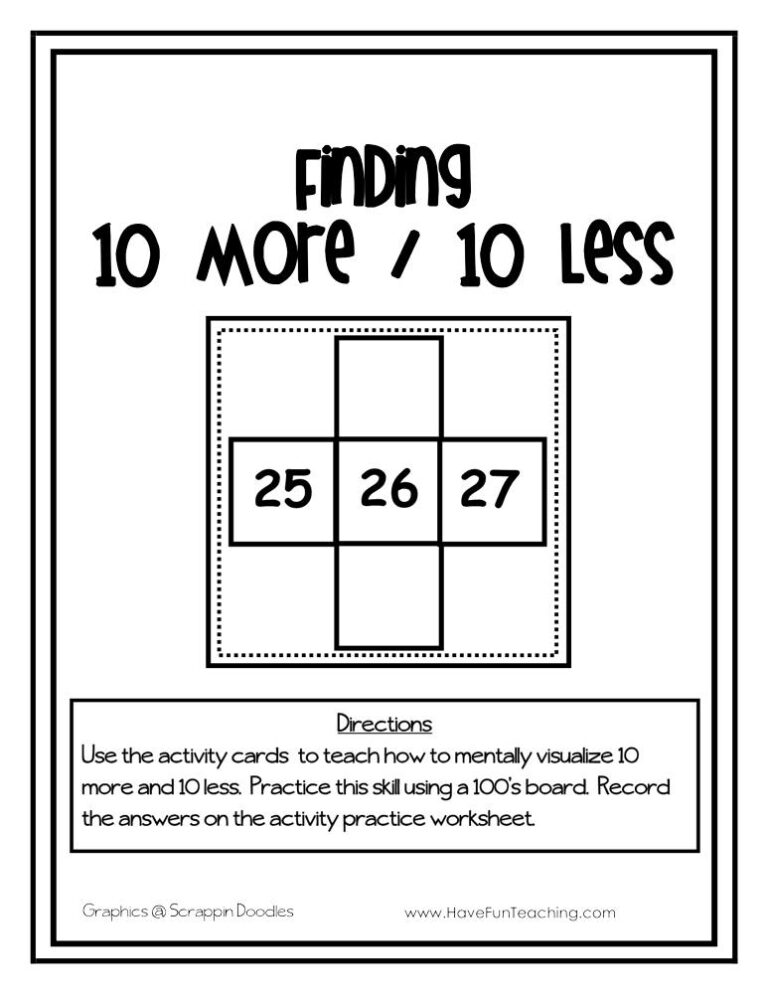
In this Finding 10 More 10 Less Activity, students practice finding 10 more and less than a given number to build skip counting and base ten skills.


This I Can Count By Tens to 100 Worksheet has kindergarten students count base-ten rods and fill in missing numbers to 100, with an answer key included so skip counting practice is quick to check.

Counting Squares Worksheets give Kindergarten students ten-frame practice: read a number and fill in the squares, then count filled squares and write the number. An answer key is included for quick checking.
Using this K.NBT.1 Kindergarten Common Core Lesson, students build numbers 11-19 using ten frame mats in order to build number awareness.

Using Rainbow Place Value Activity, students Match each place value card to the correct number on the pot of gold to build their number sense skills.
Using St. Patrick's Day Place Values Activity, students Match each place value card to the correct number on the pot of gold to build their number sense skills.
Using this K.OA.3 Kindergarten Common Core Lesson, students match equations to ten frames to build an understanding of number sense.

Using Place Value Party Place Value Activity, students build four digit numbers using a place value chart to build their number sense skills.
A printable, ready-to-use blank calendar with a landscape monthly grid and labeled day columns. Great for Kindergarten through 5th grade classrooms to map out lessons, holidays, and daily routines—just add the month and the dates.
Using the Counting Songs (Classic Video Collection), students practice skip counting by all of the numbers by singing and counting along to these thirteen videos.




Reviews
There are no reviews yet