

Drawing Friction Worksheet
This drawing friction worksheet lets 3rd graders explore force and motion by answering questions and drawing arrows to show which way friction pushes. Answer key included for quick, no-prep science practice.
$6.97
Want this one free?
Tell us where to send it and it’s yours — no card, no catch.
One free resource per teacher. We’ll also send free teaching ideas each week — unsubscribe anytime.
Free teacher account · no credit card
Membership
Get every game, song, & printable
- Every game, on any device
- 10,000+ printables
- Assign online with HFT Classroom
Then $39.97/year · cancel anytime · See plans
- Instant digital download
- Printable PDF + answer key
- Made by real teachers
Teacher / Family membership
Teaching is easier with every resource
One membership for your whole year: 10,000+ worksheets, games, songs and videos for Preschool–6th, for your classroom or homeschool.
- Unlimited printables & downloads
- Every game, on any device
- Assign online with HFT Classroom
- Cancel anytime
Teacher / Family membership · 3 days free
Yearly
Monthly would be $119.64 a year
$3.33/month
Billed $39.97 once a year
You save $79.67 every year
Start My 3 Free Days$0 today · cancel anytime
Monthly
$9.97/month
Flexible, month to month
Yearly is just $3.33/mo. Switch and save $79.67
Start My 3 Free Days$0 today · cancel anytime
About this resource
Description
Friction is the force that slows down or stops objects when they rub against each other, and this Drawing Friction Worksheet helps third grade students see exactly where and how that force works. Built for a force and motion unit, this drawing friction worksheet gives kids a clear definition of friction and then asks them to think about the direction friction pushes on everyday moving objects like a sliding sled or a heavy box being pushed across the floor.
This 3rd grade friction worksheet is a no-prep, print-and-teach page that pairs quick multiple-choice questions with a hands-on drawing activity. Use it as a lesson warm-up, a guided practice page, an exit ticket, or homework. Students first fill in the bubble beside the best answer to check what they understand about friction, and then draw arrows on two illustrations to show which way the friction force pushes as each object moves to the right.
What’s Included
- 1 print-ready PDF worksheet
- Answer key
- 4 multiple-choice questions and 2 draw-the-arrow friction activities
Kids learn best when they connect a science idea to real motion, and this drawing friction worksheet does that in three ways. First, the short definition box builds vocabulary so students can explain what friction is in their own words. Second, the multiple-choice questions reinforce that friction slows objects down and always pushes in the opposite direction of motion. Third, the drawing activity turns an invisible force into something students can see and mark on the page, deepening their understanding of force and motion.
To extend the lesson, have students rub their hands together to feel friction create warmth, or race toy cars across a smooth floor and a rough carpet to compare how much friction each surface makes. Ask kids to hunt for friction around the classroom, from shoes gripping the floor to an eraser dragging on paper. These simple experiments help parents and teachers make friction memorable long after the worksheet is finished.
Related Resources
What teachers say
Reviews
You must be logged in to post a review.
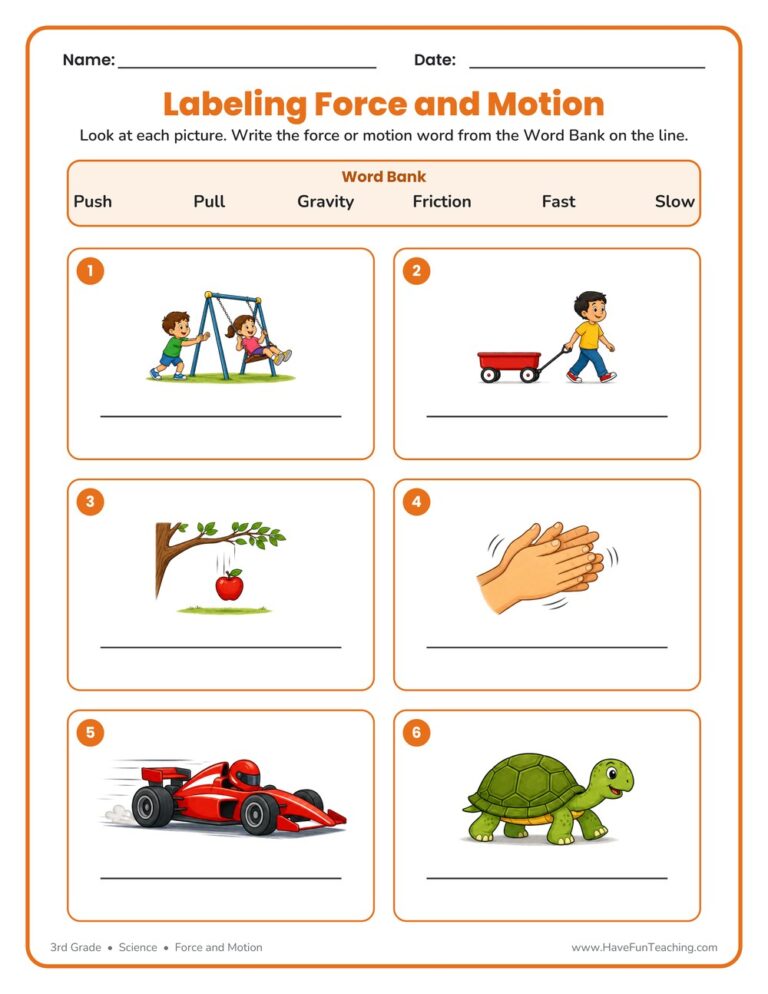
The Labeling Force and Motion Worksheet has 3rd graders label six pictures with push, pull, gravity, friction, fast, and slow from a word bank. Includes an answer key for easy, no-prep science practice.
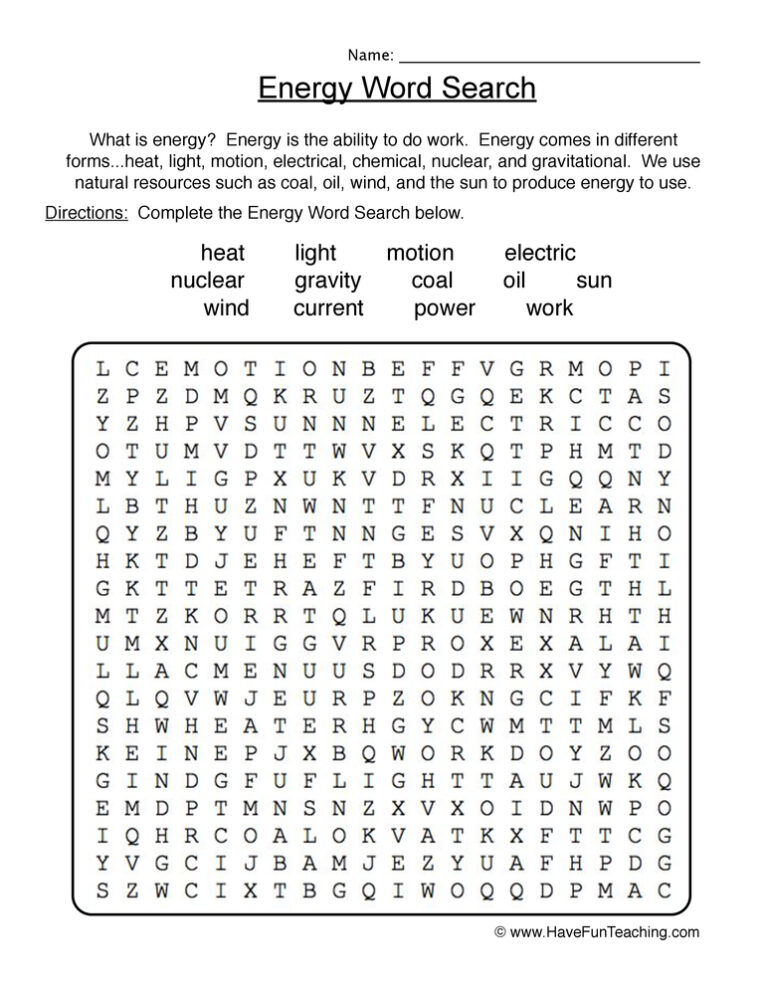
A ten-word Energy Wordsearch Worksheet that helps 3rd graders name the forms and sources of energy, then use one in a sentence of their own. Answer key included for fast, no-prep science review.

This Sound Pitch Worksheet helps 3rd grade students use sound waves and real instruments to tell whether a vibration makes a high or low pitch. An answer key is included, so science practice takes minutes to set up.
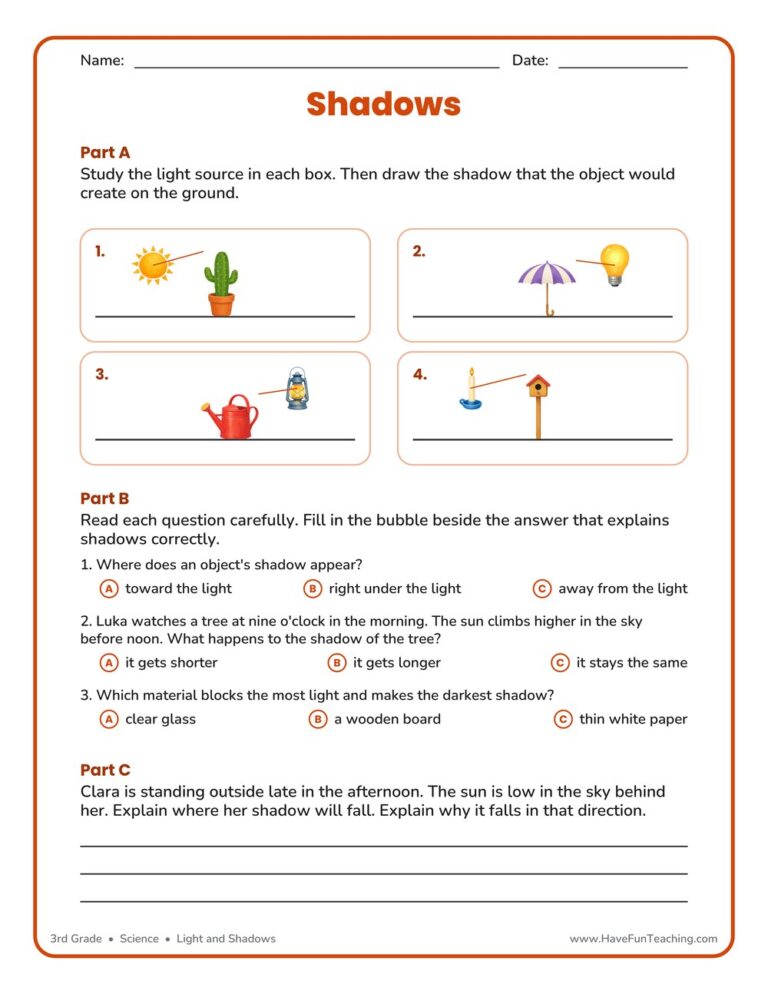
A shadows drawing worksheet where 3rd graders study four light sources, draw the shadow each object casts, and explain why it falls where it does. Answer key included for quick, no-prep science practice.
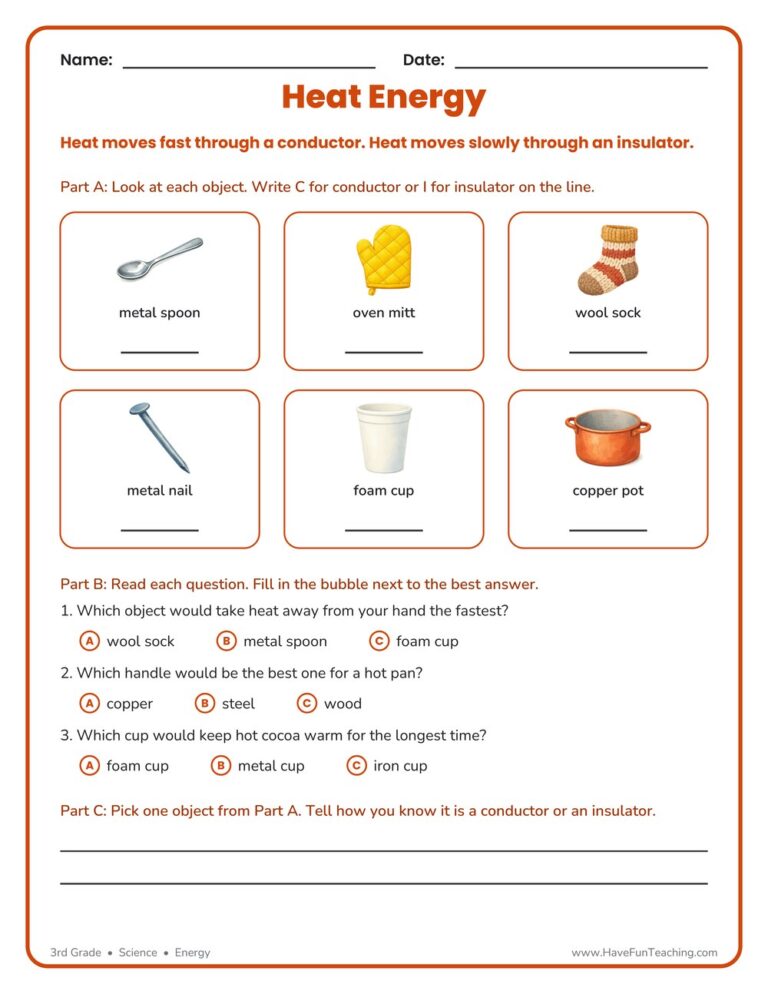
This Conductors and Insulators Heat Energy Worksheet helps 3rd grade students sort everyday objects, answer applied questions, and explain their thinking. Answer key included, so checking work takes seconds.
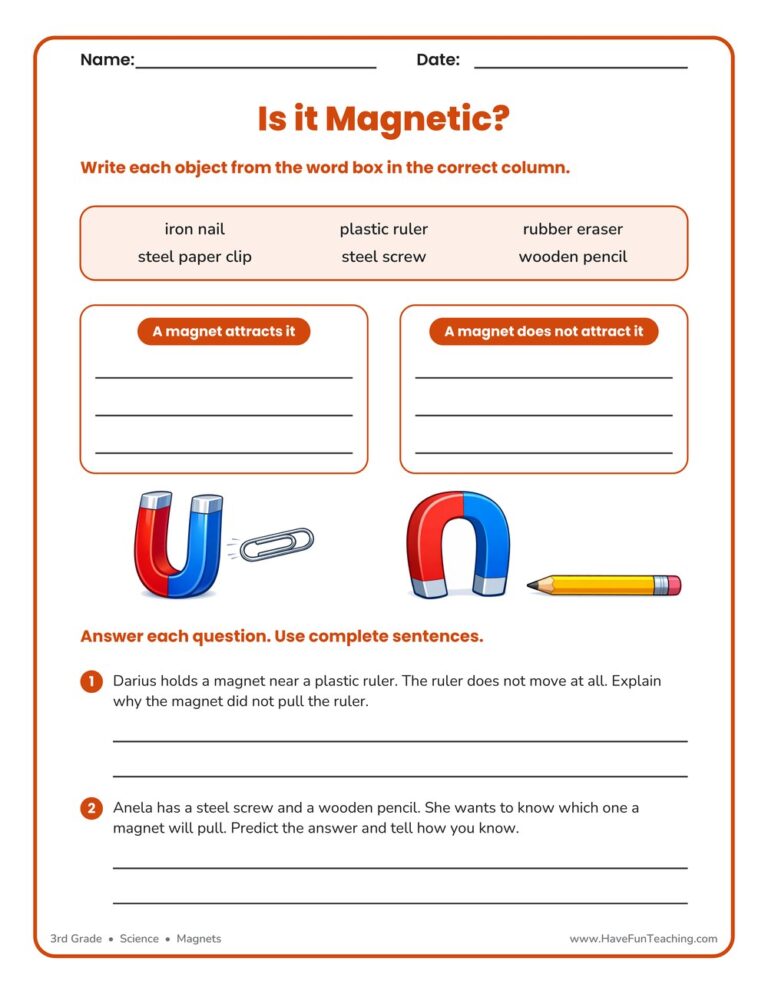
This Is it Magnetic Worksheet has 3rd Grade students sort six classroom objects by the material they are made of, then explain two predictions in writing. Answer key included, so checking work takes seconds.

This Drawing Heat Energy Worksheet gives 3rd Grade students four picture cards for tracing where heat energy comes from and where it goes, plus an answer key, so heat transfer practice is ready to print.

This magnetism experiment worksheet has 3rd graders sort eight objects by material, decide whether magnet poles attract or repel, and explain why steel is pulled and plastic is not. Answer key included for fast, no-prep science practice.

This friction drawing worksheet sends 3rd graders hunting for four real places where surfaces rub together. They sketch each one and write about it, turning an abstract force into something they can point to.

Using Magnet Activity, students sort the picture cards into two categories: magnetic or non-magnetic.
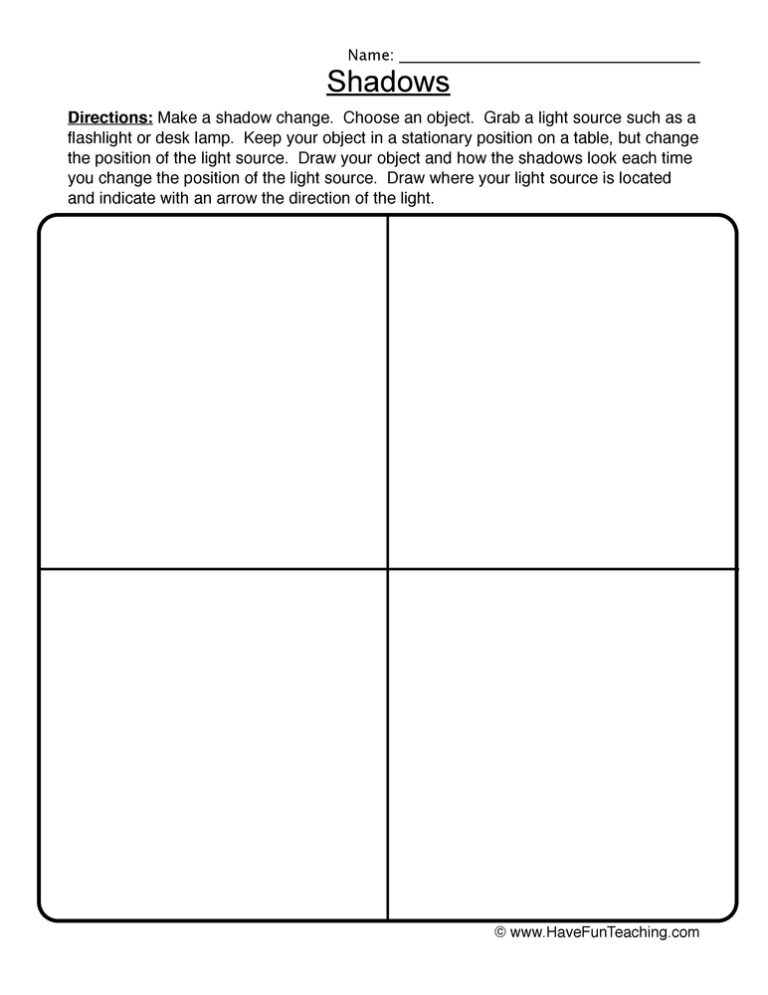
This shadows movement worksheet asks 3rd graders to sort eight light positions into longer and shorter shadows, then name what the light and the shadow did. Answer key included for no-prep science practice.
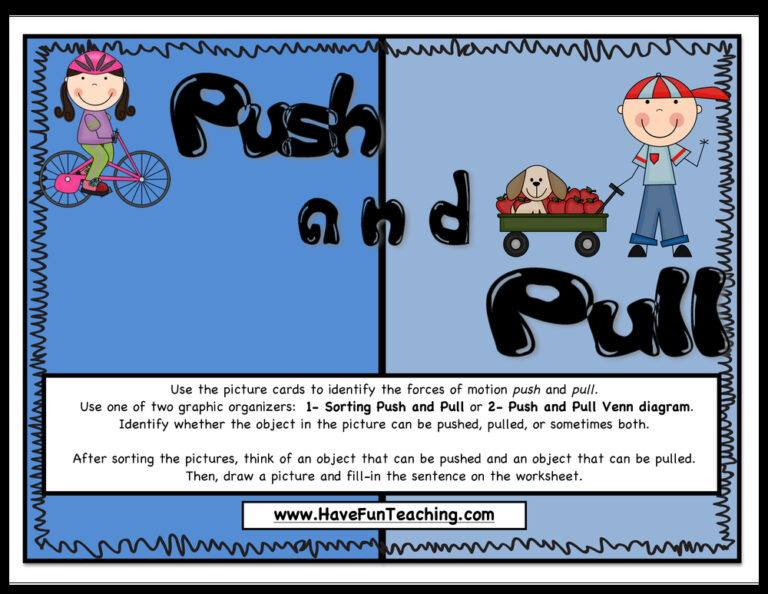
Using Motion Activity, students sort picture cards into categories of push, pull, or both to build their understanding of force.




Reviews
There are no reviews yet