

Drawing Heat Energy Worksheet
This Drawing Heat Energy Worksheet gives 3rd Grade students four picture cards for tracing where heat energy comes from and where it goes, plus an answer key, so heat transfer practice is ready to print.
$6.97
Want this one free?
Tell us where to send it and it’s yours — no card, no catch.
One free resource per teacher. We’ll also send free teaching ideas each week — unsubscribe anytime.
Free teacher account · no credit card
Membership
Get every game, song, & printable
- Every game, on any device
- 6,500+ resources
- Assign online with HFT Classroom
Then $39.97/year · cancel anytime · See plans
- Instant digital download
- Printable PDF + answer key
- Made by real teachers
Teacher / Family membership
Teaching is easier with every resource
One membership for your whole year: 6,500+ worksheets, games, songs and videos for Preschool–6th, for your classroom or homeschool.
- Unlimited printables & downloads
- Every game, on any device
- Assign online with HFT Classroom
- Cancel anytime
Teacher / Family membership · 3 days free
Yearly
Monthly would be $119.64 a year
$3.33/month
Billed $39.97 once a year
You save $79.67 every year
Start My 3 Free Days$0 today · cancel anytime
Monthly
$9.97/month
Flexible, month to month
Yearly is just $3.33/mo. Switch and save $79.67
Start My 3 Free Days$0 today · cancel anytime
About this resource
Description
Heat is the easiest kind of energy for a child to feel and the hardest one to explain, which is exactly why this Drawing Heat Energy Worksheet asks students to trace its path instead of defining it. Third graders already know that soup is hot and an ice cube is cold. What they usually have not been taught is the rule underneath: heat energy always moves in one direction, out of the warmer object and into the cooler one, until the two are the same temperature. Once a student can say which way the heat is going, every example they meet afterward makes sense.
The worksheet gives four everyday scenes, each in its own picture card with a short caption: a cold spoon resting in hot soup, an ice cube melting on a warm plate, a marshmallow toasting beside a campfire, and a metal pot heating over a burner. For each card the student writes where the heat energy comes from on the first line and where it goes on the second. A closing section asks for two things that happen as a hot pan slowly cools, which turns the rule into a written explanation rather than a fill-in-the-blank. A complete answer key is included on the final page.
What’s Included
- Four illustrated heat transfer scenes, each with a caption and two writing lines
- A written response section on what happens as a hot object cools
- Every card has exactly one defensible answer, so the sheet can be graded quickly
- Clear cards, numbered badges, and roomy third grade writing lines
- A complete answer key on the final page
Three Reasons This Helps Kids
- It teaches direction, not vocabulary. Naming the hotter object and the cooler one forces the student to apply the rule instead of repeating a definition they do not yet understand.
- It uses scenes children already know. Soup, ice, campfires and cooking pots need no set up, so the thinking goes into the science rather than into decoding an unfamiliar situation.
- It ends in writing. The final section asks for an explanation in the student’s own words, the kind of constructed response that science assessments actually ask for.
Teacher and Parent Ideas
Use this drawing heat energy worksheet as the check for understanding at the end of a heat transfer lesson, or as a warm up before introducing conductors and insulators. Ask students to draw an arrow on each card showing the direction the heat moves, then compare arrows with a partner. Try the ice cube card as a real experiment: put one cube on a metal tray and one on a wooden board and time which melts first. For an extension, have students find three more examples of heat moving in their own kitchen and write a caption for each. This 3rd grade energy worksheet pairs naturally with a lesson on states of matter, since melting and boiling are heat transfer in action.
Related Resources
What teachers say
Reviews
Write a review, earn store credit
Get 25¢ in credit for every approved review of a resource you’ve downloaded, played or purchased — up to 15 a month. Credit applies automatically to your membership payments, so your reviews can help pay for your membership.
Honest reviews only — any star rating earns the same. Program rules
Log in to write a review and earn store credit.
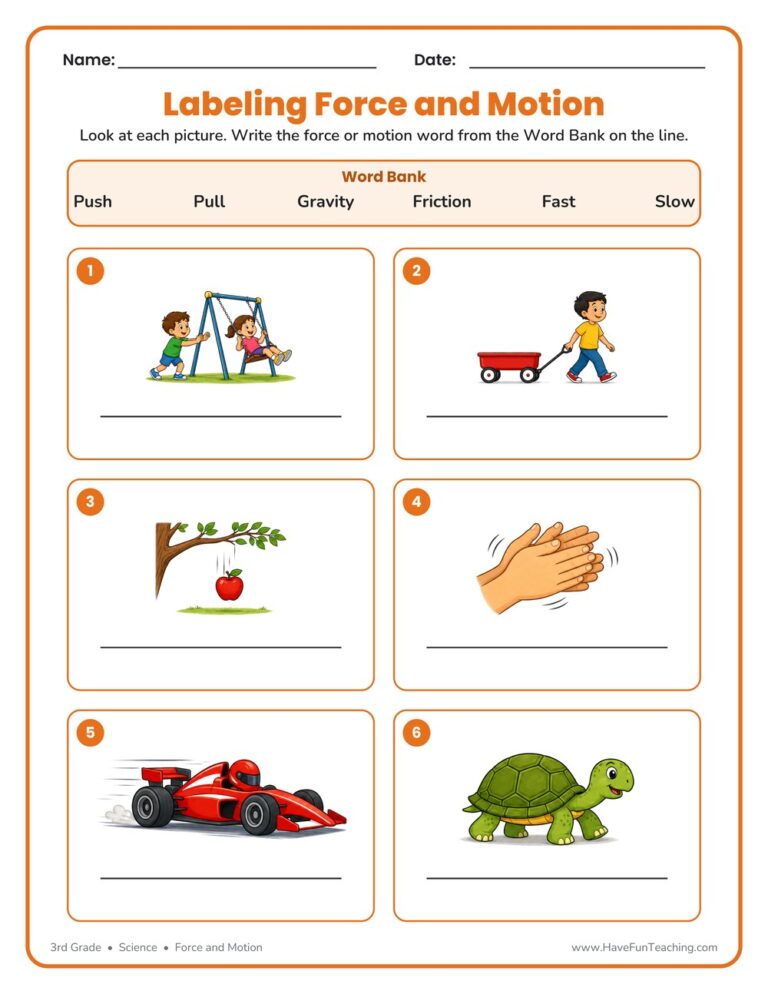
The Labeling Force and Motion Worksheet has 3rd graders label six pictures with push, pull, gravity, friction, fast, and slow from a word bank. Includes an answer key for easy, no-prep science practice.
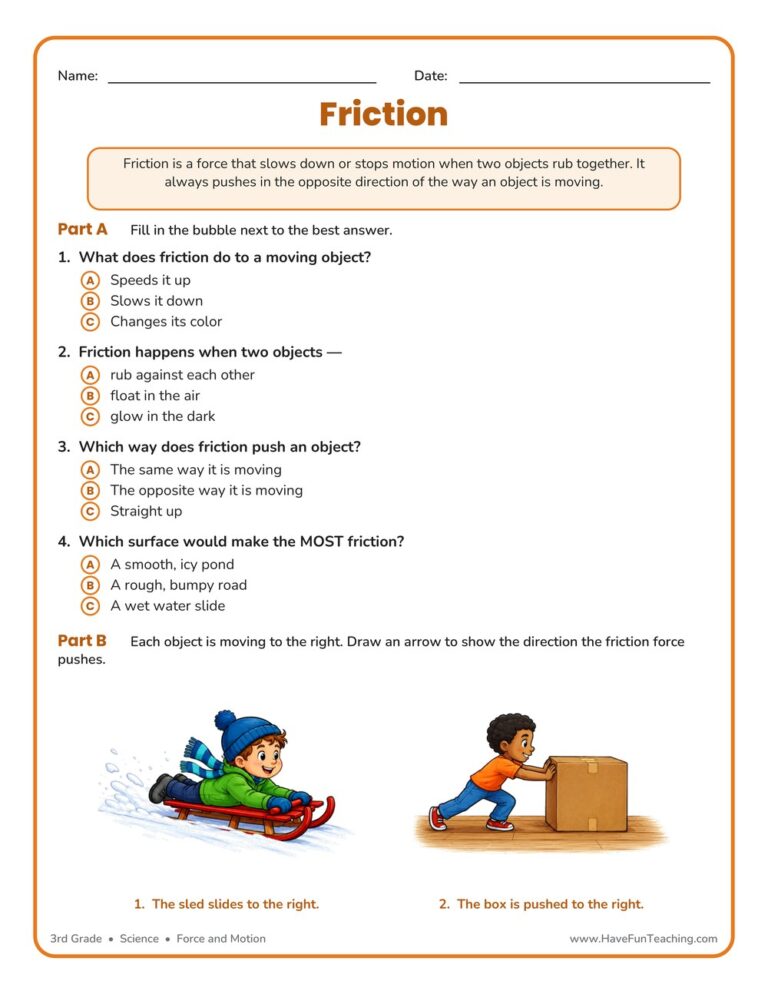
This drawing friction worksheet lets 3rd graders explore force and motion by answering questions and drawing arrows to show which way friction pushes. Answer key included for quick, no-prep science practice.
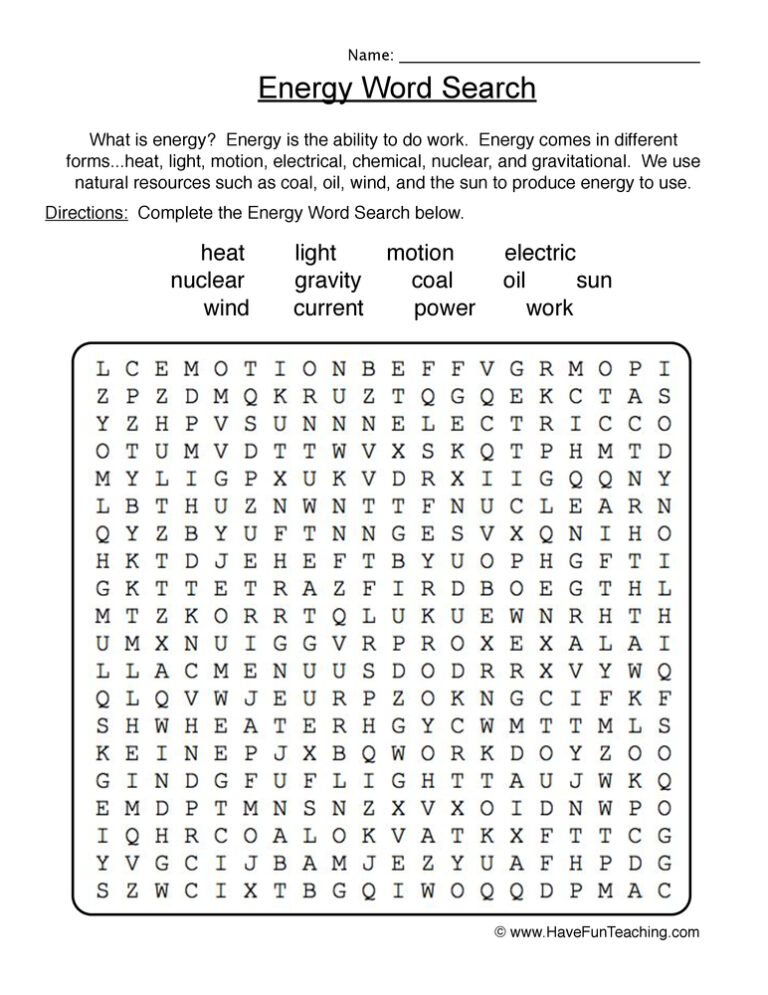
A ten-word Energy Wordsearch Worksheet that helps 3rd graders name the forms and sources of energy, then use one in a sentence of their own. Answer key included for fast, no-prep science review.

This Sound Pitch Worksheet helps 3rd grade students use sound waves and real instruments to tell whether a vibration makes a high or low pitch. An answer key is included, so science practice takes minutes to set up.
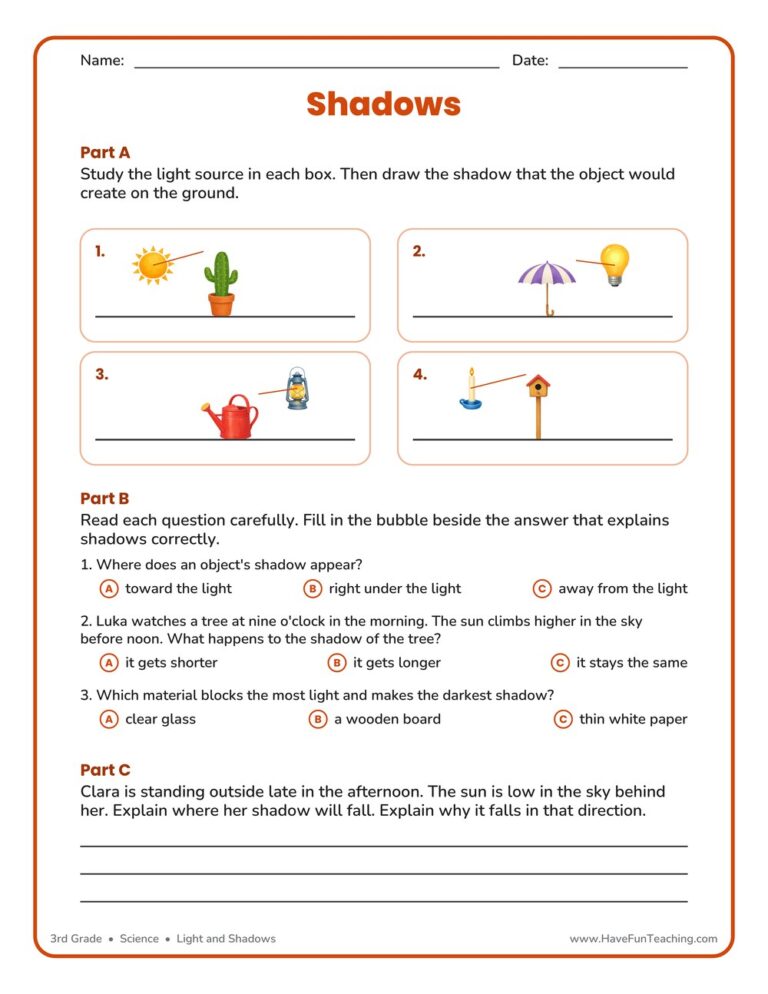
A shadows drawing worksheet where 3rd graders study four light sources, draw the shadow each object casts, and explain why it falls where it does. Answer key included for quick, no-prep science practice.

This friction drawing worksheet sends 3rd graders hunting for four real places where surfaces rub together. They sketch each one and write about it, turning an abstract force into something they can point to.
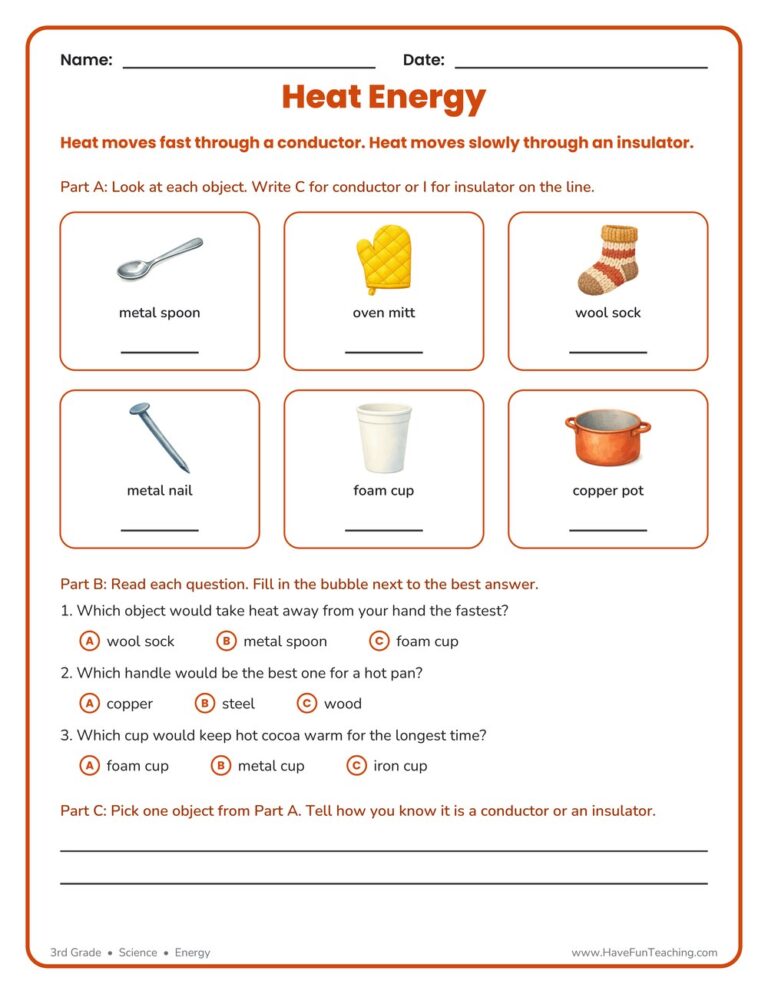
This Conductors and Insulators Heat Energy Worksheet helps 3rd grade students sort everyday objects, answer applied questions, and explain their thinking. Answer key included, so checking work takes seconds.
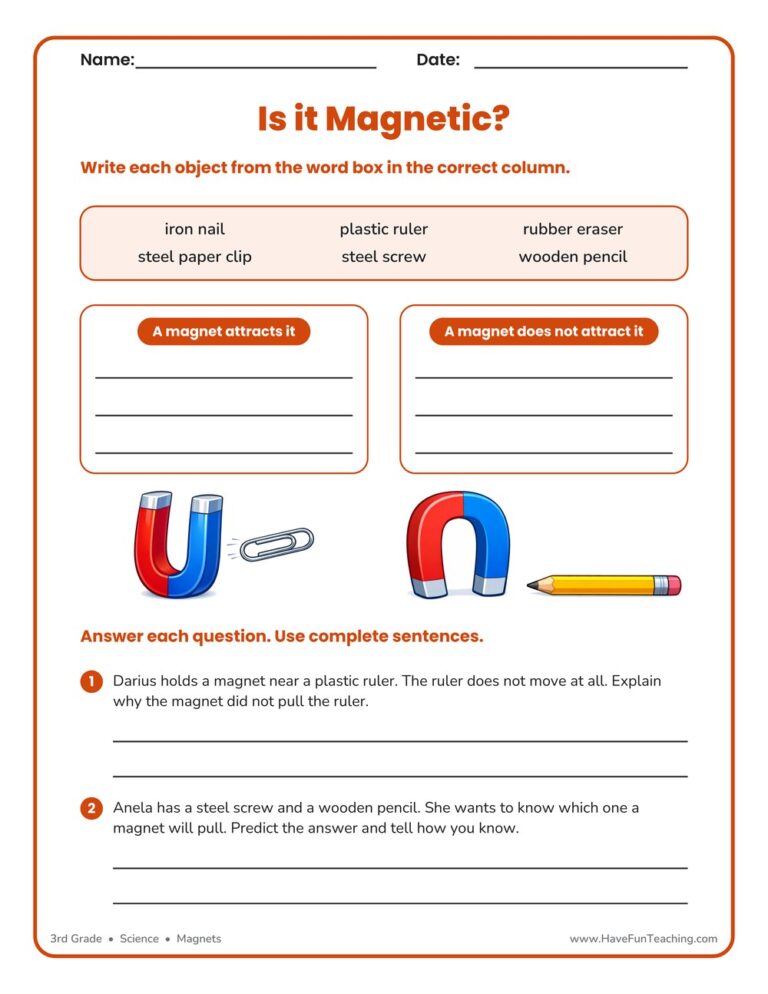
This Is it Magnetic Worksheet has 3rd Grade students sort six classroom objects by the material they are made of, then explain two predictions in writing. Answer key included, so checking work takes seconds.
This shadows movement worksheet asks 3rd graders to sort eight light positions into longer and shorter shadows, then name what the light and the shadow did. Answer key included for no-prep science practice.
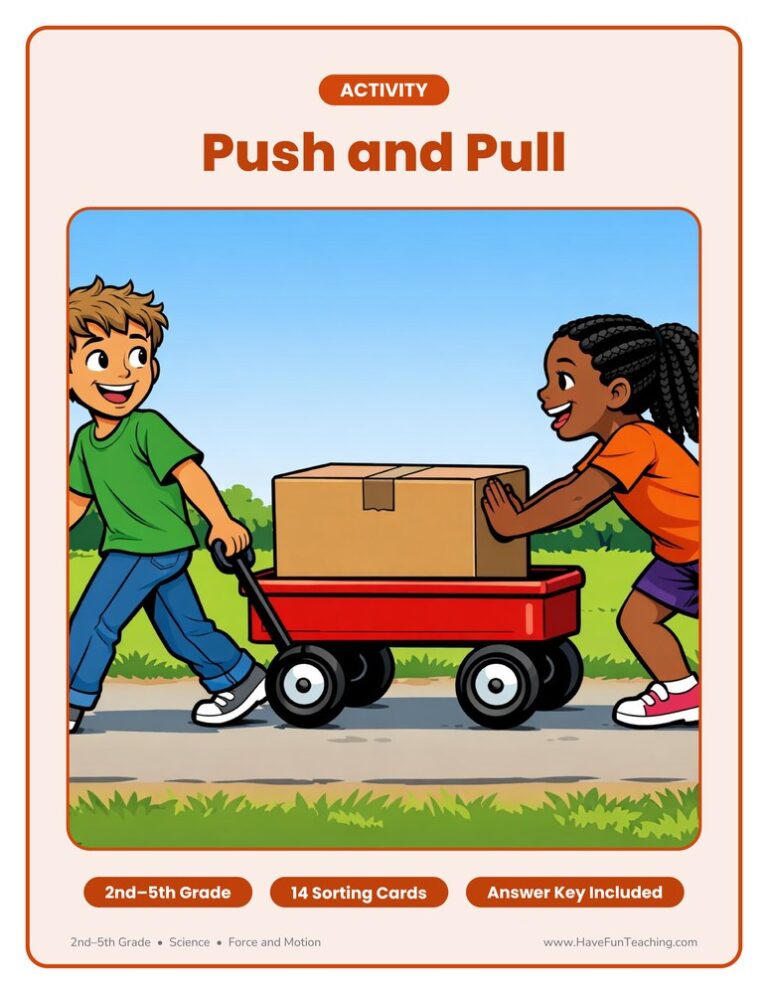
This motion activity helps 2nd to 5th grade students sort everyday actions into pushes and pulls, with 14 sorting cards, a practice page, and an answer key included.

This magnet activity has kindergarten to 3rd grade students sort picture cards into things a magnet will pull and things it will not, with a sorting mat, practice page and answer key.

This magnetism experiment worksheet has 3rd graders sort eight objects by material, decide whether magnet poles attract or repel, and explain why steel is pulled and plastic is not. Answer key included for fast, no-prep science practice.




Reviews
There are no reviews yet