
Elapsed Time Stories Worksheet
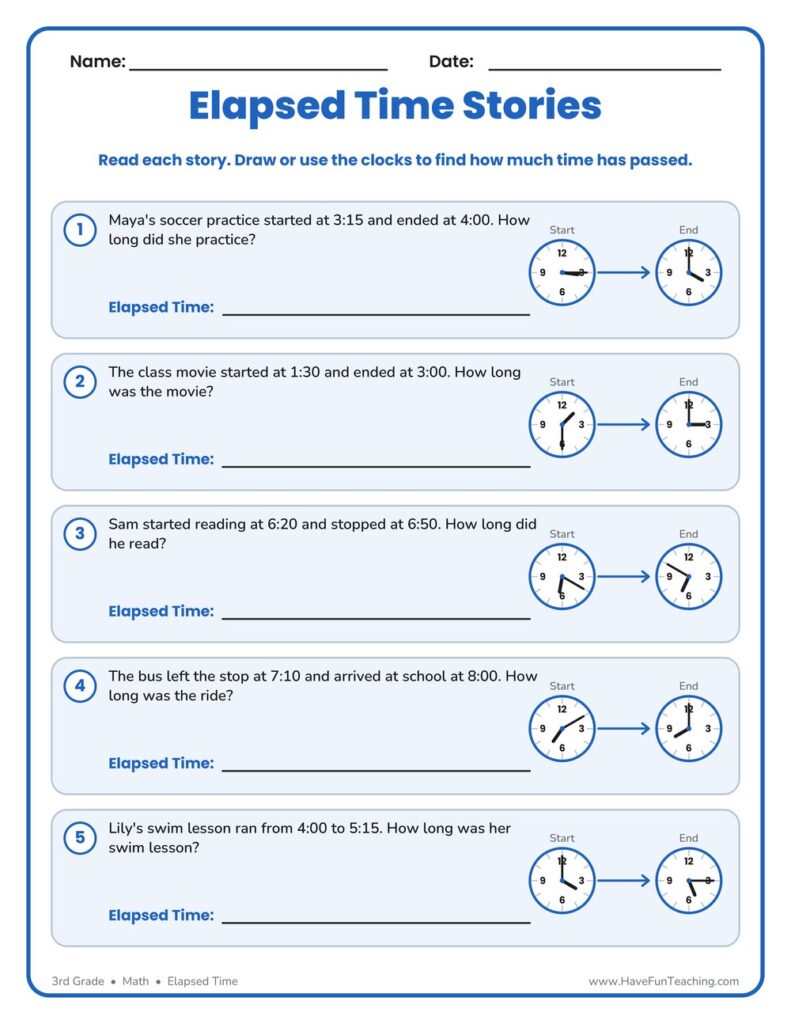
A story-based Elapsed Time Stories Worksheet where 3rd graders read five number stories and use start-and-end clocks to find how much time has passed. Includes a complete answer key for fast, no-prep telling-time practice.
$6.97
Or free with a membership — members pay $3.33/mo for all 10,000+ resources. See plans
Want this one free?
Tell us where to send it and it’s yours — no card, no catch.
One free resource per teacher. We’ll also send free teaching ideas each week — unsubscribe anytime.
Teaching is easier with a membership
Unlimited printables, games & videos for PreK–6th — for your classroom or homeschool. Cancel anytime.
Start your 3-day free trial$0 today · cancel anytime · Instant access to 10,000+ resources
About this resource
Description
Learning to find elapsed time helps students connect telling time to the real moments of their day. With this Elapsed Time Stories Worksheet, students read short number stories and figure out how much time has passed between a starting time and an ending time. Working through relatable situations, like soccer practice, a class movie, and the morning bus ride, gives third graders a concrete way to reason about hours and minutes on an analog clock.
This 3rd grade elapsed time worksheet gives students five story problems, and each story is paired with a start clock and an end clock so they can see the beginning and ending times. Read each story aloud or let students read independently, then have them count forward on the clocks, or add up the minutes and hours, to find the elapsed time. Students write each answer on the line provided, and the included answer key makes checking work quick and simple.
What’s Included
- 1 print-ready PDF worksheet
- Answer key
- 5 elapsed time story problems, each with a start clock and an end clock
This Elapsed Time Stories Worksheet helps kids learn in three ways. First, the word-problem format builds reading comprehension right alongside math, so students practice pulling the important information out of a story. Second, the paired analog clocks give a visual model that supports learners who are still counting by fives around the clock face. Third, the mix of within-the-hour and across-the-hour problems stretches thinking from simple minute differences to elapsed times that cross a full hour.
Teachers and parents can extend this skill in fun, hands-on ways. Use a real classroom clock or a play clock to act out each story before solving it. Challenge students to write their own elapsed time stories about their daily routine, then trade with a partner to solve. At home, ask children to figure out how long dinner took, how long a show lasted, or how much time is left until bedtime, turning everyday moments into quick, meaningful practice.
Related Resources
What teachers say
Reviews
You must be logged in to post a review.

This Third Grade Math Test Practice Worksheet gives students 10 multiple-choice questions on place value, addition, and subtraction, with a complete answer key for fast, no-prep review.

A third grade triple digit subtraction regroup worksheet with twelve column problems that give students focused practice borrowing across the ones, tens, and hundreds. Includes a complete answer key for quick, no-prep math practice.
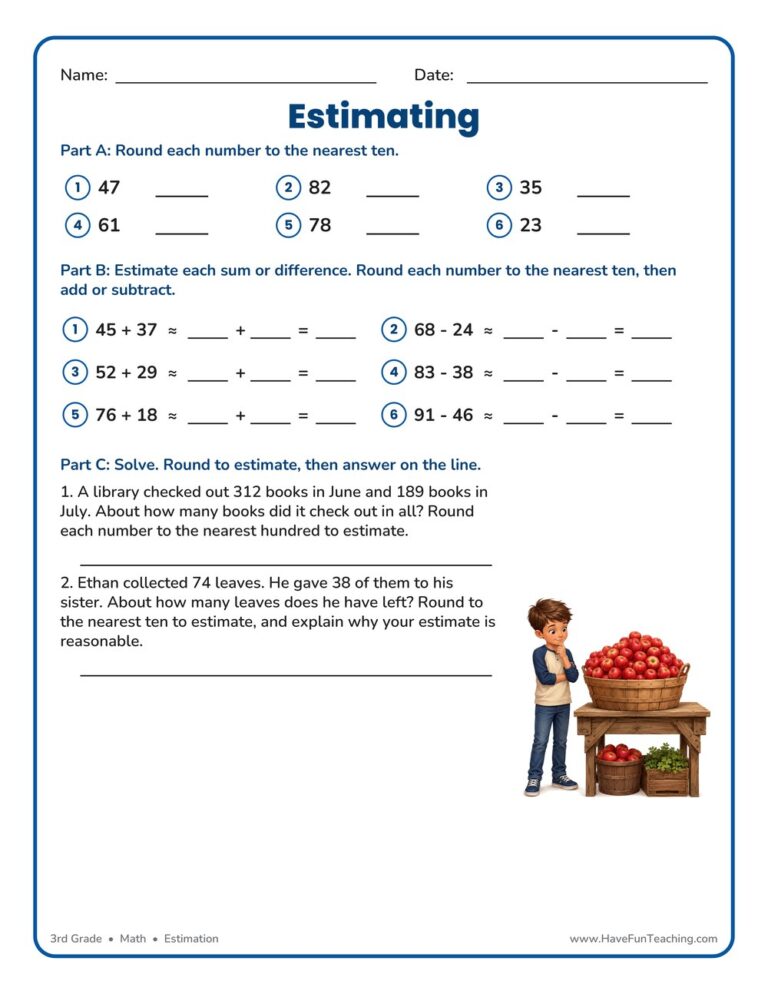
This add/subtract estimation worksheet helps 3rd graders round to the nearest ten and hundred to estimate sums and differences. Includes an answer key for quick, no-prep rounding and estimation practice.
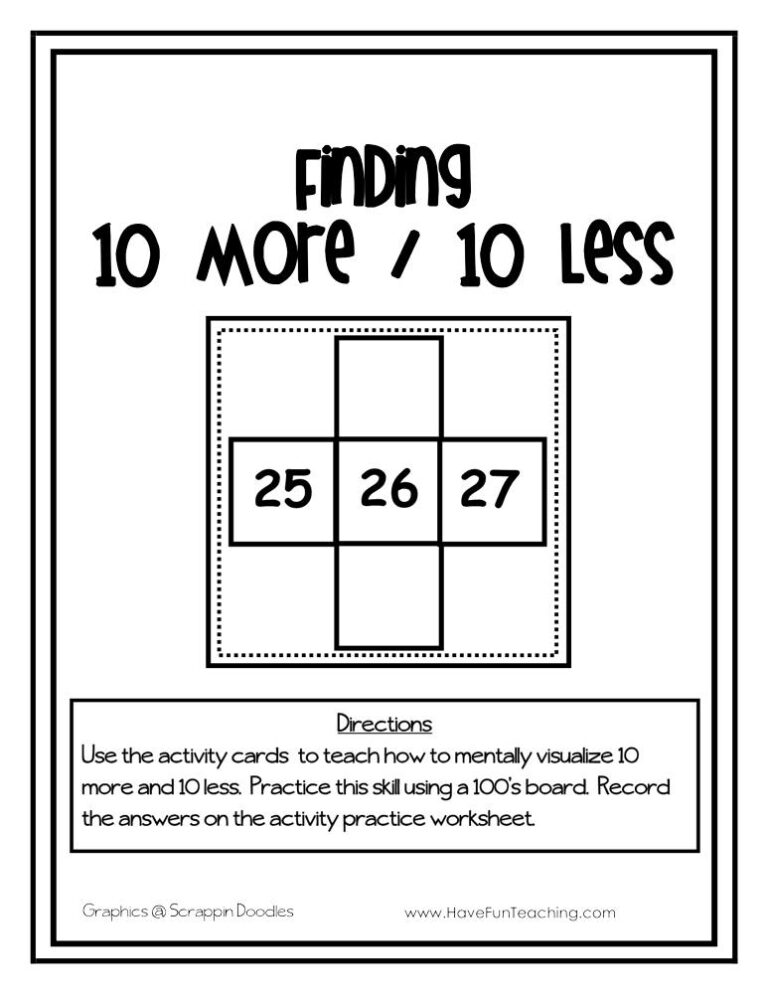
In this Finding 10 More 10 Less Activity, students practice finding 10 more and less than a given number to build skip counting and base ten skills.
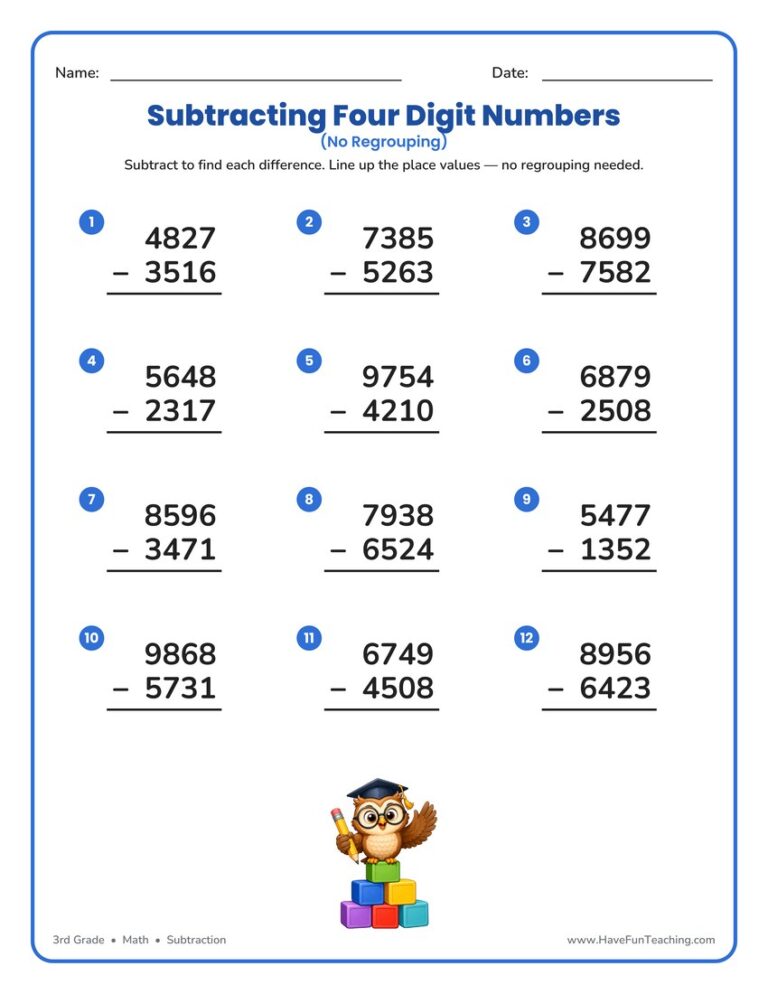
This Four Digit Subtraction No Regrouping Worksheet gives 3rd graders twelve clean column problems to build place value and subtraction fluency. Includes an answer key—perfect for no-prep math practice at home or school.
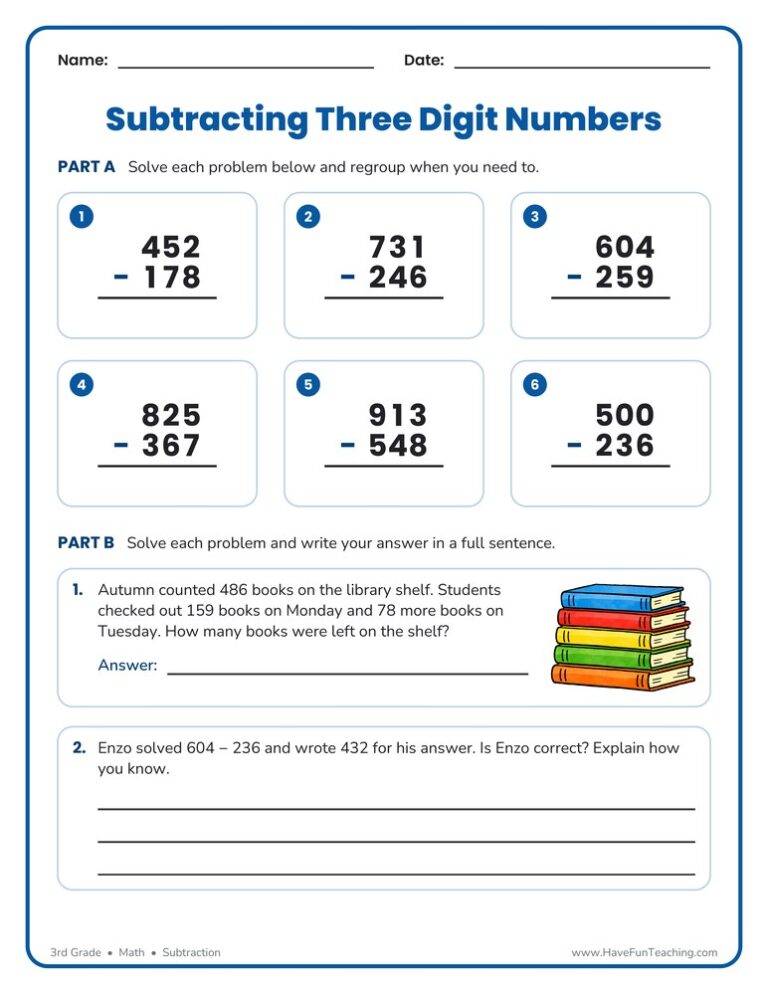
This triple digit number subtraction regrouping worksheet gives 3rd graders six column problems, a two-step word problem, and an error-analysis item. Answer key included, so it grades in seconds.
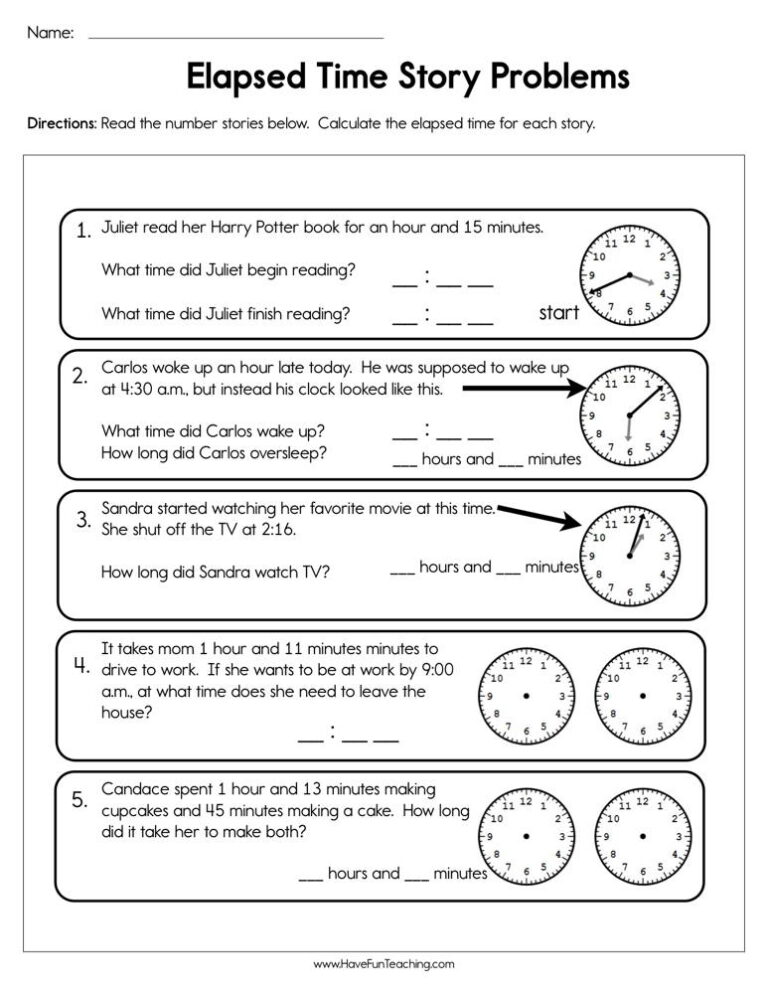
This 3rd grade Elapsed Time Story Problems Worksheet has students read six real-life number stories and calculate how much time has passed. Complete answer key included—perfect for no-prep telling time and subtraction practice.
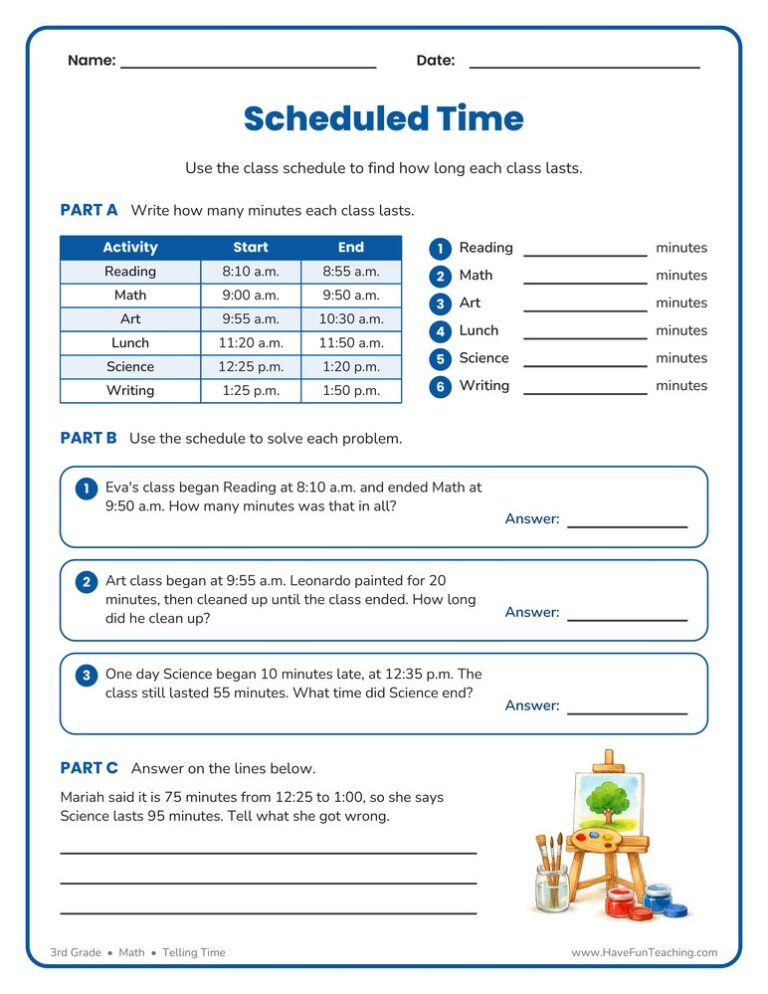
This scheduled time worksheet has 3rd graders read a school schedule and find how many minutes each class lasts, then solve multi-step elapsed time problems. Answer key included for fast, no-prep practice.
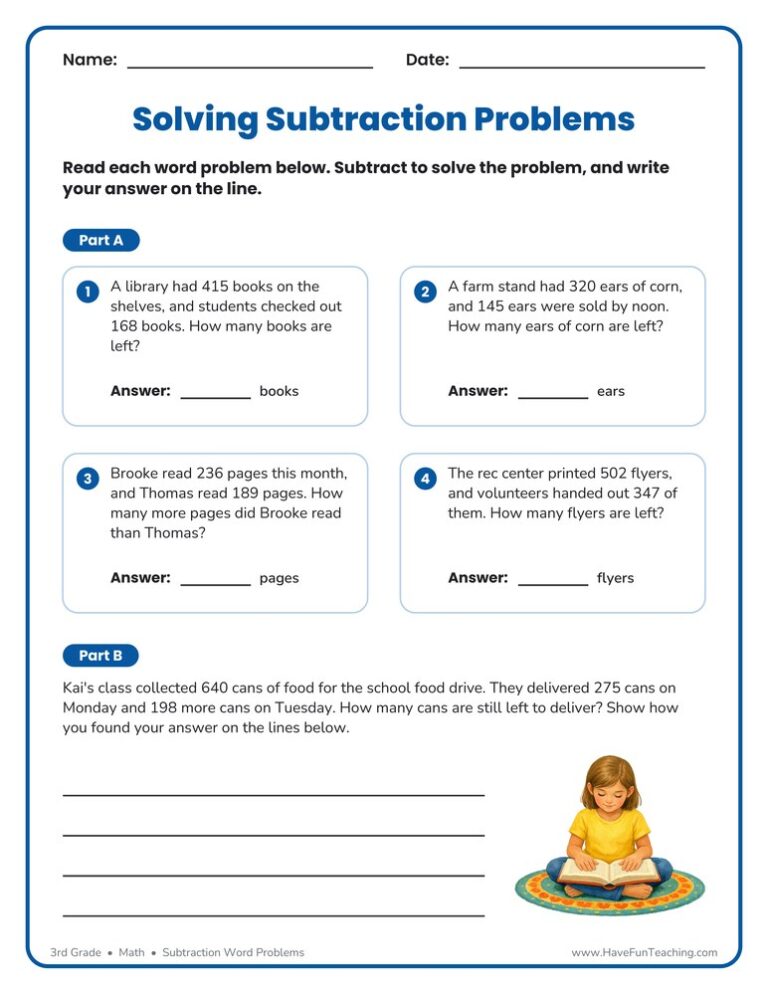
A subtraction word problems worksheet that has 3rd graders subtract within 1,000 across four everyday stories and one two-step challenge they explain in writing. Answer key included for fast, no-prep practice.

This Regrouping Subtraction Worksheet gives 3rd graders six two- and three-digit problems that all need regrouping, plus two word problems. Answer key included for quick, no-prep math practice.

This measurement word problems worksheet gives 3rd Grade students five story problems to solve by adding or subtracting, then labeling each answer with its unit. Answer key included.
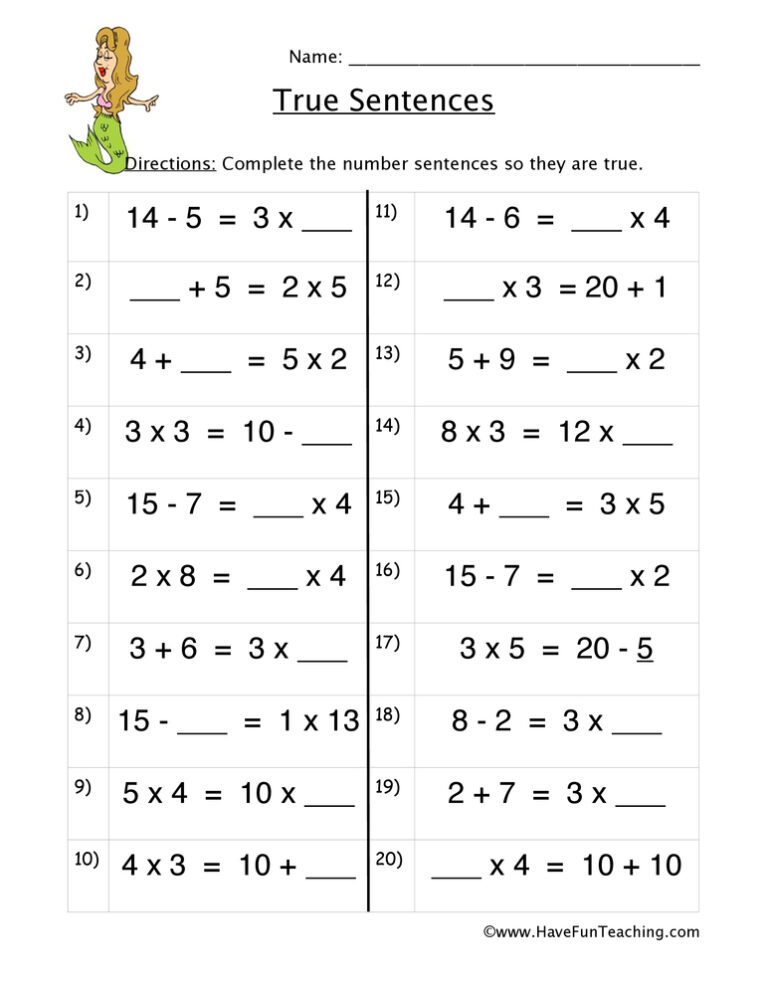
This True Math Sentences Worksheet asks 3rd graders to balance eight number sentences, judge four more as true or false, and explain one answer. Answer key included for quick, no-prep equality practice.

Reviews
There are no reviews yet