

Ending Sounds T W X Y Z Worksheet
This Ending Sounds T W X Y Z Worksheet has 1st graders say six picture names and read three sentences, then write the final letter t, w, x, y or z. An answer key is included for no-prep phonics practice.
$6.97
Or free with a membership — members pay $3.33/mo for all 10,000+ resources. See plans
Want this one free?
Tell us where to send it and it’s yours — no card, no catch.
One free resource per teacher. We’ll also send free teaching ideas each week — unsubscribe anytime.
Teaching is easier with a membership
Unlimited printables, games & videos for PreK–6th — for your classroom or homeschool. Cancel anytime.
Start your 3-day free trial$0 today · cancel anytime · Instant access to 10,000+ resources
About this resource
Description
Hearing the last letter in a word is one of the first real reading skills a child builds, and it is the one that turns guessing into decoding. This Ending Sounds T W X Y Z Worksheet asks first graders to look at a picture, say its name out loud, stretch the word to its very end, and write the letter that finishes it. The five letters here — t, w, x, y and z — are the ones children meet last and practice least, so they are exactly the ones worth a sheet of their own.
This 1st grade final consonants worksheet comes in two parts on two printed pages. In Part A, six full-color pictures each sit above the word with its final letter missing and an empty square to write it in: box, cat, cow, candy, saw and nest. Because a picture names the word, there is only ever one letter that fits — a real problem with plain letter-stub practice, where “bo” could just as easily be bow or boy. Part B moves to three short sentences, which do the same job for words no picture can show. Page two is the complete answer key.
What’s Included
- 1 print-ready PDF worksheet
- Answer key
- 6 picture-and-letter activities and 3 sentence activities
Three things make this Ending Sounds T W X Y Z Worksheet worth printing. First, the task is short and physical: say the word, hear the end, write one letter, and the child gets nine chances to feel that click. Second, every single item has exactly one correct answer, so a child who reasons well is never marked wrong for a defensible choice. Third, the sheet covers the tail end of the alphabet that most phonics programs rush — the x in box, the z in buzz, the y in candy — and it does so with everyday words a six-year-old already says out loud.
Stretch the practice past the page. Say a word slowly and have your child catch the last sound in the air with a clap. Go on a hunt around the room for things whose names end in t or x, and keep a running list on the fridge. Play a quick round of change-the-ending, turning cat into cab and cap and can, so children hear how much one final letter carries. For a child who finishes early, ask them to draw one more picture for each of the five letters and label it. Reading the sentences in Part B aloud twice, once slowly and once at story speed, builds fluency at the same time.
Related Resources
What teachers say
Reviews
You must be logged in to post a review.
This Alphabet Micro Lesson is a short 3 minute video that teaches all about the Alphabet, including letter recognition, consonants, and vowels.
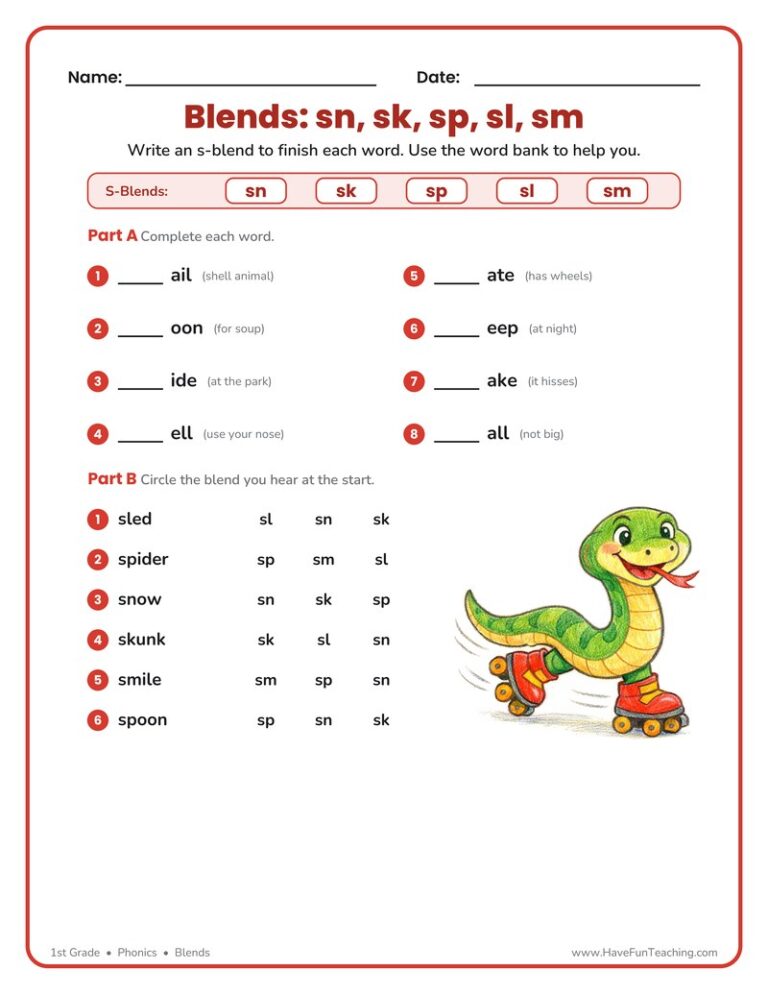
This S Blends Worksheet helps first graders spell and hear the beginning blends sn, sk, sp, sl, and sm by completing real words. Includes a complete answer key, perfect for no-prep phonics practice at home or school.

This is the Alphabet Song by Have Fun Teaching offers a fun and engaging way to learn the alphabet. This song helps children master their ABCs with a catchy tune and memorable lyrics. The repetition and rhythm make it easier for kids to remember the alphabet letters. Teachers and parents…

This NG/NK digraph worksheet asks 1st graders to sort six words by their ending sound and then build four more. Answer key included for fast, no-prep phonics practice.
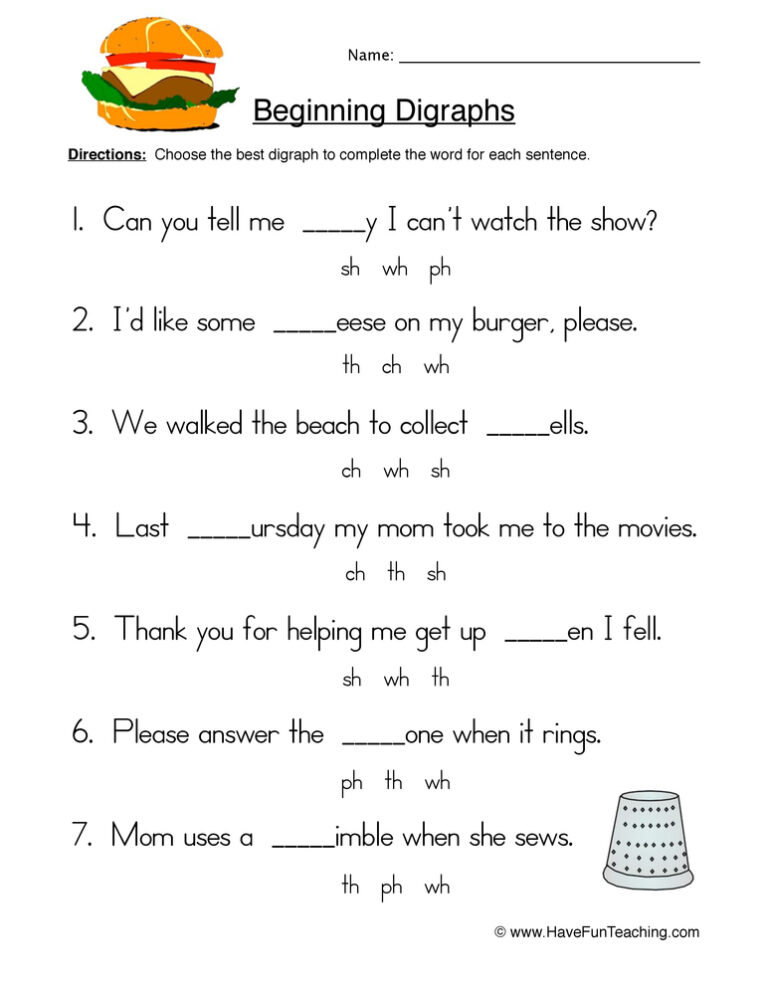
This beginning digraphs fill in the blank worksheet has 1st graders write ch, sh, th or wh to finish words in sentences and under pictures. Answer key included, so it grades itself in seconds.
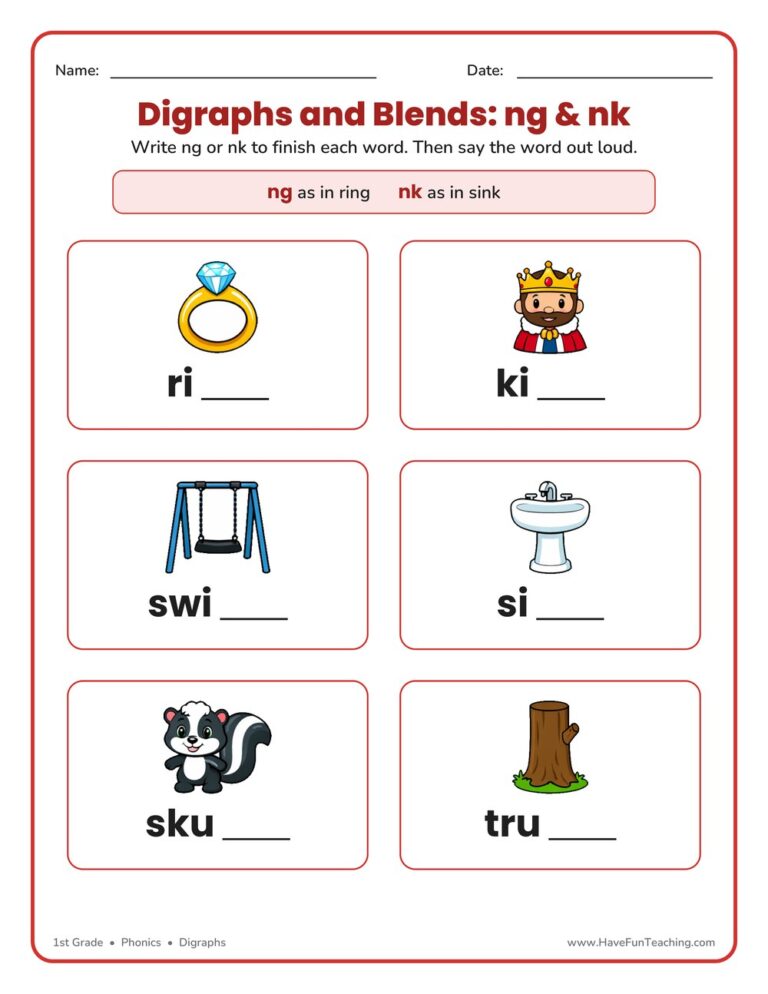
This ng and nk digraph worksheet gives 1st graders picture-clue practice writing the ending sounds in words like ring and skunk. An answer key is included for quick, no-prep phonics practice.

This Blends SC, SK Worksheet gives 1st graders six picture clues and a word sort for the beginning blends sc and sk. An answer key is included, so blend practice takes no prep.

A w or wh worksheet that helps 1st graders decide which spelling makes the /w/ sound, with six picture clues and six picture-free words. Answer key included for fast, confident phonics practice.
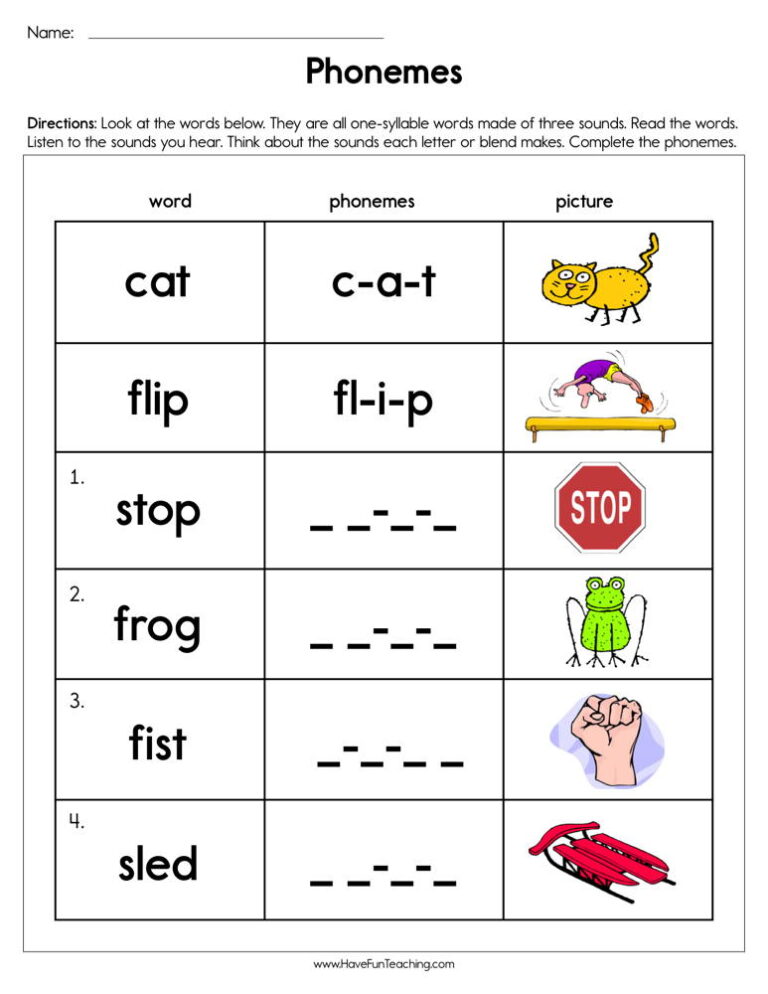
This Phonemes Worksheet gives 1st graders hands-on practice segmenting short words into their individual sounds, with picture cues and worked blend examples. Includes an answer key to build the phonemic awareness that powers reading and spelling.
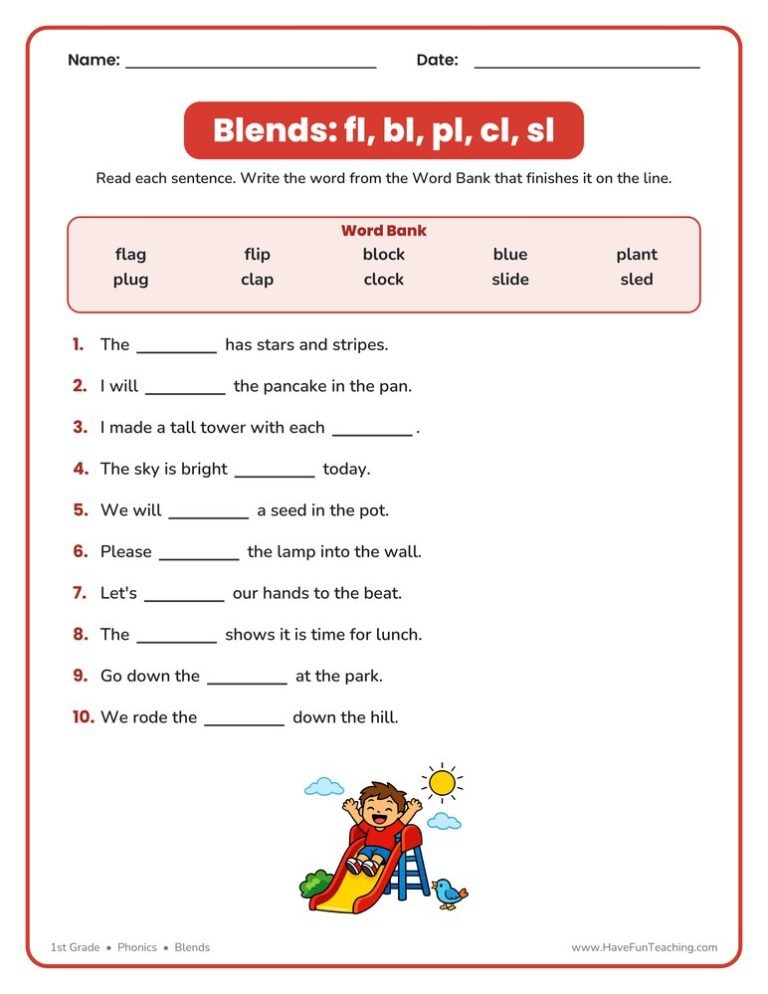
The L Blends Fill in the Blank Worksheet gives 1st graders ten sentences and a word bank to practice fl, bl, pl, cl, and sl blends. Answer key included for quick, no-prep phonics practice at home or school.
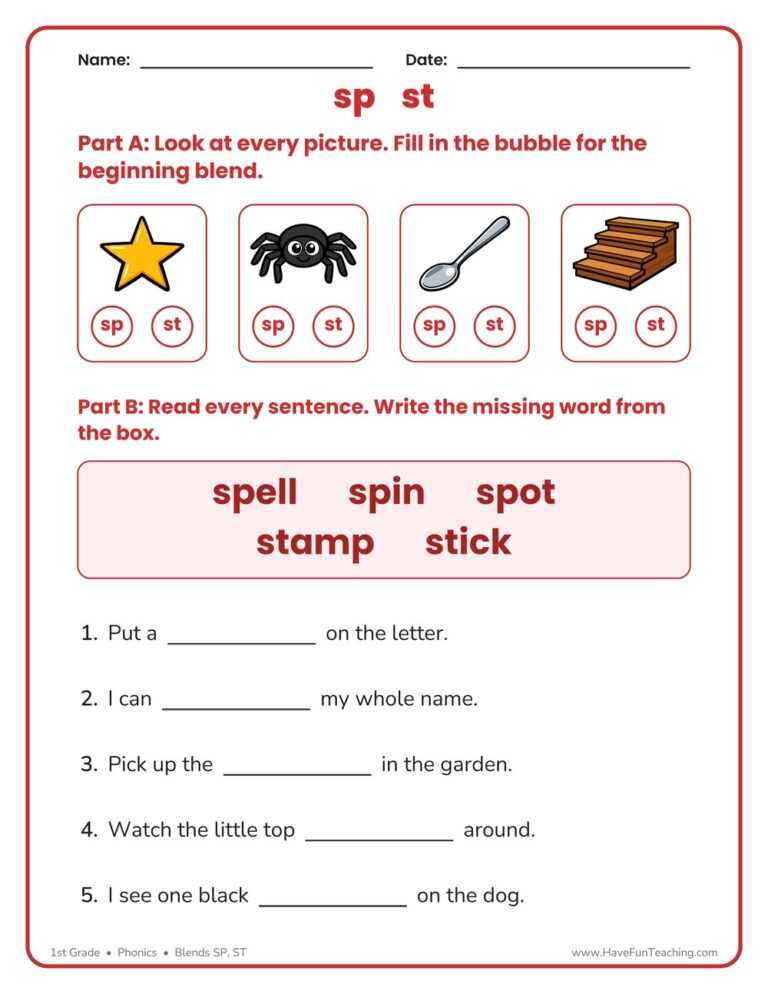
Practice the Blends SP, ST Worksheet with picture bubbles and word-box sentences made for 1st Grade readers. An answer key is included, so beginning blends turn into quick, confident reading.
Reviews
There are no reviews yet