
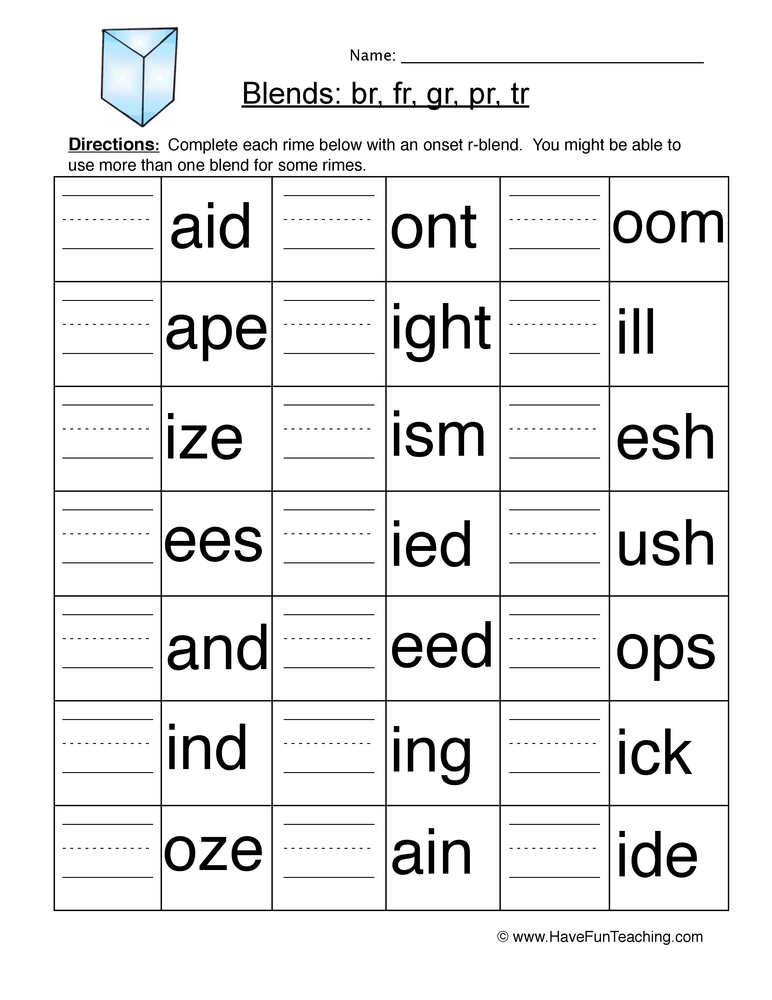
R Blends Worksheet
This R Blends Worksheet gives 1st graders two quick activities — three word-bank sentences and a br, gr, tr word sort — covering the blends br, fr, gr, pr, and tr. Answer key included for fast checking.
$6.97
Or free with a membership — members pay $3.33/mo for all 10,000+ resources. See plans
Want this one free?
Tell us where to send it and it’s yours — no card, no catch.
One free resource per teacher. We’ll also send free teaching ideas each week — unsubscribe anytime.
Teaching is easier with a membership
Unlimited printables, games & videos for PreK–6th — for your classroom or homeschool. Cancel anytime.
Start your 3-day free trial$0 today · cancel anytime · Instant access to 10,000+ resources
About this resource
Description
Consonant blends are two letters that sit side by side at the start of a word, and a reader has to say both sounds quickly without dropping either one. The r blends — br, fr, gr, pr, and tr — are among the first blends 1st graders meet, and they turn up in everyday words like brush, frog, grapes, prize, and train. This R Blends Worksheet gives students focused practice hearing that second sound and matching it to the letters that spell it. When children read and write r blends automatically, they stop guessing at the beginning of a word and start decoding it.
This r-blend practice worksheet is a single printable page with two short activities. In Part A, students read three sentences and choose the word from the box — bricks, frog, or prize — that completes each one, so the blend is always tied to real meaning rather than an isolated sound drill. In Part B, they read six words and write each one under the blend it begins with: br, gr, or tr. A crayon-style picture under every column gives a visual anchor for the sort. Use it as morning work, a phonics-center task, a guided-reading warm-up, or homework, and check the work with the included key.
What’s Included
- 1 print-ready PDF worksheet
- Answer key
- 2 activities: 3 word-bank sentences and a 6-word br / gr / tr word sort
There are three reasons this R Blends Worksheet helps children learn the skill. First, it pairs reading with writing — students do not simply circle a choice, they form the whole word by hand, which builds the letter-sound memory that carries straight into spelling. Second, the sentence activity puts each blend in context, so children practice using meaning as a check on their decoding instead of sounding out words in isolation. Third, the sort makes the pattern visible: seeing brush and broom together, then grapes and green, then truck and train, helps students generalize the rule to blend words they have never seen before.
Keep the practice going away from the page. Go on a blend hunt through a favorite picture book and tally every br, fr, gr, pr, and tr word the class can find. Build a pocket-chart sort with word cards students move themselves. Play a blend-swap game — change the br in brush to a c and talk about what happens to the word. Have children draw a silly scene and label it with as many r-blend words as they can fit. Short, playful repetition spread over several days does far more than one long session.
Related Resources
What teachers say
Reviews
You must be logged in to post a review.
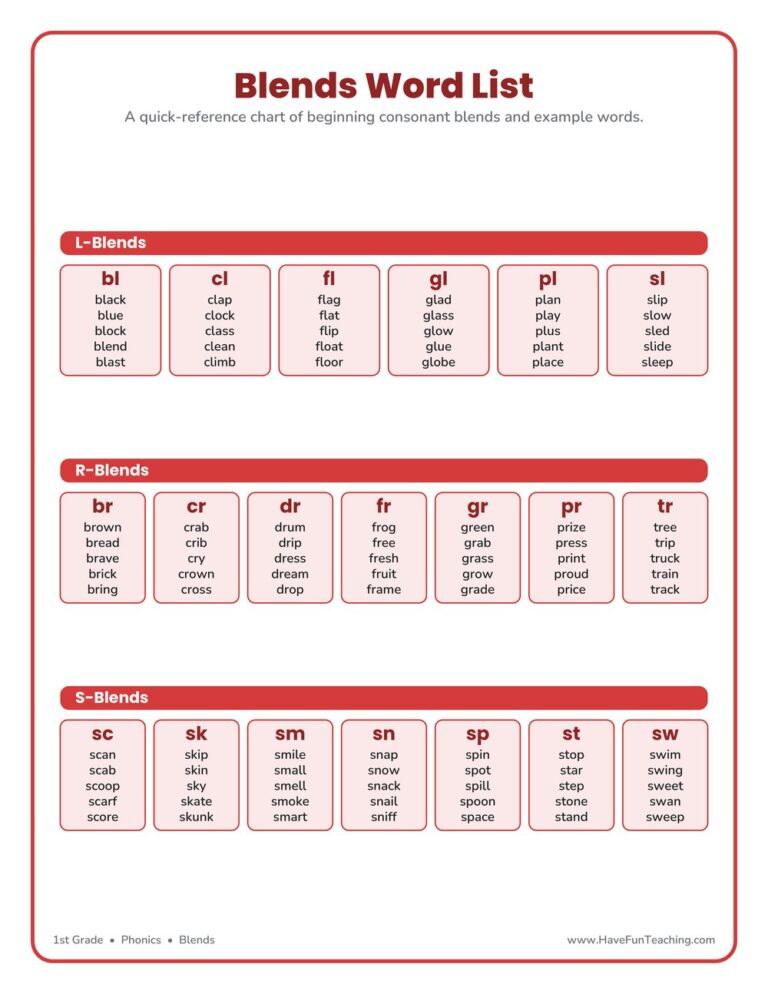
This Blends Word List is a single-page phonics reference chart grouping L-blends, R-blends, and S-blends with example words for each. A clean, no-prep tool that helps 1st graders read and build blend words with confidence.
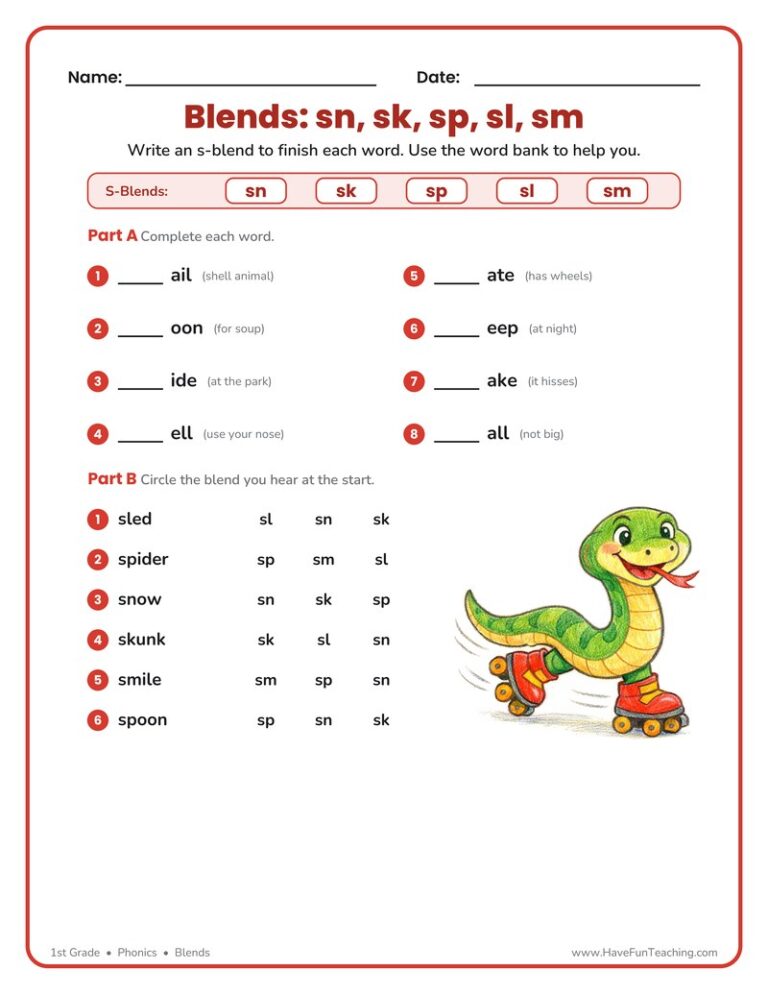
This S Blends Worksheet helps first graders spell and hear the beginning blends sn, sk, sp, sl, and sm by completing real words. Includes a complete answer key, perfect for no-prep phonics practice at home or school.

This NG/NK digraph worksheet asks 1st graders to sort six words by their ending sound and then build four more. Answer key included for fast, no-prep phonics practice.
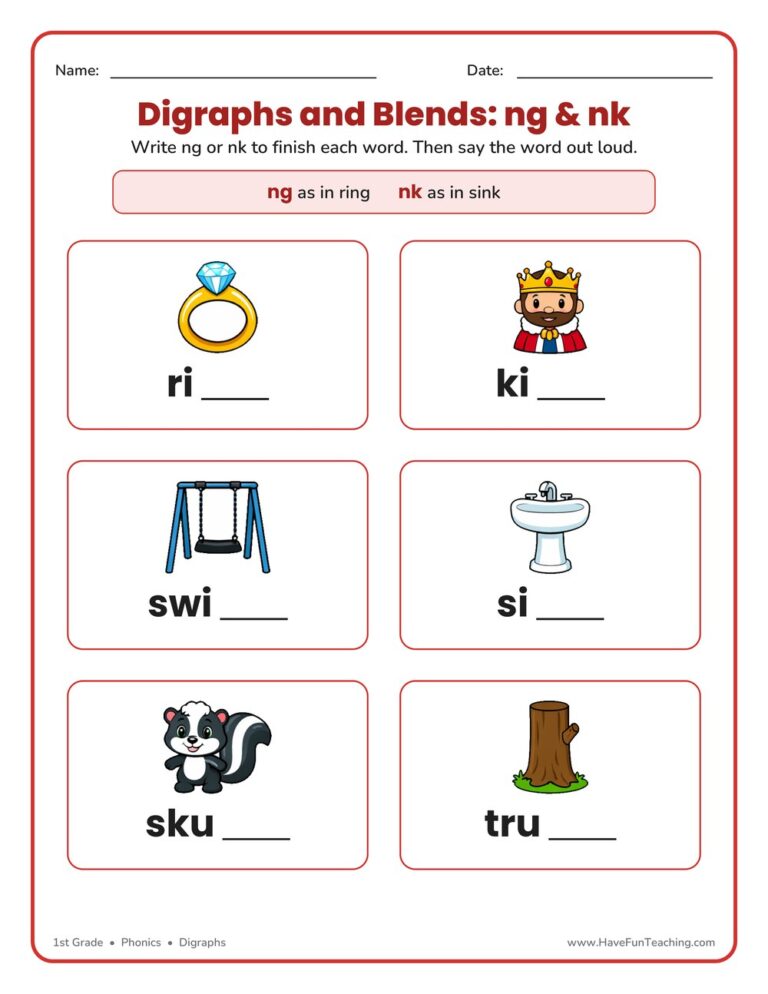
This ng and nk digraph worksheet gives 1st graders picture-clue practice writing the ending sounds in words like ring and skunk. An answer key is included for quick, no-prep phonics practice.

This Blends SC, SK Worksheet gives 1st graders six picture clues and a word sort for the beginning blends sc and sk. An answer key is included, so blend practice takes no prep.
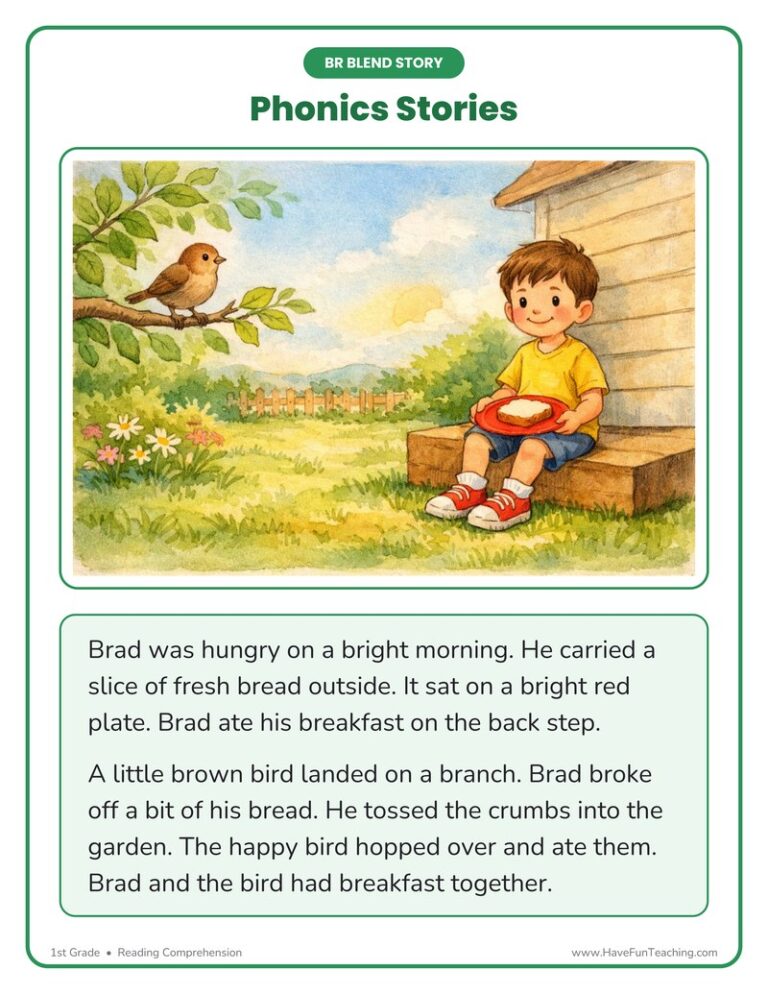
The Brad Eats Bread BR Phonics Stories Reading Comprehension Worksheet pairs a short decodable br-blend story with five comprehension questions for 1st Grade. Answer key included, so blending practice and understanding are checked in one no-prep page.
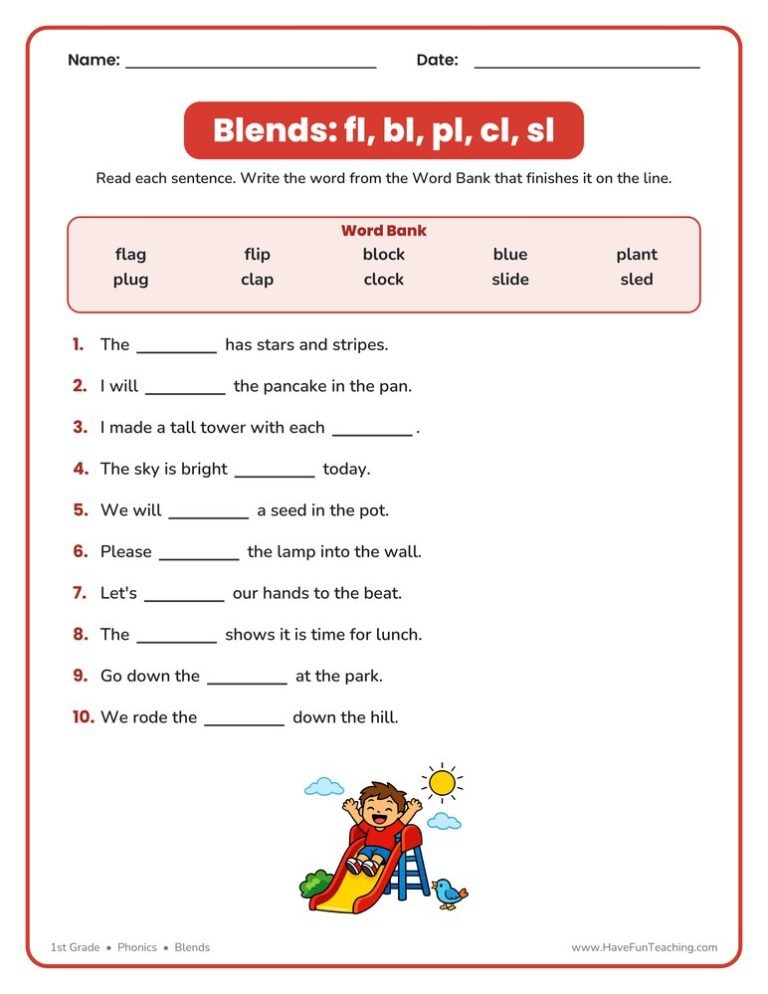
The L Blends Fill in the Blank Worksheet gives 1st graders ten sentences and a word bank to practice fl, bl, pl, cl, and sl blends. Answer key included for quick, no-prep phonics practice at home or school.
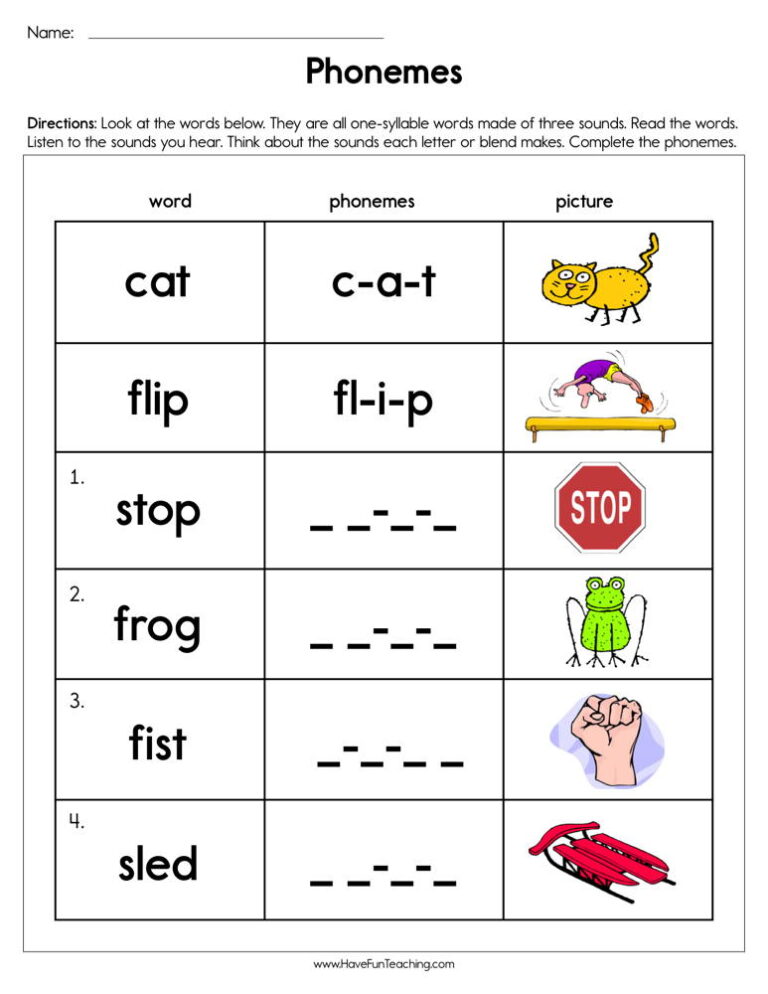
This Phonemes Worksheet gives 1st graders hands-on practice segmenting short words into their individual sounds, with picture cues and worked blend examples. Includes an answer key to build the phonemic awareness that powers reading and spelling.
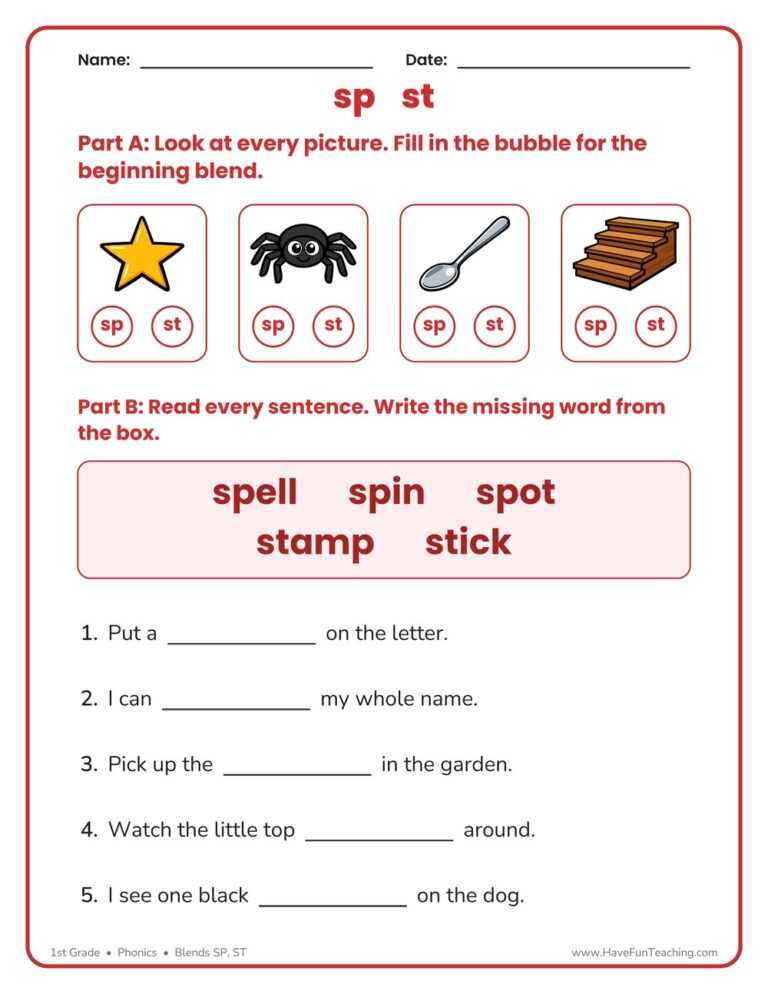
Practice the Blends SP, ST Worksheet with picture bubbles and word-box sentences made for 1st Grade readers. An answer key is included, so beginning blends turn into quick, confident reading.
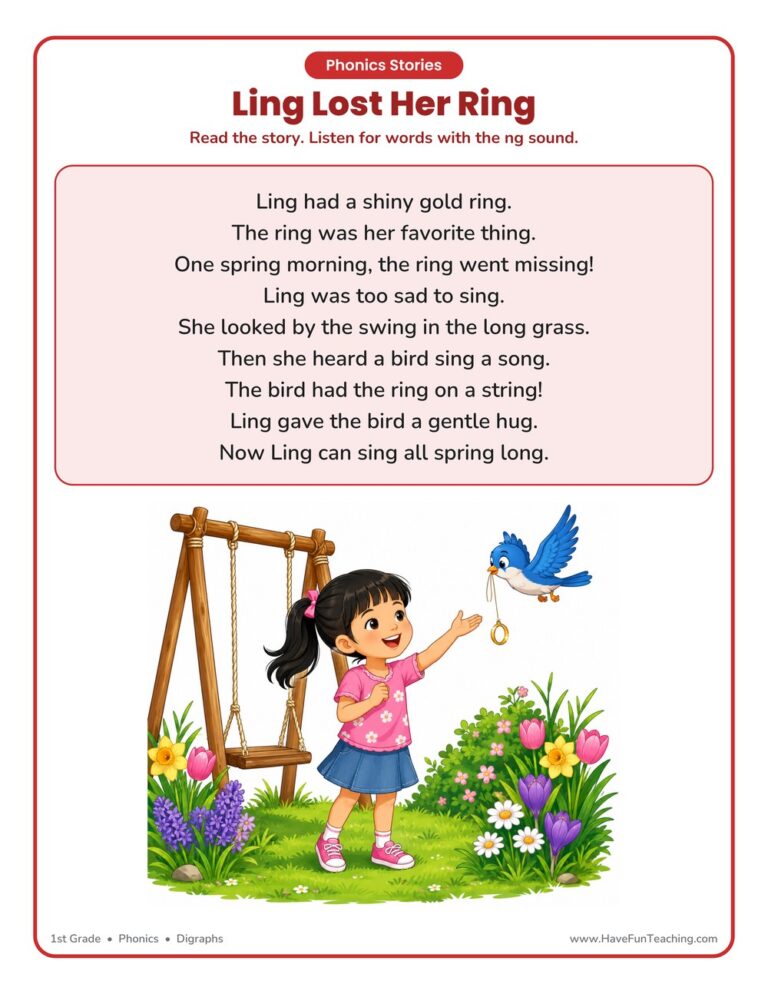
This NG Phonics Stories worksheet gives first graders a decodable ng story with reading comprehension questions and a word-building activity. An answer key is included, so young readers build phonics and comprehension skills with confidence.

Using the Blends, Digraphs, and Trigraphs Activity, students create lists of words that have beginning and ending blends, digraphs, or trigraphs.

This Blends BL BR Worksheet has 1st graders write the missing blend under six pictures, then spell two whole words. An answer key is included for quick, no-prep phonics practice.




Reviews
There are no reviews yet