

Fish Worksheet
This fish worksheet has 3rd graders circle the facts that are true of all fish, sort eight animals into Fish and Not a Fish, and explain how a dolphin is different. Answer key included.
$6.97
Or free with a membership — members pay $3.33/mo for all 10,000+ resources. See plans
Want this one free?
Tell us where to send it and it’s yours — no card, no catch.
One free resource per teacher. We’ll also send free teaching ideas each week — unsubscribe anytime.
Teaching is easier with a membership
Unlimited printables, games & videos for PreK–6th — for your classroom or homeschool. Cancel anytime.
Start your 3-day free trial$0 today · cancel anytime · Instant access to 10,000+ resources
About this resource
Description
Fish are the largest group of vertebrates on Earth, and the traits that put an animal in that group are simple enough to test on one page: gills instead of lungs, fins instead of limbs, a cold-blooded body and scales. This fish worksheet turns those traits into a short classification task, because knowing that a trout is a fish matters far less than being able to say which features make it one. Third graders who can name the traits can then apply them to an animal they have never studied.
This 3rd grade classification worksheet works in three steps. Students first circle the three facts that are true of all fish from a set of six, so the false traits — feathers, lungs and warm blood — are ruled out deliberately rather than by guessing. They then write eight animals from a word box into a Fish or Not a Fish column, and the box deliberately mixes an easy call like a crab with harder ones like a shark, a whale and a turtle. The last section asks for a written explanation of why a dolphin is not a fish, which is where the traits from the first section have to be used as evidence. A full answer key is on the second page.
What’s Included
- 1 print-ready PDF worksheet
- Answer key
- 6 true-or-false fish facts to circle
- An 8-animal Fish or Not a Fish sorting chart
- 1 written-explanation prompt with a model answer
Three things make this fish worksheet useful in a classification unit. First, the trait set is the same one a test question will use, so students practise the exact discrimination the standard asks for. Second, the animals in the word box are chosen to break the common shortcut that anything living in water must be a fish, which is the misconception that survives most lessons. Third, the written explanation turns recognition into reasoning, giving the teacher a sentence to check rather than a column of circled words.
Teachers and parents can build on the sheet in several ways. Pull up a short video of a dolphin surfacing and ask students to time how long it stays under, then compare that with a fish that never leaves the water. Make a class chart of the five vertebrate groups and add one animal to each column every day for a week. A visit to a pet shop or aquarium works even better: ask students to find the gill covers on a real fish and count its fins. Sorting picture cards face down into two piles also turns the same skill into a quick review game.
Related Resources
What teachers say
Reviews
You must be logged in to post a review.
While Parts of the Body Song (Animated Music Video), students learn about the different parts of the body while listening to catchy lyrics.

While Parts of the Body Song (MP3), students learn about the different parts of the body while listening to catchy lyrics.

This birds worksheet has 3rd graders circle the facts true of all birds, sort eight animals into Bird and Not a Bird, and explain why a bat is not a bird. Answer key included.

This describe it five senses worksheet has 3rd graders match five sentences to the sense that notices them, then write their own description. An answer key is included for quick, no-prep science practice.
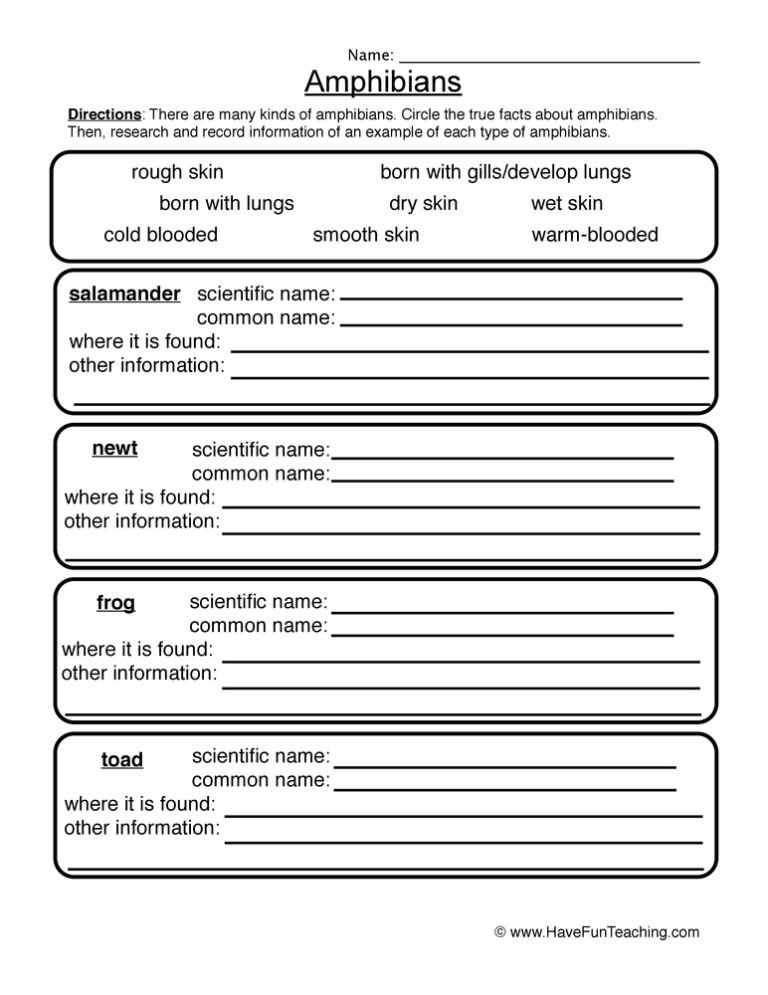
This amphibians worksheet has 3rd graders circle amphibian traits, sort eight animals into amphibian and non-amphibian columns, and explain their thinking. Answer key included for fast, no-prep science practice.
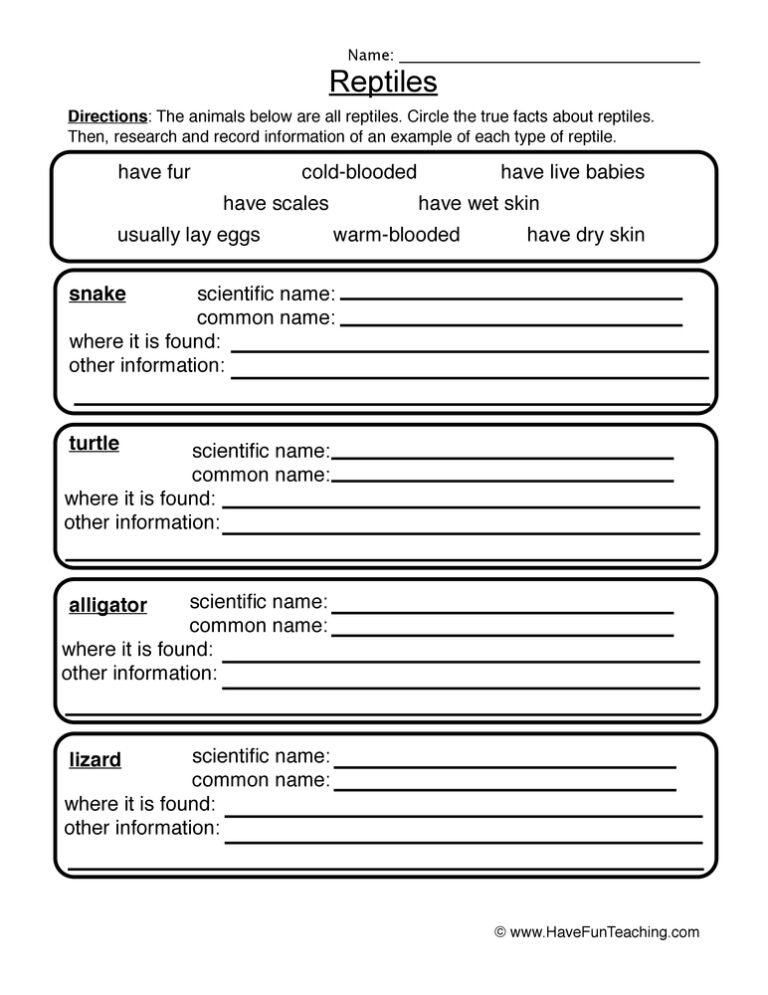
This reptiles worksheet has 3rd Grade students check reptile facts, sort eight animals into reptile and not-a-reptile columns, and explain how a frog differs. An answer key is included, so checking work takes seconds.
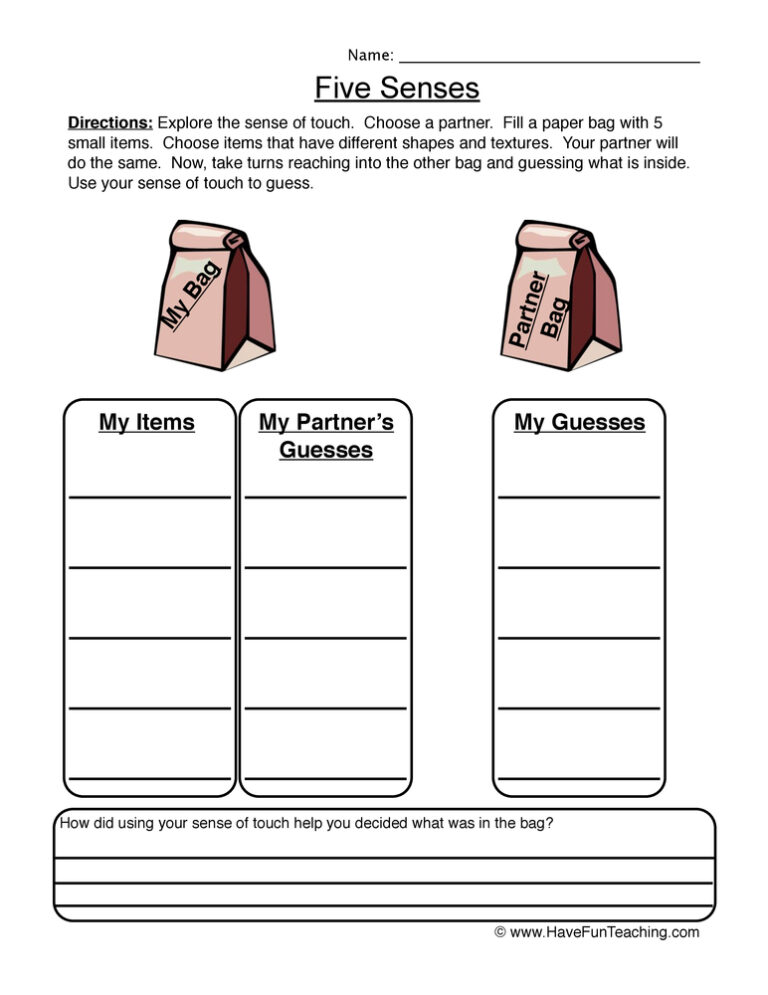
Using What is in the Bag? Five Senses Worksheet, students guess what object is in the bag using the provided Five Sense clues with a partner.
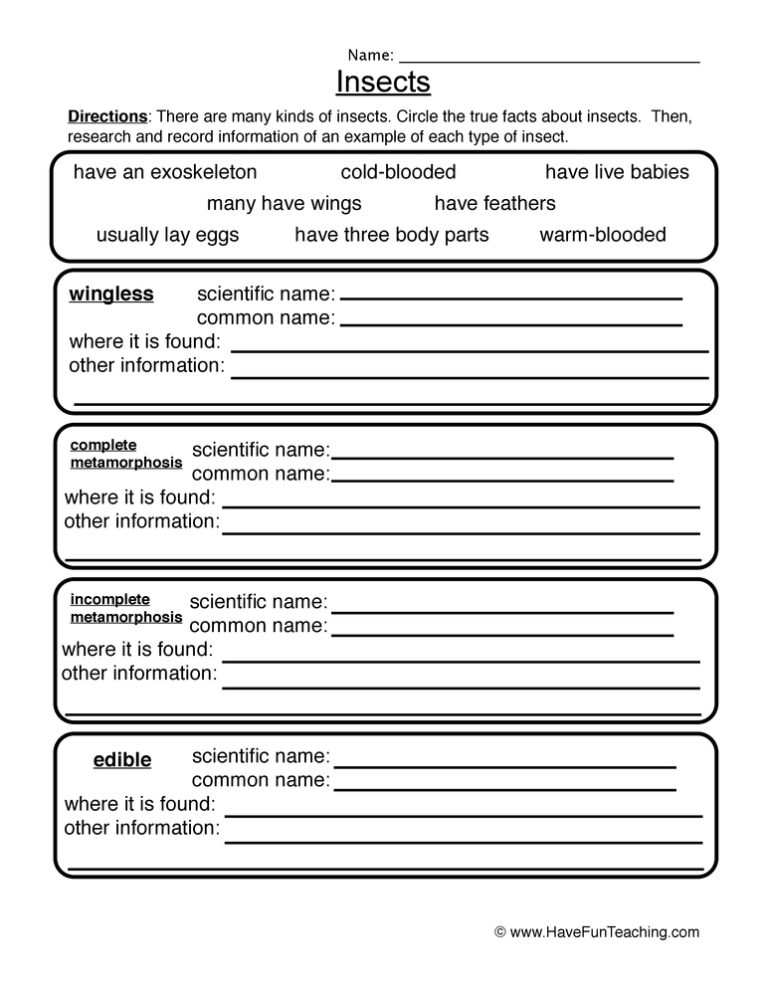
This insects worksheet helps 3rd grade students circle true insect facts, sort eight animals into insect groups, and explain why a spider is not an insect, with an answer key included for easy checking.
Using Senses Draw and Write Worksheet, students draw pictures of using 2 of your senses, then write sentences about them.
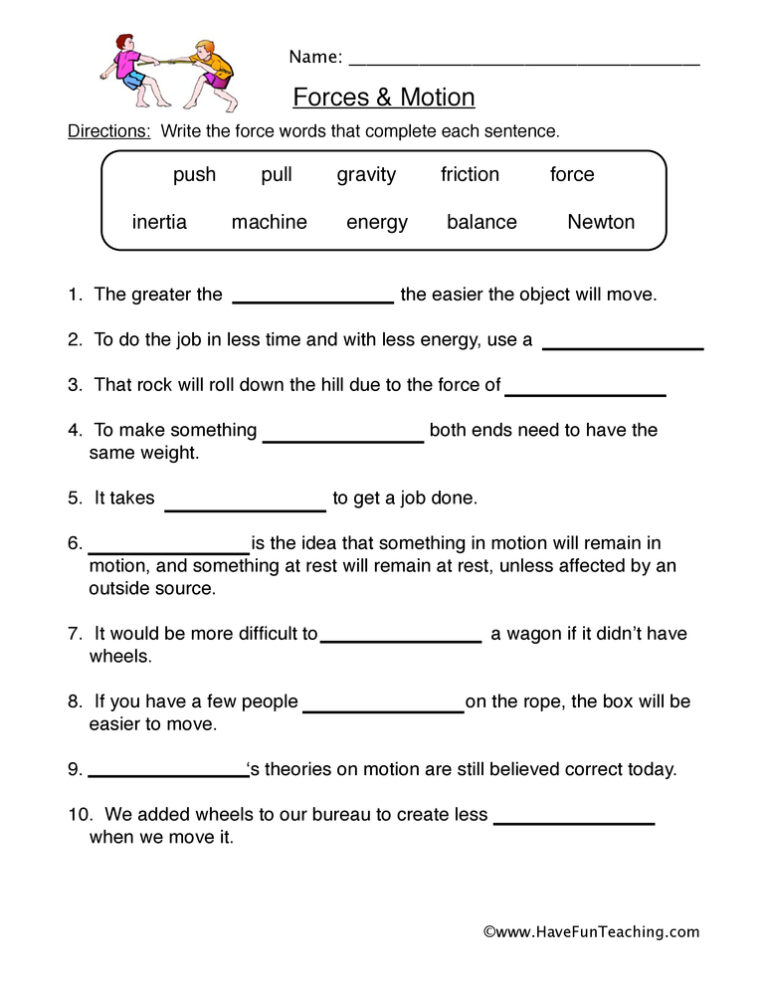
A 3rd grade forces motion worksheet where students use a word bank to complete eight sentences about force, push, pull, gravity, friction, motion, speed, and magnets. Includes an answer key for easy, no-prep science practice.

This who what when where why graphic organizer worksheet helps 3rd graders record the five key details — who, what, when, where, and why — from any story or article. A clear, reusable note-taking template.
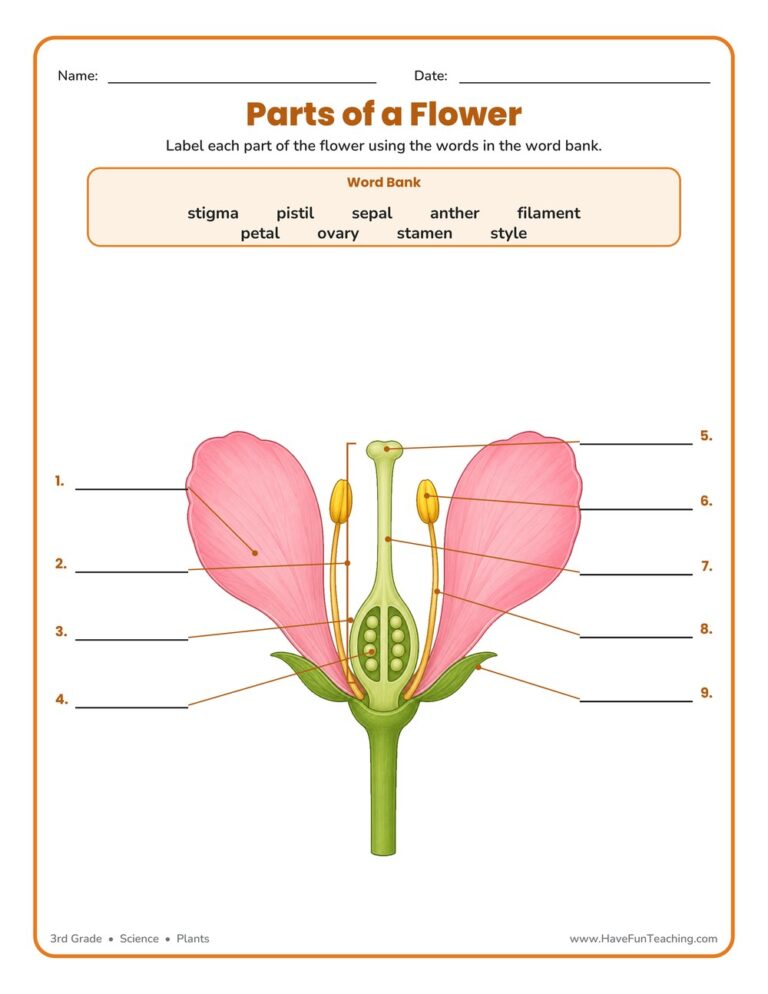
A third grade flower parts of a plant worksheet where students label the nine parts of a flower — petal, sepal, stamen, pistil, and more — using a word bank. Includes a complete answer key for quick, no-prep life science practice.
Reviews
There are no reviews yet