Skip to content
Start My 3 Free Days $0 today · cancel anytime

3rd Grade Force Worksheets

12 3rd grade force worksheets. Teacher favorites: Forces Motion Worksheet and Falling Gravity Worksheet. How teachers use these

3rd Grade Force Worksheets

12 3rd grade force worksheets. Teacher favorites: Forces Motion Worksheet and Falling Gravity Worksheet. How teachers use these

Worksheet
Worksheet3rd GradeForces Motion Worksheet

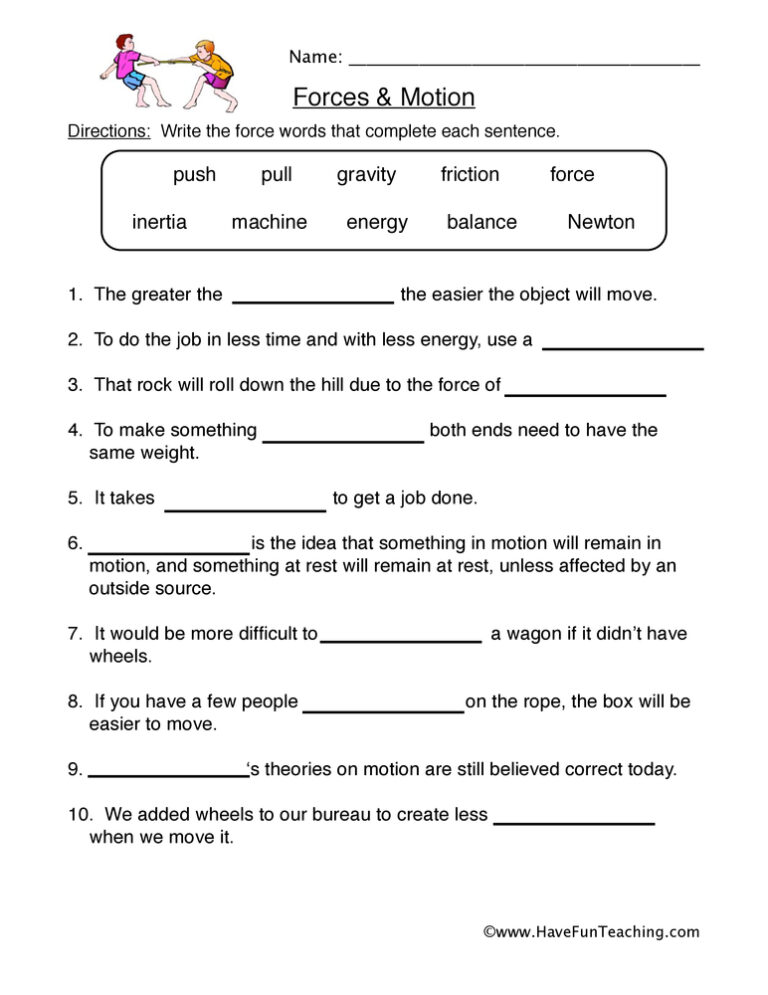
A 3rd grade forces motion worksheet where students use a word bank to complete eight sentences about force, push, pull, gravity, friction, motion, speed, and magnets. Includes an answer key for easy, no-prep science practice.

Worksheet
Worksheet3rd GradeFalling Gravity Worksheet

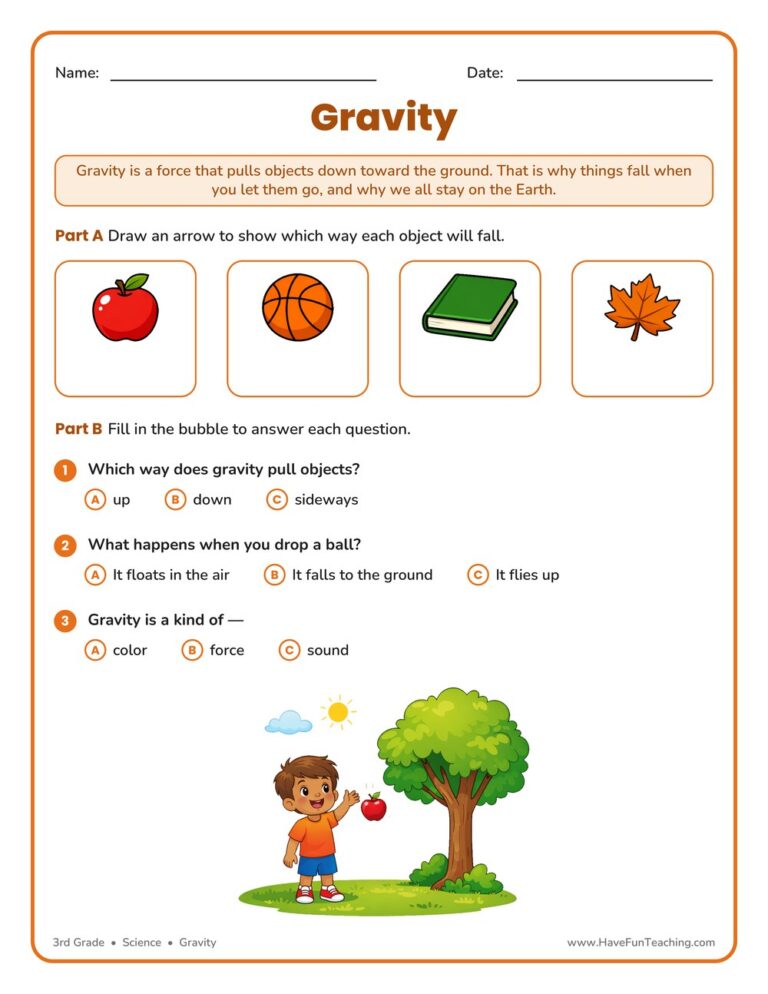
This falling gravity worksheet helps 3rd graders show which way objects fall and explain how gravity pulls things down. Answer key included — a quick, no-prep way to practice force and motion at home or in class.

Worksheet
Worksheet3rd GradeLabeling Force and Motion Worksheet

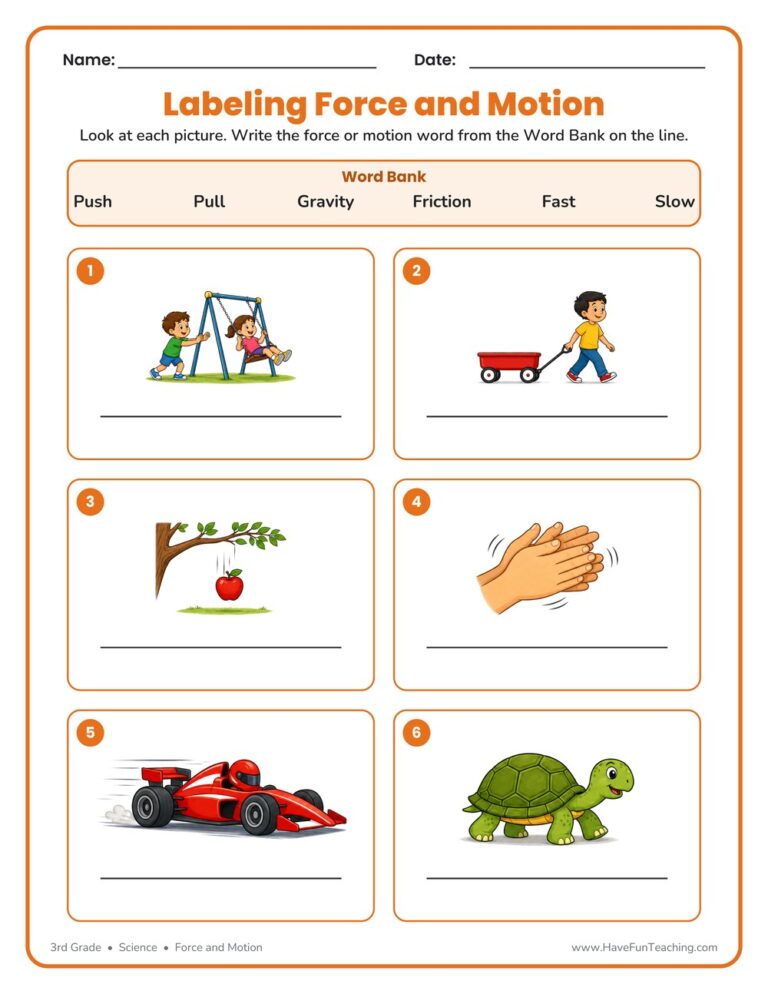
The Labeling Force and Motion Worksheet has 3rd graders label six pictures with push, pull, gravity, friction, fast, and slow from a word bank. Includes an answer key for easy, no-prep science practice.

Worksheet
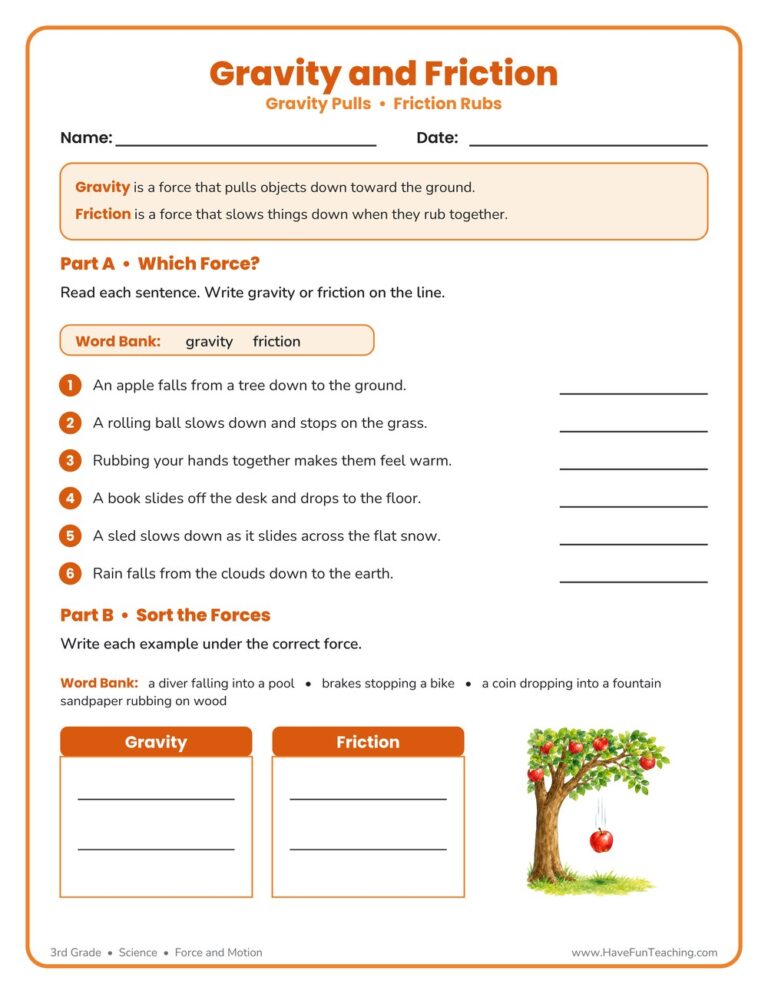
Worksheet3rd GradeGravity or Friction Force Worksheet

This Gravity or Friction Force Worksheet helps 3rd grade students tell the difference between gravity and friction by identifying and sorting real-life examples. Includes a complete answer key for quick, no-prep science practice.

Worksheet
Worksheet3rd GradeFall Faster Gravity Worksheet

This Fall Faster Gravity Worksheet asks 3rd graders to predict which dropped object lands first and to explain why, using gravity and air resistance. Answer key included for fast, no-prep science practice.

Worksheet
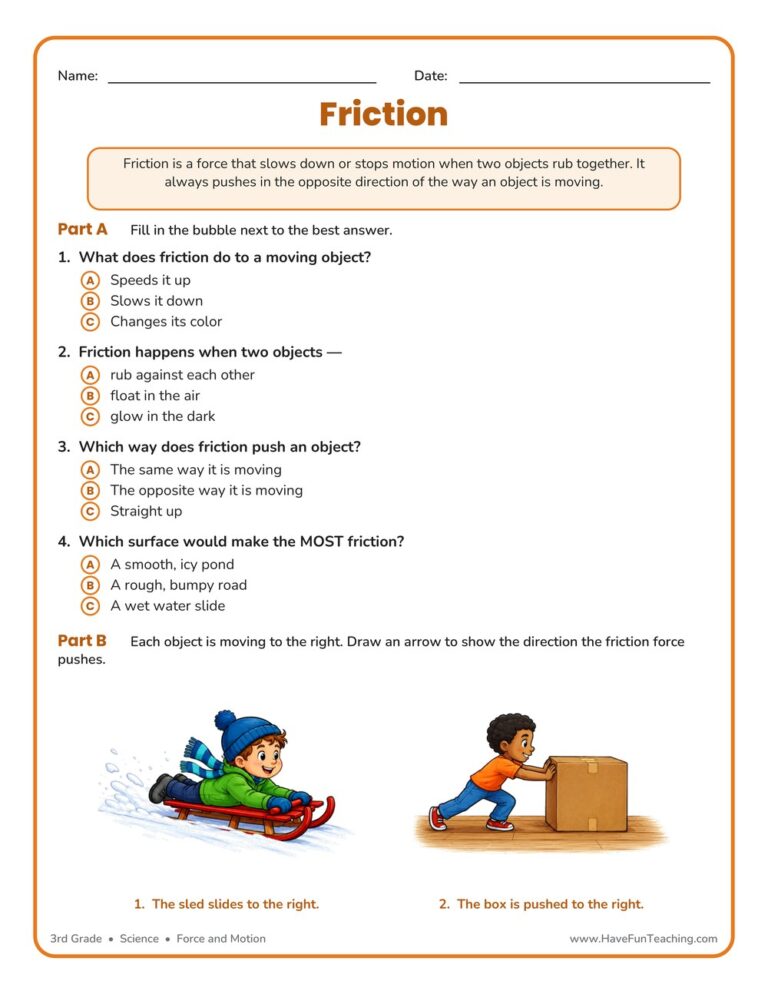
Worksheet3rd GradeDrawing Friction Worksheet

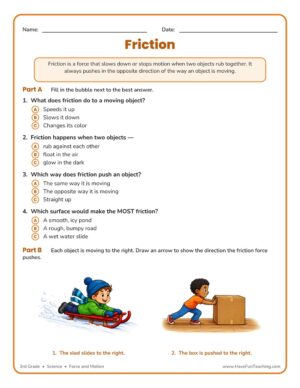
This drawing friction worksheet lets 3rd graders explore force and motion by answering questions and drawing arrows to show which way friction pushes. Answer key included for quick, no-prep science practice.

Worksheet
Worksheet3rd GradeFriction Worksheet

This Friction Worksheet asks 3rd grade students to name the sliding, rolling, or fluid friction shown in six pictures, then explain one of them. An answer key is included, so checking work takes seconds.

Worksheet
Worksheet3rd GradeMagnetism Worksheet

A magnetism worksheet for 3rd grade: sort eight classroom objects by whether a magnet attracts them, then find the magnetic object in four sentences. Answer key included for no-prep science practice.

Worksheet
Worksheet3rd GradeFriction Worksheet - Draw

This friction drawing worksheet sends 3rd graders hunting for four real places where surfaces rub together. They sketch each one and write about it, turning an abstract force into something they can point to.

Worksheet
Worksheet3rd GradeFields and Poles Magnets Worksheet

This fields and poles magnets worksheet has 3rd Grade students name the poles and field of a magnet, predict a push or a pull, and explain how a compass works. An answer key is included.

Worksheet
Worksheet3rd GradeMagnetism Experiment Worksheet

This magnetism experiment worksheet has 3rd graders sort eight objects by material, decide whether magnet poles attract or repel, and explain why steel is pulled and plastic is not. Answer key included for fast, no-prep science practice.

Worksheet
Worksheet3rd GradeMan and Fuel Powered Worksheet

This man and fuel powered worksheet asks 3rd graders to sort eight machines into people powered and fuel powered columns, then explain four more in writing. Answer key included for a no prep science lesson.

From our teachers' playbook

Pushes, pulls and magnetic mysteries

What do 3rd graders learn about force?

A force is a push or a pull, and 3rd graders learn that forces make things start, stop, speed up or change direction. They compare balanced forces, like a tug-of-war that does not move, with unbalanced forces that send something rolling. They explore gravity pulling everything toward Earth and friction slowing a sliding block. Magnets are a big part of 3rd grade too: kids discover that magnets can push or pull without even touching, and that like poles repel. The click comes when kids predict which way a toy car will roll and they are right!

Our favorite ways to teach force in 3rd grade

Force is easiest to understand when kids feel it themselves. These moves let them.

Push it, pull it, test it

Give each group a toy car and a ramp. Kids push gently, then harder, and measure how far it rolls. Changing one thing at a time turns a fun play session into a real experiment about force and motion.

Why it works: the U.S. Department of Education's guide for teaching elementary math recommends moving from hands-on objects to drawings to numbers.
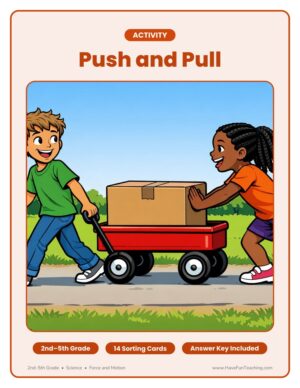
Motion ActivityTry it withMotion ActivityActivitiesOpen it →
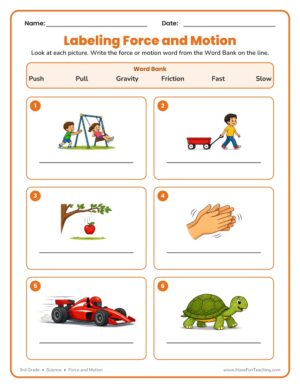
Draw the arrows

Have kids draw force arrows on pictures: a big arrow for a strong push, a small arrow for a weak one, two equal arrows for a tie. Drawing forces helps kids see balanced and unbalanced forces at a glance.

Why it works: children learn more from words and pictures together than from words alone (Mayer, 2009).

Labeling Force and Motion WorksheetTry it withLabeling Force and Motion WorksheetWorksheetsOpen it →

Word wall warm-up

Point to a force word like "friction" or "gravity" and kids act it out. Then they give a real-life example. Quick vocabulary checks keep the science words fresh all unit long.

Why it works: researchers who compared ten study methods found practice testing is one of the two that work best (Dunlosky and colleagues, 2013).

Force and Motion Word WallTry it withForce and Motion Word WallFlash CardsOpen it →

Questions parents and teachers ask about 3rd grade force

What is a force for 3rd grade?

A force is a push or a pull. Forces can make an object move, stop, speed up, slow down or change direction.

What are balanced and unbalanced forces?

Balanced forces are equal and opposite, so nothing moves, like a tug-of-war tie. Unbalanced forces are not equal, so the object moves toward the stronger force.

What is friction?

Friction is a force that slows things down when two surfaces rub together. Rough surfaces like carpet have more friction than smooth ones like ice.

How can I teach force at home?

Roll balls on different floors, play tug-of-war or test which toys a fridge magnet can pick up. Ask your child, "What made it move? What made it stop?"