
Flower Parts of a Plant Worksheet
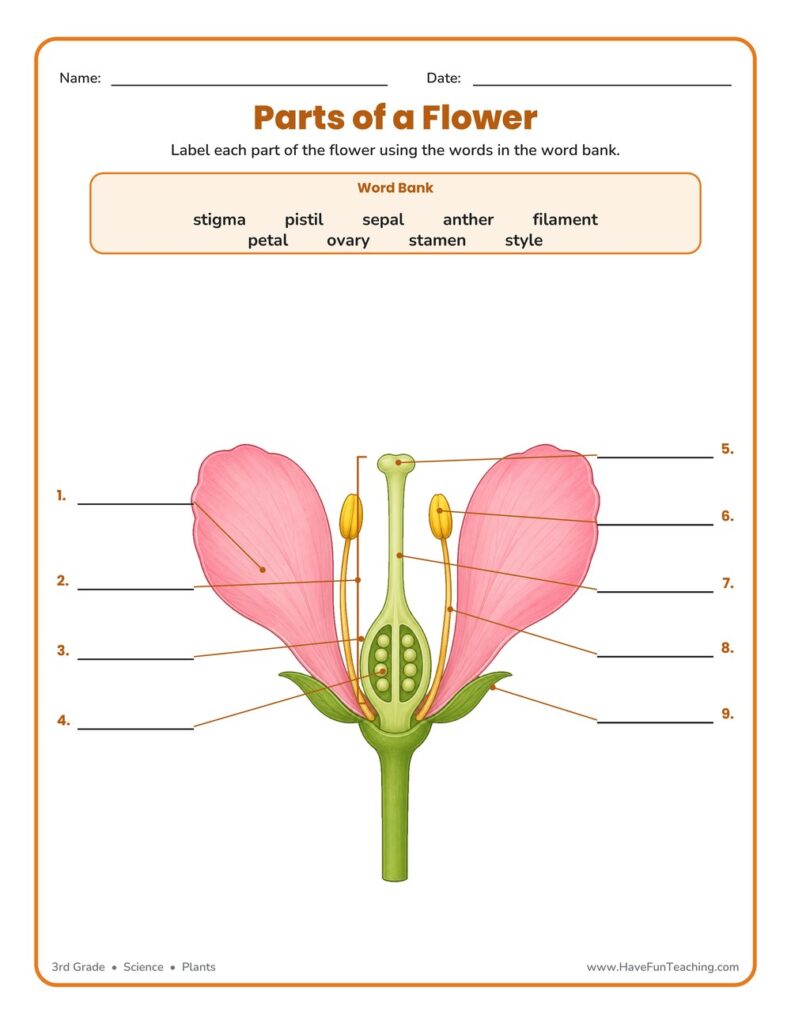
A third grade flower parts of a plant worksheet where students label the nine parts of a flower — petal, sepal, stamen, pistil, and more — using a word bank. Includes a complete answer key for quick, no-prep life science practice.
$6.97
Or free with a membership — members pay $3.33/mo for all 10,000+ resources. See plans
Want this one free?
Tell us where to send it and it’s yours — no card, no catch.
One free resource per teacher. We’ll also send free teaching ideas each week — unsubscribe anytime.
Teaching is easier with a membership
Unlimited printables, games & videos for PreK–6th — for your classroom or homeschool. Cancel anytime.
Start your 3-day free trial$0 today · cancel anytime · Instant access to 10,000+ resources
About this resource
Description
Understanding the parts of a flower is a foundational life science skill that helps students see how plants grow, reproduce, and make new seeds. This Flower Parts of a Plant Worksheet introduces third graders to the nine main structures of a flower — the petal, sepal, stamen, anther, filament, pistil, stigma, style, and ovary — and shows that each part does an important job. By learning to name and locate these structures, children build the science vocabulary they need to describe the natural world around them.
This parts of a flower worksheet gives students a clearly labeled flower diagram and a word bank of the nine flower parts. Kids read each term, follow the leader line to the matching structure, and write the correct name on the numbered blank. To use it, hand out the page after a lesson or read-aloud on plants, let students label each part using the word bank, and then check their work against the included answer key.
What’s Included
- 1 print-ready PDF worksheet
- Answer key
- A labeled flower cross-section diagram with a nine-word word bank and nine labeling lines
This Flower Parts of a Plant Worksheet helps children learn in three ways. First, it pairs each vocabulary word with a picture, so students connect the name of a flower part to what it actually looks like. Second, the word bank gives just enough support that learners can succeed on their own while still recalling each term. Third, labeling a real diagram turns passive reading into active practice, which helps the names of the parts stick in memory far better than a plain list to memorize.
Teachers and parents can extend this activity in many fun ways. Bring in a real flower — a lily or tulip works well — and gently take it apart so children can find the petal, sepal, stamen, and pistil with their own hands. Have students draw and label their own flower after a garden visit or nature walk. Turn the vocabulary into a matching game with cards, or ask kids to explain the job of each part in their own words. Pairing the worksheet with a hands-on flower dissection or a plant-growing project makes the learning memorable and connects it to the living world outside the classroom.
Related Resources
What teachers say
Reviews
You must be logged in to post a review.

This matching habitats worksheet has 3rd graders link five animals to the habitats they live in, then explain two animal adaptations in writing. Answer key included for fast, no-prep science practice.
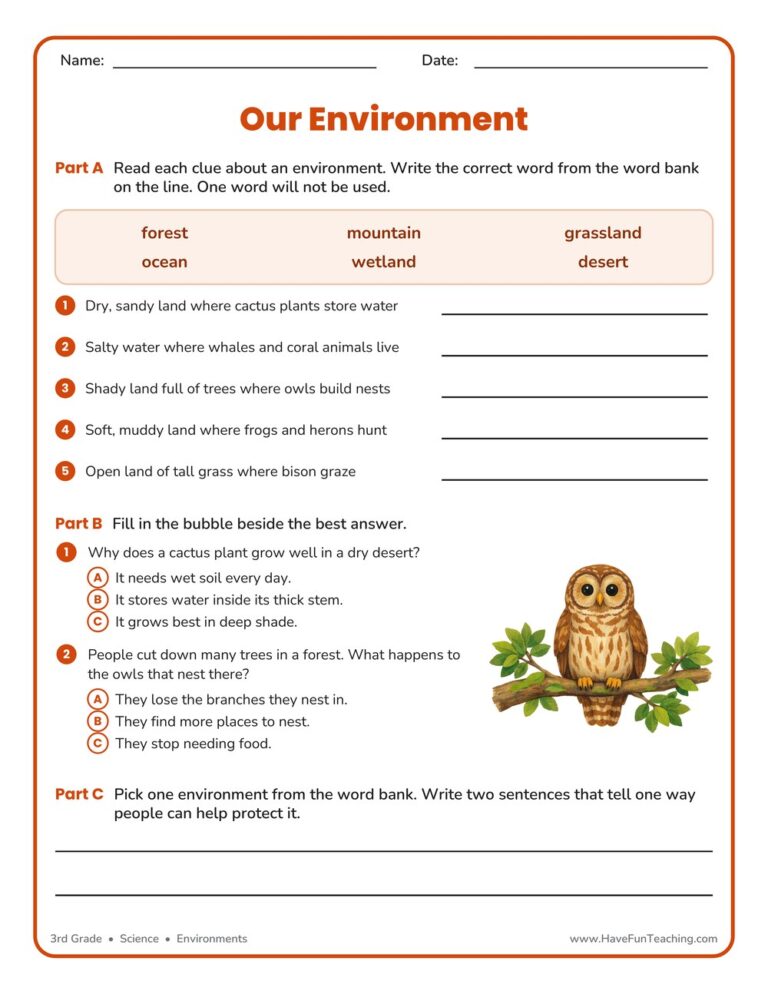
This Our Environment Worksheet asks 3rd graders to name five environments, answer two habitat questions, and write about protecting nature. An answer key is included for fast, no-prep science practice.

This life cycle of plants matching worksheet has 3rd grade students match four pictures to the seed, sprout, seedling, and adult plant stages, then answer three questions in writing. Answer key included.
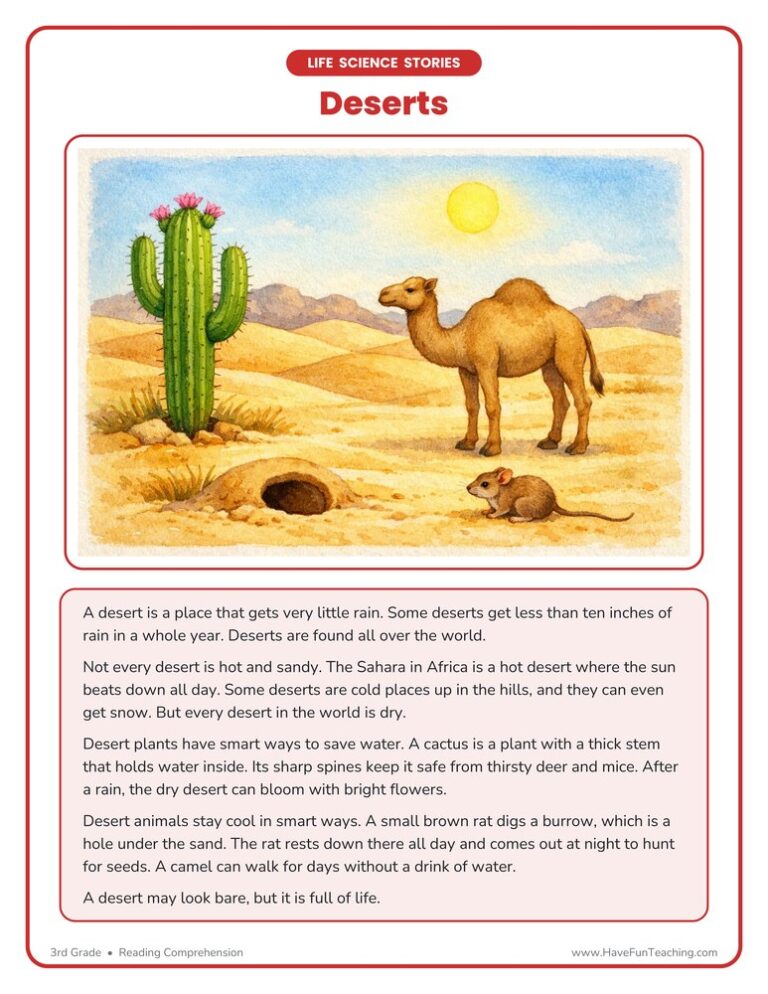
This Deserts Life Science Reading Comprehension Worksheet gives 3rd Grade readers a short nonfiction passage about hot and cold deserts, with comprehension questions and an answer key included, so science reading practice takes minutes to prep.

This birds worksheet has 3rd graders circle the facts true of all birds, sort eight animals into Bird and Not a Bird, and explain why a bat is not a bird. Answer key included.

This describe it five senses worksheet has 3rd graders match five sentences to the sense that notices them, then write their own description. An answer key is included for quick, no-prep science practice.

This animal habitats worksheet asks 3rd Grade students to match animals to their habitats, sort six animals into two environments, and explain one desert adaptation. An answer key is included for fast, no-prep science practice.

While watching the Creation Song, students learn about the days of Creation perfect for Sunday school, kid's church, and Bible lessons for kids. Bring joy and understanding into your kid's church, Sunday school, and classroom with this song about the days of Creation. Your kids will love a new way…
The Life Science Stories Reading Comprehension Digital Worksheet Collection has online digital worksheets for Google Classroom & online distance learning.

This Water Pollution Worksheet has 3rd Grade students sort pictures, finish sentences from a word box, and write about one way to keep rivers clean. Answer key included.

This reptiles, amphibians, and insects worksheet helps 3rd grade students sort four animals by their traits and explain their thinking in writing. Answer key included for quick, no-prep life science practice.

UsingCharacter Reading Comprehension Workbook Download, students can have all of the passages about different life science topics all in one workbook.
Reviews
There are no reviews yet