

Helpful vs Hurtful Problem Solving Worksheet
This helpful vs hurtful problem solving worksheet asks Kindergarten students to judge seven everyday phrases as kind or unkind. Answer key included, so kids leave with words they can actually use.
$6.97
Or free with a membership — members pay $3.33/mo for all 10,000+ resources. See plans
Want this one free?
Tell us where to send it and it’s yours — no card, no catch.
One free resource per teacher. We’ll also send free teaching ideas each week — unsubscribe anytime.
Teaching is easier with a membership
Unlimited printables, games & videos for PreK–6th — for your classroom or homeschool. Cancel anytime.
Start your 3-day free trial$0 today · cancel anytime · Instant access to 10,000+ resources
About this resource
Description
Solving a problem with words is one of the first social skills a young child practices at school, and this helpful vs hurtful problem solving worksheet gives them a simple, concrete way to hear the difference. Some words open a door: they invite a friend to share, they ask instead of grab, they buy a little patience. Other words slam that door shut. Kindergarten students already feel that difference long before they can name it, and naming it is exactly what turns a feeling into a skill they can use on the playground, at the art table, and in the block corner.
This helpful vs hurtful problem solving worksheet puts seven short, familiar phrases in front of students – the kinds of things children really say when two of them want the same marker. For each one, the student reads the words and fills in the bubble to show whether those words are helpful or hurtful. The phrases are printed large and kept to a few easy words, so beginning readers can work through the page with very little support. A complete answer key is included, so the sheet works just as well at a center, in a small group, or as a quick whole-class check.
What’s Included
- One printable Kindergarten worksheet with seven spoken phrases to judge
- Fill-in-the-bubble choices – helpful or hurtful – for every phrase
- Large, easy-to-read type sized for beginning readers
- A friendly illustration modeling one child sharing with another
- A complete answer key on the second page
Three Reasons This Helps Kids
- It makes an invisible skill visible. Sorting real phrases into helpful and hurtful gives children a vocabulary for something they usually only feel, which is the first step toward choosing better words on their own.
- It rehearses the language before the conflict. Reading “Can I help?” and “We can trade.” on a calm afternoon makes those words far easier to reach for when a real disagreement starts.
- It builds reading confidence at the same time. Every phrase is short, decodable, and repeated in familiar patterns, so students practice reading for meaning while they practice kindness.
Ideas for Teachers and Parents
Read each card aloud together before students mark it, and ask a child to say the phrase in a helpful way instead – “Give it to me!” becomes “Can I have a turn?” Cut the finished page into cards for a pocket-chart sort, or post the helpful phrases near the classroom door as sentence starters. At home, this kindergarten life skills worksheet pairs well with a bedtime review of the day: name one helpful thing someone said to you, and one helpful thing you said to someone else. Teachers of mixed-age groups can hand the same page to older siblings and ask them to write a helpful replacement underneath each hurtful phrase.
Related Resources
What teachers say
Reviews
You must be logged in to post a review.

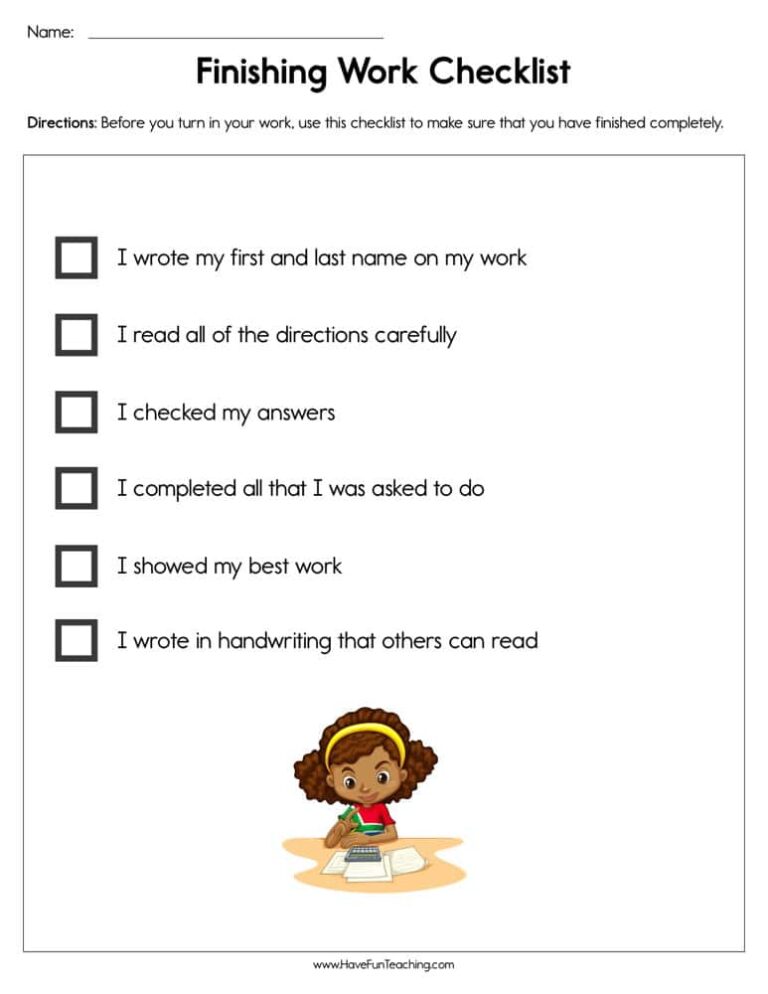
This Finishes Work Checklist Worksheet gives Kindergarten students six simple steps to check before they turn in a paper, so finishing carefully becomes a habit they own.


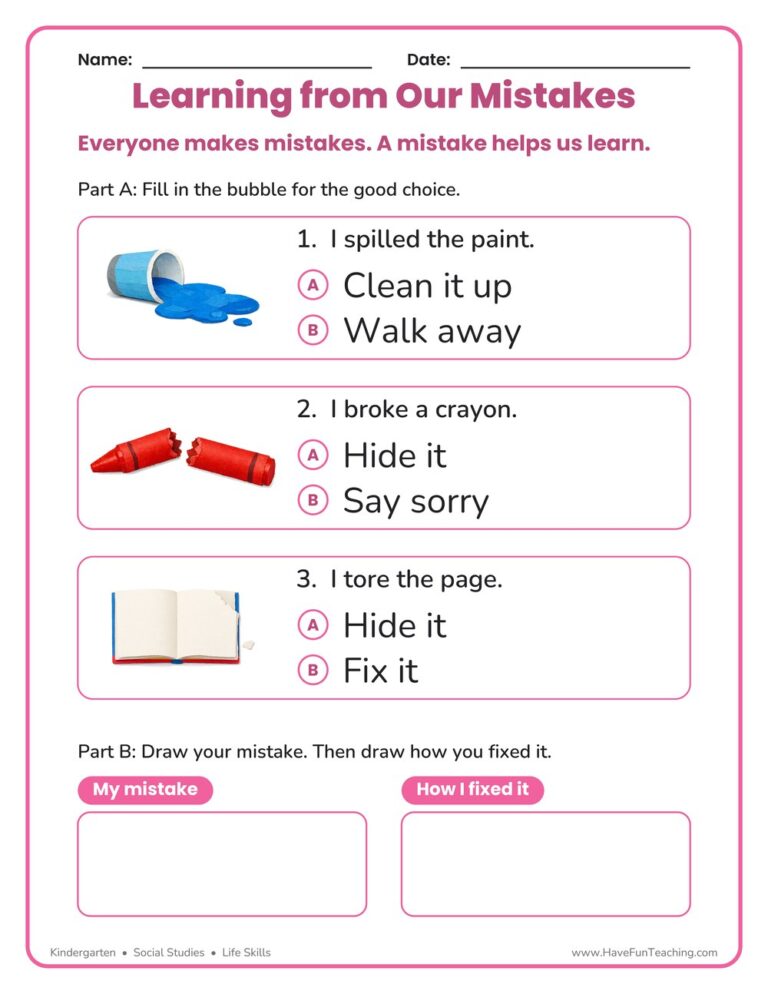
A Learning from Our Mistakes Worksheet for Kindergarten, where children pick the good choice after a spill, a break, or a tear, then draw their own fix. Answer key included for easy, no-prep social skills practice.

This Problem Solving Reflection Worksheet helps Kindergarten students choose good solutions to three everyday classroom problems and draw one they solved themselves. An answer key is included, so it is ready to print and teach.

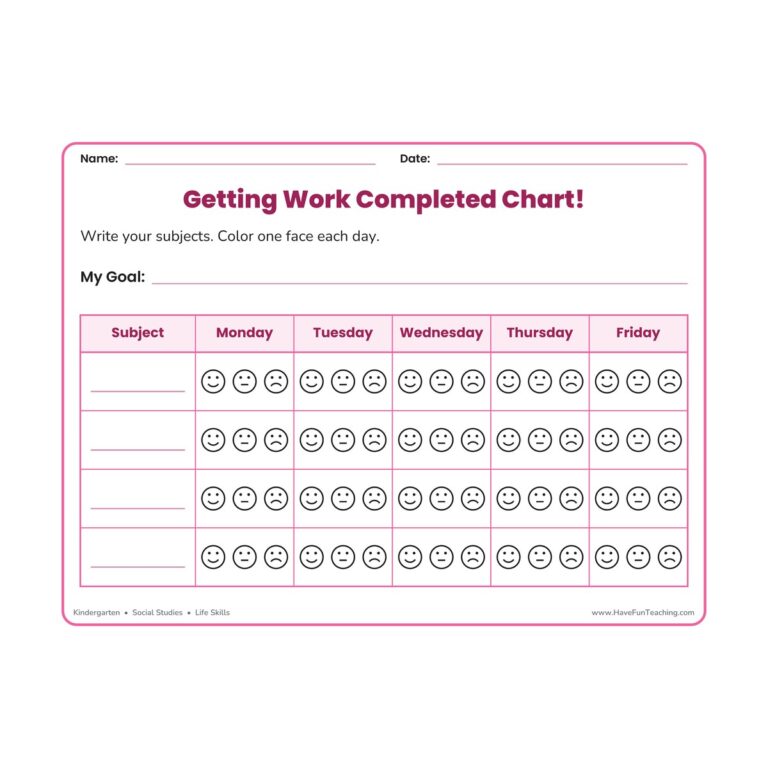
With the Getting Work Completed Chart Worksheet, Kindergarten students set a weekly goal and color a face for each subject every day, building the habit of finishing what they start.
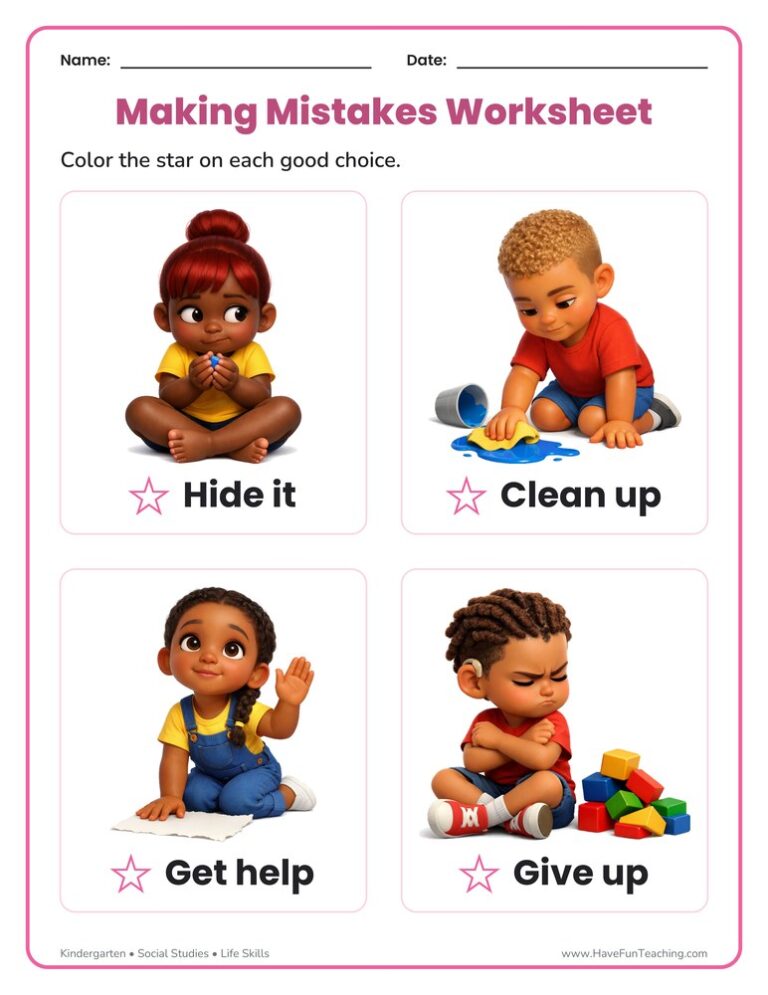
This Making Mistakes Worksheet asks kindergarten students to color the star on each good choice after something goes wrong. An answer key is included, so it is ready for morning meeting or a calm-down corner.

This How to Solve a Problem Worksheet asks kindergarten students to pick the kindest fix for three everyday classroom mix-ups, then draw a problem of their own. An answer key is included for quick checking.

This dialing telephone number worksheet helps Kindergarten students fill in a phone keypad and write their own phone number. An answer key is included, and kids gain a safety skill they will use for life.
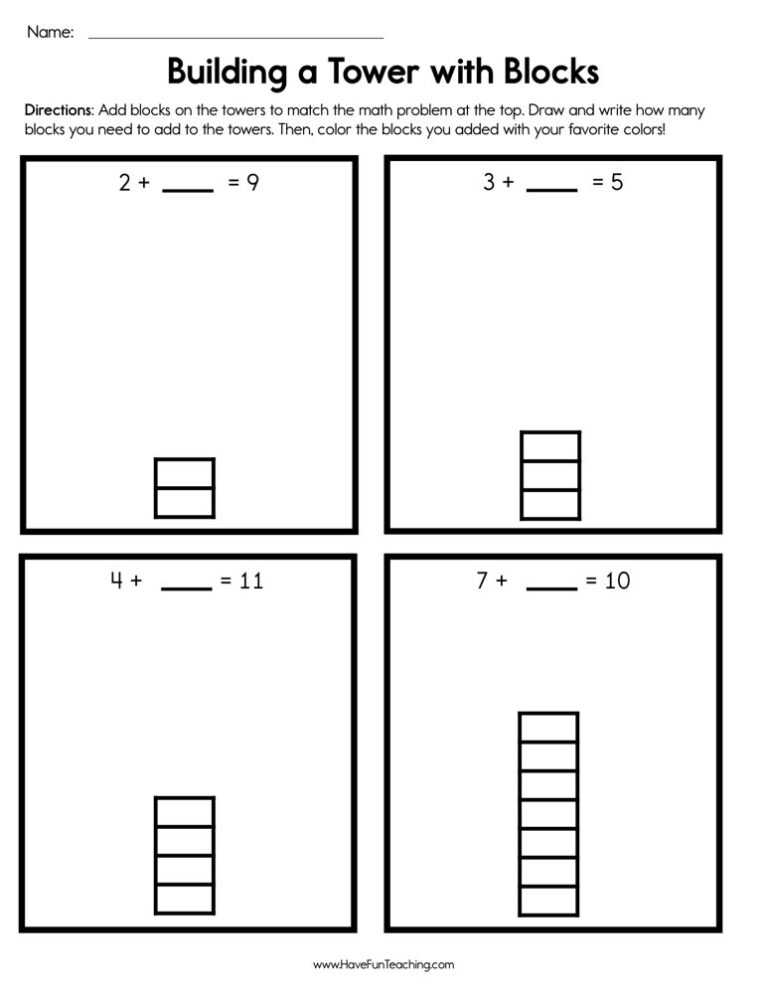
The Building a Tower with Blocks Worksheet gives Kindergarten students four block towers to finish, drawing and writing the missing addend in each number sentence. An answer key is included, so checking work takes seconds.
Reviews
There are no reviews yet