
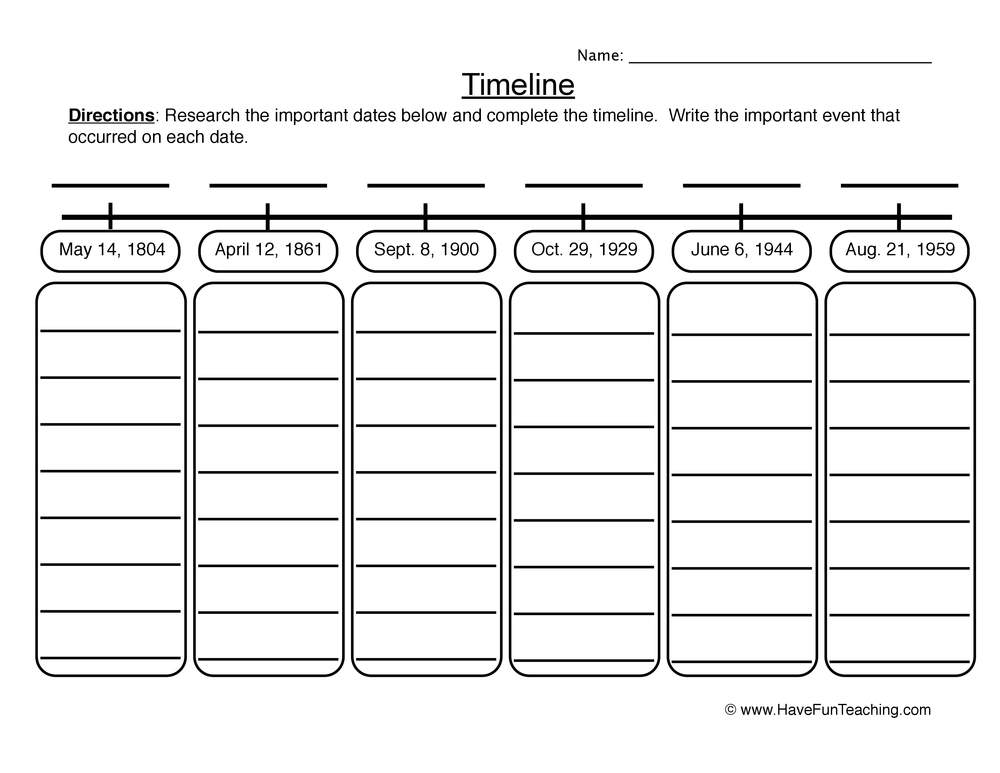
Historical Timeline Worksheet
A historical timeline worksheet where 4th graders place five national park events on a dated scale and figure out the years between them. Answer key included, for no-prep practice in reading time lines.
$6.97
Or free with a membership — members pay $3.33/mo for all 10,000+ resources. See plans
Want this one free?
Tell us where to send it and it’s yours — no card, no catch.
One free resource per teacher. We’ll also send free teaching ideas each week — unsubscribe anytime.
Teaching is easier with a membership
Unlimited printables, games & videos for PreK–6th — for your classroom or homeschool. Cancel anytime.
Start your 3-day free trial$0 today · cancel anytime · Instant access to 10,000+ resources
About this resource
Description
Reading a time line is how students first see history laid out in order, and a historical timeline worksheet gives them a clear, hands-on way to practice it. On a time line, distance means time: the space between two marks is a number of years, so a learner can see at a glance that two events were close together or far apart. Fourth graders who can place an event on a dated scale, read the decade labels around it, and subtract one year from another are doing real historical thinking, not just memorizing dates. That skill carries straight into social studies reading, science sequencing, and any text that asks what happened first.
This 4th grade timeline worksheet uses five true events from the story of America’s national parks, from the day Yellowstone became the very first park in 1872 to the day the Everglades was set aside in 1947. In Part A, students read the five lettered events in the box and write each letter in the circle that marks its year on the printed scale. Because the events in the box are not listed in date order, they have to read and think rather than copy the list straight down. In Part B, they use the finished time line to answer four questions about how many years passed between events, including one question that compares two spans of time.
What’s Included
- 1 print-ready PDF worksheet
- Answer key
- 1 labeled time line from 1860 to 1950 with five events to place
- 4 elapsed-time questions, including one two-step comparison
This historical timeline worksheet helps children learn the skill in three ways. First, it separates the two halves of the job: placing an event on the scale comes before reasoning about it, so a student who struggles with one still succeeds at the other. Second, every question is answered from the page itself, so the practice is reading a time line rather than recalling facts a child may never have been taught. Third, the elapsed-year questions ask for four-digit subtraction with a real purpose behind it, which is exactly how fourth graders are asked to use subtraction on assessments.
Teachers and parents can stretch the same skill in a few easy ways. Have students build a personal time line of their own life, one mark for each year, and compare its scale to this one. Walk outside and pace off a hallway time line with sticky notes, one step per decade, so the years become a distance children can feel. After a read-aloud, ask the class to place three events from the book on a blank line in order. You can also give students the answers first and ask them to write the questions, which forces them to look at the spacing on the scale in a whole new way.
Related Resources
What teachers say
Reviews
You must be logged in to post a review.

This Native American Groups Worksheet gives 4th graders four illustrated culture region cards, four inference clues, and a written response about how the land shaped homes. Answer key included for fast review.
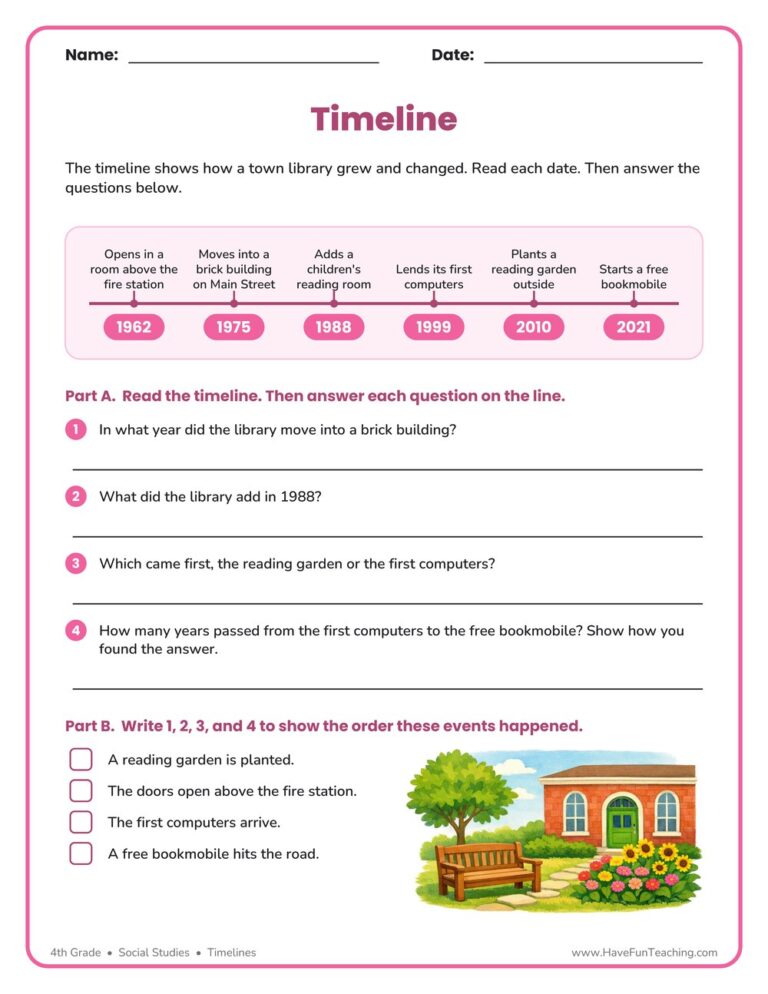
This timeline worksheet gives 4th graders a six-event town library timeline to read, question, and put in order. Answer key included, so students get real practice reading dates and events with no prep at all.
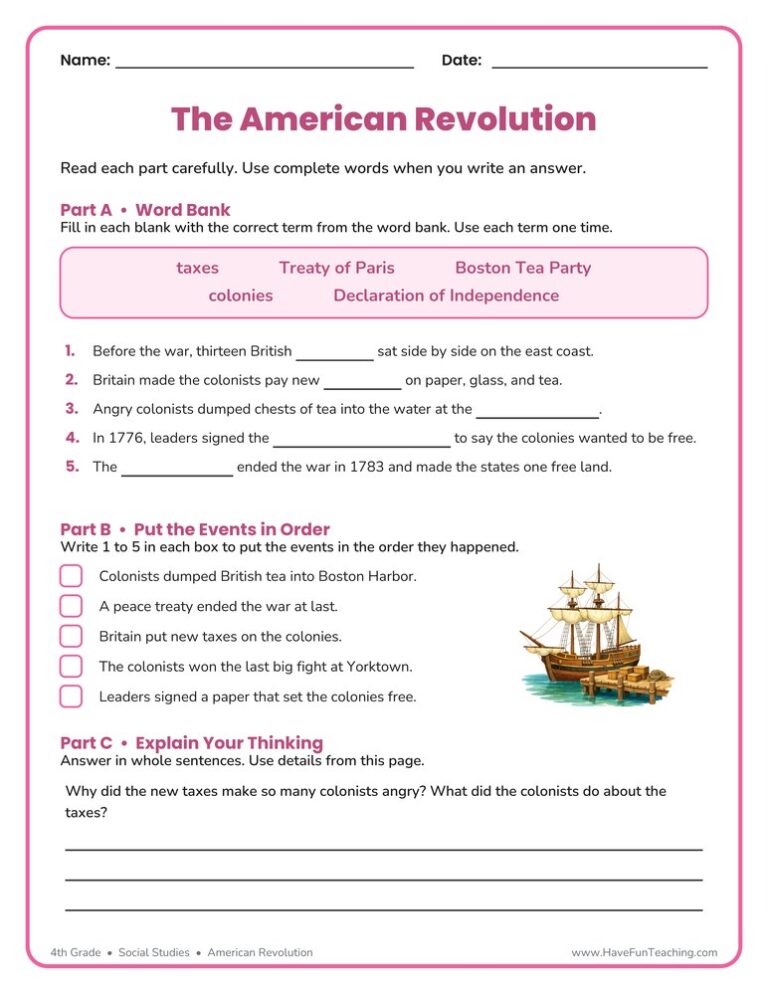
This American Revolution worksheet gives 4th graders word-bank vocabulary, a five-event timeline to put in order, and a short written response. An answer key is included, so review takes no prep at all.
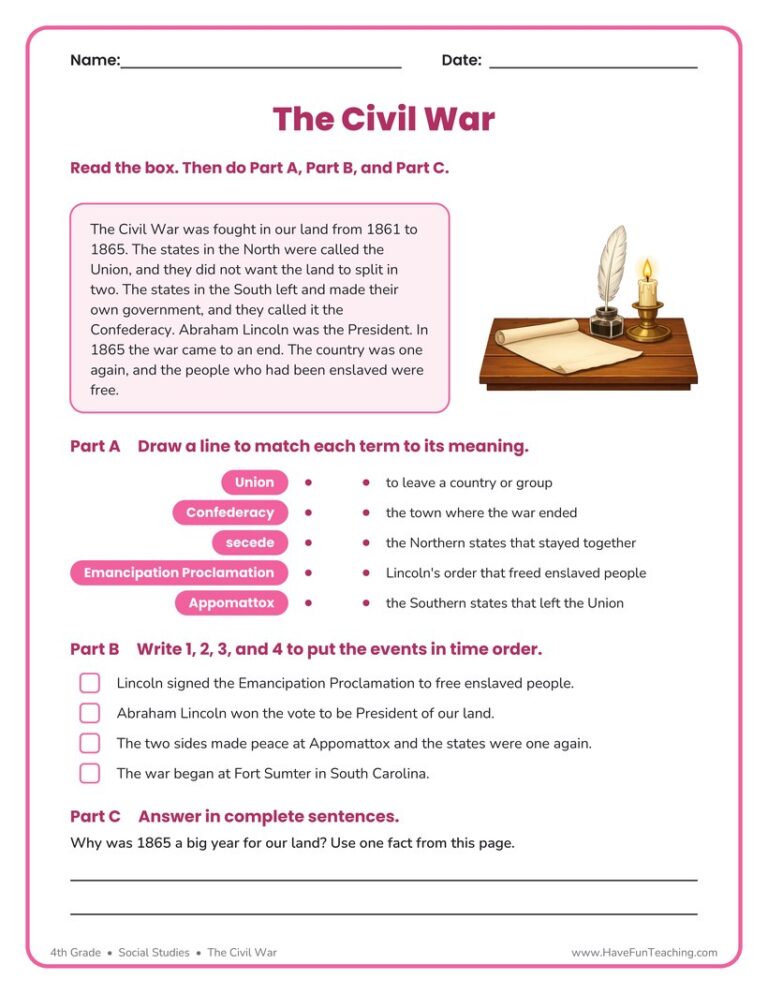
Students read a short passage, match Civil War terms, put four events in time order, and write a supported answer. This Civil War Worksheet fits 4th grade classrooms and homeschools, and an answer key is included.
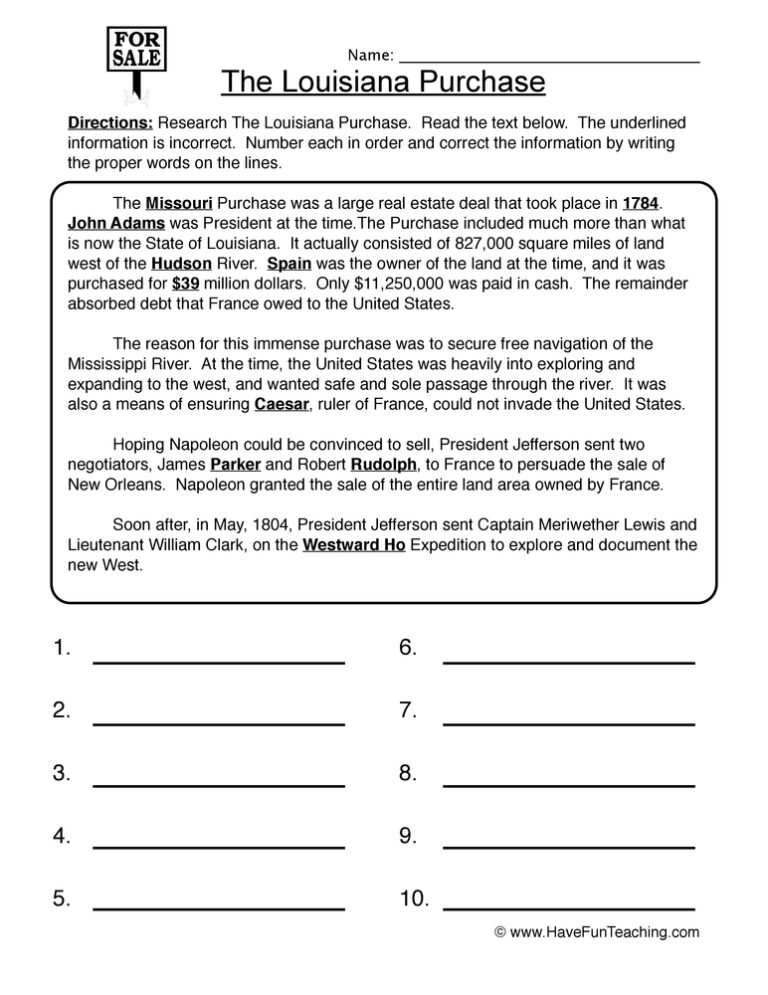
This Louisiana Purchase Worksheet gives 4th graders a short article and a labeled map of the fifteen states formed from the 1803 deal, plus six questions and two written responses. Answer key included for quick checking.
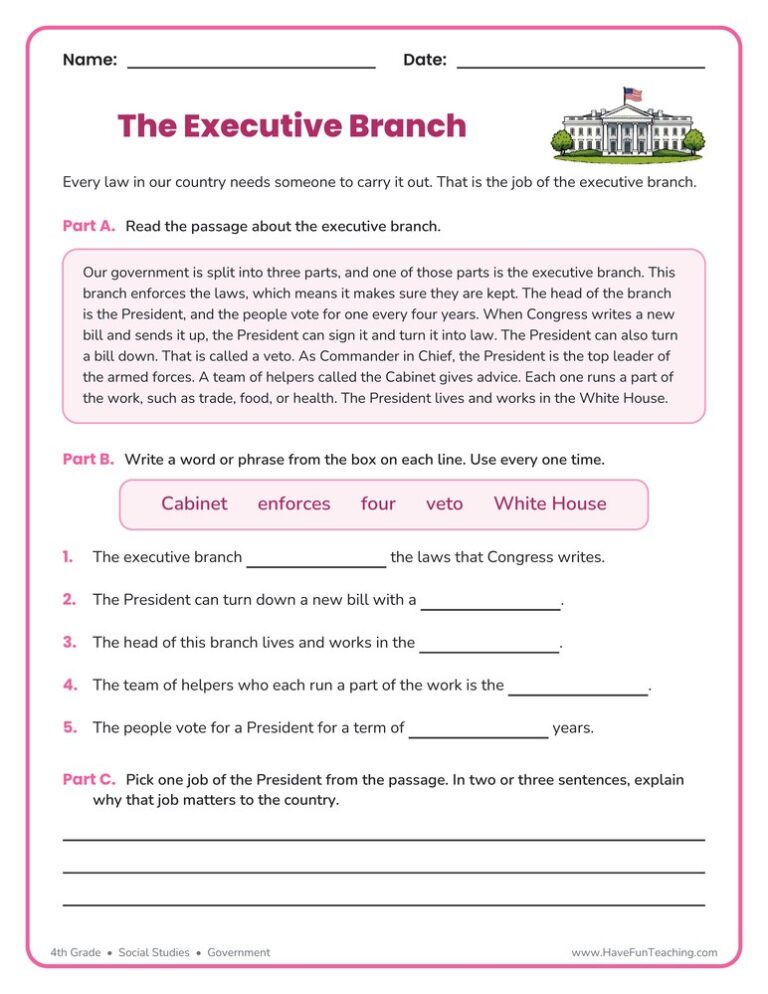
An executive branch worksheet for 4th grade, with a short passage, a word-bank activity, and a written response on the President, the veto, and the Cabinet. Answer key included for quick, no-prep civics practice.

This Industrial Revolution worksheet asks 4th graders to match key history and economics terms to clues, then explain how steam power and railroads made everyday goods cheaper. Answer key included.
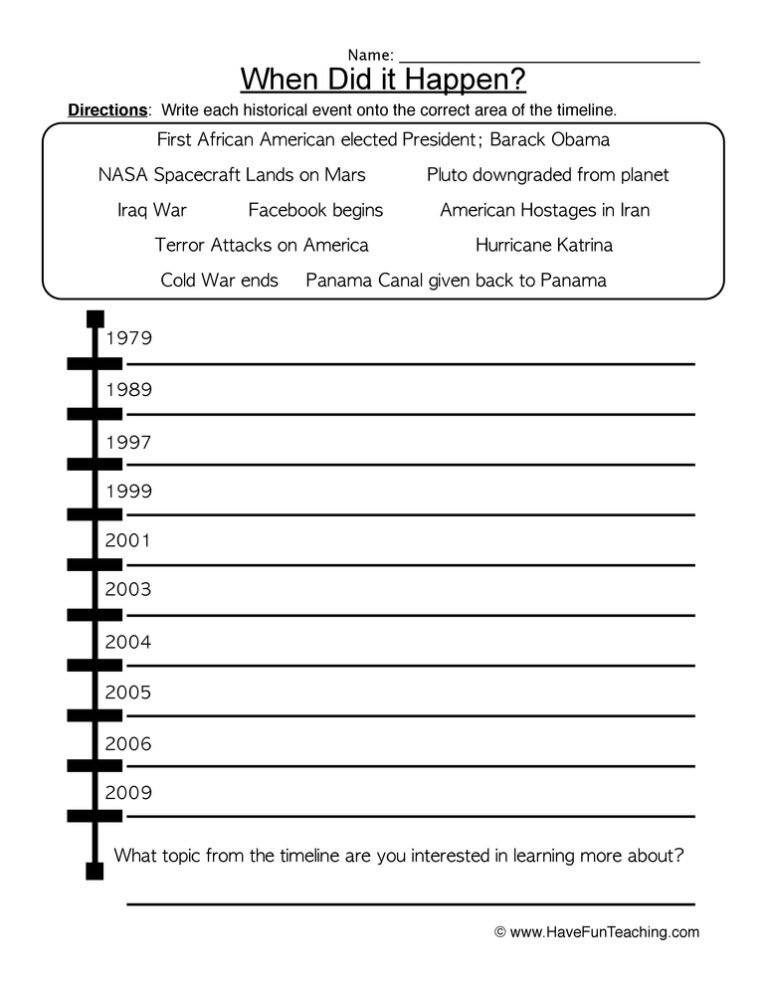
This when did it happen in history worksheet has 4th grade students place six American milestones on a dated timeline and count the years between them. An answer key is included for quick checking.

This early explorers worksheet has 4th graders research Marco Polo, Magellan, Lewis, Amundsen, and Cousteau, then record each home country and famous journey. An answer key is included.
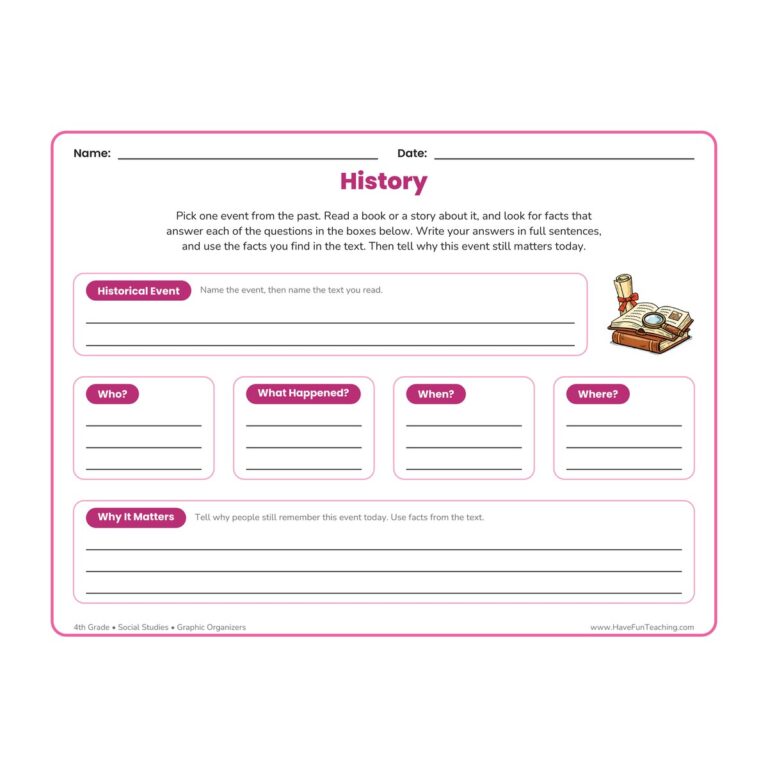
A landscape history graphic organizer worksheet that helps 4th graders record the who, what, when, and where of any historical event from a non-fiction text, then explain in writing why it still matters today.
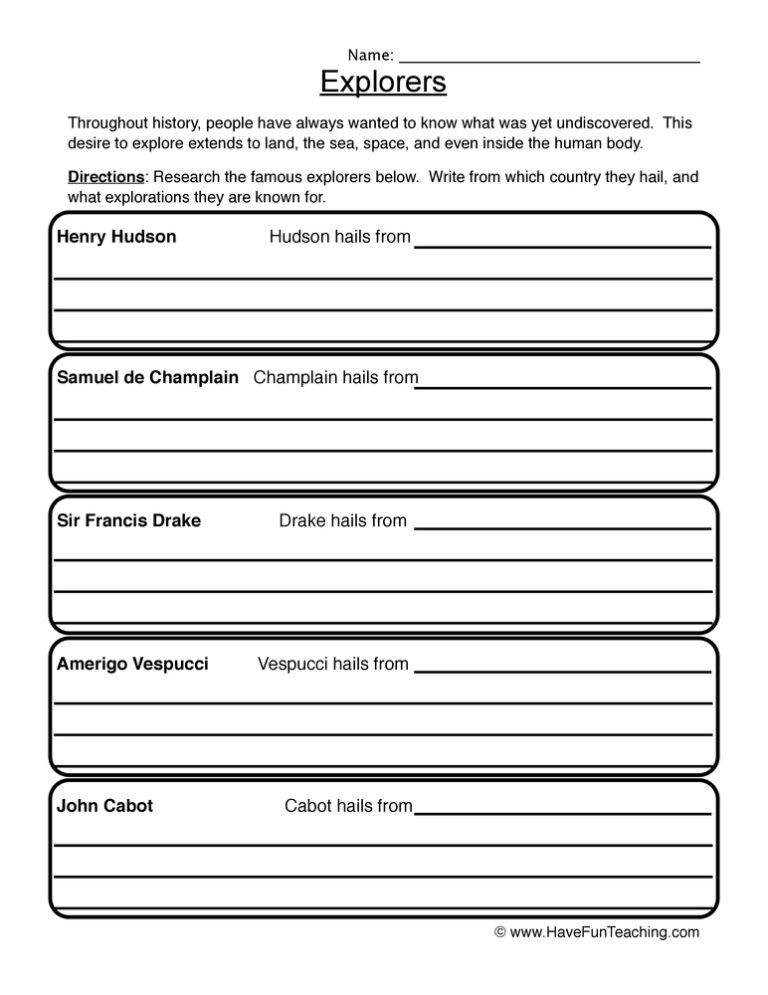
This explorers worksheet has 4th graders research five famous explorers, record each home country, and explain what each one is known for. An answer key with model answers is included.
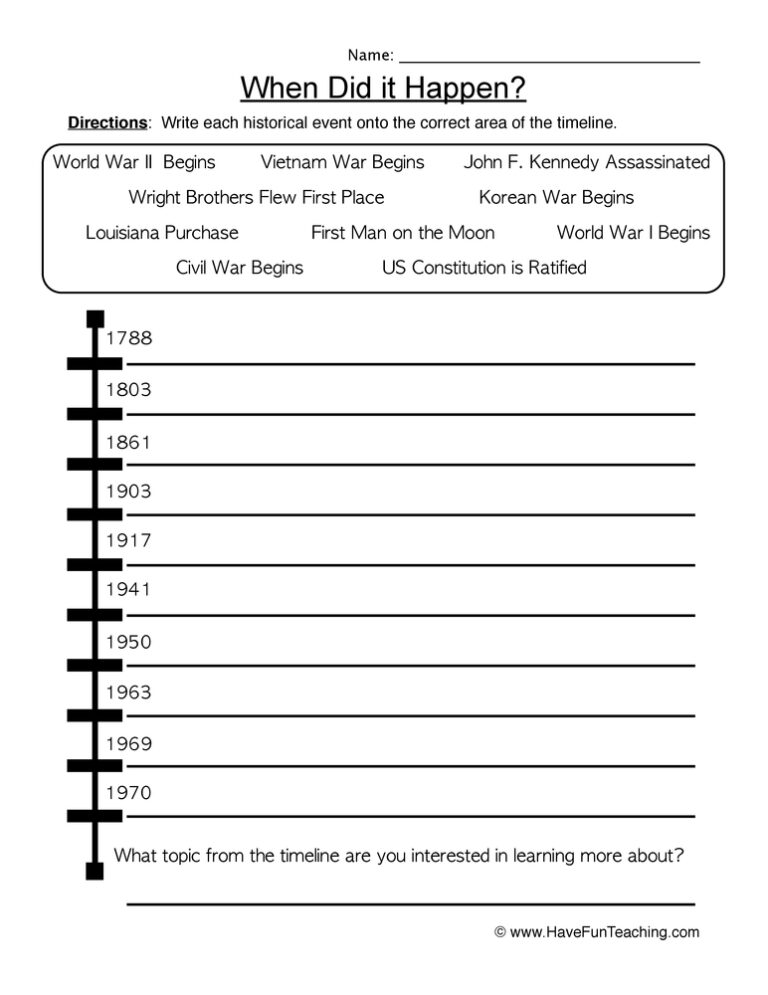
This When Did it Happen Worksheet has 4th Grade students place six American events beside the right year on a timeline, then count the years between them. An answer key is included, so checking takes seconds.

Reviews
There are no reviews yet