Skip to content
Start My 3 Free Days $0 today · cancel anytime

4th Grade Economics Resources

8 4th grade economics resources: 8 worksheets and 2 assessments. How teachers use these

4th Grade Economics Resources

8 4th grade economics resources: 8 worksheets and 2 assessments. How teachers use these

Worksheet
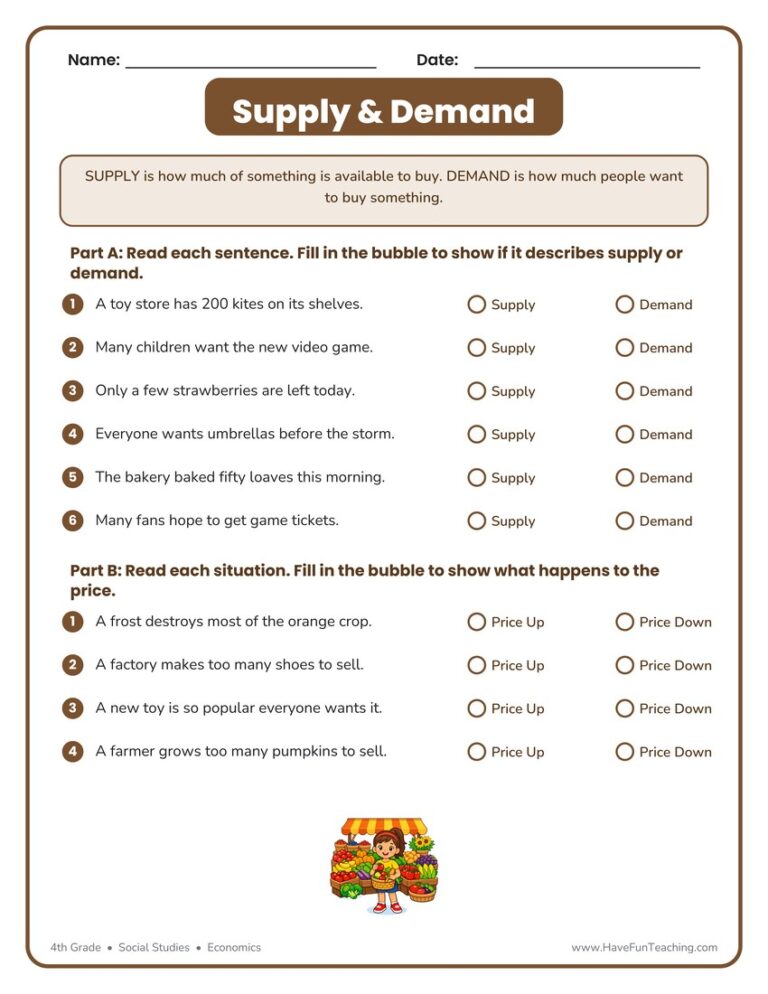
Worksheet4th GradeSupply & Demand Worksheet

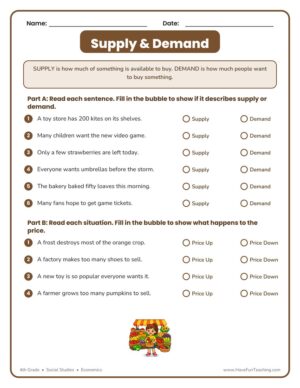
This Supply & Demand Worksheet helps 4th grade students sort supply and demand and predict how prices change. Includes a complete answer key for quick, no-prep economics practice.

Worksheet
Worksheet4th GradeIndustrial Revolution Worksheet

This Industrial Revolution worksheet asks 4th graders to match key history and economics terms to clues, then explain how steam power and railroads made everyday goods cheaper. Answer key included.

Assessment
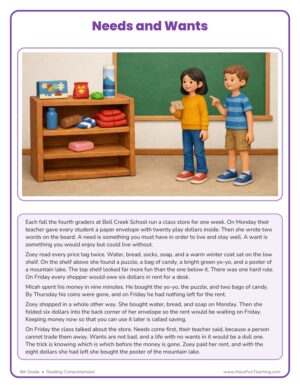
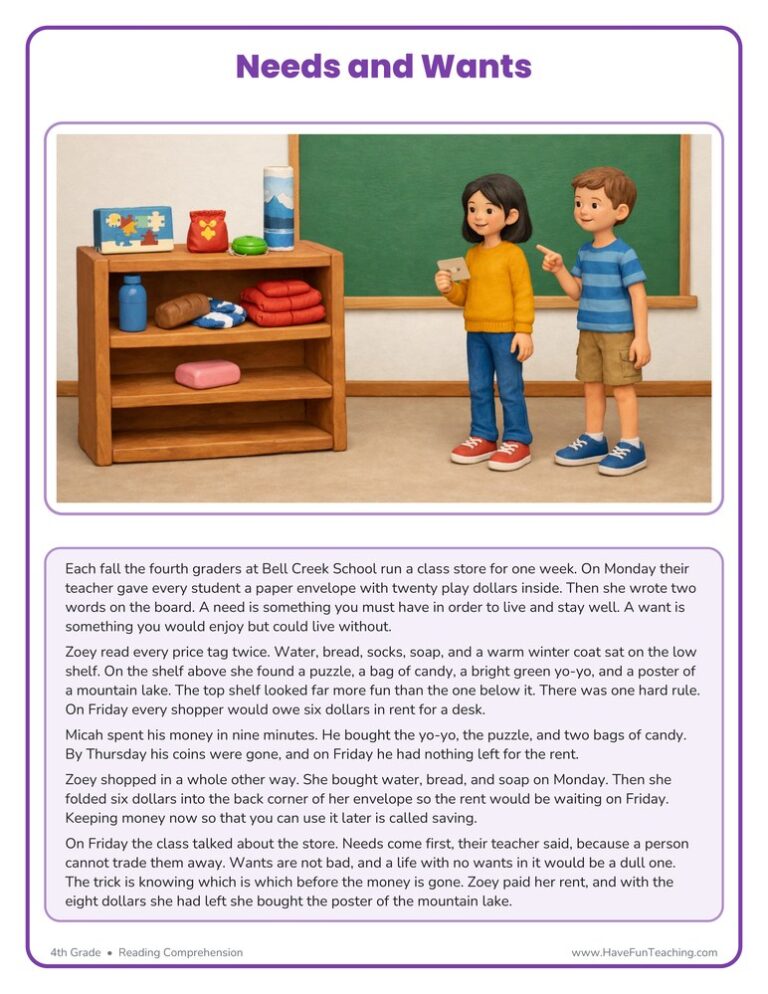
Assessment4th GradeNeeds and Wants Reading Comprehension Worksheet

A needs and wants reading comprehension worksheet for 4th grade: read a short story about a classroom store, then answer bubble and written-response questions. Answer key included, so students can check their own evidence.

Worksheet
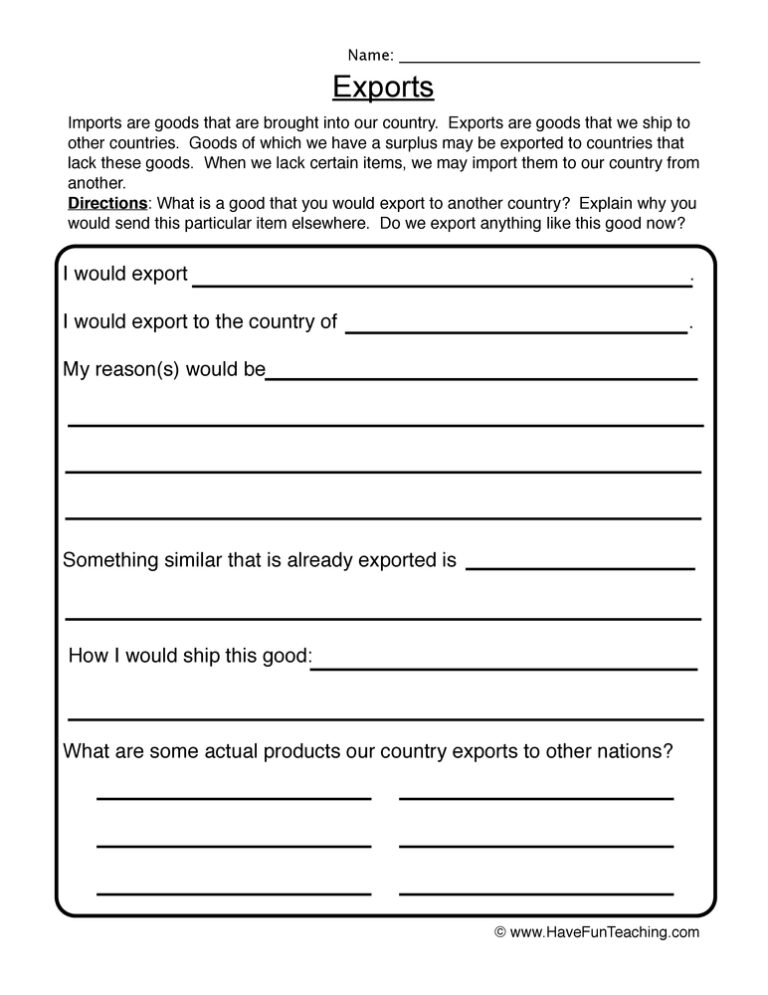
Worksheet4th GradeExports Worksheet

This Exports Worksheet has 4th graders label five trade situations as an import or an export, then explain their thinking in two written answers. Answer key included for quick, no-prep economics practice.

Worksheet
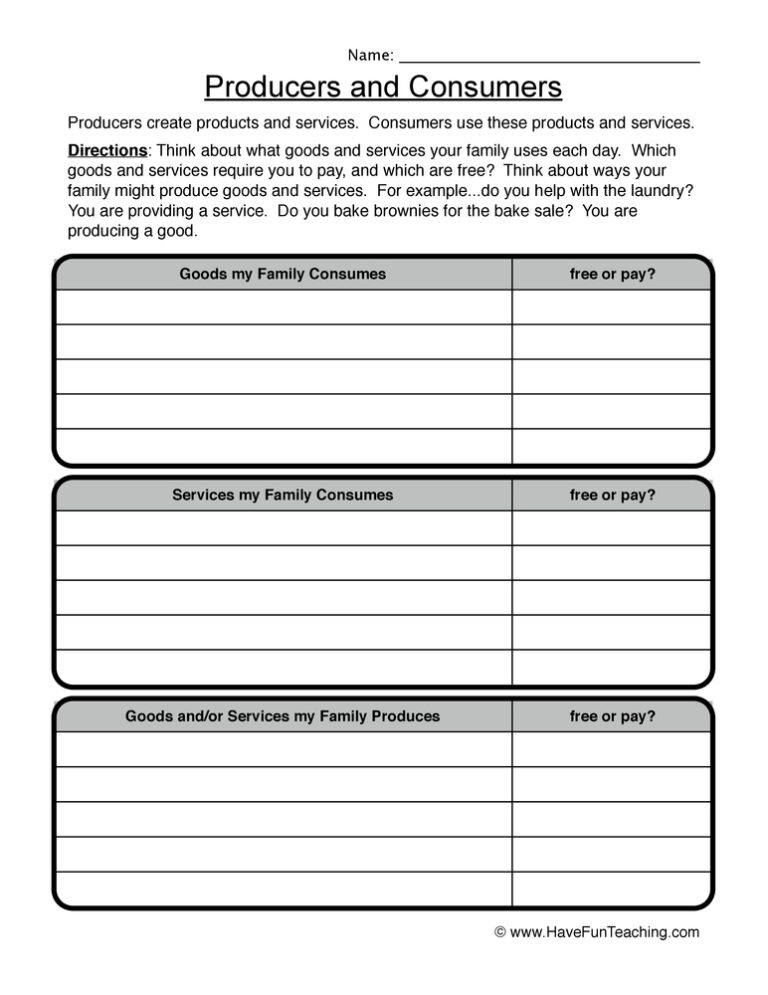
Worksheet4th GradeCreating Producers and Consumers Worksheet

This creating producers and consumers worksheet has 4th graders sort six community situations by producer or consumer and by goods or services. An answer key is included, so it is ready for quick, no-prep social studies practice.

Worksheet
Worksheet4th GradeProducers and Consumers Worksheet

A Producers and Consumers Worksheet that has 4th graders match six everyday scenes to producer, consumer, goods, or services, then explain how a shopper pays a maker. Answer key included for quick no-prep economics practice.

Assessment
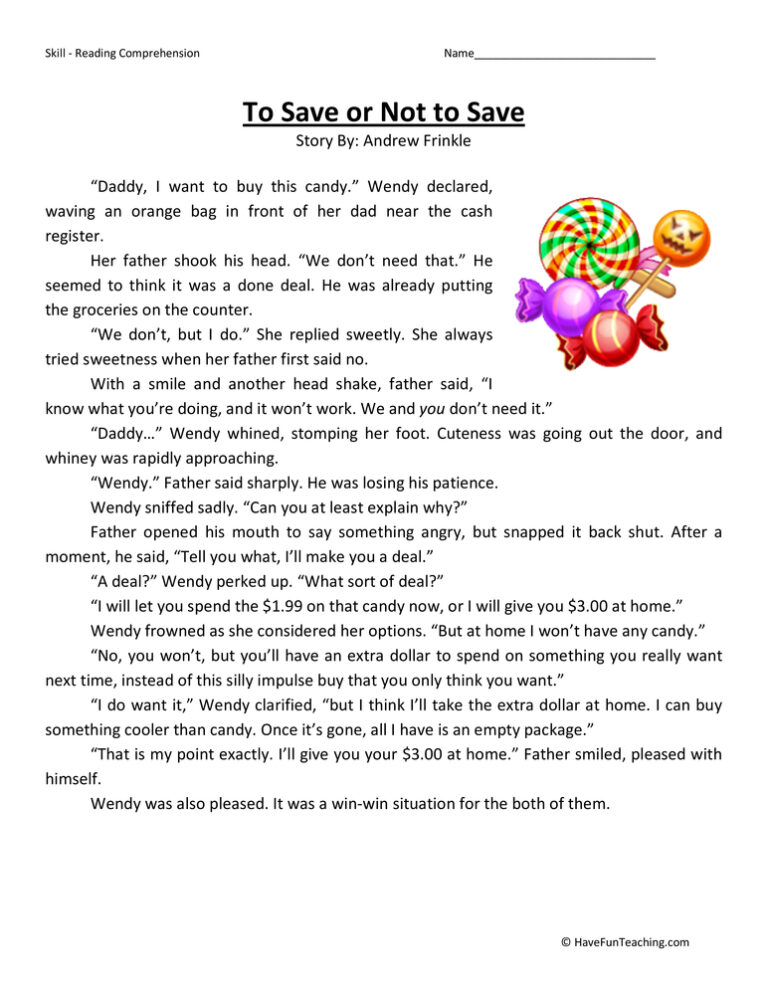
Assessment4th GradeTo Save or Not to Save Reading Comprehension Worksheet

This To Save or Not to Save reading comprehension worksheet gives 4th graders a nonfiction passage on saving and spending, with questions and an answer key that build smart money habits.

Worksheet
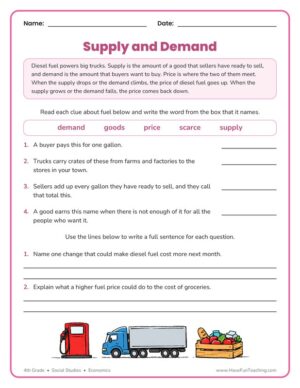
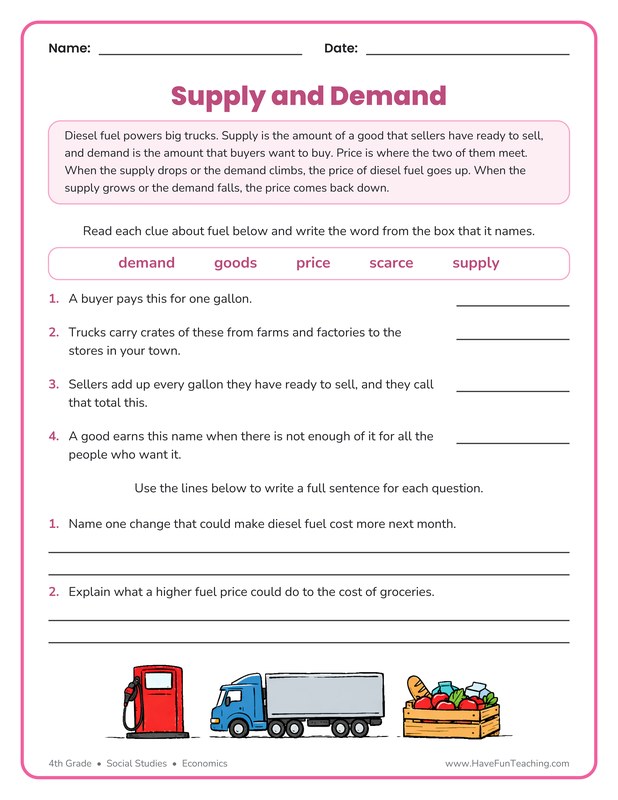
Worksheet4th GradeDiesel Fuel Supply and Demand Worksheet

This supply and demand worksheet asks 4th graders to use diesel fuel, trucks, and grocery prices to explain why a price rises or falls. An answer key is included for fast, no-prep economics practice.

From our teachers' playbook

Lemonade stands, price tags and big ideas

What do 4th graders learn about economics?

Fourth graders find out that every purchase is a choice. They sort needs from wants, meet producers and consumers, and see how goods and services move from a farm or factory to a store shelf. The big idea is scarcity: we can't have everything, so we trade one thing for another (that's opportunity cost!). Many classes also tie economics to their state's history, like the crops and goods it exports. The click comes when kids realize a price goes up when lots of people want something and there isn't much of it.

How we make economics real for 9-year-olds

Economics sticks when kids get to buy, sell and decide. These three moves turn vocabulary into choices they actually make.

Open a classroom market

Give each table a "business" (bookmarks, paper airplanes, cookie coupons) and a few play dollars. Half the class produces, half consumes, then everyone switches. Afterward, kids label who was a producer, a consumer, and what was a good or a service.

Why it works: kids understand an idea best when they touch it, then draw it, then write it, the order the U.S. Department of Education recommends for elementary math.

Creating Producers and Consumers WorksheetTry it withCreating Producers and Consumers WorksheetWorksheetsOpen it →
Draw the price story

Sketch a simple supply and demand picture on the board: lots of buyers, only three scooters. Ask "What happens to the price?" and let kids act it out with sticky-note prices. Seeing the price move makes the rule stick far better than a definition.

Why it works: pairing a picture with each word gives kids two ways to remember it, a well-tested principle of how people learn (Mayer, 2009).

Supply & Demand WorksheetTry it withSupply & Demand WorksheetWorksheetsOpen it →

Mix the big ideas together

Don't teach needs, then trade, then exports in separate weeks and walk away. Shuffle them into one review: a worksheet question on exports, then one on producers, then one on scarcity. Kids have to decide which idea fits, and that's where real understanding shows up.

Why it works: mixing different kinds of problems in one practice set helped students do far better on a later test (Rohrer and Taylor, 2007).

Exports WorksheetTry it withExports WorksheetWorksheetsOpen it →

Questions parents and teachers ask

What economics is taught in 4th grade?

Most 4th grade classes cover needs and wants, goods and services, producers and consumers, scarcity, and supply and demand. Many also connect it to state history, like what their state produces and trades.

How do I explain supply and demand to a 4th grader?

Use something they care about. If every kid wants the last slice of pizza, the "price" goes up. If there's a whole tray left, nobody pays much. More wanting plus less having equals a higher price.

What is opportunity cost for kids?

It's what you give up when you choose. If you spend your $5 on stickers, the opportunity cost is the book you didn't buy. Kids get it fast when you ask them about a real choice they made.

How can I teach economics at home?

Let your child plan a small grocery list with a budget, or run a weekend lemonade stand. Talk through costs, prices and what they'd do differently next time.