
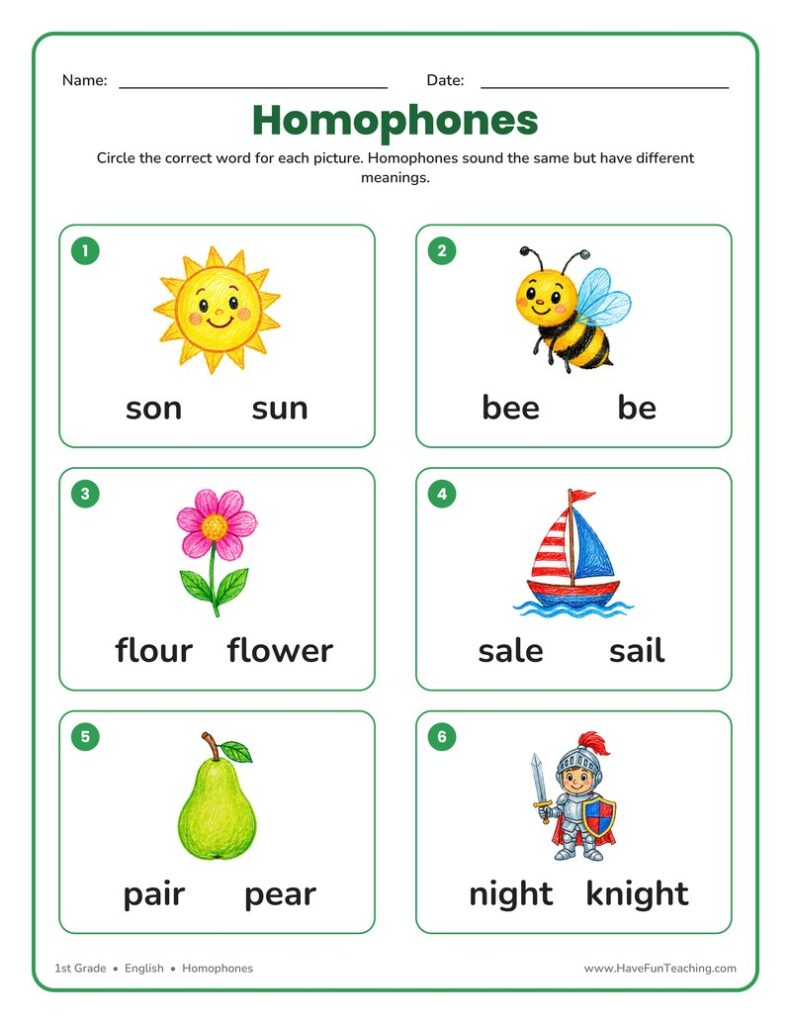
Homophones Worksheet
This first grade Homophones worksheet has students circle the correct homophone that matches each picture, from sun and son to flower and flour. A complete answer key is included for quick, no-prep vocabulary practice.
$6.97
Or free with a membership — members pay $3.33/mo for all 10,000+ resources. See plans
Want this one free?
Tell us where to send it and it’s yours — no card, no catch.
One free resource per teacher. We’ll also send free teaching ideas each week — unsubscribe anytime.
Teaching is easier with a membership
Unlimited printables, games & videos for PreK–6th — for your classroom or homeschool. Cancel anytime.
Start your 3-day free trial$0 today · cancel anytime · Instant access to 10,000+ resources
About this resource
Description
Homophones are words that sound exactly the same but are spelled differently and have different meanings, like sun and son or flower and flour. This Homophones worksheet helps young learners notice these tricky sound-alike words and choose the correct one to match each picture. Building an early awareness of homophones gives children a strong foundation for spelling, reading, and vocabulary, and it teaches them to slow down and think about what a word really means instead of just how it sounds.
This first grade homophones worksheet gives children six friendly picture cards. For each card, students look at the picture, read the two homophone choices below it, and circle the word that matches. To use it, hand out the sheet and read the directions together, then have students say each pair of words aloud so they can hear that the words sound alike before deciding which spelling fits the picture. A complete answer key is included so grading takes just a few seconds.
What’s Included
- 1 print-ready PDF worksheet
- Answer key
- 6 picture-and-word homophone activities
This homophones worksheet helps kids learn in three important ways. First, the colorful picture clues connect each word to a clear meaning, so children see why two words that sound the same are not the same. Second, choosing between only two options keeps the task simple and confidence-building for early readers. Third, the mix of everyday words like bee, sail, and pear gives students practice they can carry straight into their own writing.
Teachers and parents can extend the skill in fun ways beyond the page. Play a quick listening game where you say a homophone and children hold up a picture or point to the meaning. Challenge students to use both homophones in silly sentences, draw a picture for each meaning, or hunt for sound-alike words in a favorite storybook. Short, playful practice like this helps homophones stick.
Related Resources
What teachers say
Reviews
You must be logged in to post a review.
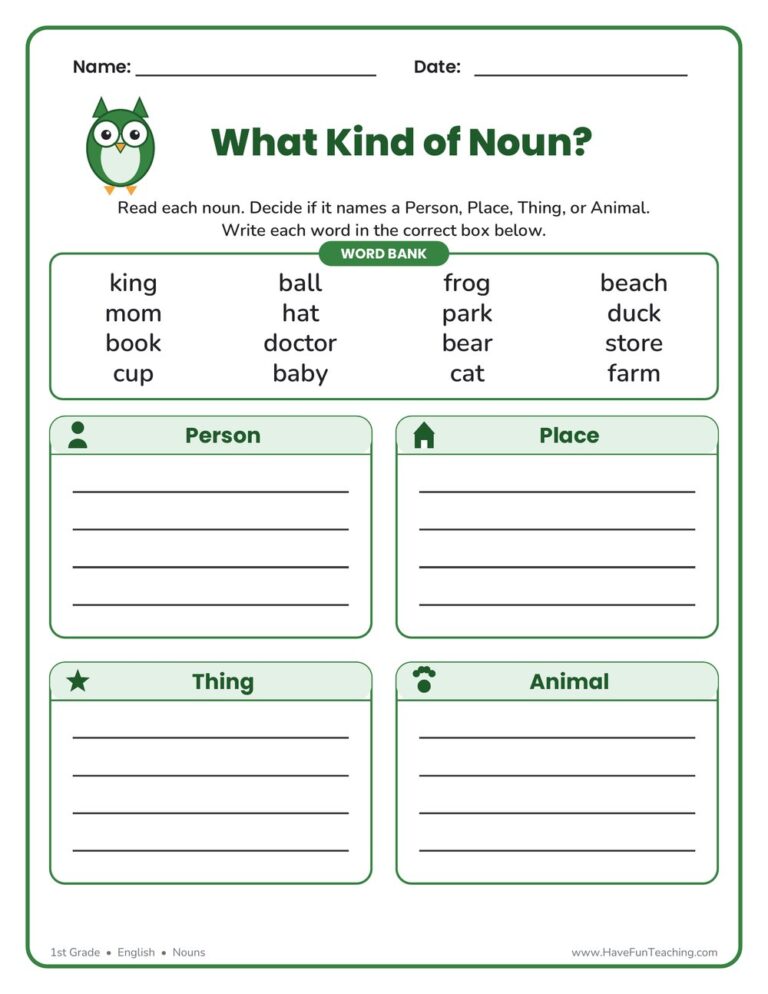
A noun sorting worksheet that helps 1st graders read everyday words and sort them into person, place, thing, and animal. Includes a complete answer key — perfect for quick, no-prep grammar practice at home or school.
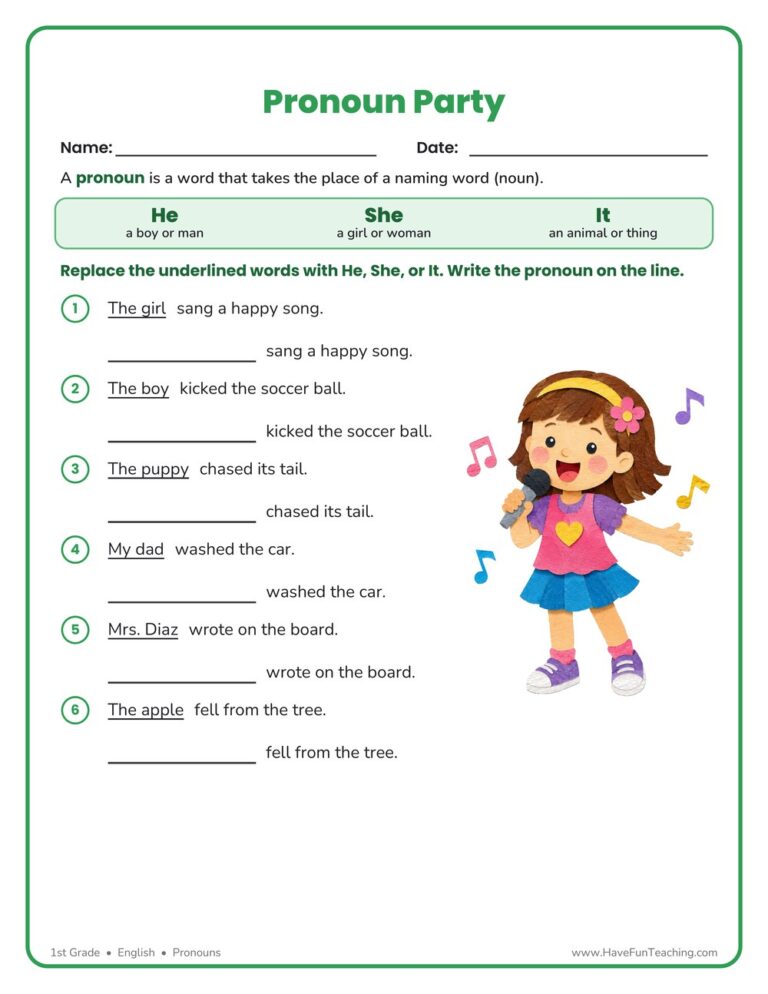
This first grade Pronoun Worksheet has students replace underlined naming words with the pronouns He, She, and It across six sentences. An answer key is included—perfect for quick, no-prep grammar practice at home or school.

This Adjectives Color Size Shape Worksheet gives 1st graders picture prompts and an adjective sorting activity to practice describing words. Answer key included for easy, no-prep grammar practice.

This identifying verbs worksheet gives 1st graders practice circling the action word in a sentence and matching verbs to pictures. Answer key included for fast, no-prep grammar review.

This Categorizing Objects Worksheet helps 1st graders read nine words and sort them into groups like animals, food, and colors. Includes a complete answer key for quick, no-prep classification practice.
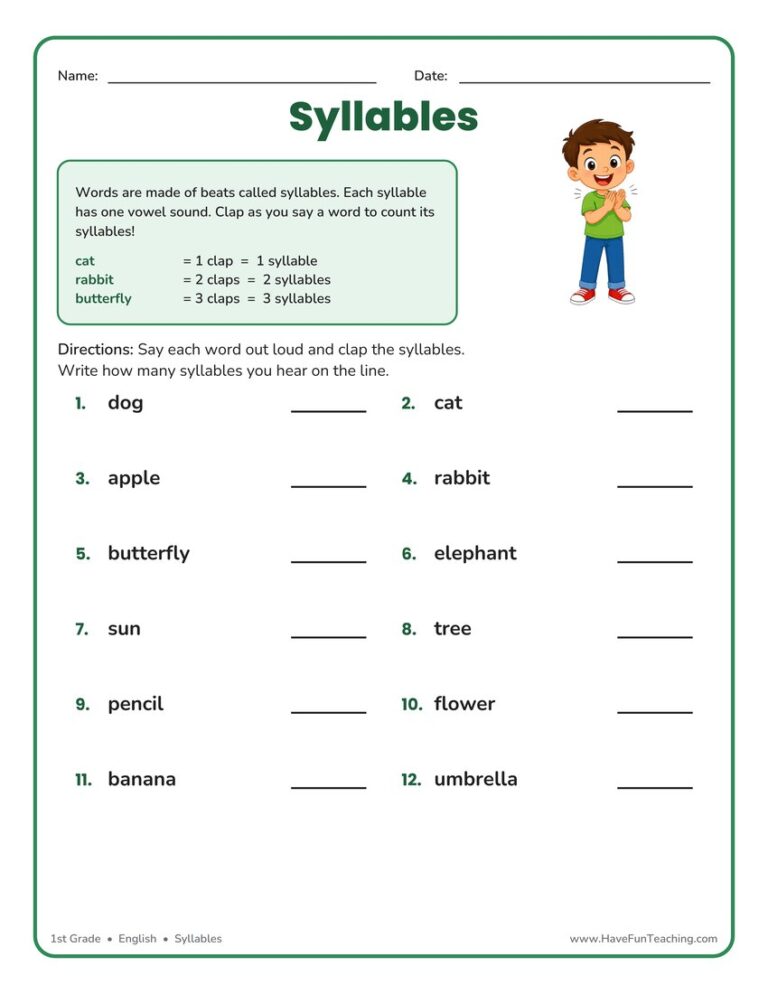
A clap-and-count syllables worksheet that helps first graders hear and count the beats in everyday words. Includes a complete answer key — perfect for quick, no-prep phonological awareness practice.
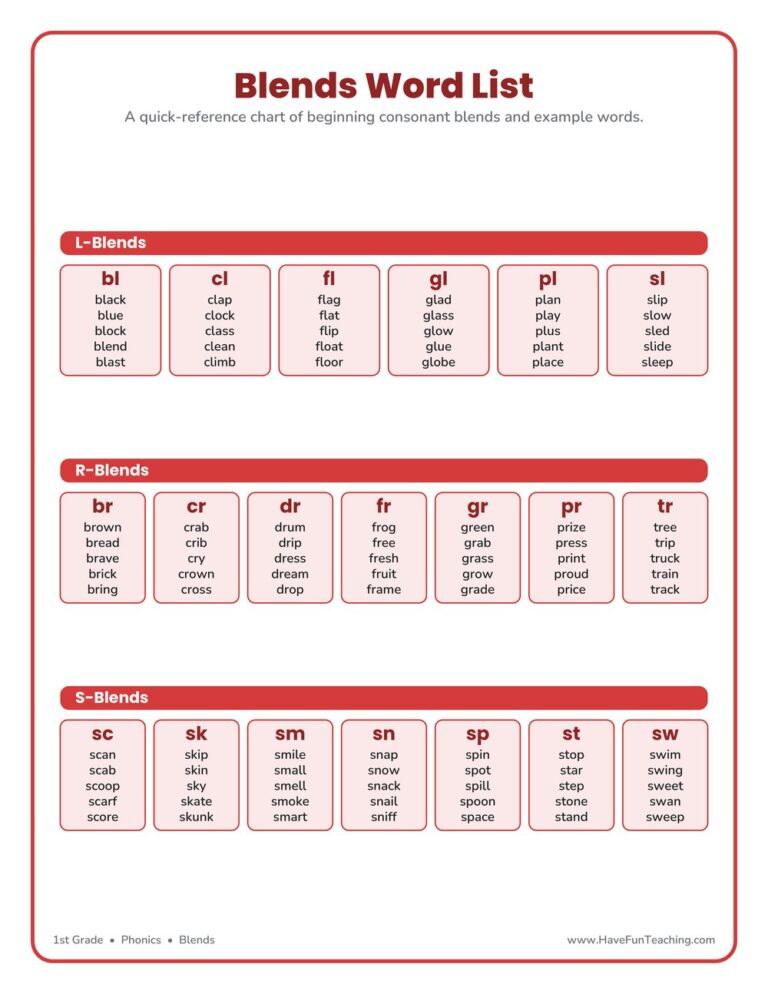
This Blends Word List is a single-page phonics reference chart grouping L-blends, R-blends, and S-blends with example words for each. A clean, no-prep tool that helps 1st graders read and build blend words with confidence.
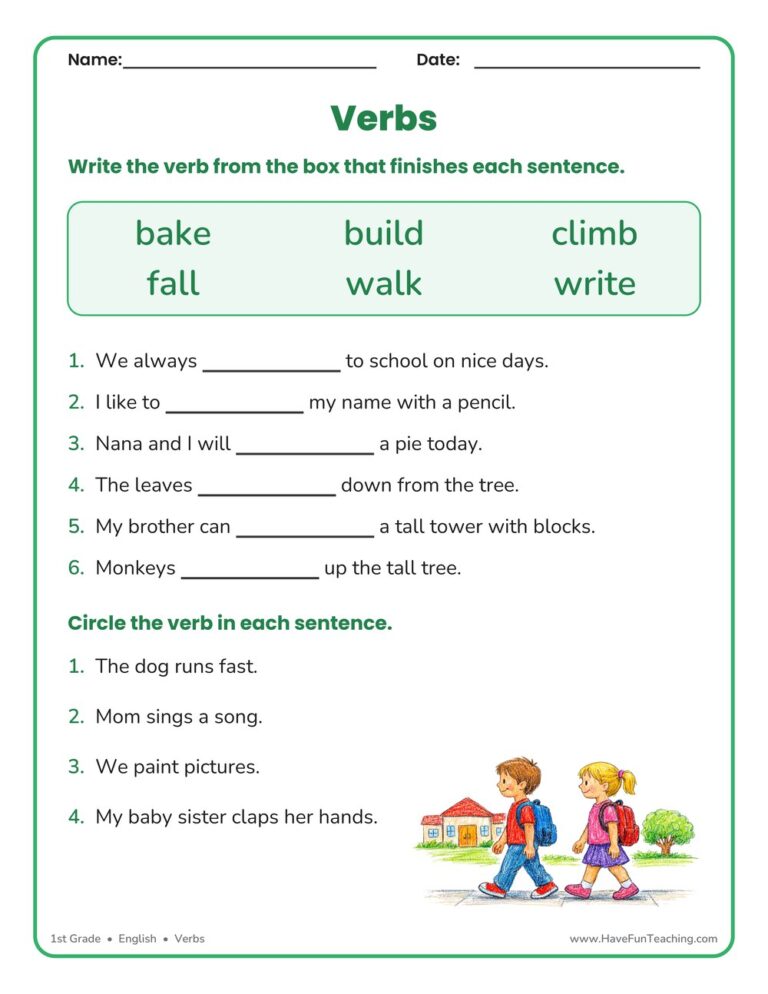
This Verbs Fill in the Blank Worksheet gives 1st graders six word-bank sentences to complete and four verbs to circle. An answer key is included, so grammar practice is ready to print and easy to check.

This Two Syllable Words Reading Words Worksheet gives 1st Grade readers hands-on practice splitting words into syllables and spotting two-syllable words, with an answer key included so checking work takes seconds.
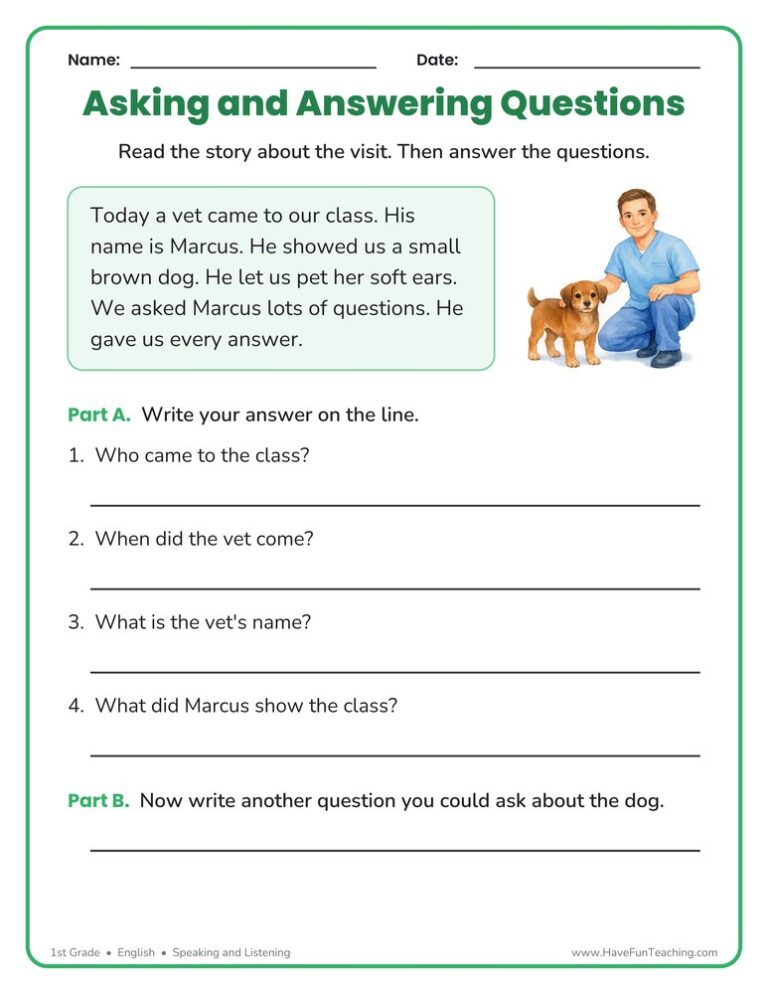
This Asking and Answering Questions Worksheet gives 1st Grade students a short story, four text-based questions, and room to write a question of their own. Answer key included, so checking work takes seconds.
The Sight Word Songs Volume 1 (MP3 Album) will help students recognize 22 sight words as they are repeated, spelled, and used in sentences put to a catchy tune.




Reviews
There are no reviews yet