

I Can Read and Correct Sentences Worksheet
In this I Can Read and Correct Sentences Worksheet, 1st grade students fix and rewrite sentences with a capital and a period. An answer key is included to make checking quick.
$6.97
Or free with a membership — members pay $3.33/mo for all 10,000+ resources. See plans
Want this one free?
Tell us where to send it and it’s yours — no card, no catch.
One free resource per teacher. We’ll also send free teaching ideas each week — unsubscribe anytime.
Teaching is easier with a membership
Unlimited printables, games & videos for PreK–6th — for your classroom or homeschool. Cancel anytime.
Start your 3-day free trial$0 today · cancel anytime · Instant access to 10,000+ resources
About this resource
Description
This I Can Read and Correct Sentences Worksheet helps first graders learn two rules every writer uses: a sentence starts with a capital letter and ends with a period. Children read short sentences that have both of those parts missing, then write each one again the right way. The I Can Read and Correct Sentences Worksheet turns the rule into real practice, so students read carefully, spot what is wrong and fix it in their own handwriting.
The page opens with one worked example in a tinted box that shows a plain sentence turning into a correct one. Part A gives three short sentences to read and rewrite, each on two roomy writing lines sized for first grade hands. Some sentences also hide a name or the word I, which need a capital too. Part B shows two days of the week in large print, and students write each day again with a capital letter. A bright kite picture matches the first sentence on the page.
What’s Included
- 1 print-ready PDF worksheet, 2 pages
- 1 worked example that models the fix
- 3 sentences to read and rewrite on two lines each
- 2 day names to rewrite with a capital letter
- 1 answer key page with every sentence written correctly
There are three reasons this 1st grade capitalization worksheet helps children learn. First, rewriting a whole sentence builds the habit of checking the start and the end every time they write. Second, reading each sentence before fixing it supports fluency and careful attention to print. Third, spotting names, the word I and days of the week teaches that some words always need a capital, not just the first one.
Teachers can model the example on the board, then have partners read each sentence aloud before they write. Parents and homeschool families can ask children to make up a silly sentence without a capital or period and let someone else fix it. For extra practice, students can check a page of their own writing and circle every capital and period they find.
Related Resources
What teachers say
Reviews
You must be logged in to post a review.
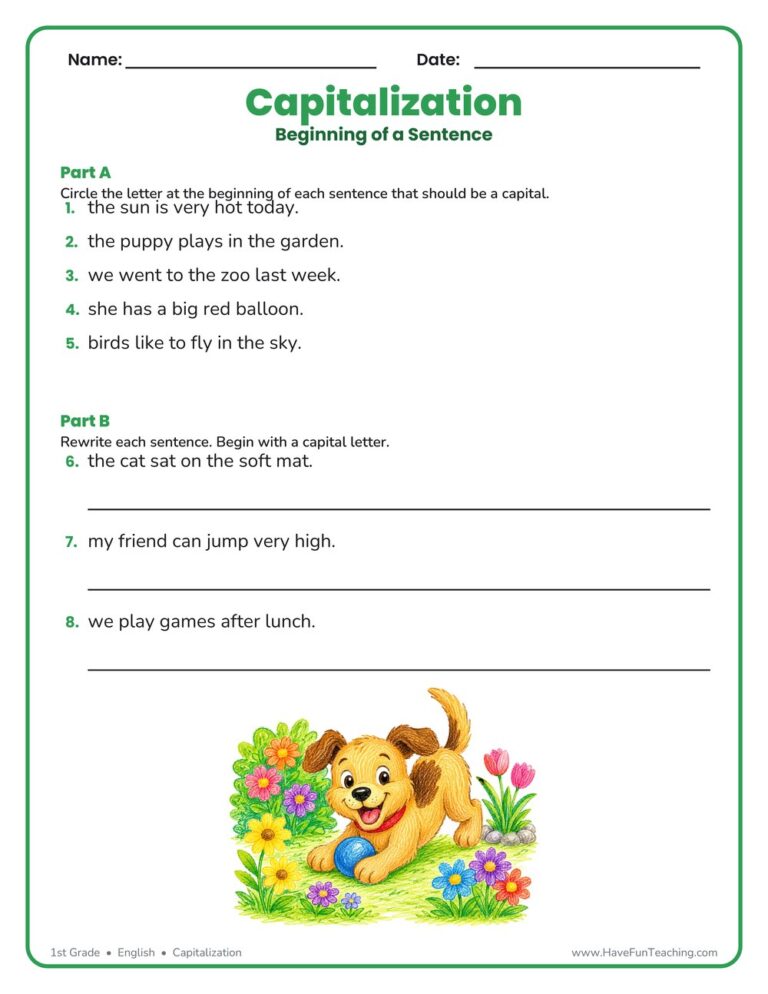
A puppy-themed Capitalization Beginning of a Sentence Worksheet that helps 1st graders circle and rewrite sentences with a capital first letter. Answer key included for quick, no-prep grammar practice.

This capitalization writing sentences worksheet has 1st grade students rewrite sentences with capital letters for the first word, names, and I. An answer key is included for fast checking.

The I Can Read Worksheet has 1st grade students put mixed-up words in order and write real sentences with capitals and periods. An answer key is included for fast, easy checking.
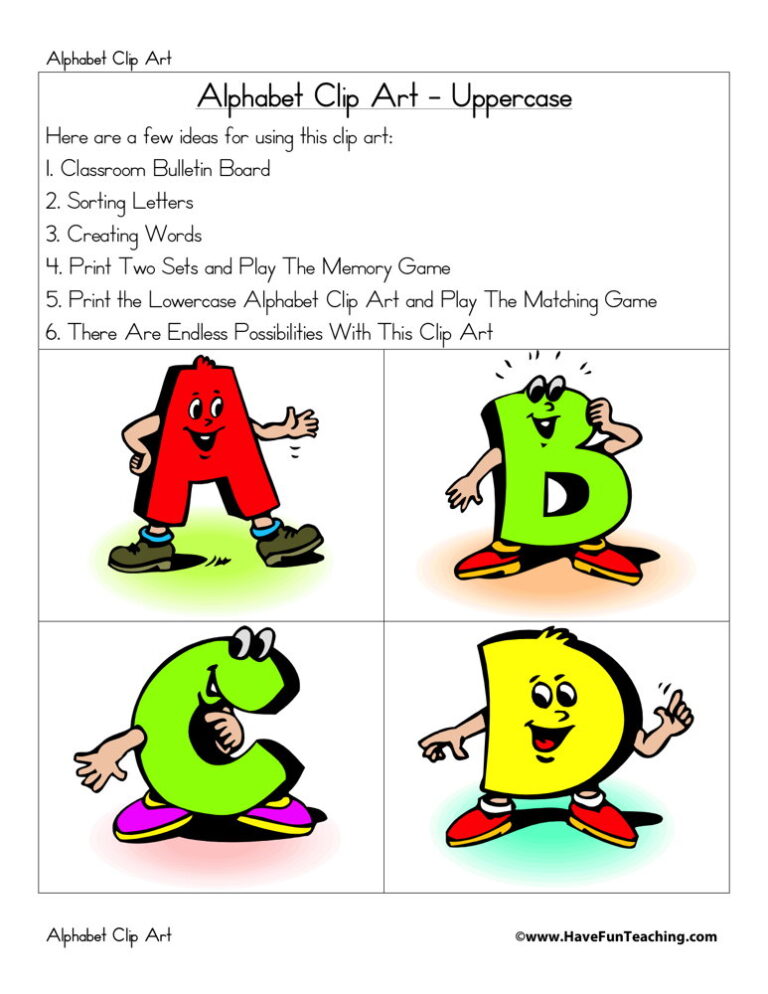
Using this Alphabet Uppercase Letters Clip Art is a perfect addition to any bulletin board, flyer, or other printable that you use in your classroom.
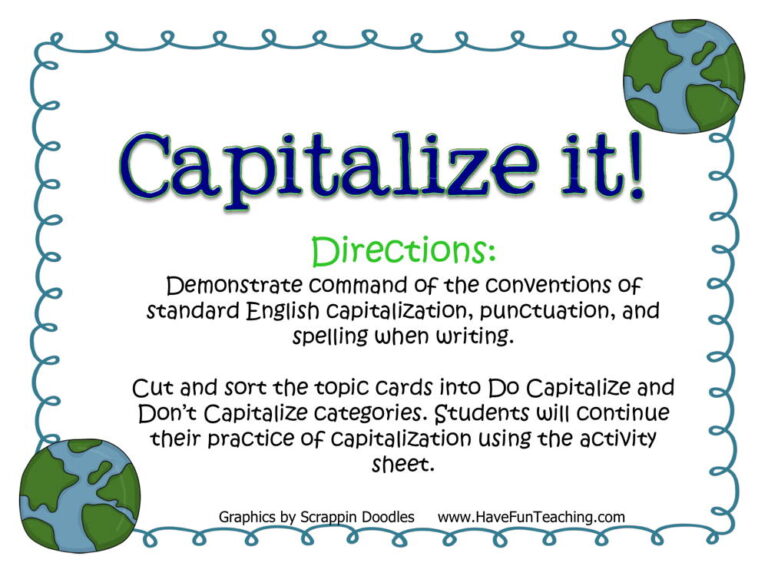
Using Capitalize It Activity, students sort the topic cards into Do Capitalize and Don't Capitalize categories.

Using Capital Letters Writing Worksheet, students write a paragraph using words that begin with capital letters like months, days, names, and streets.
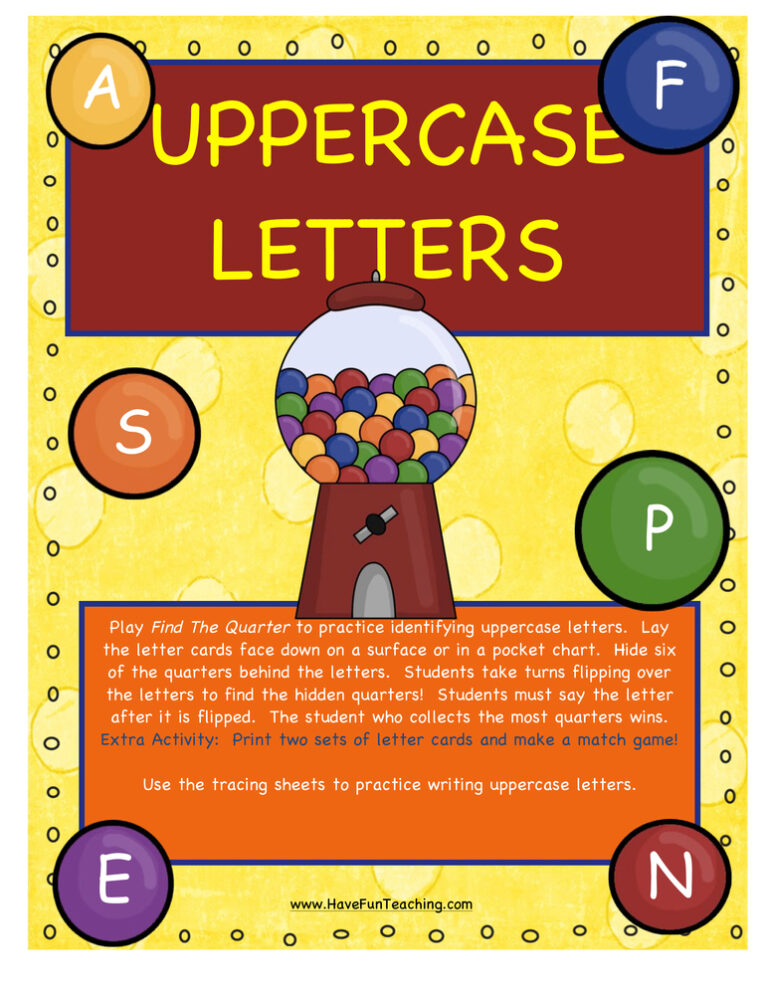
Using Uppercase Letters Activity, studentspractice identifying uppercase letters to build recognition skills.

Using Capital Letters Examples Worksheet, students provide examples of different proper nouns using the categories provided.
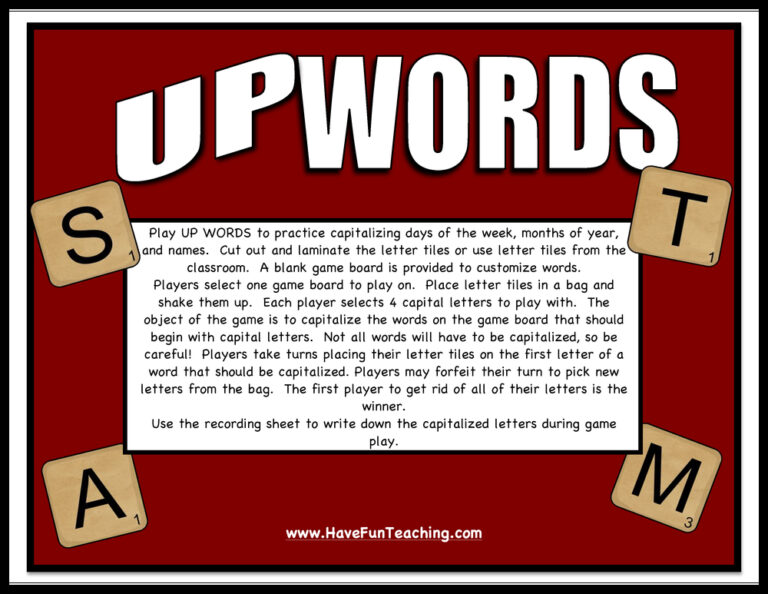
Using Upwords Capitalizing Words Activity, students practice capitalizing days of the week, months of year, and names

Using Uppercase and Lowercase Letter Matching Center Activity, studentshelp the dogs with lowercase letters find the doghouse with the matching uppercase letter.
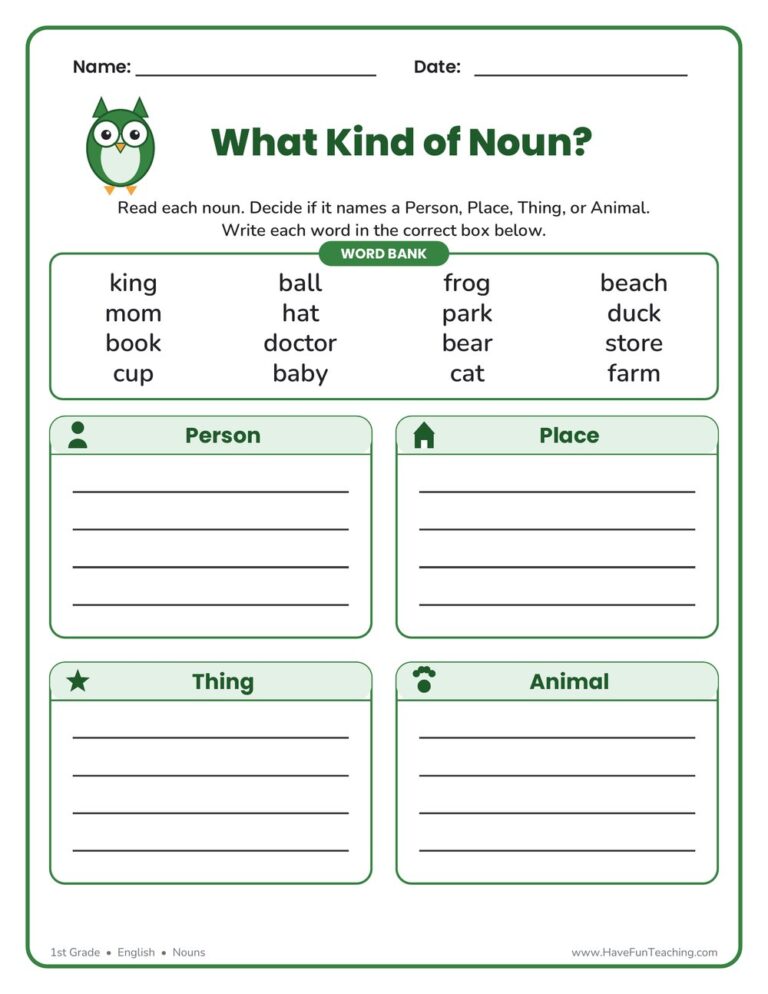
A noun sorting worksheet that helps 1st graders read everyday words and sort them into person, place, thing, and animal. Includes a complete answer key — perfect for quick, no-prep grammar practice at home or school.




Reviews
There are no reviews yet