

Living and Non-Living Things Compare and Contrast Graphic Organizer
This living and non-living things compare and contrast graphic organizer asks 3rd graders to sort six facts about a cat and a chair into a Venn diagram. Answer key included for quick checking.
$6.97
Or free with a membership — members pay $3.33/mo for all 10,000+ resources. See plans
Want this one free?
Tell us where to send it and it’s yours — no card, no catch.
One free resource per teacher. We’ll also send free teaching ideas each week — unsubscribe anytime.
Teaching is easier with a membership
Unlimited printables, games & videos for PreK–6th — for your classroom or homeschool. Cancel anytime.
Start your 3-day free trial$0 today · cancel anytime · Instant access to 10,000+ resources
About this resource
Description
Learning to compare and contrast is one of the first real thinking skills a third grader builds, and a living and non-living things compare and contrast graphic organizer makes that thinking visible. When students set a cat beside a chair they stop guessing and start sorting: a cat drinks water, eats a meal every day, grows bigger and can have kittens, while a chair was built by a carpenter from lumber, cloth and screws and never needs food, water or air. Both, it turns out, have four sturdy legs and both are found inside a cozy family home. Naming what is shared and what is different is exactly what strong readers do with two characters, two settings or two texts.
This printable Venn diagram worksheet gives students six lettered sentences and one clear job: decide whether each sentence belongs to the cat, to the chair, or to both. Because children write only the letter, their attention stays on the reasoning instead of on copying. This 3rd grade compare and contrast worksheet works as a whole-class warm-up, a science center card or homework, and it closes with a written response that asks students to explain their thinking in complete sentences.
What’s Included
- 1 print-ready PDF worksheet
- Answer key
- 6 lettered sorting sentences, a two-circle Venn diagram, and 1 written response question
Three things make this resource work. First, the Venn diagram turns an abstract idea into a picture, so children can see that both is a real category and not a wrong answer. Second, every sentence has exactly one defensible home, so students get honest feedback instead of vague credit. Third, the closing question moves them from sorting to explaining, which is the step reading assessments actually measure. A living and non-living things compare and contrast graphic organizer also doubles as a science review of what every living thing needs to survive.
Try it beyond the page. Take the class on a five-minute walk and have partners name three living things and three non-living things they pass, then compare two of them out loud. Hide classroom objects in a bag and let students ask yes-or-no questions, such as does it grow or does it need water, until they can classify each one. At home, families can compare a pet with a favorite toy, or a houseplant with a lamp, and write one sentence about how the two are alike. You can also reuse the same two-circle diagram all year with story characters, two holidays or two habitats.
Related Resources
What teachers say
Reviews
You must be logged in to post a review.
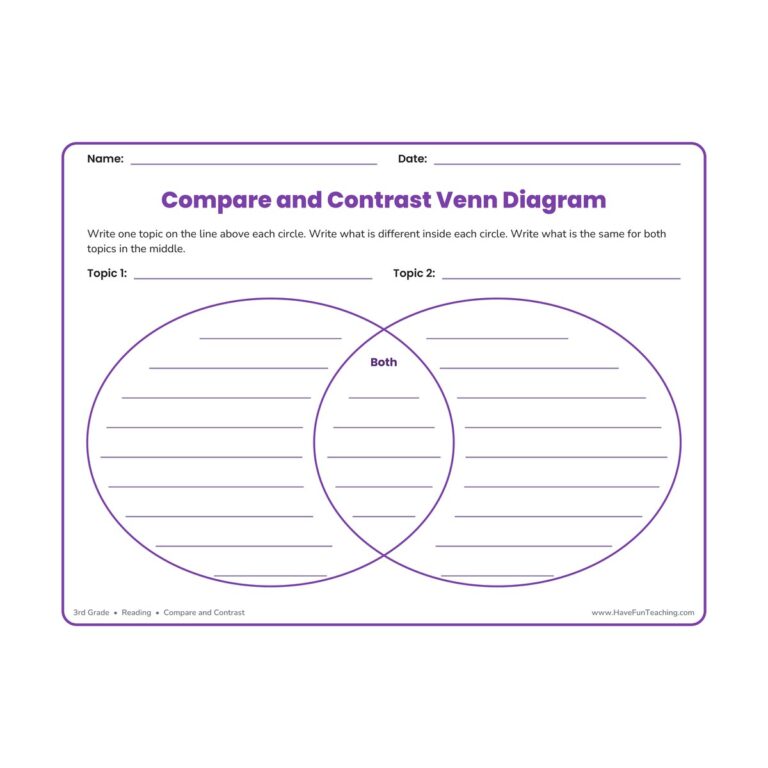
This blank Venn diagram graphic organizer worksheet gives 3rd grade students two roomy circles and a shared middle for comparing any two topics, so their thinking is sorted out before they write.
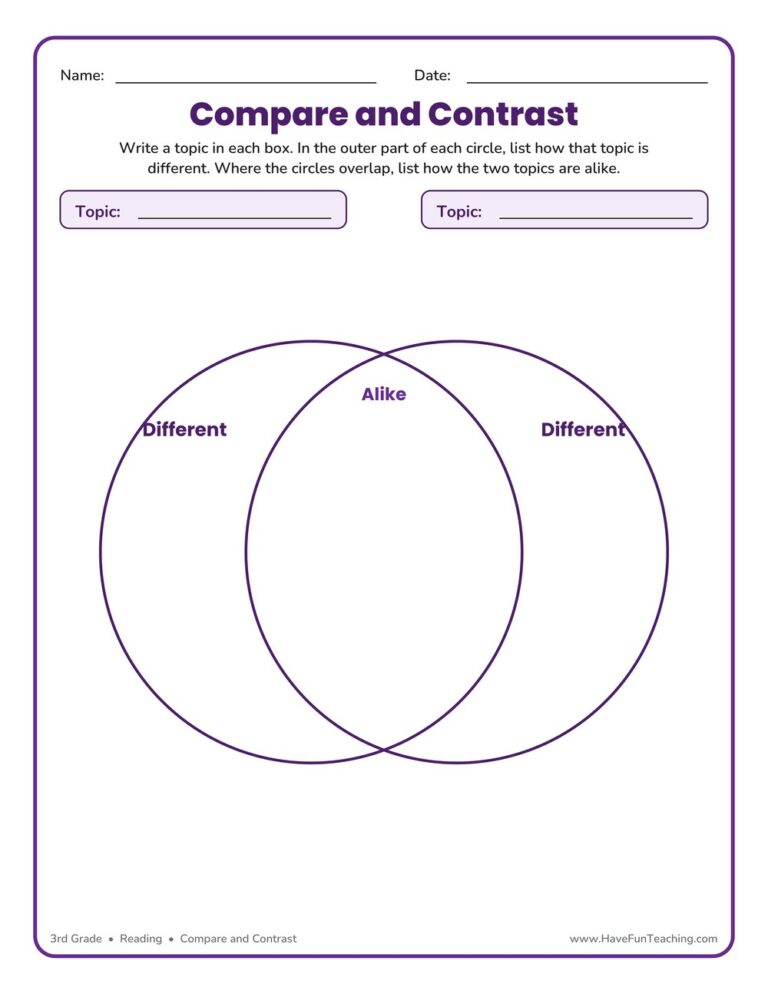
This Compare and Contrast Topics Graphic Organizer Worksheet gives 3rd graders a large Venn diagram to sort how two topics are alike and different. A flexible, no-prep reading tool for any two subjects at home or school.

This comparing and contrasting venn diagram worksheet has 3rd grade students sort eight facts about apples and oranges into a labeled Venn diagram, then write two comparison sentences. Answer key included.
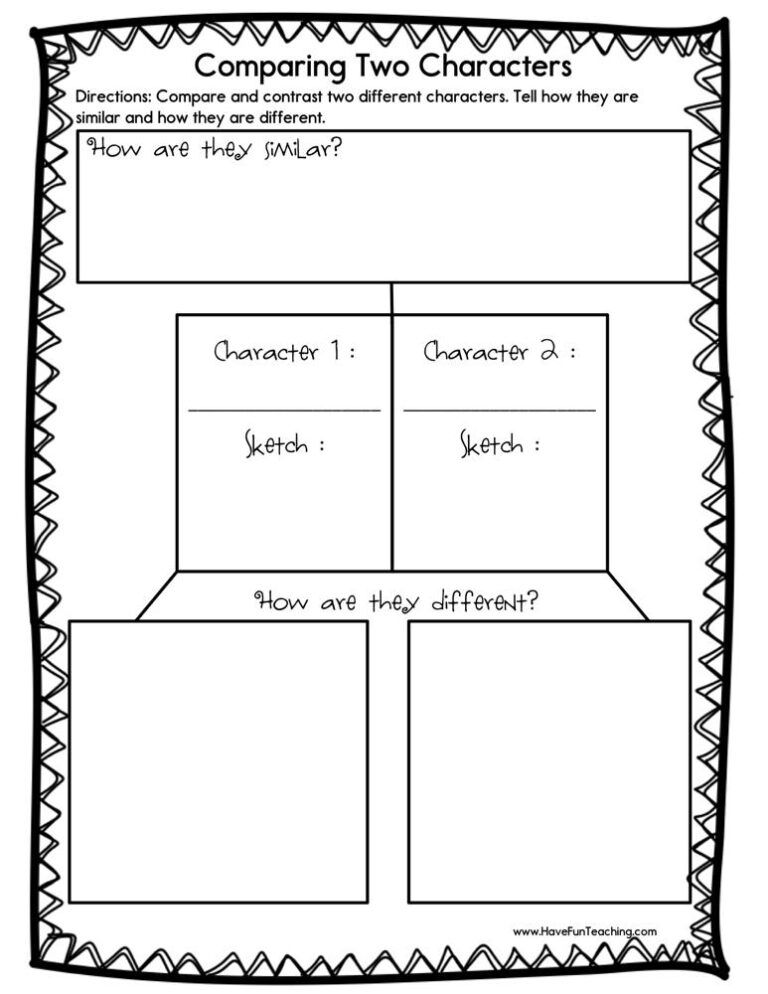
This comparing two characters worksheet has 3rd graders sort facts about the tortoise and the hare into a Venn diagram and write a comparison, with an answer key included, to sharpen character analysis.

This similes worksheet gives 3rd grade students practice completing, analyzing, and writing similes, with an illustrated prompt and an answer key included so every child can describe the world more vividly.
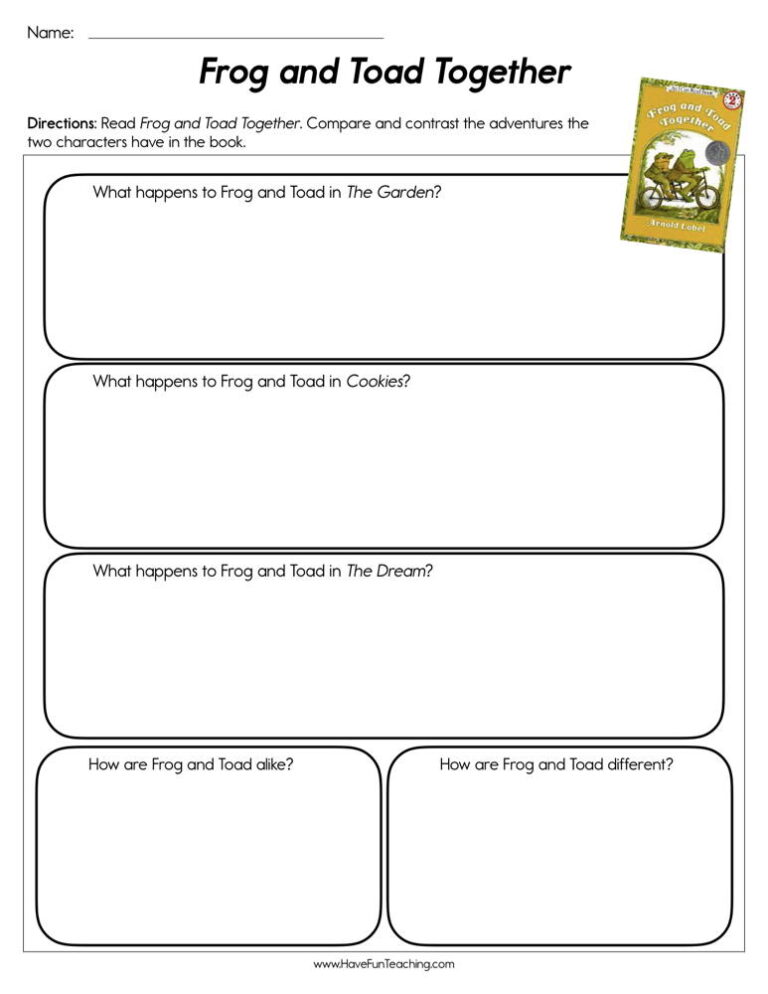
Using this Frog and Toad Together Worksheet, studentsread Frog and Toad Together to compare and contrast the adventures the two characters have in the book.

This Compare Contrast Similar Texts Worksheet hands 3rd graders two short orchard passages and asks what each author's most important point is. Answer key included — an easy way to practice comparing texts with real evidence.

Using Compare and Contrast Across Cultures Activity, students compare and contrast two or more versions of the same story by different authors or from different cultures.
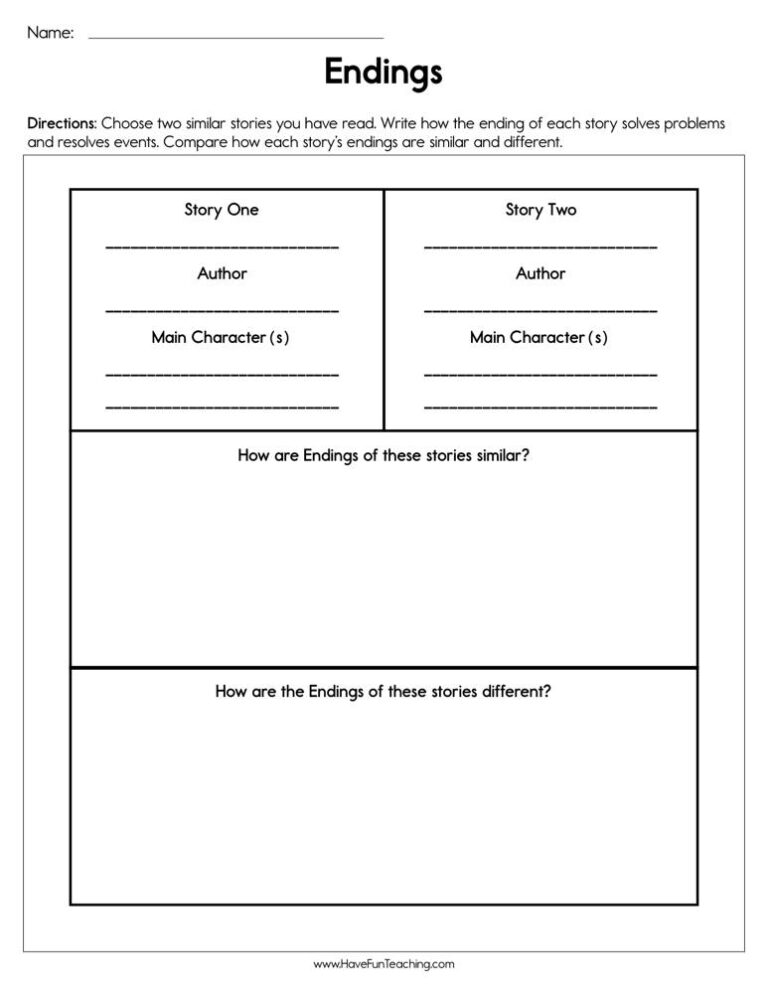
This endings worksheet helps 3rd grade students compare how two stories they have read end, explaining each ending and how the two are alike and different to build strong reading skills.
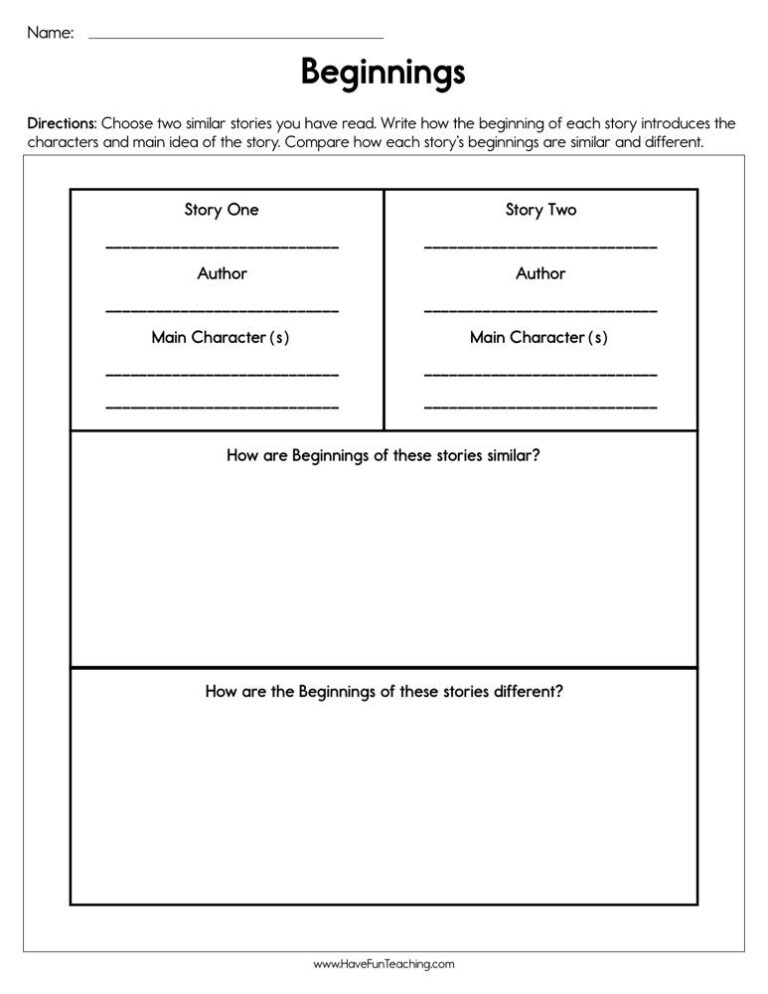
Using Beginnings Worksheet, students write how the beginning of each story introduces the characters and main idea of the story to compare the two similar stories read.

A compare and contrast cause and effect graphic organizer where 3rd graders chart what happened and why in two texts, then write how the texts compare. Works with any pair of books.

Using this Comparing Seasons Venn Diagram Worksheet, students compare two seasons using a Venn Diagram.




Reviews
There are no reviews yet