

Compare and Contrast Characters Worksheet
Meet two friends, then check off what they share and what makes each one different. This compare and contrast characters worksheet gives 1st graders a clear, no-prep sorting chart, with a complete answer key included.
$6.97
Or free with a membership — members pay $3.33/mo for all 10,000+ resources. See plans
Want this one free?
Tell us where to send it and it’s yours — no card, no catch.
One free resource per teacher. We’ll also send free teaching ideas each week — unsubscribe anytime.
Teaching is easier with a membership
Unlimited printables, games & videos for PreK–6th — for your classroom or homeschool. Cancel anytime.
Start your 3-day free trial$0 today · cancel anytime · Instant access to 10,000+ resources
About this resource
Description
Comparing and contrasting is one of the first real thinking skills a young reader uses. Before a child can explain how two stories connect, they have to notice how two people are alike and how they are different. This compare and contrast characters worksheet gives first graders a simple, concrete way to practice exactly that: two short character profiles set side by side, with everything a child needs to spot what the two friends share and what makes each of them one of a kind.
The page introduces Vivian and Waylon in three short sentences each, written at a 1st grade reading level. Under each name is a full-color illustration showing that character doing exactly what the text describes, so a student who is still building decoding stamina can lean on the picture while reading. Below the profiles, a five-row chart asks the child to check one box for every detail: Vivian, Waylon, or Both. Read the profiles aloud once together, then let students work the chart on their own — this 1st grade compare and contrast worksheet fits a guided-reading warm-up, a literacy-center task, or a quick homework page equally well.
What’s Included
- 1 print-ready PDF worksheet
- Answer key
- 2 illustrated character profiles and a 5-row compare-and-contrast sorting chart
There are three reasons this compare and contrast characters worksheet works so well at this age. First, it separates the thinking from the writing: a first grader who can absolutely tell you that both friends have a puppy may not yet be able to write that sentence, and a check box lets the idea come out anyway. Second, the two profiles are written in parallel — same sentence shapes, same order — so the shared detail and the different details line up visually, and the comparison becomes something a child can see instead of only hear. Third, the chart offers “Both” as a real answer, which is the step most young readers skip; noticing that two characters can share a trait and still be different is the heart of this standard.
Once the page is finished, keep the thinking going. Ask students to draw a third friend and add a row to the chart. Pull two characters out of books you have already read together and build the same three columns on chart paper. Play a quick “Both or One?” game on the carpet, where you name a detail and children point left, point right, or hold up both hands. At home, try it with family members — who likes soup, who likes toast, who likes both? The instrument stays the same every time, and that repetition is what makes the skill stick.
Related Resources
What teachers say
Reviews
You must be logged in to post a review.
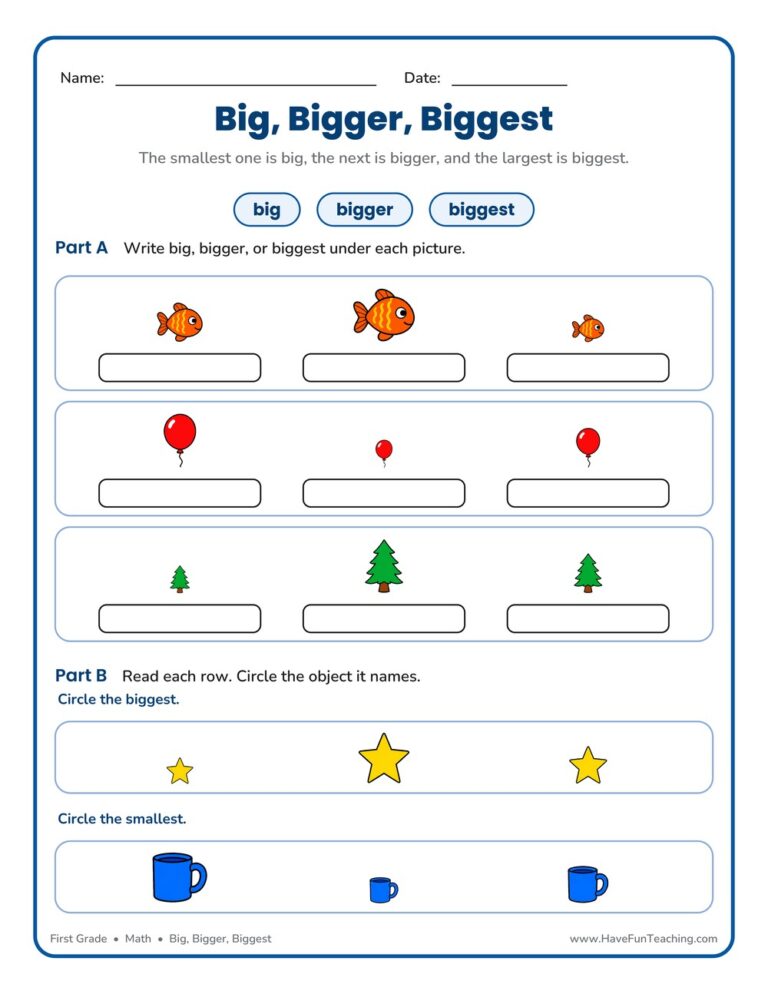
This Big, Bigger, Biggest Worksheet gives first grade students fun practice comparing objects by size, labeling big, bigger, and biggest and circling the biggest and smallest. An answer key is included to make learning simple.
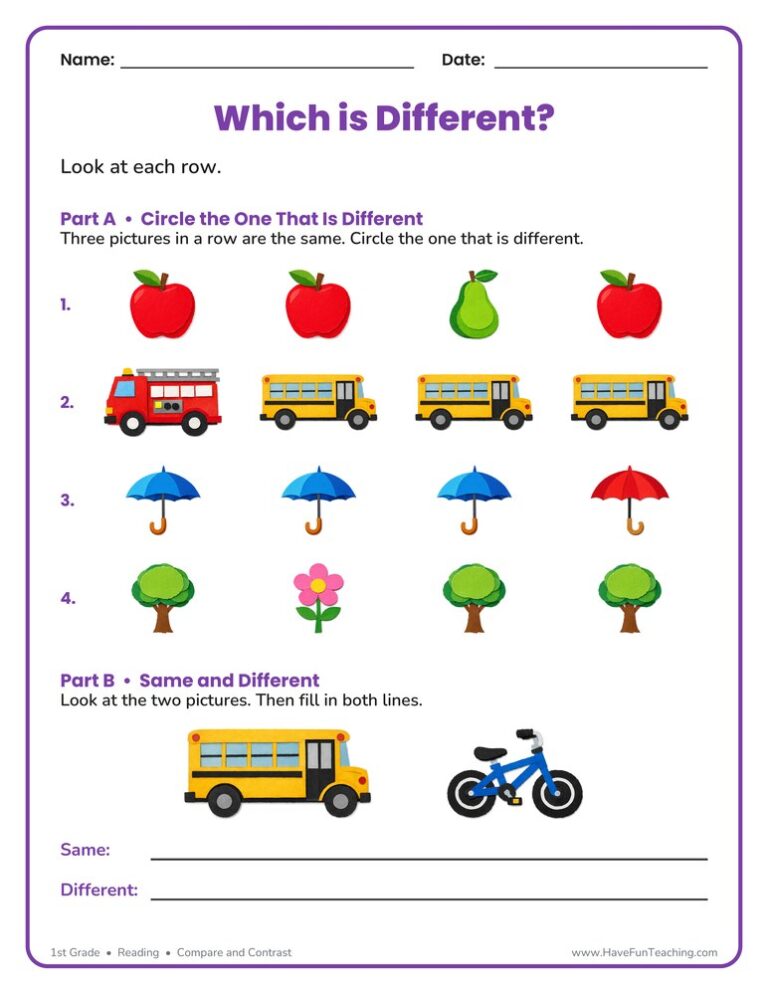
This same different picture worksheet asks 1st graders to circle the odd picture in four rows, then name one likeness and one difference, with an answer key included.

This comparing characters worksheet gives 1st graders a short story about two friends and a three-part chart for sorting what is alike and what is different. Answer key included, so checking takes seconds.
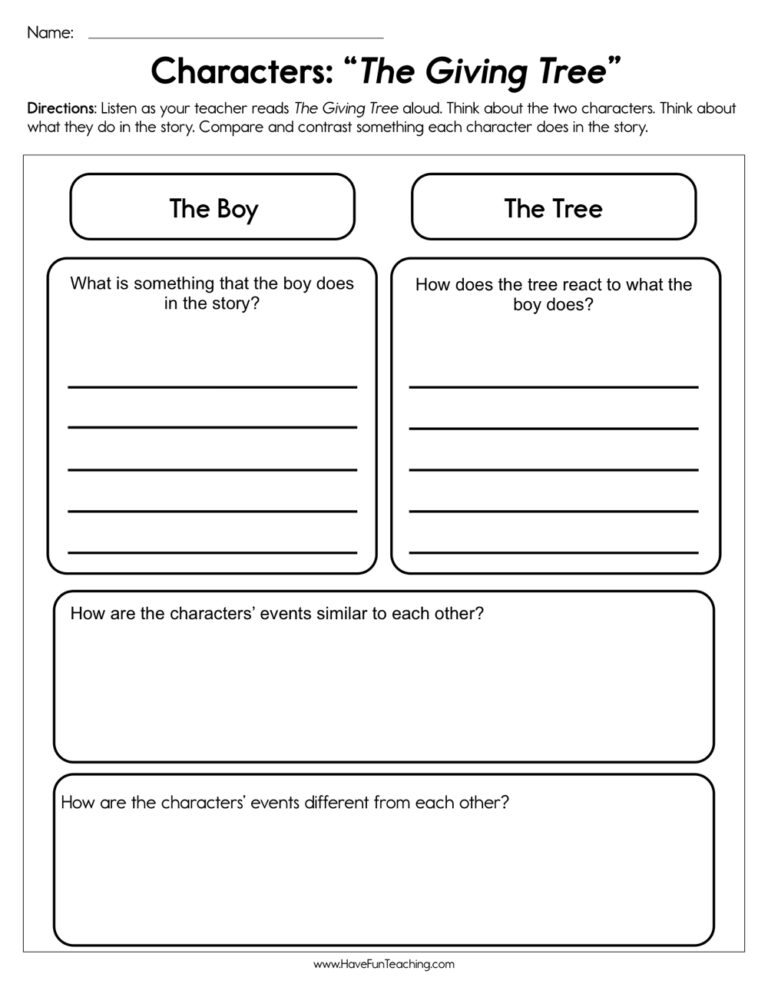
Using Characters, Settings, and Big Events Worksheet, students draw pictures and write a sentence for each to tell about the story elements in a book.

A two-part Same Different Categories Worksheet where 1st graders circle the words that belong to a group, then find the one that does not. Answer key included for quick, no-prep sorting practice.
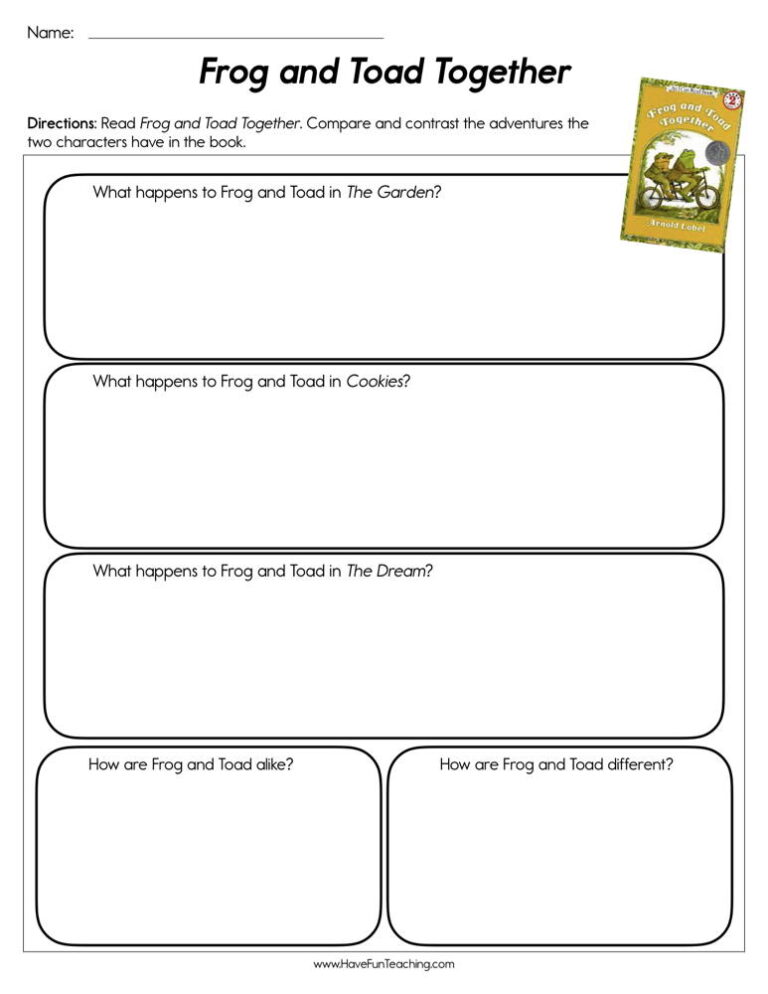
Using this Frog and Toad Together Worksheet, studentsread Frog and Toad Together to compare and contrast the adventures the two characters have in the book.

This same different objects worksheet asks 1st grade students to circle the object that changes color, size, or direction, then compare a crayon and a pencil. An answer key is included for quick checking.
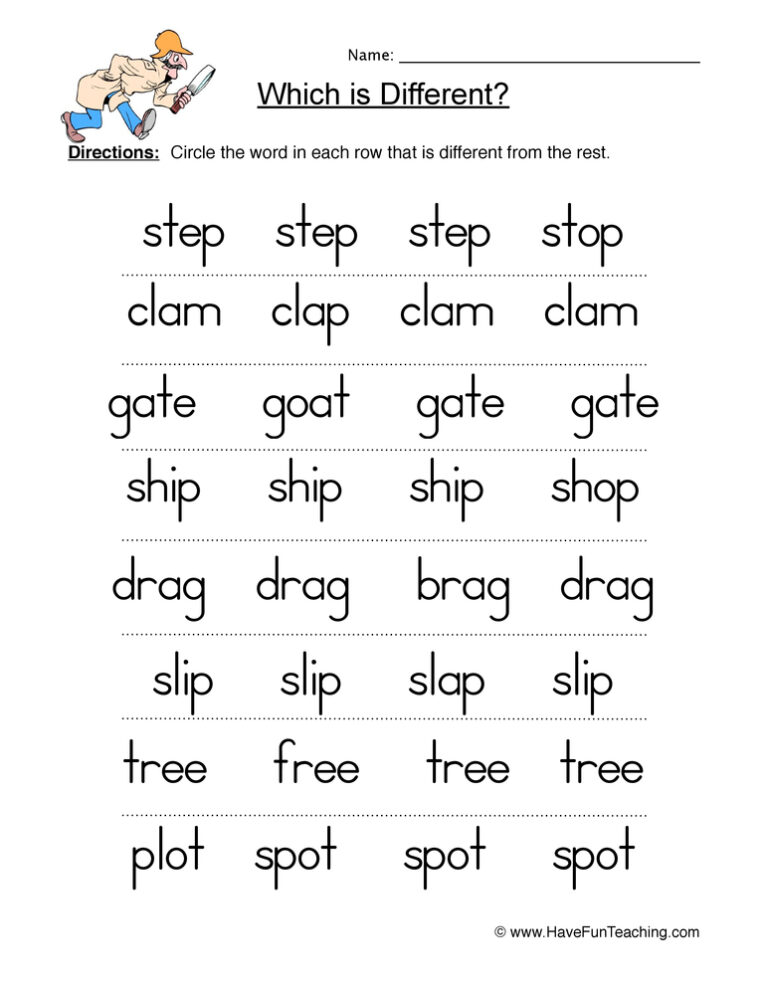
This Same Different Four Letter Words Worksheet asks 1st Graders to circle the word that is not the same, then match three pictures to their look-alike words. Answer key included for fast, no-prep word discrimination practice.

Using this Size Activity, students play Categories to practice identifying the sizes tall, short, big and small.

Using Compare and Contrast Characters Charlie Brown and Arthur Worksheet, students compare two different characters from two different stories you have read.
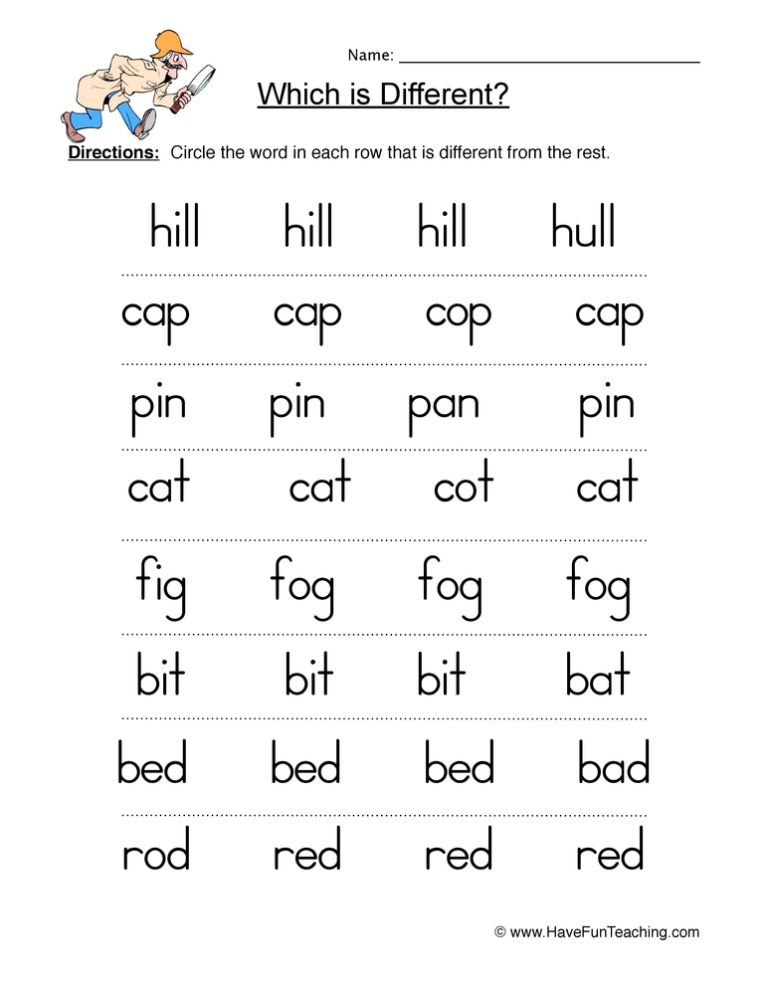
This same and different words worksheet gives 1st Grade readers ten rows of look-alike words to compare, with an answer key included, so children learn to read every letter instead of guessing.
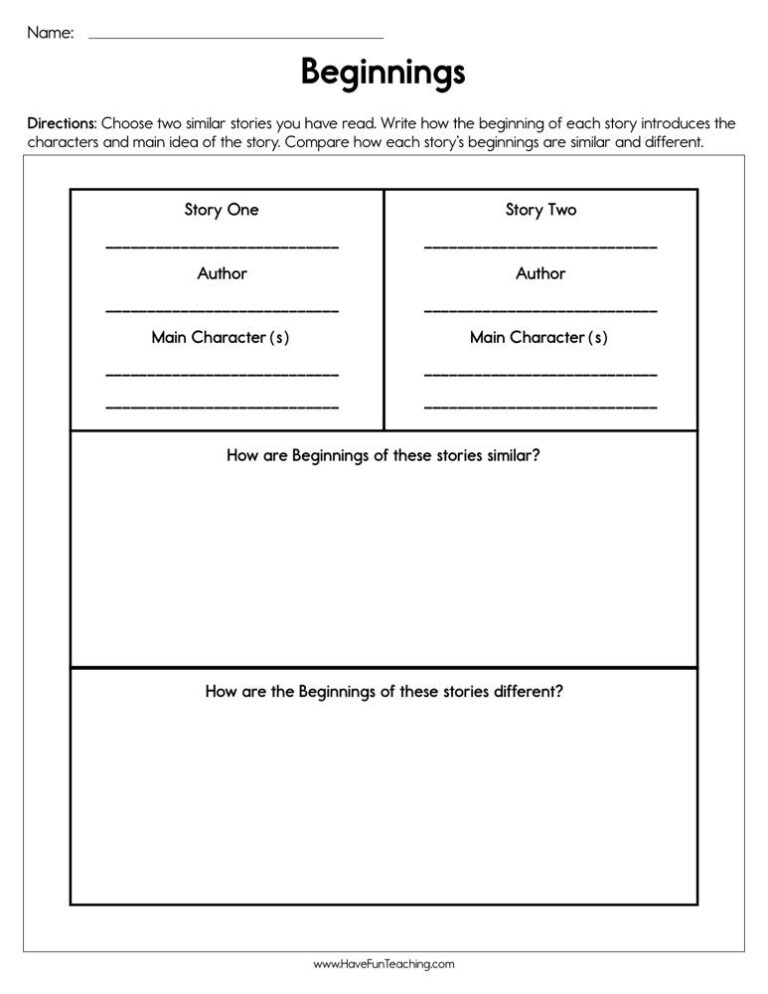
Using Beginnings Worksheet, students write how the beginning of each story introduces the characters and main idea of the story to compare the two similar stories read.
Reviews
There are no reviews yet