

Matching Shape Attributes Worksheet
This matching shape attributes worksheet has 2nd graders match five shapes to the rules they follow, then count sides and corners. An answer key is included, so checking work takes seconds.
$6.97
Or free with a membership — members pay $3.33/mo for all 10,000+ resources. See plans
Want this one free?
Tell us where to send it and it’s yours — no card, no catch.
One free resource per teacher. We’ll also send free teaching ideas each week — unsubscribe anytime.
Teaching is easier with a membership
Unlimited printables, games & videos for PreK–6th — for your classroom or homeschool. Cancel anytime.
Start your 3-day free trial$0 today · cancel anytime · Instant access to 10,000+ resources
About this resource
Description
Shape attributes are the rules that tell one shape from another: the number of sides, the number of corners, and whether those sides are all the same length. This matching shape attributes worksheet gives second graders a clear, hands-on way to practice reading a rule and deciding which shape follows it. Instead of leaning on memorized shape names, students look closely at each figure and count what they actually see, which is exactly how the geometry standards ask them to think.
The page opens with a matching activity: five shapes sit on the left, five rules sit on the right, and students draw a line from each shape to the rule it follows. A second section asks them to count the sides and corners of three larger figures and write each number on the line. Use this 2nd grade geometry worksheet as a lesson warm-up, a math-center task, a quick check for understanding, or homework after a lesson on plane figures.
What’s Included
- 1 print-ready PDF worksheet
- Answer key
- 5 shape-and-rule matching pairs plus 3 count-the-attributes cards
Three things make this matching shape attributes worksheet work. First, it separates a shape from its name, so a student who has only memorized labels has to slow down and count. Second, every rule is true of exactly one shape on the page, so students get immediate, honest feedback about whether they read carefully. Third, the counting cards move students from recognizing a shape to describing it in their own numbers, which is the step that carries them into later work on quadrilaterals and polygons.
Keep the practice going away from the page. Hand students a pile of straws or craft sticks and ask them to build a shape with exactly six sides. Go on a shape hunt around the classroom or the kitchen and name the attributes of whatever you find: a window with four equal sides, a stop sign with eight. Play a quick guessing game in which one person reads a rule out loud and everyone else holds up fingers for the number of corners. Then ask students to write a rule of their own and trade it with a partner.
Related Resources
What teachers say
Reviews
You must be logged in to post a review.

Using the Shapes Song, students learn all about shapes, including Shape Names and Shape Recognition. The Shapes Song by Have Fun Teaching is a song that teaches the shapes. Shapes have names their made of angles and lines, there are flat shapes and solid shapes we see them all the…

This Identifying the Name of Shapes Worksheet helps 2nd graders choose the correct name for each 2D shape, from circles to hexagons. Answer key included—a quick, no-prep geometry practice for home or class.

Using the Circle Song, students will learn all about circles. A circle is a shape that goes around and around. It's like a pizza, and a cookie, a ring, and a coin. A circle is a shape that goes around and around. In this song, your kids will also draw…

Using the Square Song (MP3), students learn all about squares, including Shape Names and Shape Recognition through a catchy song!
Using the Shape Song (MP3), students learn all about shapes, including Shape Names and Shape Recognition through a catchy song!

In this Seaside Symmetry Activity, students recognize a line of symmetry for a two-dimensional figure as a line across the figure such that the figure can be folded along the line into matching parts.
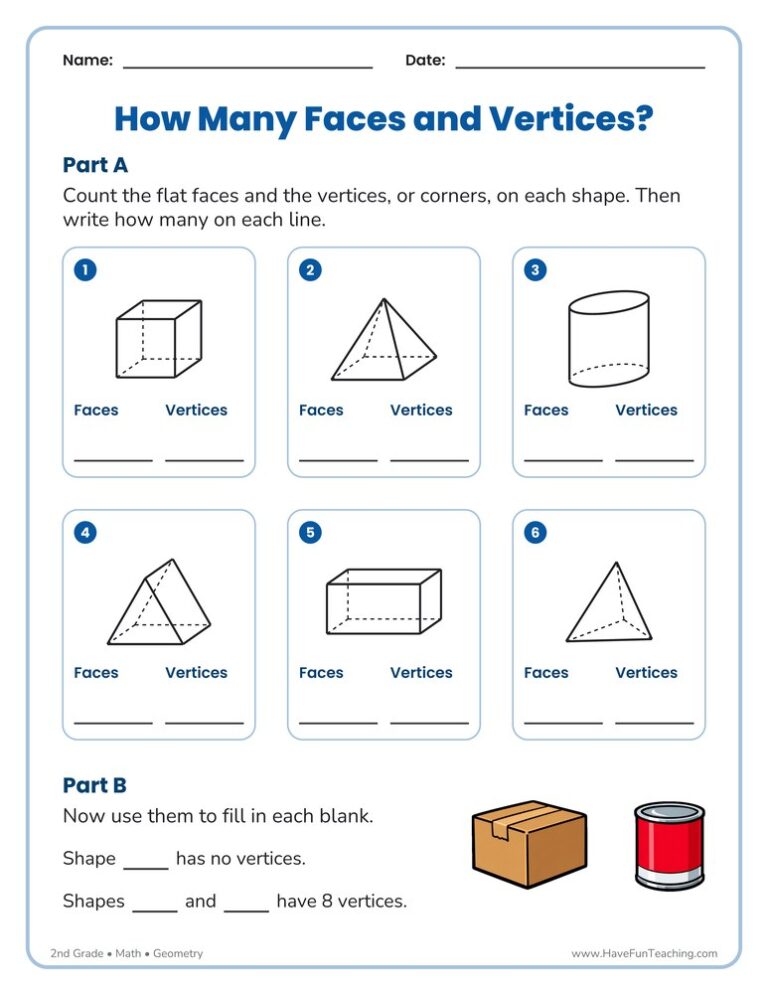
This How Many Faces and Vertices? Worksheet has 2nd Grade students count the flat faces and corners on six solid figures, then compare their answers. Answer key included, so checking takes seconds.

Using the Shape Songs (MP3 Album), students learn all about shapes, including Shape Names and Shape Recognition through a catchy song!

A drawing shapes by the rules worksheet where 2nd graders read an attribute clue, draw the matching shape, name it, and count its sides and corners. Answer key included for fast, no-prep geometry practice.
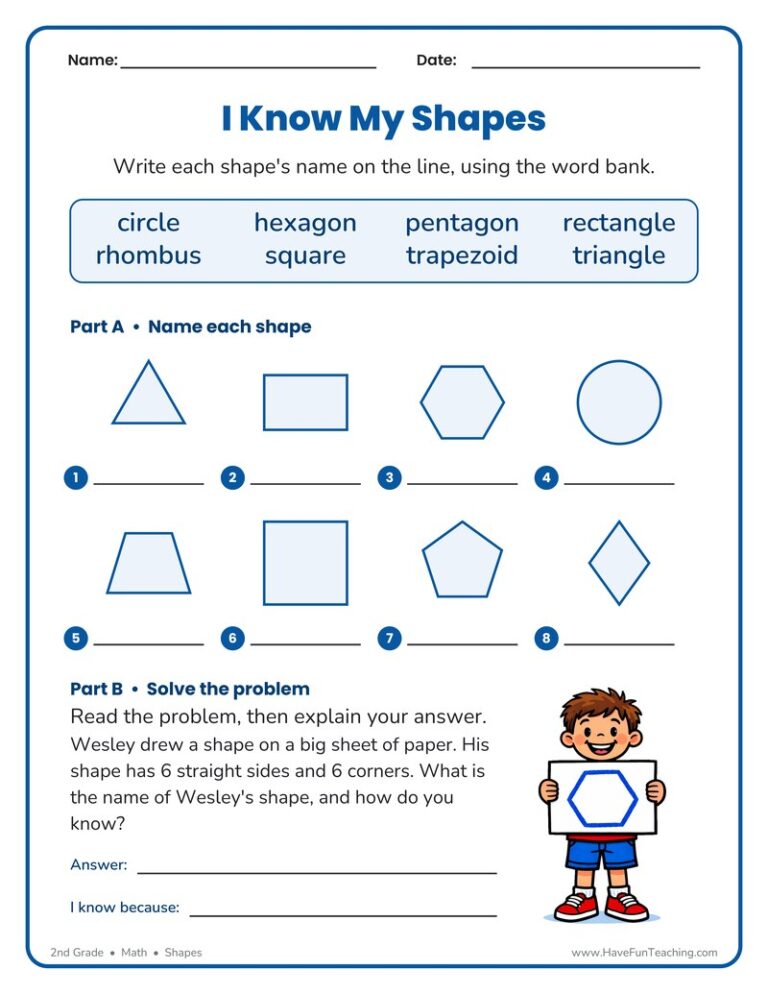
This Identifying Shapes Worksheet asks 2nd graders to name eight figures from a word bank, then explain a six-sided shape. Answer key included, making it a quick no-prep geometry review.
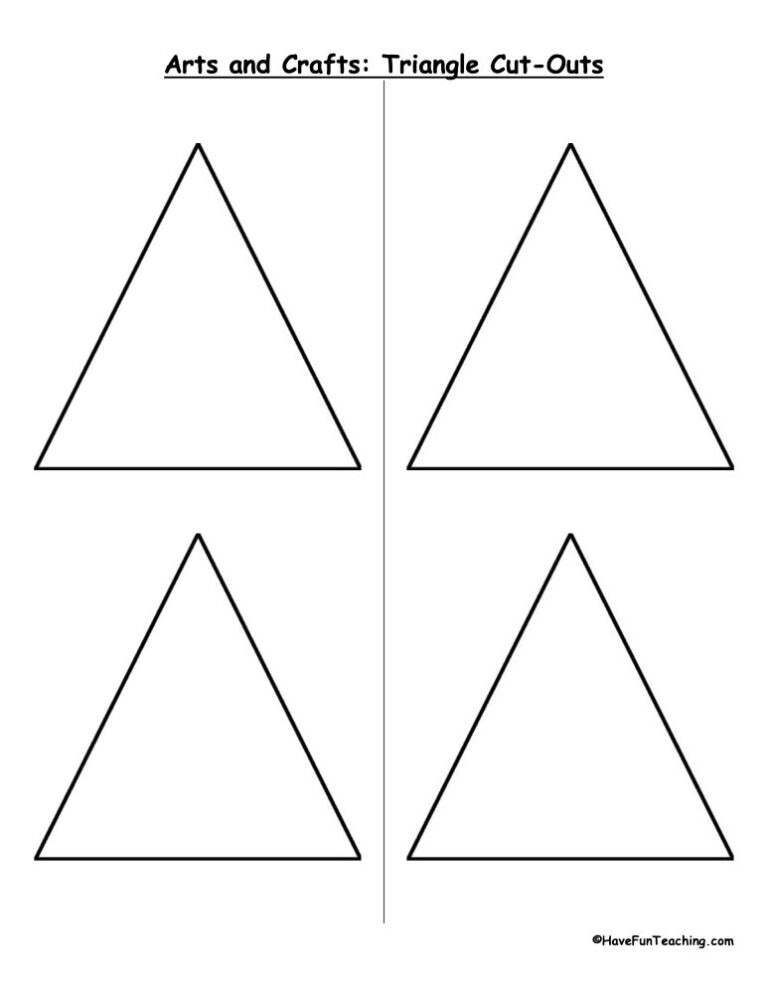
These Triangle Cut Outs will quickly give you templates for classroom decoration or student activities.
Using the Circle Song (MP3), students learn all about circles, including Shape Names and Shape Recognition through a catchy song!
Reviews
There are no reviews yet