
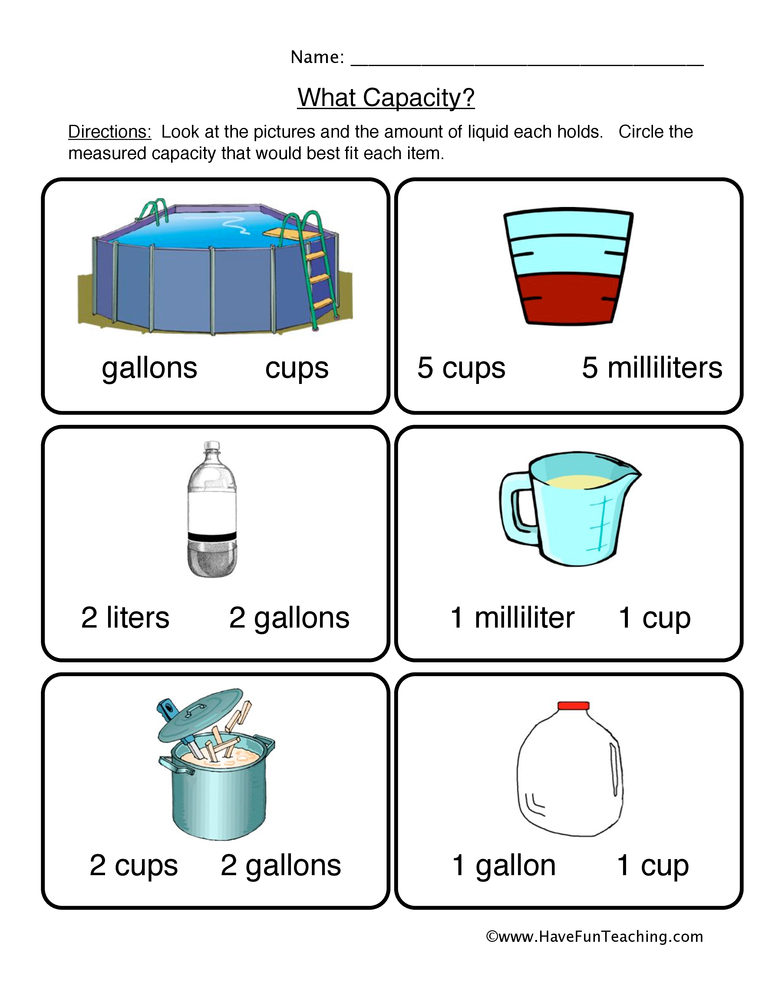
What Capacity Worksheet
This What Capacity Worksheet gives 3rd Grade students practice estimating units, reading measuring cup scales, and solving liquid volume word problems. An answer key is included, so measurement practice takes no prep at all.
$6.97
Or free with a membership — get this and 10,000+ resources. See plans
Teaching is easier with a membership
Unlimited printables, games & videos for PreK–6th — for your classroom or homeschool. Cancel anytime.
Start your 3-day free trialNo commitment · Cancel anytime · Instant access to 10,000+ resources
About this resource
Description
Capacity is the amount of liquid a container can hold, and it is one of the first measurement ideas that helps children make sense of the world around them. This What Capacity Worksheet gives 3rd Grade students focused practice choosing sensible units, reading a measuring scale, and thinking carefully about how much liquid a real container holds. Students learn that a medicine spoon holds only a few milliliters while a bathtub holds hundreds of liters, and that estimating well is a skill they can use every single day at home and at school.
This 3rd grade measurement worksheet moves students from estimating to measuring to solving. In Part A, children look at six familiar containers and fill in the bubble beside the better estimate of what each one holds. In Part B, they read the scale on four different measuring cups and write the amount of liquid shown, including cups where the liquid stops halfway between two labeled marks. In Part C, students solve two multi-step word problems that ask them to add liquid amounts, convert between liters and milliliters, and work with cups and quarts. Use it as morning work, as independent practice after a hands-on pouring lesson, as a math center activity, or as a quick review before a measurement assessment.
What’s Included
- 1 print-ready PDF worksheet
- Answer key
- 6 estimate-the-unit picture questions, 4 read-the-scale measuring cups, and 2 multi-step word problems
This What Capacity Worksheet helps children learn capacity in three ways. First, the picture questions build number sense about units, so students stop guessing and start reasoning about whether milliliters or liters make sense. Second, reading the marked measuring cups teaches students to interpret a scale, including the halfway marks that show up on real containers and on test questions. Third, the word problems ask students to combine amounts and convert between units, which turns measurement from a vocabulary lesson into real problem solving.
Teachers and parents can extend this skill away from the page. Set out a bucket, a pitcher, a mug, and a spoon, and let children order them from smallest to largest capacity before checking with water. Fill a liter bottle using a 250 milliliter cup and count how many cups it takes. Cook together and read the measuring cup out loud at every step. Send children on a kitchen hunt for labels that show milliliters and liters, then sort the containers into groups. Each of these games gives children another chance to see that capacity is something they can measure, compare, and talk about.
Related Resources
What teachers say
Reviews
You must be logged in to post a review.

A third grade perimeter shape problems worksheet where students find the perimeter of eight labeled polygons by adding the side lengths. Includes a complete answer key for fast, no-prep measurement practice at home or school.
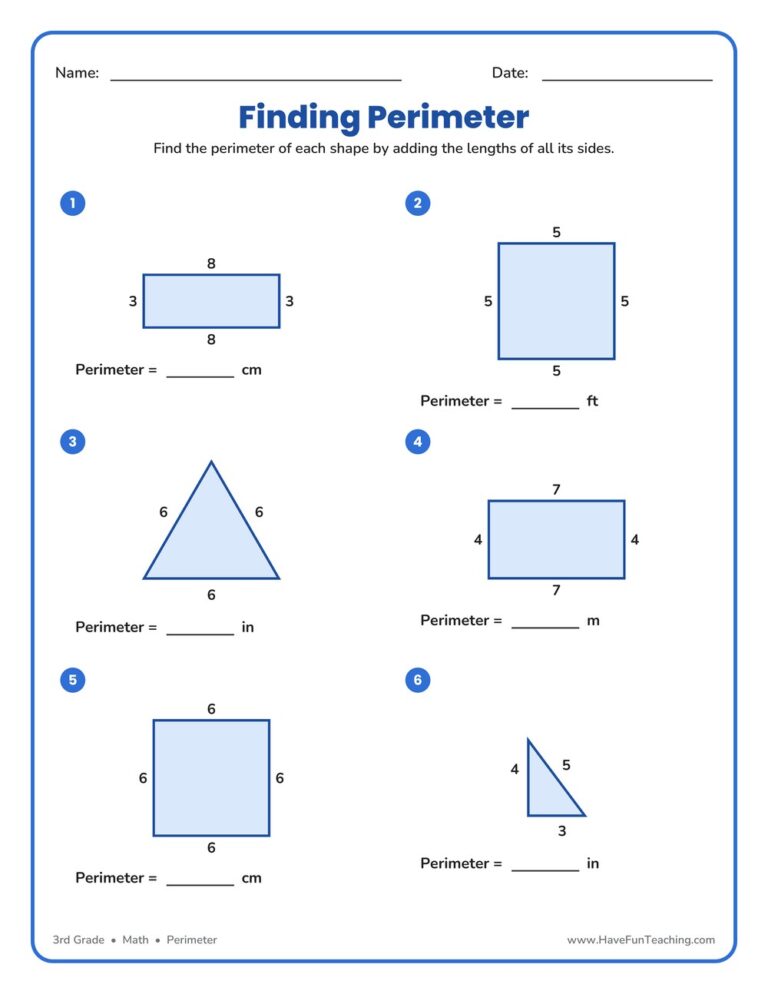
A 3rd grade finding shape perimeter worksheet where students add the side lengths of rectangles, squares, and triangles to find each shape’s perimeter. Includes a complete answer key for quick, no-prep geometry practice.

Using this Comparing Sizes Worksheet, studentslook at the two pictures in each square and circle the word that best describes the picture.

This Perimeter Word Problems Worksheet gives 3rd graders five real-world story problems for finding the perimeter of rectangles, squares, and triangles. Includes an answer key—great for hands-on measurement practice.
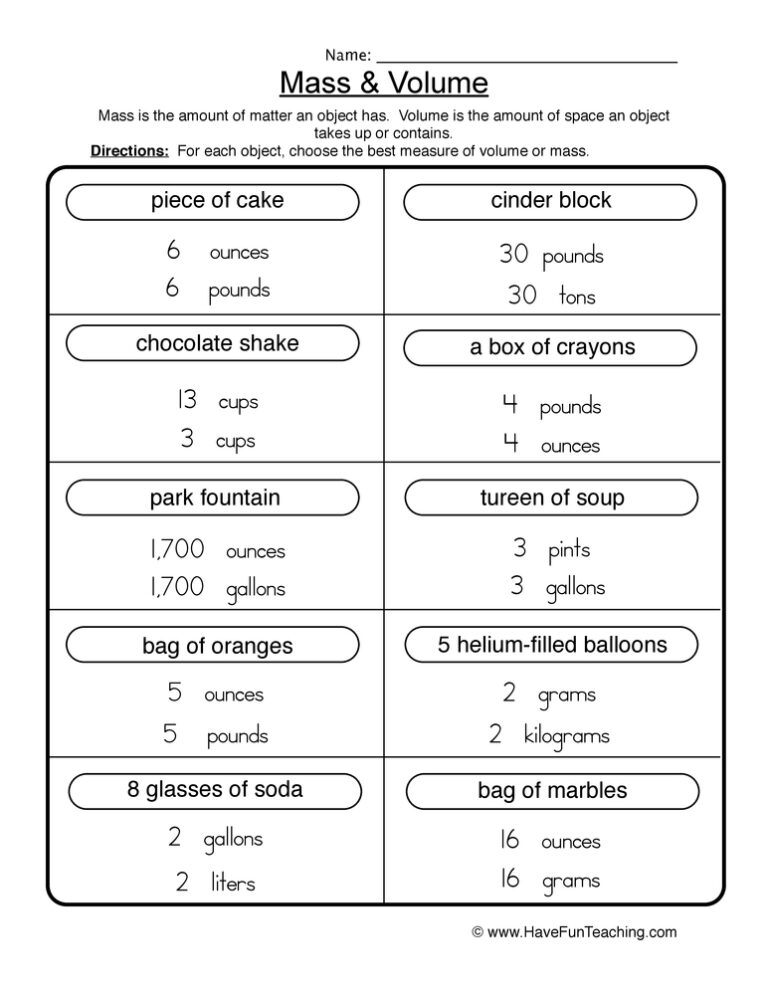
Using thisMass Volume Worksheet, studentschoose the best measure of volume or mass for the object provided.

A Solving Perimeter Word Problems Worksheet that gives 3rd graders five real-world problems, including one missing-side challenge with a written explanation. Answer key included for fast, no-prep perimeter practice.

Using Perimeter Equation Problems Worksheet, students find the perimeter of two-dimensional shapes when one or all side lengths are given.
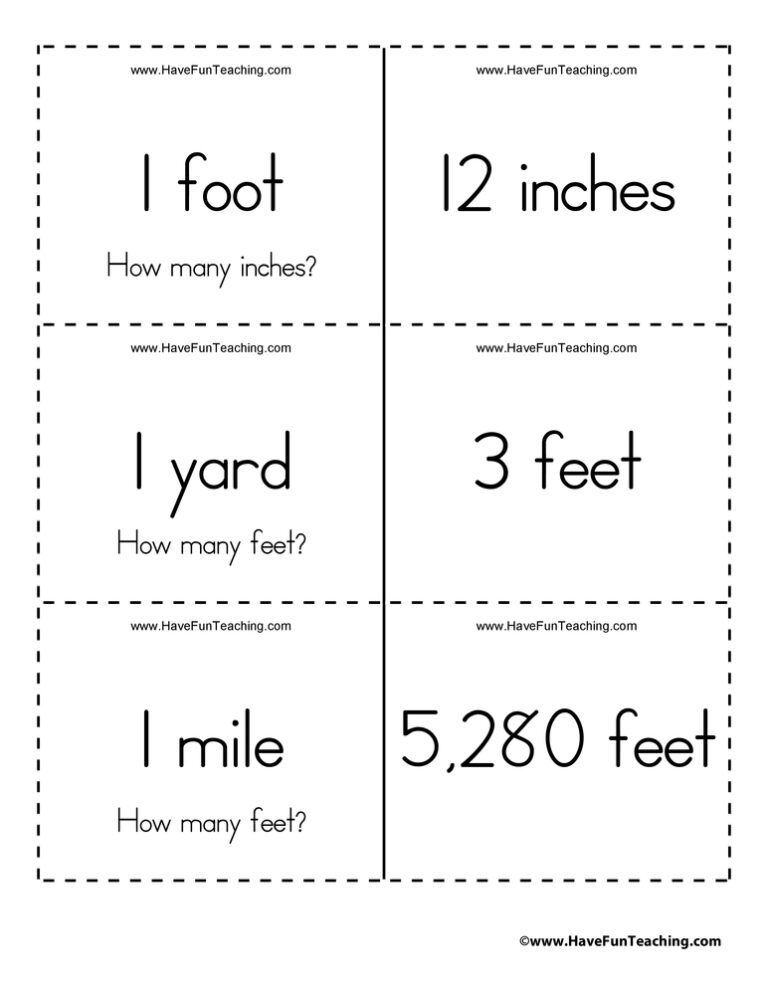
Using Measurement Flash Cards, students build their understanding of unit conversions by matching two units.

Using Perimeter and Area Worksheet, students find the area and perimeter in different real life scenario word problems.

A read a thermometer worksheet for 3rd Grade: students find the temperature on four Fahrenheit scales, then solve multi-step temperature problems. Answer key included, so measurement practice is ready to print and quick to check.

The Finding the Perimeter of Shapes Grid Worksheet helps 3rd graders count grid units to find the perimeter of rectangles and an L-shape. Includes an answer key for quick, no-prep measurement practice.
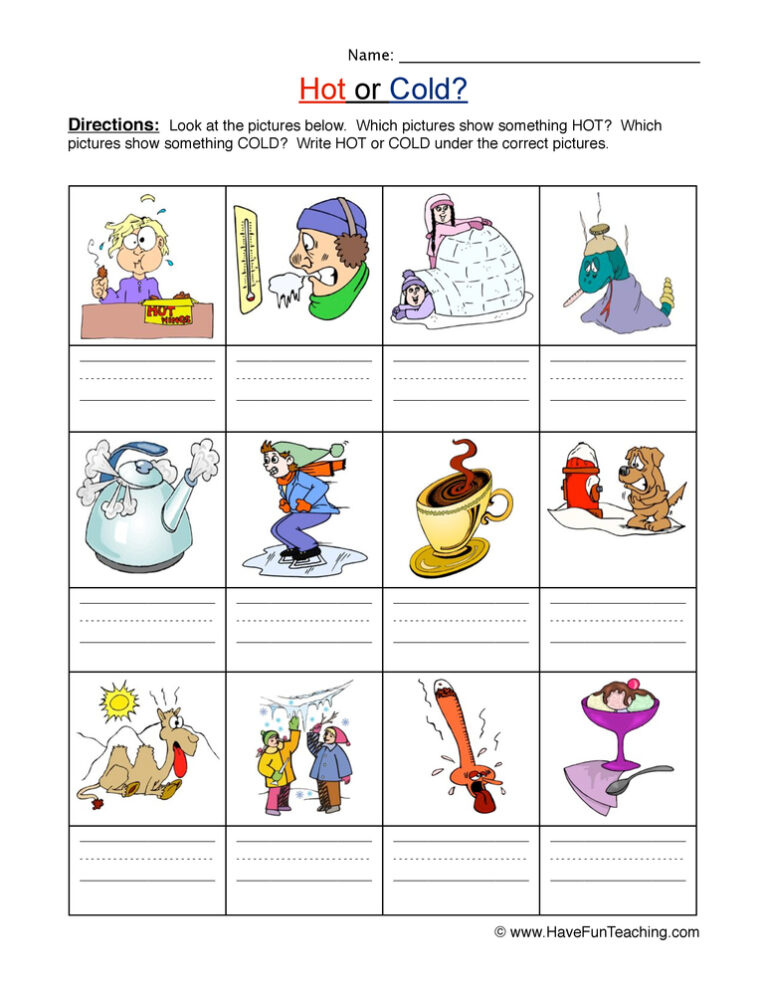
Using this Is it Hot or Cold Worksheet, student use pictures to determine if objects are hot or cold to improve their understanding of temperature.
Reviews
There are no reviews yet