

My Plate Drawing Worksheet
This My Plate Drawing Worksheet asks 2nd graders to name four food groups and draw a balanced meal. An answer key is included, so kids can check their healthy food choices.
$6.97
Or free with a membership — members pay $3.33/mo for all 10,000+ resources. See plans
Want this one free?
Tell us where to send it and it’s yours — no card, no catch.
One free resource per teacher. We’ll also send free teaching ideas each week — unsubscribe anytime.
Teaching is easier with a membership
Unlimited printables, games & videos for PreK–6th — for your classroom or homeschool. Cancel anytime.
Start your 3-day free trial$0 today · cancel anytime · Instant access to 10,000+ resources
About this resource
Description
MyPlate is a simple picture that shows children how to fill a healthy plate with fruits, vegetables, grains, protein, and dairy. Knowing which foods belong in each group helps kids make smart choices at every meal. This My Plate Drawing Worksheet helps young learners name the food groups and then plan a balanced meal of their own.
This second grade health and nutrition worksheet begins with a word bank of four food groups. Students read four short sentences about foods such as fish, pasta, milk, and apples, and write the matching food group in each box. Next, children draw a healthy meal on a plate that shows a fruit, a vegetable, a grain, and a protein. The second page is an answer key for the food group sentences, so checking work is quick for teachers and parents. Use the My Plate drawing worksheet for science centers, health lessons, homework, or a fun review before lunch.
What’s Included
- 1 print-ready PDF worksheet page
- A four-word food group bank, four sentences, and a large box for drawing a healthy meal
- An answer key on page 2
There are three big reasons this page helps kids build healthy habits. First, sorting familiar foods into groups turns a big idea into something children can see and remember. Second, reading short sentences about what each food does for the body, like building strong bones or giving energy to play, connects nutrition to real life. Third, drawing a balanced plate lets children practice planning a meal, which is a skill they can use at home and at school.
Here are a few ideas to stretch the learning. Before the page, show a real plate and ask students to name foods that might go on it. After the page, invite children to share their drawings and point out each food group. Families can use the worksheet to plan a real dinner together, and classes can make a food group chart with pictures cut from grocery ads.
Related Resources
What teachers say
Reviews
You must be logged in to post a review.
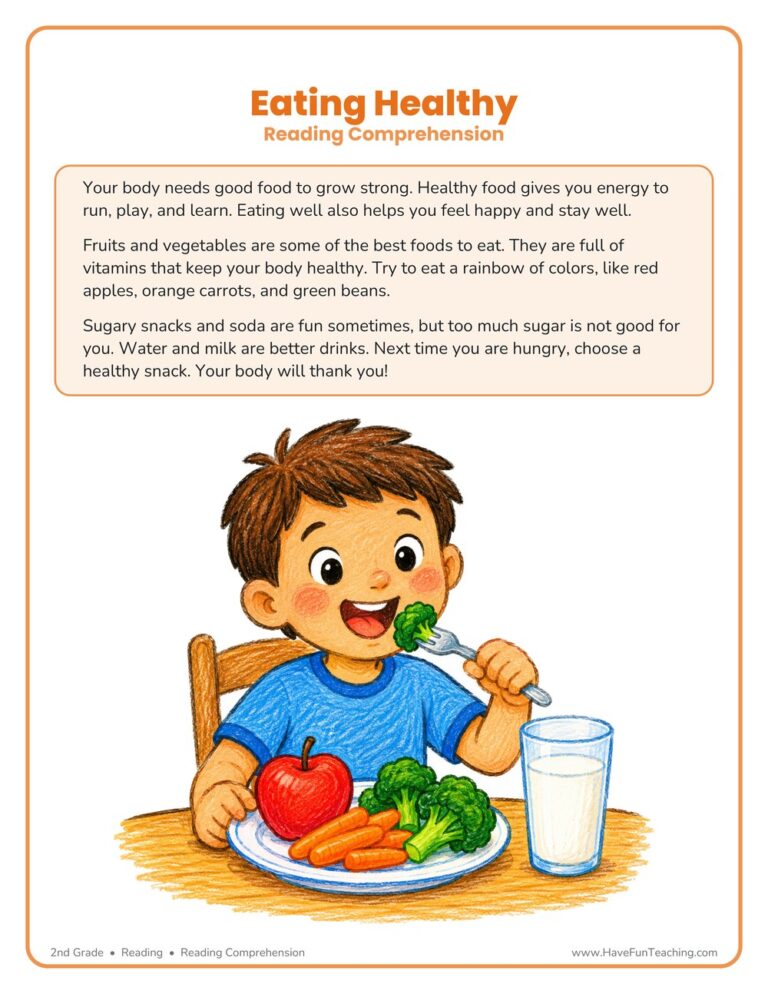
The Eating Healthy Reading Comprehension Worksheet gives 2nd graders a fun passage about healthy food plus six questions to check understanding. Answer key included—perfect for no-prep reading and nutrition practice at home or school.

This Fitness Package Download provides you and your students with all of the Have Fun Teaching Fitness DVDs, CDs, and Reading Comprehension Workbook.
The Brain Break Song (MP3) is perfect for classroom brain breaks, transitions, indoor recess, and physical activities.

These Donut Cut Outs quickly give you templates that can be easily cut and applied for classroom decoration or student activities

The Classifying Proteins, Grains, Fruits and Veggies Worksheet asks 2nd grade students to sort fifteen everyday foods into three labeled food groups. An answer key is included, so classifying practice checks itself.


Using this Walking Song (Original Music Video), your students will be working up a sweat as they walk along with the catchy beat.

This dozen donuts reading comprehension worksheet gives 2nd grade students a short bakery story, four multiple-choice questions, and a written response. An answer key is included, so checking the work is quick.
This Fitness Songs (MP3 Album) provides you and your students with seven fitness songs to get your class moving and fit in a fun and musical way!

Health & Fitness Reading Comprehension Workbook Download includes 38 Phonics-themed Stories. 5 test questions per story. Progress Reports.
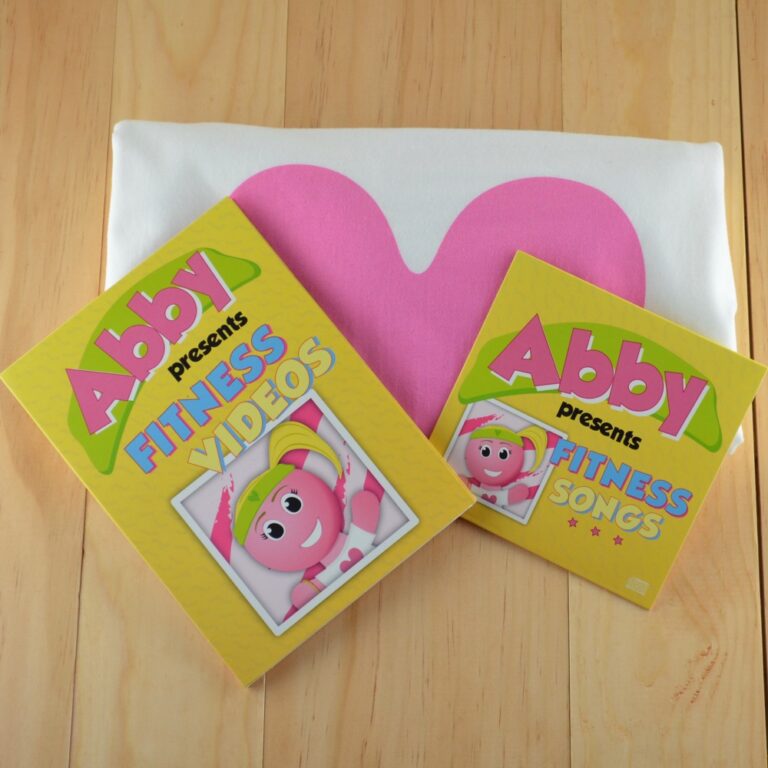
This Fitness Package provides you and your students with all of the Have Fun Teaching Fitness DVDs, CDs, Reading Comprehension Workbook, and T-shirt.
Reviews
There are no reviews yet