

Classifying Proteins, Grains, Fruits and Veggies Worksheet
The Classifying Proteins, Grains, Fruits and Veggies Worksheet asks 2nd grade students to sort fifteen everyday foods into three labeled food groups. An answer key is included, so classifying practice checks itself.
$6.97
Or free with a membership — members pay $3.33/mo for all 10,000+ resources. See plans
Want this one free?
Tell us where to send it and it’s yours — no card, no catch.
One free resource per teacher. We’ll also send free teaching ideas each week — unsubscribe anytime.
Teaching is easier with a membership
Unlimited printables, games & videos for PreK–6th — for your classroom or homeschool. Cancel anytime.
Start your 3-day free trial$0 today · cancel anytime · Instant access to 10,000+ resources
About this resource
Description
Classifying is one of the first science skills young students use to make sense of the world around them, and food is the friendliest place to start. This Classifying Proteins, Grains, Fruits and Veggies Worksheet gives second grade students fifteen familiar foods and three clearly labeled groups to sort them into. Because every food on the page is one children already recognize from the lunch table, the thinking stays on the skill itself: looking closely at an item, deciding what makes it belong with other items, and placing it in the category where it fits.
This food groups sorting worksheet keeps the task clean and uncluttered. Students read every food in the word bank, then write each one on a line under Proteins, Grains, or Fruits & Veggies. Five roomy handwriting lines sit beneath each label, so students practice spelling and letter formation at the same time they practice classifying. A completed answer key is printed on the second page, so this Classifying Proteins, Grains, Fruits and Veggies Worksheet works for independent seat work, a partner activity, a science center, or a quick check before you move on to healthy eating.
What’s Included
- A one-page classifying activity built around a fifteen-word food bank
- Three labeled sorting columns: Proteins, Grains, and Fruits & Veggies
- Five solid handwriting lines inside every column
- Full-color illustrations of one food from each food group
- A complete answer key on page two
Three Reasons This Helps Kids
First, sorting is real science thinking. A student who can explain why chicken and eggs belong together is building the same habit of mind that later sorts animals, rocks, and matter. Second, writing each food instead of circling it slows students down just enough to look at the word, say it, and spell it, which turns one activity into science and literacy practice at once. Third, the food groups on this page connect straight to health: children who can name what a food is made of are better prepared to talk about balanced meals and everyday choices.
Teacher and Parent Ideas
Read the word bank aloud together before students begin so the reading load never gets in the way of the sorting. Ask students to add one more food of their own to the bottom of each column, then defend the choice to a partner. At home, take the page to the kitchen and match each column to something on the shelf, or sort the family grocery list into the same three groups. Finished pages make a bright bulletin board display for a nutrition unit, and the answer key lets students check a partner’s work before it is handed in.
Related Resources
What teachers say
Reviews
You must be logged in to post a review.
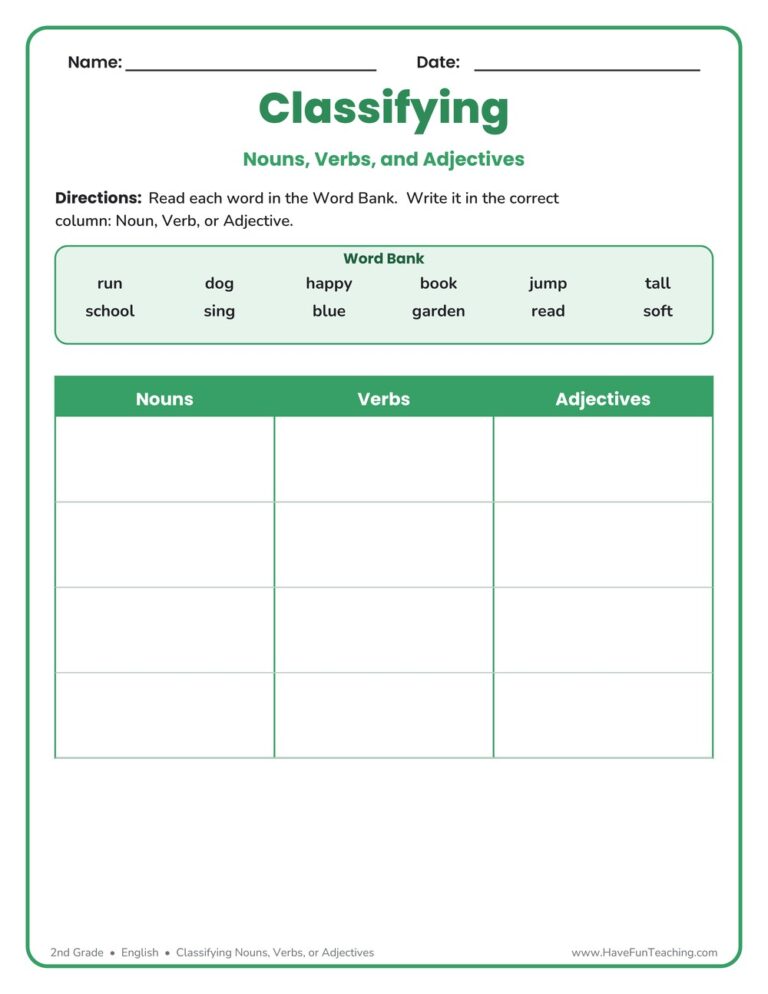
Sort twelve everyday words into nouns, verbs, and adjectives with this Classifying Nouns, Verbs, or Adjectives Worksheet for 2nd grade. Includes a complete answer key for quick, no-prep grammar practice.
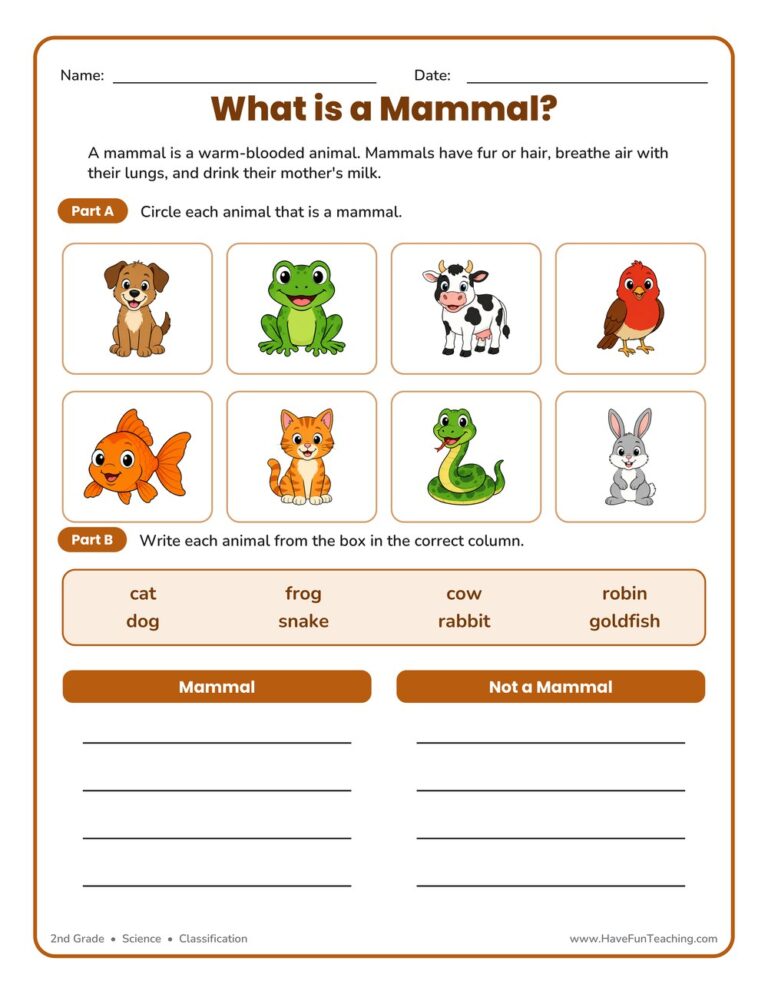
This mammal classification worksheet helps 2nd graders spot mammals and sort animals into mammal and not-a-mammal groups. It includes a complete answer key, making it perfect for no-prep science practice at home or in the classroom.

Using this Animal Song (Animated Music Video), your students learn about different types of animals and their sounds by watching this fun, catchy video.
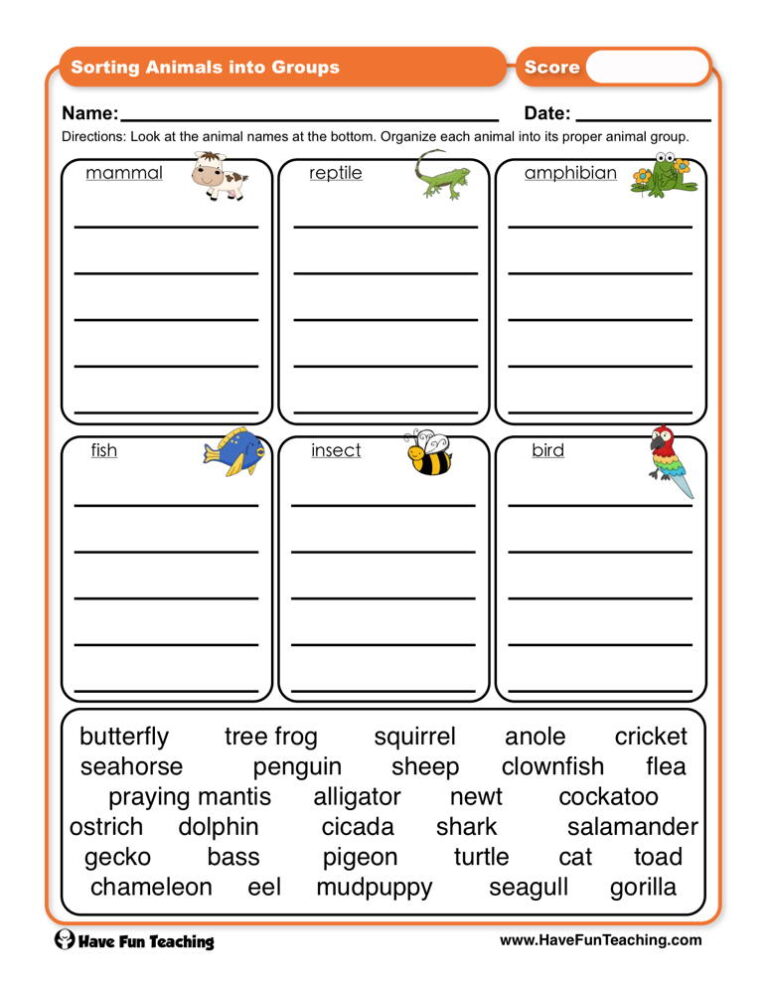
Practice animal classification with this Sorting Animals into Groups Worksheet for 2nd grade. Students sort twelve animals into six groups, with an answer key included for easy checking.

This mammal fish bird worksheet asks 2nd graders to name the animal group for six pictures and four trait clues. An answer key is included, so checking the work takes only a minute.

This animal classification worksheet lets 2nd graders sort twelve animals into mammals, birds, fish, and reptiles using a picture-clued word box. An answer key is included — great for no-prep science practice at home or in class.
The Life Science Stories Reading Comprehension Digital Worksheet Collection has online digital worksheets for Google Classroom & online distance learning.
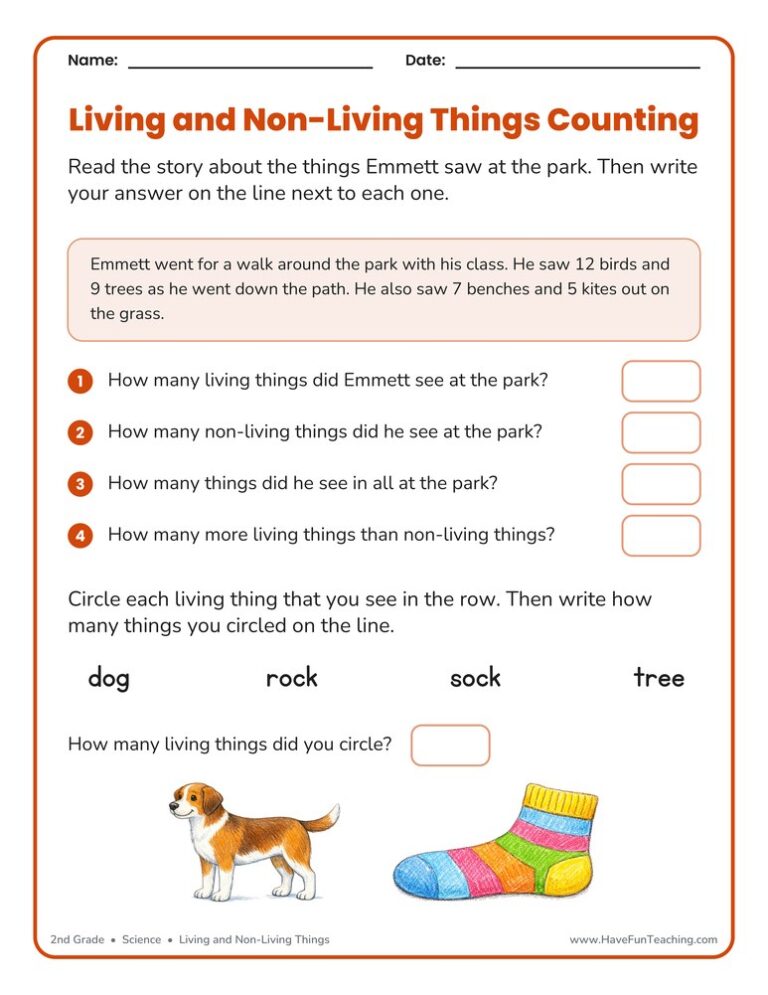
This Living Things and Non Living Things Counting Worksheet gives 2nd grade students a park number story to count, classify and compare, with an answer key included so checking the whole page takes seconds.
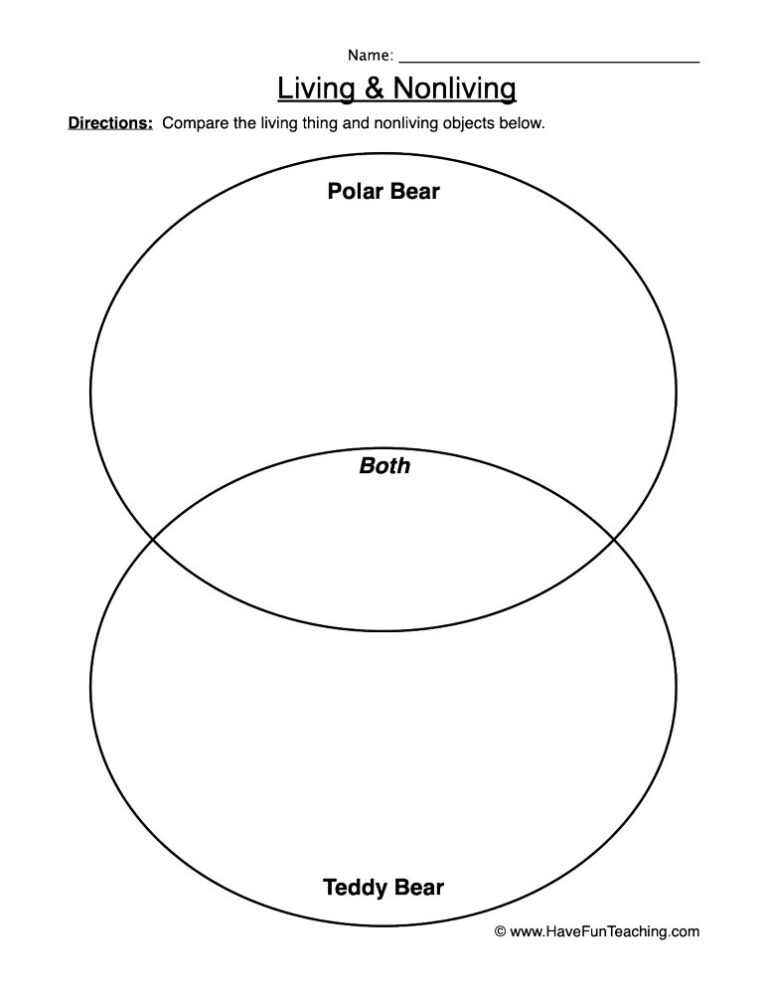
This living non-living venn diagram worksheet has 2nd grade students sort six facts about a polar bear and a teddy bear into a Venn diagram. An answer key is included for quick, easy checking.

This How Many Wheels Classifying Transportation Worksheet has 2nd Grade students sort nine vehicle words into two, four and no wheel groups, with an answer key, so classifying becomes a clear rule.
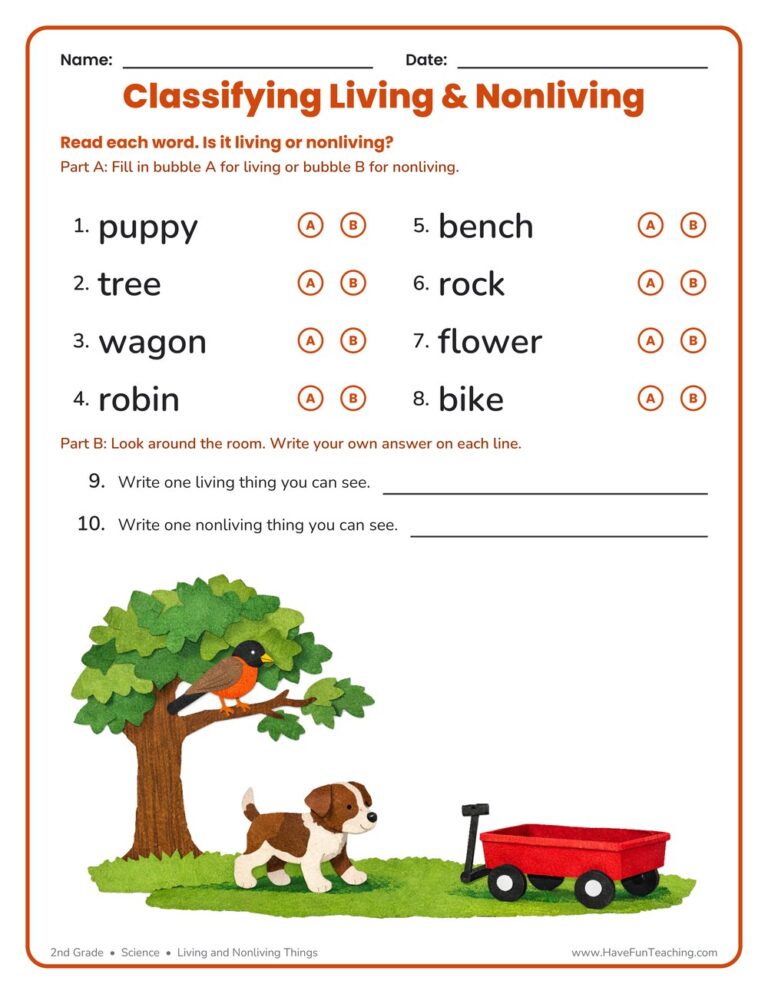
This Classifying Living and Nonliving Things Worksheet has 2nd Grade students sort eight everyday things into living or nonliving, then find one of each in the room. An answer key is included for quick checking.

This classifying list worksheet has 2nd grade students sort nine everyday words into solid, liquid, and gas columns. An answer key is included, making it easy to check their thinking about matter.
Reviews
There are no reviews yet