
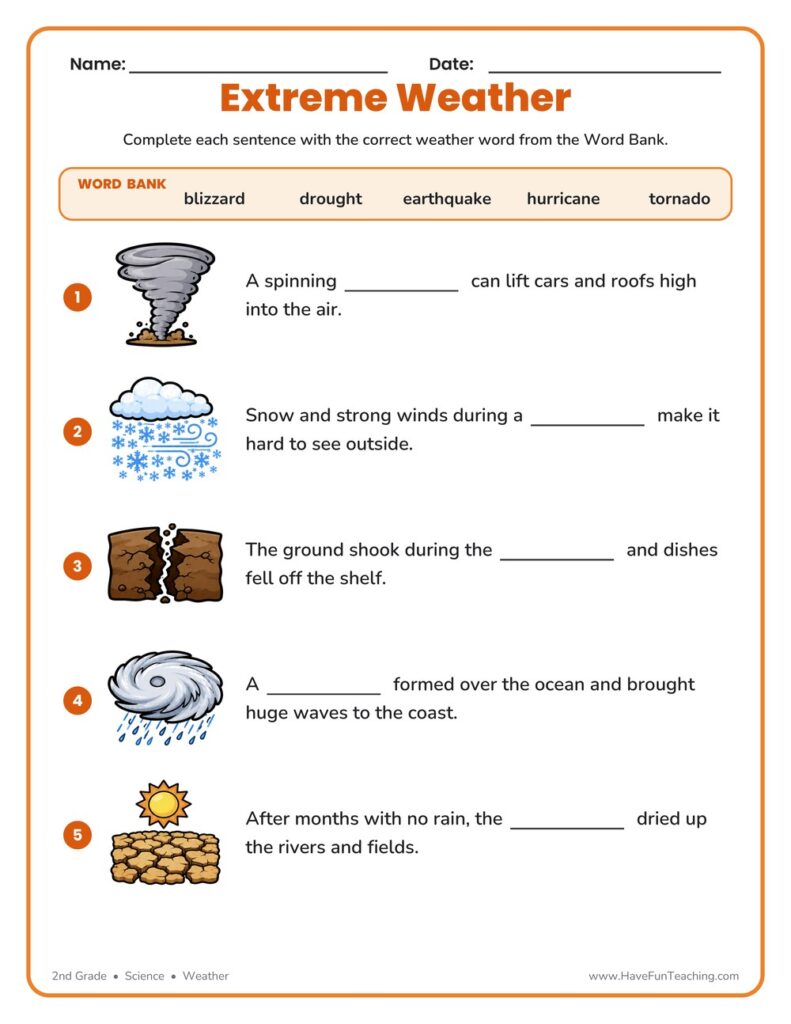
Natural Disasters Fill in the Blanks Worksheet
This Natural Disasters Fill in the Blanks Worksheet has 2nd graders match blizzards, droughts, earthquakes, hurricanes, and tornadoes to picture-clue sentences. Answer key included — perfect for no-prep extreme weather vocabulary practice.
$6.97
Or free with a membership — members pay $3.33/mo for all 10,000+ resources. See plans
Want this one free?
Tell us where to send it and it’s yours — no card, no catch.
One free resource per teacher. We’ll also send free teaching ideas each week — unsubscribe anytime.
Teaching is easier with a membership
Unlimited printables, games & videos for PreK–6th — for your classroom or homeschool. Cancel anytime.
Start your 3-day free trial$0 today · cancel anytime · Instant access to 10,000+ resources
About this resource
Description
Extreme weather shapes the world around us, and learning the words for it helps young scientists describe what they see and feel. This Natural Disasters Fill in the Blanks Worksheet introduces 2nd graders to five kinds of extreme weather — blizzards, droughts, earthquakes, hurricanes, and tornadoes — by matching each weather word to a sentence that describes it. Building this vocabulary gives students the language they need to talk about storms, seasons, and the ways weather affects people and places.
On this 2nd grade earth science worksheet, students read five short sentences and fill in each blank with the correct word from the Word Bank. A bold, colorful picture beside every sentence gives a helpful clue, so children can connect each word to a real weather event. To use it, hand out the page, review the five Word Bank words together, and let students complete each sentence on their own or with a partner. The included answer key makes checking quick and easy.
What’s Included
- 1 print-ready PDF worksheet
- Answer key
- 5 fill-in-the-blank sentences with picture clues and a five-word Word Bank
This Natural Disasters Fill in the Blanks Worksheet helps kids learn in three ways. First, the Word Bank and picture clues scaffold new science vocabulary so every learner can find success. Second, reading each sentence for meaning builds comprehension while students decide which weather word fits best. Third, writing the word on the line reinforces spelling and handwriting, turning a single page into reading, science, and writing practice all at once.
For even more fun, invite students to act out each type of weather with sounds and motions, or have them draw and label their own extreme-weather scene. Families can watch the sky together and talk about the weather each day, or share a story about a big storm they remember. Sorting the words into “sky” and “ground” events, or researching how people stay safe in a storm, extends the learning even further.
Related Resources
What teachers say
Reviews
You must be logged in to post a review.
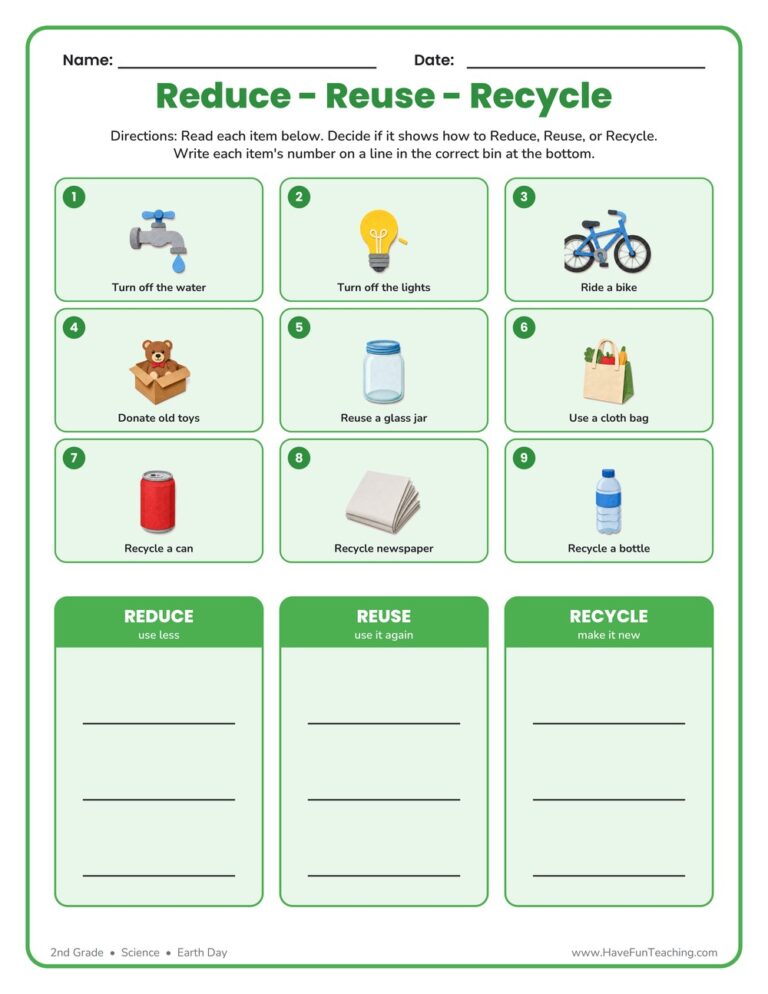
A second grade Reduce, Reuse, Recycle Sorting Worksheet where students sort nine everyday items into the correct earth-friendly bin. Answer key included — a quick, no-prep Earth Day activity for home or classroom.

The Seasons Song by Have Fun Teaching is perfect for teaching and learning all about the seasons of the year. This is a fun way for kids to learn the seasons. With this seasons song, your kids can learn about Spring, Summer, Fall, and Winter. While listening to the Seasons…
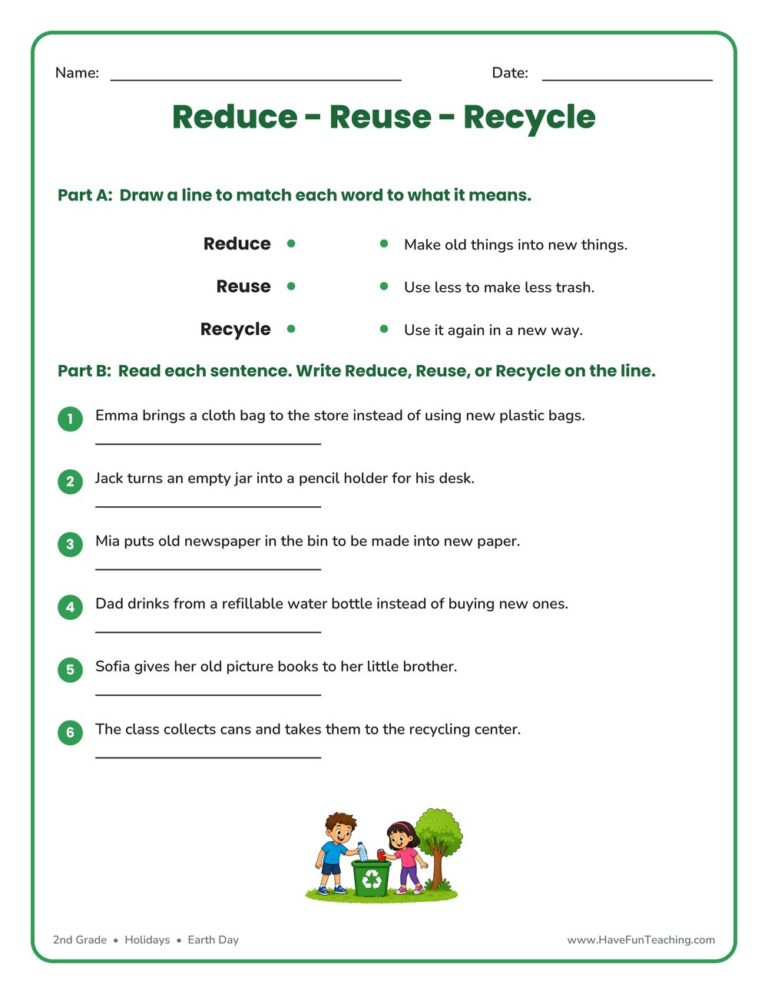
This Reduce, Reuse, Recycle worksheet helps 2nd grade students learn the three Rs by matching each word to its meaning and sorting Earth Day scenarios. Answer key included for quick, no-prep practice.
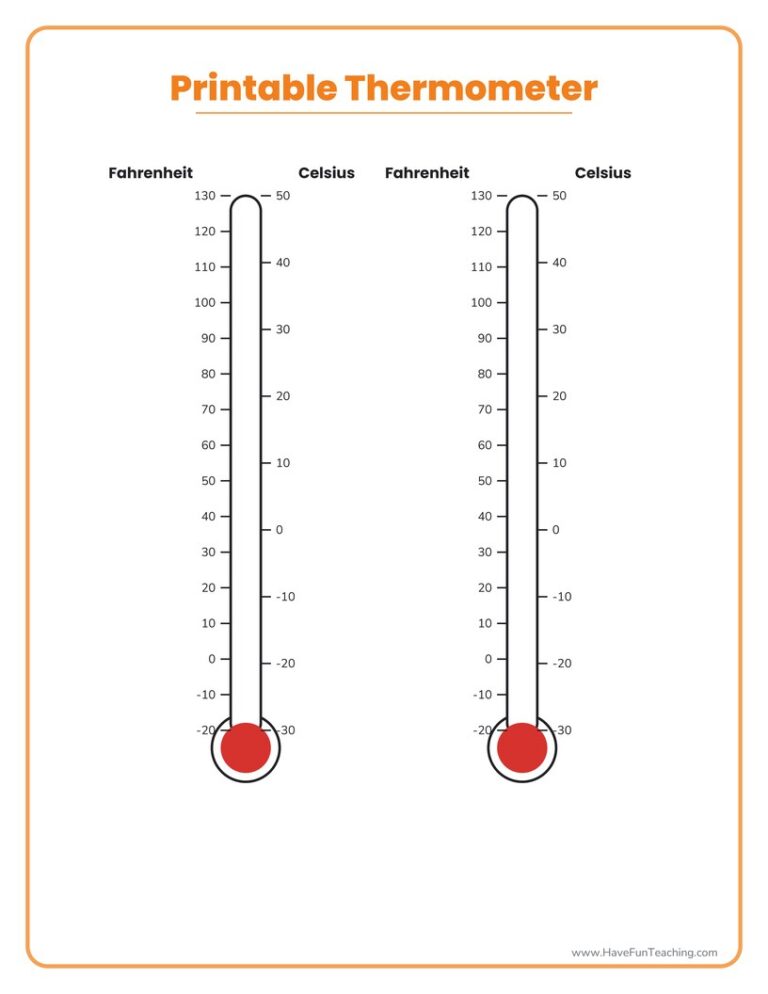
This Printable Thermometer shows Fahrenheit and Celsius scales side by side, giving 2nd grade students an easy classroom tool for tracking temperature and weather. Print, mark, and reuse all year long.
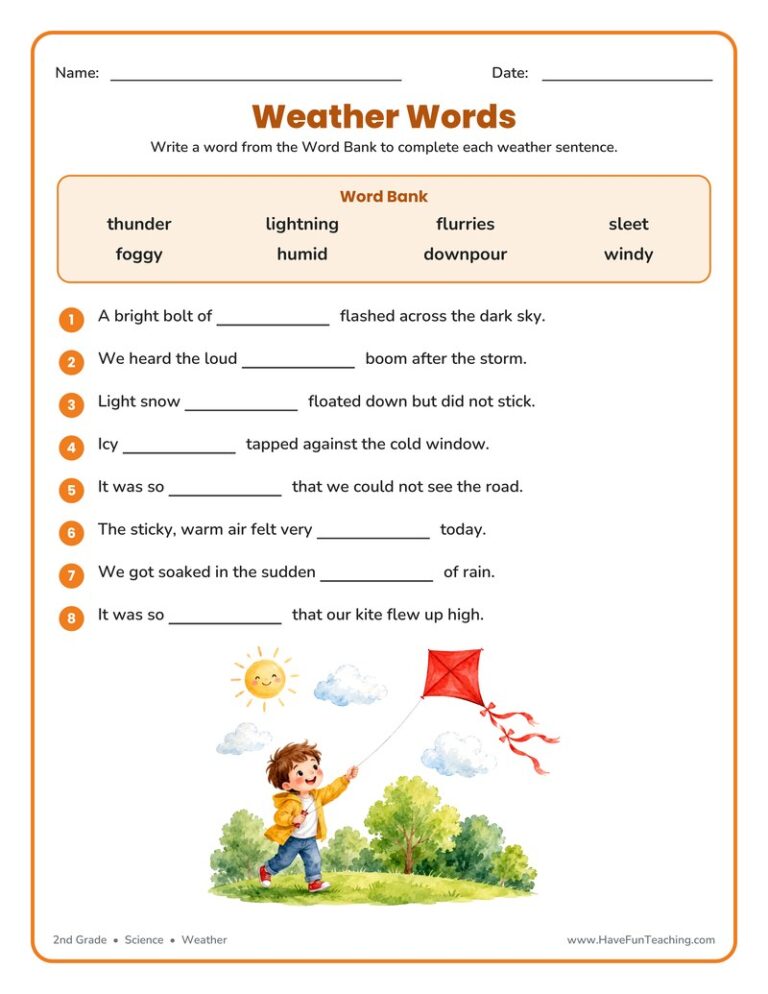
This Weather Fill in the Blank Worksheet lets 2nd graders complete eight weather sentences using a word bank of terms like thunder, sleet, and downpour. Includes an answer key for quick, no-prep science vocabulary practice.
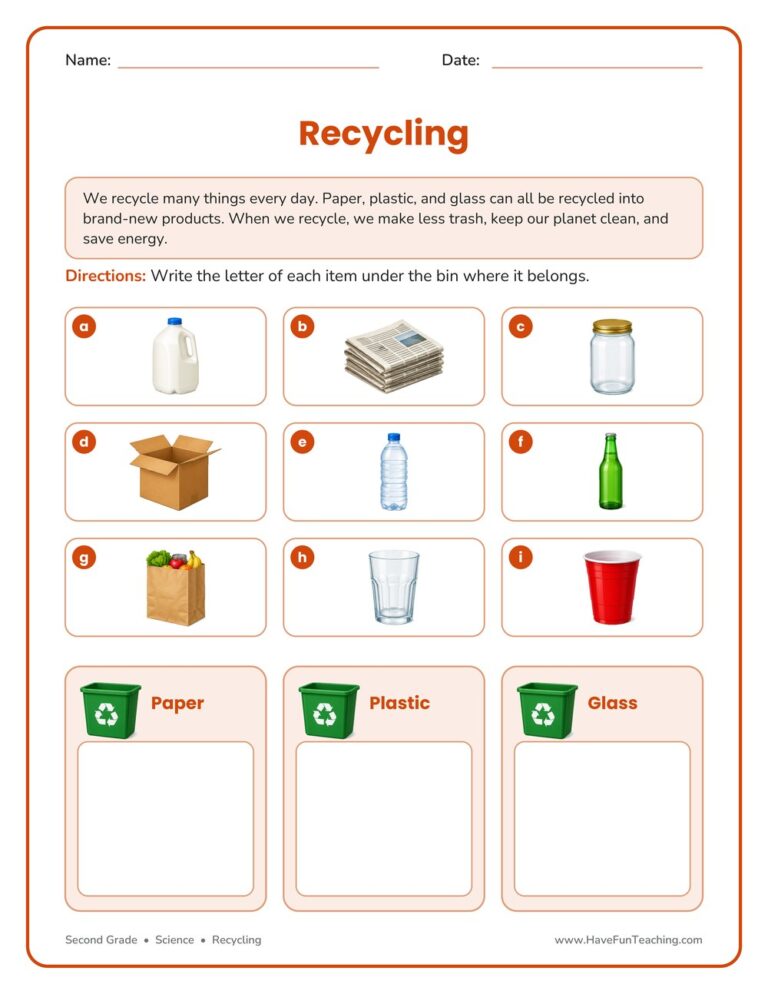
A recycling sort worksheet for second grade, where students sort paper, plastic, and glass items into the correct bins. Includes an answer key—a hands-on Earth Day science activity for classrooms and homeschool.
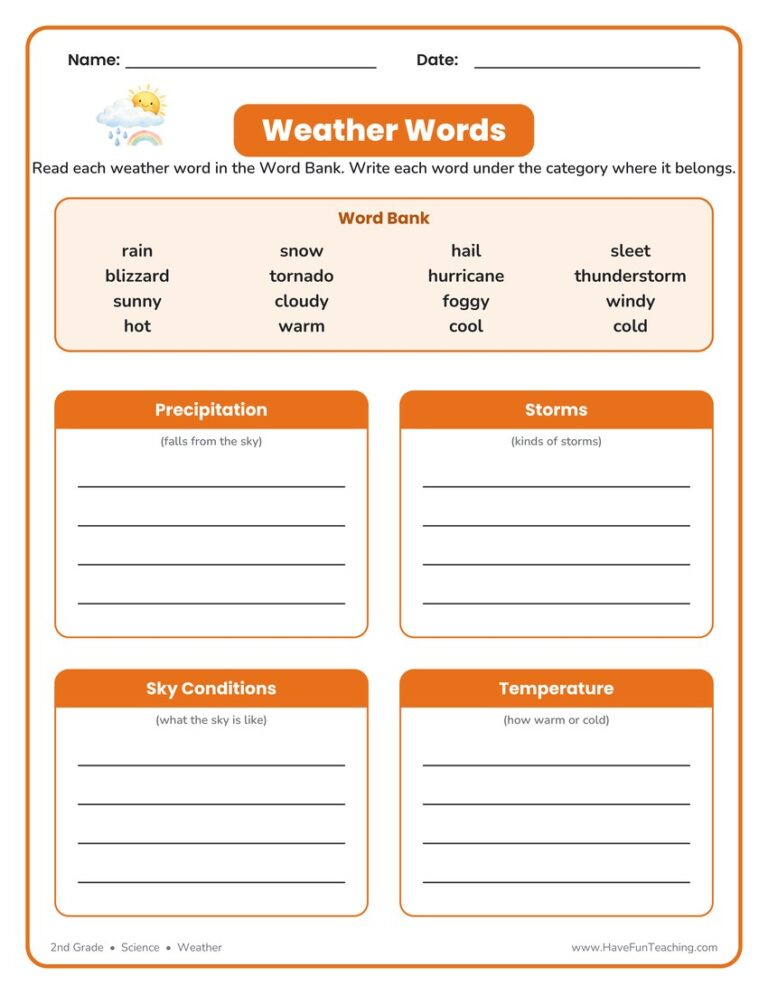
This Weather Words Worksheet helps 2nd graders sort sixteen weather terms into precipitation, storms, sky conditions, and temperature. Answer key included — a quick, no-prep way to grow earth science vocabulary.
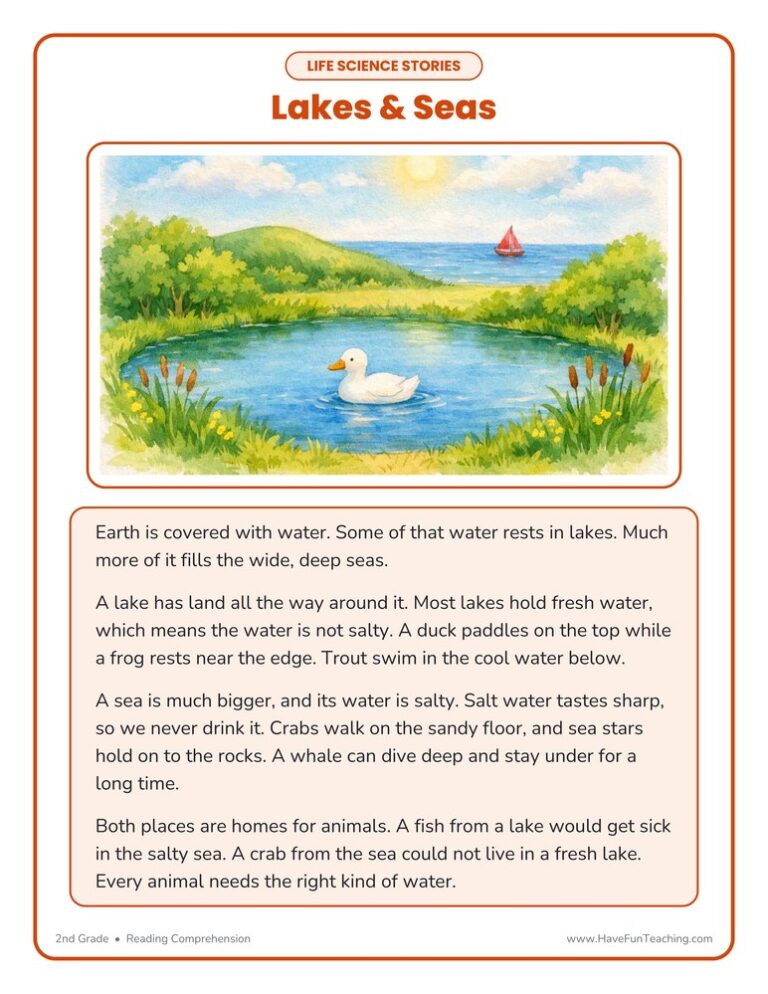
This Lakes and Seas Life Science Reading Comprehension Worksheet gives 2nd Grade students an original passage about fresh water and salt water habitats, with bubble, fill-in, and writing questions. Answer key included.

This Natural Disasters Matching Worksheet gives 2nd Grade students six weather words, six clues to match them to and an answer key, so severe-weather vocabulary is learned by its features.
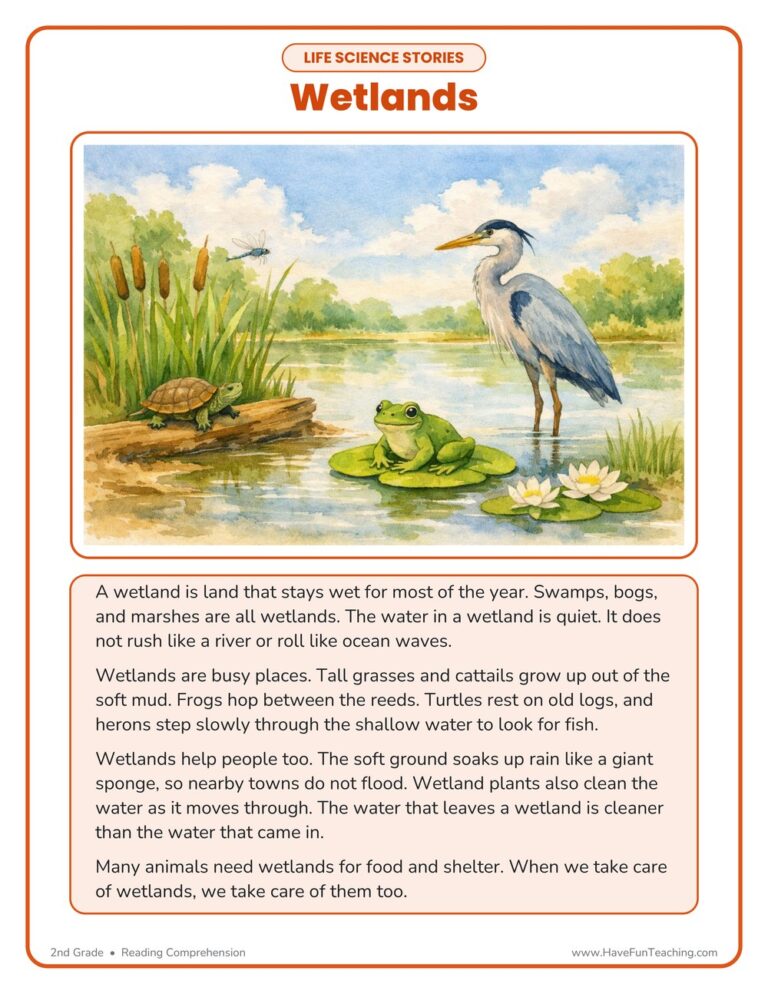
Explore swamps, bogs, and marshes with this wetlands life science reading comprehension worksheet. Second graders read a short nonfiction passage and answer six questions, and an answer key is included, so learning about habitats stays easy and fun.
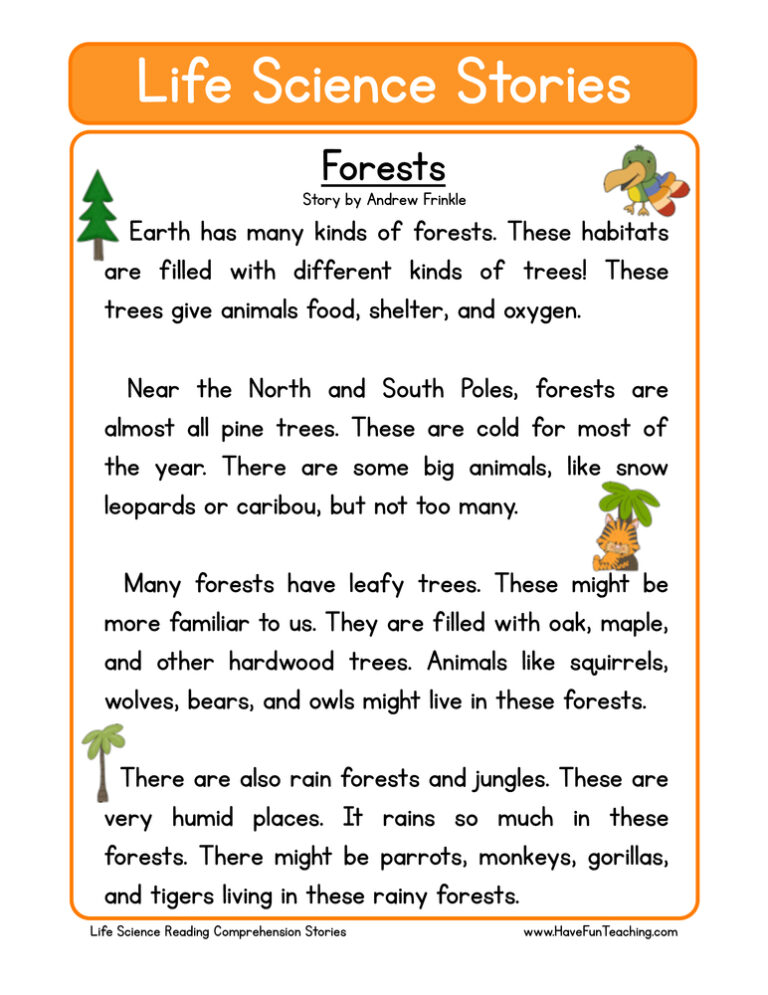
This Forests Life Science Reading Comprehension Worksheet gives 2nd graders a short non-fiction passage about pine, leafy, and rain forests, plus questions and an answer key. Great no-prep practice for main idea and key details.

This weather writing worksheet gives 2nd grade students a Word Bank of weather words, four sentences to complete, and lines to describe the sky outside. An answer key is included, so science writing practice is ready in minutes.
Reviews
There are no reviews yet