Skip to content
Start My 3 Free Days $0 today · cancel anytime

Weather Worksheets

65 weather worksheets. Teacher favorites: Weather Names Worksheet and Printable Thermometer. How teachers use these

Weather Worksheets

65 weather worksheets. Teacher favorites: Weather Names Worksheet and Printable Thermometer. How teachers use these

Worksheet
WorksheetKindergartenWeather Names Worksheet

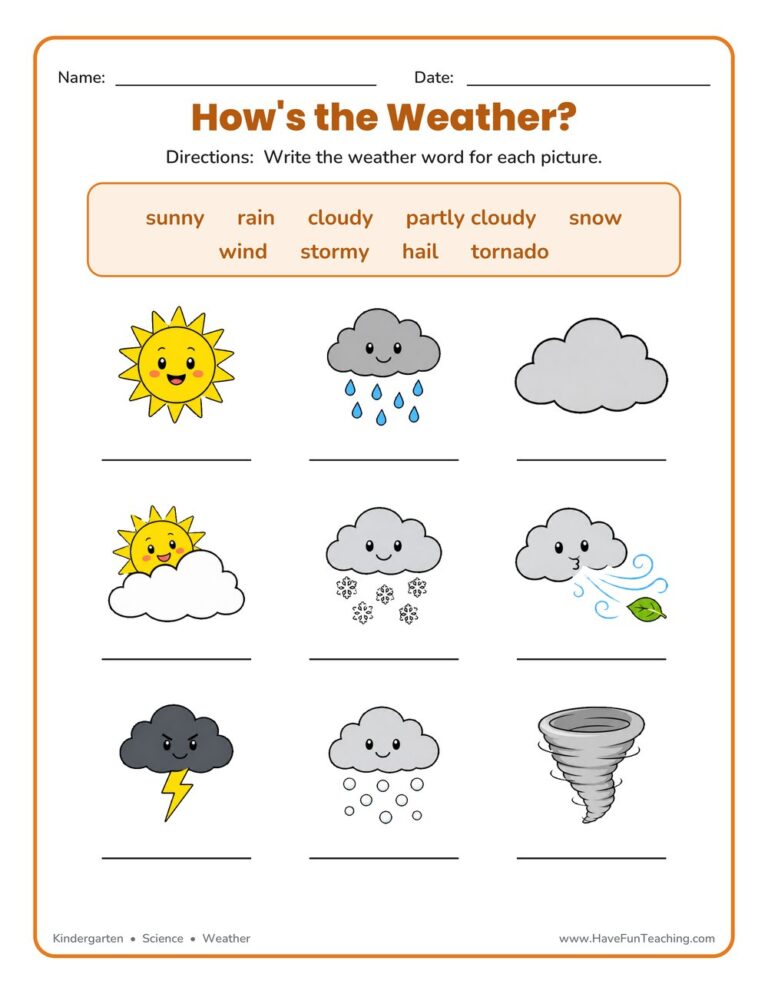
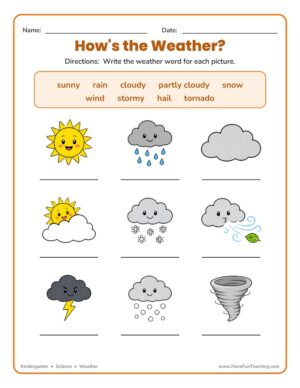
This Weather Names Worksheet gives kindergarten kids nine weather pictures to label using a simple word bank. A complete answer key is included — an easy, no-prep way to build science vocabulary and early writing skills.

Worksheet
Worksheet2nd GradePrintable Thermometer

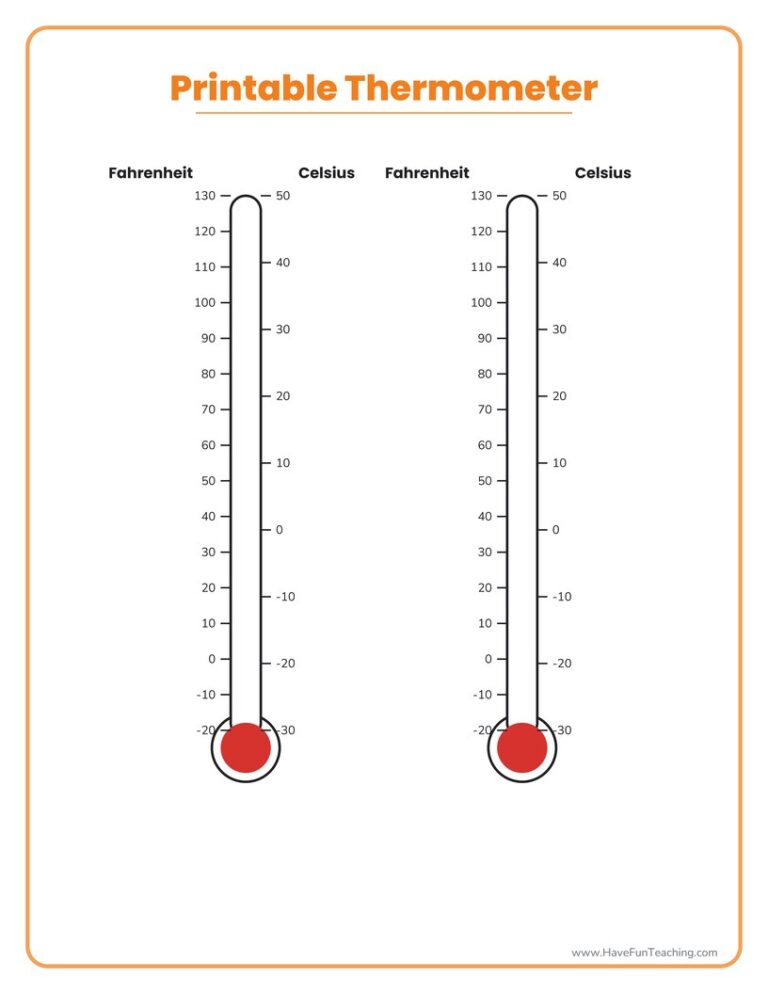
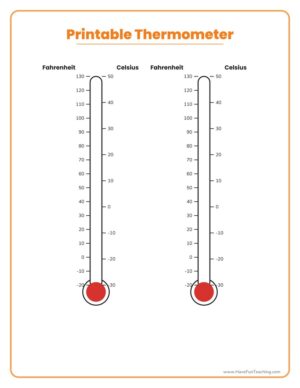
This Printable Thermometer shows Fahrenheit and Celsius scales side by side, giving 2nd grade students an easy classroom tool for tracking temperature and weather. Print, mark, and reuse all year long.

Worksheet
Worksheet2nd GradeWeather Fill in the Blank Worksheet

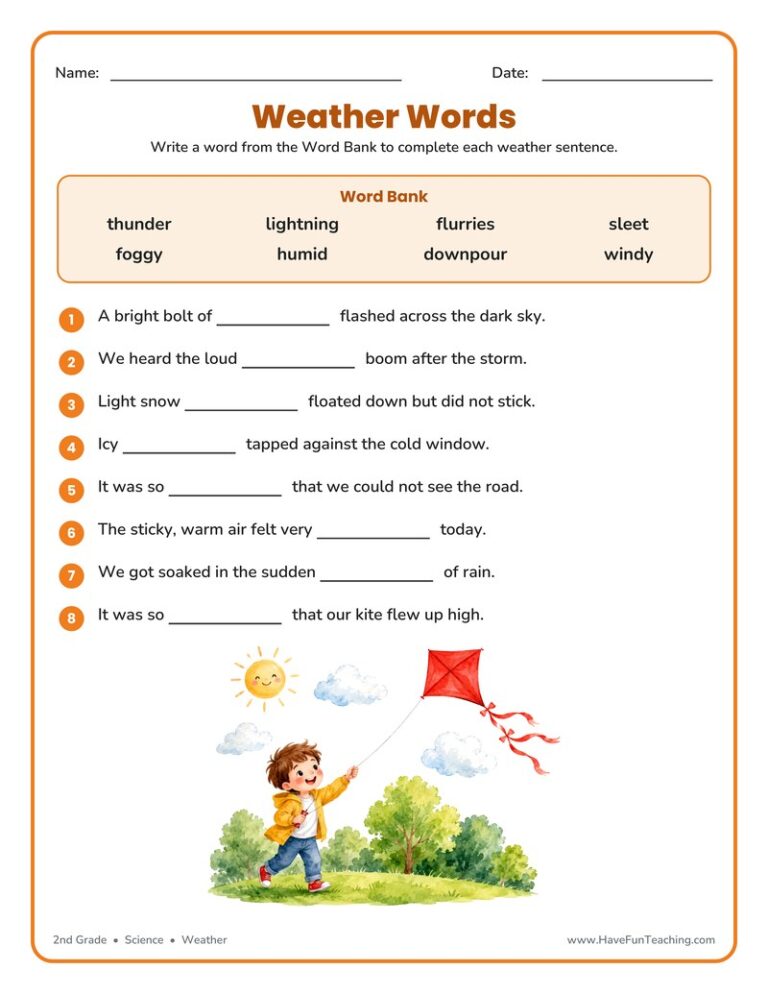
This Weather Fill in the Blank Worksheet lets 2nd graders complete eight weather sentences using a word bank of terms like thunder, sleet, and downpour. Includes an answer key for quick, no-prep science vocabulary practice.

Worksheet
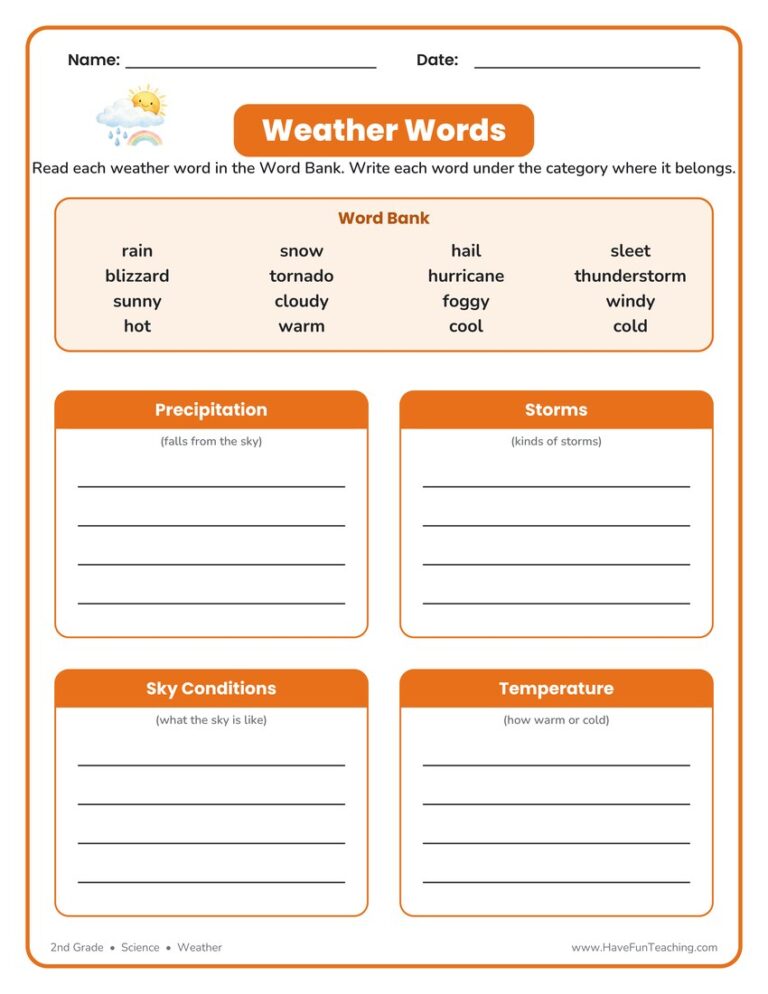
Worksheet2nd GradeWeather Words Worksheet

This Weather Words Worksheet helps 2nd graders sort sixteen weather terms into precipitation, storms, sky conditions, and temperature. Answer key included — a quick, no-prep way to grow earth science vocabulary.

Worksheet
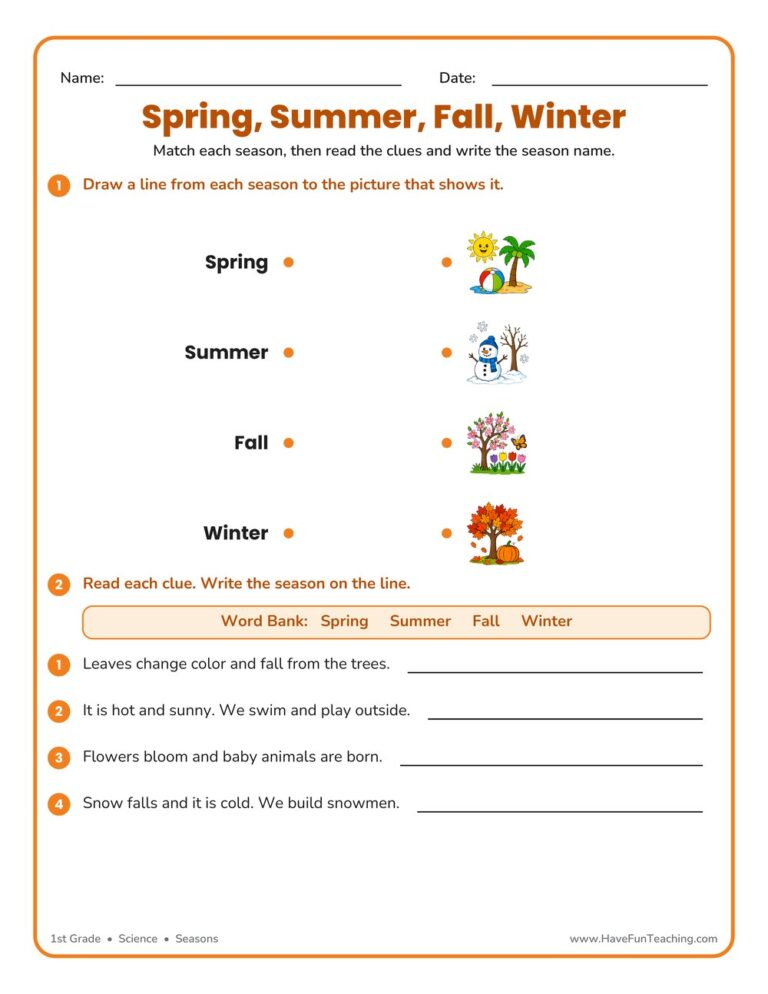
Worksheet1st GradeSeasons of the Year Matching Worksheet

A colorful seasons of the year matching worksheet where 1st graders match spring, summer, fall, and winter to pictures, then write each season from a clue. Answer key included — perfect for no-prep science practice.

Worksheet
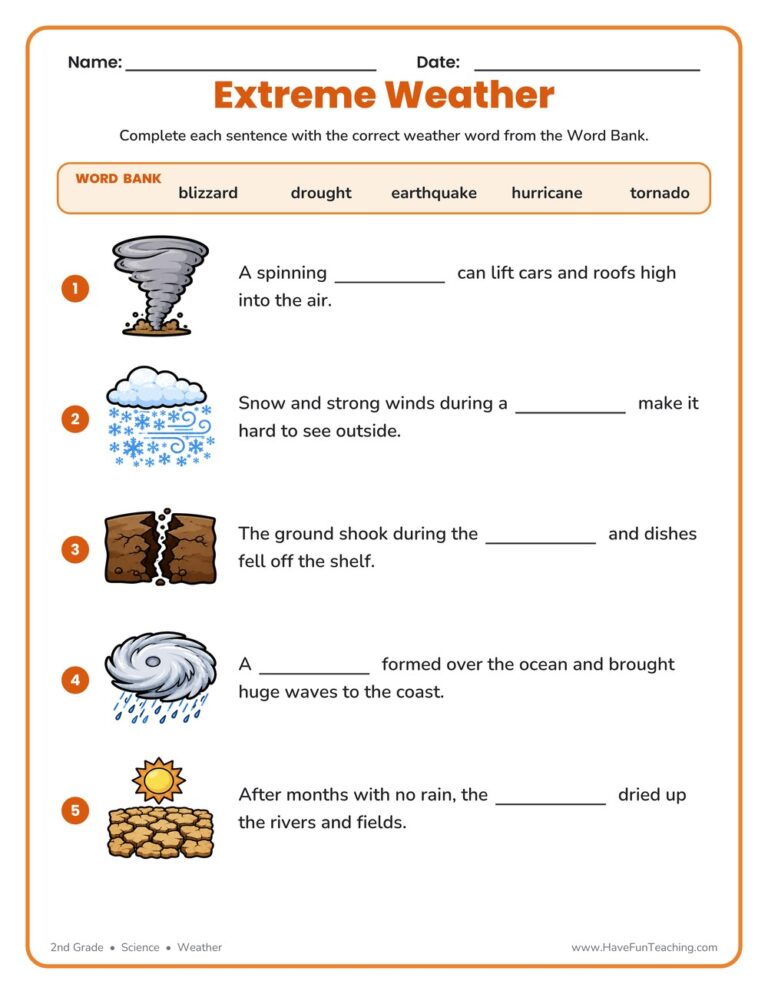
Worksheet2nd GradeNatural Disasters Fill in the Blanks Worksheet

This Natural Disasters Fill in the Blanks Worksheet has 2nd graders match blizzards, droughts, earthquakes, hurricanes, and tornadoes to picture-clue sentences. Answer key included — perfect for no-prep extreme weather vocabulary practice.

Worksheet
Worksheet3rd GradeClimate Map Worksheet

This climate map worksheet has 3rd Grade students read a color-coded map of the United States and use its key to name the climate of any state. Answer key included, so checking work takes seconds.

Worksheet
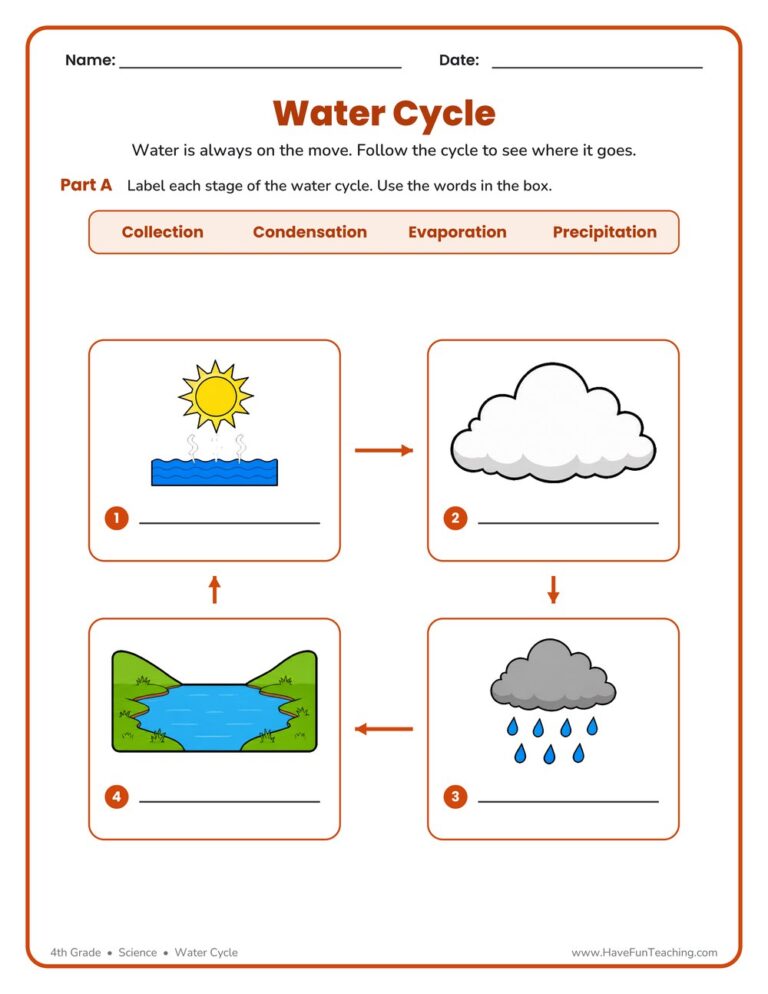
Worksheet4th GradeWater Cycle Worksheet

This Water Cycle Worksheet helps 4th graders label the stages of the water cycle, match science terms to clues, and explain the process in their own words. Includes an answer key — a no-prep way to reinforce earth science vocabulary.

Worksheet
WorksheetKindergartenWeather Word Wall

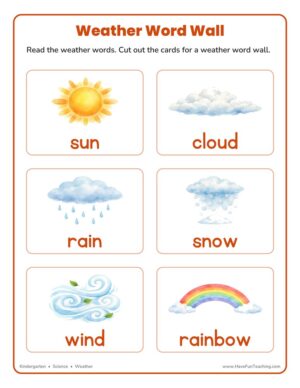
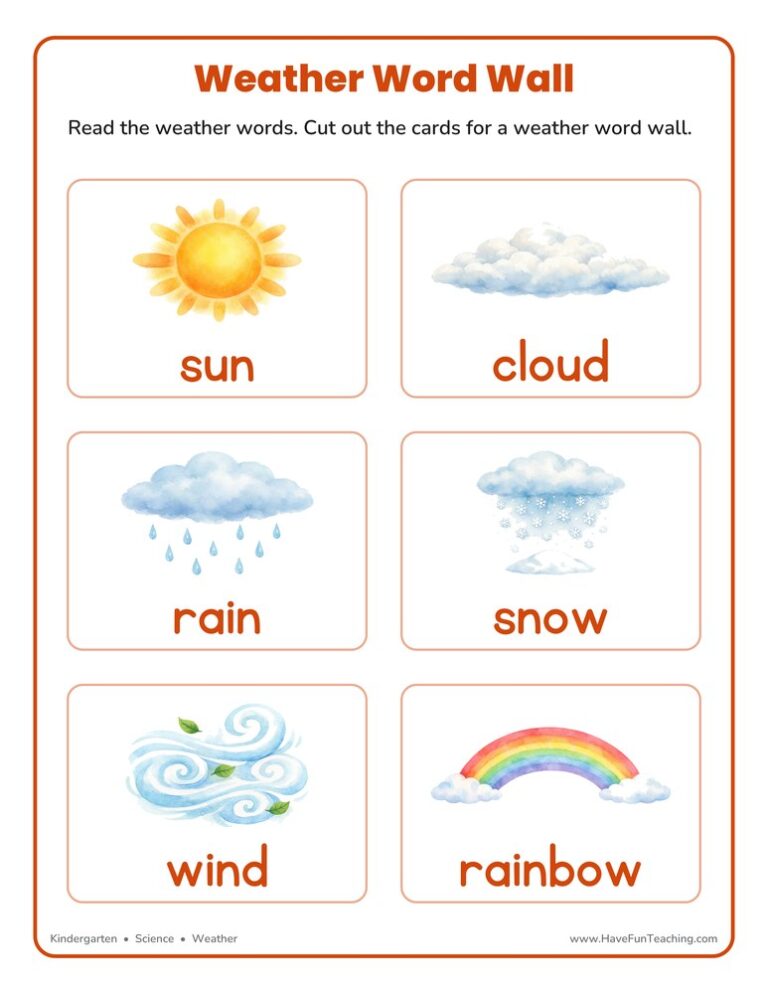
This Weather Word Wall gives Kindergarten classrooms six big picture cards — sun, cloud, rain, snow, wind and rainbow — ready to print, cut and post so young writers always have the weather words within reach.

Worksheet
Worksheet2nd GradeThe Right Temperature Worksheet

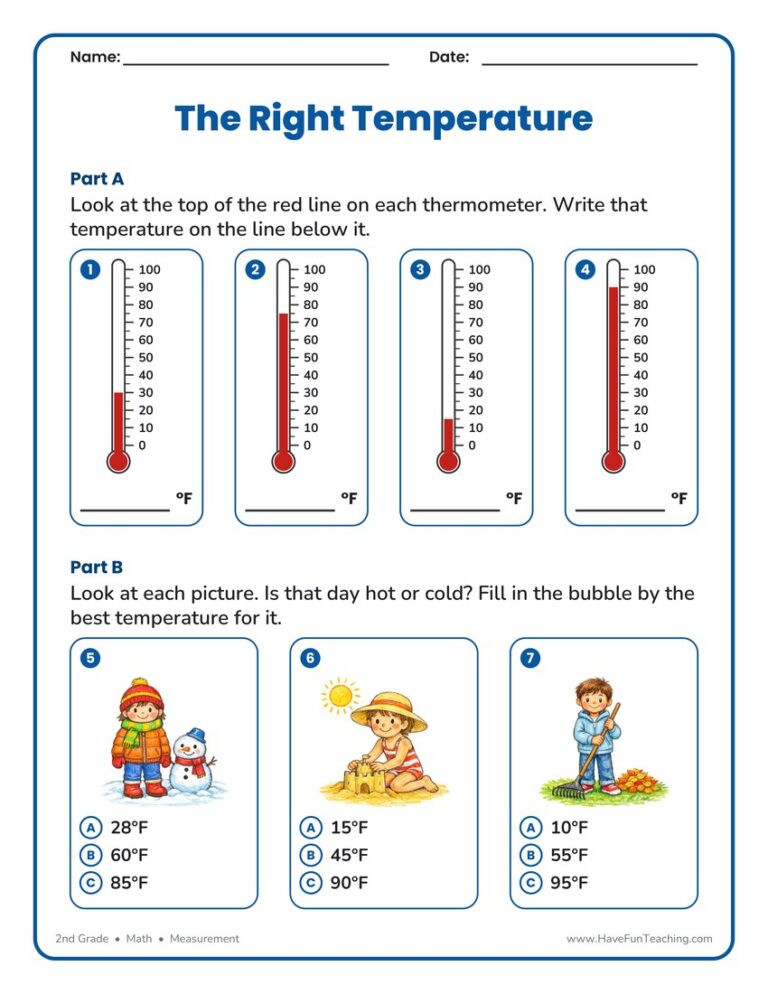
The Right Temperature Worksheet has 2nd graders read four Fahrenheit thermometers and match a temperature to three weather pictures. An answer key is included, so it works as no-prep morning work or a quick measurement check.

Worksheet
Worksheet3rd GradeSevere Weather Word Search Worksheet

This severe weather word search worksheet has 3rd graders hunt twelve storm words, then match five clues to the right term. Answer key included for fast, no-prep science vocabulary practice.

Worksheet
WorksheetKindergartenThe Weather is Rainy Reading Comprehension Worksheet

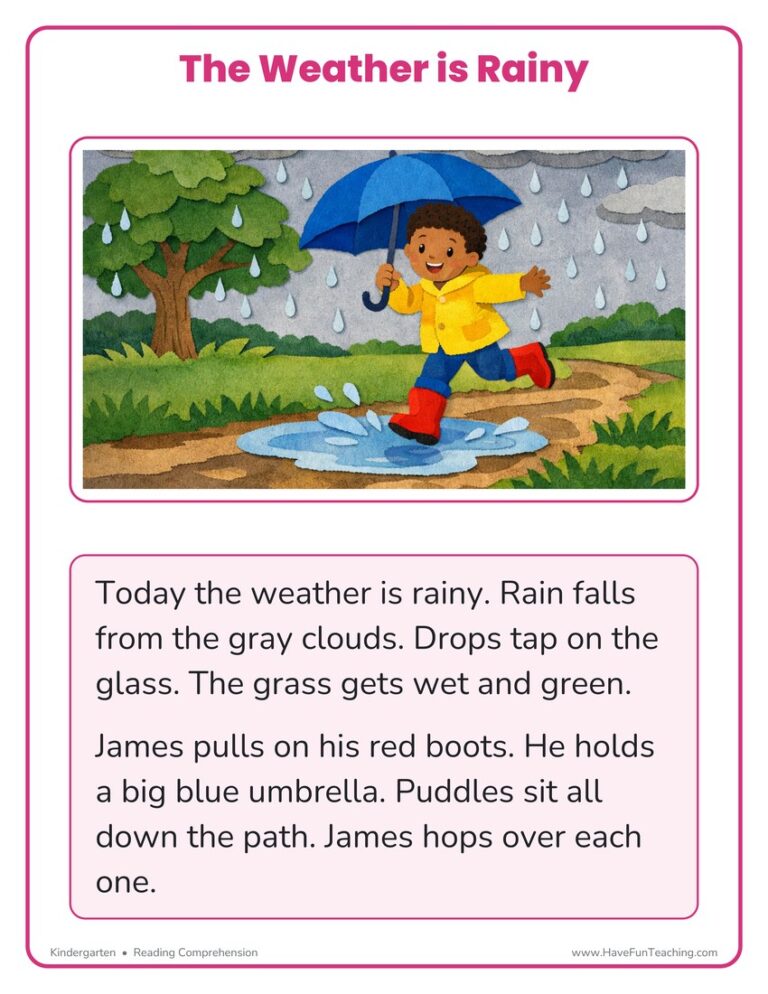
The Weather is Rainy Reading Comprehension Worksheet gives Kindergarten readers a short story about rainy weather with five fill-in-the-bubble questions. Answer key included — no-prep comprehension practice in one page.

Worksheet
Worksheet2nd GradeWeather Writing Worksheet

This weather writing worksheet gives 2nd grade students a Word Bank of weather words, four sentences to complete, and lines to describe the sky outside. An answer key is included, so science writing practice is ready in minutes.

Worksheet
Worksheet3rd GradeWeather Instruments Worksheet

This Weather Instruments Worksheet gives 3rd graders a short passage on the tools a weather station uses, plus five questions. Answer key included, so a whole weather lesson is ready to print in minutes.

Worksheet
Worksheet2nd GradeNatural Disasters Matching Worksheet

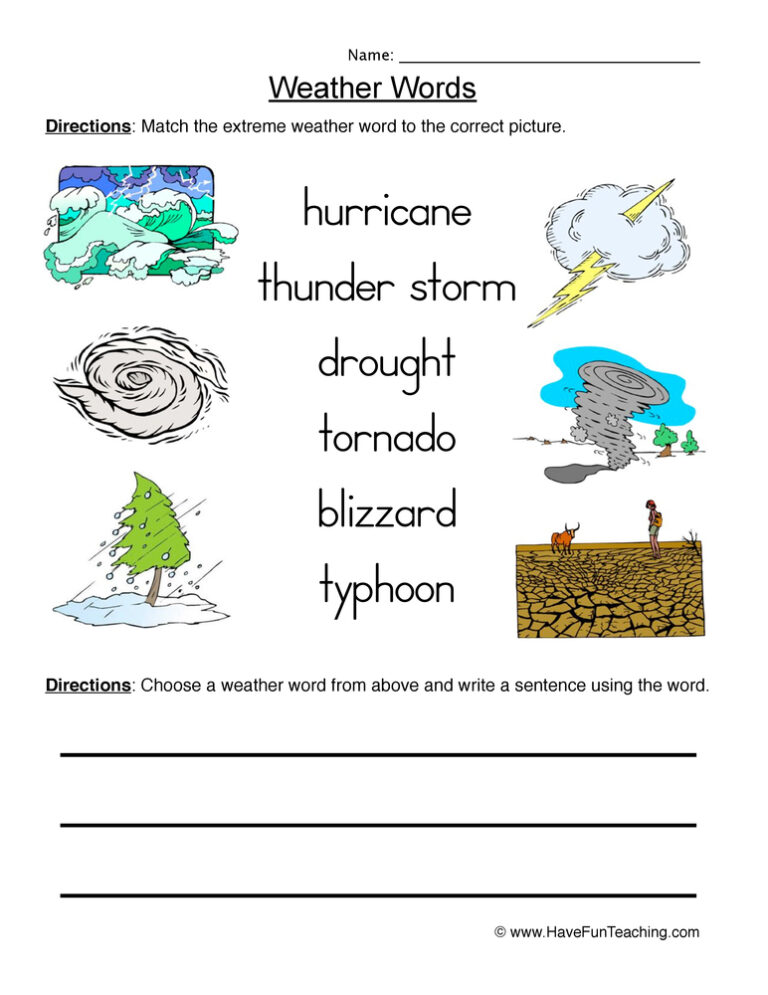
This Natural Disasters Matching Worksheet gives 2nd Grade students six weather words, six clues to match them to and an answer key, so severe-weather vocabulary is learned by its features.

Worksheet
Worksheet1st GradeWeather Matching Worksheet

This weather matching worksheet has 1st Grade students match four weather words to their meanings, then finish six sentences. An answer key is included, so weather vocabulary practice is quick to assign and check.

Worksheet
WorksheetKindergartenSnowman Cut Outs

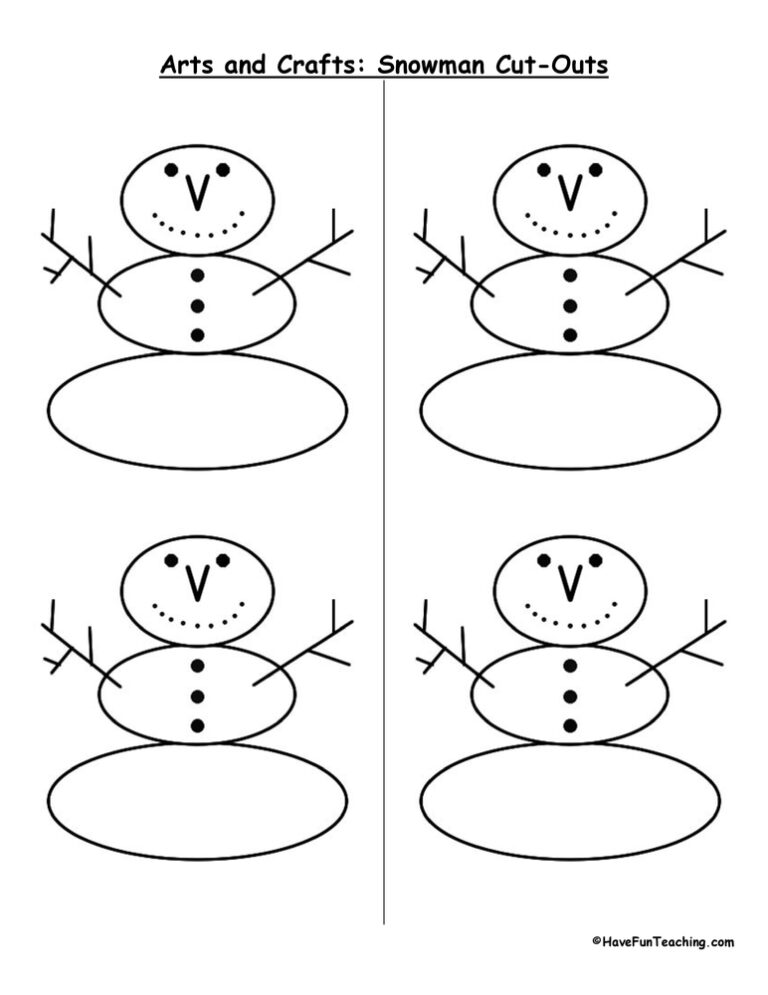
This snowman cut outs worksheet gives kindergarten students four bold snowman shapes to color and cut out, building fine motor skills while making a cheerful winter craft for cards or bulletin boards.

Worksheet
Worksheet4th GradeWeather Instruments Match Worksheet

A Weather Instruments Match Worksheet for 4th Grade: students match six weather tools to what they measure, pick the right instrument for real situations, and explain their thinking. Answer key included for fast, no-prep science practice.

Worksheet
Worksheet3rd GradeClimate Research Worksheet

This climate research worksheet has 3rd grade students choose a U.S. region, look it up, and write about its seasons, extreme weather, and why people enjoy living there.

Worksheet
Worksheet3rd GradeClassifying Types of Weather Worksheet

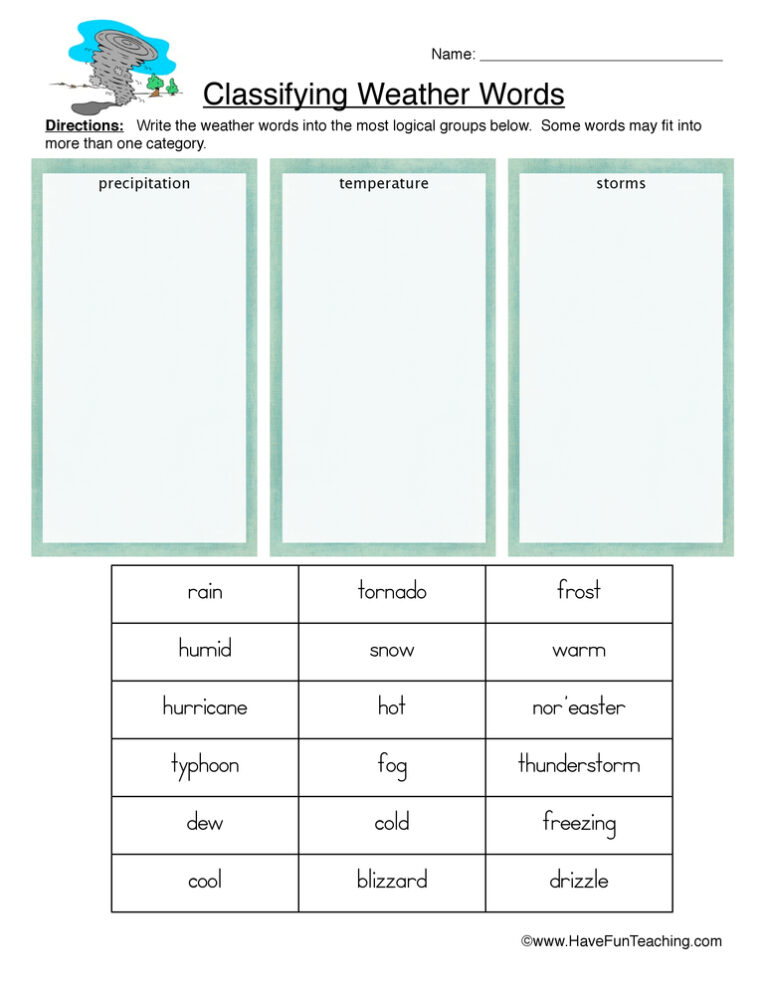
This classifying types of weather worksheet has 3rd Grade students sort twelve weather words into precipitation, temperature, and storms, then explain two answers. Answer key included.

From our teachers' playbook

Sunny, stormy and full of questions

What do kids learn about weather?

Weather is science kids can see right out the window! Kindergartners observe and record the day's weather: sunny, cloudy, rainy, windy or snowy. In 1st and 2nd grade they notice season patterns and read a thermometer. By 3rd grade they learn the tools meteorologists use, like the rain gauge, anemometer and wind vane, and the difference between weather (today) and climate (the usual pattern over many years). Older kids follow the water cycle: evaporation → condensation → precipitation → collection. The big idea that clicks? Weather changes every day, but it follows patterns we can measure and predict.

Our favorite ways to teach weather

Weather is perfect for real observation. These moves turn kids into little meteorologists.

Run a class weather station

Each morning, one helper checks the sky and reads a paper thermometer, then moves the red line to today's temperature. Record it on a chart for a month and ask kids what pattern they see. Real data from their own playground makes it personal.

Why it works: going from real objects to pictures to symbols is a core recommendation of the U.S. Department of Education's elementary math guide.
Printable ThermometerTry it withPrintable ThermometerWorksheetsOpen it →
Sing the forecast

Open the morning weather check with the Weather Song. Kids act out each kind of weather as they sing: shiver for snow, sway for wind. The movements become a quick way to review the vocabulary all year.

Why it works: a catchy, repeating tune gives the brain a hook to hang words on, so sung text is remembered better (Wallace, 1994).

Weather Names WorksheetTry it withWeather Names WorksheetWorksheetsOpen it →

Weather word wall

Post picture cards for each weather word near your calendar. When a new word comes up, like fog or hail, add the card and have kids point to it during the weather report. Pictures help early readers and English learners connect the word to what they see.

Why it works: children learn more from words and pictures together than from words alone (Mayer, 2009).

Weather Word WallTry it withWeather Word WallWorksheetsOpen it →

Weather questions we hear a lot

What's the difference between weather and climate?

Weather is what's happening outside right now or this week. Climate is the usual weather pattern in a place over many years. A snowy day in Florida is weather, but Florida's warm climate means snow is rare.

What weather tools do kids learn about?

Kids usually learn the thermometer (temperature), rain gauge (rainfall), anemometer (wind speed) and wind vane (wind direction). Some 3rd graders also meet the barometer, which measures air pressure.

When do kids learn about weather in school?

Weather shows up early. Kindergartners observe and record daily weather, and 3rd graders often study weather data, climate and severe weather safety. The water cycle usually comes in the upper elementary grades.

How can I teach weather at home?

Keep a simple weather journal on the fridge. Each day, kids draw the sky, write the temperature and guess tomorrow's weather. After a week, check how many predictions were right.

How do I talk to kids about severe weather?

Keep it calm and focused on safety. Explain what each kind of storm is, then practice what your family or class does, like where to go during a tornado drill. Knowing the plan helps kids feel safe instead of scared.