

Paul and Austin Phonics Reading Comprehension Story Worksheet – AW Sound
An AW sound reading comprehension worksheet for 1st graders, built on the decodable Paul and Austin phonics story with comprehension questions and a writing prompt. Answer key included for quick, no-prep practice.
$6.97
Or free with a membership — members pay $3.33/mo for all 10,000+ resources. See plans
Want this one free?
Tell us where to send it and it’s yours — no card, no catch.
One free resource per teacher. We’ll also send free teaching ideas each week — unsubscribe anytime.
Teaching is easier with a membership
Unlimited printables, games & videos for PreK–6th — for your classroom or homeschool. Cancel anytime.
Start your 3-day free trial$0 today · cancel anytime · Instant access to 10,000+ resources
About this resource
Description
This AW sound reading comprehension worksheet helps first graders read, decode, and understand words that use the “aw” vowel sound, such as dawn, paw, yawn, and lawn. The “aw” sound can be tricky because two letters work together to make one sound, so extra practice with real words and full sentences makes a big difference. Built around the short phonics story “Paul and Austin,” it pairs decodable “aw” words with a fun barnyard tale so young readers sound out new words while reading for meaning.
This aw sound phonics story worksheet is easy to use at school or at home. Children first read the illustrated “Paul and Austin” story, then answer four multiple-choice comprehension questions, complete three word-bank fill-in-the-blank sentences, and finish with a short writing response. A complete answer key is included, so checking work takes only a moment.
What’s Included
- 1 print-ready PDF worksheet
- Answer key
- A decodable “aw” sound story, 4 comprehension questions, 3 word-bank sentences, and a writing prompt
Kids learn best when phonics and meaning come together. This AW sound reading comprehension worksheet builds decoding skills by repeating the “aw” pattern inside a natural story, strengthens comprehension through questions that ask readers to recall key details, and grows confidence by letting children write their own answer at the end. Each part reinforces the last so practice feels purposeful.
Teachers and parents can extend the lesson in many ways. Read the story aloud together and clap for every “aw” word, make a word wall of “aw” words like straw, claw, and hawk, or have children draw their favorite part of the story. You can also ask readers to hunt for other “aw” words in their favorite books. Turning the sounds into a game keeps early readers engaged and eager to keep practicing.
Related Resources
What teachers say
Reviews
You must be logged in to post a review.
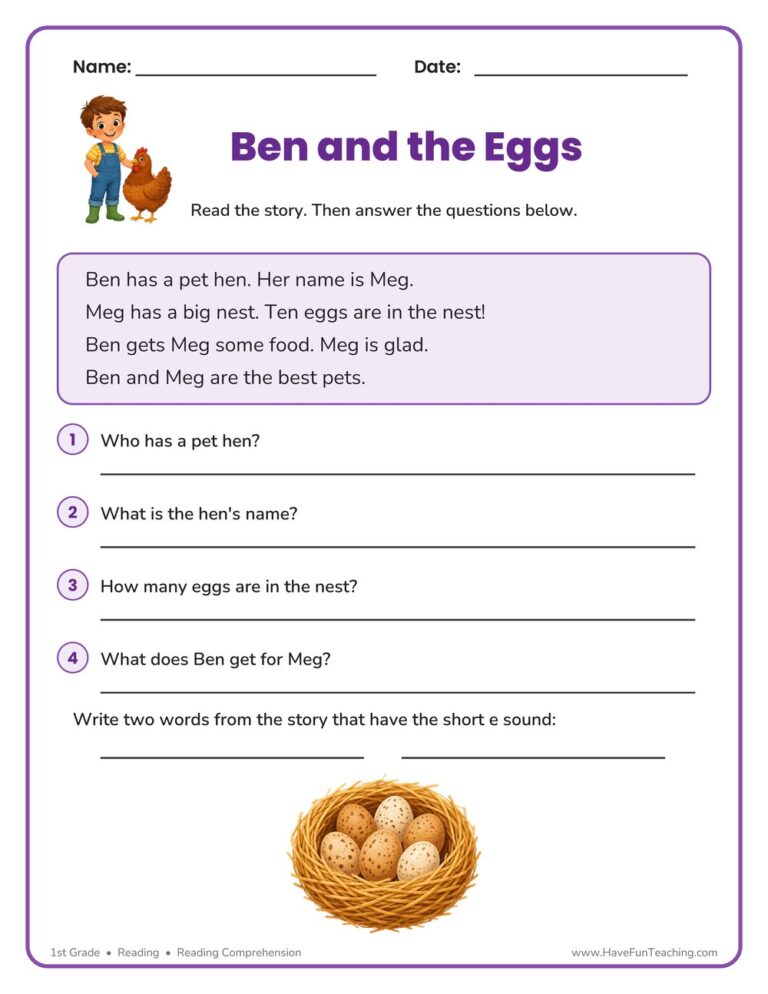
A short vowel E reading comprehension story worksheet starring Ben and his hen. 1st graders read the decodable story and answer questions. Includes a complete answer key — great for quick, no-prep phonics and reading practice.
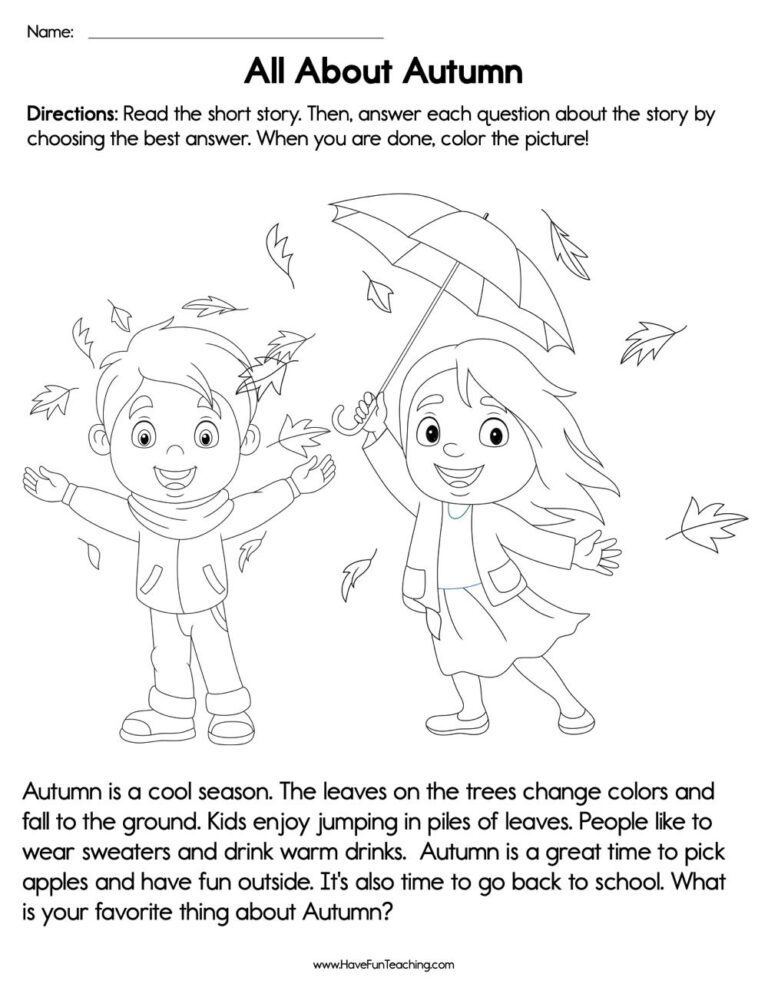
The All About Autumn Reading Comprehension Worksheet gives 1st graders a short fall passage and multiple-choice questions to build reading comprehension. An answer key is included for quick, no-prep practice at home or school.

This New Friend Reading Comprehension Worksheet gives first graders a short story about making a new friend, plus multiple-choice and short-answer questions. Answer key included for quick, no-prep reading practice.
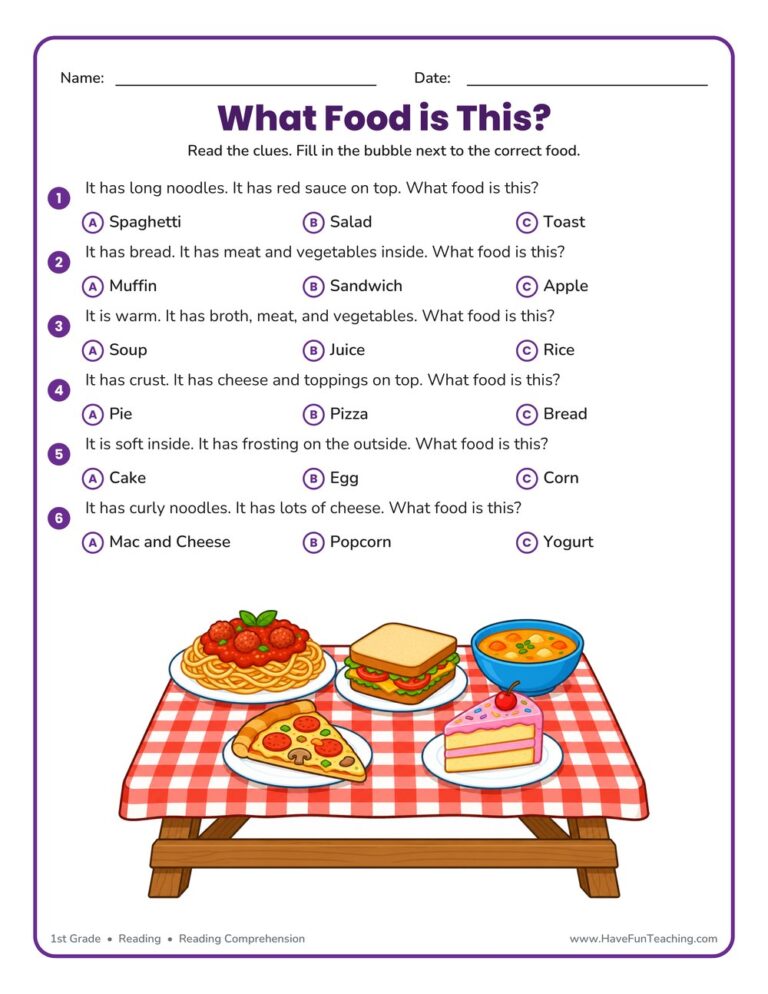
This what food is this reading comprehension worksheet lets 1st graders read food clues and choose the correct food in six fun riddles. Includes a complete answer key — great for quick, no-prep reading practice.
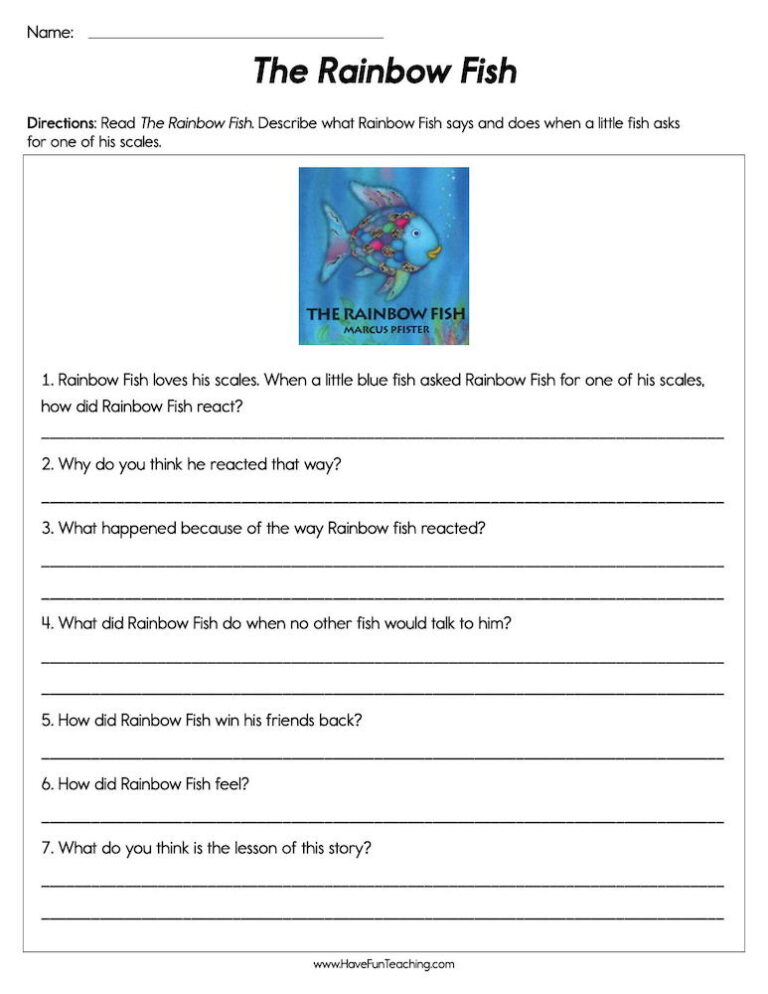
Using The Rainbow Fish Worksheet, students read The Rainbow Fish and describe what Rainbow Fish says and does when a little fish asks for one of his scales.

The Pie Guy Phonics Reading Comprehension Story Worksheet - Long Vowel I Sound gives 1st graders a fun, decodable long-I story with five comprehension questions and a complete answer key for quick, no-prep reading practice.

Using Chrysanthemum Worksheet, students read Chrysanthemum and describe what she says and does when her school friends make fun of her adored name.
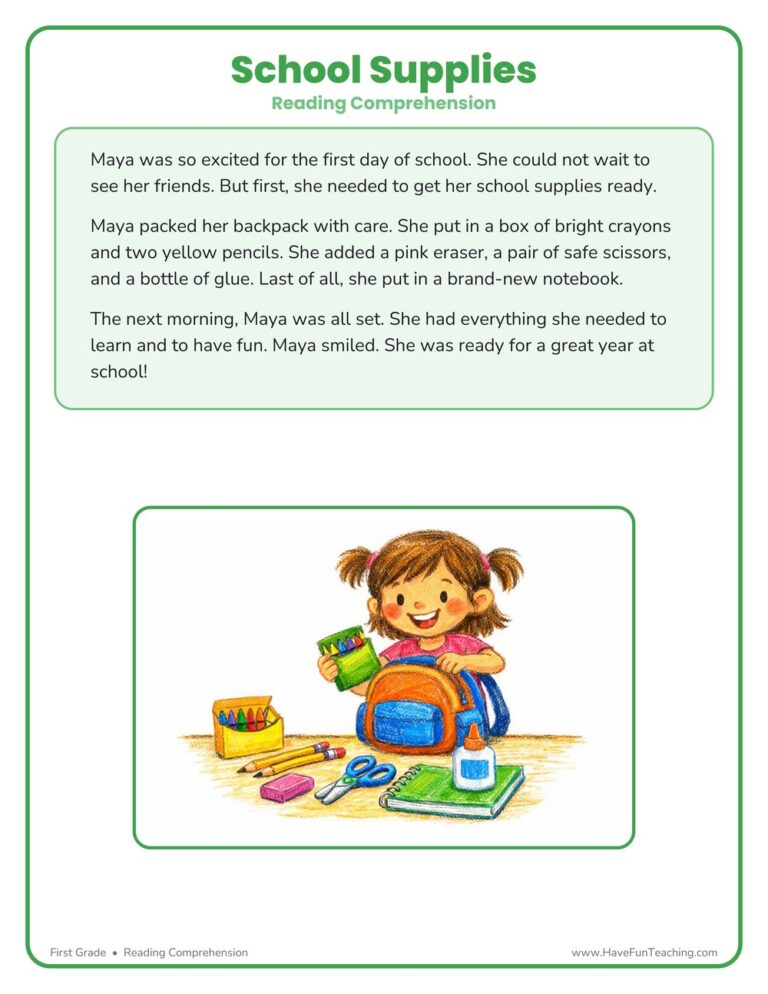
Students read a fun story about a girl packing her school supplies, then answer questions to practice comprehension. This first grade School Supplies Reading Comprehension Worksheet includes an answer key to build confident early readers.
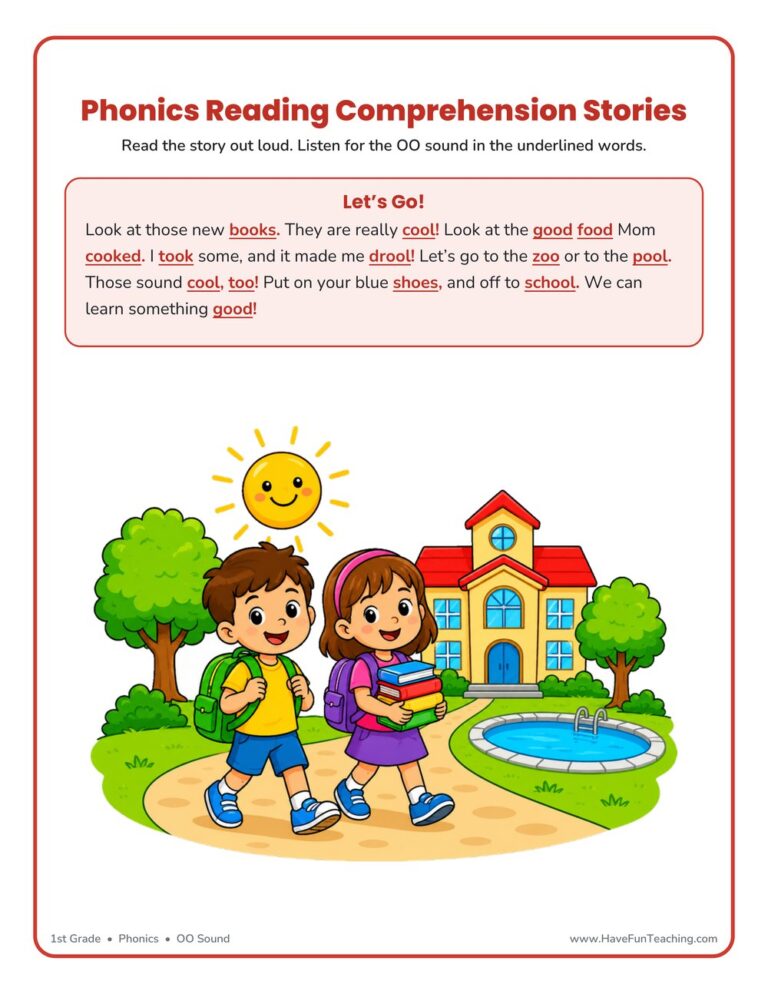
An OO sound phonics worksheet that pairs a fun “Let’s Go!” story with five comprehension questions for 1st graders. Kids read, spot OO words like zoo and pool, then answer. Answer key included — perfect for no-prep phonics practice.
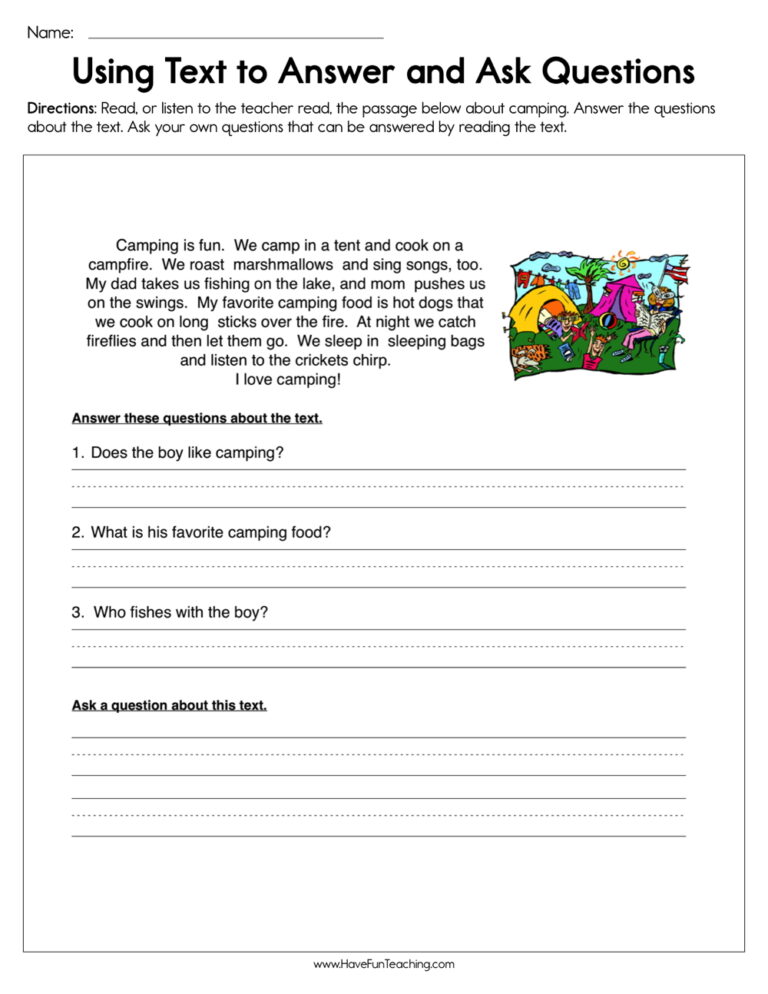
This Using Text to Answer and Ask Questions Worksheet gives 1st graders a short class-garden story, four bubble questions, and space to write a question of their own. Answer key included, so comprehension practice is ready in minutes.
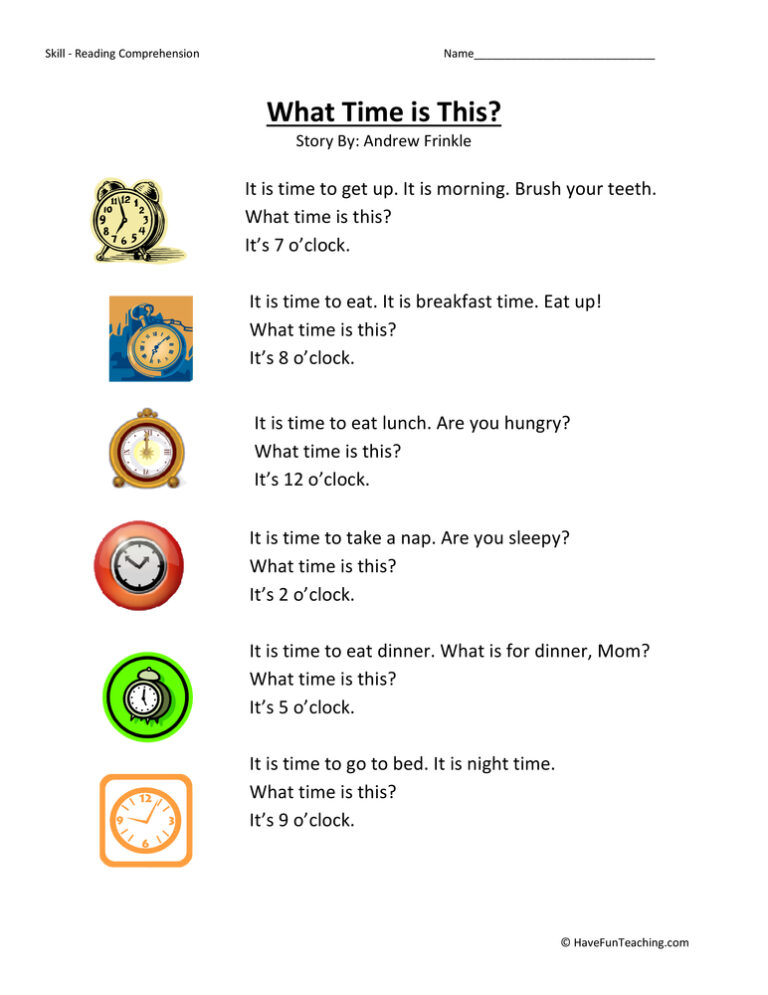
This What Time is This Reading Comprehension Worksheet gives 1st graders a short story about a boy's day and five questions about the o'clock times inside it. Answer key included for quick, no-prep practice.
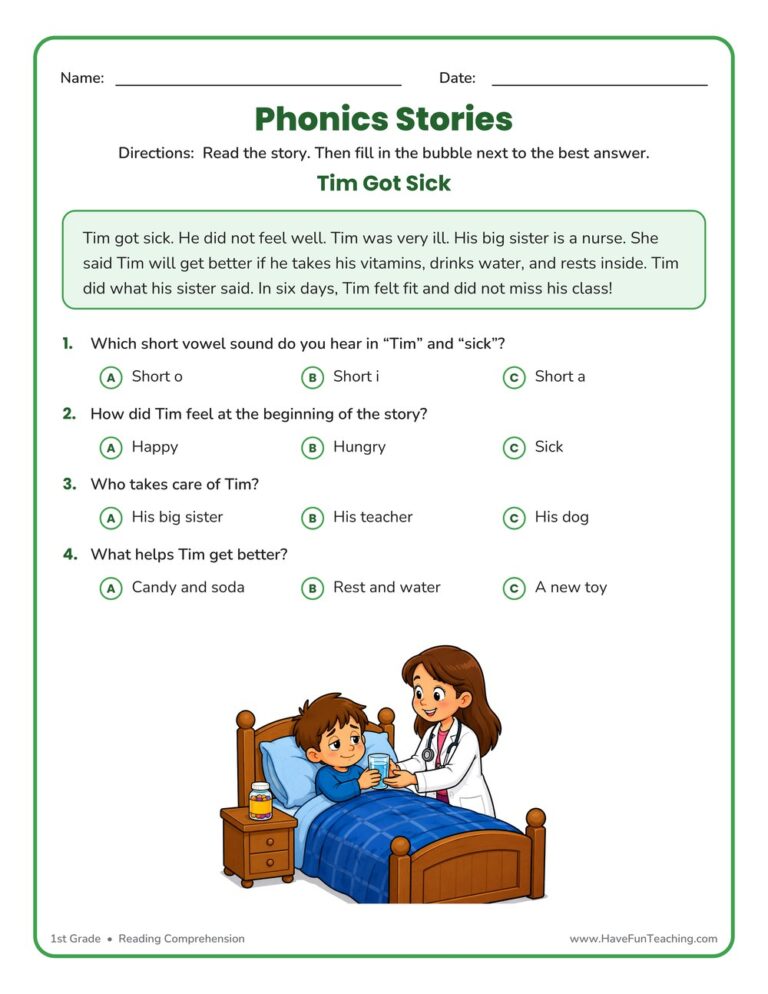
This Tim Got Sick reading comprehension worksheet gives 1st graders a short vowel I story with fill-in-the-bubble questions and an answer key included to build phonics and reading skills.
Reviews
There are no reviews yet