Skip to content
Start My 3 Free Days $0 today · cancel anytime

Blends Resources

88 blends resources: 73 worksheets, 34 assessments, 13 activities and more. How teachers use these

Blends Resources

88 blends resources: 73 worksheets, 34 assessments, 13 activities and more. How teachers use these

Worksheet
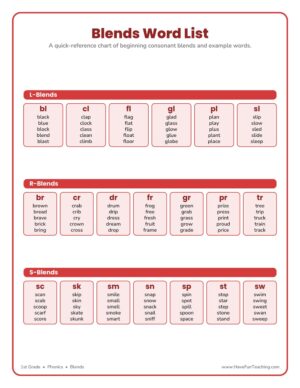
Worksheet1st GradeBlends Word List

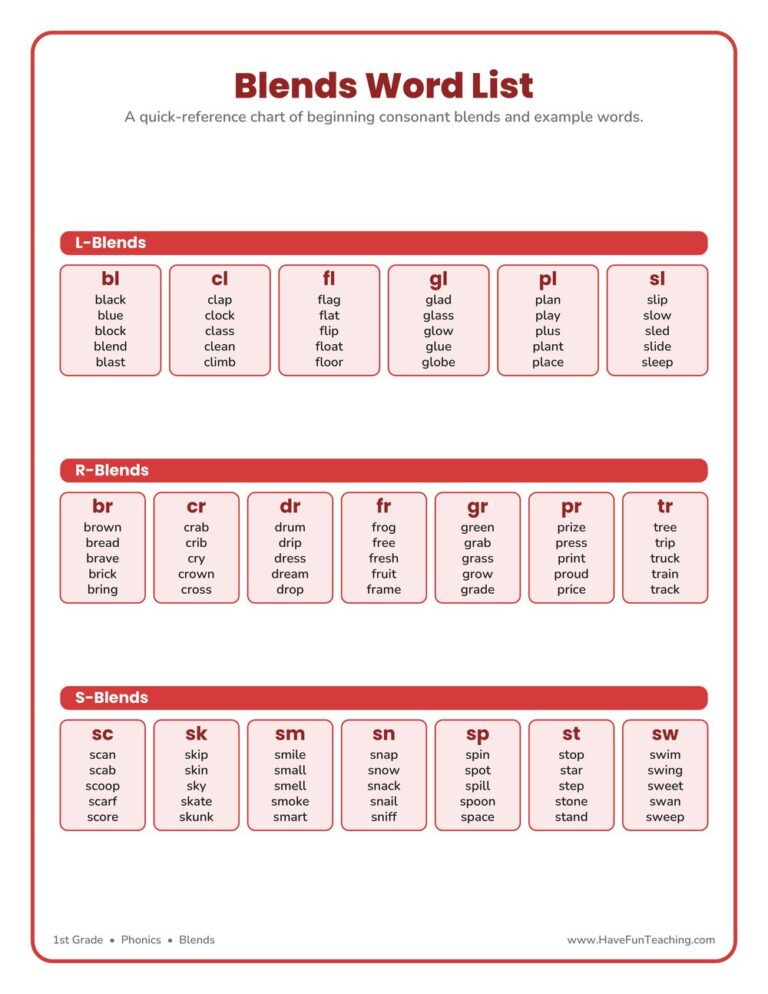
This Blends Word List is a single-page phonics reference chart grouping L-blends, R-blends, and S-blends with example words for each. A clean, no-prep tool that helps 1st graders read and build blend words with confidence.

Worksheet
Worksheet1st GradeNG and NK Digraph Worksheet

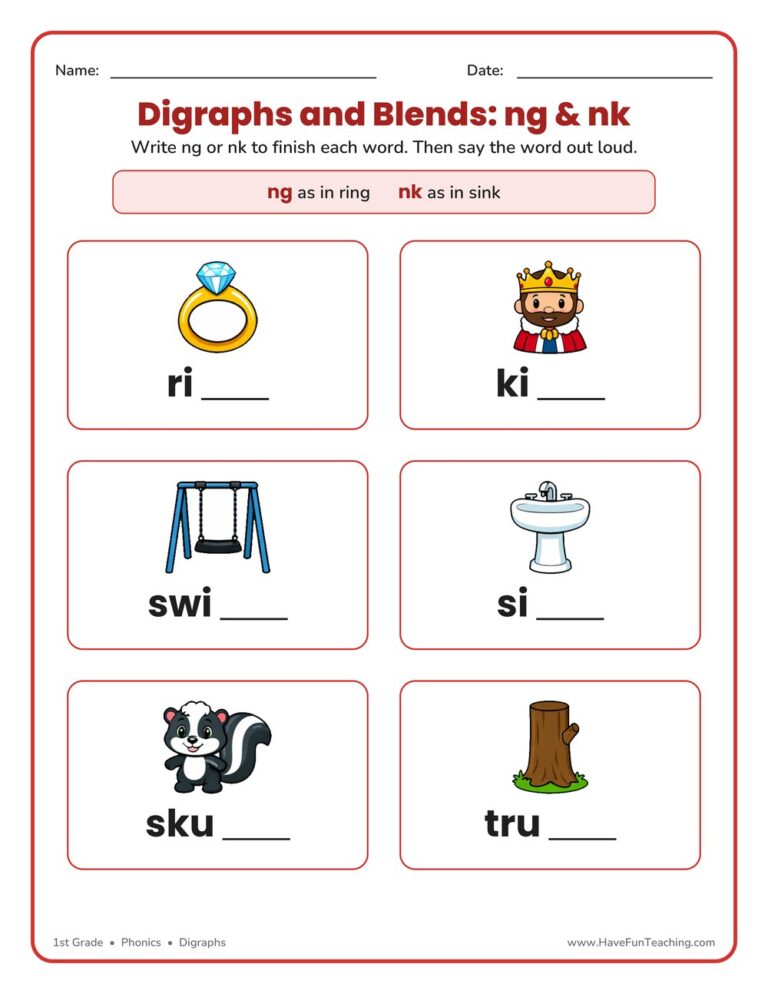
This ng and nk digraph worksheet gives 1st graders picture-clue practice writing the ending sounds in words like ring and skunk. An answer key is included for quick, no-prep phonics practice.

Worksheet
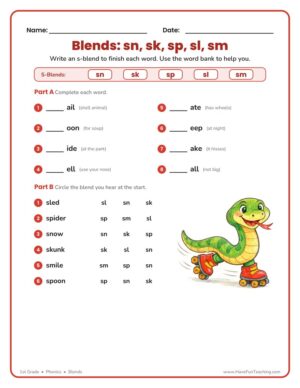
Worksheet1st GradeS Blends Worksheet

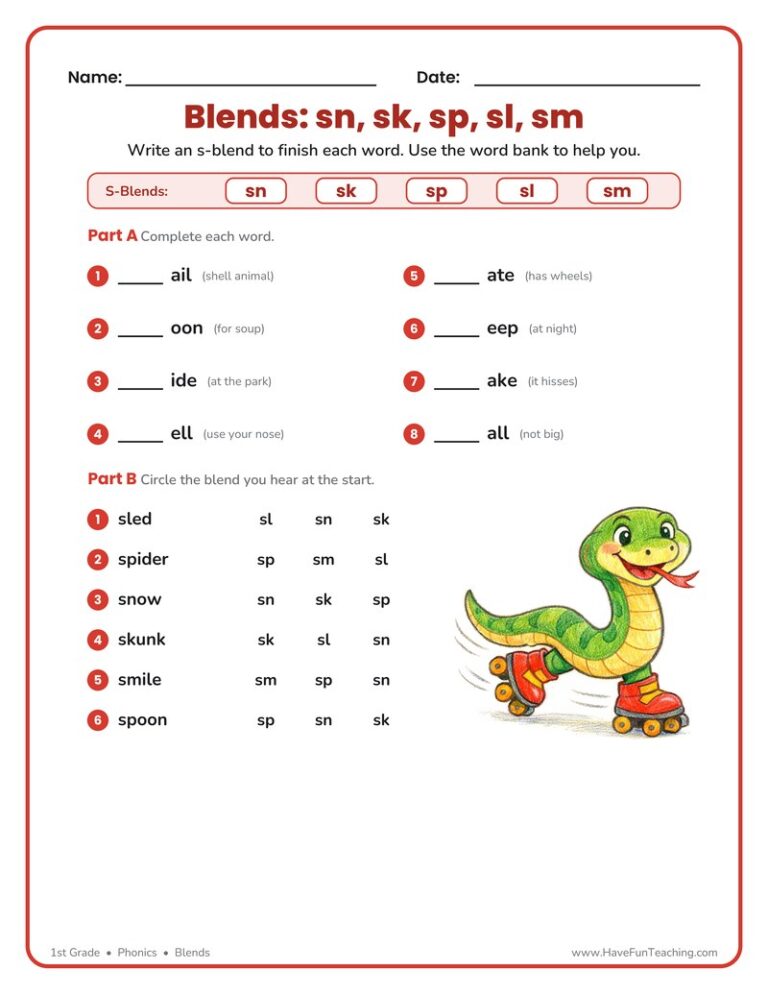
This S Blends Worksheet helps first graders spell and hear the beginning blends sn, sk, sp, sl, and sm by completing real words. Includes a complete answer key, perfect for no-prep phonics practice at home or school.

Worksheet
Worksheet1st GradeNG/NK Digraph Worksheet

This NG/NK digraph worksheet asks 1st graders to sort six words by their ending sound and then build four more. Answer key included for fast, no-prep phonics practice.

Worksheet
Worksheet1st GradeLing Lost Her Ring NG Phonics Stories Reading Comprehension Worksheet

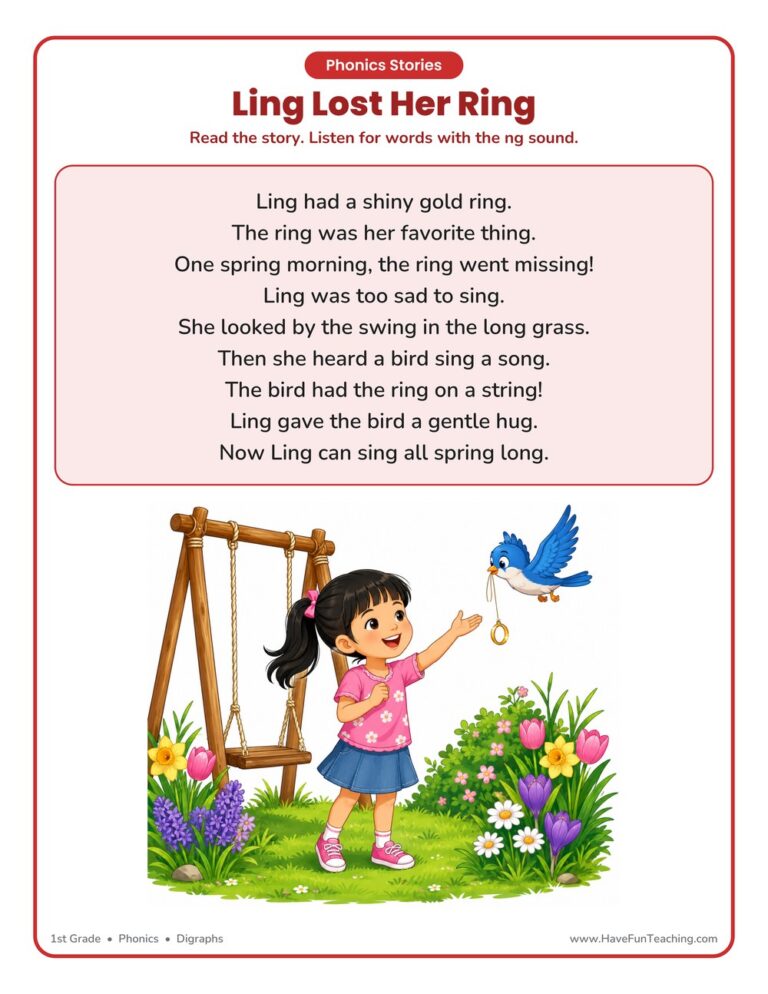
This NG Phonics Stories worksheet gives first graders a decodable ng story with reading comprehension questions and a word-building activity. An answer key is included, so young readers build phonics and comprehension skills with confidence.

Worksheet
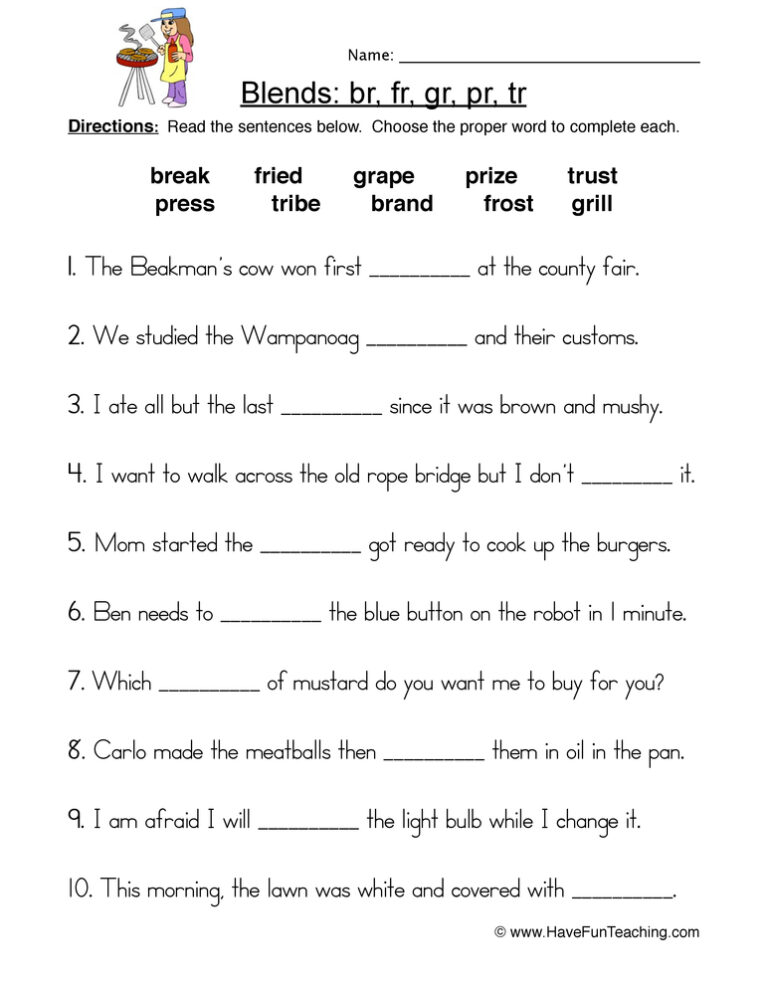
Worksheet1st GradeR Blends Worksheet

This R Blends Worksheet gives 1st graders two quick activities — three word-bank sentences and a br, gr, tr word sort — covering the blends br, fr, gr, pr, and tr. Answer key included for fast checking.

Worksheet
Worksheet1st GradeL Blends Fill in the Blank Worksheet

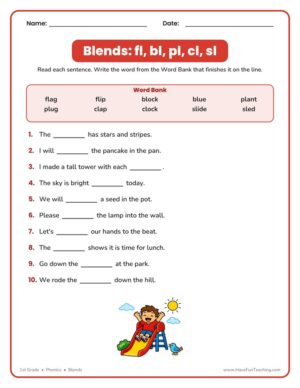
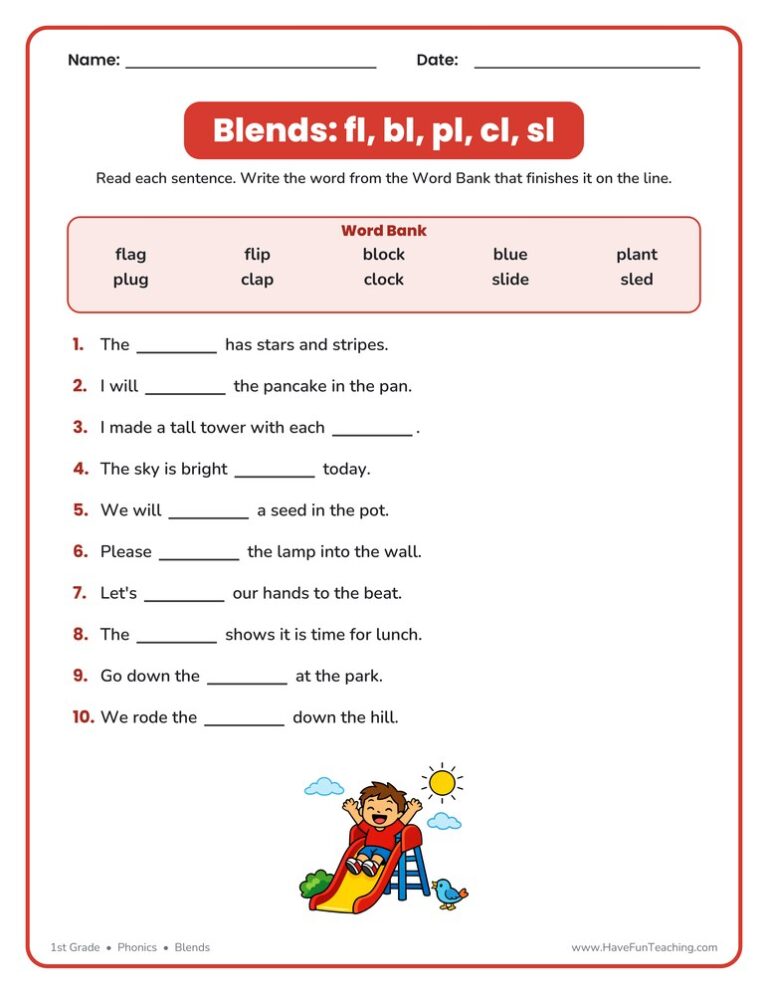
The L Blends Fill in the Blank Worksheet gives 1st graders ten sentences and a word bank to practice fl, bl, pl, cl, and sl blends. Answer key included for quick, no-prep phonics practice at home or school.

Worksheet
WorksheetKindergartenPhonological Awareness Worksheet

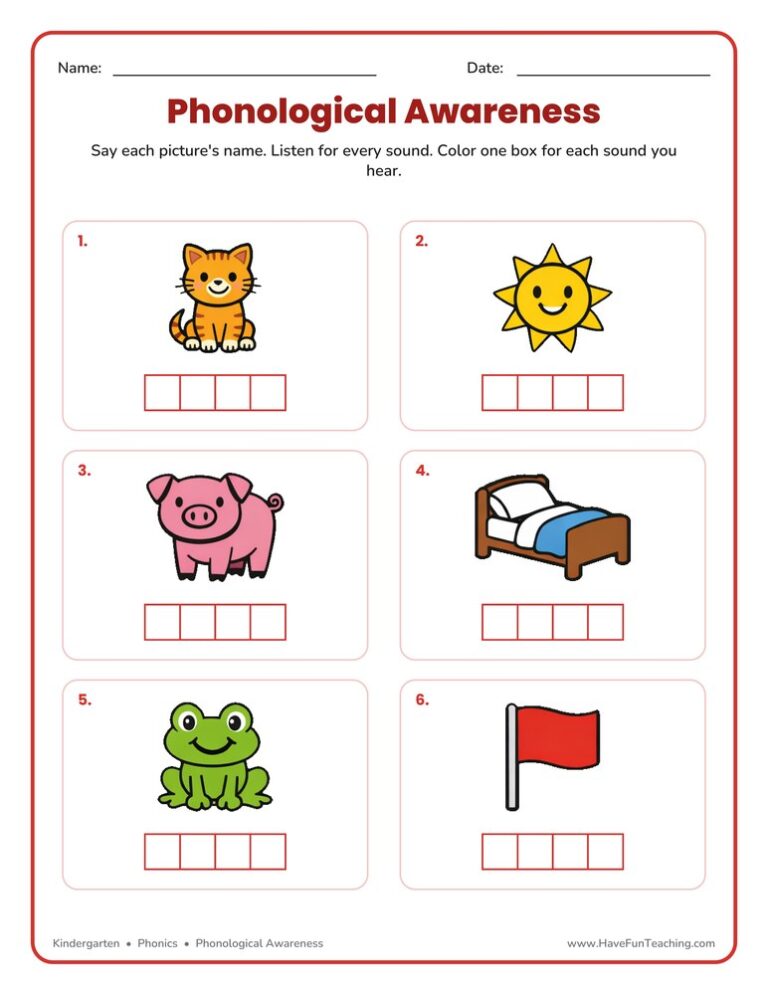
This phonological awareness worksheet helps Kindergarten students listen for each sound in a word and color one box per sound they hear. Includes a complete answer key for easy, no-prep practice of early phonics and phoneme skills.

Worksheet
Worksheet1st GradeBlends SP, ST Worksheet

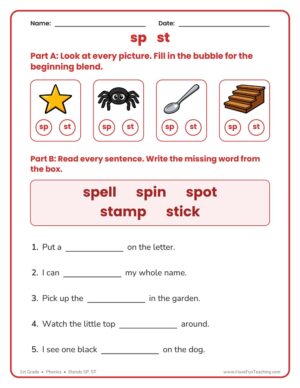
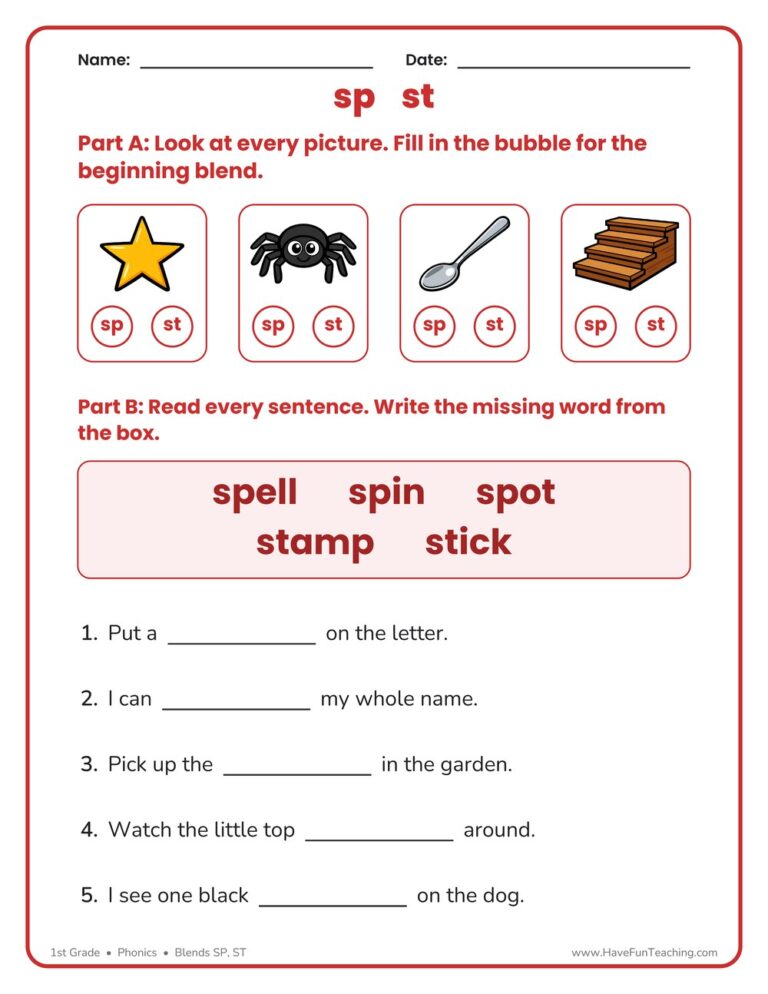
Practice the Blends SP, ST Worksheet with picture bubbles and word-box sentences made for 1st Grade readers. An answer key is included, so beginning blends turn into quick, confident reading.

Assessment
Assessment1st GradeBrad Eats Bread BR Phonics Stories Reading Comprehension Worksheet

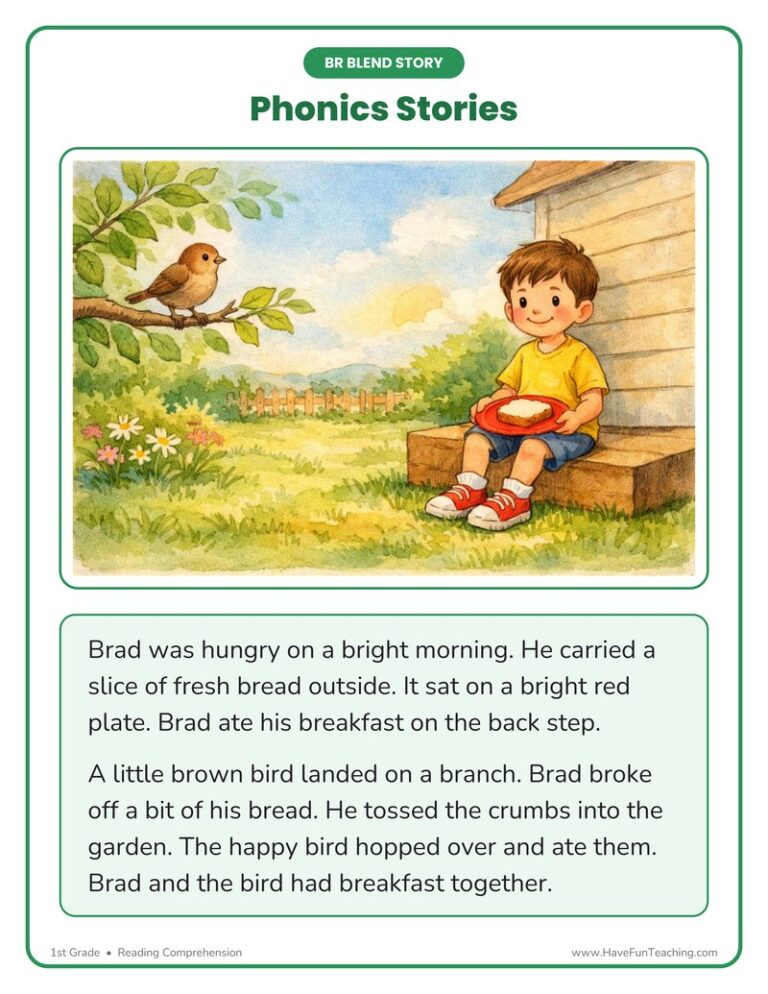
The Brad Eats Bread BR Phonics Stories Reading Comprehension Worksheet pairs a short decodable br-blend story with five comprehension questions for 1st Grade. Answer key included, so blending practice and understanding are checked in one no-prep page.

Worksheet
Worksheet1st GradeBlends SM, SN Worksheet

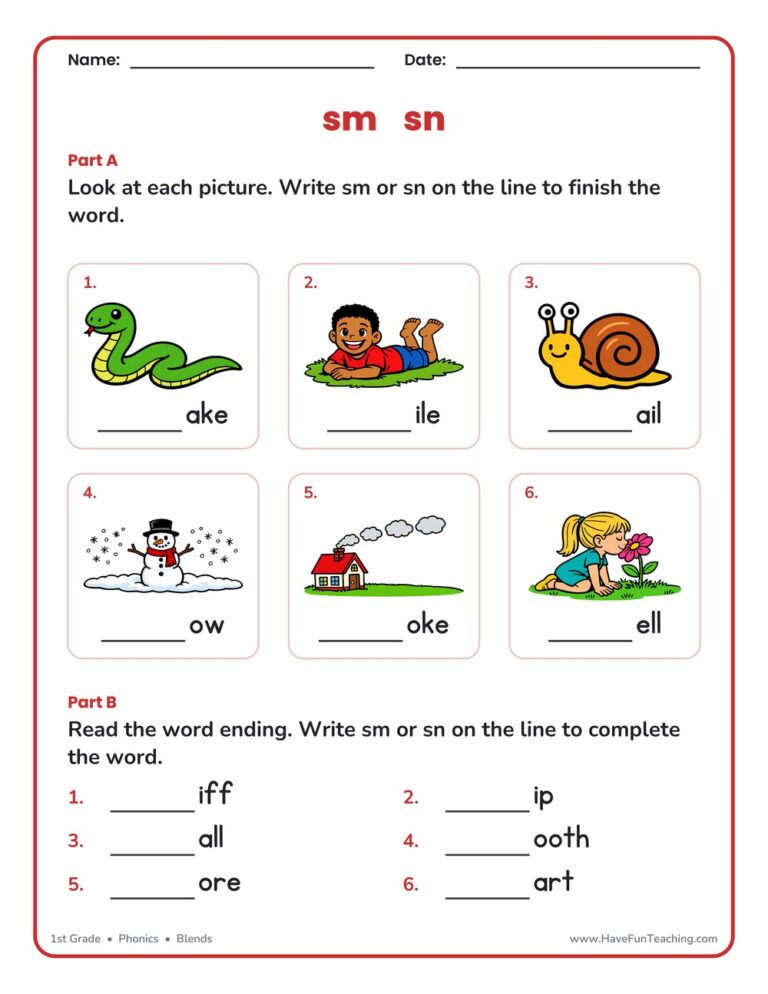
This Blends SM, SN Worksheet asks 1st graders to listen for the beginning blend, then write sm or sn to finish twelve words. An answer key is included, so checking takes only seconds.

Worksheet
Worksheet1st GradeBlends BL, BR Worksheet

This Blends BL BR Worksheet has 1st graders write the missing blend under six pictures, then spell two whole words. An answer key is included for quick, no-prep phonics practice.

Activity
ActivityKindergartenPopcorn Blends Activity

In this popcorn blends activity, K-2nd Grade children spin a blend, sort 12 picture cards into popcorn boxes and fill in a practice page, with an answer key included for quick checking.

Assessment
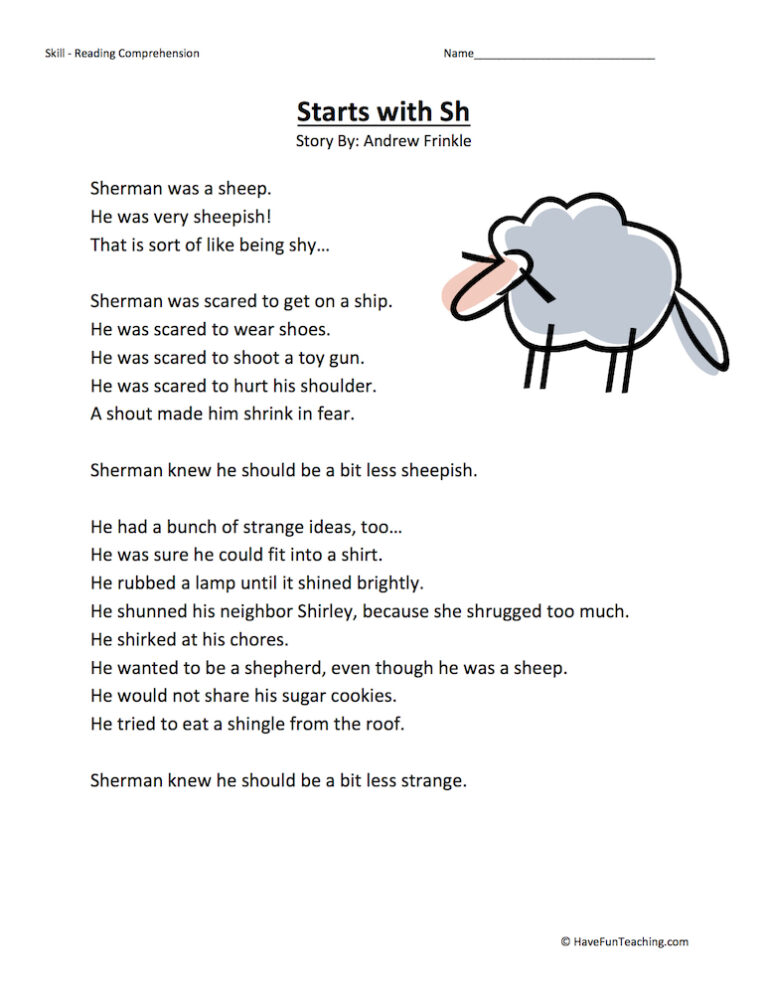
Assessment1st GradeStarts With SH Reading Comprehension Worksheet

This Starts With SH Reading Comprehension Worksheet gives 1st graders a short beach story full of sh words plus five bubble-in questions. An answer key is included, so phonics practice and reading comprehension happen in one no-prep activity.

Assessment
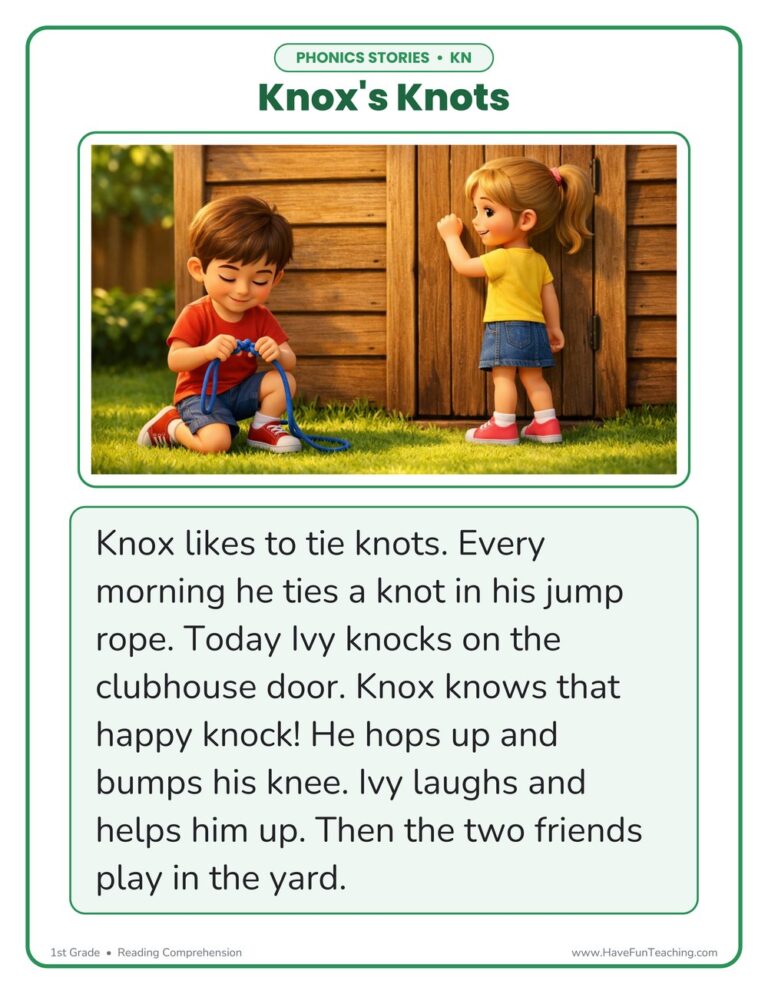
Assessment1st GradeKnox's Knots KN Phonics Stories Reading Comprehension Worksheet

This KN phonics stories reading comprehension worksheet gives 1st graders a short, decodable story about Knox and his knots, then five questions to answer. An answer key is included, so checking work takes seconds.

Worksheet
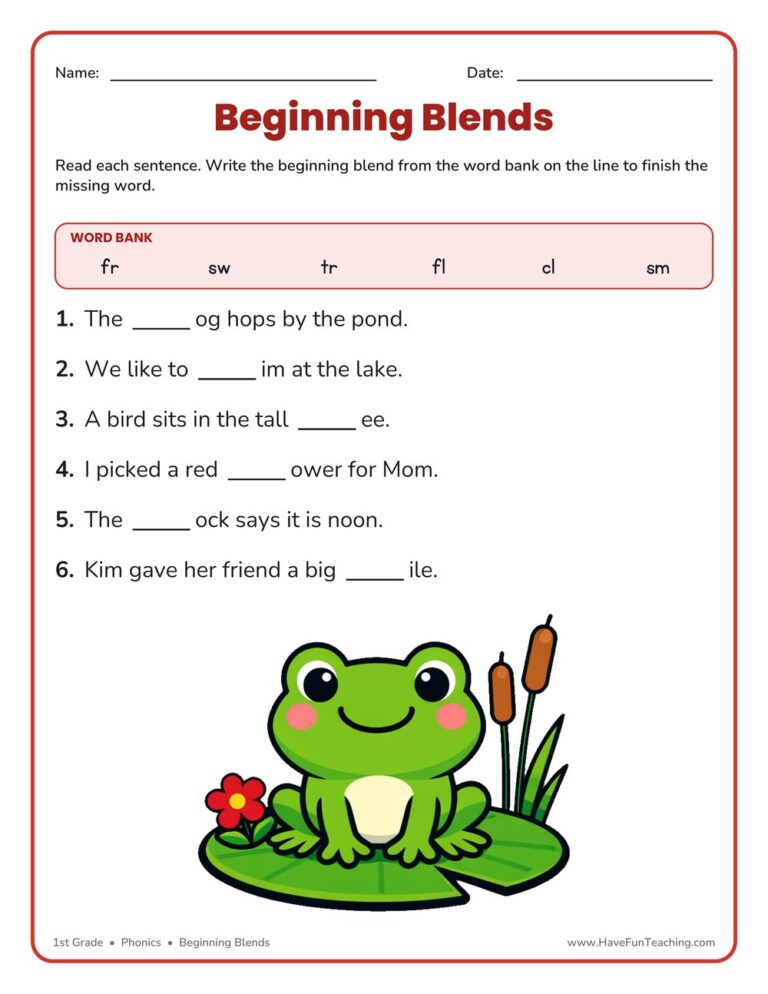
Worksheet1st GradeBeginning Blends Fill in the Blank Worksheet

This beginning blends fill in the blank worksheet lets 1st graders read six sentences and drop in the right consonant blend from a word bank. Includes an answer key for quick, no-prep phonics practice at home or in class.

Worksheet
Worksheet1st GradeBlends SC, SK Worksheet

This Blends SC, SK Worksheet gives 1st graders six picture clues and a word sort for the beginning blends sc and sk. An answer key is included, so blend practice takes no prep.

Assessment
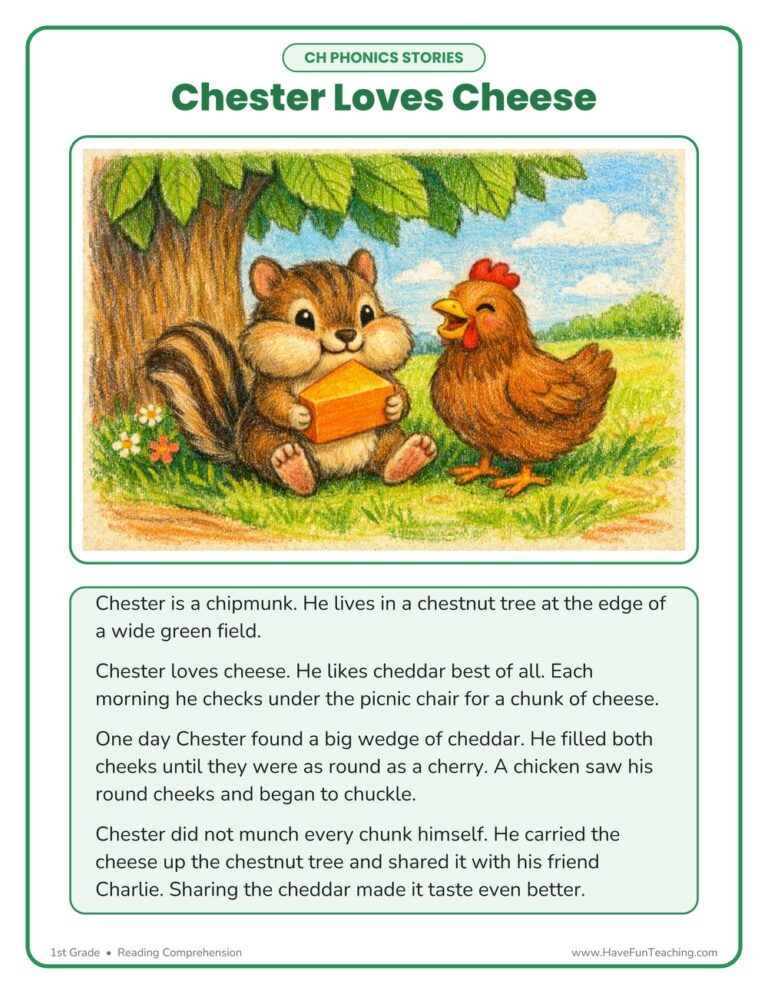
Assessment1st GradeChester Loves Cheese CH Phonics Stories Reading Comprehension Worksheet

The Chester Loves Cheese CH Phonics Stories Reading Comprehension Worksheet pairs a playful ch digraph story with five bubble questions for 1st graders. An answer key is included, so ch practice and comprehension happen on one no-prep page.

Worksheet
Worksheet1st GradeEnding Blends Pictures Worksheet

The Ending Blends Pictures Worksheet has first graders say six picture names and write the ending blend they hear, then finish three sentences. An answer key is included, so ending sounds stop slipping away.

Worksheet
Worksheet1st GradeR Blends Fill in the Blanks Worksheet

This R Blends Worksheet asks 1st graders to read six sentences and write the missing word from a box of br, fr, gr, pr and tr words. Answer key included for easy checking.

From our teachers' playbook

Two sounds, one smooth slide

What do kids learn about blends?

A blend is two or three consonants side by side where you still hear every sound. In st + op = stop, kids say the /s/ and the /t/, just quickly. Children usually meet blends in kindergarten and 1st grade, right after short vowels: l-blends (bl, cl, fl), r-blends (br, cr, tr), s-blends (sn, sp, st) and ending blends like -nd and -st. The big "aha" is that blends are different from digraphs. In ship the s and h make one new sound, but in slip you hear both!

Our favorite ways to teach blends

Blends trip kids up when they drop a sound. These moves keep both sounds in the word.

Stretch it, then squish it

Say "flag" slowly with a finger tap for each sound: /f/ /l/ /a/ /g/. Then squish the taps together and say it fast. Kids who drop the /l/ and say "fag" catch it right away when they count four taps. Keep a word list handy so you can run ten words in two minutes.

Why it works: the National Reading Panel found that systematic, explicit phonics teaching clearly improves how children learn to read.
Blends Word ListTry it withBlends Word ListWorksheetsOpen it →
Swap the first sound

Start with a word kids know, like "nap", then add a letter: "snap!" Move from "top" to "stop" and "lip" to "slip." Building blends on top of known words shows kids a blend is just one more sound up front, not a scary new chunk.

Why it works: the U.S. Department of Education's guide for teaching elementary math recommends moving from hands-on objects to drawings to numbers.

S Blends WorksheetTry it withS Blends WorksheetWorksheetsOpen it →

One blend family a week

Teach s-blends one week, l-blends the next, r-blends after that, and keep a quick review of the old family every Friday. Two-minute warm-ups spread over the month beat one long blends lesson that fades by spring.

Why it works: spreading practice out over days is one of the two most effective study methods in a major research review (Dunlosky and colleagues, 2013).

Blends SP, ST WorksheetTry it withBlends SP, ST WorksheetWorksheetsOpen it →

Questions parents and teachers ask about blends

What is a consonant blend?

A blend is two or three consonants together where each letter keeps its own sound, like bl in "black" or str in "string." You hear every sound, just said quickly.

What is the difference between a blend and a digraph?

In a blend you hear each letter (s and l in "slip"). In a digraph two letters make one new sound (sh in "ship"). Many kids mix them up at first, so sorting words into two piles is a great quick check.

What grade do kids learn blends?

Most children work on blends in kindergarten and 1st grade, once they can read short-vowel words like "cat" and "pig." Three-letter blends like spl and str usually come later in 1st or 2nd grade.

Why does my child skip a sound in blends?

It is very common! Kids often say "tuck" for "truck" because the second sound is quick and quiet. Have them tap one finger per sound, then say the word fast. Counting the taps makes the missing sound easy to spot.

Which blends should I teach first?

Start with s-blends like st, sp and sn, because the /s/ can be held and stretched. Then move to l-blends and r-blends, and save three-letter blends for last.

Keep exploring