

Reading a Thermometer Worksheet
This reading a thermometer worksheet gives 2nd graders four Fahrenheit scales to read and three real-life pictures to match to a temperature. Answer key included, so practice is quick to check and ready to print.
$6.97
Or free with a membership — members pay $3.33/mo for all 10,000+ resources. See plans
Want this one free?
Tell us where to send it and it’s yours — no card, no catch.
One free resource per teacher. We’ll also send free teaching ideas each week — unsubscribe anytime.
Teaching is easier with a membership
Unlimited printables, games & videos for PreK–6th — for your classroom or homeschool. Cancel anytime.
Start your 3-day free trial$0 today · cancel anytime · Instant access to 10,000+ resources
About this resource
Description
Reading a thermometer is one of the first real measurement tools a second grader gets to use, and it pulls together three skills at once: reading a scale, counting by fives and tens, and connecting a number to something a child can actually feel. This reading a thermometer worksheet gives students four Fahrenheit thermometers to read and three everyday scenes to match to a temperature, so the number on the scale always means something real. Every thermometer on the page is drawn to a true linear scale with tick marks every five degrees and labels every ten, exactly like the classroom thermometer on the wall.
Students start at the bulb, follow the red line up to where it stops, and write that number on the line under each thermometer. Two of the readings land right on a labeled mark and two land on a smaller tick between labels, so children practice counting on from a known number instead of only reading the easy ones. In the second half of this 2nd grade measurement worksheet, students look at a picture of a snowy day, a sprinkler on the grass, and a child flying a kite, then fill in the bubble for the temperature that fits. Use it as morning work, as a science-and-math warm-up during a weather unit, or as a quick check before you move on to comparing temperatures.
What’s Included
- 1 print-ready PDF worksheet
- Answer key
- 4 thermometer-reading problems and 3 picture-matching questions
Three things make this reading a thermometer worksheet stick. First, the thermometers are accurate: the liquid column stops exactly at the value being read, so a student who counts carefully is always rewarded with the right answer. Second, the readings mix labeled marks with unlabeled ticks, which forces real scale reading instead of number recognition. Third, the picture questions build temperature sense — a child who can read twenty-five degrees off a scale but does not know that twenty-five degrees means a coat and mittens has only learned half the skill. Pairing the two on one page turns an abstract number into something a second grader can picture.
Hang a real thermometer outside a window and have students record the temperature at the same time every morning for two weeks, then graph it. Ask them which day was warmest and how many degrees warmer it was than the coldest day. Compare the temperature of tap water, ice water, and warm water with a kitchen thermometer and let students predict before they measure. At home, check the temperature before choosing what to wear, or read the oven thermometer while baking together. Sorting a stack of magazine pictures into hot, warm, and cold piles is another quick way to build the same sense of what a number on a scale really feels like.
Related Resources
What teachers say
Reviews
You must be logged in to post a review.

This Measuring in Centimeters and Inches Worksheet has 2nd graders measure a key, crayon, and pencil in two units on a ruler. Answer key included — a hands-on way to build ruler skills and early number sense.

A Measuring Inches Worksheet where 2nd graders read an inch ruler to measure four objects, then order the lengths from shortest to longest. Answer key included for fast, no-prep practice.

This Reading Thermometers Worksheet has 2nd graders read four Fahrenheit thermometers to the nearest two degrees, then color two more to match a given temperature. Answer key included for fast, no-prep measurement practice.

Students measure two objects with an inch ruler and find the difference on this Comparing Two Measurements Worksheet, a 2nd grade printable with an answer key included that builds real measuring confidence.
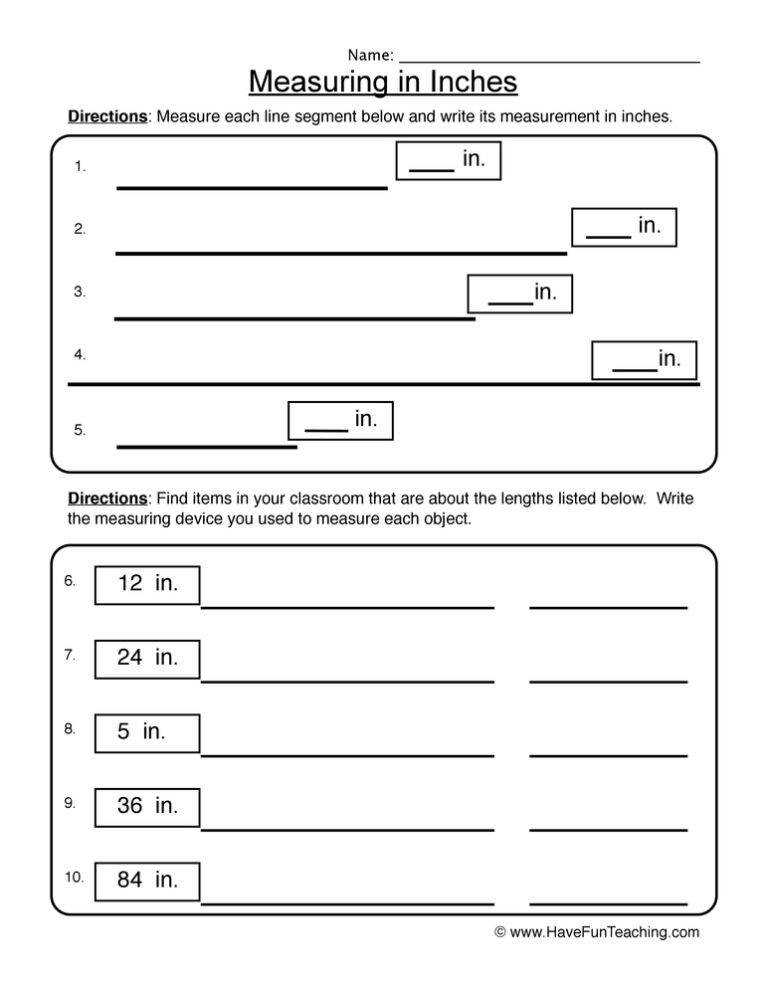
This measurement in inches worksheet gives 2nd graders three true-size objects to measure on a printed ruler, plus a comparison question. Answer key included for quick, no-prep measuring practice.
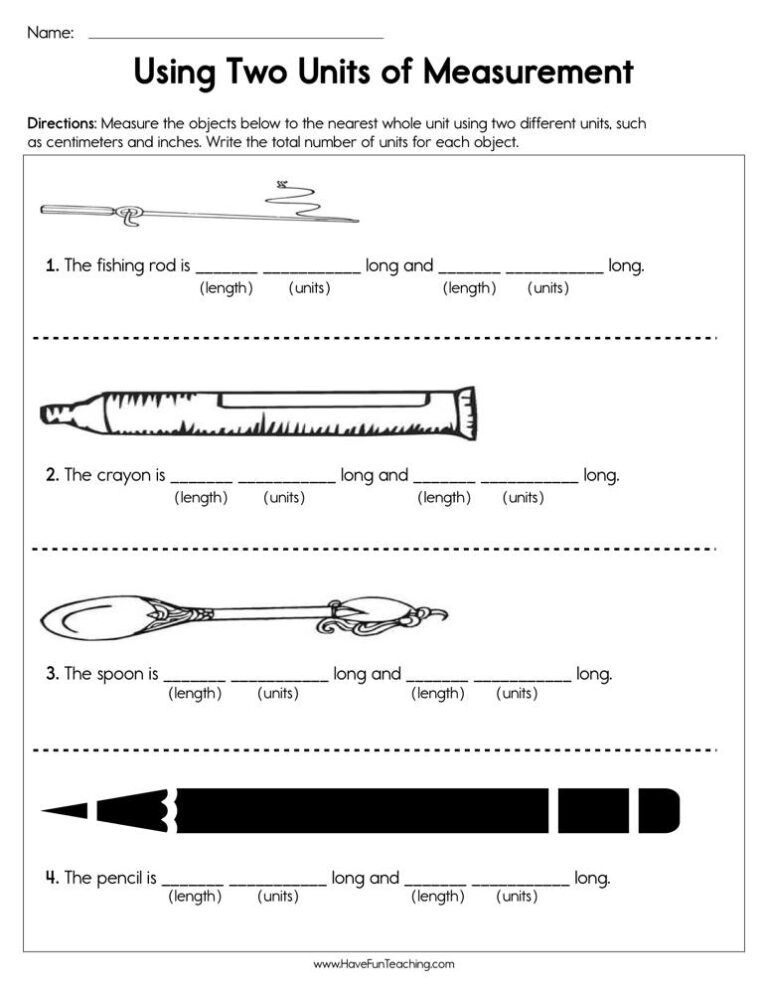
A using two units of measurement worksheet where 2nd graders measure a crayon, a spoon, and a paintbrush in both inches and centimeters on a true-scale ruler. Answer key included for quick, no-prep practice.
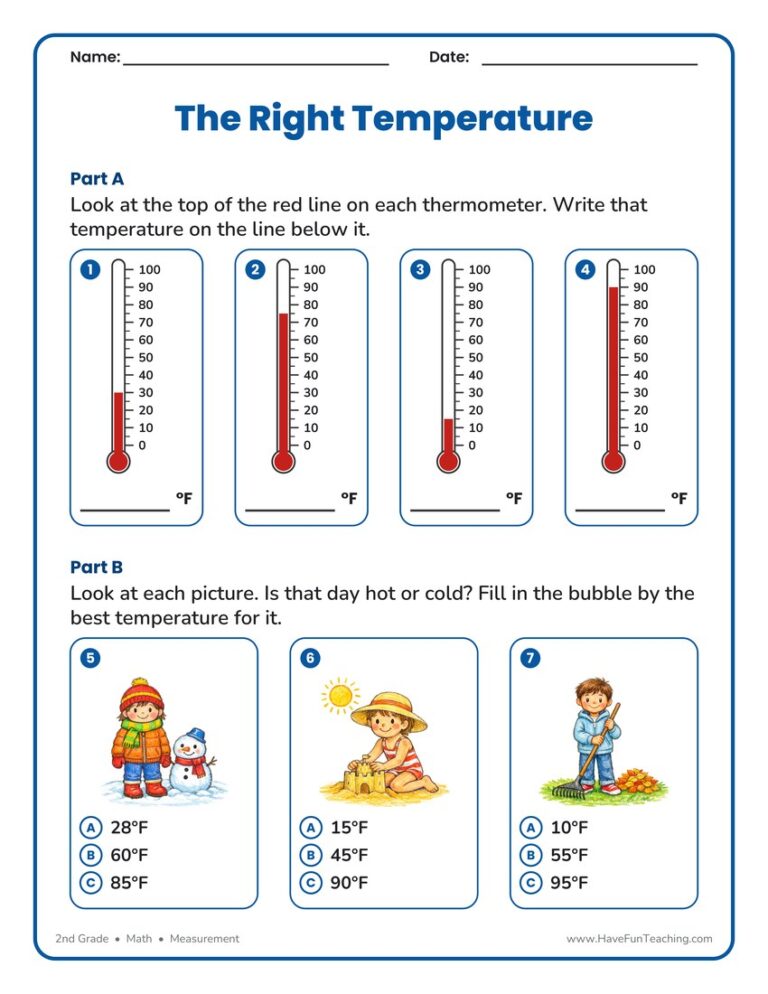
The Right Temperature Worksheet has 2nd graders read four Fahrenheit thermometers and match a temperature to three weather pictures. An answer key is included, so it works as no-prep morning work or a quick measurement check.

Students measure four everyday objects on an inch ruler, then use this comparing object lengths worksheet to find how many inches longer one object is than another. 2nd Grade, answer key included.
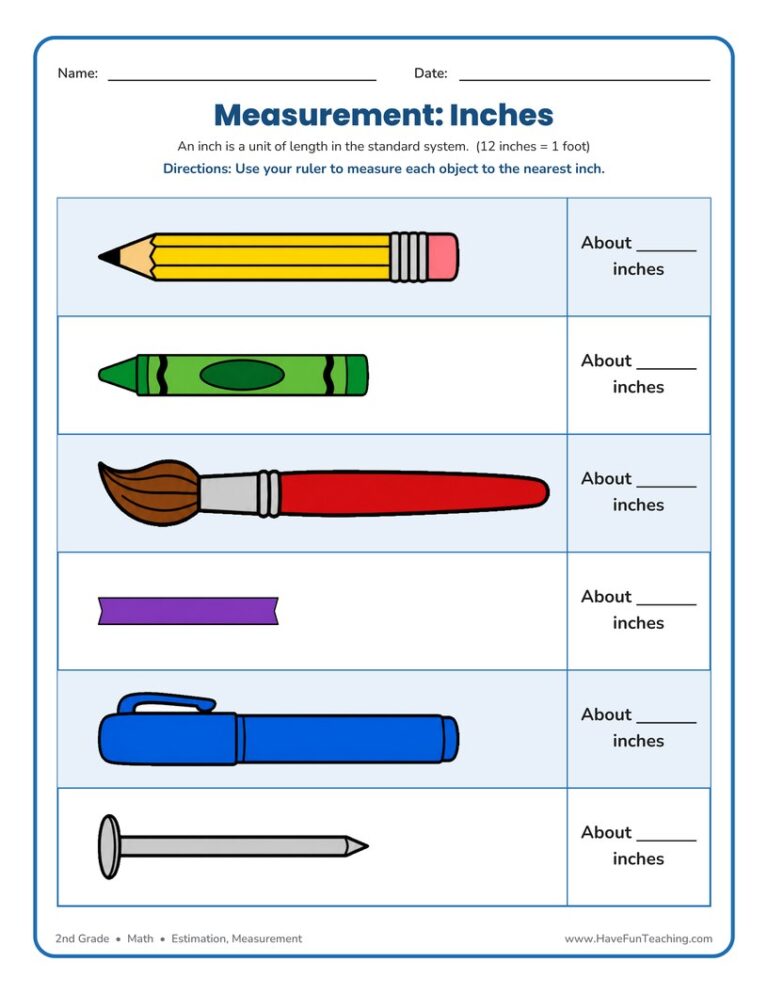
A measuring in inches worksheet where 2nd graders use a ruler to measure six objects to the nearest inch. Includes an answer key — great no-prep practice for estimation and measurement skills.
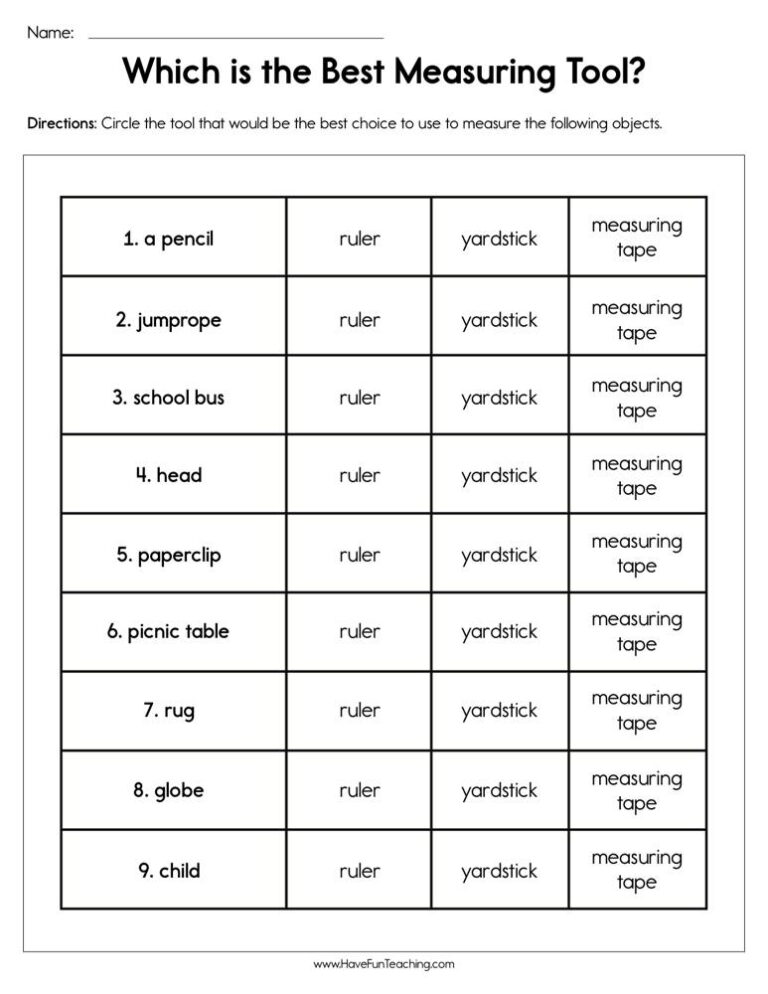
This which is the best measuring tool worksheet asks 2nd graders to pick a ruler, yardstick, or measuring tape for six everyday objects. Answer key included, so measurement practice takes no prep at all.
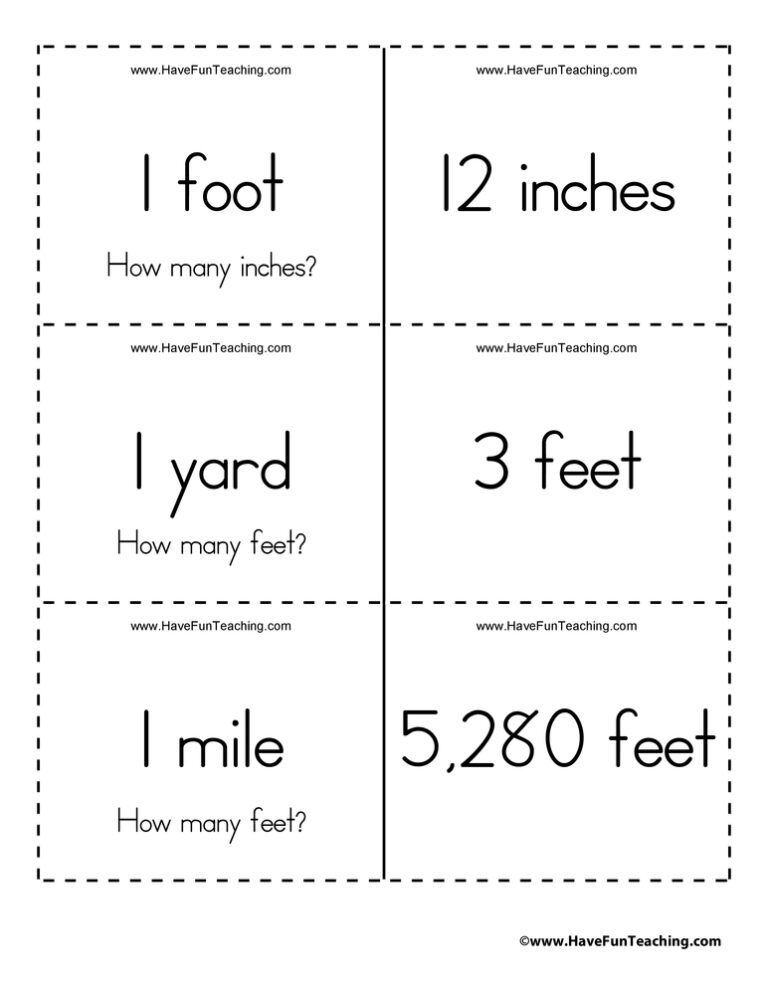
Using Measurement Flash Cards, students build their understanding of unit conversions by matching two units.
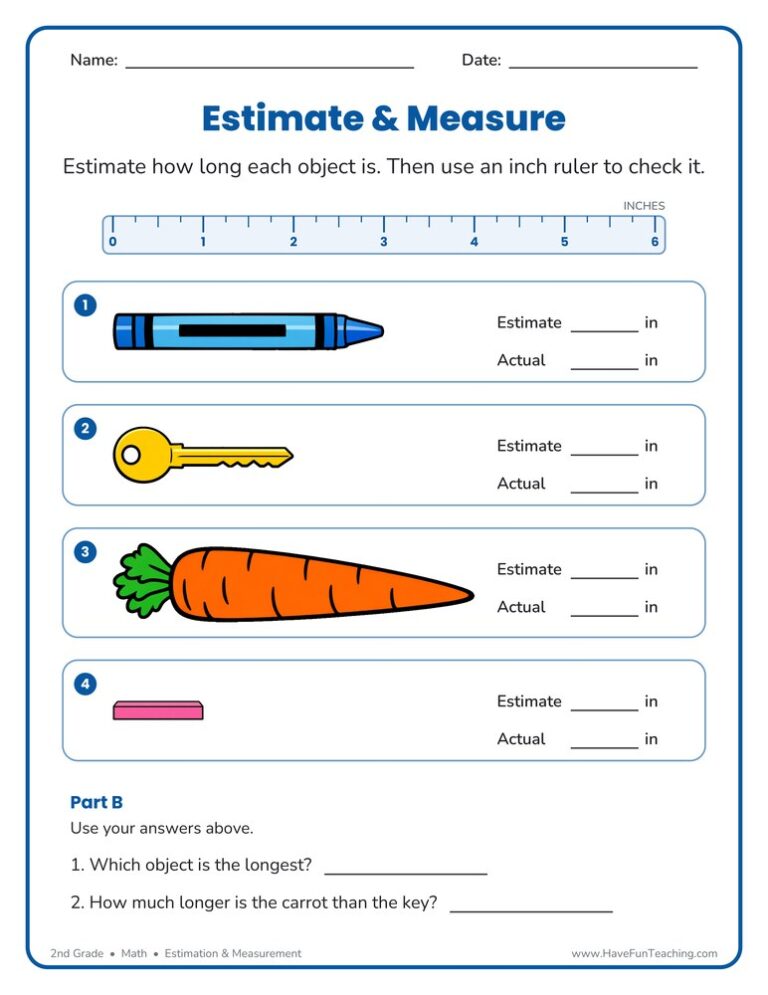
An estimate and measure inches worksheet where 2nd graders guess the length of four everyday objects, then measure each one with a ruler. Answer key included — no-prep practice that builds real number sense.
Reviews
There are no reviews yet