

Same Different Four Letter Words Worksheet
This Same Different Four Letter Words Worksheet asks 1st Graders to circle the word that is not the same, then match three pictures to their look-alike words. Answer key included for fast, no-prep word discrimination practice.
$6.97
Or free with a membership — members pay $3.33/mo for all 10,000+ resources. See plans
Want this one free?
Tell us where to send it and it’s yours — no card, no catch.
One free resource per teacher. We’ll also send free teaching ideas each week — unsubscribe anytime.
Teaching is easier with a membership
Unlimited printables, games & videos for PreK–6th — for your classroom or homeschool. Cancel anytime.
Start your 3-day free trial$0 today · cancel anytime · Instant access to 10,000+ resources
About this resource
Description
Comparing words that look almost alike is one of the first ways a young reader learns to slow down and look closely at print. This Same Different Four Letter Words Worksheet gives first graders a tight set of four-letter words — gate and goat, ship and shop, clam and clap — and asks them to decide which one is not the same. Noticing that a single letter changes a whole word is the foundation of compare and contrast, and it is also what keeps a reader from guessing at print instead of actually reading it.
This 1st grade compare and contrast worksheet has two parts. In Part A, students scan six rows of four-letter words and circle the one word in each row that does not match the other three. In Part B, three pictures give the skill a meaning check: children look at a goat, a nest and a ship, then circle the word that goes with each picture instead of its look-alike neighbor. Use it as a morning warm-up, a literacy-center task, a quick check for understanding, or homework. Everything a child needs sits on one page, and the answer key follows on page two.
What’s Included
- 1 print-ready PDF worksheet
- Answer key
- 6 word-comparison rows plus 3 picture-and-word matching cards
Three things make this Same Different Four Letter Words Worksheet worth the ten minutes it takes. First, it trains visual discrimination: a first grader who can see the difference between clam and clap is far less likely to misread either one later inside a sentence. Second, it builds the vocabulary of comparison — same, different, alike, not alike — that students will lean on for years in reading, writing, math and science. Third, the picture cards force a child to connect a word’s spelling to its meaning, so the task never collapses into a shape-matching game.
Teachers and parents can stretch the skill in a few minutes with no prep at all. Write two look-alike words on a whiteboard and have children clap the moment they spot the letter that changed. Play a listening version in the car or at the dinner table: say three matching words and one different word, and let your child call out the odd one. Ask students to hunt for their own near-twin words in a favorite book and copy the pairs into a notebook. Around the classroom, sort word cards into a same pile and a different pile, or flip the picture cards face down and turn the pairs into a memory game.
Related Resources
What teachers say
Reviews
You must be logged in to post a review.
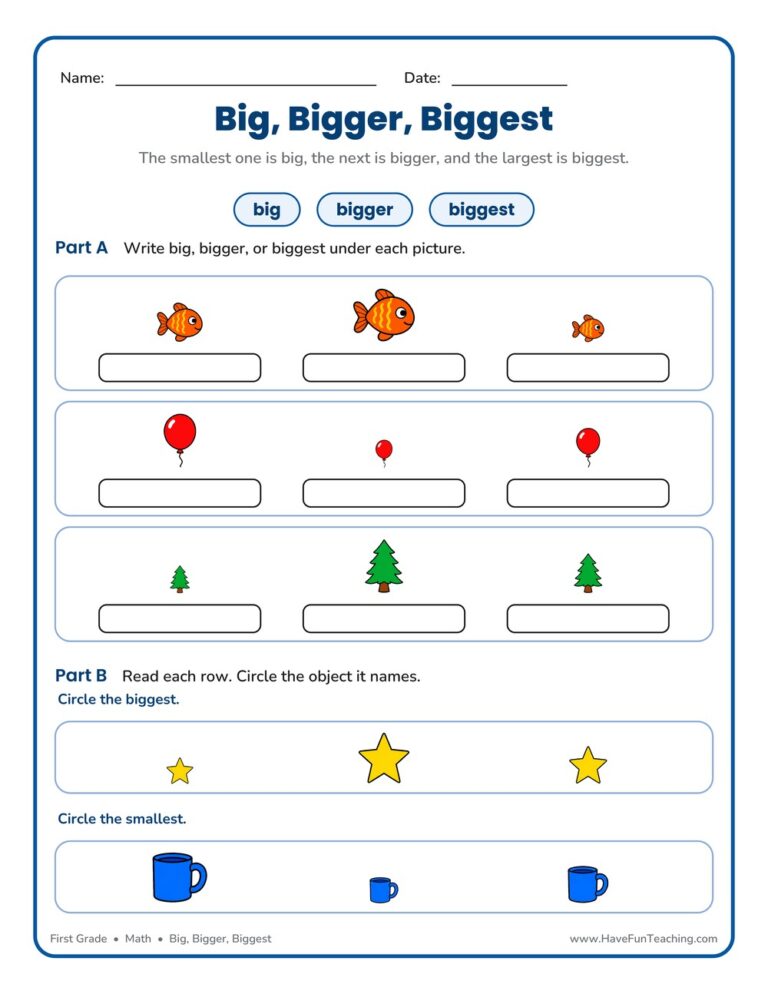
This Big, Bigger, Biggest Worksheet gives first grade students fun practice comparing objects by size, labeling big, bigger, and biggest and circling the biggest and smallest. An answer key is included to make learning simple.
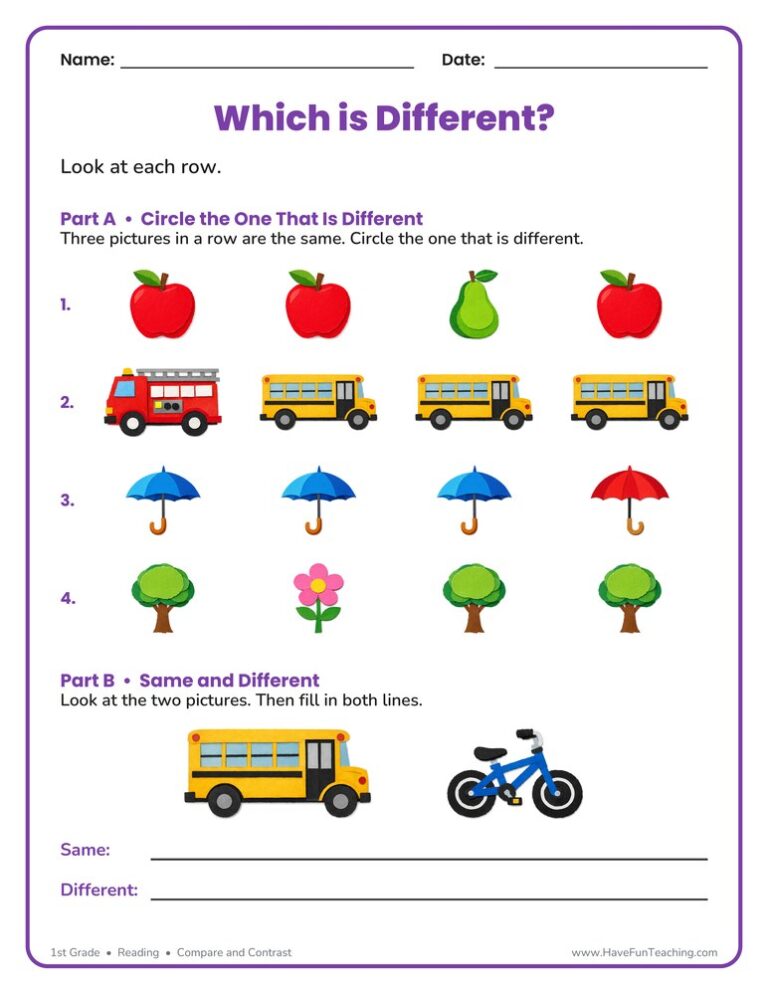
This same different picture worksheet asks 1st graders to circle the odd picture in four rows, then name one likeness and one difference, with an answer key included.

Meet two friends, then check off what they share and what makes each one different. This compare and contrast characters worksheet gives 1st graders a clear, no-prep sorting chart, with a complete answer key included.

This comparing characters worksheet gives 1st graders a short story about two friends and a three-part chart for sorting what is alike and what is different. Answer key included, so checking takes seconds.
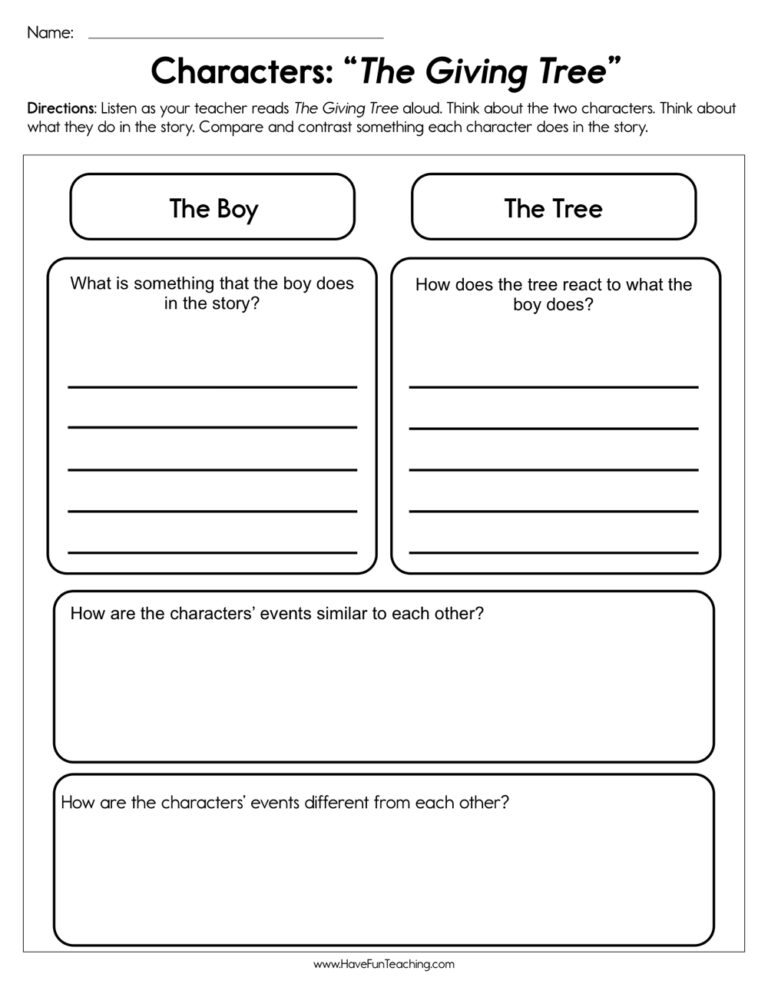
Using Characters, Settings, and Big Events Worksheet, students draw pictures and write a sentence for each to tell about the story elements in a book.

A two-part Same Different Categories Worksheet where 1st graders circle the words that belong to a group, then find the one that does not. Answer key included for quick, no-prep sorting practice.

This same different objects worksheet asks 1st grade students to circle the object that changes color, size, or direction, then compare a crayon and a pencil. An answer key is included for quick checking.
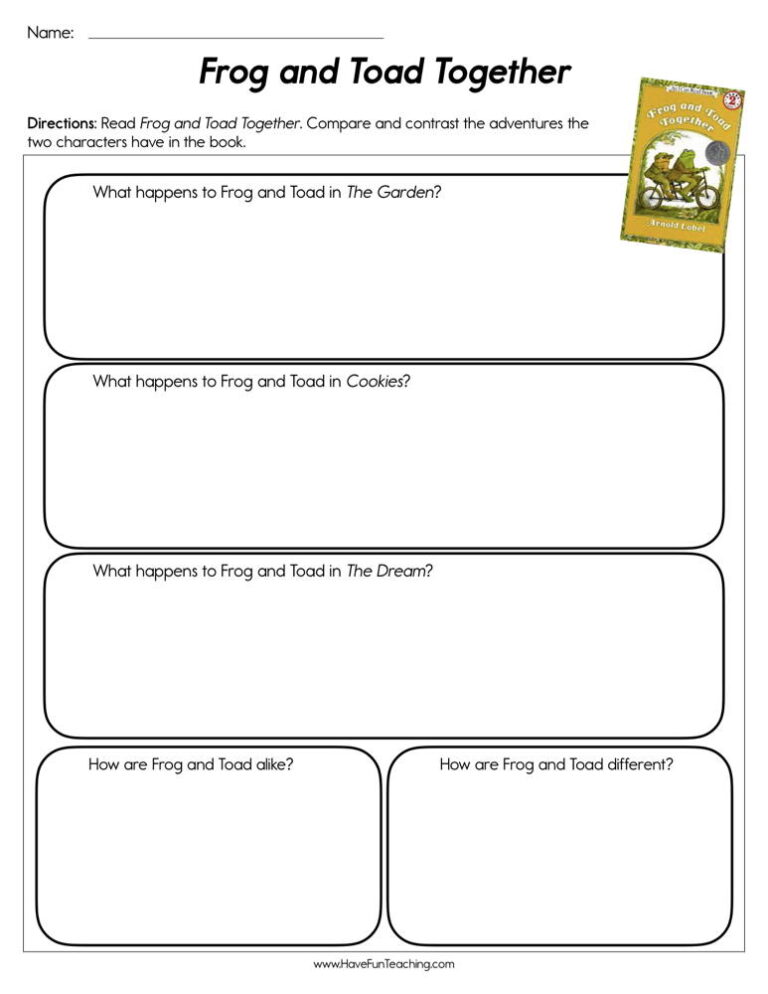
Using this Frog and Toad Together Worksheet, studentsread Frog and Toad Together to compare and contrast the adventures the two characters have in the book.

Using this Size Activity, students play Categories to practice identifying the sizes tall, short, big and small.

Using Compare and Contrast Characters Charlie Brown and Arthur Worksheet, students compare two different characters from two different stories you have read.

Words Same Different Worksheet gives 1st grade readers five rows of short words to compare plus four same or different pairs, with an answer key, so they learn to read every letter carefully.
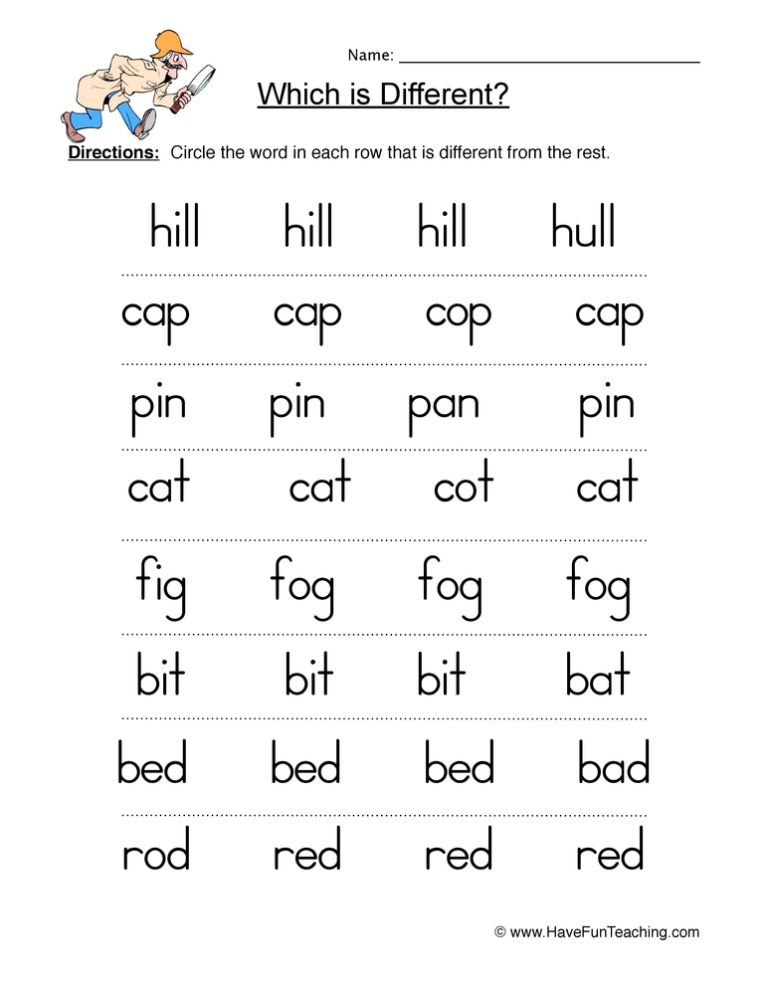
This same and different words worksheet gives 1st Grade readers ten rows of look-alike words to compare, with an answer key included, so children learn to read every letter instead of guessing.




Reviews
There are no reviews yet