
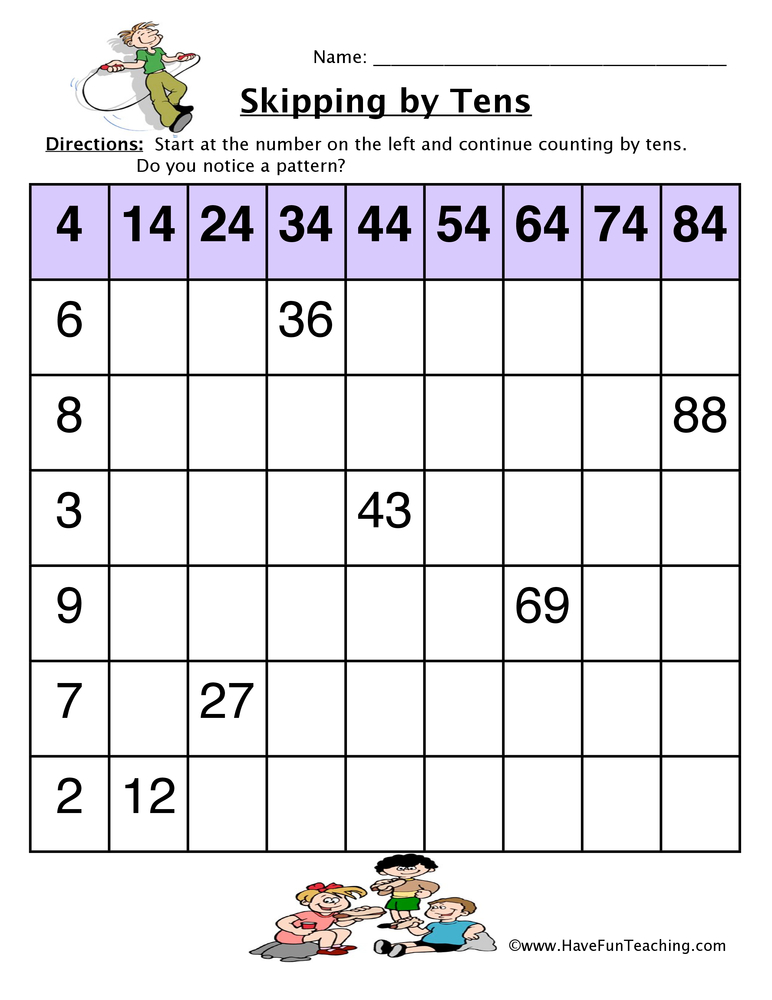
Skip Count by Tens Chart Worksheet
Use this skip count by tens chart worksheet to help 2nd graders count on and back by tens with three-digit numbers across each hundred. An answer key is included for quick checking.
$6.97
Or free with a membership — members pay $3.33/mo for all 10,000+ resources. See plans
Want this one free?
Tell us where to send it and it’s yours — no card, no catch.
One free resource per teacher. We’ll also send free teaching ideas each week — unsubscribe anytime.
Teaching is easier with a membership
Unlimited printables, games & videos for PreK–6th — for your classroom or homeschool. Cancel anytime.
Start your 3-day free trial$0 today · cancel anytime · Instant access to 10,000+ resources
About this resource
Description
Skip counting by tens is one of the fastest ways for children to see how our number system works. Every time you add ten, the tens digit grows by one while the ones digit stays the same. This skip count by tens chart worksheet helps 2nd graders count on and count back by tens with three-digit numbers, including the tricky jumps that cross into a new hundred.
About This Worksheet
The first section of this skip count by tens chart worksheet is a counting chart. The top row is a worked example that starts at 147 and counts on by tens all the way to 217. In each practice row, students begin with the shaded number on the left and count on by tens to fill every empty box. One helper number is already printed in each row so children can check their thinking as they go. The second section flips the skill around: students count back by tens and write the missing numbers in three sequences, and each one crosses a hundred, such as 206, 196, 186. This is a great 2nd grade skip counting worksheet for math centers, morning work, homework, or a quick check after a place value lesson.
What’s Included
- A count-on-by-tens chart with a worked example and six practice rows
- Three count-back-by-tens sequences with missing numbers
- A full answer key
Why This Worksheet Helps Kids
First, filling in a chart shows students the pattern: the ones digit never changes when you count by tens. Second, the rows that cross a hundred, such as 371 to 441, build real place value understanding instead of rote counting. Third, counting back by tens prepares children for mental subtraction of ten, a key 2nd grade skill.
Ideas for Teachers and Parents
Before students begin, count on by tens together out loud from a number like 120. After the chart is finished, ask children to circle the ones digit in each column and describe what they notice. Use dimes or base ten rods to act out a row. At home, pick any three-digit number, such as a house number, and take turns counting on or back by tens.
Related Resources
What teachers say
Reviews
You must be logged in to post a review.
Using the Counting Songs (Classic Video Collection), students practice skip counting by all of the numbers by singing and counting along to these thirteen videos.

A kangaroo-themed Counting to 1000 by Tens and Hundreds Worksheet that helps 2nd graders complete skip-counting patterns by filling in the missing numbers. Answer key included for quick, no-prep math practice.

Using the Counting By Fives Song (Original Music Video), students practice skip counting by 5s by singing and counting along to this fun and engaging video!
Using the Counting By Ones Song (Original Music Video), students practice counting by 1s by singing and counting along to this fun and engaging video!

The Identify Place Value Worksheet gives 2nd Grade students base ten block models, three-digit numbers, and a word problem to break apart into hundreds, tens, and ones. Answer key included, so practice checks itself.
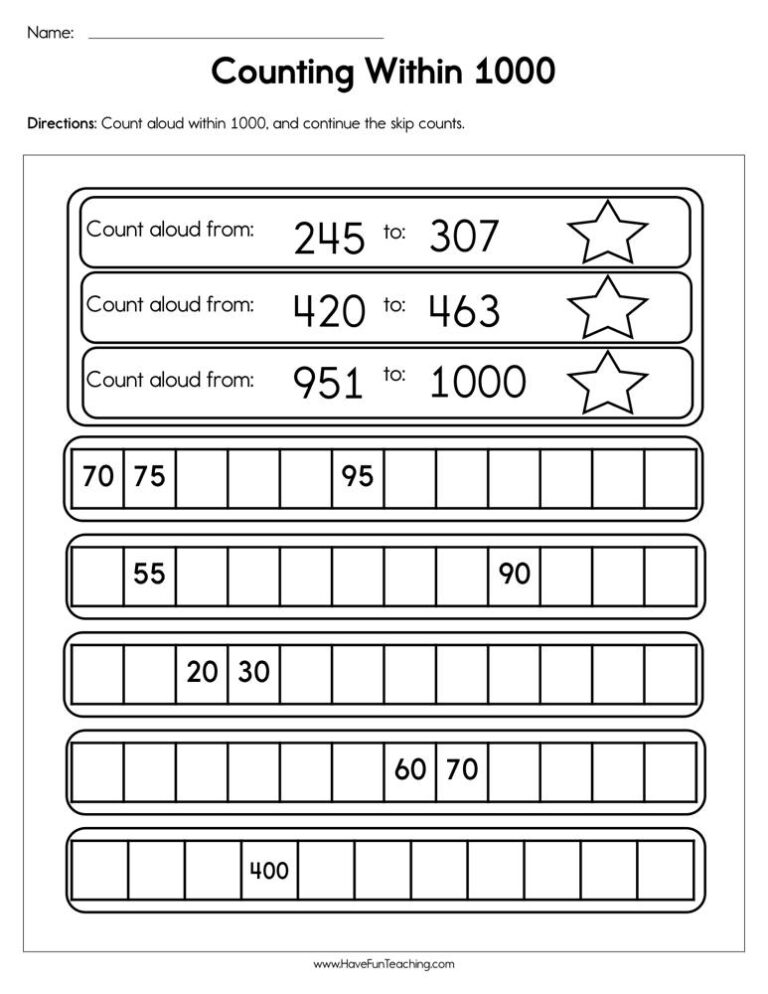
This counting within 1000 worksheet gives 2nd graders five missing-number strips and two word problems for counting on by ones and skip counting by 5s, 10s, and 100s. Answer key included for fast, no-prep practice.

Using the Counting By Twos Song (Original Music Video), students practice skip counting by 2s by singing and counting along to this fun and engaging video!
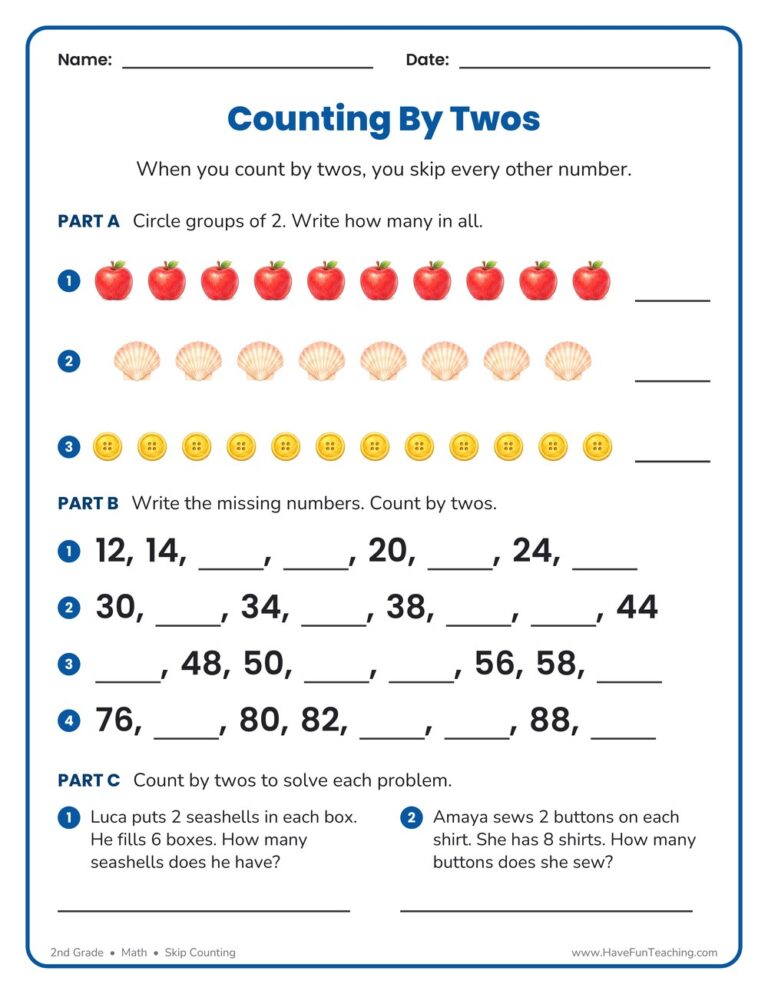
This Counting by Twos Worksheet gives 2nd Grade students hands-on practice grouping objects in pairs and finishing number patterns. An answer key is included, so checking work takes seconds.

Using the Counting By Ones Song, students practice counting by ones to fifty by singing and counting along to this fun and engaging video!
Using the Counting Songs (MP3 Album), students practice skip counting by all of the numbers by singing and counting along to these thirteen songs.
Using theCount to 100 Song (MP3), students practice counting to 100 by singing and counting along to this fun and engaging song!
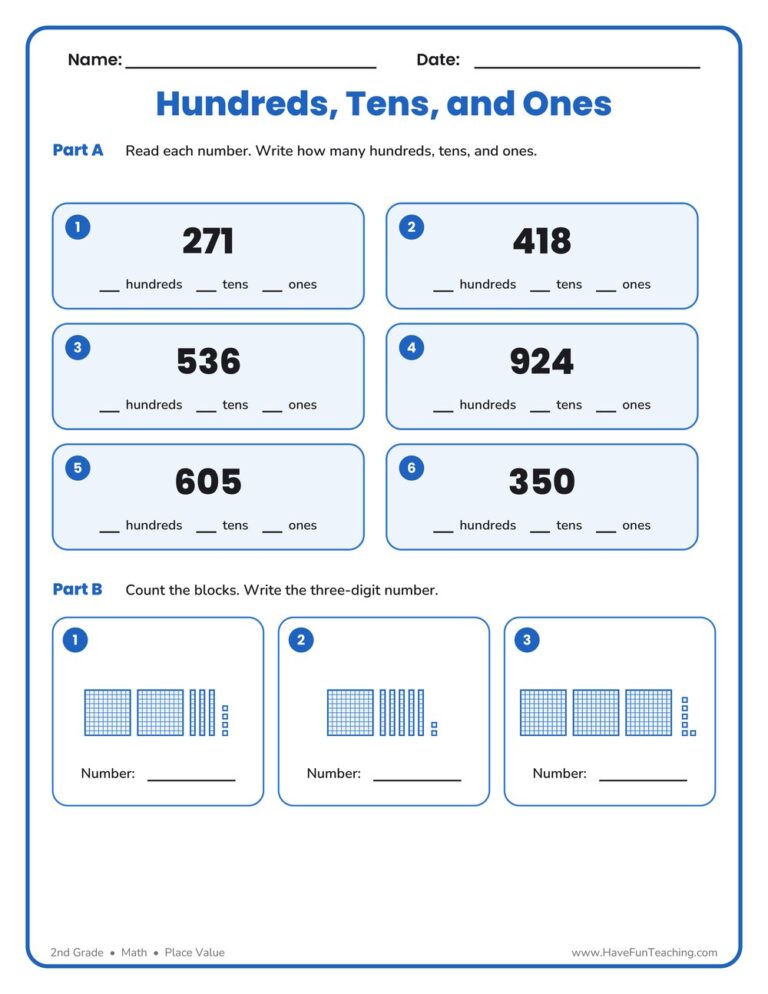
A hundreds tens and ones worksheet where 2nd graders read three-digit numbers and count base-ten blocks to name each digit’s value. Includes an answer key for fast, no-prep place value practice.




Reviews
There are no reviews yet