
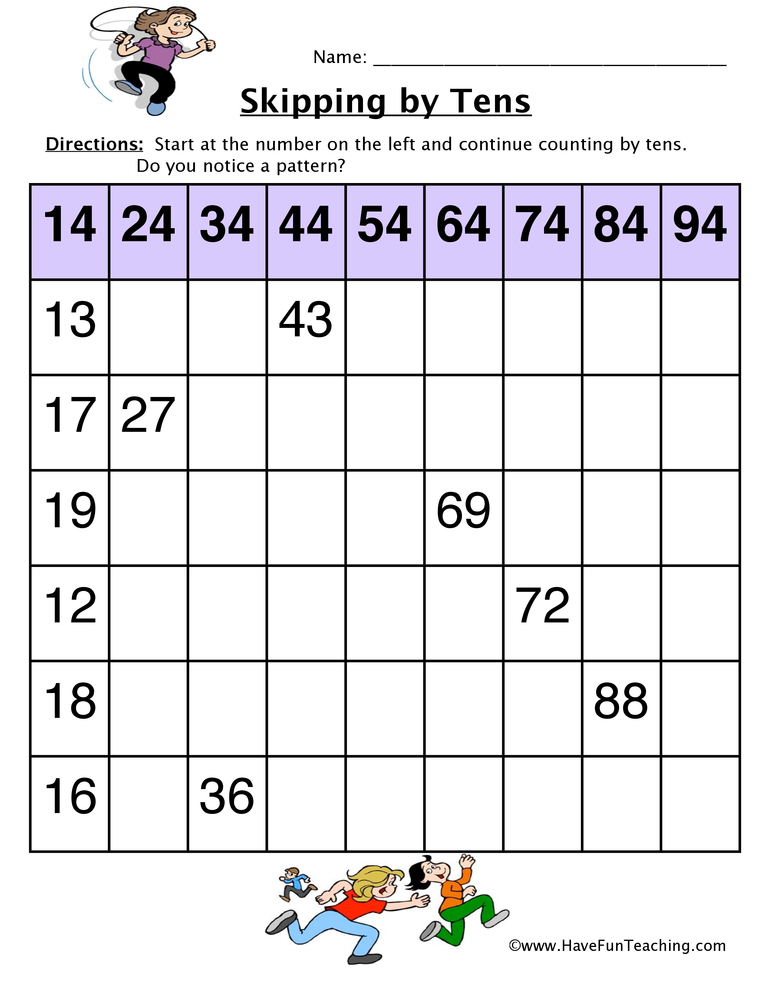
Skipping by Tens Worksheet
Help 1st graders count on from any number with this skipping by tens worksheet, featuring a counting table and missing-number sequences to 120. An answer key is included for easy checking.
$6.97
Or free with a membership — members pay $3.33/mo for all 10,000+ resources. See plans
Want this one free?
Tell us where to send it and it’s yours — no card, no catch.
One free resource per teacher. We’ll also send free teaching ideas each week — unsubscribe anytime.
Teaching is easier with a membership
Unlimited printables, games & videos for PreK–6th — for your classroom or homeschool. Cancel anytime.
Start your 3-day free trial$0 today · cancel anytime · Instant access to 10,000+ resources
About this resource
Description
Counting on by tens from any number is an important step in first grade place value. When children add ten again and again, they see that the tens digit grows by one while the ones digit stays the same. This skipping by tens worksheet helps young learners practice that pattern, starting from numbers that are not multiples of ten, and build a strong base for adding and subtracting ten in their heads.
The first section is a counting table. Each row begins with a shaded number, and one more number is already filled in to help. Students count on by tens across the row and write each missing number, using a completed example row at the top as a guide. The second section has three number sequences with boxes to fill in, and one of them counts past 100 all the way to 120. This 1st grade counting worksheet is great for math centers, morning work, homework, or a quick check after a place value lesson.
What’s Included
- 1 print-ready PDF worksheet
- A count-on-by-tens table with a worked example row and six practice rows
- Three missing-number sequences that count by tens up to 120
- A complete answer key
This resource helps kids learn in three ways. First, starting from numbers like 13 or 19 shows children that skip counting by tens works from any number, not just from ten. Second, filling a whole row lets students notice and name the pattern in the ones and tens digits. Third, the sequences with missing numbers ask children to count forward from different places, which builds flexible number sense.
Teachers and parents can make this skill hands-on. Use base-ten rods and single cubes so children can add one rod at a time and watch the number change. Point to a hundreds chart and slide a finger straight down a column to show counting by tens. Try a skipping by tens worksheet warm-up game where kids jump forward and shout each new number, or count dimes to make the pattern feel real.
Related Resources
What teachers say
Reviews
You must be logged in to post a review.
Using the Counting Songs (Classic Video Collection), students practice skip counting by all of the numbers by singing and counting along to these thirteen videos.
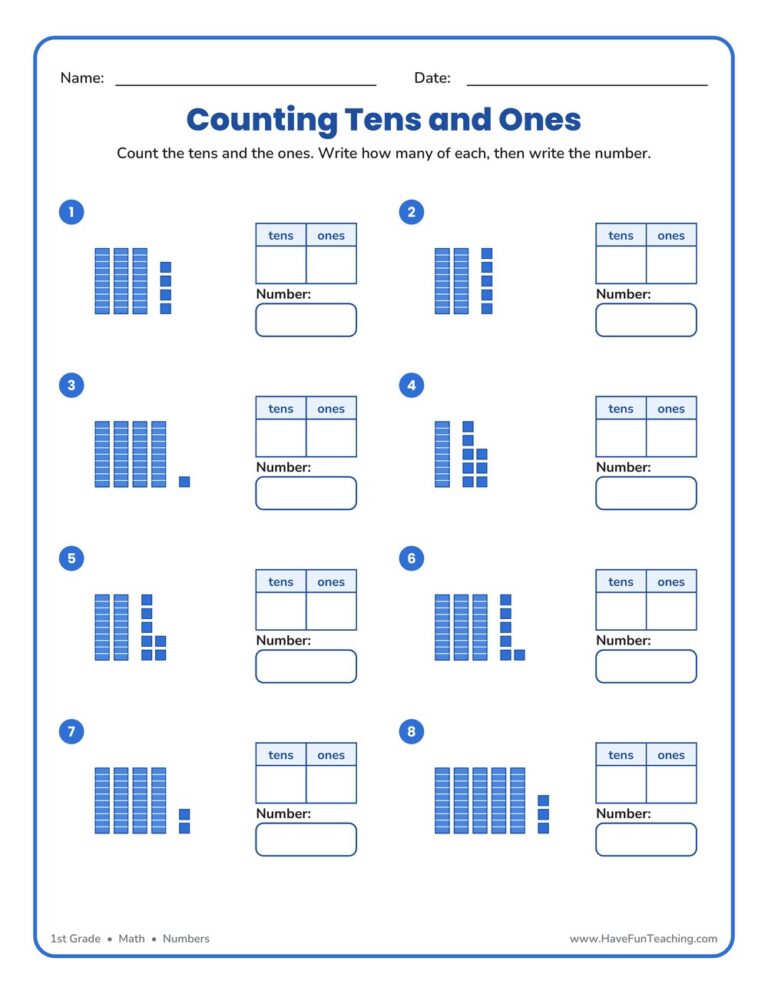
This Counting Tens Ones Worksheet helps first graders count base-ten blocks, record the tens and ones, and write each two-digit number. Includes a complete answer key for quick, no-prep place value practice at home or school.
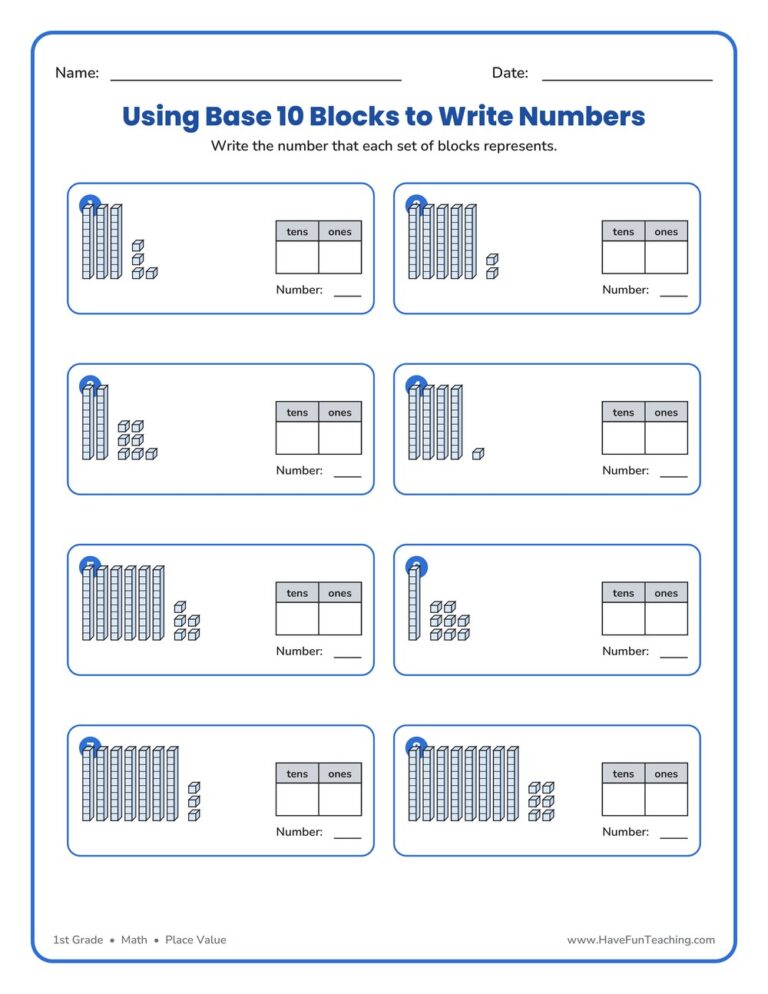
This Using Base 10 Blocks to Write Numbers Worksheet helps 1st graders count tens rods and ones cubes, then record each two-digit number in a place value chart. Includes an answer key for quick, no-prep practice.

This counting on to add worksheet helps 1st graders start from the bigger number and count forward on a number line to twenty. An answer key is included, so checking work takes seconds.

Using the Counting By Fives Song (Original Music Video), students practice skip counting by 5s by singing and counting along to this fun and engaging video!
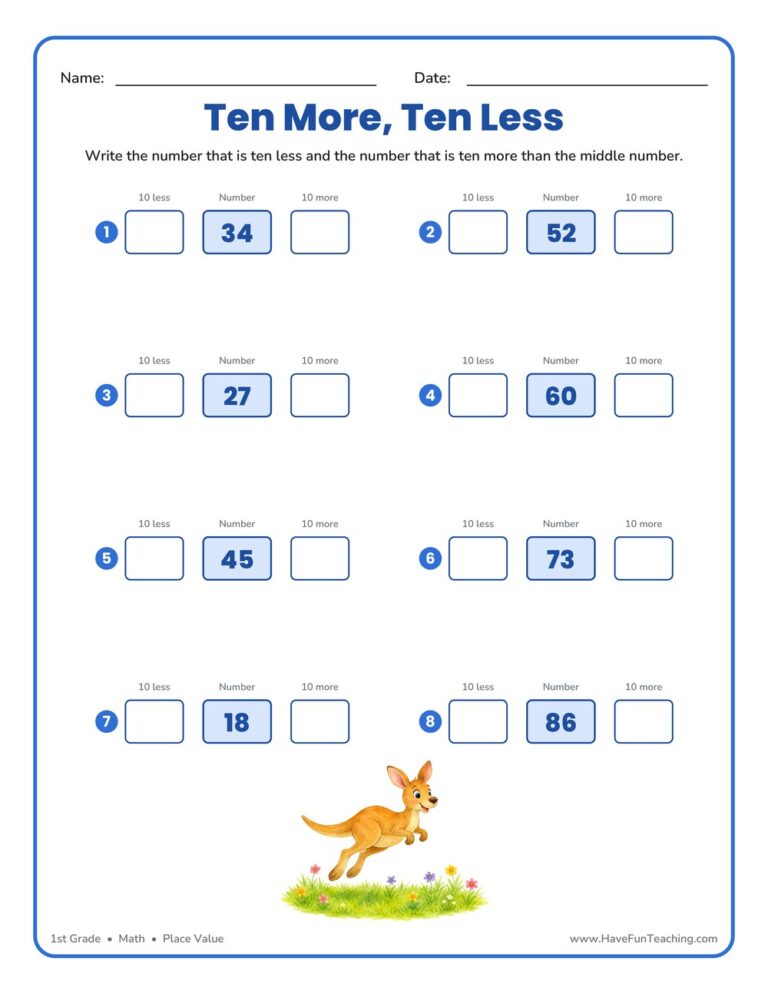
This Ten More Ten Less Worksheet gives 1st graders eight quick problems to find ten more and ten less than a two-digit number. Includes an answer key for fast, no-prep place value practice.

Using the Counting By Ones Song (Original Music Video), students practice counting by 1s by singing and counting along to this fun and engaging video!

Using the Counting By Twos Song (Original Music Video), students practice skip counting by 2s by singing and counting along to this fun and engaging video!

This finding the missing number worksheet gives first graders focused practice solving for the unknown number in addition and subtraction equations within 20. Includes an answer key — a quick, no-prep way to build number sense and fact fluency.

This counting back to subtract worksheet gives 1st graders number-line hops, six equations within 20, and a word problem, with an answer key included, so subtraction becomes a quick, confident count.
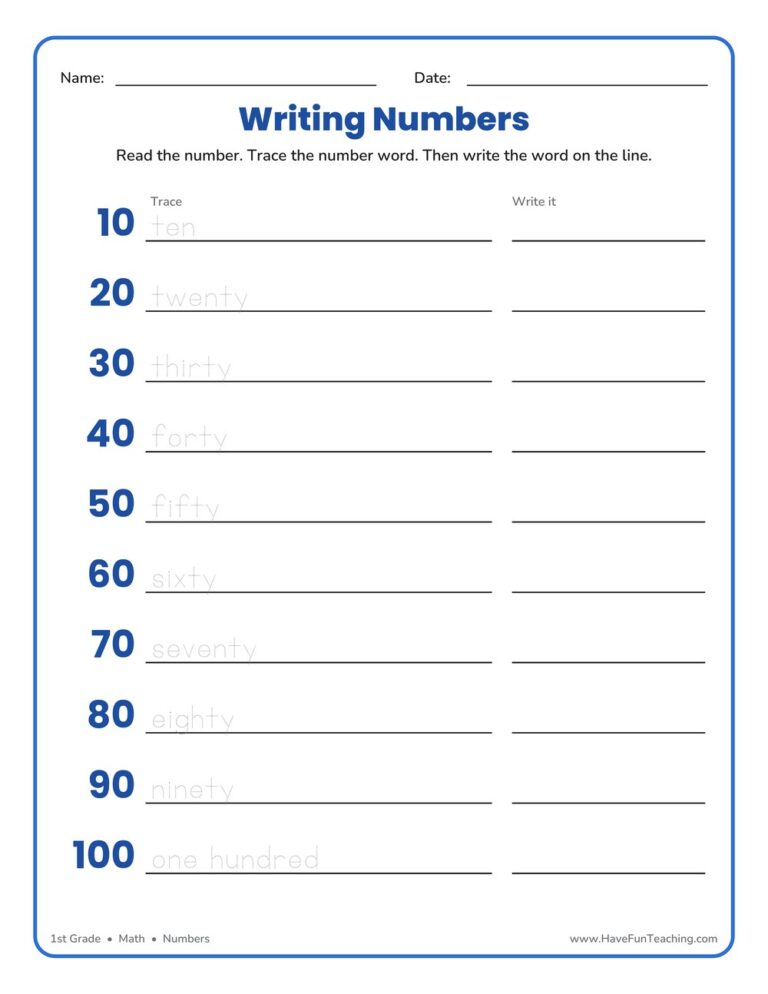
This Write Numbers to 100 Worksheet helps first graders trace and write number words from ten to one hundred while counting by tens. Answer key included — perfect for no-prep number word and handwriting practice.
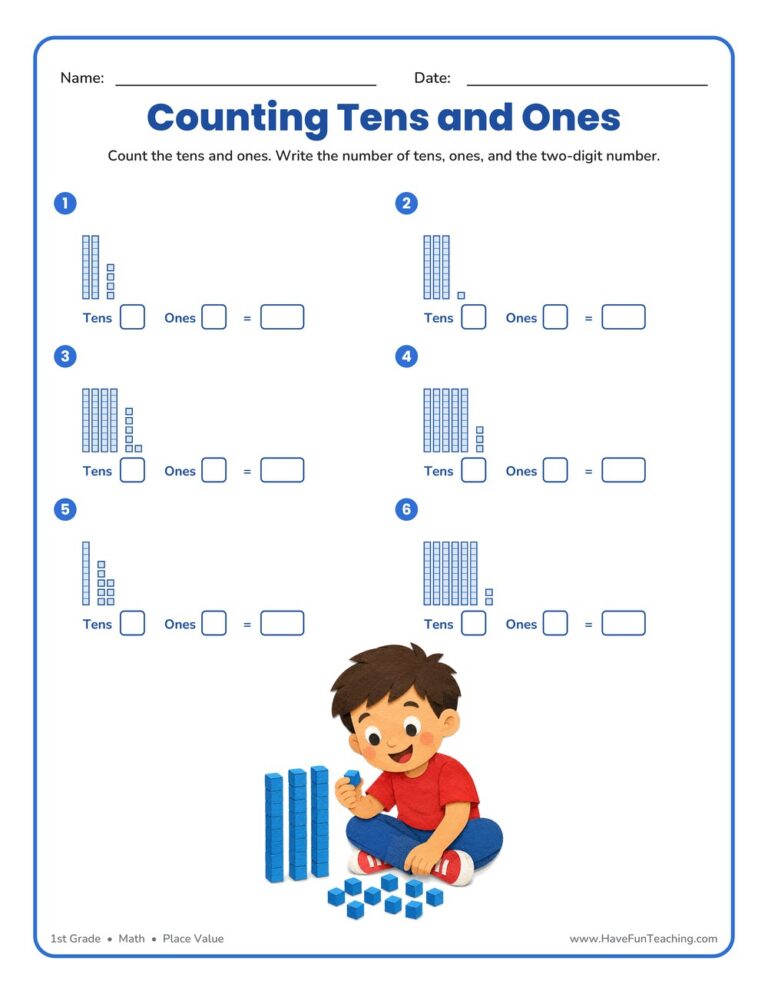
A first grade Counting Tens and Ones Worksheet where students count base ten blocks and write each two-digit number. Includes a complete answer key for easy, no-prep place value practice at home or school.




Reviews
There are no reviews yet