
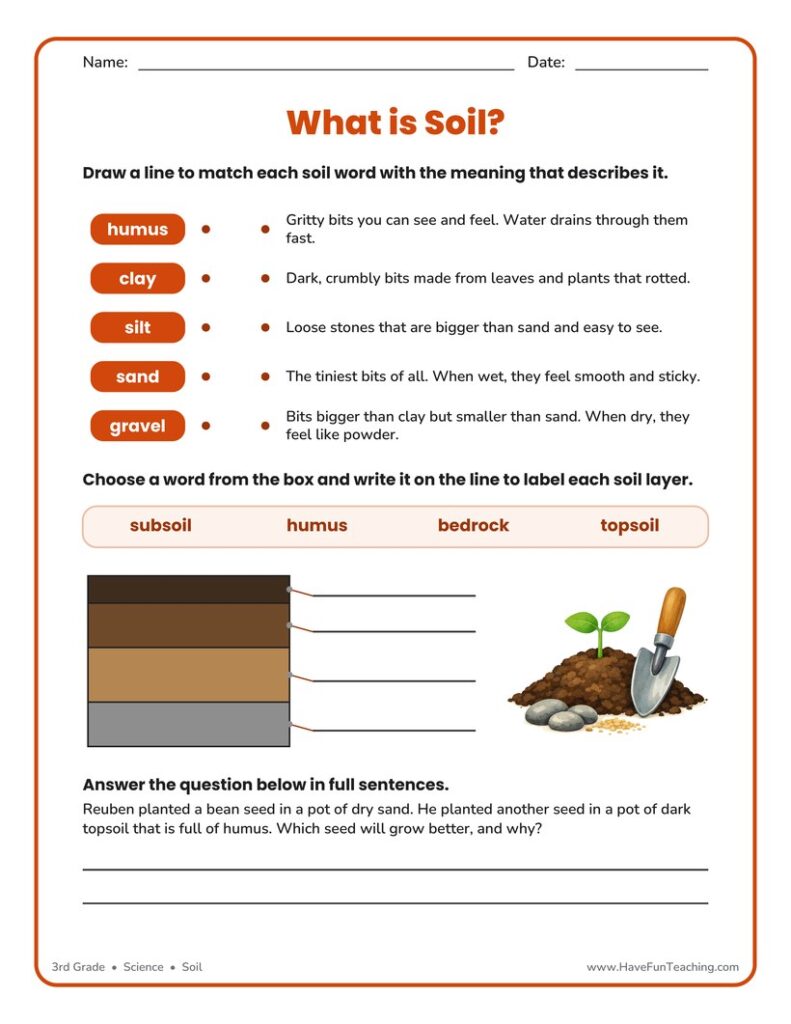
Soil Matching Worksheet
This Soil Matching Worksheet gives 3rd Grade students hands-on practice matching soil words to their meanings and labeling the four soil layers. An answer key is included, so checking work takes seconds.
$6.97
Or free with a membership — members pay $3.33/mo for all 10,000+ resources. See plans
Want this one free?
Tell us where to send it and it’s yours — no card, no catch.
One free resource per teacher. We’ll also send free teaching ideas each week — unsubscribe anytime.
Teaching is easier with a membership
Unlimited printables, games & videos for PreK–6th — for your classroom or homeschool. Cancel anytime.
Start your 3-day free trial$0 today · cancel anytime · Instant access to 10,000+ resources
About this resource
Description
Soil is far more than plain dirt. It is a layered mixture of rotted plant material, tiny rock pieces, water, and air, and every plant a child has ever seen depends on it. This Soil Matching Worksheet gives third graders a clear, hands-on way to tell humus, clay, silt, sand, and gravel apart, and then to name the four layers of a soil profile from the dark surface all the way down to solid bedrock.
Using this soil matching worksheet, students draw a line from each soil word to the meaning that describes it, choose words from a word box to label a full-color soil-layer diagram, and finish by writing a short explanation of why a bean seed grows better in dark topsoil full of humus than in dry sand. The activities move from recognition to labeling to reasoning, so students have to do more than memorize a list of terms. Print it, hand it out, and let students work independently or with a partner. A complete answer key sits on the final page, so this 3rd grade earth science worksheet also works as a fast check for understanding.
What’s Included
- One printable, no-prep worksheet page with three activities
- A matching section covering humus, clay, silt, sand, and gravel
- A soil profile diagram to label from a word box: humus, topsoil, subsoil, and bedrock
- A written-response question that asks students to explain their thinking
- A complete answer key on the final page
Three Reasons This Helps Kids
First, matching the soil words to real descriptions builds the earth science vocabulary students meet again in later units on weathering, erosion, and natural resources. Second, labeling the soil profile turns an abstract diagram into something a child can read, which strengthens the diagram skills that show up on science assessments. Third, the closing question asks students to justify an answer in full sentences, and explaining why is exactly the kind of thinking third grade science standards ask for.
Teacher and Parent Ideas
Pair the page with a real soil sample. Let students rub a pinch of sand and a pinch of clay between their fingers before they start, so the descriptions on the page match something they have actually touched. Dig a small hole in a garden bed, or fill a clear jar with soil and water and let it settle overnight, then compare the settled bands to the diagram on the worksheet. For early finishers, ask them to draw and label a soil profile for their own yard or schoolyard. At home, this page pairs naturally with planting seeds in two different pots and watching what happens.
Related Resources
What teachers say
Reviews
You must be logged in to post a review.

The Seasons Song by Have Fun Teaching is perfect for teaching and learning all about the seasons of the year. This is a fun way for kids to learn the seasons. With this seasons song, your kids can learn about Spring, Summer, Fall, and Winter. While listening to the Seasons…
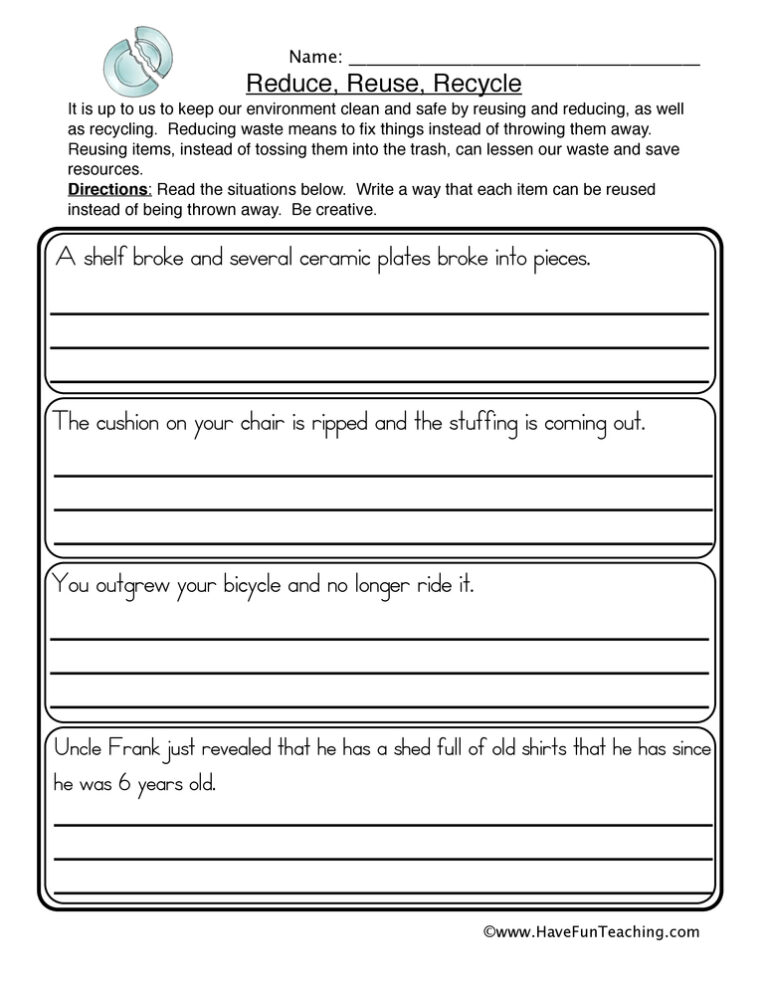
Read six real-life situations and decide whether each one shows reducing, reusing, or recycling on this reduce, reuse, recycle scenarios worksheet for 3rd grade. Answer key included, so Earth Day science practice takes no prep.
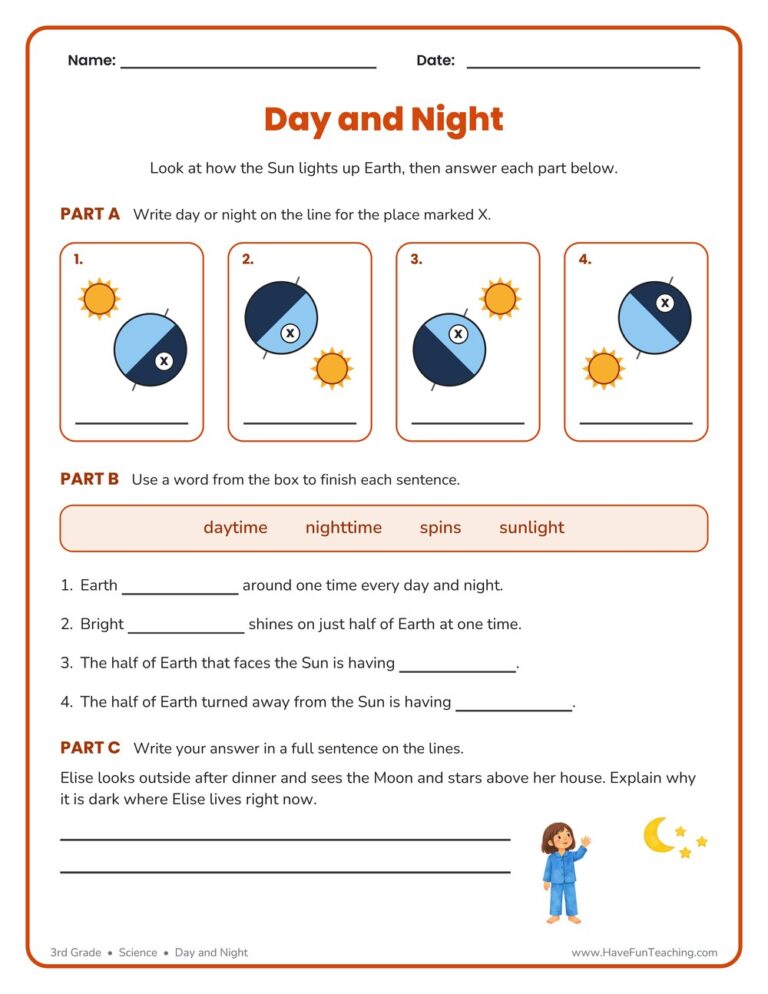
A hands-on day and night worksheet where 3rd graders read Sun and Earth diagrams, finish science sentences from a word box, and explain what makes it dark. Answer key included for quick, no-prep review.
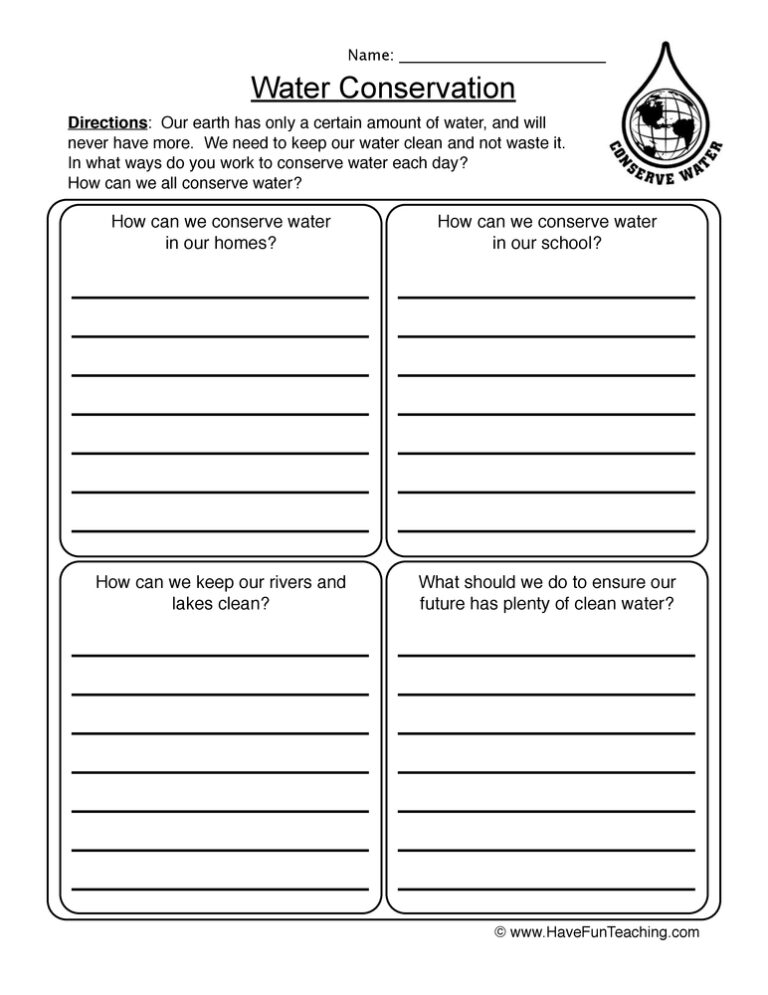
Students use this Water Conservation Worksheet to define key terms, sort water-saving habits, and solve a two-step drip problem. Built for 3rd Grade, with an answer key included for fast, no-prep science practice.
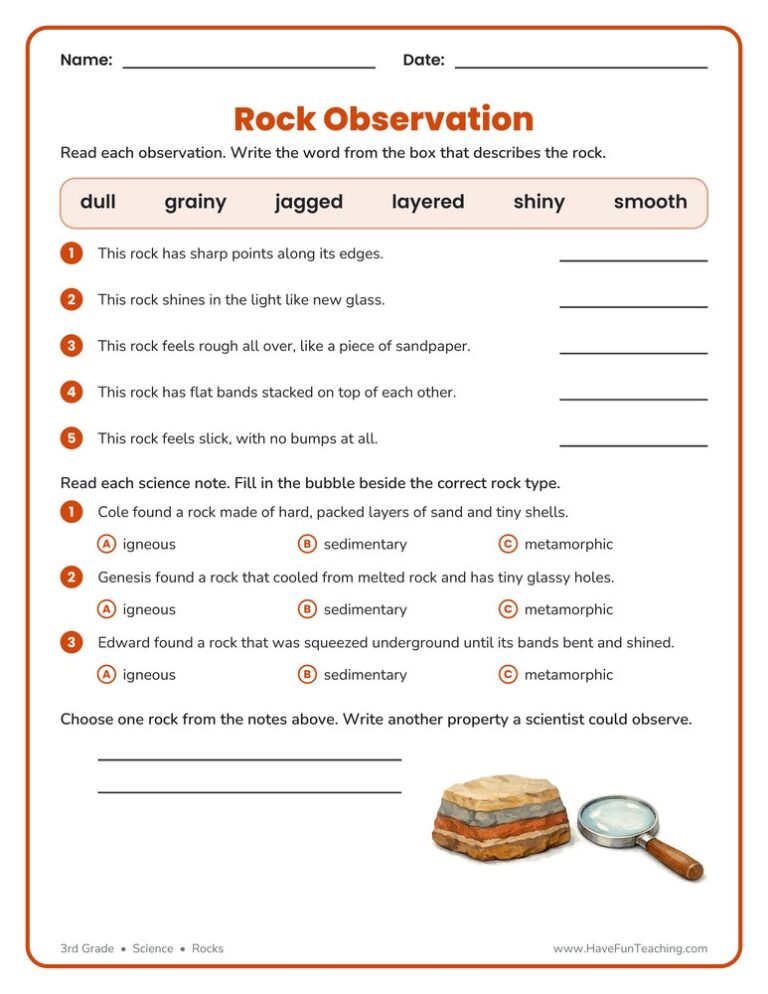
This Rock Observation Worksheet has 3rd grade students match describing words to five rock observations, name three rock types, and record one more property. An answer key is included, so it is ready to print.
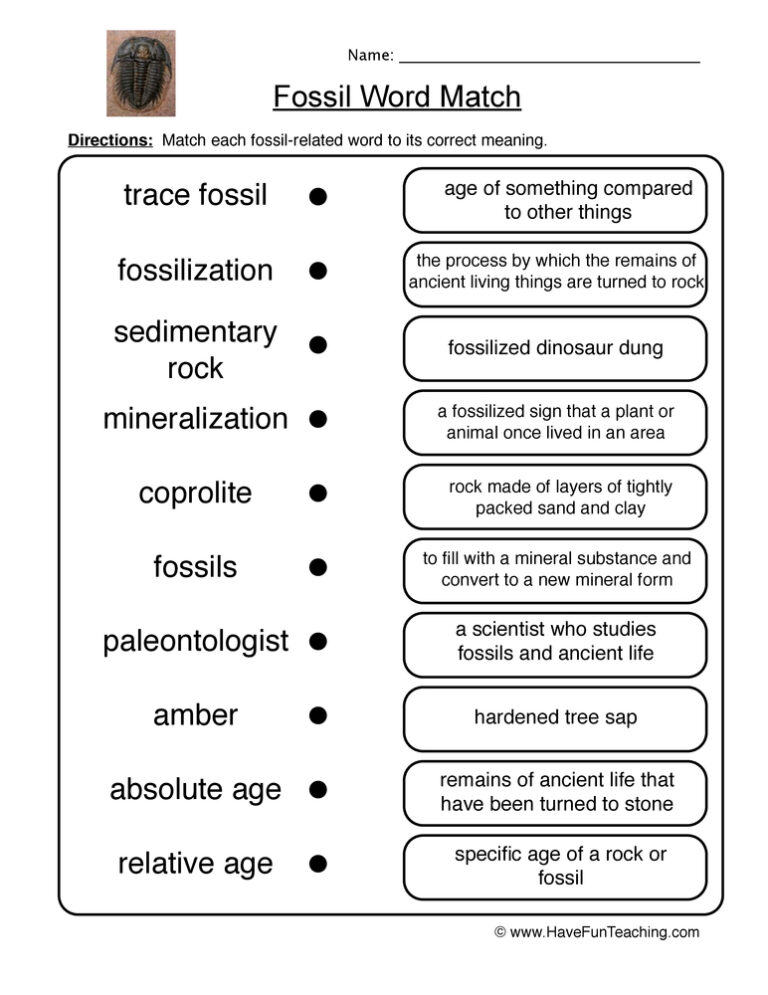
This fossil definitions worksheet gives 3rd grade students matching, fill-in-the-blank, and written-response practice with key fossil vocabulary. An answer key is included, so review is quick and confident.
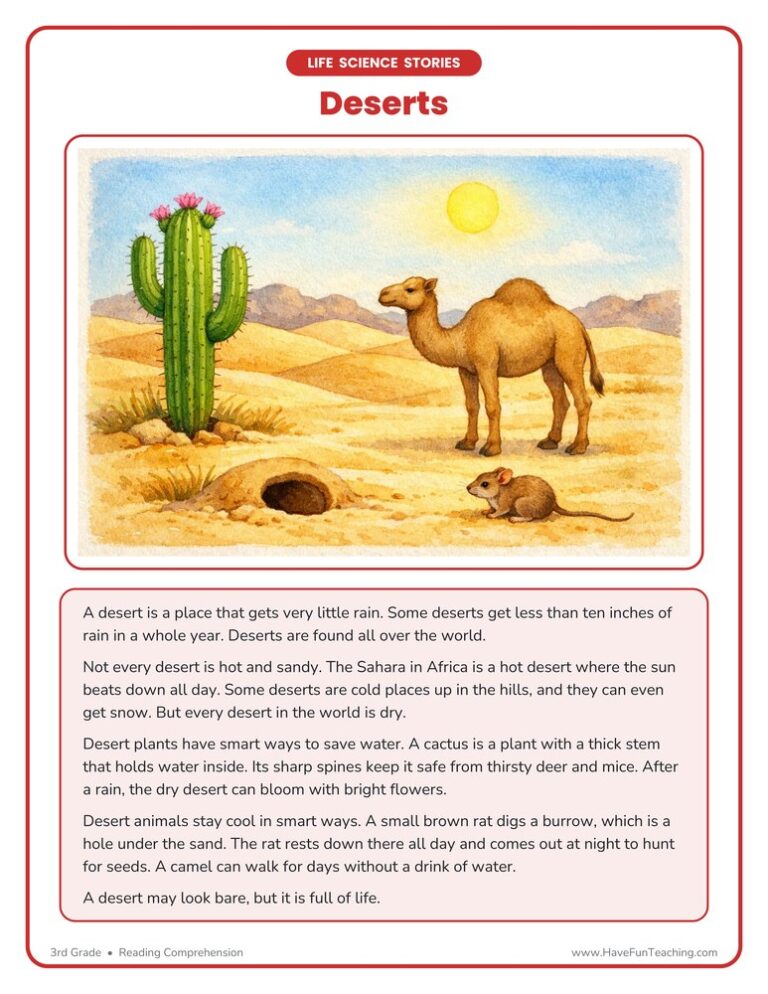
This Deserts Life Science Reading Comprehension Worksheet gives 3rd Grade readers a short nonfiction passage about hot and cold deserts, with comprehension questions and an answer key included, so science reading practice takes minutes to prep.
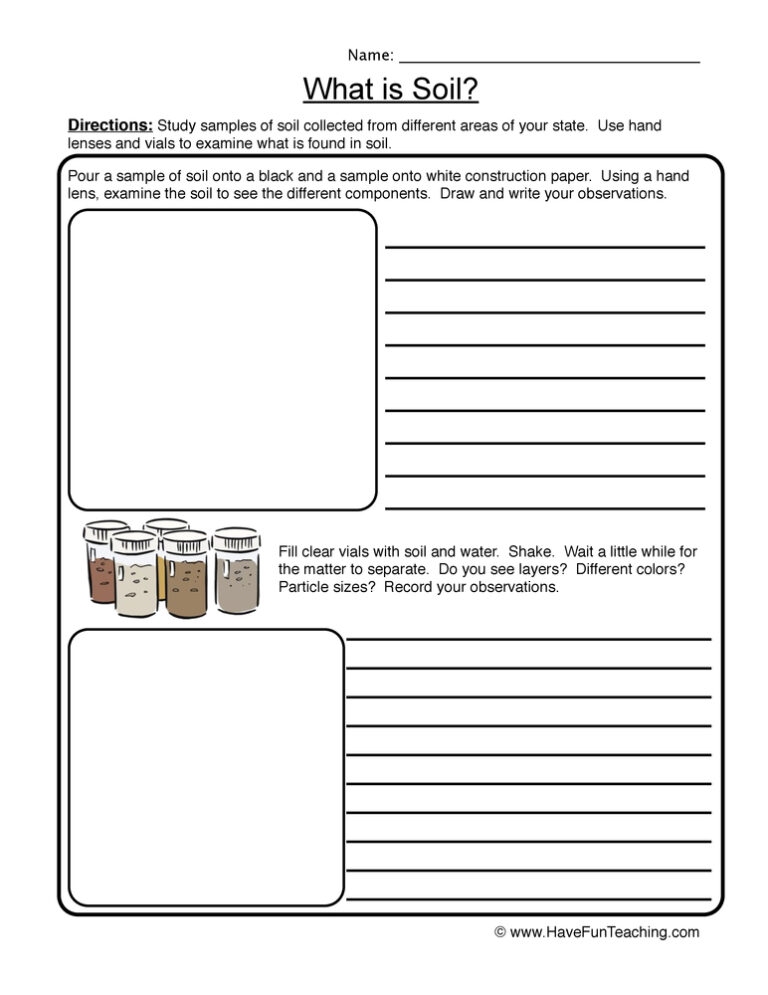
This What is Soil? Worksheet asks 3rd grade students to name what soil is made of, identify its three layers from a reference box, and explain why humus matters, with an answer key.

While watching the Creation Song, students learn about the days of Creation perfect for Sunday school, kid's church, and Bible lessons for kids. Bring joy and understanding into your kid's church, Sunday school, and classroom with this song about the days of Creation. Your kids will love a new way…
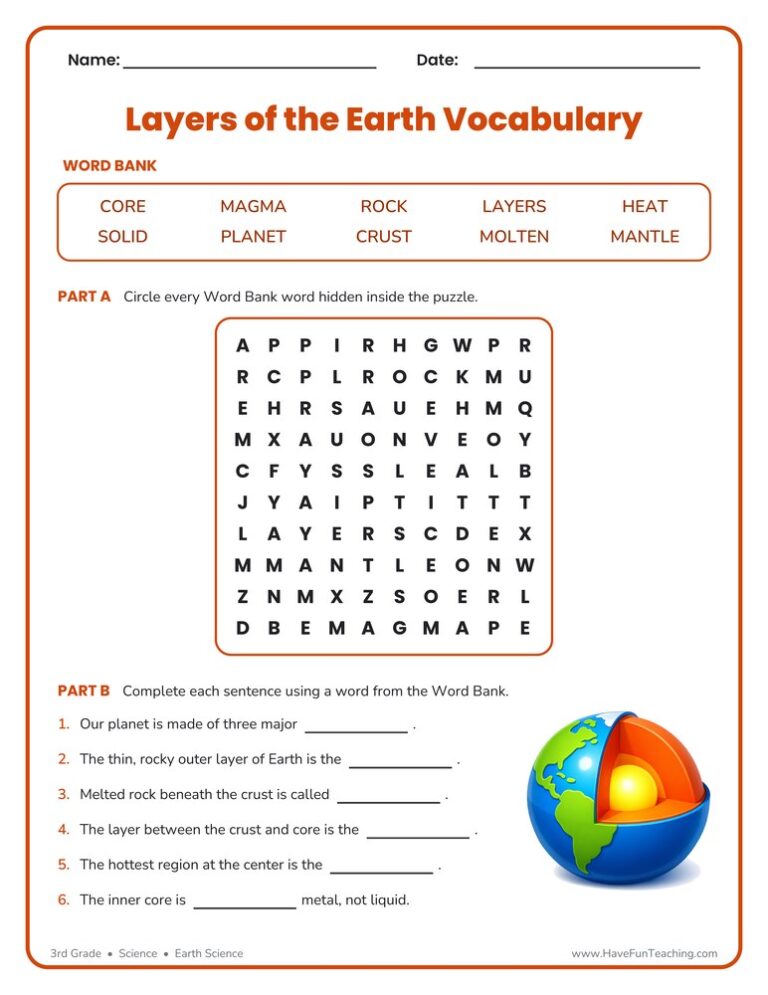
This layers of the earth word search worksheet gives 3rd grade students a 10-word Earth Science puzzle plus six fill-in-the-blank sentences, with an answer key included, so science vocabulary sticks the first time.

Using thisMoon Song (MP3), students learn about the phases of the moon through catchy, interesting lyrics.
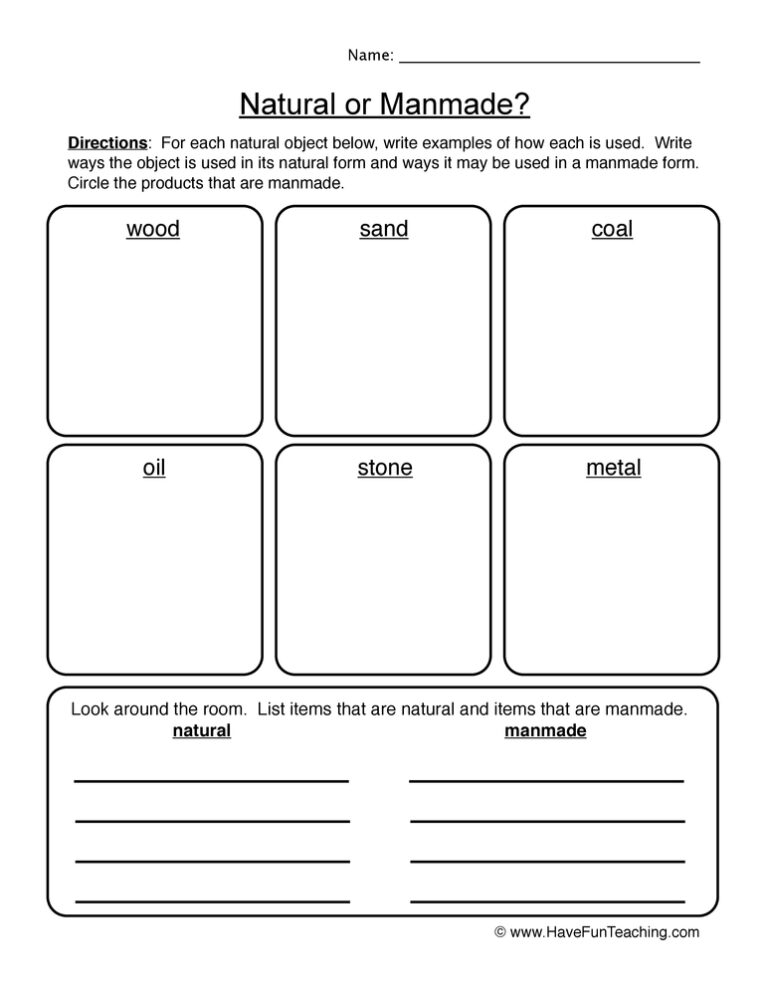
This natural man-made writing worksheet helps 3rd grade students sort everyday materials into natural and manmade groups, then find both kinds inside four short sentences. An answer key is included, so science practice is ready to print.




Reviews
There are no reviews yet