
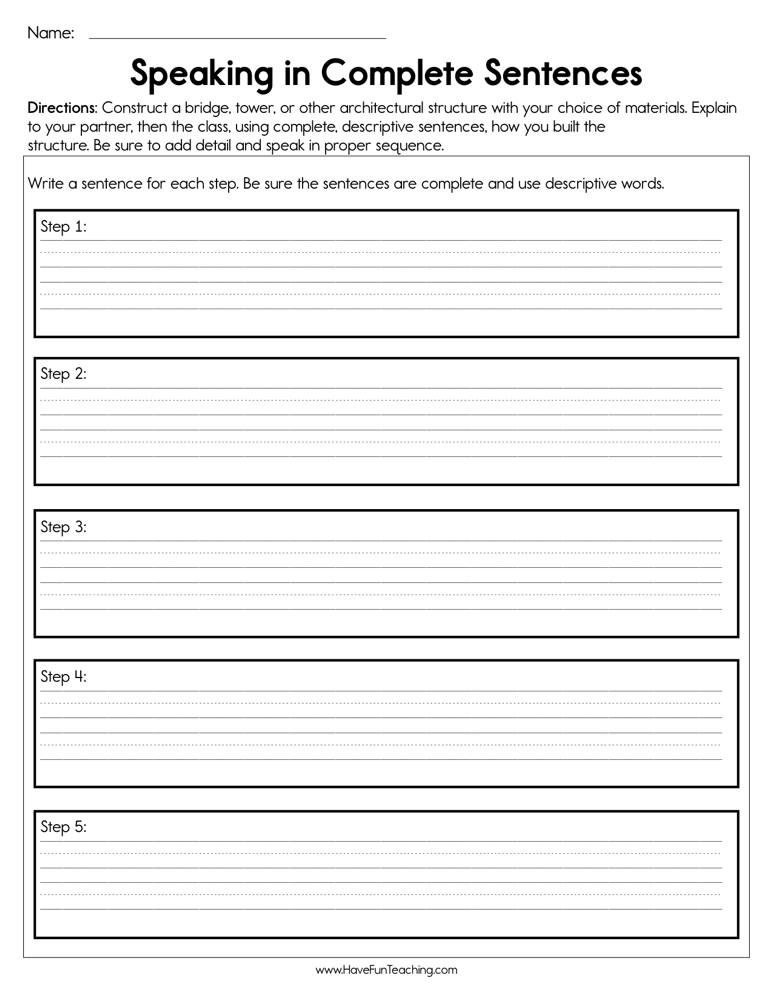
Speaking in Complete Sentences Worksheet
A Speaking in Complete Sentences Worksheet that helps 2nd graders tell a whole sentence from a fragment, find the naming part, and say and write one about a picture. Answer key included for confident sentence practice.
$6.97
Want this one free?
Tell us where to send it and it’s yours — no card, no catch.
One free resource per teacher. We’ll also send free teaching ideas each week — unsubscribe anytime.
Free teacher account · no credit card
Membership
Get every game, song, & printable
- Every game, on any device
- 10,000+ printables
- Assign online with HFT Classroom
Then $39.97/year · cancel anytime · See plans
- Instant digital download
- Printable PDF + answer key
- Made by real teachers
Teacher / Family membership
Teaching is easier with every resource
One membership for your whole year: 10,000+ worksheets, games, songs and videos for Preschool–6th, for your classroom or homeschool.
- Unlimited printables & downloads
- Every game, on any device
- Assign online with HFT Classroom
- Cancel anytime
Teacher / Family membership · 3 days free
Yearly
Monthly would be $119.64 a year
$3.33/month
Billed $39.97 once a year
You save $79.67 every year
Start My 3 Free Days$0 today · cancel anytime
Monthly
$9.97/month
Flexible, month to month
Yearly is just $3.33/mo. Switch and save $79.67
Start My 3 Free Days$0 today · cancel anytime
About this resource
Description
Speaking in complete sentences is one of the first big steps a young writer takes. A complete sentence needs a naming part that tells who or what, and a telling part that says what happens. This Speaking in Complete Sentences Worksheet gives second graders a clear, friendly way to hear that difference, say it out loud, and then write it down. Students learn to notice when a group of words stops short of a whole idea, and how to finish the thought so a listener understands it the first time.
This 2nd grade sentences worksheet moves from listening to speaking to writing in three short parts. In Part A, students fill in a bubble to tell whether each group of words is a complete sentence. In Part B, they draw a line under the naming part of four sentences so the subject stands out. In Part C, they look at the picture, say a complete sentence about it to a partner, and then write that sentence on the lines. Print it for morning work, a grammar center, a partner-talk warm-up, or homework.
What’s Included
- 1 print-ready PDF worksheet
- Answer key
- 8 sentence activities plus a speak-and-write picture prompt
Three things make this Speaking in Complete Sentences Worksheet work. First, it keeps one skill on the page, so students are never guessing what to look for. Second, it asks for the same idea in three ways — recognize it, mark it, and produce it — which is how a rule moves from something a child can spot to something a child can use. Third, the partner-talk step turns grammar into real speaking practice, so students hear their own sentences out loud before they commit them to paper.
Teachers and parents can stretch the lesson in easy ways. Try a quick finish-my-sentence game where an adult says a naming part and the child adds a telling part. Sort sentence strips into complete and incomplete piles on the floor. Ask students to answer with a full sentence for one whole day, at morning meeting or at the dinner table. Record a short partner conversation and play it back so students can hear which sentences told the whole idea and which ones stopped too soon.
Related Resources
What teachers say
Reviews
You must be logged in to post a review.
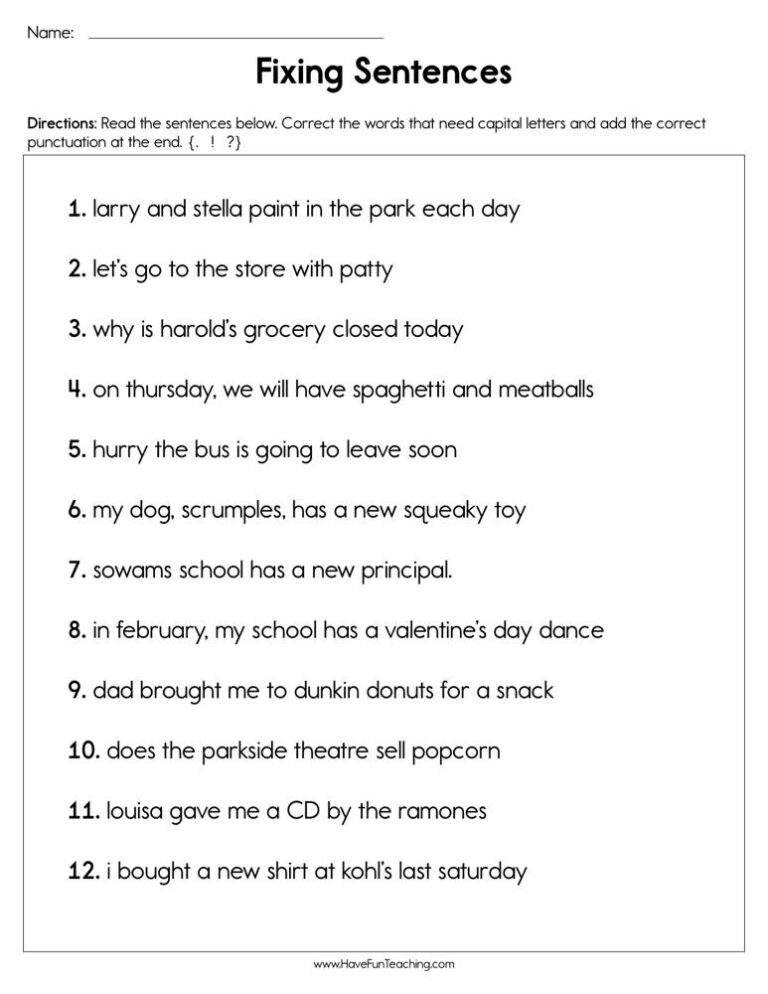
This editing sentences worksheet gives 2nd graders eight sentences to rewrite with the correct capital letters and end marks. Includes a complete answer key—perfect for quick, no-prep proofreading practice at home or school.
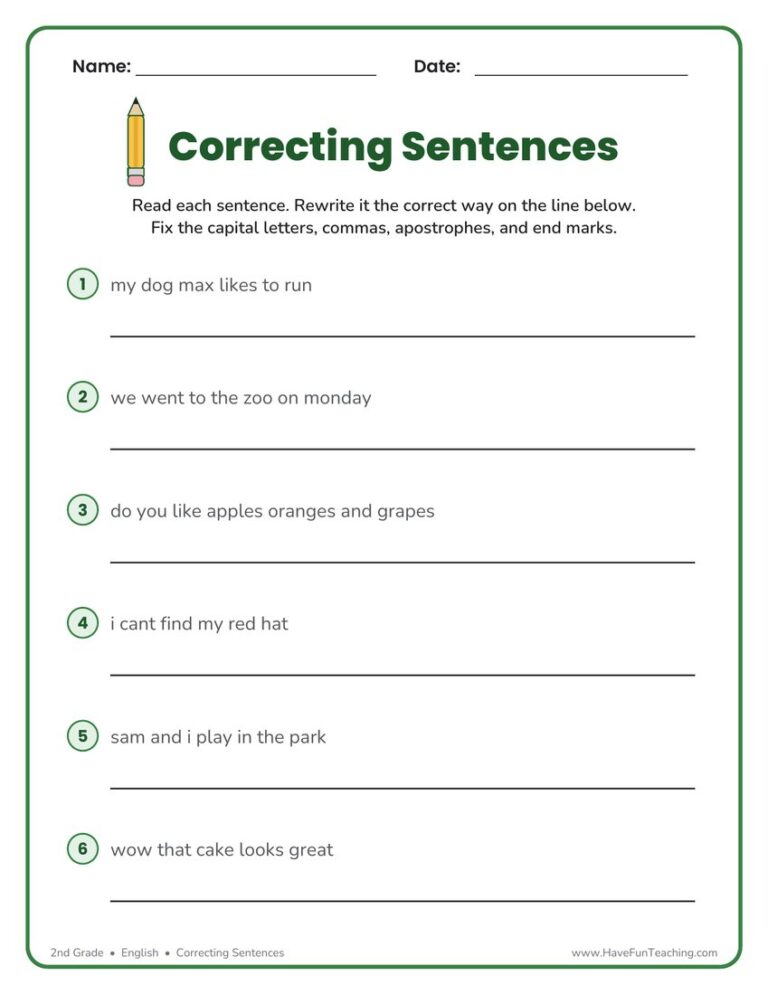
A 2nd grade correcting sentences worksheet where students rewrite six sentences to fix capital letters, commas, apostrophes, and end marks. Includes an answer key for quick, no-prep proofreading practice.
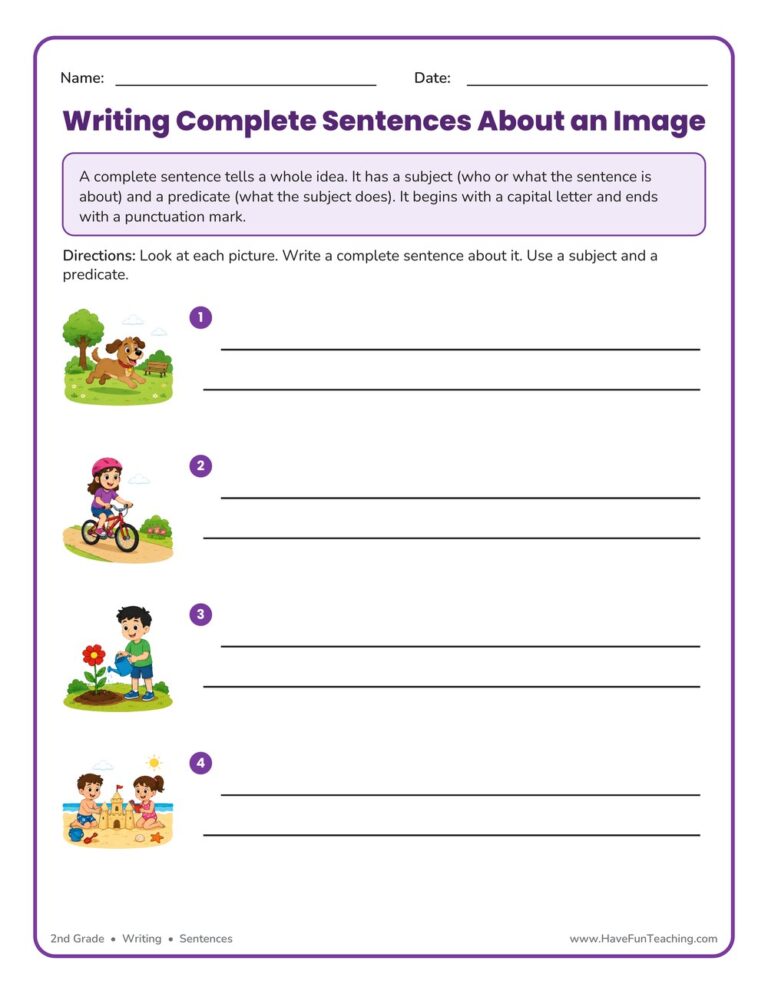
This Writing Complete Sentences About an Image Worksheet gives 2nd graders four picture prompts to practice building sentences with a subject and predicate. Includes sample answers — great for no-prep grammar and writing practice.
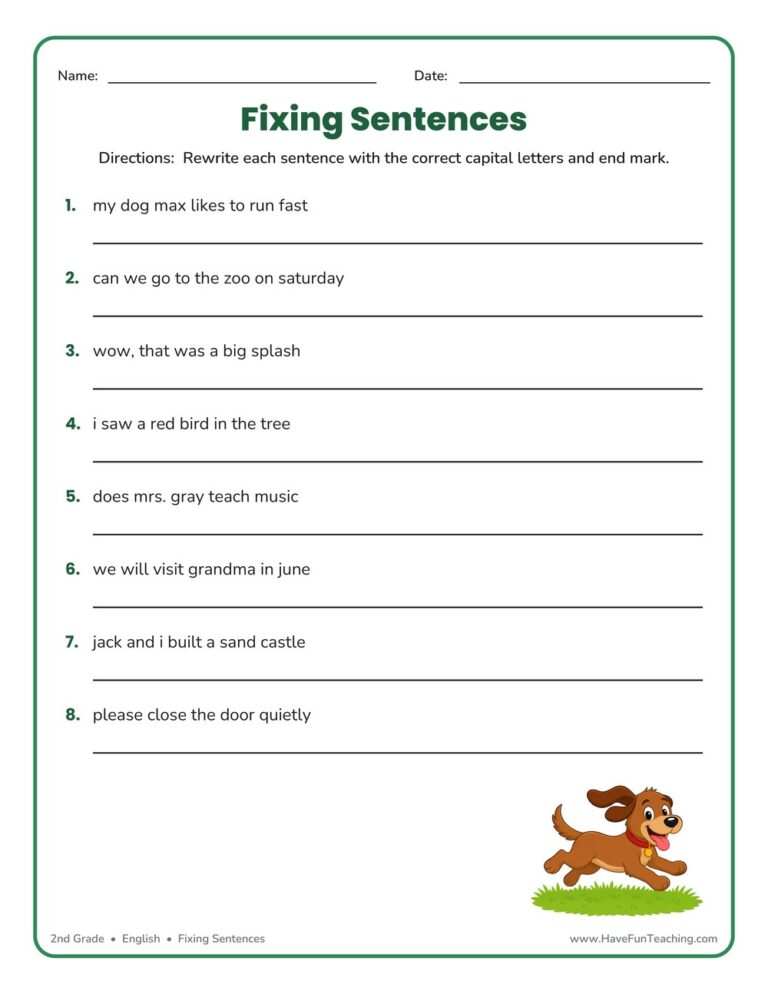
This Fixing Sentences Worksheet gives 2nd graders eight sentences to rewrite with the correct capital letters and end marks. Includes a complete answer key — perfect for no-prep grammar and editing practice.
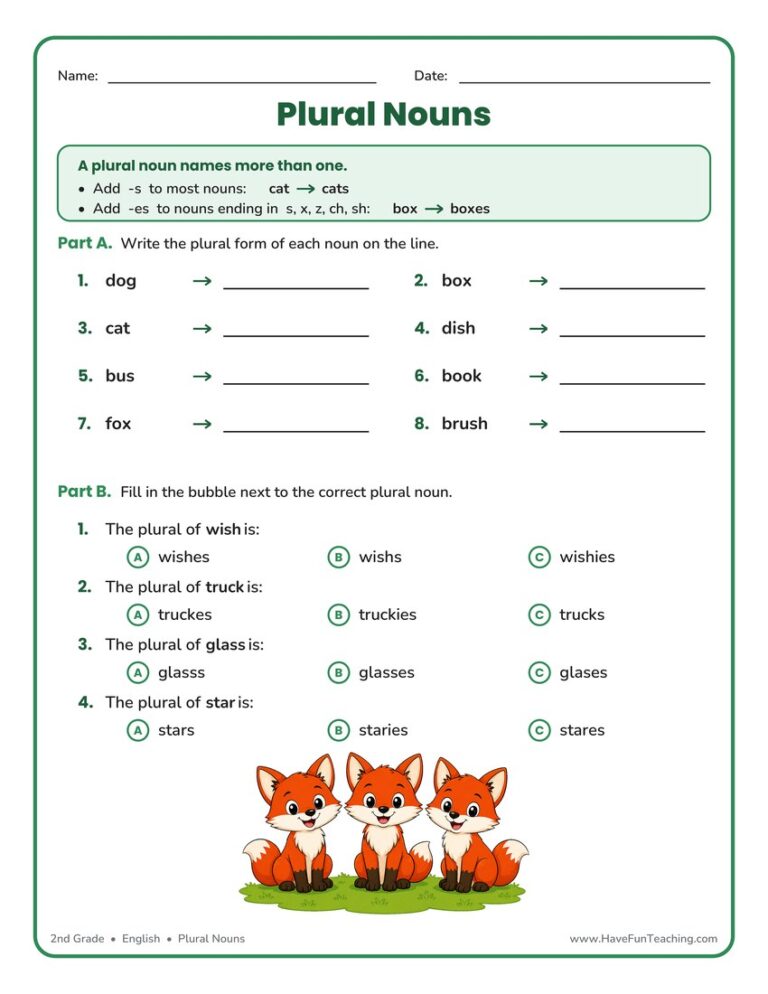
The Creating Plural Nouns Worksheet gives 2nd graders two-part practice turning singular nouns into plurals with the -s and -es rules. Includes a complete answer key for quick, no-prep grammar practice at home or school.

This Correcting Punctuation Worksheet helps 2nd graders rewrite eight sentences with correct capital letters, commas, and apostrophes. Includes an answer key for quick, no-prep editing practice.

This Correcting Capitalization Worksheet gives 2nd graders six sentences to fix, rewriting each one with capital letters for names, places, months, and sentence beginnings. Answer key included for quick, no-prep grammar practice.

This finding nouns worksheet asks 2nd graders to circle nine nouns inside a short story, then sort each one under Person, Place, or Thing. Answer key included for quick, no-prep grammar practice.

Using the Science Songs (MP3 Album), students learn about different science concepts while listening to these upbeat and catchy songs.

This Adding Adjectives Worksheet gives 2nd grade students fun practice finding, choosing, and writing describing words in sentences. An answer key is included, so learning to use adjectives feels clear and rewarding.

This Adjectives Pictures Worksheet asks 2nd graders to choose the adjective that fits each picture, then write two describing words of their own. Answer key included, so grading takes seconds.
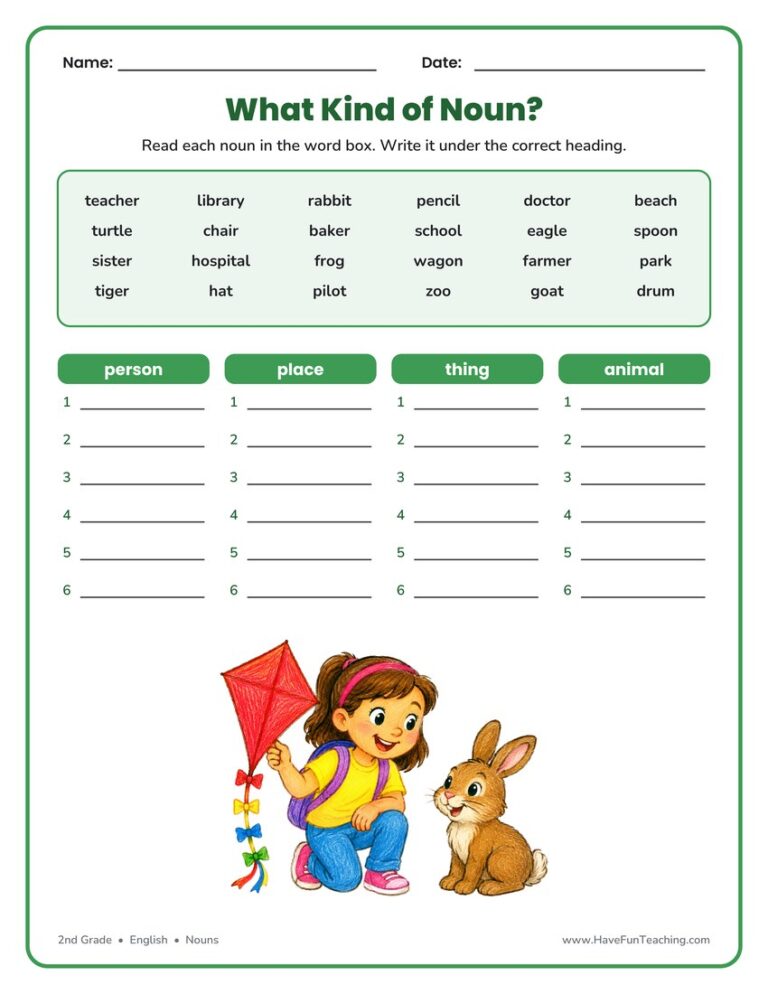
Students sort twenty-four nouns into person, place, thing, and animal categories on this 2nd grade sorting nouns worksheet. Includes a complete answer key for fast, no-prep grammar practice.
Reviews
There are no reviews yet