

Taking Away to Subtract Worksheet
This Taking Away to Subtract Worksheet gives kindergarten students four cross-out picture problems and one word problem, with an answer key included, so subtraction within six feels concrete and easy to check.
$6.97
Or free with a membership — members pay $3.33/mo for all 10,000+ resources. See plans
Want this one free?
Tell us where to send it and it’s yours — no card, no catch.
One free resource per teacher. We’ll also send free teaching ideas each week — unsubscribe anytime.
Teaching is easier with a membership
Unlimited printables, games & videos for PreK–6th — for your classroom or homeschool. Cancel anytime.
Start your 3-day free trial$0 today · cancel anytime · Instant access to 10,000+ resources
About this resource
Description
Subtraction starts with a picture a child can actually see. Before a kindergartner can hold a number fact in their head, they need to count a set of real objects, take some of them away, and count what is left. This Taking Away to Subtract Worksheet builds that first, concrete bridge between counting and subtracting. Children look at a row of apples, balloons, cupcakes, or flowers, cross out the ones being taken away, and then write how many are left. Every problem stays within six, so the numbers never get in the way of the idea, and the pictures do the explaining.
This kindergarten subtraction worksheet gives students four picture problems and one short word problem on a single, uncluttered page. Read the directions together, then let children mark the page themselves. Crossing out is the whole point: the pencil marks turn an abstract minus sign into an action the child performed. Model the first item aloud, count the leftover pictures with them, and then write the answer on the line. The last problem asks students to read a short story about Sofia and her pencils, cross out two, and record the difference. A full answer key is included on page two so grading takes seconds.
What’s Included
- 1 print-ready PDF worksheet
- Answer key
- 4 cross-out picture subtraction problems (within 6)
- 1 illustrated subtraction word problem
There are three reasons this Taking Away to Subtract Worksheet helps young learners. First, it keeps the quantities small and countable, so children succeed early and stay confident. Second, it pairs the picture, the equation, and the written answer in one line, which helps students connect the drawing to the symbols instead of treating them as separate skills. Third, the crossing-out step gives a physical record of the thinking, so a teacher can see at a glance whether a child understood the take-away idea or simply guessed a number.
Keep the practice going away from the page. Line up six crackers at snack time and eat two, then ask how many are left. Pop bubbles, remove blocks from a tower, or take toy cars off a shelf and say the subtraction sentence out loud together. Draw circles on a whiteboard and let your child be the one to cross them out. Sing a counting-down song on the way to school. Small, playful repetitions like these make subtraction feel like something children already know how to do.
Related Resources
What teachers say
Reviews
You must be logged in to post a review.
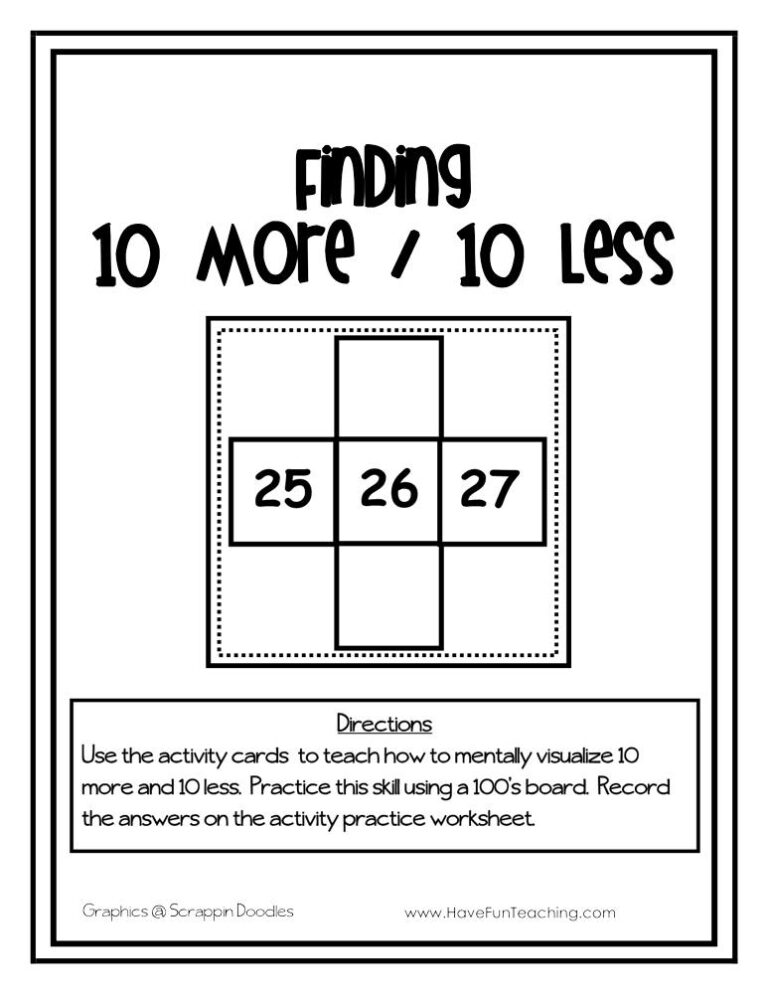
In this Finding 10 More 10 Less Activity, students practice finding 10 more and less than a given number to build skip counting and base ten skills.

This Subtracting Within 5 Worksheet gives Kindergarten students ten take-away problems, from countable pictures to number sentences, with an answer key included so practice stays quick, clear, and confidence-building.

Use the Subtracting Using Pictures Assessment Worksheet to check that your Kindergarten learners can take away within 10 using picture models. An answer key is included, so checking work takes seconds.

This Subtraction Facts to 5 Worksheet gives Kindergarten students eight number facts and three apple picture problems to solve, with an answer key included, so subtraction within 5 becomes quick and confident.
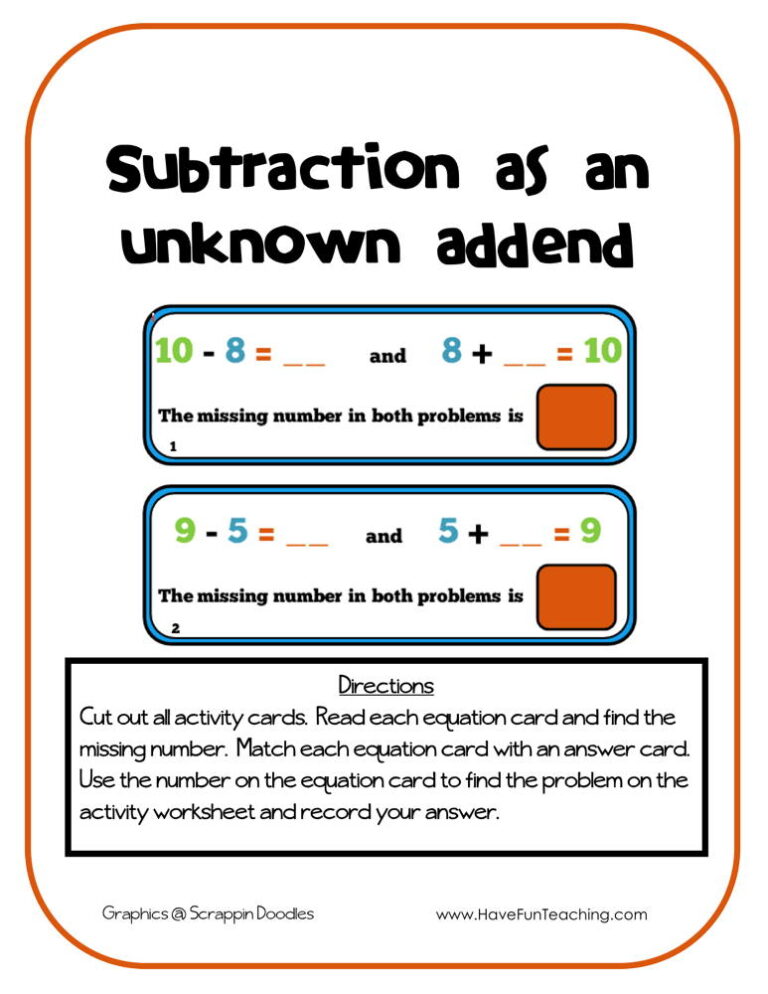
In this Subtraction as an Unknown Addend Activity, students find the unknown whole number in addition and subtraction equations up to 20.

This word problem subtraction worksheet helps Kindergarten students cross out pictures and write number sentences to take away within 10. An answer key is included for quick, easy checking.

The Subtract Three Matching Worksheet asks first grade students to match six subtraction facts to their differences and solve four more in answer boxes. An answer key is included.

Using Compose and Decompose Numbers 11-19 Activity, students use ten frames to compose and decompose numbers to build numbers sense.
In this Add and Subtract with Frogs Activity, students add and subtract within 1000, using concrete models or drawings and strategies.

In this Adding and Subtracting Unknown Numbers Activity, students find the unknown whole number in addition and subtraction equations up to 20.

Using Subtracting 10 Using a Number Line Activity, students subtract multiples of ten from multiples of ten on a number line to solve the subtraction equations.
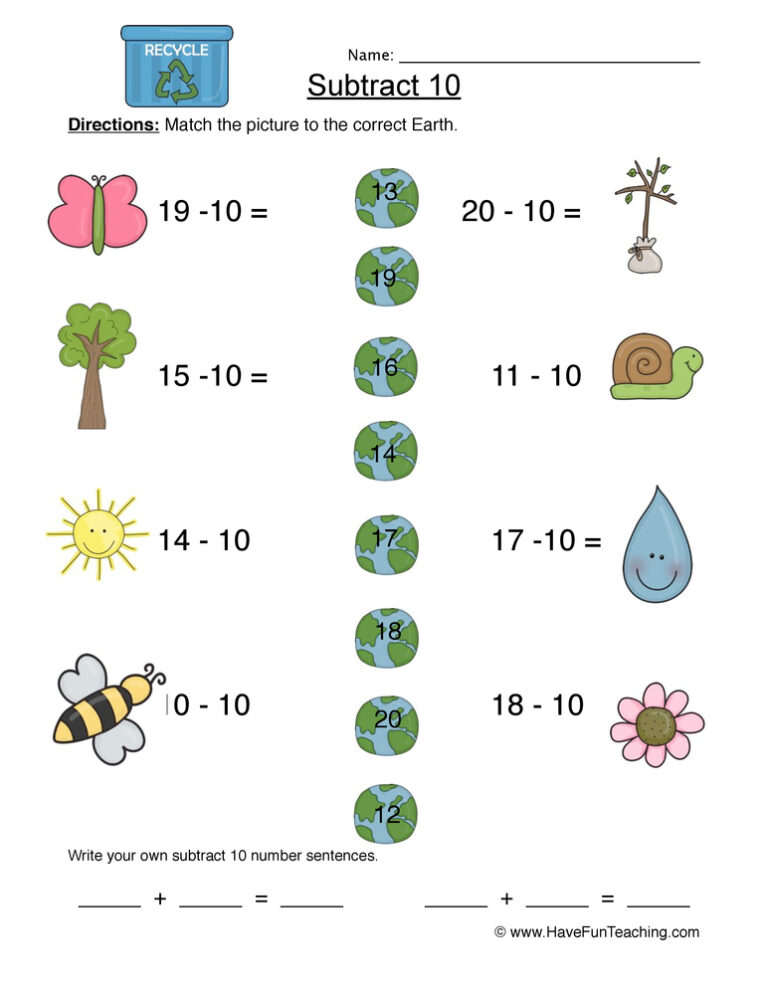
Using Subtract Ten Matching Worksheet, students solve equations by subtracting ten and then match equations to answers.

Reviews
There are no reviews yet