Skip to content
Start My 3 Free Days $0 today · cancel anytime

Kindergarten Subtraction Resources

26 kindergarten subtraction resources: 13 activities, 11 worksheets, 1 test prep and more. How teachers use these

Kindergarten Subtraction Resources

26 kindergarten subtraction resources: 13 activities, 11 worksheets, 1 test prep and more. How teachers use these

Worksheet
WorksheetKindergartenSubtracting Using Pictures Assessment Worksheet

Use the Subtracting Using Pictures Assessment Worksheet to check that your Kindergarten learners can take away within 10 using picture models. An answer key is included, so checking work takes seconds.

Worksheet
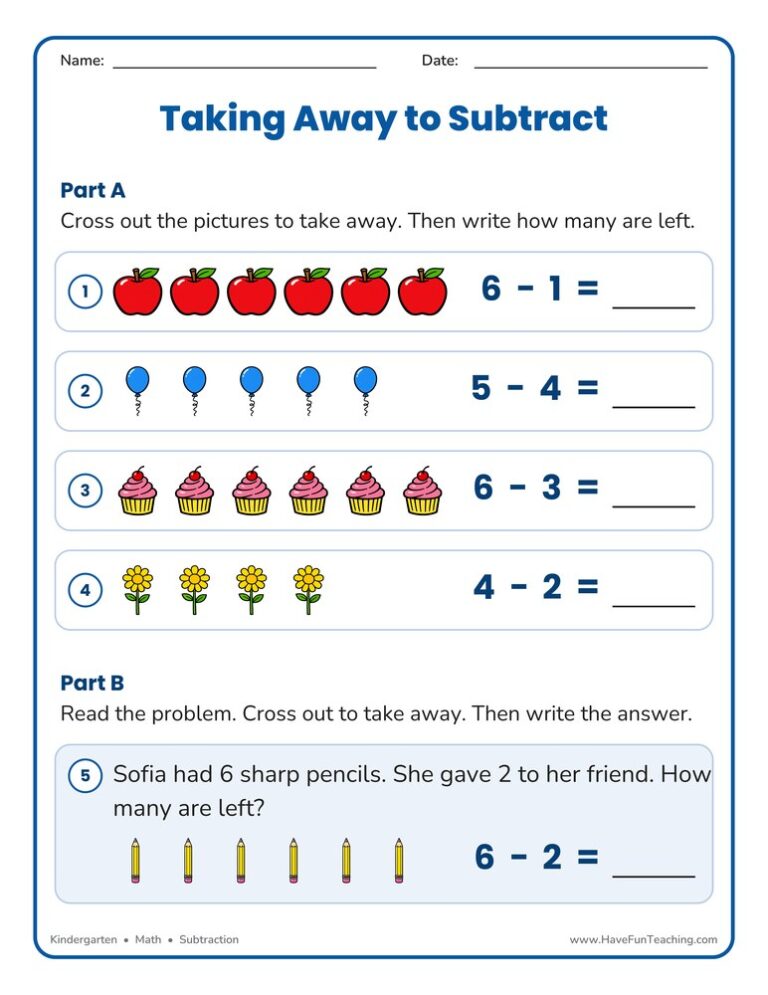
WorksheetKindergartenTaking Away to Subtract Worksheet

This Taking Away to Subtract Worksheet gives kindergarten students four cross-out picture problems and one word problem, with an answer key included, so subtraction within six feels concrete and easy to check.

Worksheet
WorksheetKindergartenSubtracting Within 5 Worksheet

This Subtracting Within 5 Worksheet gives Kindergarten students ten take-away problems, from countable pictures to number sentences, with an answer key included so practice stays quick, clear, and confidence-building.

Activity
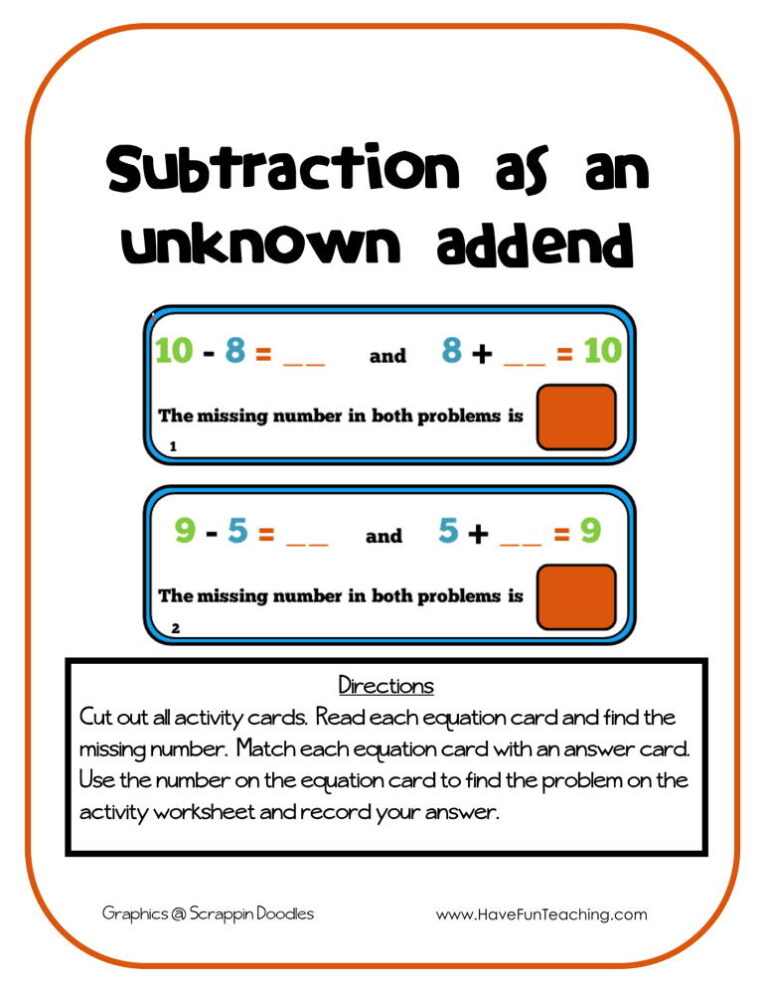
ActivityKindergartenSubtraction as an Unknown Addend Activity

This subtraction as an unknown addend activity helps K through 2nd grade students solve subtraction within 20 by matching each fact to its addition fact card. Answer key included.

Worksheet
WorksheetKindergartenWord Problem Subtraction Worksheet

This word problem subtraction worksheet helps Kindergarten students cross out pictures and write number sentences to take away within 10. An answer key is included for quick, easy checking.

Worksheet
WorksheetKindergartenSubtraction Facts to 5 Worksheet

This Subtraction Facts to 5 Worksheet gives Kindergarten students eight number facts and three apple picture problems to solve, with an answer key included, so subtraction within 5 becomes quick and confident.

Worksheet
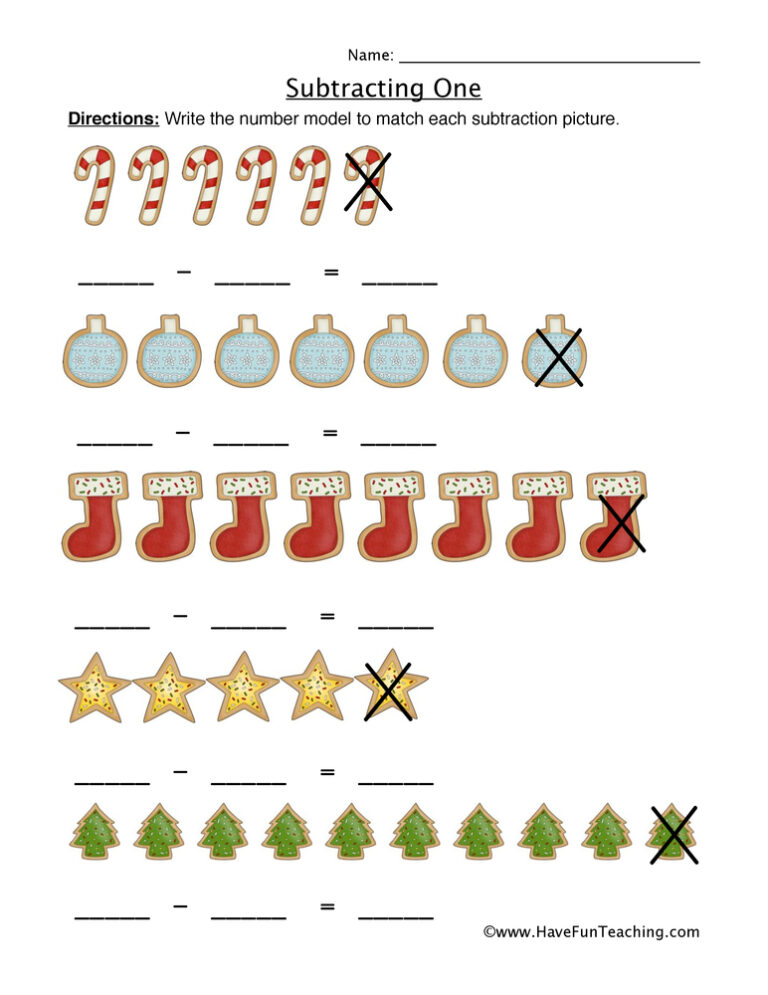
WorksheetKindergartenSubtracting One Writing Equations Worksheet

This Subtracting One Writing Equations Worksheet helps Kindergarten students count picture rows, take away one, and write each number sentence, with an answer key included so early subtraction clicks.

Worksheet
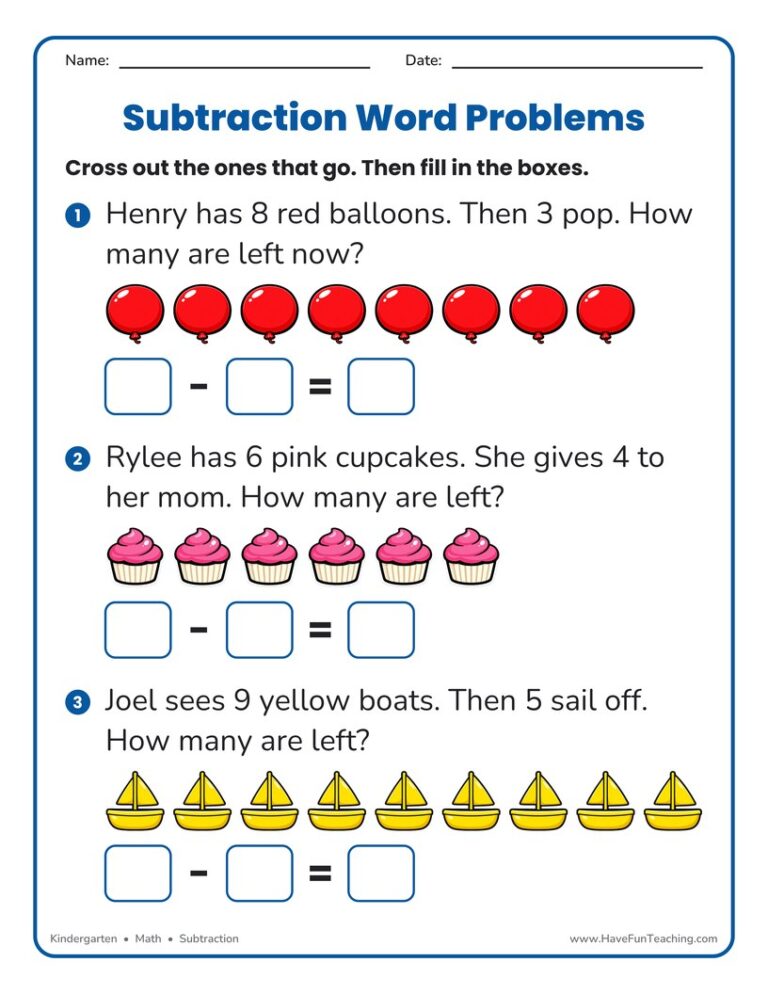
WorksheetKindergartenSubtraction Equations Word Problems Worksheet

This subtraction equations word problems worksheet gives kindergarten students three picture stories to count, cross out, and write as equations within ten. An answer key is included for quick checking.

Workbook
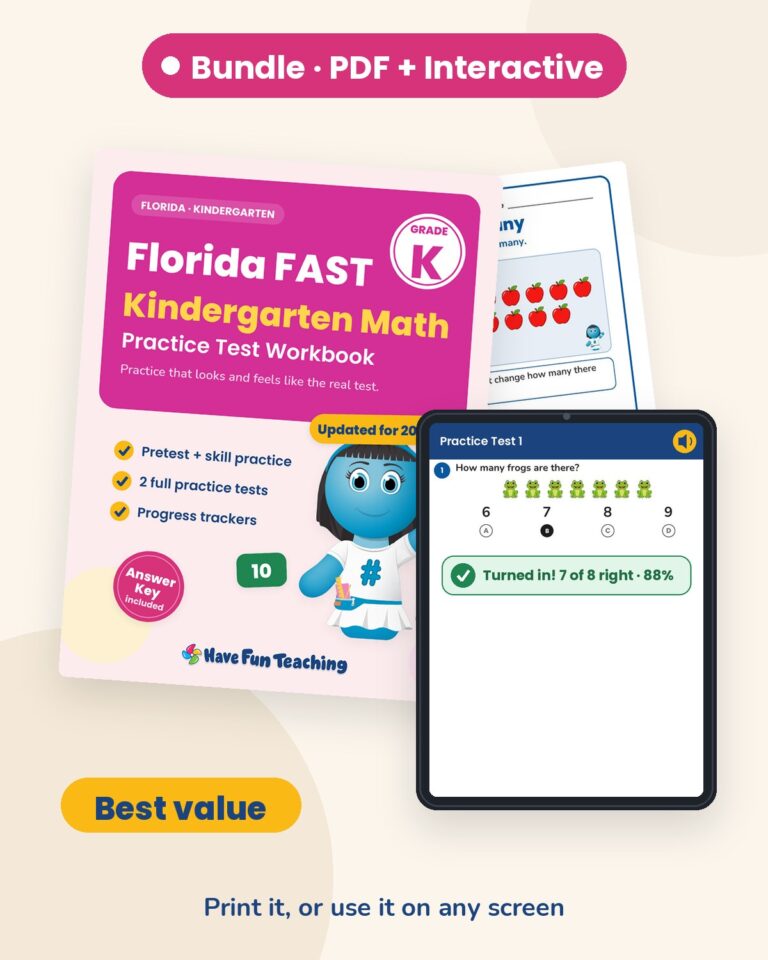
WorkbookKindergartenFlorida FAST Kindergarten Math Practice Test Workbook

A Florida FAST Kindergarten math practice test workbook for teachers, with a pretest, skill practice for all 22 benchmarks, mixed review and 2 full-length practice tests. Answer key included, so test prep is ready to go.

Worksheet
WorksheetKindergartenSubtracting Two Writing Equations Worksheet

This Subtracting Two Writing Equations Worksheet lets Kindergarten students count picture rows, take away two, and write each number sentence, with an answer key included to make early subtraction practice easy.

Activity
ActivityKindergartenDecomposing a Ten Frame Activity

This decomposing a ten frame activity helps kindergarten to 2nd grade students match ten frames to facts that make 10, with a practice page and answer key included.

Worksheet
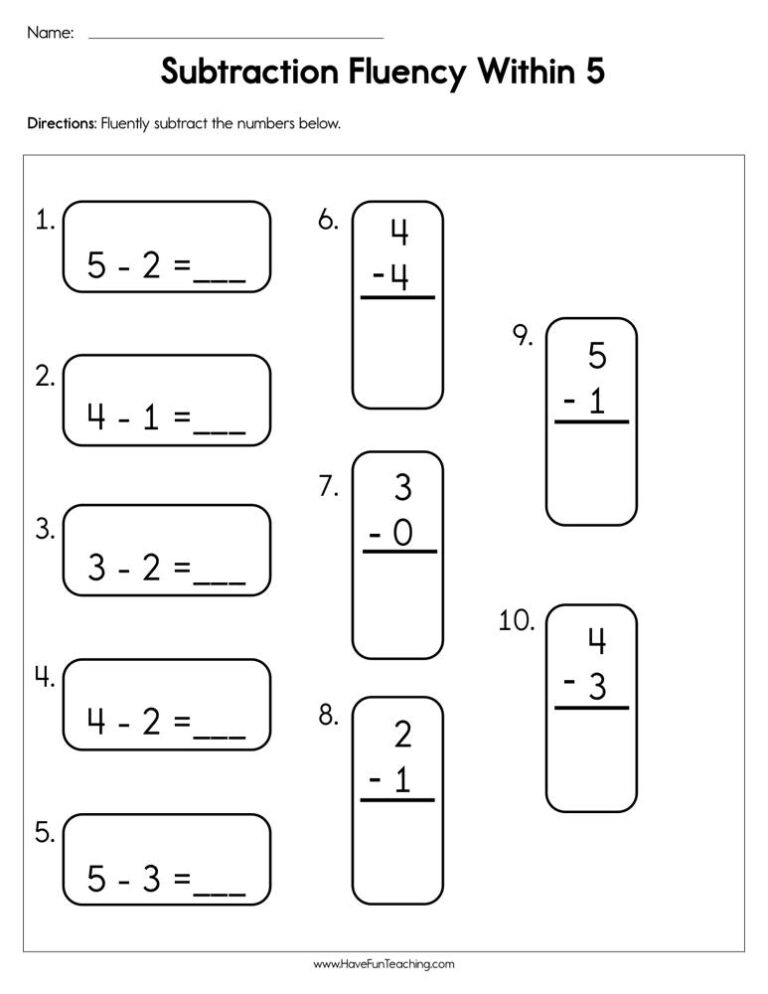
WorksheetKindergartenSubtracting Fluency Within 5 Worksheet

This subtracting fluency within 5 worksheet gives kindergarten students 14 quick take-away facts with answers from 0 to 5 to build speed and confidence. An answer key is included for easy checking.

Activity
ActivityKindergartenMissing Number Addition and Subtraction Activity

This missing number addition and subtraction activity has K-2nd grade students match watermelon equation cards to their answers within 10 and 20. Answer key included for fun, hands-on fact practice.

Activity
ActivityKindergartenMissing Number Addition Activity

This missing number addition activity has children draw watermelon slices to find the unknown addend in 18 problems within 10. Made for kindergarten and 1st grade, with a practice page and answer key included.

Activity
ActivityKindergartenSubtraction Within 5 Activity

This subtraction within 5 activity has kindergarten and 1st grade children solve peanut butter jar problems and match them to jelly jar answers. Answer key included.

Worksheet
WorksheetKindergartenSubtract Three Matching Worksheet

The Subtract Three Matching Worksheet asks first grade students to match six subtraction facts to their differences and solve four more in answer boxes. An answer key is included.

Activity
ActivityKindergartenCount Back Activity

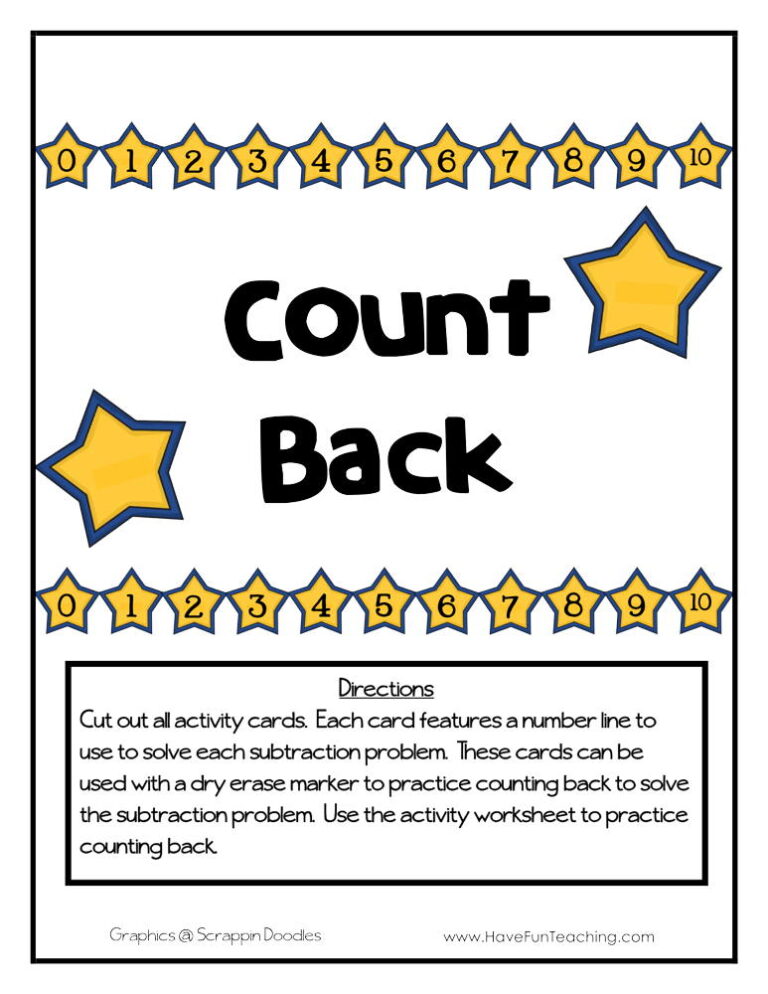
Using Count Back Activity, students count back from one number to another number to solve the subtraction equations.

Activity
ActivityKindergartenSingle Digit Subtraction Activity

This single digit subtraction activity has kindergarten and 1st grade students draw apple number cards, subtract, and record each difference. Answer key included.

Activity
ActivityKindergartenSubtraction in the Garden Subtraction Activity

This subtraction in the garden subtraction activity lets kindergarten and 1st grade children plant, pick and count paper vegetables to solve take-away problems within 10. Answer key included.

Activity
ActivityKindergartenAdding to Make 10 Activity

Using Adding to Make 10 Activity, students match addition equation cards with missing addend cards to show equations that make 10.

From our teachers' playbook

Take away, count what's left

What do kindergarteners learn about subtraction?

In kindergarten, subtraction means taking away. Kids start with real objects: five apples, eat two, how many are left? They act it out, draw it and finally write it: 5 − 2 = 3. By the end of the year most kindergarteners subtract within 5 quickly and within 10 with objects or fingers. They also solve simple story problems. The click moment is when a child realizes subtraction undoes addition: "3 and 2 make 5, so 5 take away 2 is 3!"

Our favorite ways to make subtraction stick

Kindergarten subtraction is all about real things disappearing. These moves make it visible.

Act it out with objects

Give kids five counters or snacks. Tell a story: "Five bunnies were in the garden. Two hopped away." Kids slide two away and count what's left. Acting out the story first makes the minus sign mean something.

Why it works: the U.S. Department of Education's guide for teaching elementary math recommends moving from hands-on objects to drawings to numbers.

Taking Away to Subtract WorksheetTry it withTaking Away to Subtract WorksheetWorksheetsOpen it →

Draw it and cross it out

Kids draw five circles, then cross out two and count the rest. Drawing is the bridge from real objects to equations, and it's a strategy they can use on any test.

Why it works: pairing a picture with each word gives kids two ways to remember it, a well-tested principle of how people learn (Mayer, 2009).

Subtracting Using Pictures Assessment WorksheetTry it withSubtracting Using Pictures Assessment WorksheetWorksheetsOpen it →

Count back hops

Put a number line on the floor. Kids start on 7 and hop back 3 spaces, saying each number. Their whole body learns that subtraction moves backward.

Why it works: playful practice with a clear goal keeps kids practicing longer, and simple learning games have been shown to build real skills (Ramani and Siegler, 2008).

Count Back ActivityTry it withCount Back ActivityActivitiesOpen it →

Questions teachers and parents ask

What subtraction should kindergarteners know?

Kindergarteners subtract within 10 using objects, drawings and fingers, and become fluent within 5. They also solve simple take-away story problems.

How do I teach subtraction to a 5-year-old?

Start with real objects and simple stories. Let your child take some away and count what's left. Move to drawings, then to writing the equation once they understand the idea.

Should kindergarteners use fingers to subtract?

Yes. Fingers are a great tool at this age. As kids practice, they'll start to know small facts by heart.

How can I practice subtraction at home?

Count snacks and eat a few, park toy cars and drive some away, or count stairs going down. Everyday take-away moments build number sense.