
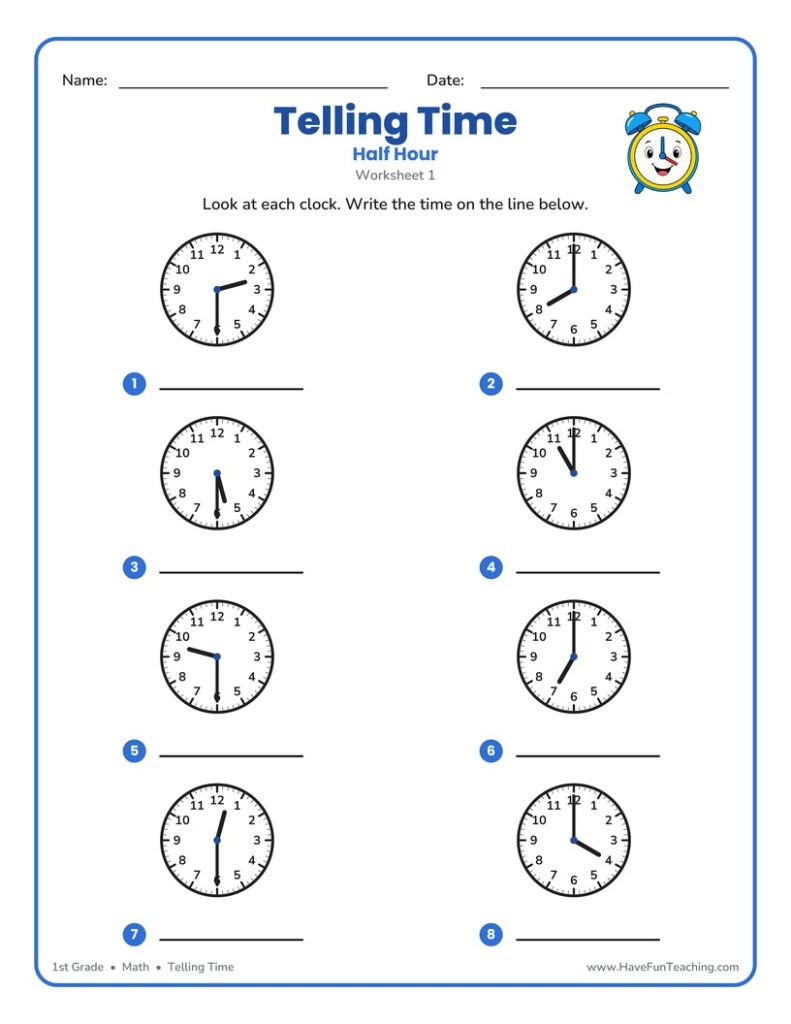
Telling Time To The Half Hour Worksheet
A Telling Time To The Half Hour Worksheet where first graders read eight analog clocks and write each time. Includes an answer key—perfect for quick, no-prep clock practice at home or school.
$6.97
Or free with a membership — members pay $3.33/mo for all 10,000+ resources. See plans
Want this one free?
Tell us where to send it and it’s yours — no card, no catch.
One free resource per teacher. We’ll also send free teaching ideas each week — unsubscribe anytime.
Teaching is easier with a membership
Unlimited printables, games & videos for PreK–6th — for your classroom or homeschool. Cancel anytime.
Start your 3-day free trial$0 today · cancel anytime · Instant access to 10,000+ resources
About this resource
Description
Telling time is one of the first real-world math skills children master, and it lays the groundwork for reading schedules, following routines, and understanding how the day unfolds. This Telling Time To The Half Hour Worksheet gives first graders clear, focused practice reading an analog clock and recording the time it shows. Each clock displays a time on the hour or the half hour, so students learn to notice where the short hour hand and the long minute hand point and to connect that picture to the numbers they write.
The worksheet presents eight friendly analog clocks, and students simply look at each clock and write the matching time on the line below it. As a 1st grade clocks worksheet, it is perfect for morning warm-ups, math centers, independent practice, or quick homework. Because the page is clean and uncluttered, children can concentrate on one clock at a time, and the included answer key lets teachers and parents check work in seconds.
What’s Included
- 1 print-ready PDF worksheet
- Answer key
- 8 analog-clock telling-time problems
There are three big reasons this resource helps young learners. First, it isolates a single skill—reading time to the hour and half hour—so children are not overwhelmed by minutes they have not learned yet. Second, the repeated practice on this Telling Time To The Half Hour Worksheet builds the automatic recognition kids need to read clocks quickly and confidently. Third, writing the digital time next to each analog clock strengthens the link between the two ways we show time, which deepens real understanding instead of guessing.
To extend the learning, set a real classroom or kitchen clock to different half-hour times and ask your child to read it aloud, or have students draw their own clock hands to match a time you call out. You can also tie telling time to daily routines—“We eat lunch at 12:00” or “Recess starts at 1:30”—so the skill feels useful and real. Pairing this worksheet with a hands-on play clock makes practice playful and memorable.
Related Resources
What teachers say
Reviews
You must be logged in to post a review.
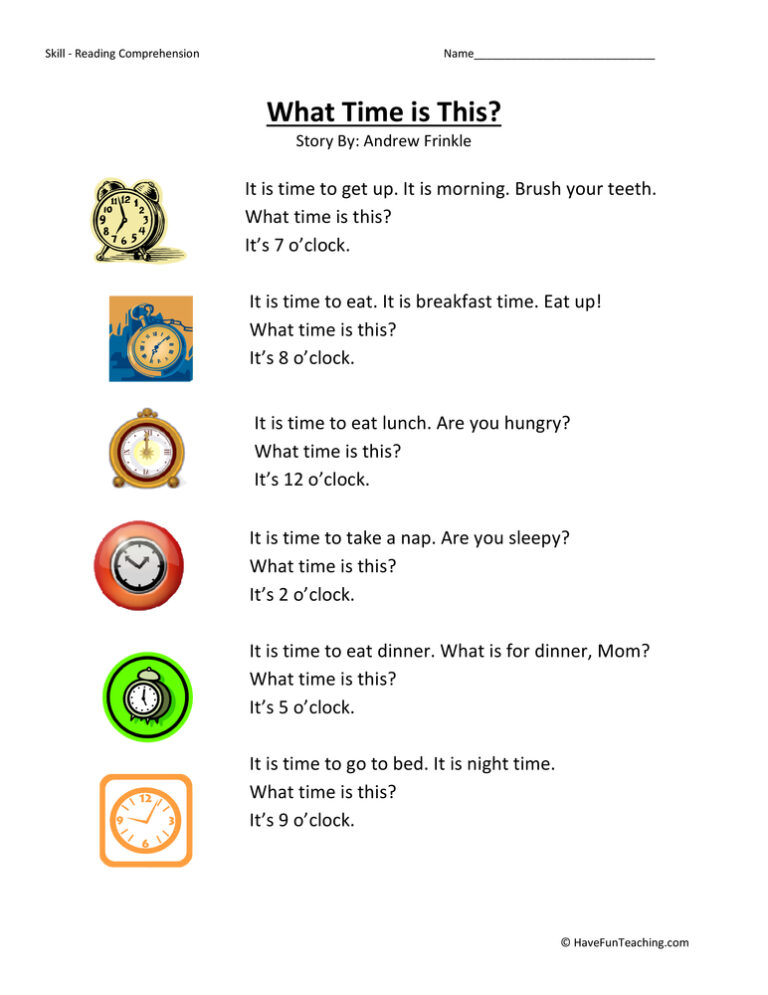
This What Time is This Reading Comprehension Worksheet gives 1st graders a short story about a boy's day and five questions about the o'clock times inside it. Answer key included for quick, no-prep practice.

A What Time Is It worksheet where 1st graders read six analog clocks and write the digital time to the hour and half hour. Includes a complete answer key — perfect for quick, no-prep telling time practice at home or school.

This time telling worksheet asks 1st grade students to write the time under six clocks set to the hour and half hour, then draw the hands on three more. An answer key is included.

This time to the hour worksheet has 1st graders read six analog clocks and then draw the hands on two more. An answer key is included, so whole-hour practice is ready to hand out with no prep.

Using this Telling Time Activity, students practice telling time to the hour on an analog clock.

This time to the hour matching worksheet has 1st grade students match analog clocks to digital times and draw the hands themselves. An answer key is included, so practice is ready to print and go.

The Clock Worksheet has 1st graders fill in the missing numbers on a big clock face, then read three clocks and write each time. Answer key included, so the dial finally makes sense with zero prep.
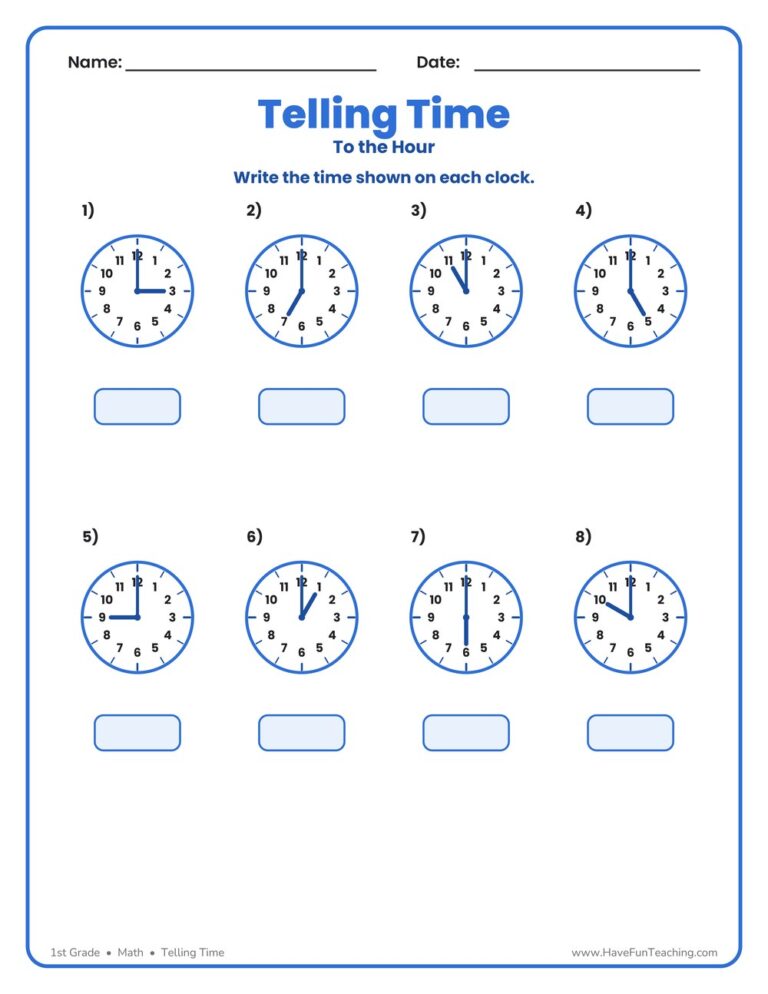
This Telling Time To The Hour Worksheet gives 1st graders eight analog clocks to read and write as digital times. Includes a complete answer key—perfect for quick, no-prep clock practice at home or school.
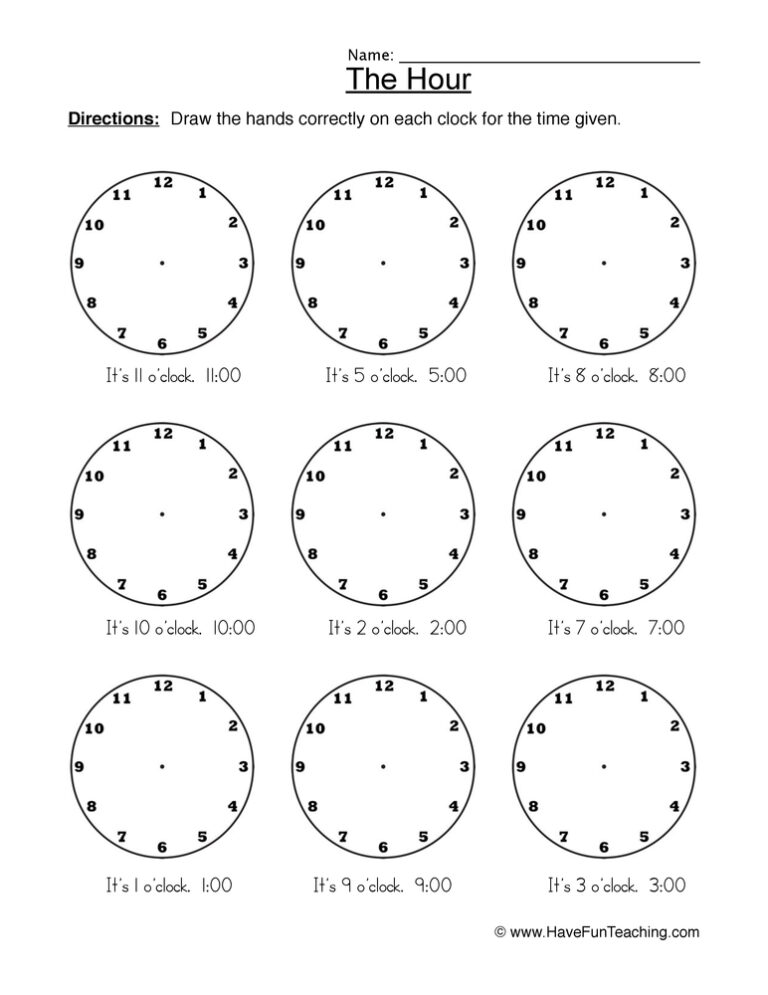
This Showing Time Worksheet has 1st graders read six analog clocks and draw the hands on three more, all to the hour. A complete answer key is included for fast, no-prep practice.

This Identifying Times Worksheet gives 1st Grade students nine analog clocks to read and draw, practicing time to the hour both ways. An answer key is included, so checking the page takes seconds.

Using this Telling Time Hour Clock BINGO, students practice telling time to the hour on an analog clock.
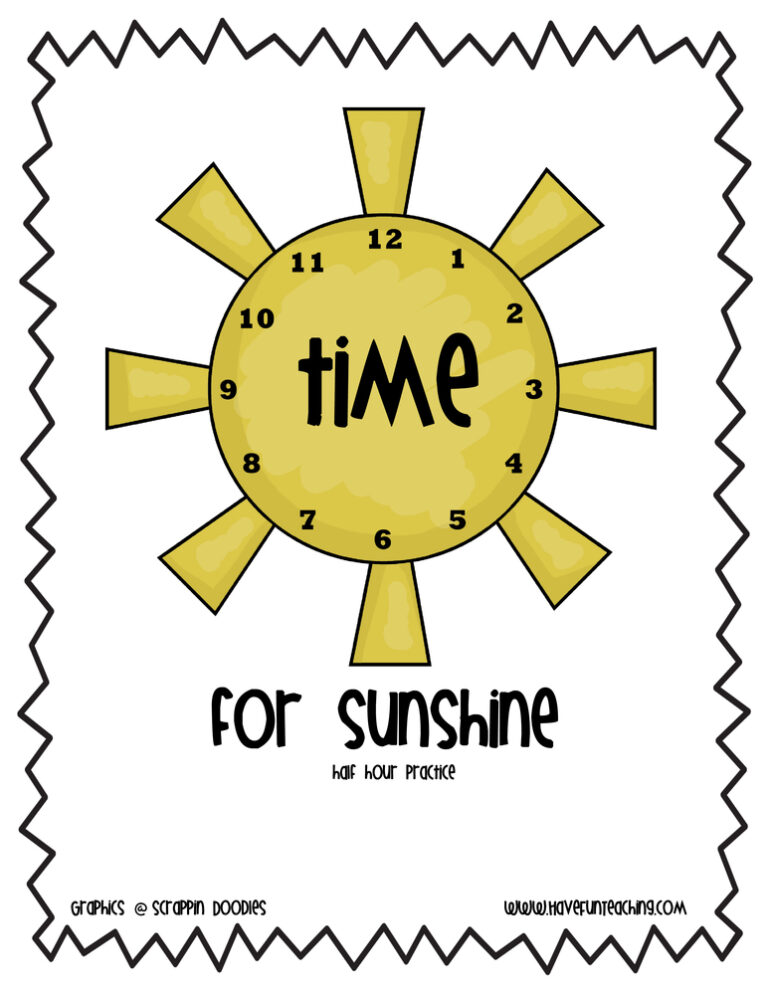
Using this Time for Sunshine To The Half Hour Clock Activity , students practice telling time to the half hour on an analog clock.

Reviews
There are no reviews yet