

Time Telling Worksheet
This time telling worksheet asks 1st grade students to write the time under six clocks set to the hour and half hour, then draw the hands on three more. An answer key is included.
$6.97
Or free with a membership — members pay $3.33/mo for all 10,000+ resources. See plans
Want this one free?
Tell us where to send it and it’s yours — no card, no catch.
One free resource per teacher. We’ll also send free teaching ideas each week — unsubscribe anytime.
Teaching is easier with a membership
Unlimited printables, games & videos for PreK–6th — for your classroom or homeschool. Cancel anytime.
Start your 3-day free trial$0 today · cancel anytime · Instant access to 10,000+ resources
About this resource
Description
Learning to read an analog clock is one of the first real measurement skills a first grader meets, and it takes practice with the hands themselves, not just a digital display. This time telling worksheet gives students nine clock faces to work with, all set to the hour and the half hour. Students learn that the short, thick hour hand names the hour and that the long minute hand tells how far past that hour the clock has moved. Once a child can see that the minute hand pointing straight up means o’clock and pointing straight down means thirty, reading a classroom clock stops being a guess.
This time telling worksheet works in two directions, which is what makes it more than a matching drill. In Part A, six clocks already show their hands, and students write the time in the box under each one. In Part B, the box shows the time and the clock face is blank, so students have to draw the hour hand and the minute hand themselves. Working both ways on the same 1st grade clocks worksheet means a child cannot simply copy a pattern; they have to know what each hand does. Page two is a complete answer key, so checking the work takes seconds.
What Is Included
- One printable worksheet page plus a full answer key page
- Six read-the-clock items set to the hour and the half hour
- Three draw-the-hands items with blank clock faces and printed times
- Nine large, clearly numbered clocks with all sixty minute marks
- A Name and Date line at the top for classroom use
Three things make this practice stick. First, every clock is drawn to the real geometry of a working clock, so the hour hand sits halfway between two numbers at half past, exactly the way a wall clock behaves; students who learn on it are not surprised later. Second, the sheet asks for both reading and drawing, so a child who can name a time also has to produce one, which is a much stronger check of understanding. Third, the hour and half hour times are mixed rather than grouped, so students slow down and look at the minute hand on every single item instead of settling into a rhythm.
Teachers and parents can stretch this activity in a few easy ways. Try calling out a daily routine and asking a child to draw it on a blank clock, such as when the school bus arrives or when lunch begins. Keep a small demonstration clock nearby and have students set the hands to match each item before they write. You can also count around the face by fives together, touching each number as you go, so the minute marks start to feel familiar long before students reach time to five minutes in second grade.
Related Resources
What teachers say
Reviews
You must be logged in to post a review.
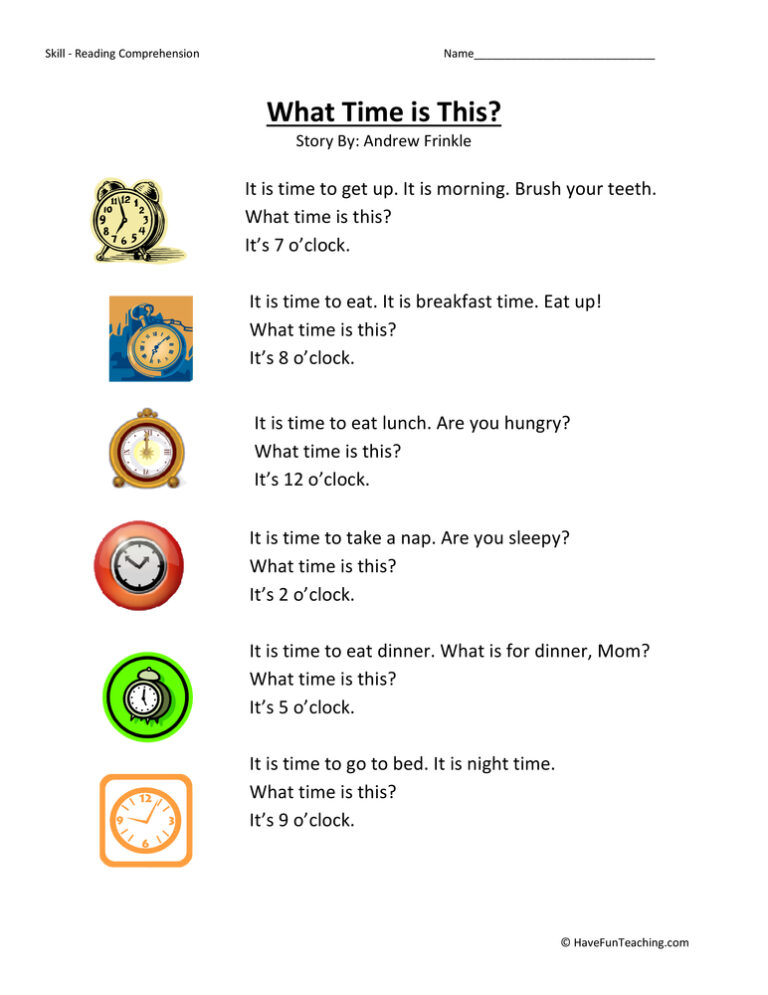
This What Time is This Reading Comprehension Worksheet gives 1st graders a short story about a boy's day and five questions about the o'clock times inside it. Answer key included for quick, no-prep practice.

A What Time Is It worksheet where 1st graders read six analog clocks and write the digital time to the hour and half hour. Includes a complete answer key — perfect for quick, no-prep telling time practice at home or school.
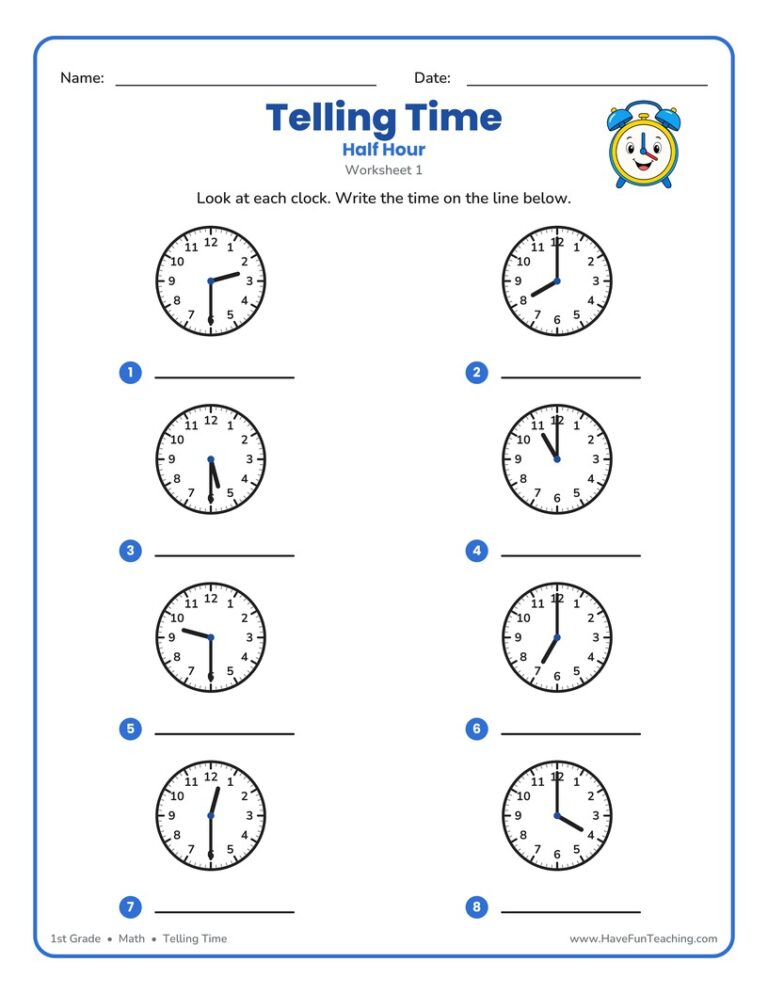
A Telling Time To The Half Hour Worksheet where first graders read eight analog clocks and write each time. Includes an answer key—perfect for quick, no-prep clock practice at home or school.

This time to the hour worksheet has 1st graders read six analog clocks and then draw the hands on two more. An answer key is included, so whole-hour practice is ready to hand out with no prep.

Using this Telling Time Activity, students practice telling time to the hour on an analog clock.

The Clock Worksheet has 1st graders fill in the missing numbers on a big clock face, then read three clocks and write each time. Answer key included, so the dial finally makes sense with zero prep.

This time to the hour matching worksheet has 1st grade students match analog clocks to digital times and draw the hands themselves. An answer key is included, so practice is ready to print and go.
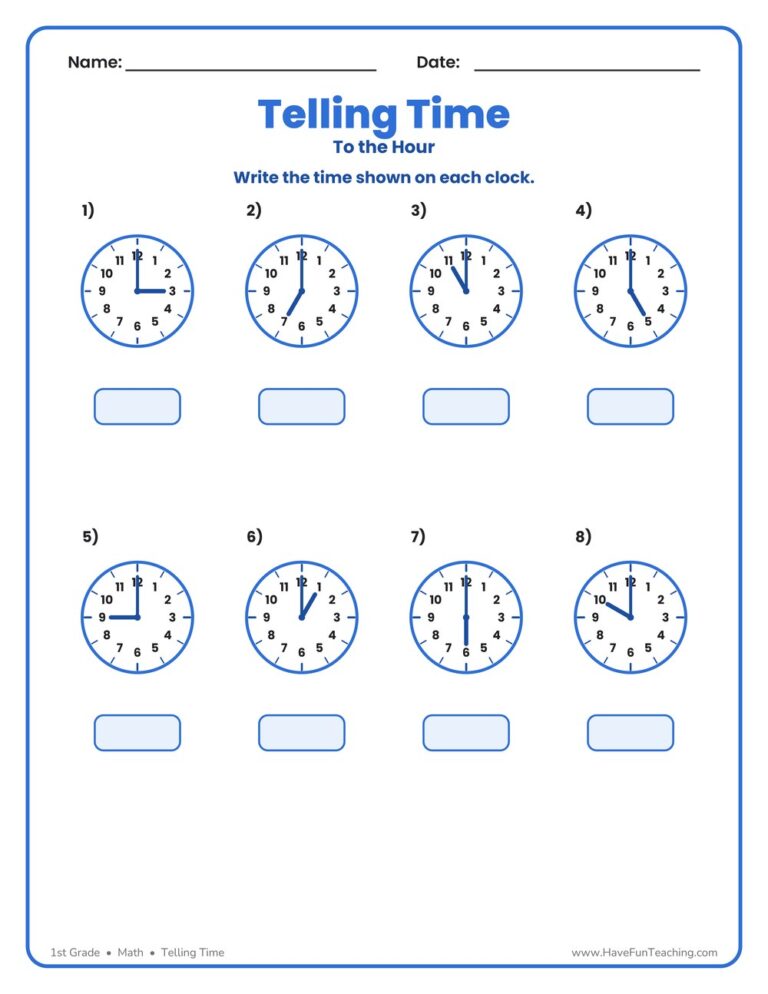
This Telling Time To The Hour Worksheet gives 1st graders eight analog clocks to read and write as digital times. Includes a complete answer key—perfect for quick, no-prep clock practice at home or school.
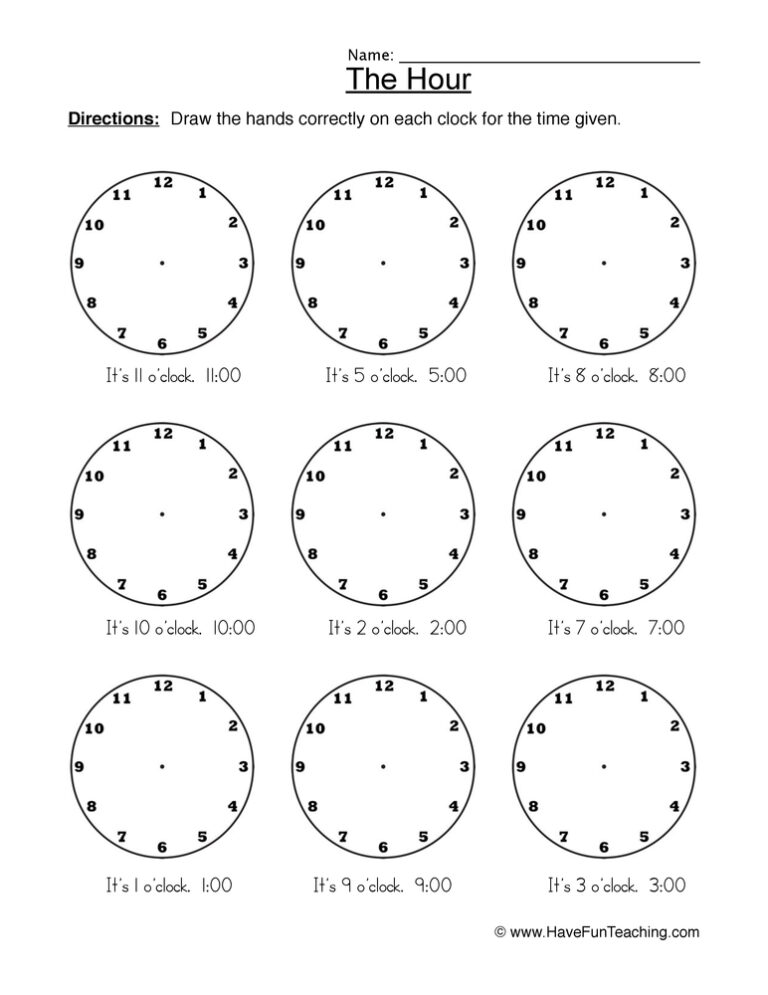
This Showing Time Worksheet has 1st graders read six analog clocks and draw the hands on three more, all to the hour. A complete answer key is included for fast, no-prep practice.

This Identifying Times Worksheet gives 1st Grade students nine analog clocks to read and draw, practicing time to the hour both ways. An answer key is included, so checking the page takes seconds.

Using this Telling Time Hour Clock BINGO, students practice telling time to the hour on an analog clock.
Using this Time for Sunshine To The Half Hour Clock Activity , students practice telling time to the half hour on an analog clock.

Reviews
There are no reviews yet