

Time to the Hour Worksheet
This time to the hour worksheet has 1st graders read six analog clocks and then draw the hands on two more. An answer key is included, so whole-hour practice is ready to hand out with no prep.
$6.97
Or free with a membership — members pay $3.33/mo for all 10,000+ resources. See plans
Want this one free?
Tell us where to send it and it’s yours — no card, no catch.
One free resource per teacher. We’ll also send free teaching ideas each week — unsubscribe anytime.
Teaching is easier with a membership
Unlimited printables, games & videos for PreK–6th — for your classroom or homeschool. Cancel anytime.
Start your 3-day free trial$0 today · cancel anytime · Instant access to 10,000+ resources
About this resource
Description
Learning to read a clock face is one of the first big measurement skills a child meets, and this time to the hour worksheet gives first graders a calm, uncluttered place to practice it. When the minute hand points straight up at the 12, the hour hand alone tells the story — and that single idea is what turns a wall clock from decoration into information. Reading whole hours first builds the confidence students need before half hours, quarter hours, and single minutes arrive later on.
This printable 1st grade clocks worksheet is built in two parts. In Part A, students look at six large analog clocks and write the time on the blanks below each one, hour first and minutes second. In Part B they flip the skill around: two dials are printed empty with a time written above them, and students draw both the hour hand and the minute hand themselves. Every clock is drawn to real clock geometry — twelve numbered hour positions, a short thick hour hand and a long thin minute hand — so what students practice here matches the clock hanging on the classroom wall.
What’s Included
- 1 print-ready PDF worksheet
- Answer key
- 6 read-the-clock items and 2 draw-the-hands items
Three things make this time to the hour worksheet effective. First, it separates the two hands visually, so students learn to identify the hour hand by its shorter length instead of guessing. Second, it mixes reading with drawing, and producing a time on a blank dial is a far stronger check of understanding than simply recognizing one. Third, the clocks are large and generously spaced, which keeps young students from losing their place — a common source of mistakes that look like confusion but are really just crowding.
Teachers and parents can stretch this practice well past the page. Set a real classroom clock to a whole hour and have students call it out together, then match the daily schedule to the clock: snack at 10:00, recess at 1:00, dismissal at 3:00. A paper plate, two cut-out arrows and a brass fastener make a hands-on clock every child can hold and turn. Counting around the dial by fives is an easy warm-up that pays off later when minutes are introduced. At home, ask what time a favorite show starts and let your child find that hour on the clock before you say it out loud.
Related Resources
What teachers say
Reviews
You must be logged in to post a review.
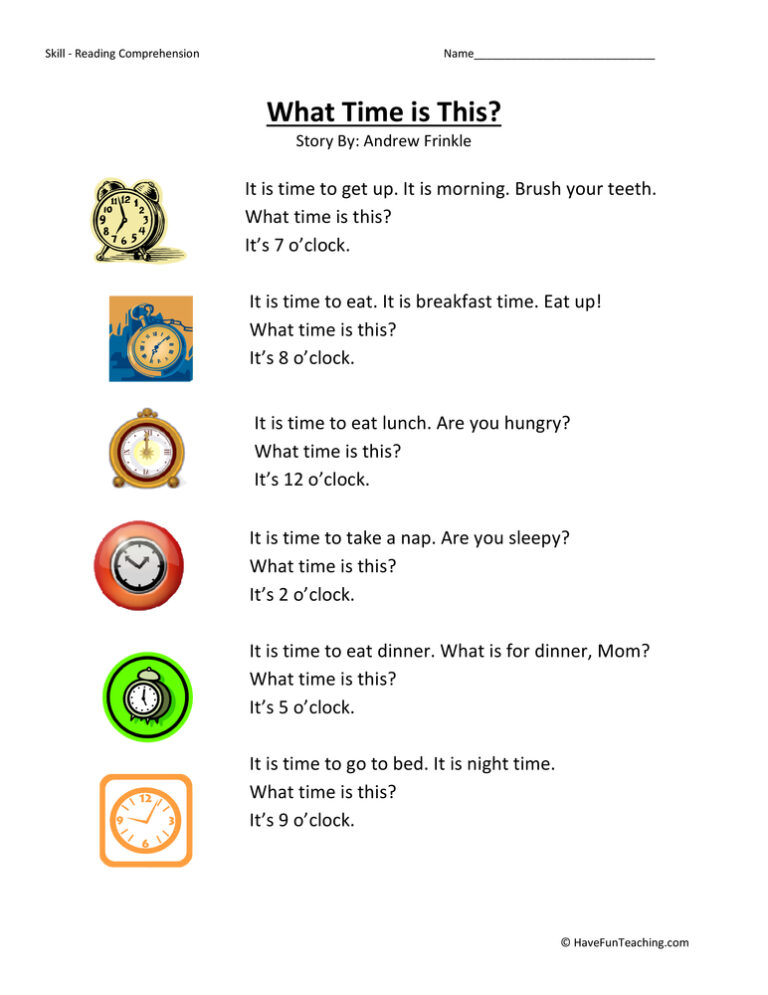
This What Time is This Reading Comprehension Worksheet gives 1st graders a short story about a boy's day and five questions about the o'clock times inside it. Answer key included for quick, no-prep practice.

A What Time Is It worksheet where 1st graders read six analog clocks and write the digital time to the hour and half hour. Includes a complete answer key — perfect for quick, no-prep telling time practice at home or school.
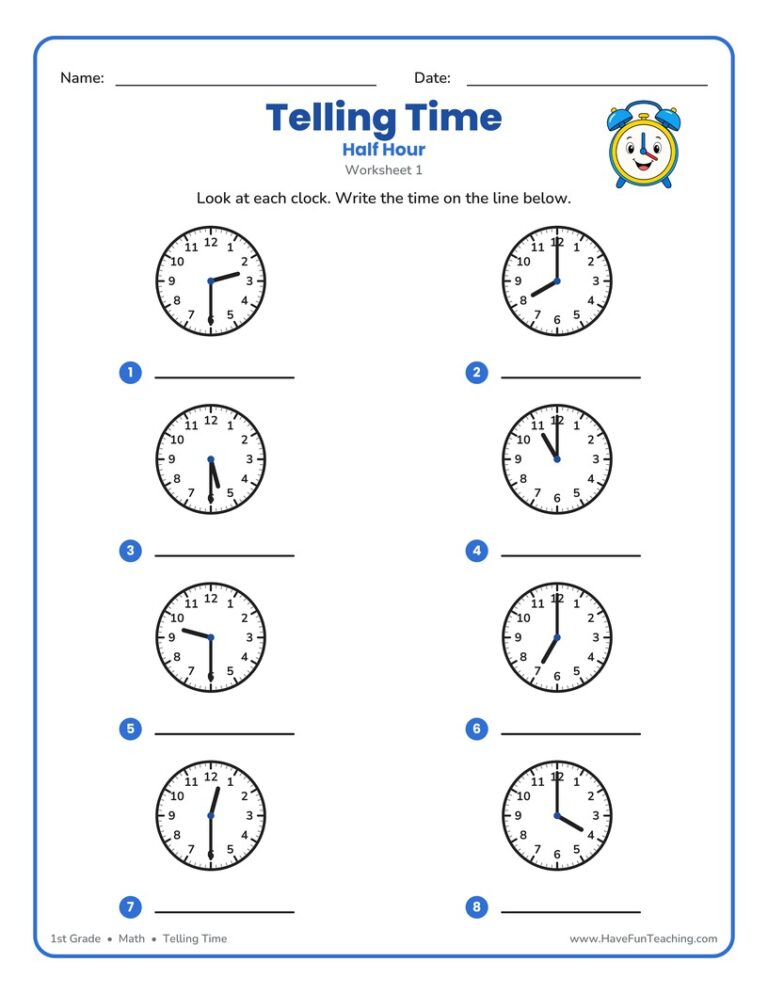
A Telling Time To The Half Hour Worksheet where first graders read eight analog clocks and write each time. Includes an answer key—perfect for quick, no-prep clock practice at home or school.

This time telling worksheet asks 1st grade students to write the time under six clocks set to the hour and half hour, then draw the hands on three more. An answer key is included.

Using this Telling Time Activity, students practice telling time to the hour on an analog clock.

The Clock Worksheet has 1st graders fill in the missing numbers on a big clock face, then read three clocks and write each time. Answer key included, so the dial finally makes sense with zero prep.

This time to the hour matching worksheet has 1st grade students match analog clocks to digital times and draw the hands themselves. An answer key is included, so practice is ready to print and go.
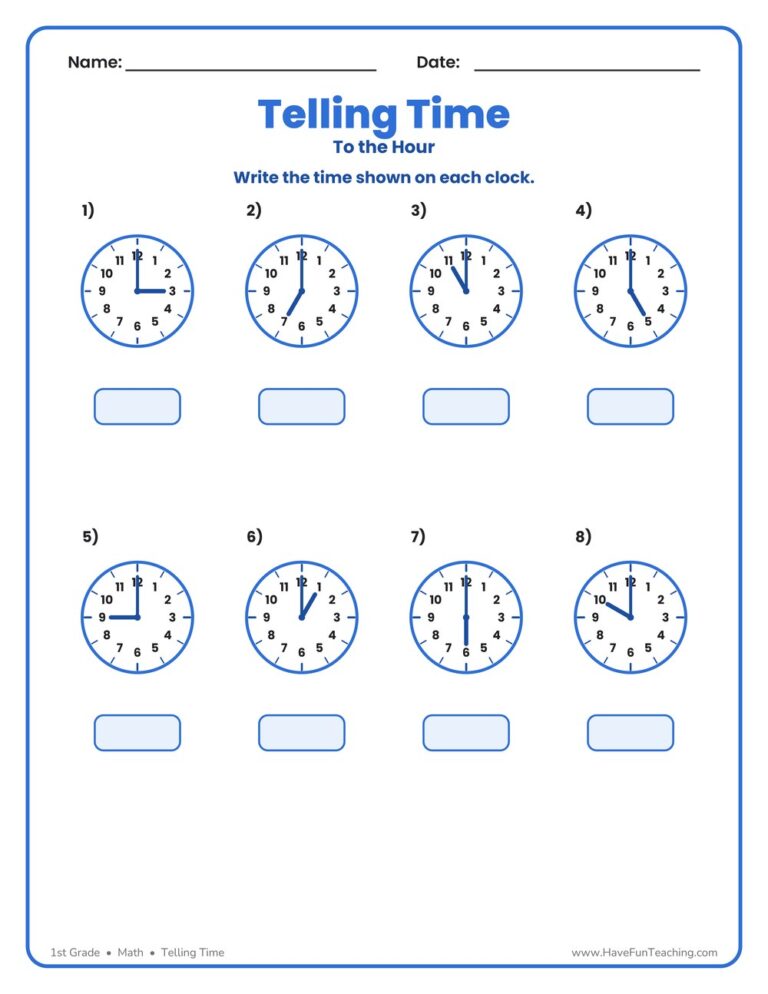
This Telling Time To The Hour Worksheet gives 1st graders eight analog clocks to read and write as digital times. Includes a complete answer key—perfect for quick, no-prep clock practice at home or school.
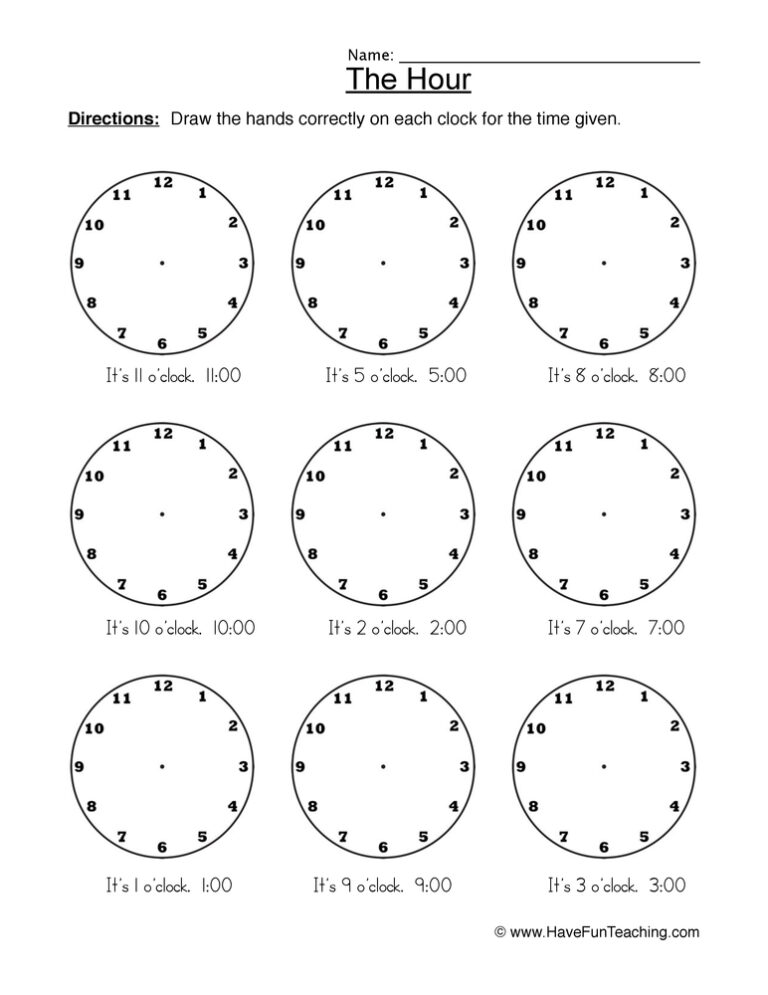
This Showing Time Worksheet has 1st graders read six analog clocks and draw the hands on three more, all to the hour. A complete answer key is included for fast, no-prep practice.

This Identifying Times Worksheet gives 1st Grade students nine analog clocks to read and draw, practicing time to the hour both ways. An answer key is included, so checking the page takes seconds.

Using this Telling Time Hour Clock BINGO, students practice telling time to the hour on an analog clock.
Using this Time for Sunshine To The Half Hour Clock Activity , students practice telling time to the half hour on an analog clock.




Reviews
There are no reviews yet